
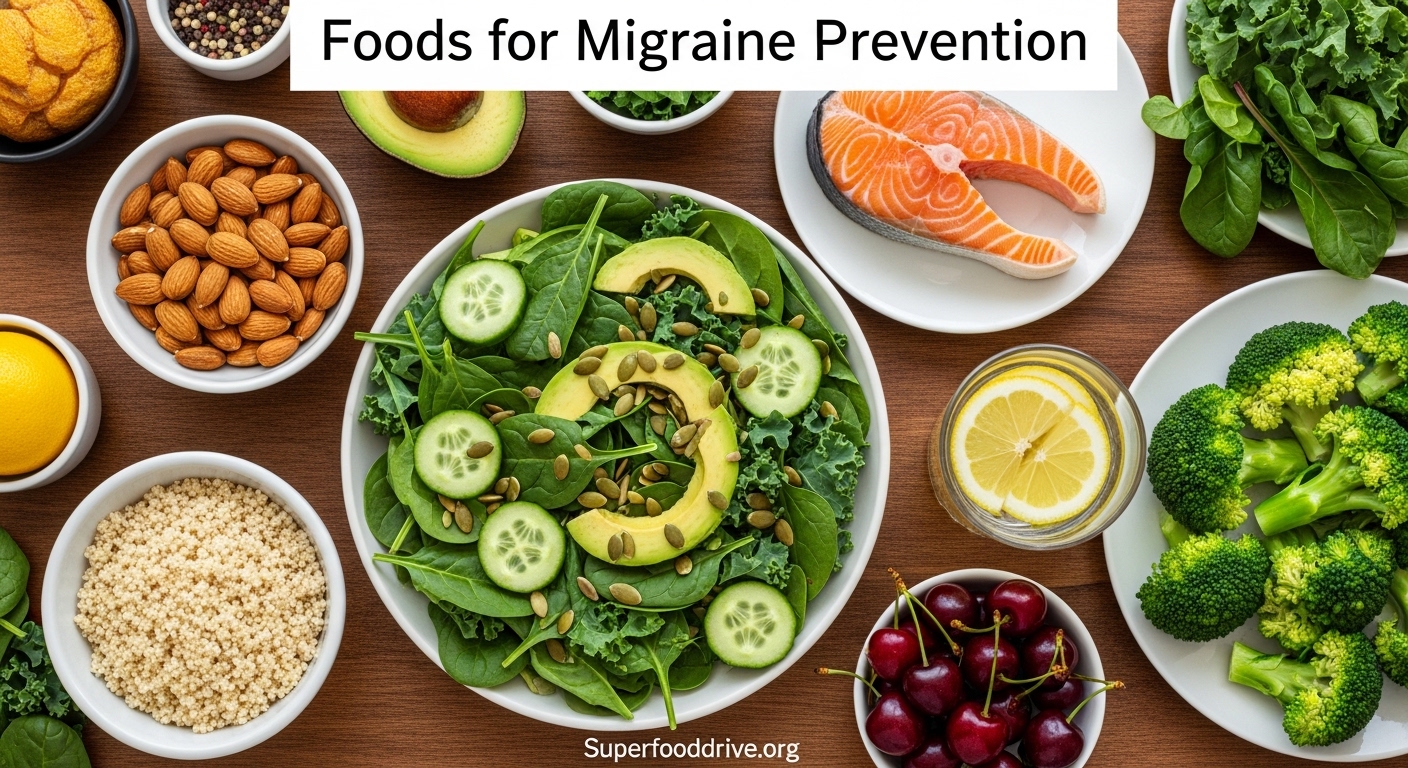
I used to think migraines were just something I had to accept. That was until I discovered how much diet affects my attacks. Over the past three years, I have tested different foods, tracked my triggers, and learned what actually works.
This guide shares everything I have learned about foods for migraine prevention. Whether you get occasional headaches or deal with chronic migraines, the right foods can make a real difference. Research shows that up to 60% of people with migraines have food triggers they can identify and manage.
By the end of this article, you will know exactly which foods help prevent migraines, what to avoid, and how to build a sustainable eating plan that works for your life.
Table of Contents
Quick Start: 10 Easiest Foods to Add Today
If you want to start preventing migraines right now, focus on these ten foods. Each one packs nutrients that support brain health and reduce inflammation.
Spinach and leafy greens top the list for magnesium content. One cup of cooked spinach provides 39% of your daily magnesium needs.
Salmon and fatty fish deliver anti-inflammatory omega-3s. Aim for two servings per week.
Quinoa offers complete protein plus magnesium. It is affordable and cooks in 15 minutes.
Pumpkin seeds contain 156mg of magnesium per ounce. Keep them in your desk for easy snacking.
Sweet potatoes provide complex carbs for blood sugar stability plus potassium.
Almonds offer healthy fats and magnesium. A small handful makes a perfect snack.
Blueberries pack antioxidants that fight inflammation. Fresh or frozen both work.
Cucumber and celery hydrate while delivering electrolytes.
Eggs provide B vitamins including riboflavin, shown to reduce migraine frequency.
Oatmeal stabilizes blood sugar with slow-releasing complex carbohydrates.
Understanding the Migraine-Diet Connection
Foods for migraine prevention work through several biological mechanisms. Understanding these helps you make smarter choices.
Neuroinflammation and Nutrients
Migraines involve inflammation in the brain and surrounding blood vessels. Certain nutrients directly counter this inflammation. Omega-3 fatty acids produce anti-inflammatory compounds called resolvins. Magnesium helps regulate neurotransmitter function and blood vessel tone.
When your brain has adequate magnesium, it is less likely to become hypersensitive to triggers. Research published in 2026 confirms that people with migraines often have lower magnesium levels than those without.
Blood Sugar Stability
Fluctuating blood sugar is a major migraine trigger for many people. When blood sugar drops too low, your body releases stress hormones that can trigger headache pain.
Complex carbohydrates from whole grains, vegetables, and legumes release energy slowly. This prevents the spikes and crashes that set off migraines.
The Gut-Brain Axis
Your gut and brain communicate constantly through the vagus nerve and chemical messengers. A healthy gut microbiome produces neurotransmitters like serotonin that influence migraine susceptibility.
Fiber-rich foods feed beneficial gut bacteria. Fermented foods support microbiome diversity. Both contribute to foods for migraine prevention.
Magnesium-Rich Foods for Migraine Prevention
Magnesium deficiency correlates strongly with migraine frequency. Studies show that 400-600mg of supplemental magnesium can reduce attacks by up to 40%. Getting magnesium from food provides additional nutrients and better absorption.
Top Magnesium Sources
Spinach (cooked): 157mg per cup. Add to smoothies, omelets, or pasta dishes.
Swiss chard: 150mg per cup cooked. Sauté with garlic for a simple side.
Pumpkin seeds: 156mg per ounce. Roast with spices for a savory snack.
Black beans: 120mg per cup. Make burrito bowls or add to salads.
Quinoa (cooked): 118mg per cup. Use as a rice substitute.
Almonds: 80mg per ounce. Portion carefully as nuts can trigger some people.
Avocado: 58mg per fruit. Add to toast, salads, or smoothies.
Edamame: 99mg per cup. Steam and salt lightly.
Daily Targets and Budget Tips
Women need 310-320mg of magnesium daily. Men need 400-420mg. These targets increase slightly if you exercise heavily or drink alcohol regularly.
Black beans, lentils, and bananas offer the most magnesium per dollar. Frozen spinach works just as well as fresh and costs less.
Omega-3 Fatty Acids: Anti-Inflammatory Powerhouses
Omega-3 fatty acids reduce inflammation throughout your body, including in the brain tissue involved in migraines. They also improve blood flow and reduce blood vessel constriction.
Best Omega-3 Sources
Wild-caught salmon: 2,150mg per 3-ounce serving. Choose wild over farmed for higher omega-3 content.
Sardines: 1,500mg per can. Affordable and shelf-stable.
Mackerel: 4,580mg per 3-ounce serving. Highest concentration but strong flavor.
Chia seeds: 5,060mg per ounce. Add to yogurt, oatmeal, or smoothies.
Flaxseeds: 2,350mg per tablespoon. Ground flax absorbs better than whole seeds.
Walnuts: 2,570mg per ounce. Good for snacks but watch portions.
Plant vs. Animal Sources
Animal sources provide EPA and DHA directly. Your body converts plant-based ALA to these forms, but the conversion rate is only 5-10%. If you eat plant-based, include algae-based DHA supplements or focus on chia and flax.
Preparation Tips
Baking or poaching fish preserves omega-3s better than frying. Store seeds and nuts in the refrigerator or freezer to prevent oxidation.
Hydrating Foods and Electrolytes
Dehydration triggers migraines in about one-third of sufferers. Drinking water helps, but water-rich foods provide hydration plus nutrients.
High Water Content Foods
Cucumber: 96% water. Add to salads or infuse in water.
Celery: 95% water. Contains natural sodium for electrolyte balance.
Watermelon: 92% water. Also provides magnesium and potassium.
Strawberries: 91% water plus anti-inflammatory antioxidants.
Lettuce: 96% water. Use as a base for migraine-friendly meals.
Zucchini: 94% water. Spiralize as pasta substitute.
Electrolyte Balance
Sodium, potassium, and magnesium work together to maintain proper cellular function. An imbalance can trigger migraine symptoms.
Coconut water provides natural electrolytes without artificial additives. Sweet potatoes offer 542mg of potassium per medium potato. Bananas deliver 422mg of potassium and are easy to eat even during mild nausea.
Vitamin B2 (Riboflavin) and CoQ10 Sources
Research shows promise for both riboflavin and Coenzyme Q10 in migraine prevention. Studies indicate that 400mg of riboflavin daily can reduce migraine frequency by about 30%.
Riboflavin-Rich Foods
Beef liver: 2.9mg per 3-ounce serving. Highest source but not for everyone.
Almonds: 0.7mg per ounce. Easy snack option.
Eggs: 0.5mg per large egg. Versatile and affordable.
Spinach: 0.4mg per cup cooked. Another reason to eat your greens.
Mushrooms: 0.4mg per cup. Add to stir-fries or omelets.
CoQ10 Sources
Sardines: 22mg per can. Double benefit with omega-3s.
Beef: 2.6mg per 3-ounce serving. Choose grass-fed when possible.
Chicken: 1.4mg per 3-ounce serving. Dark meat contains more than white.
Peanuts: 0.8mg per ounce. Budget-friendly option.
Getting these nutrients from food provides smaller doses than supplements but with better absorption and additional benefits.
Foods to Avoid: Understanding Triggers
Knowing what to avoid is just as important as knowing what to eat. The 5 Cs provide a helpful framework for common triggers.
The 5 Cs of Migraine Triggers
Cheese: Especially aged varieties like cheddar, parmesan, blue cheese, and brie. These contain high levels of tyramine, a compound formed during aging that affects blood vessels.
Chocolate: Contains phenylethylamine and caffeine. However, recent research suggests chocolate may not trigger migraines as previously thought. Food cravings before an attack might be a prodrome symptom rather than a cause.
Citrus: Oranges, lemons, limes, and grapefruit affect some migraine sufferers. The acidity may trigger attacks in sensitive individuals.
Caffeine: While small amounts can help during attacks, daily use followed by withdrawal can trigger headaches.
Cured/processed meats: Hot dogs, bacon, salami, and ham contain nitrates and nitrites that dilate blood vessels.
Tyramine-Rich Foods
Tyramine forms when proteins break down in aged and fermented foods. Besides aged cheese, watch for:
- Fermented soy products (miso, tempeh)
- Pickled foods
- Smoked fish
- Yeast extracts (Marmite, Vegemite)
- Overripe bananas and avocados
Other Common Triggers
Monosodium glutamate (MSG): Found in Chinese restaurant food, processed snacks, and some canned soups. Watch for labels listing “hydrolyzed protein” or “autolyzed yeast.”
Artificial sweeteners: Aspartame affects some migraine sufferers. It appears in diet sodas, sugar-free gum, and low-calorie desserts.
Alcohol: Red wine contains tyramine, tannins, and histamine. Beer and champagne also trigger attacks in many people.
Remember that triggers are highly individual. What causes migraines in one person may be fine for another.
The Truth About Caffeine and Migraine
Caffeine presents a paradox for migraine sufferers. It can both help and hurt.
During a migraine attack, caffeine can enhance pain relief from medications. Many over-the-counter migraine remedies contain caffeine for this reason. A small amount at the onset of symptoms may stop an attack.
However, daily caffeine consumption creates dependency. Missing your usual morning coffee can trigger withdrawal headaches. These feel similar to migraines and may trigger full attacks.
The key is consistency. If you drink caffeine, keep your intake steady. If you want to quit, taper gradually over several weeks rather than stopping abruptly.
Most experts recommend limiting caffeine to 200mg daily for migraine sufferers. That equals about one 12-ounce cup of coffee.
Dietary Patterns That Work
Some people find success following specific eating patterns rather than just focusing on individual foods for migraine prevention.
The Mediterranean Diet
The Mediterranean diet emphasizes vegetables, fruits, whole grains, fish, olive oil, and moderate red wine. Research links this pattern to reduced migraine frequency.
The anti-inflammatory nature of this diet addresses one root cause of migraines. High omega-3 intake from fish and olive oil helps. The abundance of vegetables provides magnesium and other protective nutrients.
Low-Fat Approaches
Some studies suggest that restricting fat intake to 20-30% of daily calories may help. This approach emphasizes fruits, vegetables, whole grains, and lean proteins.
However, completely eliminating healthy fats may backfire. Your brain needs fat to function. Focus on reducing saturated and trans fats while keeping omega-3s.
Ketogenic Diet Considerations
The ketogenic diet forces your body to burn fat for fuel instead of carbohydrates. Some preliminary research suggests this metabolic state may reduce migraine frequency.
However, the diet is restrictive and difficult to maintain. The transition period often causes headaches. Work with a healthcare provider if you want to try this approach.
DASH Diet Overlap
The DASH diet, designed to lower blood pressure, shares many features with migraine-friendly eating. It emphasizes vegetables, fruits, whole grains, and low-fat dairy while limiting sodium.
Since high blood pressure correlates with migraines, this approach offers double benefits.
Plant-Based Options
Vegetarian and vegan diets can support migraine prevention if planned carefully. Focus on leafy greens for magnesium, chia and flax for omega-3s, and complete proteins from quinoa and legumes.
Plant-based eaters may need algae-based DHA supplements since conversion from plant omega-3s is inefficient.
Practical Implementation: Making It Work
Knowing which foods help is only half the battle. Here is how to actually implement foods for migraine prevention in your daily life.
Meal Timing Matters
Skipping meals triggers migraines in many people. Long gaps between eating cause blood sugar drops that can spark attacks.
Aim to eat every 3-4 hours. Include protein and complex carbs at each meal. Keep healthy snacks available for emergencies.
Eat breakfast within an hour of waking. This stabilizes blood sugar after the overnight fast.
Food Journaling Guide
Identifying your personal triggers requires tracking. Record what you eat, when you eat, and when migraines occur.
Include details like sleep quality, stress levels, and menstrual cycle for women. Patterns emerge over 2-3 months.
Do not eliminate foods based on one episode. A food is only a trigger if it consistently precedes attacks.
Elimination Diet Basics (With Warnings)
If you suspect multiple triggers, an elimination diet can help identify them. Remove common triggers for 4-6 weeks, then reintroduce one at a time.
However, elimination diets carry risks. They can create anxiety around food, trigger disordered eating, or cause nutritional deficiencies. Work with a registered dietitian.
Never restrict children or pregnant women without medical supervision.
Quick Snack Ideas
Keep these migraine-friendly snacks available:
- Apple slices with almond butter
- Hummus with cucumber and carrots
- Hard-boiled eggs
- Pumpkin seeds
- Blueberries with Greek yogurt
- Oatmeal packets (unsweetened)
- Rice cakes with avocado
Budget Strategies
Eating for migraine prevention does not require expensive specialty foods. Frozen vegetables often cost less than fresh and retain nutrients. Canned salmon and sardines provide omega-3s affordably.
Dried beans and lentils offer magnesium and protein at pennies per serving. Buy nuts in bulk and portion them yourself.
Seasonal produce costs less and tastes better. Shop sales and stock up on non-perishables.
What to Eat During Different Migraine Phases
Your nutritional needs change throughout a migraine episode. Foods for migraine prevention differ from foods for attack management.
Prodrome Phase
The prodrome occurs hours or days before pain starts. Symptoms include food cravings, mood changes, yawning, and neck stiffness.
Some people crave specific foods during prodrome. Research suggests these cravings are early symptoms, not triggers. However, eating trigger foods during this vulnerable time may push you into full attack.
Focus on stable blood sugar. Eat complex carbs with protein. Avoid alcohol and heavily processed foods.
During an Attack
Nausea makes eating difficult during attacks. Many people cannot stomach regular food.
The BRAT diet (bananas, rice, applesauce, toast) provides gentle nutrition. Clear broths offer hydration and electrolytes. Ginger tea may ease nausea.
Some people find relief from cold foods like smoothies or ice chips. Others prefer warm, bland options.
Avoid heavy, greasy foods that may worsen nausea.
Postdrome Recovery
The postdrome phase leaves you feeling drained and foggy. Your brain needs fuel to recover.
Focus on nutrient-dense foods. Omega-3-rich fish supports brain function. Leafy greens replenish magnesium. Hydrating fruits restore fluid balance.
Eat regular meals to stabilize your system. This is not the time to skip breakfast.
Foods for Migraine Prevention: Complete Guide Summary
Foods for migraine prevention work by reducing inflammation, supporting brain health, and stabilizing blood sugar. The most important categories include magnesium-rich foods like spinach and pumpkin seeds, omega-3 sources like salmon and chia seeds, and hydrating options like cucumber and watermelon.
Avoiding triggers requires personal experimentation. The 5 Cs (cheese, chocolate, citrus, caffeine, cured meats) affect many people, but your triggers may differ.
Consistency matters more than perfection. Regular meal timing, adequate hydration, and a generally anti-inflammatory diet provide protection even if you occasionally eat trigger foods.
Frequently Asked Questions
What is the best food to prevent migraines?
There is no single best food, but magnesium-rich options like spinach and pumpkin seeds show strong evidence. Fatty fish high in omega-3s also rank highly. The best approach combines multiple beneficial foods rather than relying on one miracle ingredient.
What are the 5 C’s to avoid for migraines?
The 5 Cs are: Cheese (especially aged), Chocolate, Citrus fruits, Caffeine, and Cured or processed meats. These categories contain compounds like tyramine, phenylethylamine, nitrates, and caffeine that trigger attacks in many people.
What foods can set off migraines?
Common trigger foods include aged cheeses, processed meats with nitrates, alcohol (especially red wine), foods containing MSG, artificial sweeteners like aspartame, and fermented or pickled foods high in tyramine. However, triggers are highly individual. What affects one person may not affect another.
What is the 20 20 20 rule for migraines?
The 20-20-20 rule actually refers to preventing digital eye strain, not migraines specifically. Every 20 minutes, look at something 20 feet away for 20 seconds. While not a migraine-specific rule, reducing eye strain can help prevent headaches that may trigger migraines in sensitive individuals.
Can diet alone prevent migraines?
Diet helps many people reduce migraine frequency, but it rarely eliminates attacks completely. Most migraineurs benefit from combining dietary changes with stress management, adequate sleep, and appropriate medical treatment when needed. Think of food as one tool in your prevention toolkit.
How long before dietary changes work for migraines?
Most people need 8-12 weeks of consistent dietary changes to see results. Some notice improvements sooner, especially from hydration and regular meal timing. Food journaling helps track your personal timeline and identify which changes make the biggest difference.
Conclusion
Foods for migraine prevention offer real hope for reducing attack frequency and severity. By focusing on magnesium-rich greens, omega-3-packed fish, and hydrating produce while avoiding your personal triggers, you give your brain the support it needs.
Remember that change takes time. Start with the quick-win foods from this guide. Add more beneficial options gradually. Track your symptoms to identify your specific triggers.
Most importantly, be patient with yourself. Migraines are complex, and no single approach works for everyone. The foods for migraine prevention in this article provide a solid foundation. Combine them with good sleep, stress management, and medical care when needed.
You deserve fewer migraine days. The right foods can help get you there.