
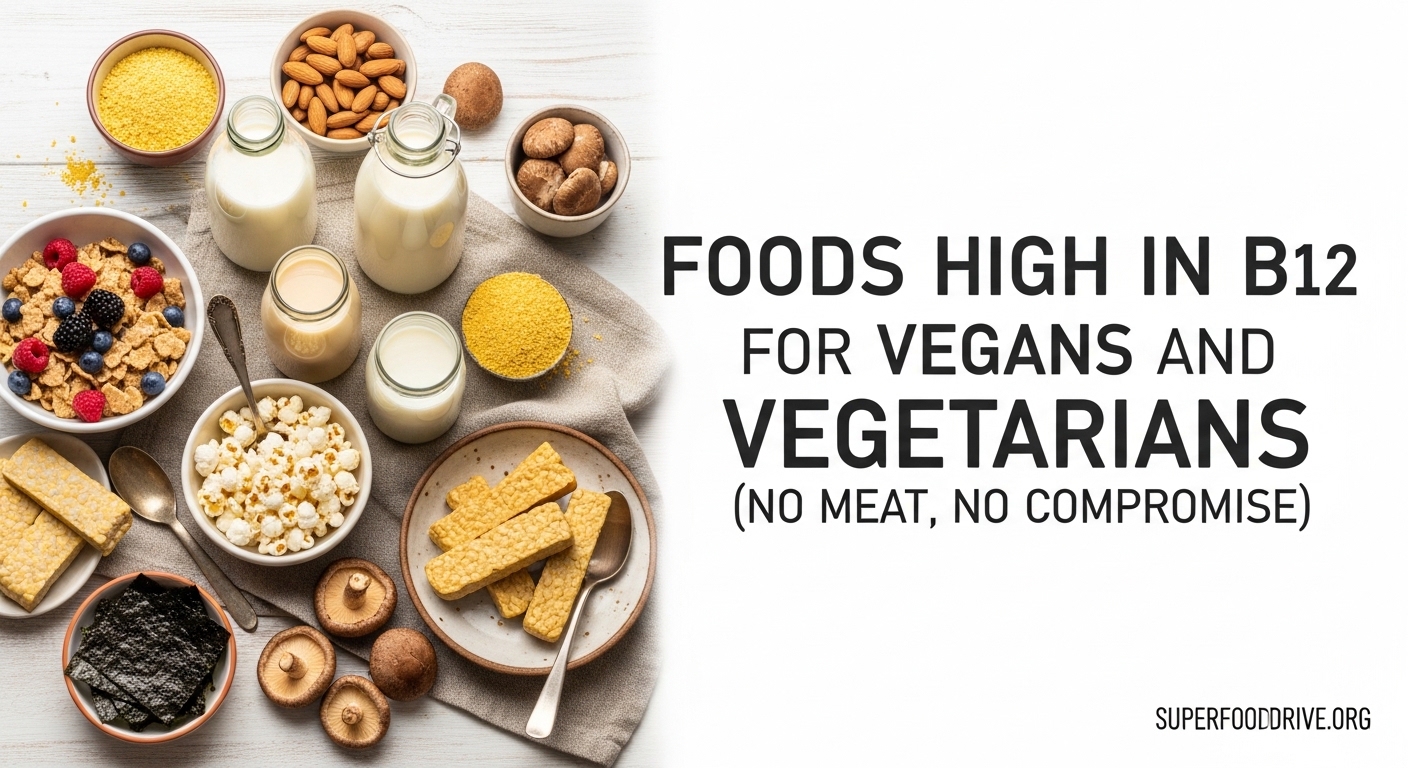
Getting enough vitamin B12 on a plant-based diet doesn’t have to be complicated. I spent weeks researching the best natural and fortified sources after watching a friend struggle with fatigue and brain fog from a deficiency she didn’t know she had. This guide covers everything you need to know about foods high in B12 for vegans and vegetarians.
You will learn exactly which foods contain the most B12, how much you need daily, and the warning signs that your levels might be low. Whether you have been vegan for years or are just starting to eat more plant-based meals, this information could save you from the serious health problems that come from running low on this essential nutrient.
Table of Contents
What Is Vitamin B12 and Why It Matters for Plant-Based Diets
Vitamin B12, also called cobalamin, is a water-soluble vitamin your body cannot produce on its own. It plays a critical role in producing red blood cells, synthesizing DNA, and keeping your nervous system functioning properly. Without adequate B12, your body cannot create healthy blood cells or maintain proper nerve function.
The challenge for vegans and vegetarians is that B12 occurs naturally almost exclusively in animal products. Meat, fish, eggs, and dairy contain reliable amounts of this vitamin. Plants do not make B12, which means plant-based eaters must be intentional about getting it from fortified foods or supplements. Research from the National Institutes of Health confirms that vegetarians and vegans have significantly higher rates of B12 deficiency than meat eaters.
Your body stores B12 in the liver, and these reserves can last several years. This means you might not notice deficiency symptoms immediately after switching to a plant-based diet. However, once those stores deplete, the health consequences can be severe and sometimes irreversible.
Vegetarian B12 Food Sources
Lacto-ovo vegetarians have more B12 options than vegans because dairy and eggs contain this vitamin naturally. These foods provide reliable amounts without requiring fortification.
Eggs: A Versatile B12 Source
One large egg contains about 0.6 micrograms of B12, which is roughly 25% of your daily requirement. Eating two eggs for breakfast provides half your daily needs. The vitamin concentrates in the yolk, so do not skip it. I find that keeping hard-boiled eggs in the fridge makes it easy to add B12 to salads and grain bowls throughout the week.
Dairy Products: Yogurt, Milk, and Cheese
Dairy foods offer consistent B12 content. One cup of whole milk provides 1.1 micrograms, while the same amount of plain yogurt contains 1.4 micrograms. Cheese varies by type, with Swiss delivering 0.9 micrograms per ounce and mozzarella providing 0.6 micrograms. Cottage cheese offers about 0.9 micrograms per half-cup serving.
Greek yogurt stands out as particularly beneficial. A single 6-ounce container delivers 1.3 micrograms of B12 along with protein that helps keep you full. I recommend choosing plain varieties and adding your own fruit to avoid excess sugar.
Fortified Vegetarian Foods
Many foods marketed to vegetarians come fortified with B12. Breakfast cereals often contain 1.5 to 6 micrograms per serving. Check labels and look for brands that provide at least 25% of your daily value. Some plant-based meat alternatives also include added B12, though amounts vary significantly between products.
Vegan B12 Food Sources
Vegans must rely entirely on fortified foods and select plant sources that contain B12. Here are the most reliable options backed by research.
Nutritional Yeast: The Vegan Favorite
Nutritional yeast is the single best vegan food source for B12, but only when fortified. Two tablespoons of fortified nutritional yeast provide an impressive 8 micrograms, which is over 300% of your daily needs. This deactivated yeast has a cheesy, nutty flavor that works beautifully on popcorn, pasta, and roasted vegetables.
Unfortified nutritional yeast contains virtually no B12. Always check the label to confirm fortification before purchasing. I buy mine in bulk and sprinkle it on almost everything. It has become my secret weapon for meeting B12 targets without thinking about it.
Fortified Plant Milks
Soy, almond, oat, and other plant milks often contain added B12. One cup typically provides 1.0 to 3.0 micrograms depending on the brand. The bioavailability of B12 from fortified plant milk is comparable to that from dairy milk according to research published in nutrition journals.
Not all plant milks are fortified. Some brands focus on minimal ingredients and skip the added vitamins. Check the nutrition label and choose varieties that provide at least 25% of your daily B12 per serving. Using fortified plant milk in your morning coffee and cereal is an effortless way to boost intake.
Fortified Breakfast Cereals
Many breakfast cereals deliver substantial B12 in a small serving. A single cup of fortified cereal can provide anywhere from 1.5 to 6 micrograms. Pair it with fortified plant milk and you could meet your entire daily requirement before leaving the house.
Watch out for added sugars in some cereals. Look for options with less than 8 grams of sugar per serving while still providing at least 25% of your daily B12. Whole grain varieties offer the bonus of fiber to keep you satisfied longer.
Fortified Meat Alternatives
Plant-based burgers, sausages, and deli slices often contain added B12. One serving typically provides 0.5 to 1.5 micrograms. These products vary widely in their nutritional profiles, so reading labels matters. Some brands prioritize whole food ingredients without fortification, while others aim to match the nutrient content of meat.
Algae and Seaweed: Natural Plant Sources
Research published in PMC has identified certain algae and seaweed as containing bioavailable B12. Dried purple laver, also known as nori, provides approximately 54 to 58 micrograms per 100 grams. This makes it one of the most concentrated plant sources available.
Other algae sources like chlorella and spirulina contain B12 analogs, but research on their bioavailability is mixed. Some studies suggest these forms may not effectively raise human B12 levels. Nori appears to be the most reliable seaweed source based on current evidence.
Tempeh and Fermented Foods
Tempeh, a fermented soy product, contains small amounts of B12 produced by bacteria during fermentation. One cup provides approximately 0.1 to 0.2 micrograms. While this is not enough to meet daily needs alone, it contributes to your overall intake.
Other fermented foods like sauerkraut, kimchi, and kombucha contain trace amounts of B12 from bacterial fermentation. However, these levels are generally too low to rely on as primary sources. Enjoy them for their probiotic benefits, but do not count on them for your B12 needs.
Shiitake Mushrooms
Dried shiitake mushrooms contain measurable B12, with approximately 5.6 micrograms per 100 grams of dried mushrooms. Fresh shiitake has much lower levels. While this sounds promising, you would need to eat a large quantity of dried mushrooms regularly to meet your daily requirement.
The B12 in mushrooms appears to be bioavailable, making them a valuable addition to your B12 strategy. I like to keep dried shiitakes on hand for stir-fries and soups, knowing they contribute to my overall intake alongside fortified foods.
B12 Content Comparison: Micrograms Per Serving
Here is how common vegetarian and vegan B12 sources compare per standard serving size.
| Food Source | Serving Size | B12 (mcg) | % Daily Value |
|---|---|---|---|
| Fortified Nutritional Yeast | 2 tablespoons | 8.0 | 333% |
| Dried Nori (Purple Laver) | 100 grams | 54-58 | 2250% |
| Fortified Breakfast Cereal | 1 cup | 1.5-6.0 | 63-250% |
| Fortified Plant Milk | 1 cup | 1.0-3.0 | 42-125% |
| Dried Shiitake Mushrooms | 100 grams | 5.6 | 233% |
| Eggs | 2 large | 1.2 | 50% |
| Plain Yogurt | 1 cup | 1.4 | 58% |
| Milk | 1 cup | 1.1 | 46% |
| Swiss Cheese | 1 ounce | 0.9 | 38% |
| Tempeh | 1 cup | 0.1-0.2 | 4-8% |
This table shows why fortified foods are essential for vegans. Natural plant sources like tempeh contribute only small amounts, while fortified nutritional yeast or cereal can meet your entire daily requirement in a single serving.
How Much B12 Do You Actually Need Daily
The Recommended Dietary Allowance (RDA) for vitamin B12 varies by age and life stage. Adults need 2.4 micrograms daily. Pregnant women require 2.6 micrograms, and breastfeeding women need 2.8 micrograms to support their baby’s development.
Children need less depending on age. Infants up to 6 months need 0.4 micrograms, while children ages 9 to 13 require 1.8 micrograms. Teenagers need the adult amount of 2.4 micrograms starting at age 14.
Older adults may need higher intakes because absorption decreases with age. The National Institutes of Health recommends that people over 50 obtain most of their B12 from fortified foods or supplements since reduced stomach acid affects absorption from natural food sources.
B12 Deficiency Symptoms to Watch For
B12 deficiency develops gradually, and symptoms can be subtle at first. Many people attribute early signs to stress or aging. Based on real experiences shared in health forums, here are the warning signs that indicate you should get tested.
Early Warning Signs
Fatigue and weakness are often the first symptoms. You might feel tired despite getting adequate sleep. Some people experience a pale or yellowish skin tone due to reduced red blood cell production. Shortness of breath and dizziness, especially upon standing, can signal low B12 affecting oxygen transport.
Neurological Symptoms
Brain fog and difficulty concentrating are common complaints among deficient vegans. One Reddit user described their experience as sudden cramps in legs, excessive sweating, low mood, and nausea that built up over two years before diagnosis. Numbness or tingling in hands and feet indicates nerve damage that may become permanent if left untreated.
Other neurological symptoms include memory problems, depression, and changes in walking or balance. Vision disturbances can occur in severe cases. These symptoms develop because B12 is essential for maintaining the myelin sheath that protects nerves.
Physical Changes
Some people report changes in hair texture and increased hair loss. Glossitis, a swollen and inflamed tongue, is another sign. Mouth ulcers and changes in taste perception can also indicate deficiency. Heart palpitations may occur as your heart works harder to pump oxygen-poor blood.
If you experience any combination of these symptoms, request a blood test from your healthcare provider. Serum B12 levels below 200 picograms per milliliter typically indicate deficiency, though some people experience symptoms even with levels between 200 and 400.
Do Vegans Need B12 Supplements
Most nutrition experts recommend that vegans take a B12 supplement regardless of their diet. While fortified foods can provide adequate B12, supplements offer reliable dosing and eliminate the guesswork of tracking fortified food intake.
Supplement Dosage Recommendations
The Vegan Society recommends either eating fortified foods two or three times daily providing at least 3 micrograms each time, taking one daily supplement of 10 micrograms, or taking one weekly supplement of 2000 micrograms. These amounts account for absorption rates, which decrease as intake increases.
Many health professionals suggest higher doses for those with documented deficiency. Forum discussions consistently recommend the 2000 microgram weekly cyanocobalamin approach as simple and cost-effective. This provides a reliable dose without daily pill-taking.
Cyanocobalamin vs Methylcobalamin
Two main forms of B12 supplements exist. Cyanocobalamin is the synthetic form most commonly found in supplements and fortified foods. It is stable, well-studied, and cost-effective. Research shows it effectively raises B12 levels in deficient individuals.
Methylcobalamin is the natural form found in food. Some people prefer it believing it absorbs better, though research does not strongly support this claim. Methylcobalamin is less stable and typically more expensive. Both forms work, but cyanocobalamin offers the best value and most research backing.
Testing Your Levels
Getting your B12 levels tested annually is wise for anyone on a plant-based diet. Request a serum B12 test from your doctor. Some practitioners also recommend testing homocysteine and methylmalonic acid levels, which can indicate functional deficiency even when serum B12 appears normal.
Track your levels over time to ensure your intake strategy works. If you prefer relying on fortified foods, testing confirms you are consuming enough. If you take supplements, testing verifies absorption and appropriate dosing.
Sample Meal Ideas for Getting Enough B12
Putting this information into practice is easier than you might think. Here are simple meal combinations that deliver adequate B12 throughout the day.
Breakfast Options
Fortified cereal with fortified soy milk and sliced banana provides 100% or more of your daily B12. Add nutritional yeast to scrambled tofu for an extra boost. Smoothies made with fortified plant milk, berries, and a tablespoon of nutritional yeast hide the yeast flavor while delivering substantial B12.
Lunch and Dinner Ideas
Top salads with nutritional yeast instead of cheese. Add fortified plant milk to soups and sauces. Include tempeh in stir-fries for a small B12 contribution alongside protein. Make nori wraps with vegetables and rice for the algae B12 benefits.
For vegetarians, a breakfast of two eggs with cheese and a glass of milk covers most of your daily needs. Greek yogurt with fortified granola combines dairy and fortified grain B12 sources.
Snack Ideas
Popcorn sprinkled with nutritional yeast is addictive and nutritious. Fortified plant milk in your coffee or tea contributes to daily intake. Energy bars made with fortified cereals and nut butter provide portable B12.
Frequently Asked Questions
Which vegan food has the highest B12?
Dried purple laver (nori) contains the most B12 of any vegan food, with 54 to 58 micrograms per 100 grams. Among commonly available foods, fortified nutritional yeast provides the highest amount at 8 micrograms per 2-tablespoon serving. Both provide multiple times the daily requirement in a single serving.
What do vegans eat to get B12?
Vegans rely on fortified foods including nutritional yeast, plant milks, breakfast cereals, and meat alternatives. Some algae and seaweed like nori contain natural B12. Fermented foods like tempeh provide small amounts. Most vegans also take supplements to ensure adequate intake.
What do you crave when your B12 is low?
B12 deficiency does not typically cause specific food cravings like iron deficiency does. Instead, you may experience fatigue, brain fog, numbness in extremities, mood changes, and difficulty concentrating. Some people report unusual cravings for non-food items, a condition called pica, though this is more associated with iron deficiency.
Do vegetarians need B12 supplements?
Lacto-ovo vegetarians who regularly eat eggs and dairy usually get adequate B12 from food. However, those who rarely consume these foods may need supplementation. Vegans should take supplements or consistently eat multiple fortified foods daily to meet requirements. Regular blood testing helps determine individual needs.
How long does it take to fix B12 deficiency?
With proper supplementation, B12 levels begin rising within days. However, symptom improvement varies. Fatigue and weakness often improve within weeks. Neurological symptoms like numbness may take months to resolve and can become permanent if deficiency was severe or prolonged. Full recovery typically takes 3 to 6 months with consistent treatment.
Conclusion: Foods High in B12 for Vegans and Vegetarians
Getting enough vitamin B12 on a plant-based diet requires intention but not stress. Vegetarians can rely on eggs and dairy while vegans need fortified foods like nutritional yeast, plant milks, and cereals. Understanding foods high in B12 for vegans and vegetarians helps you build a sustainable eating pattern.
The most important step is getting your levels tested, especially if you have been plant-based for over a year. Supplements offer peace of mind and reliable dosing for those who want simplicity. With proper planning, you can enjoy all the benefits of plant-based eating while maintaining optimal B12 levels for long-term health.