
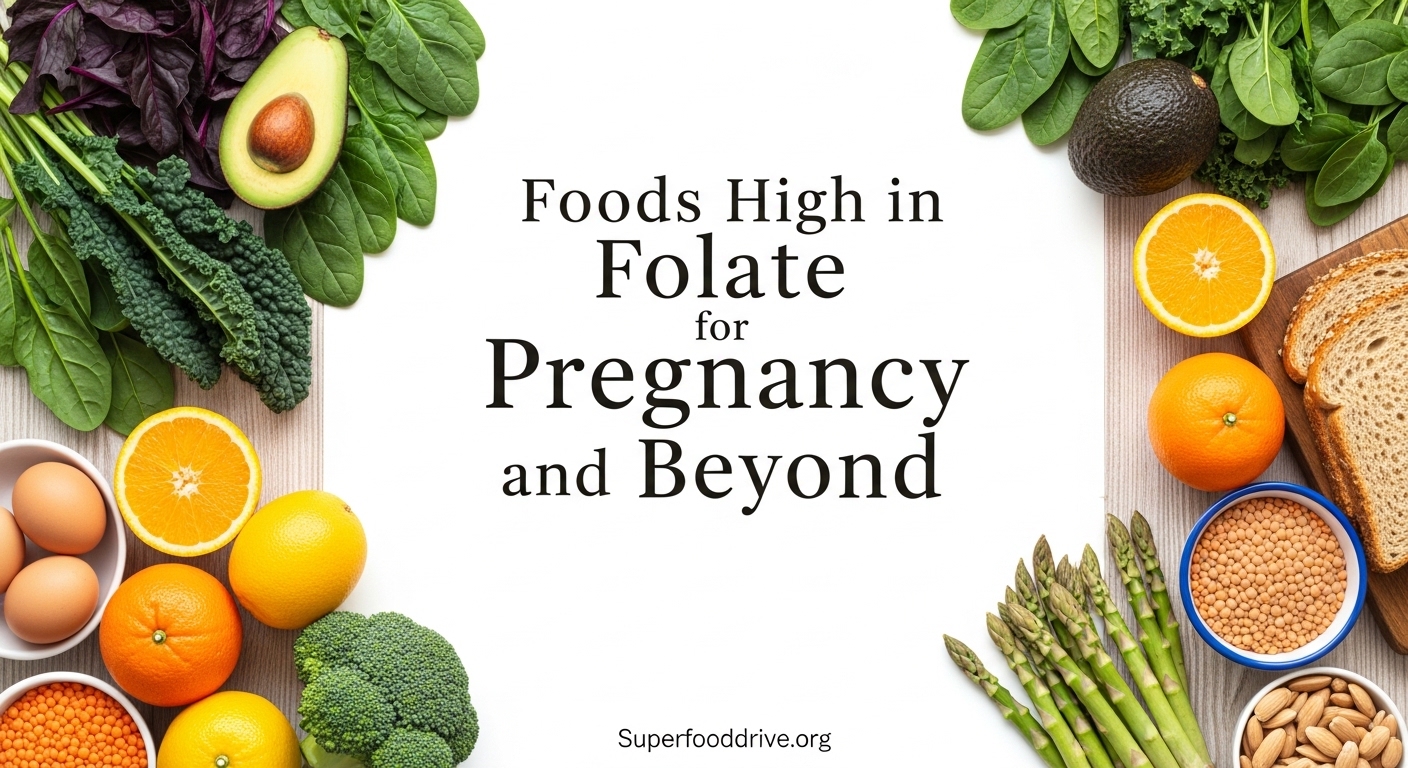
Getting enough folate is one of the most important things you can do for a healthy pregnancy. Foods high in folate provide the vitamin B9 your body needs for DNA synthesis, cell division, and preventing serious birth defects like neural tube defects. Whether you are planning to conceive, currently pregnant, or simply want to optimize your nutrition, this guide covers everything you need to know about natural folate sources.
In this article, you will learn the difference between folate and folic acid, discover the top foods rich in folate with specific microgram amounts, understand daily recommendations for each life stage, and get practical tips for maximizing absorption. I will also address common concerns like MTHFR genetic variants and what to do if you did not take supplements early in pregnancy.
Here are five of the best foods high in folate to start incorporating today:
- Beef liver: 215 mcg per 3-ounce serving
- Spinach (cooked): 263 mcg per cup
- Lentils (cooked): 358 mcg per cup
- Asparagus: 268 mcg per cup
- Chickpeas (cooked): 282 mcg per cup
Table of Contents
What Is Folate and How Does It Differ From Folic Acid?
Folate is the natural form of vitamin B9 found in whole foods. It is water-soluble and essential for DNA synthesis, cell repair, and red blood cell formation. Your body absorbs folate from food sources and converts it into the active form called methylfolate.
Folic acid is the synthetic version of vitamin B9. Manufacturers add it to fortified foods like cereals, pasta, and bread. It is also the form found in most prenatal vitamins. Your body must convert folic acid into methylfolate before it can use it.
The key difference lies in bioavailability and metabolism. Natural folate from food comes with cofactors and nutrients that support absorption. Folic acid requires enzymatic conversion, and some people process it less efficiently due to genetic variants. Both forms ultimately provide vitamin B9, but natural folate sources offer additional nutritional benefits.
Why Folate Is Critical During Pregnancy
Folate plays a starring role in fetal development from the moment of conception. It supports cell division and DNA synthesis, which are happening at an incredible rate as your baby grows. The neural tube, which becomes the brain and spinal cord, forms within the first 28 days of pregnancy.
Adequate folate intake significantly reduces the risk of neural tube defects like spina bifida and anencephaly. These serious birth defects occur when the neural tube fails to close properly. Research from the Centers for Disease Control and Prevention shows that consuming 400 micrograms of folate daily before conception and during early pregnancy can prevent up to 70 percent of neural tube defects.
But folate benefits extend beyond birth defect prevention. It supports placenta development, helps prevent anemia by supporting red blood cell production, and may reduce the risk of other complications like preterm birth and low birth weight. Your folate needs continue throughout pregnancy and into breastfeeding.
Foods High in Folate: The Complete List
Here are the top foods rich in folate organized by category. I have included specific microgram amounts per serving so you can plan your meals strategically.
Leafy Greens
Leafy greens are among the most concentrated natural folate sources available. They are also packed with iron, fiber, and other nutrients that support pregnancy.
Spinach (cooked): 263 mcg per cup. Cooking spinach actually concentrates the folate by reducing volume while preserving nutrients. Add it to omelets, smoothies, or saute it as a side dish.
Romaine lettuce (raw): 64 mcg per cup. While lower than spinach, romaine offers folate in a raw form with high water content. Perfect for salads and sandwiches.
Turnip greens (cooked): 170 mcg per cup. These often-overlooked greens pack serious folate power. Saute them with garlic and olive oil for a nutrient-dense side.
Legumes and Pulses
Legumes deliver some of the highest folate concentrations of any food group. They are also excellent sources of plant-based protein and fiber.
Lentils (cooked): 358 mcg per cup. These tiny powerhouses top the list for folate content. Red, green, or brown varieties all deliver similar amounts. Try them in soups, curries, or salads.
Chickpeas (cooked): 282 mcg per cup. Also known as garbanzo beans, chickpeas are incredibly versatile. Use them in hummus, roast them for snacking, or add to grain bowls.
Black beans (cooked): 256 mcg per cup. A staple in many cuisines, black beans work beautifully in tacos, soups, and salads. One cup delivers over half your daily pregnancy needs.
Pinto beans (cooked): 294 mcg per cup. These mild-flavored beans mash easily for burritos or work whole in chili and soups.
Cruciferous Vegetables
This family of vegetables offers folate alongside cancer-fighting compounds and fiber.
Asparagus: 268 mcg per cup. Just four spears provide about 22 percent of your daily folate needs. Asparagus also contains glutathione, a powerful antioxidant. Roast, grill, or steam it lightly to preserve nutrients.
Brussels sprouts (cooked): 157 mcg per cup. These mini cabbages have made a comeback. Roasting brings out their sweetness while preserving folate content.
Broccoli (cooked): 168 mcg per cup. A pregnancy nutrition staple, broccoli offers folate plus vitamin C, which enhances iron absorption. Steam or lightly saute for best nutrient retention.
Citrus Fruits and Tropical Options
Fruits provide folate in a sweet, hydrating package. Citrus fruits are particularly valuable because their vitamin C content helps your body absorb folate more effectively.
Oranges: 55 mcg per medium fruit. Fresh orange juice offers similar amounts, but whole fruit provides fiber that helps regulate blood sugar. One orange contains about 14 percent of your daily folate needs.
Papaya: 53 mcg per cup cubed. This tropical fruit is rich in folate and digestive enzymes. Make sure it is fully ripe if you are pregnant, as unripe papaya contains compounds that may cause uterine contractions.
Bananas: 24 mcg per medium fruit. While not as high as other sources, bananas offer convenience and potassium alongside folate. They make an easy snack or smoothie base.
Grapefruit: 30 mcg per half fruit. Check with your healthcare provider before consuming grapefruit, as it can interact with certain medications.
Other Vegetables
Beets (cooked): 136 mcg per cup. These colorful root vegetables contain betaine alongside folate. They work well roasted, pickled, or grated raw into salads.
Avocado: 163 mcg per cup sliced. Creamy and satisfying, avocados offer healthy fats that help your body absorb fat-soluble vitamins. Spread on toast, add to salads, or blend into smoothies.
Okra (cooked): 88 mcg per cup. A Southern favorite, okra provides folate plus fiber. It works well in gumbo, roasted, or pickled.
Protein Sources
Beef liver: 215 mcg per 3-ounce serving. Liver is incredibly nutrient-dense but should be consumed in moderation during pregnancy due to its high vitamin A content. Limit to small portions occasionally.
Eggs: 22 mcg per large egg. While not exceptionally high in folate, eggs are a pregnancy superfood for other reasons. They provide choline, protein, and healthy fats. Eat the yolk, where most nutrients concentrate.
Chicken liver: 254 mcg per 3-ounce serving. Similar to beef liver but with less vitamin A. Still consume in moderation during pregnancy.
Nuts, Seeds, and Grains
Sunflower seeds: 104 mcg per quarter-cup. These make an easy snack or salad topping. Choose unsalted varieties during pregnancy.
Peanuts: 88 mcg per quarter-cup. Technically legumes but often grouped with nuts, peanuts offer folate plus protein and healthy fats.
Wheat germ: 78 mcg per quarter-cup. Sprinkle this nutrient-dense part of the wheat kernel over yogurt, oatmeal, or smoothies.
Quinoa (cooked): 78 mcg per cup. This complete protein grain works as a base for grain bowls or breakfast porridge.
Fortified Foods
Fortified foods contain added folic acid, not natural folate. They can help you meet daily needs, especially if food aversions limit your options.
Breakfast cereals: 100-400 mcg per serving depending on brand. Check labels, as amounts vary significantly.
Enriched bread and pasta: 60-140 mcg per serving. The enrichment process adds folic acid back to refined grains.
Orange juice (fortified): 110 mcg per cup. Some brands add folic acid to their juice. Check the label to confirm.
Daily Folate Recommendations by Life Stage
Your folate needs change depending on your life stage and physiological status. Here are the current recommendations from the National Institutes of Health.
Adults (non-pregnant): 400 mcg daily. This amount supports general health, DNA synthesis, and red blood cell formation.
Pregnancy: 600 mcg daily. Needs increase to support rapid cell division and fetal development. This higher amount should begin before conception if possible.
Breastfeeding: 500 mcg daily. Your body continues needing elevated folate to produce nutritious breast milk and support your own recovery.
Pre-conception: 400-600 mcg daily starting at least one month before trying to conceive. The neural tube forms before many women realize they are pregnant.
Maximizing Folate Absorption: Cooking and Storage Tips
How you prepare and store folate-rich foods significantly impacts their nutrient content. Folate is water-soluble and sensitive to heat, light, and oxidation.
Steam instead of boiling: Steaming preserves up to 90 percent of folate content compared to 50-60 percent retention with boiling. When you boil vegetables, the folate leaches into the cooking water.
Cook with minimal water: If you must boil, use the smallest amount of water possible and consume any cooking liquid in soups or sauces.
Eat some vegetables raw: Raw vegetables retain 100 percent of their folate. Include salads, smoothies, and crudites in your rotation.
Store properly: Folate degrades with prolonged storage. Use fresh vegetables within a few days of purchase. Frozen vegetables often retain more folate than fresh vegetables that have been stored for extended periods.
Pair with vitamin C: Consuming folate-rich foods alongside vitamin C sources enhances absorption. Add lemon juice to leafy greens or pair lentils with tomatoes.
MTHFR Gene Variants and Folate Metabolism
Some people have genetic variants in the MTHFR gene that affect how efficiently they process folic acid. Up to 40 percent of the population carries at least one variant of this gene.
If you have an MTHFR variant, your body may struggle to convert synthetic folic acid into the active methylfolate form. This does not mean you cannot have a healthy pregnancy, but it may influence your nutritional strategy.
Focus on natural folate from whole foods, which enters your metabolic pathway at a different point than folic acid. Foods high in folate provide the vitamin in forms your body can use more readily. Talk to your healthcare provider about testing if you have concerns, especially if you have a family history of neural tube defects or recurrent pregnancy loss.
Some providers recommend methylfolate supplements for women with MTHFR variants. However, food-first approaches emphasizing natural folate sources benefit everyone regardless of genetics.
Folate Needs Beyond Pregnancy
Folate remains important after your baby arrives. During breastfeeding, you need 500 mcg daily to support milk production and your own recovery. The folate in your breast milk helps your baby continue developing properly.
Your folate needs stay elevated during the postpartum period to replenish stores depleted during pregnancy. Continue emphasizing foods high in folate even after delivery.
Long-term, adequate folate supports cardiovascular health by helping regulate homocysteine levels. It also supports cognitive function and mood regulation. Women of childbearing age should maintain good folate status even when not pregnant.
What If You Did Not Take Supplements Early in Pregnancy?
If you are newly pregnant and worried because you were not taking prenatal vitamins before conception, focus on what you can control now. Start taking a prenatal vitamin immediately and emphasize foods high in folate at every meal.
Neural tube development happens very early, often before women realize they are pregnant. However, neural tube defects are relatively rare, affecting about 3,000 pregnancies annually in the United States. Most babies develop normally even without perfect pre-conception nutrition.
Talk to your healthcare provider about your concerns. They can assess your individual risk factors and may recommend additional testing or higher-dose supplementation if appropriate.
Remember that food sources provide folate in bioavailable forms. A diet rich in leafy greens, legumes, and other folate-rich foods can make a significant difference even if you missed the ideal supplement window.
FAQ
Can I get enough folate from food alone during pregnancy?
Yes, many women can meet their folate needs through food alone by eating a diet rich in leafy greens, legumes, asparagus, and other folate sources. One cup of cooked lentils provides 358 mcg, which covers over half your daily pregnancy needs. However, most healthcare providers still recommend prenatal vitamins as insurance because needs are high and absorption varies.
What is the difference between folate and folic acid?
Folate is the natural form of vitamin B9 found in foods like spinach, lentils, and asparagus. Folic acid is the synthetic form added to fortified foods and supplements. Your body must convert folic acid into the active form (methylfolate) before using it. Natural folate from food comes with cofactors that support absorption.
How much folate do I need during pregnancy?
During pregnancy, you need 600 micrograms of folate daily. This is 50 percent higher than the standard adult recommendation of 400 mcg. While breastfeeding, needs remain elevated at 500 mcg daily. Ideally, women should consume adequate folate starting at least one month before conception.
What are the best folate foods for morning sickness?
If nausea makes eating difficult, try cold or room-temperature foods, which tend to smell less. Smoothies with spinach, banana, and orange juice provide folate without strong odors. Fortified cereals are often well-tolerated. Small, frequent meals of bland foods like bananas and avocado toast can help you meet needs without triggering nausea.
Is methylfolate better than folic acid for MTHFR variants?
Methylfolate is the active form of folate that your body can use immediately without conversion. People with MTHFR gene variants may process folic acid less efficiently. While both forms ultimately provide vitamin B9, those with MTHFR variants may benefit from methylfolate supplements or emphasizing natural folate from whole foods.
What happens if I do not get enough folate during pregnancy?
Inadequate folate increases the risk of neural tube defects like spina bifida and anencephaly. It can also contribute to anemia, preterm birth, and low birth weight. However, neural tube defects are relatively rare, and most women who eat a balanced diet and take prenatal vitamins have healthy pregnancies.
Conclusion: Building Your Folate-Rich Diet
Foods high in folate provide the foundation for healthy pregnancies and overall wellness. By incorporating lentils, leafy greens, asparagus, citrus fruits, and other folate-rich options into your daily meals, you can meet your nutritional needs naturally.
Remember that folate works best as part of an overall healthy diet. Pair folate-rich foods with vitamin C sources, cook gently to preserve nutrients, and start early if you are planning to conceive. Whether you are pregnant now, planning for the future, or simply optimizing your health, these foods high in folate belong on your plate.