
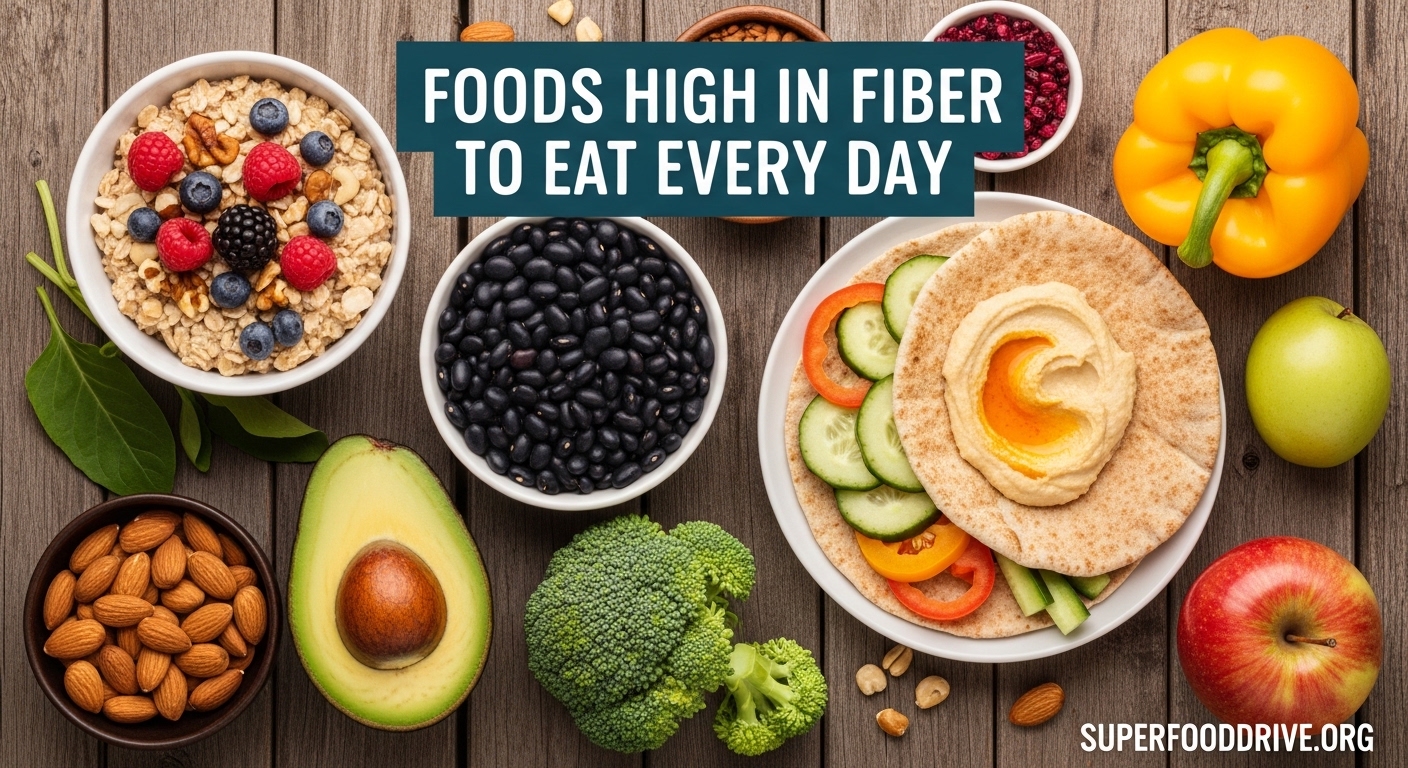
Most adults think they are eating enough fiber until they actually track it. I have seen this pattern repeatedly in nutrition communities: people discover they are only consuming 10 to 15 grams daily when their bodies need 25 to 30 grams minimum.
Our team spent months analyzing the highest fiber foods across every category, from budget-friendly staples to nutrient-dense superfoods. In this guide, you will learn exactly which foods deliver the most fiber per serving, how to incorporate them into your daily routine, and practical strategies to avoid the gas and bloating that often derails fiber goals.
Fiber is not just about staying regular. It supports heart health, helps manage blood sugar, promotes feelings of fullness, and can even assist with healthy weight management. The good news is that getting enough fiber does not require expensive supplements or complicated meal plans.
Table of Contents
Understanding Dietary Fiber and Its Health Benefits
Dietary fiber is a type of carbohydrate found in plant foods that your body cannot fully digest. Unlike other carbs that break down into sugar, fiber passes through your digestive system intact, providing a range of health benefits along the way.
Most health organizations recommend adults consume 25 to 30 grams of fiber daily. The USDA suggests 14 grams of fiber for every 1,000 calories consumed. Yet the average American only gets about 16 grams per day, leaving a significant gap that impacts long-term health.
Soluble vs Insoluble Fiber: What You Need to Know
Fiber comes in two main types, and both matter for your health. Soluble fiber dissolves in water and forms a gel-like substance in your digestive tract. This type helps lower cholesterol and stabilize blood sugar. You will find it in oats, beans, apples, and chia seeds.
Insoluble fiber does not dissolve in water. It adds bulk to stool and helps food move through your digestive system more quickly. This type promotes regularity and prevents constipation. Good sources include whole wheat, nuts, beans, and vegetables like cauliflower and potatoes.
Most plant foods contain both types of fiber, which is why eating a variety of fiber-rich foods delivers the best results. Your digestive system needs both forms working together.
The Health Benefits of Daily Fiber
Fiber supports your body in multiple ways beyond digestion. It helps lower LDL cholesterol by binding to cholesterol particles and removing them from your body. This directly supports heart health and reduces cardiovascular risk.
For blood sugar management, fiber slows the absorption of sugar into your bloodstream. This helps prevent spikes and crashes, making high-fiber foods especially valuable for people managing diabetes or prediabetes.
Weight management becomes easier with adequate fiber intake because fiber-rich foods are more filling. You feel satisfied longer after meals, which naturally reduces overall calorie consumption without hunger.
High-Fiber Legumes: The Fiber Powerhouses
Legumes represent the single most concentrated source of dietary fiber you can eat. These plant-based proteins deliver massive fiber amounts alongside vitamins, minerals, and protein, making them nutritional multitaskers.
Split peas lead the pack with 16.3 grams of fiber per cooked cup. Lentils follow closely at 15.6 grams per cup. Both cook relatively quickly compared to dried beans and work beautifully in soups, stews, and salads.
Black beans provide 15 grams per cup and shine in Mexican-inspired dishes, grain bowls, and as a burger base. Chickpeas offer 12.5 grams per cup and transform into hummus, roasted snacks, or curry additions. Kidney beans deliver 11.3 grams per cup and hold up well in chili and red beans and rice.
These fiber numbers make legumes your secret weapon. Just one cup of lentils provides over half your daily fiber goal. They are also among the most affordable protein sources, costing mere cents per serving when bought dried.
Vegetables High in Fiber
Vegetables provide substantial fiber with minimal calories, making them perfect for daily eating. Artichokes top the vegetable list with 10.3 grams per medium artichoke. They require some preparation but deliver impressive nutrition.
Green peas pack 8.8 grams of fiber per cooked cup and work in everything from pasta to fried rice. Broccoli offers 5.1 grams per cup cooked and provides cancer-fighting compounds alongside its fiber. Brussels sprouts deliver 4.1 grams per cup and have gained popularity for their versatility when roasted.
Sweet potatoes contribute 4.8 grams per medium potato with the skin on. Their natural sweetness makes them appealing even to picky eaters. Carrots provide 3.6 grams per cup and make perfect portable snacks or soup foundations.
Leafy greens like spinach and kale contain less fiber per cup but add up quickly when you eat larger servings. A big salad with several cups of mixed greens can contribute 3 to 4 grams of fiber before you even add toppings.
Fruits That Pack the Most Fiber
Berries dominate the fruit fiber category. Raspberries contain 8 grams per cup while blackberries offer 7.6 grams per cup. Both provide antioxidants alongside their fiber and taste great in smoothies, yogurt, or eaten fresh.
Pears deliver 5.5 grams per medium fruit when eaten with the skin. The skin contains most of the fiber, so peeling removes the best part. Apples provide 4.5 grams per medium fruit with skin and make convenient grab-and-go snacks.
Avocados stand out with 10 grams per cup of sliced fruit. Unlike most fruits, avocados are high in healthy fats, which further increases satiety. They work in savory dishes, smoothies, or simply on toast.
Bananas offer 3.1 grams per medium fruit and contain resistant starch when slightly green. This special starch acts like fiber, feeding beneficial gut bacteria. As bananas ripen, this starch converts to sugar, so eating them when slightly green maximizes benefits.
Whole Grains High in Fiber
Whole grains retain their fiber-rich bran and germ layers, unlike refined grains which strip these away. Chia seeds contain an astounding 34.4 grams of fiber per 100 grams, though you typically eat smaller portions. Just two tablespoons provide 10 grams of fiber.
Flaxseeds deliver 27.3 grams per 100 grams and provide omega-3 fatty acids alongside fiber. Ground flaxseed mixes easily into smoothies, oatmeal, or baked goods. Oats offer 10.1 grams per cup cooked and contain beta-glucan, a special fiber proven to lower cholesterol.
Quinoa provides 5.2 grams per cup cooked plus complete protein, making it ideal for plant-based meals. Barley contributes 6 grams per cup cooked and works well in soups and grain salads. Popcorn delivers 14.5 grams per 100 grams, though butter and oil additions change the nutrition profile.
When buying grain products, check labels carefully. Look for “whole” as the first ingredient and aim for at least 3 grams of fiber per serving for breads and cereals.
Nuts and Seeds for Daily Fiber
Nuts and seeds deliver concentrated fiber in small packages. Almonds lead with 13.3 grams per 100 grams. A one-ounce serving (about 23 almonds) provides 3.5 grams of fiber alongside healthy fats and protein.
Pistachios offer 10.3 grams per 100 grams and have the bonus of requiring shelling, which naturally slows eating. Sunflower seeds contain 8.6 grams per 100 grams and make excellent salad toppers. Pumpkin seeds provide 6 grams per 100 grams plus zinc and magnesium.
While nuts and seeds are calorie-dense, research shows they support weight management rather than hinder it. Their combination of fiber, protein, and healthy fats creates lasting satisfaction. A small handful makes an ideal afternoon snack that keeps you full until dinner.
Budget-Friendly High-Fiber Foods
Eating enough fiber does not require expensive superfoods. Some of the highest fiber foods cost pennies per serving. Dried beans and lentils rank as the most affordable fiber sources, often costing under two dollars per pound and providing multiple servings.
Oats remain one of the cheapest whole grains available. A large container provides weeks of high-fiber breakfasts for minimal cost. Carrots, cabbage, and bananas consistently rank among the least expensive produce items while delivering solid fiber content.
Popcorn kernels bought in bulk create an inexpensive, high-fiber snack. Skip the microwave bags with added oils and air-pop your own. Frozen vegetables often cost less than fresh and contain comparable fiber since they are frozen at peak ripeness.
When shopping on a budget, focus on these staples: oats for breakfast, beans and lentils for protein, carrots and cabbage for vegetables, and bananas for fruit. This combination covers your fiber bases without breaking the bank.
Simple High-Fiber Meal Ideas for Daily Success
Building high-fiber meals becomes easier when you know which combinations work. For breakfast, oatmeal topped with berries and chia seeds delivers 12 to 15 grams of fiber. Overnight oats prepared with rolled oats, flaxseed, and fruit provide similar benefits with grab-and-go convenience.
Lunch options include lentil soup with whole grain bread, quinoa salad with chickpeas and vegetables, or a bean and vegetable burrito on a whole wheat tortilla. Each of these combinations provides 10 to 15 grams of fiber in a single meal.
Dinner might feature black bean tacos with cabbage slaw, stir-fry with mixed vegetables over brown rice, or chili loaded with beans and served with cornbread. Adding a side salad boosts fiber further.
For snacks, pair apple slices with almond butter, enjoy carrot sticks with hummus, or blend a smoothie with berries, spinach, and ground flaxseed. These snacks add 3 to 5 grams of fiber each while satisfying hunger between meals.
Practical Tips for Increasing Fiber Intake
Adding fiber too quickly causes gas, bloating, and discomfort. This common mistake leads people to abandon their fiber goals. Instead, increase your intake gradually over two to three weeks, adding about 5 grams every few days.
Drink plenty of water as you increase fiber. Fiber absorbs water in your digestive tract, so inadequate hydration can cause constipation instead of preventing it. Aim for at least 8 glasses daily, more if you are active.
Read nutrition labels to identify high-fiber foods. Look for products with at least 5 grams of fiber per serving. Check bread, pasta, and cereal labels specifically, as these are common places where refined grains sneak in.
Choose whole grains over refined whenever possible. Swap white rice for brown, regular pasta for whole wheat, and white bread for whole grain versions. These simple switches add fiber without requiring major diet changes.
Add fruits and vegetables to every meal. Include berries in breakfast, salad with lunch, and an extra vegetable side at dinner. These additions boost fiber while providing vitamins, minerals, and antioxidants.
Fiber and Your Health: Heart, Digestion, and Blood Pressure
Fiber plays a direct role in heart health through cholesterol management. Soluble fiber binds to cholesterol in your digestive system and carries it out before it can enter your bloodstream. Studies show that every 7 grams of daily fiber reduces stroke risk by 7 percent.
The connection between fiber and blood pressure receives less attention but matters significantly. Research published in the Journal of Hypertension found that increased fiber intake correlates with lower blood pressure readings. The mechanism involves improved blood vessel function and reduced inflammation.
Digestive health depends on adequate fiber. Insoluble fiber adds bulk to stool and speeds transit time, preventing constipation. Soluble fiber feeds beneficial gut bacteria, which produce short-chain fatty acids that nourish colon cells and support immune function.
For blood sugar management, fiber creates a physical barrier that slows carbohydrate absorption. This prevents the spikes and crashes that challenge people with diabetes and insulin resistance. High-fiber meals produce more stable energy levels throughout the day.
Frequently Asked Questions About Fiber
What has the most fiber to eat daily?
Split peas contain the most fiber at 16.3 grams per cooked cup, followed closely by lentils at 15.6 grams and black beans at 15 grams. Chia seeds provide 34.4 grams per 100 grams, making them the most concentrated source, though typical servings are smaller. For practical daily eating, legumes offer the highest fiber per serving.
Does fiber help with erectile dysfunction?
Research suggests fiber indirectly supports erectile function through cardiovascular health. High-fiber diets improve blood flow by lowering cholesterol and blood pressure. Since erectile function depends on healthy blood circulation, the heart benefits of fiber may translate to improved vascular function throughout the body including the reproductive system.
Is a high-fiber diet good for high blood pressure?
Yes, studies show high-fiber diets help lower blood pressure. Research indicates that increased fiber intake correlates with reduced systolic and diastolic pressure readings. Fiber improves blood vessel function and reduces inflammation. The DASH diet, specifically designed to lower blood pressure, emphasizes high-fiber foods including fruits, vegetables, and whole grains.
What drink is rich in fiber?
Smoothies made with whole fruits and vegetables provide the most fiber among drinks. Blend berries, spinach, chia seeds, and flaxseed for a fiber-rich beverage. Prune juice contains natural fiber and sorbitol that aid digestion. Some fiber-fortified beverages exist, but whole food smoothies deliver superior nutrition with their fiber intact.
How much fiber should I eat per day?
Adults should aim for 25 to 30 grams of fiber daily according to the American Heart Association. The USDA recommends 14 grams of fiber per 1,000 calories consumed. Most Americans only consume about 16 grams daily, falling short of recommendations. Gradually increase your intake to avoid digestive discomfort.
What foods help with constipation?
Prunes, apples, pears, and berries provide natural fiber and sorbitol that relieve constipation. Legumes, whole grains, and vegetables add bulk to stool. Chia seeds and flaxseeds absorb water and soften stool. Drink plenty of water alongside these foods for best results.
Your Daily Fiber Action Plan
Getting enough fiber every day does not require perfection or expensive shopping. Start by identifying two or three high-fiber foods you already enjoy and commit to eating them daily. For many people, this means oatmeal at breakfast, beans at lunch, and an apple for snack.
Gradually add new fiber sources over the coming weeks. Your digestive system adapts with time, and foods that initially cause gas become comfortable regulars. Drink water consistently and pay attention to how different foods make you feel.
The fiber gap affects most Americans, but the solution is simple and delicious. With legumes, vegetables, fruits, whole grains, nuts, and seeds in your regular rotation, you will hit your 25 to 30 gram target while enjoying meals that satisfy and sustain you throughout the day.