
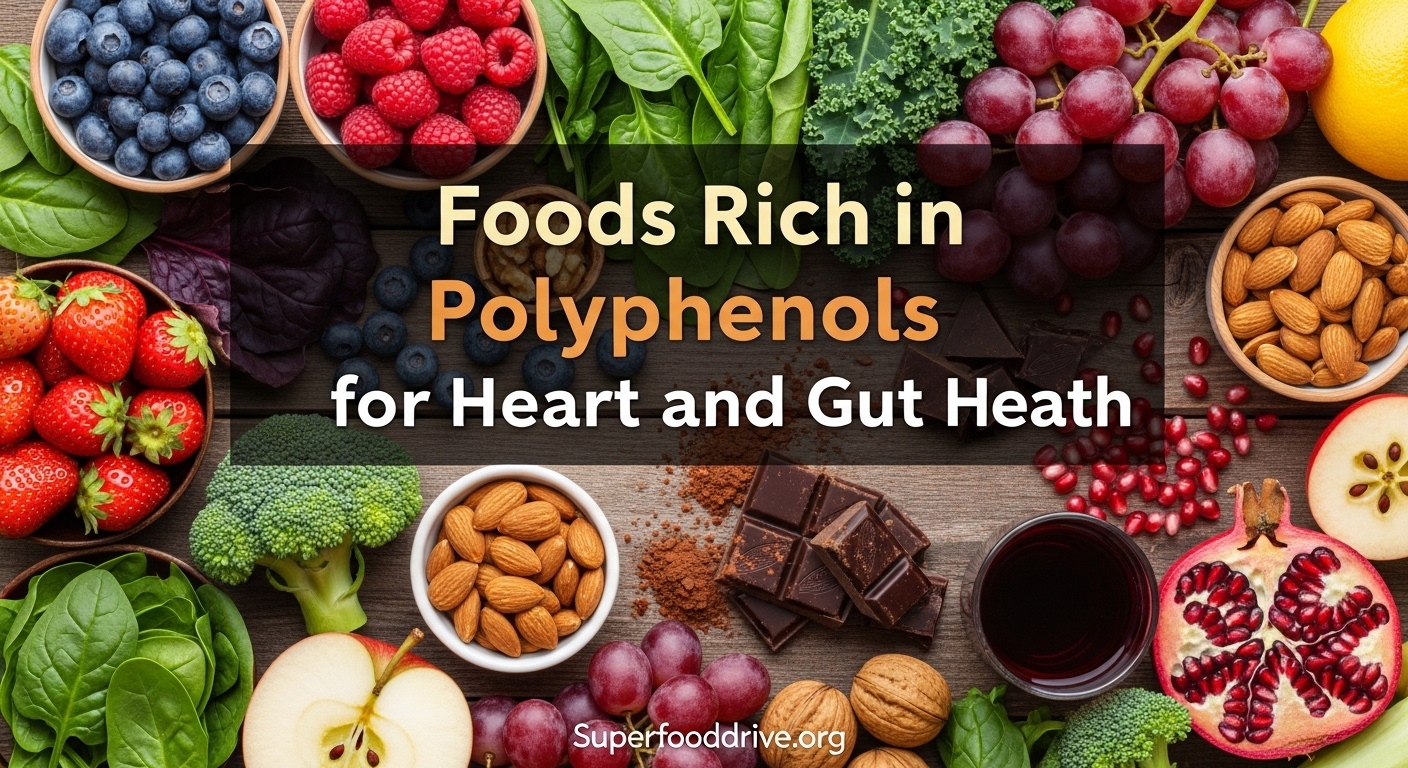
Polyphenols are the unsung heroes of plant-based nutrition. I have spent years researching how these powerful compounds support heart and gut health, and the evidence keeps getting stronger. This guide covers everything you need to know about foods rich in polyphenols for heart and gut health, backed by the latest research and real-world application.
Whether you are looking to reduce inflammation, support your cardiovascular system, or nurture your gut microbiome, understanding polyphenol-rich foods is essential. Let us dive into the science and practical steps you can take starting today.
Table of Contents
What Are Polyphenols?
Polyphenols are naturally occurring compounds found in plants that act as antioxidants. Scientists have identified over 8,000 different types of polyphenols, making them one of the most abundant classes of phytonutrients in the human diet.
These micronutrients protect plants from environmental stressors like UV radiation and pathogens. When we consume polyphenol-rich foods, we inherit these protective benefits. Think of them as nature’s defense system that your body can borrow.
The Four Main Types of Polyphenols
Understanding the different classes helps you diversify your intake. Each type offers unique benefits:
Flavonoids make up the largest group, representing about 60 percent of all polyphenols. They include subclasses like flavonols (found in onions and kale), flavanols (in tea and cocoa), anthocyanins (in berries), and isoflavones (in soy).
Phenolic acids account for roughly 30 percent of dietary polyphenols. You will find these in coffee, whole grains, and fruits like blueberries and kiwis.
Polyphenolic amides include capsaicinoids from chili peppers and avenanthramides from oats. These contribute to the anti-inflammatory effects of these foods.
Other polyphenols include resveratrol from grapes and red wine, ellagic acid from berries and nuts, and lignans from flax seeds and sesame seeds.
How Polyphenols Protect Your Heart
Research published in 2026 continues to strengthen the link between polyphenol intake and cardiovascular health. A landmark 2025 BMC Medicine study revealed something remarkable: for every 10-point increase in your polyphenol-rich dietary score, your risk of heart disease drops by 8.5 percent.
That is not a small number. Let us break down exactly how these compounds work to protect your cardiovascular system.
Blood Pressure Regulation
Polyphenols help relax blood vessels through a process called vasodilation. Compounds like flavanols in cocoa and catechins in green tea stimulate nitric oxide production. This molecule signals your blood vessel walls to expand, reducing pressure throughout your circulatory system.
Clinical trials consistently show that regular consumption of polyphenol-rich foods can lower systolic blood pressure by 2 to 8 mmHg. While that might sound modest, it translates to significant risk reduction at the population level.
Cholesterol Management
Polyphenols influence cholesterol in multiple ways. They reduce LDL oxidation, which is the process that makes cholesterol dangerous. Oxidized LDL sticks to artery walls and triggers inflammation. By preventing this oxidation, polyphenols keep your arteries clearer.
Studies on olive oil consumption show that hydroxytyrosol and other polyphenols can increase HDL cholesterol while improving its function. Better HDL means more efficient removal of excess cholesterol from your bloodstream.
Reduced Inflammation
Chronic inflammation is the root of most heart disease. Polyphenols suppress inflammatory markers like C-reactive protein and interleukin-6. They inhibit enzymes that produce inflammatory compounds and neutralize free radicals before they can damage tissues.
The Gut Health Connection
Here is where things get really interesting. Your gut microbiome and polyphenols have a mutually beneficial relationship that scientists are only beginning to fully understand.
Feeding Your Good Bacteria
Only about 5 to 10 percent of dietary polyphenols get absorbed in your small intestine. The rest travel to your colon, where they become food for beneficial bacteria. This is prebiotic action at its finest.
When gut bacteria metabolize polyphenols, they produce smaller compounds that your body can absorb. These metabolites often have even stronger anti-inflammatory effects than the original polyphenols. Your gut essentially transforms these plant compounds into more potent health boosters.
Bacterial Balance
Polyphenols selectively feed beneficial strains like Bifidobacteria and Lactobacilli while inhibiting pathogenic bacteria. This helps maintain the delicate balance that defines a healthy microbiome.
Research shows that regular polyphenol consumption increases microbial diversity, which is a key marker of gut health. Greater diversity means better resilience against digestive issues and improved immune function.
The Gut-Heart Axis
Your gut and heart communicate constantly through what scientists call the gut-heart axis. Beneficial gut bacteria produce short-chain fatty acids from polyphenol fermentation. These compounds enter your bloodstream and directly benefit cardiovascular function by reducing inflammation and improving metabolic health.
Foods Rich in Polyphenols for Heart and Gut Health
Now for the practical part. Here are the top polyphenol powerhouses you should incorporate into your diet, with approximate amounts per typical serving.
1. Cloves and Dried Herbs
Dried herbs and spices are polyphenol champions by weight. Cloves lead the pack with over 15,000 mg per 100 grams. While you will not eat 100 grams of cloves, even small amounts contribute meaningfully.
Peppermint, star anise, and dried oregano each contain 5,000 to 10,000 mg per 100 grams. I add dried oregano to nearly every savory dish. A teaspoon adds approximately 50 mg of polyphenols along with tremendous flavor.
2. Cocoa and Dark Chocolate
Cocoa powder contains roughly 3,500 mg of polyphenols per 100 grams. A 20-gram serving of 70 percent dark chocolate delivers about 200 mg of flavanols.
Choose chocolate with at least 70 percent cocoa content. The higher the percentage, the more polyphenols and the less sugar. Raw cacao powder is even more concentrated than processed cocoa.
3. Berries
Blueberries contain about 500 mg of polyphenols per 100 grams, primarily as anthocyanins. Blackberries offer even more at approximately 600 mg per 100 grams.
Strawberries, raspberries, and cranberries all provide significant amounts. Frozen berries retain most of their polyphenol content, making them accessible year-round. I keep a bag of mixed berries in my freezer for smoothies.
4. Extra Virgin Olive Oil
Quality extra virgin olive oil contains 100 to 500 mg of polyphenols per 100 ml, depending on the variety and harvest time. Early harvest oils typically have higher concentrations.
The key polyphenols here are hydroxytyrosol and tyrosol. These compounds are so well-studied for heart health that the European Food Safety Authority approved a health claim for olive oil containing at least 5 mg of hydroxytyrosol per 20 grams.
5. Nuts
Walnuts lead the nut category with approximately 600 mg of polyphenols per 100 grams. Pecans follow closely with about 500 mg. Almonds, hazelnuts, and pistachios all provide 200 to 400 mg per 100 grams.
The polyphenols in nuts work synergistically with their healthy fats. This combination maximizes absorption and cardiovascular benefit. A handful of walnuts daily is one of the simplest heart-healthy habits you can adopt.
6. Coffee and Tea
Coffee is surprisingly rich in chlorogenic acids, providing 100 to 300 mg of polyphenols per cup depending on brewing method. Tea offers catechins in green varieties and theaflavins in black varieties, ranging from 50 to 200 mg per cup.
Both beverages have been linked to reduced heart disease risk in large population studies. The key is moderation and avoiding excessive sugar or cream that can negate benefits.
7. Red Wine
Red wine contains resveratrol and proanthocyanidins, delivering approximately 150 to 300 mg of polyphenols per 150 ml glass. The grape skins used in red wine production are the source.
If you do not drink alcohol, grape juice and whole grapes provide similar compounds without the ethanol. Purple and red grapes contain significantly more polyphenols than green varieties.
8. Colorful Vegetables
Artichokes top the vegetable list with approximately 300 mg per 100 grams. Red onions, spinach, and broccoli provide 100 to 200 mg per 100 grams.
The rule is simple: deeper colors usually mean more polyphenols. Purple cabbage, red lettuce, and orange carrots outperform their paler counterparts. Eat the rainbow applies here literally.
9. Whole Grains
Whole grain flour, oats, and rye contain significant polyphenol levels. Oats specifically provide avenanthramides, unique polyphenolic amides with anti-inflammatory properties.
Refined grains lose most of their polyphenol content during processing. Switching from white to whole grain bread can triple your polyphenol intake from grain sources.
10. Legumes
Black beans, soybeans, and lentils contain 100 to 300 mg of polyphenols per 100 grams. Soy isoflavones have been extensively studied for heart and hormonal health.
Beans offer the dual benefit of polyphenols and fiber. This combination feeds your gut bacteria exceptionally well, producing those beneficial short-chain fatty acids we discussed.
How Much Polyphenols Should You Eat Daily?
Based on current research, aim for at least 650 mg of polyphenols daily for heart health benefits. The 2025 BMC Medicine study found this threshold was associated with significant cardiovascular protection.
Here is what 650 mg might look like in practice: one cup of blueberries (300 mg), a tablespoon of extra virgin olive oil (30 mg), a square of dark chocolate (100 mg), and two cups of green tea (200 mg). That is entirely achievable within a normal day.
Higher intakes up to 1,000 mg or more may provide additional benefits. The Mediterranean diet, known for heart health, typically delivers 800 to 1,200 mg of polyphenols daily through its emphasis on olive oil, nuts, vegetables, and wine.
Tips to Maximize Polyphenol Benefits
Getting polyphenols into your diet is only half the battle. Here is how to get the most from these compounds.
Choose fresh over processed. Processing destroys polyphenols. Fresh berries beat jams. Raw nuts beat roasted ones with added oils. Whole fruits beat juices.
Watch your cooking methods. High heat and long cooking times degrade polyphenols. Steam vegetables instead of boiling them. Add olive oil after cooking when possible. Keep cooking times short.
Combine for absorption. Polyphenols are fat-soluble. Eating berries with yogurt, vegetables with olive oil, or dark chocolate with nuts enhances absorption significantly.
Store properly. Light, heat, and oxygen degrade polyphenols. Keep olive oil in dark bottles away from heat. Store berries in the freezer if you will not use them quickly. Buy coffee beans whole and grind fresh.
Frequently Asked Questions
What food has the highest level of polyphenols?
Cloves contain the highest concentration of polyphenols at over 15,000 mg per 100 grams. Among commonly consumed foods, extra virgin olive oil, dark chocolate with 70 percent cocoa or higher, and berries like blackberries and blueberries rank highest. Dried herbs and spices generally contain more polyphenols by weight than fresh produce.
What drink is highest in polyphenols?
Coffee and green tea are the highest polyphenol beverages most people consume regularly. Coffee provides 100 to 300 mg of chlorogenic acids per cup. Green tea delivers 150 to 200 mg of catechins per cup. Red wine contains significant polyphenols at 150 to 300 mg per glass, though non-alcoholic alternatives like grape juice offer similar benefits.
How do polyphenols help the heart?
Polyphenols protect the heart through multiple mechanisms: they reduce blood pressure by improving blood vessel function, prevent LDL cholesterol oxidation, lower inflammation markers, and improve overall cholesterol profiles. A 2025 study showed each 10-point increase in polyphenol intake reduces heart disease risk by 8.5 percent.
How do polyphenols affect gut health?
Polyphenols act as prebiotics, feeding beneficial gut bacteria like Bifidobacteria and Lactobacilli. Only 5 to 10 percent of polyphenols are absorbed in the small intestine; the rest ferment in the colon, producing anti-inflammatory compounds. This process increases microbial diversity and strengthens the gut barrier.
How much polyphenols should you eat daily?
Aim for at least 650 mg of polyphenols daily for heart health benefits. This can be achieved through a varied diet including berries, olive oil, nuts, tea, and vegetables. The Mediterranean diet typically provides 800 to 1,200 mg daily. There is no established upper limit, as polyphenols from whole foods are safe and beneficial.
Are polyphenol supplements as effective as food sources?
Whole food sources of polyphenols are generally preferred over supplements. Foods provide a complex mixture of polyphenols that work synergistically, plus fiber and other nutrients. Additionally, supplements often contain isolated compounds at doses much higher than found in nature, and research on their long-term safety is limited.
Conclusion
Foods rich in polyphenols for heart and gut health are some of the most powerful tools available for preventive wellness. The evidence is clear: regular consumption of polyphenol-rich foods reduces heart disease risk, supports healthy blood pressure, nurtures beneficial gut bacteria, and fights chronic inflammation.
Start small. Add a handful of berries to your breakfast. Switch to extra virgin olive oil for salads. Enjoy a square of dark chocolate as an afternoon treat. These simple changes add up to meaningful health improvements over time.
Your heart and gut will thank you.