
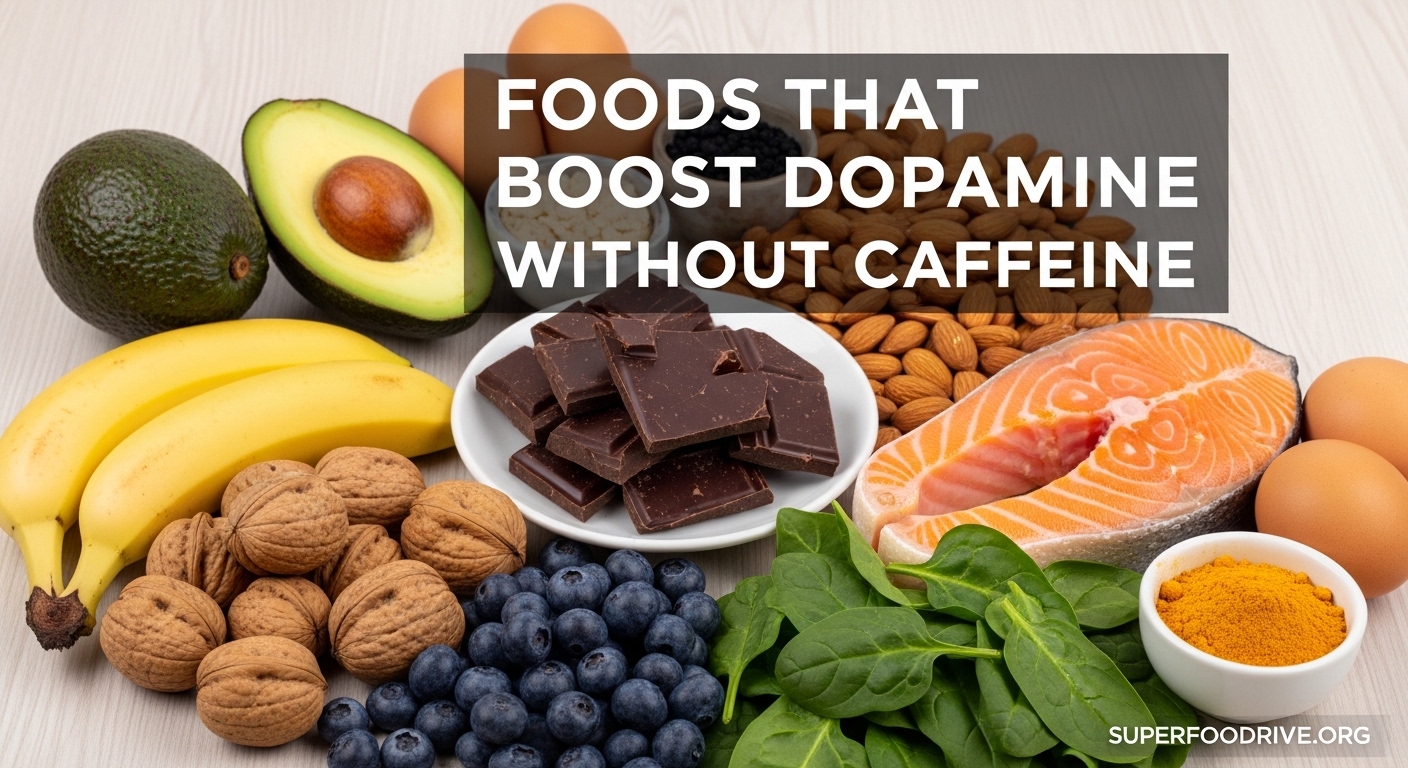
That afternoon slump hits hard. You reach for coffee, but your hands shake and your heart races. What if you could boost your mood, focus, and motivation without touching caffeine?
I’ve spent months researching natural ways to support healthy dopamine levels. The good news: certain foods provide the building blocks your brain needs to produce dopamine naturally. No jitters. No crashes. Just steady energy and improved motivation.
This guide covers everything you need to know about foods that boost dopamine without caffeine. You’ll learn which foods work best, how they help, and practical ways to incorporate them into your daily routine. Whether you’re caffeine-sensitive, trying to cut back, or simply want natural alternatives, these strategies work.
Table of Contents
Understanding Dopamine and Why It Matters
What Is Dopamine?
Dopamine is a chemical messenger your brain uses to communicate between nerve cells. Scientists call it a neurotransmitter. Think of it as your brain’s motivation and reward system.
When you accomplish something satisfying, dopamine releases. This creates feelings of pleasure and drives you to repeat the behavior. It’s why you feel good after finishing a task, eating something delicious, or achieving a goal.
But dopamine does more than make you feel good. It regulates movement, emotional responses, learning, memory, and attention. Without adequate dopamine, these functions suffer.
Signs of Low Dopamine
Many people experience low dopamine without realizing it. The symptoms creep up gradually and often get dismissed as stress or aging.
Common signs include persistent fatigue that doesn’t improve with rest. You might struggle to find motivation for activities you once enjoyed. Concentration becomes difficult. Brain fog settles in.
Other warning signs include mood changes like irritability or apathy. Some people experience sleep problems or reduced sex drive. Physical symptoms can include tremors, muscle stiffness, or difficulty with coordination.
Low dopamine doesn’t necessarily mean you have a disorder. Diet, sleep, stress, and lifestyle all affect your levels. The foods and habits in this guide address these root causes naturally.
How Foods Boost Dopamine
Your brain can’t make dopamine from thin air. It needs specific building blocks called precursor amino acids. The most important one is tyrosine.
Tyrosine is an amino acid found in protein-rich foods. Your body converts tyrosine into L-dopa, which then becomes dopamine. Another amino acid called phenylalanine can also convert to tyrosine, providing an alternative pathway.
But making dopamine requires more than just tyrosine. Your body needs cofactors like vitamin B6, folate, iron, and magnesium. These nutrients act as helpers in the conversion process. Without them, even high tyrosine intake won’t fully support dopamine production.
This is why a varied, nutrient-dense diet works better than simply eating more protein. The foods in this guide provide both the precursors and the cofactors your brain needs.
Foods That Boost Dopamine Without Caffeine
These ten food categories provide the nutrients your brain needs to produce dopamine naturally. I’ve organized them by effectiveness and practicality for daily eating.
1. Eggs – The Complete Protein Powerhouse
Eggs top my list for good reason. They’re affordable, versatile, and packed with tyrosine. One large egg contains about 250 milligrams of tyrosine, making it one of the best sources per serving.
Eggs also provide choline, another brain-supporting nutrient. The yolk contains healthy fats that help your brain absorb fat-soluble vitamins. Plus, eggs contain vitamin B12 and selenium, both important for neurotransmitter production.
I recommend eating the whole egg rather than just whites. Most of the nutrients concentrate in the yolk. For maximum dopamine support, try having eggs for breakfast with some leafy greens on the side.
Preparation matters less than consistency. Scrambled, fried, poached, or hard-boiled all work. Just avoid burning or overcooking, as high heat damages some nutrients.
2. Fish and Seafood
Fish provides a double benefit for brain health. You get high-quality protein rich in tyrosine plus omega-3 fatty acids that support overall brain function.
Salmon ranks among the best choices. A 3-ounce serving delivers approximately 750 milligrams of tyrosine along with substantial omega-3s. Tuna, sardines, and mackerel offer similar benefits at lower price points.
Shellfish deserve special mention. Shrimp, crab, and lobster contain significant tyrosine plus zinc and vitamin B12. These nutrients work together to support dopamine synthesis and receptor function.
Aim for at least two servings of fish weekly. If fresh fish isn’t practical, canned options like wild-caught salmon or sardines work well. They’re shelf-stable, affordable, and just as nutritious.
3. Lean Meats and Poultry
Chicken and turkey provide excellent tyrosine sources with less saturated fat than red meat. A 4-ounce serving of turkey breast contains roughly 1,000 milligrams of tyrosine.
Beef and pork offer even higher tyrosine concentrations. However, limit these to a few times weekly. While they boost dopamine production, excessive red meat consumption carries other health considerations.
Grass-fed and pasture-raised options provide better nutrient profiles. They contain more omega-3s and higher levels of certain vitamins. If budget allows, these options offer superior value for brain health.
Preparation method affects nutrient retention. Grilling, baking, or slow-cooking preserves more tyrosine than deep frying. Pair meat with vegetables rather than heavy starches for balanced meals.
4. Dairy Products
Dairy offers convenience and versatility for dopamine support. Cheese, yogurt, and milk all contain substantial tyrosine along with complementary nutrients.
Hard cheeses like parmesan and cheddar pack the most tyrosine per ounce. Greek yogurt combines protein with probiotics, supporting both dopamine production and gut health. Cottage cheese provides casein protein, which digests slowly for sustained amino acid release.
Full-fat dairy often works better than skim versions. The fat helps your body absorb fat-soluble vitamins needed for neurotransmitter production. Plus, fat slows digestion, providing steadier nutrient release.
For those with lactose intolerance, aged cheeses and fermented dairy like kefir contain less lactose. Many people who can’t handle milk can still enjoy these options.
5. Nuts and Seeds
Nuts and seeds provide tyrosine plus magnesium, a crucial cofactor for dopamine synthesis. They make perfect snacks between meals to maintain steady neurotransmitter support.
Pumpkin seeds lead the pack for magnesium content. Just a quarter cup provides nearly half your daily requirement. They also contain zinc, iron, and healthy fats.
Almonds offer the best tyrosine content among nuts. Walnuts provide omega-3s that support brain cell membrane health. Sunflower seeds combine tyrosine with vitamin E and selenium.
Keep portions reasonable. Nuts are calorie-dense, and overeating can work against your goals. A small handful (about 1 ounce) makes an ideal serving size.
Raw or dry-roasted options beat candied or heavily salted varieties. Added sugars and excessive sodium counteract some benefits. Look for single-ingredient options without added oils.
6. Velvet Beans (Mucuna Pruriens)
Velvet beans deserve special attention because they contain L-dopa directly. Remember, L-dopa is the immediate precursor to dopamine. Most foods provide tyrosine, which must convert to L-dopa first. Velvet beans skip that step.
This makes them potentially the fastest-acting natural dopamine booster available. Some studies show velvet bean extract works similarly to synthetic L-dopa medications, though milder.
You won’t find fresh velvet beans at typical grocery stores. They’re available as supplements, powders, or from specialty Asian markets. Traditional preparations involve careful cooking to remove compounds that can cause nausea.
Start with small amounts if trying velvet beans. The direct L-dopa content means stronger effects than other foods. Some people experience mild digestive upset initially. Consult a healthcare provider before using, especially if you take medications or have existing health conditions.
7. Fruits That Support Dopamine
Fruits don’t contain as much tyrosine as animal proteins. However, they provide vitamins, antioxidants, and phytonutrients that support dopamine synthesis indirectly.
Bananas often get mentioned for dopamine, but this requires clarification. Bananas contain dopamine, but it’s in the peel and doesn’t cross into the brain. What bananas actually offer is tyrosine in the fruit itself, plus vitamin B6 and potassium.
Berries pack antioxidants that protect dopamine-producing neurons from oxidative stress. Blueberries, strawberries, and blackberries all work well. The polyphenols in berries may also support dopamine receptor function.
Apples contain quercetin, an antioxidant that may help prevent dopamine breakdown in the brain. Watermelon provides citrulline, which improves blood flow to the brain. Avocados (technically a fruit) offer tyrosine, healthy fats, and multiple brain-supporting vitamins.
8. Leafy Greens and Vegetables
Vegetables provide folate, vitamin B6, and magnesium. These cofactors help convert tyrosine into dopamine efficiently. Without adequate cofactors, the raw materials can’t become neurotransmitters.
Spinach tops the list for folate content. A cup of cooked spinach provides over half your daily folate needs. It also contains magnesium and iron, both essential for dopamine production.
Beets offer unique benefits. They contain betaine, which supports methylation processes involved in neurotransmitter synthesis. Beet greens (the leafy tops) provide even more nutrients than the roots.
Broccoli, cauliflower, and Brussels sprouts supply folate and vitamin C. The vitamin C helps your body absorb iron from plant sources. This matters especially if you eat less meat.
Aim for at least three servings of vegetables daily. Dark leafy greens should appear at least once. Raw and cooked both work, though cooking makes some nutrients more absorbable.
9. Fermented Foods and Probiotics
The gut-brain connection plays a major role in dopamine production. Your gut bacteria produce a significant portion of your body’s neurotransmitters, including dopamine.
Fermented foods support healthy gut bacteria populations. Kimchi, sauerkraut, kefir, yogurt, and kombucha all provide beneficial probiotics. These microorganisms help maintain the gut environment needed for neurotransmitter synthesis.
Some bacteria strains specifically produce dopamine or dopamine precursors. Lactobacillus and Bifidobacterium species show particular promise in research studies. Fermented dairy and vegetables contain these beneficial strains.
Beyond dopamine production, gut health affects how well you absorb nutrients from food. Poor gut health means less tyrosine and cofactors reach your brain. Supporting your gut amplifies the benefits of other dopamine-boosting foods.
Start slowly with fermented foods if you’re new to them. They can cause temporary digestive adjustment. A tablespoon of sauerkraut or a small glass of kefir daily builds tolerance gradually.
10. Dark Chocolate
Dark chocolate offers a legitimate mood boost beyond the simple pleasure of eating it. Cocoa contains phenylethylamine, a compound that stimulates dopamine release.
Theobromine, another cocoa compound, provides gentle energy without the jittery effects of caffeine. While chocolate does contain some caffeine, dark varieties (70%+ cacao) offer more theobromine than caffeine.
For dopamine benefits, choose chocolate with at least 70% cacao content. Higher percentages mean more cocoa compounds and less sugar. A one-ounce serving provides benefits without excessive calories.
Quality matters. Look for chocolate with cocoa solids as the first ingredient, not sugar. Single-origin and minimally processed options retain more beneficial compounds.
Timing makes a difference. A small piece of dark chocolate in the afternoon can provide a gentle energy lift. Pair it with nuts for sustained effects from the protein and healthy fats.
Lifestyle Strategies That Complement Your Diet
Food provides the building blocks, but lifestyle factors determine how effectively your brain uses them. These strategies multiply the benefits of your dietary changes.
Exercise and Movement
Physical activity increases dopamine receptor availability. Even a single workout session improves dopamine signaling for hours afterward. Regular exercise builds these benefits over time.
You don’t need intense workouts. Walking, yoga, swimming, or cycling all work. The key is consistency rather than intensity. Aim for 30 minutes of movement most days.
Timing exercise with your dopamine-supporting meals creates synergy. A walk after lunch helps your body utilize the nutrients you just consumed. Morning movement can set a positive tone for the entire day.
Find activities you enjoy. Forced exercise creates stress, which works against dopamine production. Dance, garden, hike, or play sports. Movement should feel rewarding, not punishing.
Quality Sleep
Sleep deprivation dramatically reduces dopamine receptor sensitivity. Even one night of poor sleep decreases dopamine signaling by up to 20%. Chronic sleep debt creates persistent low dopamine states.
Dopamine also helps regulate your sleep-wake cycle. Low levels disrupt circadian rhythms, creating a vicious cycle of poor sleep and reduced motivation.
Prioritize 7-9 hours of sleep nightly. Consistency matters more than perfection. Going to bed and waking at similar times daily supports both sleep quality and dopamine function.
Support sleep with your diet choices. Avoid large, protein-heavy meals right before bed. The digestion process can interfere with sleep. A light snack combining complex carbs with small protein works better if you’re hungry.
Music and Creative Activities
Listening to music you enjoy triggers dopamine release. The anticipation of your favorite parts creates pleasure even before they happen. This makes music a powerful, immediate mood booster.
Playing music offers even stronger benefits. Learning an instrument challenges your brain while providing ongoing dopamine rewards as you improve. Singing, even casually, activates brain regions involved in reward processing.
Creative activities beyond music also work. Drawing, writing, crafting, or any hobby where you create something provides natural dopamine hits. The sense of accomplishment drives continued engagement.
Rotate between different activities to prevent habituation. Your brain responds more strongly to novelty. Try new music genres, different art supplies, or fresh creative challenges.
Sunlight Exposure
Sunlight helps regulate dopamine production through multiple pathways. It stimulates vitamin D synthesis, which influences dopamine-related genes. Light also directly affects dopamine release in certain brain regions.
Morning sunlight proves especially valuable. It helps set your circadian rhythm, which affects dopamine cycles throughout the day. Just 10-15 minutes of morning light improves both mood and alertness.
Seasonal changes affect dopamine for many people. Reduced winter sunlight correlates with lower dopamine levels. This explains why some people experience mood changes during darker months.
When sunlight isn’t available, bright indoor lighting helps. Consider a light therapy device during winter or if you work indoors constantly. These devices mimic natural sunlight’s effects on brain chemistry.
Task Completion and Small Wins
Your brain releases dopamine when you complete tasks. This reward mechanism evolved to motivate productive behavior. You can use this biology strategically.
Break large projects into smaller, completable steps. Each finished step provides a dopamine boost. This maintains motivation through lengthy tasks that might otherwise feel overwhelming.
Make a daily to-do list with specific, achievable items. Checking them off creates satisfaction that builds momentum. Keep tasks realistic. Setting impossible goals creates frustration instead of reward.
Celebrate small wins actively. Take a moment to acknowledge completion before rushing to the next task. This reinforces the dopamine response and trains your brain to seek task completion.
Meditation and Mindfulness
Meditation might seem passive, but it actively changes dopamine function. Regular practitioners show improved dopamine receptor density and more efficient neurotransmitter use.
Start with just 5-10 minutes daily. Focus on your breath or use guided meditation apps. Consistency matters more than session length. Five minutes daily beats an hour once weekly.
Mindfulness during eating also helps. Pay attention to your dopamine-boosting foods. Notice flavors, textures, and satisfaction. This mindful approach enhances the natural reward response to nutritious eating.
Progressive muscle relaxation and gentle yoga offer similar benefits. These practices reduce stress hormones that interfere with dopamine function. Lower cortisol means better dopamine signaling.
Building Dopamine-Boosting Meals
Knowing which foods help is only half the battle. You need practical ways to combine them into actual meals. These ideas make it easy.
Breakfast Ideas
Start your day with protein and produce. Scrambled eggs with spinach and tomatoes provides tyrosine, folate, and antioxidants. Add a slice of whole grain toast for sustained energy.
Greek yogurt with berries and pumpkin seeds offers a no-cook option. The yogurt provides protein and probiotics. Berries add antioxidants. Seeds contribute magnesium and healthy fats.
Smoothies work well for busy mornings. Blend banana, spinach, almond butter, and Greek yogurt. Add a tablespoon of cocoa powder for extra dopamine support. This combination covers all the nutritional bases.
For savory preferences, try smoked salmon on whole grain bread with avocado. The salmon delivers omega-3s and tyrosine. Avocado provides healthy fats and additional protein.
Lunch and Dinner Combinations
Build meals around a protein source with plenty of vegetables. Grilled chicken over a large salad with mixed greens, beets, and pumpkin seeds covers multiple dopamine-supporting categories.
Fish dishes offer variety. Baked salmon with roasted broccoli and quinoa provides complete nutrition. Add a side of fermented vegetables for gut health benefits.
Stir-fries combine ingredients efficiently. Use lean beef or turkey with mixed vegetables over brown rice. Include leafy greens near the end of cooking to preserve nutrients.
Soups and stews allow batch cooking. Chicken vegetable soup with beans, greens, and tomatoes stores well. Make a large pot on weekends for easy weekday meals.
Smart Snacking
Strategic snacks prevent energy crashes between meals. They maintain steady nutrient availability for dopamine production throughout the day.
Keep hard-boiled eggs ready in your refrigerator. One egg with a small piece of fruit makes a perfect portable snack. The combination provides protein, vitamins, and natural sugars.
Nut and seed mixes offer convenience. Create your own with almonds, pumpkin seeds, and walnuts. Add a few dark chocolate chips for an extra boost. Portion into small containers to prevent overeating.
Veggie sticks with hummus combine vegetables with protein. The chickpeas in hummus provide folate and fiber. Raw vegetables add crunch and nutrients without excess calories.
Cottage cheese with berries works well for dairy-tolerant individuals. The casein protein digests slowly. Berries add flavor and antioxidants without much sugar.
Meal Timing Tips
When you eat matters almost as much as what you eat. Strategic timing maximizes dopamine support when you need it most.
Space protein intake throughout the day rather than concentrating it at dinner. Your body can only use so much tyrosine at once. Multiple moderate protein meals work better than one huge serving.
Include protein at breakfast. Many people eat carb-heavy morning meals, then wonder why they crash by 10 AM. Eggs, Greek yogurt, or a protein smoothie provide steady morning energy.
Avoid heavy meals when you need peak mental performance. Digestion diverts blood flow from your brain. Light lunches with moderate protein maintain afternoon focus better than heavy midday meals.
Consider a small protein-rich snack in the late afternoon. This bridges the gap between lunch and dinner, preventing the common 3 PM energy slump without caffeine.
Frequently Asked Questions
How to get dopamine without caffeine?
The most effective ways to boost dopamine without caffeine include eating tyrosine-rich proteins like eggs, fish, and poultry; consuming nuts and seeds for magnesium; adding fermented foods for gut health; exercising regularly; getting morning sunlight; listening to music you enjoy; completing small tasks for accomplishment; and practicing meditation. These strategies provide natural dopamine support without stimulant side effects.
What food gives instant dopamine?
Dark chocolate provides the fastest food-based dopamine boost due to phenylethylamine content. Velvet beans (Mucuna pruriens) work even faster as they contain natural L-dopa. However, for sustained benefits without crashes, combine quick options with protein-rich foods that provide steady tyrosine for ongoing dopamine production.
What are signs of dopamine deficiency?
Common signs include persistent fatigue despite adequate sleep, lack of motivation for previously enjoyed activities, difficulty concentrating, brain fog, mood changes like irritability or apathy, reduced sex drive, sleep problems, and physical symptoms such as tremors or muscle stiffness. These symptoms often develop gradually and may indicate low dopamine levels.
Do bananas actually increase dopamine?
Bananas support dopamine production but not in the way commonly claimed. While banana peels contain dopamine, it doesn’t cross the blood-brain barrier. The fruit itself provides tyrosine, vitamin B6, and potassium, which help your body produce dopamine naturally. They’re a good supporting food but not a primary dopamine source.
How long does it take for food to increase dopamine?
Initial effects from eating tyrosine-rich foods can occur within 1-2 hours as amino acids reach your brain. However, building consistent healthy dopamine levels through diet takes weeks of regular consumption. Lifestyle factors like sleep, exercise, and stress management significantly affect how quickly dietary changes improve dopamine function.
Key Takeaways
Foods that boost dopamine without caffeine offer a sustainable alternative to stimulant-dependent energy. By providing your brain with the building blocks it needs, you support natural neurotransmitter production rather than forcing artificial spikes.
Focus on tyrosine-rich proteins like eggs, fish, poultry, and dairy as your foundation. Add nuts, seeds, leafy greens, and fermented foods for cofactors and gut support. Include dark chocolate strategically for immediate mood lifts.
Remember that diet works best combined with lifestyle factors. Exercise, sleep, sunlight, and stress management all amplify the benefits of your food choices. Small changes across multiple areas create bigger improvements than perfect eating alone.
Start with one or two changes from this guide. Add eggs to your breakfast. Take a morning walk. Swap afternoon coffee for a protein-rich snack. Build habits gradually rather than attempting complete overnight transformation.
Your brain wants to feel good and function well. Give it the right materials, and it will reward you with steady motivation, improved focus, and genuine energy that lasts all day.