
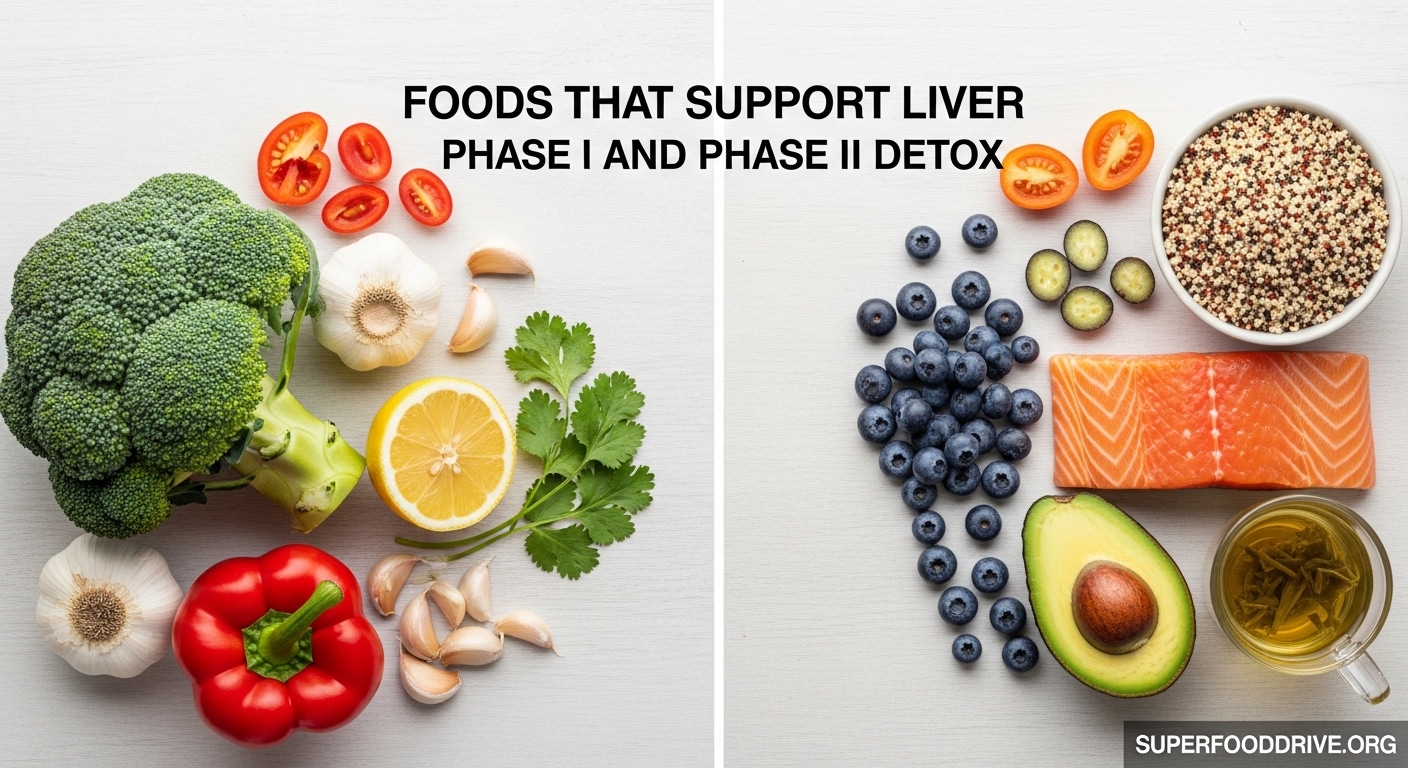
Your liver processes over 500 functions every single day. It filters blood, metabolizes nutrients, and neutralizes toxins before they can harm your body. I learned this firsthand when my own liver enzymes were elevated during a routine physical 2026. That scare sent me down a rabbit hole of research on how to support this vital organ naturally.
The liver uses a two-step process called biotransformation to handle toxins. Phase I converts fat-soluble compounds into intermediate metabolites. Phase II then conjugates these intermediates with water-soluble molecules so they can exit through urine or bile. Both phases need specific nutrients to function properly.
In this guide, I will share the exact foods that support liver detox through both Phase I and Phase II pathways. These are whole foods backed by science, not trendy cleanses or expensive supplements. You will learn which vegetables activate Phase I enzymes, which foods provide the sulfur compounds Phase II needs, and how to combine them for maximum benefit.
Table of Contents
What Is Liver Phase I and Phase II Detoxification
Phase I liver detoxification is the oxidation process where your liver uses cytochrome P450 enzymes to break down toxins, medications, hormones, and environmental chemicals. These enzymes convert fat-soluble substances into intermediate metabolites. The process generates free radicals as a byproduct, which is why Phase I needs antioxidant support.
Phase II liver detoxification is the conjugation phase where your liver attaches water-soluble molecules to the intermediate metabolites created in Phase I. This process uses six major pathways: glutathionation, sulfation, glucuronidation, methylation, acetylation, and amino acid conjugation. Each pathway requires specific nutrients to function.
The two phases must stay balanced. If Phase I runs too fast and Phase II cannot keep up, toxic intermediate compounds accumulate. This can cause symptoms like headaches, fatigue, and skin issues. Supporting both phases equally is the key to effective detoxification.
Top Foods for Phase I Liver Detoxification
Phase I foods activate cytochrome P450 enzymes and provide antioxidants to neutralize the free radicals produced during oxidation. These foods contain specific phytonutrients that stimulate the enzymatic machinery your liver needs.
Cruciferous Vegetables: The Phase I Champions
Broccoli, cauliflower, Brussels sprouts, kale, and cabbage contain glucosinolates that break down into indole-3-carbinol and sulforaphane. These compounds potently activate Phase I enzymes while also supporting Phase II pathways. I eat steamed broccoli with lemon at least four times per week.
Sulforaphane deserves special mention. This sulfur-containing compound found in broccoli sprouts can increase Phase I enzyme activity by up to 60 percent according to research. It also activates the Nrf2 pathway, which regulates antioxidant response elements throughout the body.
Green Tea and EGCG
Green tea contains epigallocatechin gallate (EGCG), a catechin that modulates Phase I enzyme activity. Studies show EGCG can inhibit certain cytochrome P450 enzymes that activate carcinogens while supporting healthy detoxification. Two to three cups of green tea daily provides meaningful support.
Matcha green tea offers the highest EGCG concentration because you consume the entire leaf. I switched from coffee to matcha in the mornings and noticed improved energy without the jitters. The L-theanine in green tea also supports calm focus.
Citrus Fruits and Limonene
Grapefruit, oranges, lemons, and limes contain limonene and other citrus bioflavonoids that stimulate Phase I enzymes. Limonene specifically supports the CYP1A1 and CYP1A2 enzymes involved in metabolizing environmental toxins. The white pith contains the highest concentrations.
Lemon water in the morning has become my daily ritual. The citric acid and vitamin C provide additional antioxidant support during the Phase I oxidation process. Just be aware that grapefruit can interact with certain medications by inhibiting specific cytochrome P450 enzymes.
Herbs and Spices That Activate Phase I
Dill, caraway seeds, and rosemary contain compounds that upregulate Phase I activity. Rosemary extract has shown particular promise for supporting the CYP enzymes involved in hormone metabolism. These herbs make excellent additions to roasted vegetables and proteins.
Top Foods for Phase II Liver Detoxification
Phase II foods provide the raw materials for conjugation reactions. These foods are typically rich in sulfur compounds, amino acids, and phytonutrients that attach to Phase I metabolites to make them water-soluble.
Sulfur-Rich Alliums
Garlic, onions, shallots, and leeks contain allyl sulfides and other organosulfur compounds that support glutathione production and Phase II sulfation pathways. Raw garlic contains the highest levels of active compounds. I crush garlic and let it sit for 10 minutes before cooking to maximize the allicin content.
Onions provide quercetin along with sulfur compounds. Red onions offer the highest quercetin concentration. These compounds support multiple Phase II pathways including glucuronidation and sulfation.
Glutathione Precursors
Glutathione is the master antioxidant and the primary compound used in glutathionation, the most important Phase II pathway. Your body makes glutathione from three amino acids: cysteine, glycine, and glutamic acid. Foods rich in these precursors support glutathione synthesis.
Whey protein from grass-fed sources provides cysteine for glutathione production. Avocados contain glutathione itself along with supporting nutrients. Asparagus is particularly rich in glutathione precursors. I blend spinach and avocado into my morning smoothies for this reason.
Brazil nuts provide selenium, a mineral essential for glutathione peroxidase activity. Just two Brazil nuts daily meet your selenium requirements. Do not overeat them as excessive selenium can be toxic.
Turmeric and Curcumin
Turmeric contains curcuminoids that support Phase II glutathionation pathways. Curcumin increases glutathione-S-transferase activity, the enzyme that conjugates toxins with glutathione. It also provides potent anti-inflammatory benefits.
Black pepper contains piperine, which increases curcumin absorption by 2000 percent. Always combine turmeric with black pepper and a fat source like olive oil or coconut milk. Golden milk with turmeric, black pepper, and coconut milk is my evening ritual.
Beets and Betalains
Beets contain betalains, pigments that support Phase II enzymes and provide antioxidant protection. Beetroot juice has been shown to increase Phase II enzyme activity and improve liver function markers. The nitrates in beets also support blood flow.
I roast beets with olive oil and balsamic vinegar weekly. Beet greens are also edible and contain even higher concentrations of nutrients than the roots. Do not discard them.
Leafy Greens and Chlorophyll
Spinach, Swiss chard, collard greens, and dandelion greens provide chlorophyll and magnesium that support Phase II methylation pathways. These foods also contain folate and B vitamins needed for proper detoxification function.
Dandelion greens deserve special mention. They have been used traditionally for liver support and contain compounds that stimulate bile production. Bitter greens in general trigger digestive secretions that support the elimination phase of detoxification.
Foods That Support Both Phase I and Phase II
Some foods provide nutrients that support both phases of liver detoxification. These dual-phase foods are particularly valuable because they help maintain the balance between Phase I and Phase II activity.
Berries and Anthocyanins
Blueberries, blackberries, raspberries, and cranberries contain anthocyanins and ellagic acid that support both phases while providing antioxidant protection. Blueberries specifically increase both Phase I and Phase II enzyme activity. Frozen berries retain most nutrients and are more affordable year-round.
Flax Seeds and Lignans
Ground flax seeds provide lignans that modulate Phase I and support Phase II pathways. They also provide fiber that binds toxins in the gut for elimination. Always grind flax seeds fresh as the oils oxidize quickly. Store ground flax in the freezer.
Artichokes
Artichokes contain cynarin and silymarin compounds that support both detox phases while stimulating bile production. They have been used traditionally for liver health for centuries. The leaves contain higher concentrations than the hearts.
How to Support Phase 1 and 2 Liver Detox Daily
Supporting both phases requires consistent dietary habits rather than short-term cleanses. Here is how I structure my daily eating to provide continuous liver support.
Breakfast might include a smoothie with spinach, blueberries, ground flax, and avocado. This provides chlorophyll, anthocyanins, lignans, and glutathione precursors. Alternatively, eggs with sautéed kale and onions offer sulfur compounds and glucosinolates.
Lunch could be a large salad with cruciferous vegetables, beets, and a turmeric dressing. I make a tahini dressing with turmeric, lemon juice, and black pepper. The fat in tahini helps absorb fat-soluble compounds.
Dinner often features roasted broccoli or Brussels sprouts with garlic and rosemary, plus a protein source. I add a squeeze of lemon for the limonene and vitamin C. A cup of green tea after dinner provides EGCG.
Foods to Avoid During Liver Support
Certain foods and substances burden the liver and should be minimized. Alcohol is the obvious one, it directly damages liver cells and depletes glutathione. Processed foods containing artificial additives require extensive detoxification. High fructose corn syrup specifically stresses the liver and promotes fat accumulation.
Charred and burnt meats contain heterocyclic amines that require significant Phase I processing. Commercial vegetable oils high in omega-6 fatty acids promote inflammation. Trans fats found in partially hydrogenated oils should be completely avoided.
Hydration Guidelines
Adequate hydration supports the elimination of water-soluble compounds produced in Phase II. Aim for half your body weight in ounces of water daily. Add lemon slices for extra limonene. Herbal teas count toward hydration.
Signs Your Liver Needs Support
When liver detoxification is sluggish, symptoms can appear. Fatigue that does not improve with sleep is common. Skin issues like acne, eczema, or unexplained rashes may indicate toxin buildup. Digestive problems including bloating, constipation, or intolerance to fatty foods suggest bile flow issues.
Hormonal imbalances, particularly estrogen dominance, can indicate poor Phase II conjugation. Brain fog and difficulty concentrating may result from toxin accumulation. If you experience these symptoms consistently, focusing on liver-supporting foods can help.
The Gut-Liver Connection
The portal vein carries nutrients and toxins directly from your intestines to your liver. An unhealthy gut microbiome increases the toxic load on your liver. Fiber feeds beneficial bacteria that produce short-chain fatty acids supporting liver health. Fermented foods like sauerkraut and kimchi provide probiotics that support this gut-liver axis.
Prebiotic foods including onions, garlic, asparagus, and bananas feed beneficial gut bacteria. When your microbiome is balanced, your liver has fewer endotoxins to process. This is why gut health and liver health are inseparable.
What Are the 5 Super Foods for the Liver
If you want maximum liver support with minimal complexity, focus on these five foods. They provide broad-spectrum support for both Phase I and Phase II pathways.
First, broccoli sprouts contain the highest sulforaphane concentration of any food. Just a tablespoon of sprouts equals the sulforaphane in a pound of mature broccoli. They are easy to grow at home in jars.
Second, turmeric with black pepper provides curcumin that supports Phase II conjugation. The anti-inflammatory benefits extend beyond liver health to your entire body.
Third, beets offer betalains that support both detox phases and improve bile flow. The nitrates also enhance exercise performance by improving oxygen delivery.
Fourth, garlic provides sulfur compounds for glutathione synthesis and supports Phase II sulfation. Raw garlic offers the most benefit, though cooked garlic still provides value.
Fifth, blueberries supply anthocyanins that support both phases while providing antioxidant protection. Frozen wild blueberries offer the highest antioxidant concentration.
Frequently Asked Questions
How to support phase 1 and 2 liver detox?
Support both phases by eating cruciferous vegetables for Phase I enzyme activation and sulfur-rich foods like garlic and onions for Phase II conjugation. Include glutathione precursors from avocados and asparagus, plus antioxidant foods like berries to protect against free radicals produced during Phase I. Stay hydrated and avoid alcohol and processed foods.
What foods are good for Phase 2 detox?
Phase II foods include sulfur-rich alliums (garlic, onions, shallots), glutathione precursors (avocados, asparagus, Brazil nuts), turmeric with black pepper, beets, and leafy greens. These provide the amino acids and compounds needed for conjugation pathways including glutathionation, sulfation, and glucuronidation.
What can I eat while detoxing my liver?
Focus on whole foods including cruciferous vegetables, berries, beets, garlic, onions, leafy greens, green tea, citrus fruits, and artichokes. Include quality proteins like eggs and grass-fed whey for amino acid support. Avoid alcohol, processed foods, high fructose corn syrup, and vegetable oils.
What are the 5 super foods for the liver?
The top 5 liver superfoods are broccoli sprouts (highest sulforaphane), turmeric with black pepper (curcumin for Phase II), beets (betalains for both phases), garlic (sulfur for glutathione), and blueberries (anthocyanins for dual-phase support). These provide comprehensive support for liver detoxification pathways.
How long does liver detox take?
The liver regenerates constantly, with complete cellular turnover occurring every 6-12 months. However, you can support liver function immediately through diet. Most people notice improved energy and digestion within 2-4 weeks of consistently eating liver-supporting foods. Long-term lifestyle changes provide the most benefit.
Conclusion
Foods that support liver detox work by providing specific nutrients for Phase I and Phase II biotransformation pathways. Phase I requires cruciferous vegetables, green tea, and citrus to activate cytochrome P450 enzymes. Phase II needs sulfur-rich foods, glutathione precursors, and compounds like curcumin for conjugation reactions.
The key is consistency, not perfection. I have found that incorporating three to four liver-supporting foods daily makes a noticeable difference in energy and digestion. Start with the five superfoods: broccoli sprouts, turmeric, beets, garlic, and blueberries. Build from there as these foods become part of your routine.
Remember that your liver is resilient. It has remarkable regenerative capacity when given the right support. Focus on whole foods, stay hydrated, avoid toxins when possible, and trust the process. Your liver works hard for you every day. These foods give it the tools to work even better.