
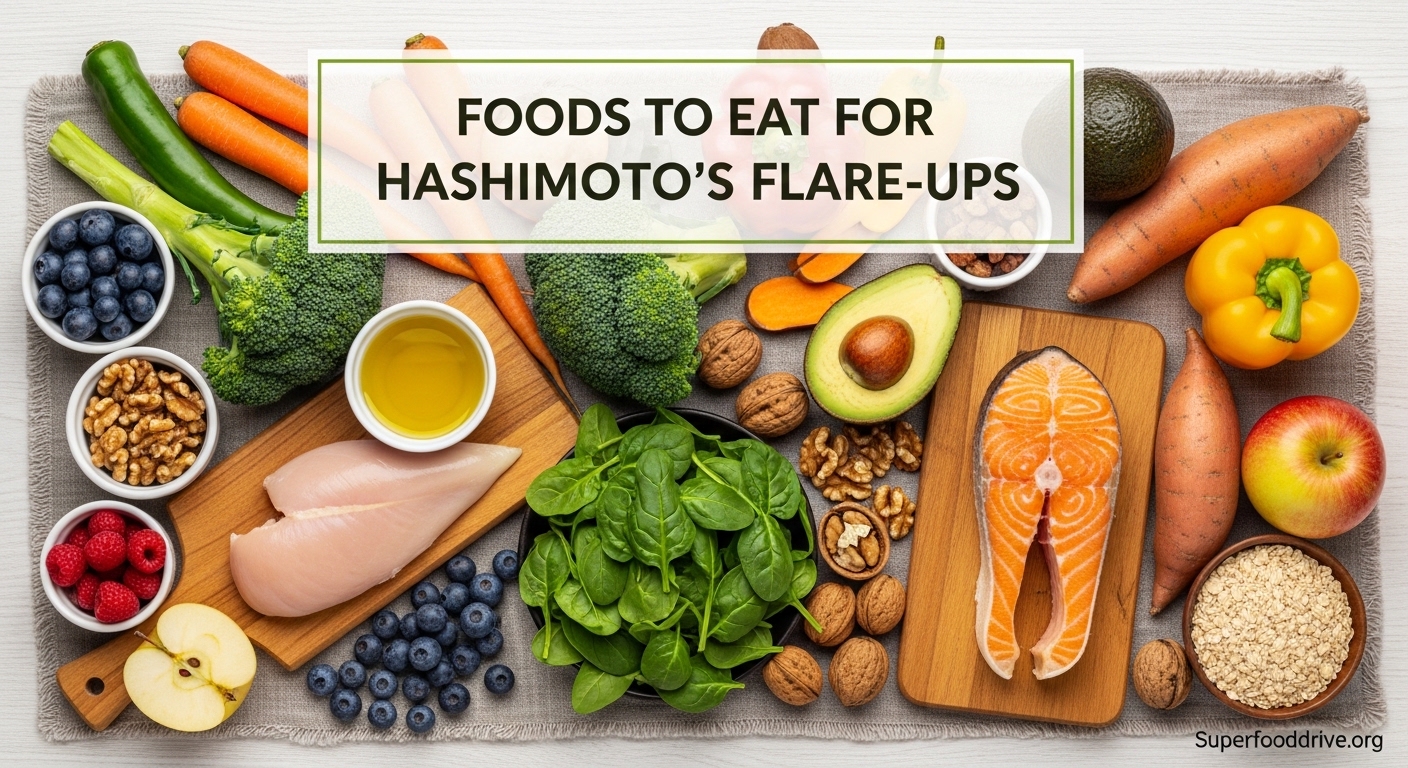
When Hashimoto’s thyroiditis flares up, the symptoms can feel overwhelming. Fatigue intensifies, brain fog rolls in, and inflammation makes every movement feel heavier. I have worked with many people navigating these challenging days, and one question keeps coming up: what should I actually eat when everything feels like it is falling apart?
The right foods can make a measurable difference during a Hashimoto’s flare-up. Anti-inflammatory choices, nutrient-dense whole foods, and specific thyroid-supporting nutrients help calm the autoimmune attack and give your body the building blocks it needs to stabilize. This guide covers exactly what to eat during Hashimoto’s flare-ups, backed by research and real-world experience.
Understanding foods to eat for Hashimoto’s flare ups is not about following a restrictive diet forever. It is about giving your body extra support when it needs it most.
Table of Contents
What Happens During a Hashimoto’s Flare-Up?
A Hashimoto’s flare-up occurs when the immune system launches a stronger attack against the thyroid gland. This autoimmune response increases inflammation throughout the body, not just in the thyroid. Understanding this process helps explain why certain foods help while others make things worse.
Common flare-up symptoms include extreme fatigue, joint and muscle pain, increased sensitivity to cold, brain fog, digestive issues, and mood changes. Some people also experience swelling in the neck where the thyroid sits. These symptoms can last days or weeks depending on the trigger and how well you manage the flare.
Dietary triggers often include stress, poor sleep, food sensitivities, and nutrient deficiencies. When a flare begins, your body needs immediate support in the form of anti-inflammatory compounds, antioxidants, and the specific nutrients required for thyroid hormone production. The foods you choose during this time directly impact how quickly you recover.
Key Nutrients Your Thyroid Needs During Flares
Before diving into specific foods, understanding the key nutrients helps you make informed choices. These nutrients play specific roles in thyroid function and become even more critical during flare-ups when your body is under increased stress.
Selenium: The Thyroid Protector
Selenium acts as a powerful antioxidant in the thyroid gland and is essential for converting the inactive thyroid hormone T4 into the active T3 form. Research shows that adequate selenium intake can help reduce thyroid peroxidase (TPO) antibodies, the markers of autoimmune activity in Hashimoto’s. Just one or two Brazil nuts provide your daily selenium needs.
Iodine: The Foundation of Thyroid Hormones
Iodine forms the backbone of thyroid hormones T3 and T4. Without adequate iodine, your thyroid cannot produce sufficient hormones. However, balance matters. Too much iodine can actually trigger or worsen autoimmune thyroiditis in some people. Seaweed and sea vegetables offer iodine in forms that are easier for the body to regulate compared to high-dose supplements.
Zinc: Supporting Hormone Conversion
Zinc works alongside selenium in the conversion of T4 to T3. It also supports immune function and helps reduce inflammation. Shellfish, pumpkin seeds, and grass-fed beef are excellent sources of zinc that are easily absorbed by the body.
Vitamin D: The Immune Regulator
Vitamin D deficiency is common in people with Hashimoto’s, and low levels correlate with higher TPO antibodies. This vitamin helps regulate the immune system and reduce autoimmune activity. Fatty fish, egg yolks, and sensible sun exposure provide vitamin D, though supplementation is often necessary to reach optimal levels.
Omega-3 Fatty Acids: Natural Inflammation Fighters
Omega-3 fatty acids from fish and certain plant sources actively reduce inflammation in the body. They help balance the immune response and can decrease the production of inflammatory compounds. Wild-caught salmon, sardines, and walnuts are rich sources of these essential fats.
Top Anti-Inflammatory Foods for Hashimoto’s Flare-Ups
These foods deserve priority placement in your diet when Hashimoto’s flares. Each provides specific benefits for thyroid health and inflammation reduction.
Wild-Caught Salmon and Fatty Fish
Salmon, mackerel, sardines, and herring deliver omega-3 fatty acids that directly combat inflammation. They also provide vitamin D and high-quality protein, which many people with Hashimoto’s under-consume. Aim for two to three servings per week during flare-ups. The protein supports thyroid hormone conversion while the omega-3s calm the immune system.
Dark Leafy Greens
Spinach, kale, Swiss chard, and collard greens pack antioxidants, magnesium, and B vitamins that support energy production and reduce inflammation. These vegetables also provide gentle fiber for gut health without the harshness that can irritate sensitive digestive systems during flares. Lightly steaming greens reduces goitrogen content while preserving nutrients.
Brazil Nuts
Just two Brazil nuts daily provide approximately 200 micrograms of selenium, meeting your daily requirement. This simple addition to your morning routine can help reduce TPO antibodies over time. Store them in the freezer to prevent the delicate fats from going rancid.
Berries
Blueberries, strawberries, raspberries, and blackberries offer antioxidants called anthocyanins that reduce oxidative stress and inflammation. Their natural sweetness can satisfy cravings without the blood sugar spikes that stress an already burdened system. Frozen berries work just as well as fresh and make excellent smoothie additions.
Avocado
Avocados provide healthy monounsaturated fats, fiber, potassium, and magnesium. These nutrients support adrenal health, which is often compromised alongside thyroid issues. The creamy texture makes avocados versatile for both savory and sweet preparations during low-energy flare days.
Sweet Potatoes and Orange Vegetables
Sweet potatoes, carrots, and butternut squash deliver beta-carotene, which converts to vitamin A and supports immune regulation. Their complex carbohydrates provide steady energy without the crashes associated with refined sugars. Roasting brings out their natural sweetness and makes them easy to digest.
Seaweed and Sea Vegetables
Nori, kelp, dulse, and wakame provide iodine in a food-based form that your body can use as needed. They also contain unique compounds that support detoxification pathways. Start with small amounts, as too much iodine can trigger symptoms in some people with Hashimoto’s.
Bone Broth
Homemade or high-quality bone broth delivers collagen, glycine, and minerals that support gut healing. Since gut health and thyroid health are intimately connected, supporting your digestive tract during flares can indirectly help calm autoimmune activity. Sip it plain or use it as a base for soups.
Pasture-Raised Eggs
Eggs provide complete protein, choline, vitamin D, and selenium in an easily digestible package. The protein content is particularly valuable since adequate protein intake supports the conversion of thyroid hormones. Choose pasture-raised when possible for higher nutrient density.
Turmeric and Ginger
These roots contain powerful anti-inflammatory compounds. Curcumin in turmeric and gingerol in ginger both help reduce systemic inflammation. Use them liberally in cooking or add to smoothies. Combining turmeric with black pepper significantly increases absorption of curcumin.
What to Eat During a Hashimoto’s Flare-Up
When a flare hits, simplicity becomes your friend. Your body is already working overtime to manage inflammation, so meals should be easy to prepare and gentle to digest. Here are specific meal ideas for flare-up days.
Breakfast Options
Start with protein to support hormone conversion and provide sustained energy. A two-egg omelet with spinach and avocado offers complete nutrition without complexity. Smoothies made with berries, spinach, coconut milk, and a scoop of collagen protein powder work well when chewing feels like too much effort. Chia seed pudding prepared the night before with berries and Brazil nuts provides omega-3s and selenium.
Lunch Ideas
Salmon salad over mixed greens with olive oil dressing delivers omega-3s and antioxidants without weighing you down. Leftover roasted sweet potato topped with canned sardines and avocado offers quick preparation with maximum nutrient density. Bone broth-based vegetable soup provides hydration, minerals, and easy-to-digest nutrition.
Dinner Suggestions
Baked wild salmon with roasted sweet potato and steamed broccoli covers your omega-3, vitamin A, and fiber needs. Slow-cooked beef stew with carrots, onions, and bone broth provides comfort along with zinc and collagen. Simple stir-fry with shrimp, bell peppers, and ginger served over cauliflower rice offers anti-inflammatory benefits with minimal preparation time.
Snack Choices
Keep snacks simple and nutrient-dense. A handful of Brazil nuts, carrot sticks with guacamole, or a small bowl of berries with coconut yogurt provide energy without blood sugar crashes. Hard-boiled eggs prepared in advance make excellent grab-and-go options.
Foods to Avoid During Hashimoto’s Flare-Ups
Just as certain foods help calm inflammation, others can fan the flames. During flare-ups, strict avoidance of trigger foods becomes more important than during stable periods.
Gluten-Containing Grains
Gluten proteins resemble thyroid tissue in molecular structure, which may trigger cross-reactivity in some people with Hashimoto’s. Wheat, barley, rye, and most oats contain gluten. Many people report reduced antibodies and improved symptoms after eliminating gluten completely, especially during flares.
Processed and Refined Sugars
Sugar spikes blood glucose and insulin, which increases inflammation and can disrupt hormone balance. During a flare, your body is already struggling with inflammation. Adding sugar creates additional stress. Skip the sweets, sodas, and packaged snacks with added sugars.
Industrial Seed Oils
Soybean, corn, canola, safflower, and sunflower oils contain high levels of omega-6 fatty acids that promote inflammation when consumed in excess. These oils appear in most processed and restaurant foods. Cook with olive oil, coconut oil, or avocado oil instead.
Dairy Products
Many people with Hashimoto’s react to dairy proteins, particularly casein. Lactose intolerance is also common. During flares, eliminating dairy can reduce additional immune system burden. Try removing it temporarily to see if symptoms improve.
Soy Foods
Soy contains goitrogens that can interfere with thyroid hormone production. It also acts as an endocrine disruptor. Fermented soy like miso and tempeh may be better tolerated than unfermented forms, but many practitioners recommend avoiding soy entirely during flares.
Raw Goitrogenic Vegetables
Broccoli, cauliflower, cabbage, Brussels sprouts, and kale contain goitrogens that can block iodine uptake. Cooking these vegetables significantly reduces their goitrogen content, making them safe and nutritious to eat. Avoid eating them raw in large amounts during flares.
Anti-Inflammatory Foods vs. Flare-Triggering Foods
| Foods to Prioritize | Foods to Avoid | Why It Matters |
|---|---|---|
| Wild-caught salmon, sardines | Farm-raised fish, fried seafood | Omega-3s reduce inflammation; poor quality fats increase it |
| Berries, citrus fruits | Refined sugar, high-fructose corn syrup | Antioxidants support healing; sugar spikes inflammation |
| Steamed leafy greens | Raw cruciferous vegetables | Cooking reduces goitrogens while preserving nutrients |
| Brazil nuts, pumpkin seeds | Processed snack foods | Selenium and zinc support thyroid; additives burden the system |
| Sweet potatoes, squash | White bread, pastries | Complex carbs provide steady energy; refined carbs cause crashes |
| Bone broth, herbal teas | Alcohol, caffeinated energy drinks | Hydration and minerals support recovery; alcohol stresses the liver |
Meal Planning Tips for Flare-Up Days
Preparation makes flare-up management significantly easier. When energy is low, having ready-to-eat options prevents falling back on convenience foods that might worsen symptoms.
Batch Cook When You Feel Well
Use your good days to prepare for challenging ones. Batch cook proteins like salmon, chicken, and hard-boiled eggs. Roast large pans of vegetables. Prepare soups and stews in bulk and freeze individual portions. Having nutrient-dense food ready removes the decision fatigue that comes with low energy.
Keep a Hashimoto’s Emergency Kit
Stock your pantry and freezer with flare-friendly options. Canned wild salmon and sardines, frozen berries, pre-washed salad greens, and frozen sweet potatoes can become meals with minimal effort. Keep Brazil nuts in your freezer for easy selenium supplementation.
Listen to Your Body’s Signals
Some days during a flare, your body may want lighter foods like smoothies and soups. Other days, you might need more substantial meals. There is no single right approach. Pay attention to how different foods make you feel and adjust accordingly.
Stay Hydrated
Inflammation increases fluid needs. Dehydration can worsen fatigue and brain fog. Aim for half your body weight in ounces of water daily, plus additional fluids if you are sweating or experiencing digestive issues. Herbal teas count toward hydration and can provide additional anti-inflammatory compounds.
Consider the Autoimmune Protocol
Some people with Hashimoto’s benefit from following the Autoimmune Protocol (AIP) diet during flares. This approach eliminates all potential trigger foods including grains, dairy, legumes, nightshades, eggs, nuts, and seeds temporarily, then reintroduces them systematically to identify personal triggers. While restrictive, many report significant symptom reduction.
Frequently Asked Questions About Hashimoto’s and Diet
What should I eat during Hashimoto’s flare up?
During a Hashimoto’s flare-up, prioritize anti-inflammatory foods like wild-caught salmon, leafy greens, berries, sweet potatoes, and Brazil nuts. These foods provide selenium, omega-3 fatty acids, and antioxidants that help reduce inflammation and support thyroid function. Focus on simple, easy-to-digest meals like salmon with roasted vegetables, bone broth soups, and smoothies with berries and spinach. Avoid gluten, dairy, processed sugars, and raw goitrogenic vegetables during flares.
How to calm down a Hashimoto’s flare-up?
To calm a Hashimoto’s flare-up, start with dietary changes: eliminate inflammatory foods and focus on nutrient-dense options rich in selenium, zinc, and omega-3s. Prioritize sleep and stress management, as both significantly impact autoimmune activity. Stay well-hydrated with water and herbal teas. Some people benefit from temporarily following the Autoimmune Protocol diet. Work with your healthcare provider to monitor thyroid levels, as medication adjustments may be needed during flares.
What foods aggravate Hashimoto’s?
Foods that commonly aggravate Hashimoto’s include gluten-containing grains, processed sugars, industrial seed oils like soybean and canola oil, dairy products, soy foods, and raw cruciferous vegetables. These foods can increase inflammation, interfere with thyroid hormone production, or trigger immune reactions. Individual sensitivities vary, so tracking your symptoms alongside your diet helps identify personal triggers. Many people benefit from working with a healthcare provider to test for food sensitivities.
What are the 7 thyroid boosting foods?
Seven foods that support thyroid health include: 1) Brazil nuts for selenium, 2) Wild-caught salmon for omega-3s and vitamin D, 3) Seaweed for iodine, 4) Leafy greens for magnesium and B vitamins, 5) Berries for antioxidants, 6) Sweet potatoes for beta-carotene, and 7) Pasture-raised eggs for complete protein and choline. These foods provide the specific nutrients your thyroid needs for hormone production and conversion while supporting overall immune function.
Can diet really help Hashimoto’s?
Yes, diet can significantly help manage Hashimoto’s symptoms and may reduce thyroid antibody levels. Research shows that nutrient deficiencies in selenium, vitamin D, zinc, and iodine worsen autoimmune thyroiditis. Anti-inflammatory foods help reduce the immune attack on the thyroid gland. While diet cannot cure Hashimoto’s, it is a powerful tool for managing flares, improving energy, and supporting overall thyroid function alongside medical treatment. Many people report feeling better within weeks of making dietary changes.
How much protein should I eat with Hashimoto’s?
Most Hashimoto’s patients benefit from higher protein intake than the standard recommendations. Aim for 0.7 to 1 gram of protein per pound of ideal body weight daily, spread across meals. Protein supports the conversion of T4 to T3 thyroid hormone and helps maintain muscle mass, which is often compromised in hypothyroidism. Include quality sources like wild fish, pasture-raised eggs, grass-fed beef, and organic poultry. Many people with Hashimoto’s under-eat protein, which can worsen fatigue and slow metabolism.
Putting It All Together
Managing Hashimoto’s flare-ups through diet is not about perfection. It is about giving your body the support it needs during challenging times. The foods to eat for Hashimoto’s flare ups focus on reducing inflammation while providing the specific nutrients your thyroid requires.
Start with the basics: add two Brazil nuts to your morning routine for selenium. Include wild-caught salmon twice weekly for omega-3s. Fill half your plate with colorful vegetables. Eliminate gluten and processed sugars during flares. These simple changes create a foundation that supports healing.
Remember that dietary changes complement medical treatment, not replace it. Work with your healthcare provider to monitor your thyroid levels and adjust medications as needed. Track your symptoms and food intake to identify your personal triggers and successes.
With the right nutritional approach, Hashimoto’s flare-ups become more manageable. Your body has an remarkable capacity to heal when given the proper building blocks. Use this guide as your roadmap to calmer, more stable days ahead.