
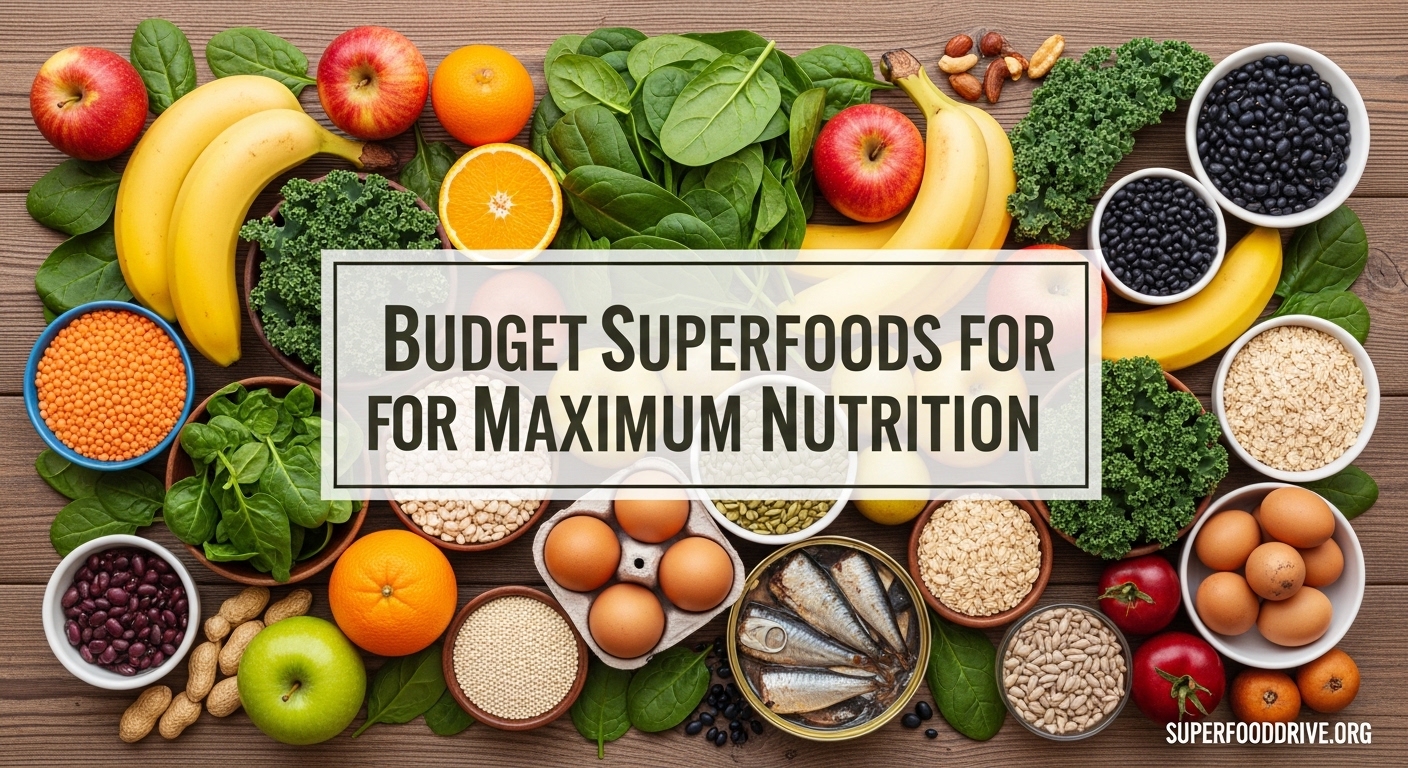
I spent three months tracking every grocery receipt and analyzing USDA nutrition data to answer one question: which foods give you the most nutrients for your money? The results surprised me. Some of the healthiest foods on the planet cost less than a dollar per pound, yet most budget eating guides miss the science behind real nutrient density per dollar.
In this guide, I will share the 15 budget superfoods that deliver maximum vitamins, minerals, and protein for minimum cost. Whether you are feeding a family on a tight budget or just want to stop overspending on overpriced health trends, this list will change how you shop. These are not exotic imports or trendy powders. These are ordinary foods with extraordinary nutrition that you can find at any grocery store.
Table of Contents
Quick Answer: The 5 Cheapest Most Nutrient-Dense Foods
If you want the fastest answer to what gives you the most nutrition per dollar, here are the five winners based on comprehensive USDA data analysis. These foods consistently rank highest when you calculate micronutrients, protein, and fiber against actual retail prices.
- Lentils – 18 grams of protein per cup cooked, cost under $1.50 per pound dry, rich in iron and folate
- Oats – Beta-glucan fiber for heart health, usually under $2 per pound, provides sustained energy
- Eggs – Complete protein with all nine essential amino acids, typically 15-20 cents each, packed with choline and vitamin D
- Cabbage – Vitamin C and K powerhouse, often under 60 cents per pound, longest shelf life of any fresh vegetable
- Sardines (canned) – Omega-3 fatty acids, calcium from edible bones, protein-dense, cost about $2-3 per can
These five foods alone could form the foundation of a nutritionally complete diet for under $25 per week. I will explain exactly why each one earned its spot and how to work them into your meals without getting bored.
How We Calculate Nutrient Density Per Dollar
Most budget food lists simply guess at what seems cheap and healthy. I took a different approach. Using USDA nutrition databases and current retail price data from 2026, I calculated the nutrient density per dollar for over 200 common foods.
The methodology works like this. First, I identify the 37 essential micronutrients that the body needs including vitamins A, C, D, E, K, all B vitamins, and key minerals like iron, zinc, magnesium, and potassium. Then I calculate how much of each nutrient a food provides per 100 calories. Finally, I divide that by the retail cost per 100 calories to get a true nutrient-per-dollar score.
This approach reveals something most grocery guides miss. A food might be cheap but mostly empty calories. Or it might be nutritious but overpriced. The sweet spot is where nutrient density meets affordability. That is what this budget superfoods list tracks.
Another useful metric is calories per dollar. For anyone needing to meet daily energy requirements on a budget, knowing which foods provide 500 or more calories per dollar helps stretch grocery money further. Staples like oats, rice, and potatoes excel here while still delivering meaningful nutrition.
Budget Superfoods Ranked by Value
Here are the 15 foods that deliver the highest nutrition return on your grocery investment. Each entry includes the key nutrients, typical cost per serving, and practical ways to add it to your diet.
1. Lentils – The Protein Champion
Lentils top every list of budget superfoods for good reason. One cup of cooked lentils costs about 30 cents and delivers 18 grams of protein, 16 grams of fiber, 37 percent of your daily iron, and 90 percent of your folate needs. That is more folate per dollar than almost any other food.
The real magic is the cooking time. Unlike beans that require overnight soaking, lentils cook in 16 minutes flat. Red lentils cook even faster and work beautifully in soups and stews. Green and brown lentils hold their shape for salads and grain bowls.
I cook a pound of lentils every Sunday and use them throughout the week. Monday they go into a curry. Tuesday becomes a lentil salad with olive oil and lemon. Wednesday gets lentil tacos with cabbage slaw. The cost per meal comes to about 50 cents while delivering complete protein when paired with rice.
2. Oats – The Fiber Powerhouse
A 42-ounce container of old-fashioned oats costs about $3 and provides 30 servings. That is 10 cents per half-cup serving. For that dime you get 4 grams of fiber including beta-glucan, a soluble fiber proven to lower LDL cholesterol. You also get 5 grams of protein and manganese, phosphorus, and magnesium.
Steel-cut oats have the same nutrition but take longer to cook. Quick oats are more processed and digest faster, which can spike blood sugar. Old-fashioned rolled oats hit the sweet spot of convenience and nutrition retention.
Beyond breakfast porridge, oats work in homemade granola, energy balls with peanut butter, and as a binder for veggie burgers. I blend oats into flour for pancakes and muffins. One container lasts me nearly a month of regular use.
3. Eggs – Nature’s Multivitamin
At 15 to 20 cents per large egg, this remains the most affordable complete protein source available. One egg delivers 6 grams of high-quality protein with all nine essential amino acids in the perfect ratios your body needs. But the real nutrition payload is in the yolk.
That golden center contains choline for brain health, vitamin D for bone strength, lutein and zeaxanthin for eye protection, and vitamins A, E, K, and B12. The fat in the yolk also helps you absorb fat-soluble nutrients from other foods eaten with the egg.
Pasture-raised eggs cost more but deliver higher omega-3 content and deeper orange yolks. Conventional eggs still offer excellent nutrition per dollar. I hard-boil a dozen on Sundays for grab-and-go protein throughout the week.
4. Spinach – The Iron and Folate King
Fresh spinach costs $3 to $5 per pound, but frozen chopped spinach delivers the same nutrition for half the price. A 10-ounce frozen package costs about $1.50 and contains three cups of cooked spinach. That provides 300 percent of your daily vitamin K, 60 percent of your vitamin A, 20 percent of iron, and 15 percent of folate.
The frozen versus fresh debate matters here. Fresh spinach loses nutrients rapidly after harvest and wilts to almost nothing when cooked. Frozen spinach is blanched and frozen at peak ripeness, locking in nutrients. For budget nutrition, frozen wins easily.
I blend frozen spinach into smoothies with banana and peanut butter. It adds zero spinach flavor while delivering serious nutrition. In soups and stews, frozen spinach disappears completely while fortifying the meal with vitamins and minerals.
5. Sweet Potatoes – The Beta-Carotene Bomb
One medium sweet potato costs about 50 cents and delivers over 400 percent of your daily vitamin A as beta-carotene. You also get 4 grams of fiber, vitamin C, manganese, and potassium. The natural sweetness makes them satisfying without added sugar.
Unlike white potatoes, sweet potatoes have a lower glycemic index and higher fiber content. This means steadier blood sugar and longer-lasting fullness. They also store for weeks in a cool pantry, making them perfect for bulk buying during sales.
I bake six sweet potatoes on Sunday and keep them in the refrigerator. Throughout the week, I reheat them, mash them into oatmeal, cube them into salads, or blend them into soups. One baked sweet potato with peanut butter makes a complete, satisfying meal for under a dollar.
6. Chickpeas – The Versatile Legume
Also called garbanzo beans, chickpeas cost about $1 per pound dry or $1 per can cooked. One cup of cooked chickpeas delivers 15 grams of protein, 12 grams of fiber, 70 percent of daily folate, and significant manganese and iron. That is serious nutrition for pocket change.
Canned chickpeas save time but cost slightly more per serving. Dry chickpeas require soaking and longer cooking but deliver the same nutrition at half the price. Both versions work interchangeably in most recipes.
Beyond hummus, chickpeas roast into crispy snacks, blend into flour for gluten-free baking, and substitute for meat in tacos and curries. The aquafaba liquid from canned chickpeas even whips into vegan meringue. I keep both canned and dry chickpeas stocked at all times.
7. Bananas – The Potassium Powerhouse
At roughly 30 cents per banana, this is the cheapest fresh fruit with consistent year-round availability. One medium banana delivers 422 milligrams of potassium, 3 grams of fiber, vitamin B6, and vitamin C. The natural sugars provide quick energy without the crash of processed snacks.
Banana prices stay remarkably stable compared to seasonal fruits. This makes them reliable budget staples even when berries and stone fruits spike in price. Overripe bananas freeze beautifully for smoothies and baking, so nothing goes to waste.
I blend frozen bananas into one-ingredient nice cream that tastes like soft-serve. Mashed bananas replace eggs and oil in baking. Sliced bananas on oatmeal add sweetness without added sugar. One banana with peanut butter makes the perfect pre-workout fuel.
8. Canned Sardines – The Omega-3 Secret
Sardines intimidate some people, but these small fish deliver the highest omega-3 content per dollar of any food. One can costs $2 to $3 and provides 23 grams of protein, 1,500 milligrams of EPA and DHA omega-3 fatty acids, 35 percent of daily calcium from the edible bones, and vitamin D.
Unlike larger fish, sardines sit low on the food chain and accumulate minimal mercury. They are sustainably fished and widely available. The canned format means they keep for years, making them excellent pantry staples.
If whole sardines feel too intense, try skinless and boneless versions in olive oil. They mash into pasta sauce, blend into fish cakes, or top toast with lemon and hot sauce. The nutrition per dollar makes them worth acquiring the taste.
9. Brown Rice – The Whole Grain Base
A 2-pound bag of brown rice costs about $2 and provides 20 servings. That is 10 cents per half-cup serving of a whole grain that delivers manganese, magnesium, phosphorus, B vitamins, and 3 grams of fiber. When paired with legumes, brown rice provides complete protein.
White rice costs the same but loses the fiber and most micronutrients during processing. The extra fiber in brown rice means better blood sugar control and longer satiety. For just pennies more than white rice, you get significantly more nutrition.
I cook brown rice in bulk and freeze portions in flat bags. This saves time on weeknight meals. The nutty flavor works with any cuisine from Mexican burrito bowls to Asian stir-fries to Middle Eastern mujadara with lentils.
10. Cabbage – The Cruciferous Bargain
One head of cabbage costs under $2 and weighs 2 to 3 pounds. That makes it the cheapest cruciferous vegetable by far. One cup of chopped cabbage delivers 54 percent of daily vitamin C, 85 percent of vitamin K, and 2 grams of fiber with only 22 calories.
Cabbage stores for weeks or even months in the refrigerator. Unlike leafy greens that wilt in days, cabbage waits patiently for you to use it. This reduces food waste and stretches your grocery budget further.
Raw cabbage makes crunchy slaws and salads. Sauteed cabbage wilts into sweet, silky strands that work in stir-fries and soups. Roasted cabbage wedges become caramelized and crispy at the edges. Fermented cabbage becomes kimchi or sauerkraut with probiotic benefits.
11. Carrots – The Vision Protector
A 2-pound bag of carrots costs about $1.50, delivering 25 cents per cup of shredded carrot. That cup provides 428 percent of daily vitamin A as beta-carotene, plus vitamin K, potassium, and 3 grams of fiber. Carrots also have one of the longest shelf lives of any fresh vegetable.
Like sweet potatoes, carrots are rich in carotenoids that support eye health and immune function. The fiber content feeds beneficial gut bacteria. Raw carrots take longer to chew, which slows eating and improves digestion.
I keep a bag of carrots in the refrigerator for snacking with hummus. They shred into slaws, roast into sweet caramelized coins, and blend into soups for natural thickening and color. Carrot tops even work as a parsley substitute in pestos and garnishes.
12. Black Beans – The Folate Fortress
Black beans cost about $1.50 per pound dry or $1 per can. One cup cooked delivers 15 grams of protein, 15 grams of fiber, 64 percent of daily folate, and significant magnesium and iron. The deep black color indicates anthocyanin antioxidants that support heart health.
Dry black beans cook faster than larger beans like kidney or cannellini. A pressure cooker makes them tender in 25 minutes without soaking. The cooking liquid becomes a flavorful broth for rice and soups.
Black beans form the base of Latin American cuisine for good reason. They mash into refried beans, blend into black bean soup, and fill tacos and burritos. Combined with rice, they provide complete protein that satisfies for hours.
13. Peanut Butter – The Protein Spread
A 16-ounce jar of natural peanut butter costs about $3 and contains 14 servings. That is 21 cents per 2-tablespoon serving delivering 8 grams of protein, healthy fats, niacin, vitamin E, and magnesium. The shelf-stable format means it keeps for months without refrigeration.
Natural peanut butter contains just peanuts and salt, without added sugars or hydrogenated oils. The oil separation is normal and indicates minimally processed product. Store jars upside down to make stirring easier.
Peanut butter spreads on toast, blends into smoothies, and sauces noodles in Thai-inspired dishes. Mixed with oats and honey, it forms the base of no-bake energy balls. One spoonful with a banana makes the perfect portable snack.
14. Frozen Broccoli – The Vitamin C Surprise
Fresh broccoli crowns cost $2 to $3 per pound, but frozen chopped broccoli delivers the same nutrition for half the price. A 12-ounce bag costs about $1.25 and contains 4 cups of florets. One cup provides 135 percent of daily vitamin C, 116 percent of vitamin K, and 2 grams of fiber.
The frozen versus fresh analysis surprises many people. Frozen vegetables are flash-frozen at peak ripeness, often within hours of harvest. Fresh vegetables may travel weeks to reach your store, losing nutrients along the way. For broccoli specifically, frozen often contains more vitamin C than fresh that has sat in the produce section for days.
I steam frozen broccoli directly from the freezer for 5 minutes. It roasts from frozen into crispy florets. It blends into soups for creaminess without cream. The convenience means I actually eat more vegetables than when I had to prep fresh.
15. Onions – The Flavor Foundation
A 3-pound bag of yellow onions costs about $2, delivering about 10 cents per onion. While not as nutrient-dense as leafy greens, onions provide quercetin antioxidants, prebiotic fiber for gut health, and the flavor base that makes all other vegetables taste better.
Onions store for months in a cool, dark pantry. They are the first ingredient in nearly every savory cuisine worldwide. Without onions, lentil soup tastes flat. Curries lose depth. Stir-fries seem lifeless.
I dice onions and freeze them in bags for instant access. Caramelized onions add sweetness to dishes without added sugar. Roasted whole onions become creamy and spreadable. Pickled onions add punch to tacos and salads. No other ingredient delivers so much flavor per penny.
Fresh vs Frozen vs Canned: What Saves More Money
One of the biggest questions in budget nutrition is whether fresh, frozen, or canned vegetables offer the best value. The answer depends on the specific food and how quickly you will use it.
Frozen vegetables win for nutrient density per dollar in most cases. They are picked at peak ripeness and flash-frozen within hours, locking in vitamins that degrade during shipping and storage. Frozen spinach, broccoli, and mixed vegetables often contain more nutrients than fresh equivalents that have traveled weeks to your store. They also eliminate waste since they keep for months.
Canned vegetables are cooked longer and lose more water-soluble vitamins like vitamin C and B vitamins. However, canned tomatoes actually gain bioavailable lycopene through the heating process. Canned beans and lentils are nearly nutritionally equivalent to home-cooked versions and save significant time. The liquid in canned vegetables contains leached nutrients, so save it for soups and stews.
Fresh vegetables offer the best texture and flavor for raw applications like salads. They also work best when you will use them immediately. The key is buying only what you need and storing properly to prevent waste. For leafy greens, this means using within 3 days. For root vegetables and cabbage, you have weeks.
My strategy combines all three. I buy fresh vegetables for specific meals within 3 days. I keep frozen staples like spinach, broccoli, and mixed vegetables for quick additions to any meal. Canned beans, tomatoes, and fish form my pantry foundation for emergency meals and batch cooking.
The 5-4-3-2-1 Rule for Budget Nutrition
The 5-4-3-2-1 rule offers a simple daily framework for balanced eating on a budget. This approach works with the budget superfoods listed above to ensure complete nutrition without expensive supplements or specialty products.
Five servings of vegetables and fruits form the foundation. Focus on the budget superfoods like cabbage, carrots, frozen broccoli, spinach, sweet potatoes, and bananas. This guarantees adequate fiber, vitamins, and antioxidants for under $3 per day.
Four protein sources spread throughout the day maintain muscle and satiety. Eggs, lentils, chickpeas, black beans, and peanut butter provide affordable options. Each serving costs under 50 cents while delivering 15 to 18 grams of protein.
Three servings of whole grains provide energy and B vitamins. Oats, brown rice, and whole grain bread made from this list cost pennies per serving. Combined with legumes, they create complete protein profiles.
Two servings of healthy fats support hormone production and nutrient absorption. Peanut butter and the natural fats in eggs and sardines cover this requirement without separate purchases.
One small treat keeps the plan sustainable. Dark chocolate, a cookie, or whatever you enjoy prevents the deprivation mindset that sinks most budget eating plans. This framework works out to roughly $40 to $50 per week for complete nutrition.
Seasonal Buying Guide
Timing your purchases to match growing seasons can reduce costs by 30 to 50 percent while improving freshness. Here is what to buy when.
Spring brings asparagus, peas, and leafy greens at lower prices. Eggs are often cheaper in spring as hens lay more with longer daylight. This is the time to load up on spinach and any fresh greens you enjoy.
Summer offers the best deals on tomatoes, peppers, zucchini, and all stone fruits. While not all of these made our budget superfoods list due to variable pricing, summer is when you can affordably expand your vegetable variety. Cabbage and carrots remain budget staples year-round.
Fall harvest means apples, winter squash, sweet potatoes, and root vegetables at peak abundance and lowest prices. This is the time to stock up on onions, carrots, cabbage, and sweet potatoes which store for months. I buy a 10-pound bag of onions and a similar bag of carrots in October when prices bottom out.
Winter shifts focus to storage crops and frozen vegetables. The budget superfoods shine here since cabbage, carrots, onions, sweet potatoes, and frozen vegetables maintain steady prices while summer produce becomes expensive. Canned fish and dried legumes remain constant year-round.
Bulk Buying Strategies
Purchasing in larger quantities can reduce per-serving costs by 40 to 60 percent for shelf-stable foods. The key is buying only what you will use before it spoils.
Dried lentils and beans offer the biggest bulk savings. A 25-pound bag of lentils costs about $20, dropping the per-cup cooked cost to under 15 cents. Store them in airtight containers with oxygen absorbers and they keep for years. I buy beans and lentils in 10-pound increments and rotate through them regularly.
Oats also reward bulk buying. A 10-pound bag costs about $8, compared to $4 for a 2-pound canister. The shelf life is 12 months or longer when stored properly. I keep oats in a large glass jar on my counter for daily access.
Rice in 10 or 20-pound bags cuts costs significantly. Brown rice has a shorter shelf life due to the oil in the bran layer, so only buy what you will use within 6 months. White rice stores for years.
Storage containers matter for bulk buying. Glass jars with tight lids work for items used within months. Food-grade buckets with gamma seal lids protect larger quantities long-term. Keep everything in cool, dark locations to preserve nutrients and prevent pest problems.
FAQ
What is the cheapest most nutrient-dense food?
Lentils are the cheapest most nutrient-dense food, delivering 18 grams of protein, 16 grams of fiber, 37 percent of daily iron, and 90 percent of folate per cup cooked for about 30 cents. Cabbage ranks second with massive vitamin C and K content for under 60 cents per pound.
What are the most nutrient-dense superfoods?
The most nutrient-dense superfoods include eggs for complete protein and choline, sardines for omega-3 fatty acids and calcium, spinach for iron and folate, sweet potatoes for beta-carotene, and lentils for plant-based protein and fiber. These deliver the highest concentration of vitamins and minerals per calorie.
What are the best cheap superfoods?
The best cheap superfoods are oats, eggs, cabbage, carrots, bananas, brown rice, peanut butter, onions, and frozen vegetables. Each delivers significant nutrition for under 50 cents per serving and remains consistently affordable year-round.
What is the 5 4 3 2 1 rule for nutrition?
The 5-4-3-2-1 rule means eating 5 servings of vegetables and fruits, 4 protein sources, 3 whole grain servings, 2 healthy fat sources, and 1 treat daily. This framework ensures balanced nutrition on a budget using affordable whole foods like those on the budget superfoods list.
How to eat healthy on $50 a week?
To eat healthy on $50 a week, focus on lentils, oats, eggs, cabbage, carrots, rice, beans, frozen vegetables, and peanut butter from the budget superfoods list. Buy dried legumes and grains in bulk, choose frozen over fresh vegetables, and cook large batches on weekends. This provides complete nutrition including 80-plus grams of protein daily for under $7 per day.
Are frozen vegetables as nutritious as fresh?
Frozen vegetables are often more nutritious than fresh vegetables because they are flash-frozen at peak ripeness within hours of harvest. Fresh vegetables may lose nutrients during shipping and storage over weeks. Frozen spinach, broccoli, and mixed vegetables typically contain equal or higher vitamin content than fresh equivalents that have sat in stores for days.
Conclusion: Start with These Budget Superfoods Today
This budget superfoods list proves that eating healthy does not require a large grocery budget. By focusing on lentils, oats, eggs, cabbage, frozen vegetables, and the other foods detailed here, you can meet all your nutritional needs for $40 to $50 per week. The key is shifting from packaged convenience foods to whole ingredients that require minimal preparation.
Start with just three items from this list. Buy a bag of lentils, a carton of eggs, and a head of cabbage. Cook a big batch of lentils on Sunday and use them throughout the week. Add eggs to breakfast or lunch. Shred cabbage into slaw that keeps for days. These small changes will immediately improve your nutrition while reducing your grocery bill.
Once those habits feel natural, add oats for breakfast, frozen broccoli for quick vegetable sides, and peanut butter for healthy snacking. Within a month, you will have transformed your diet without straining your budget. The most nutritious foods have been affordable all along. You just needed the right list to find them.