
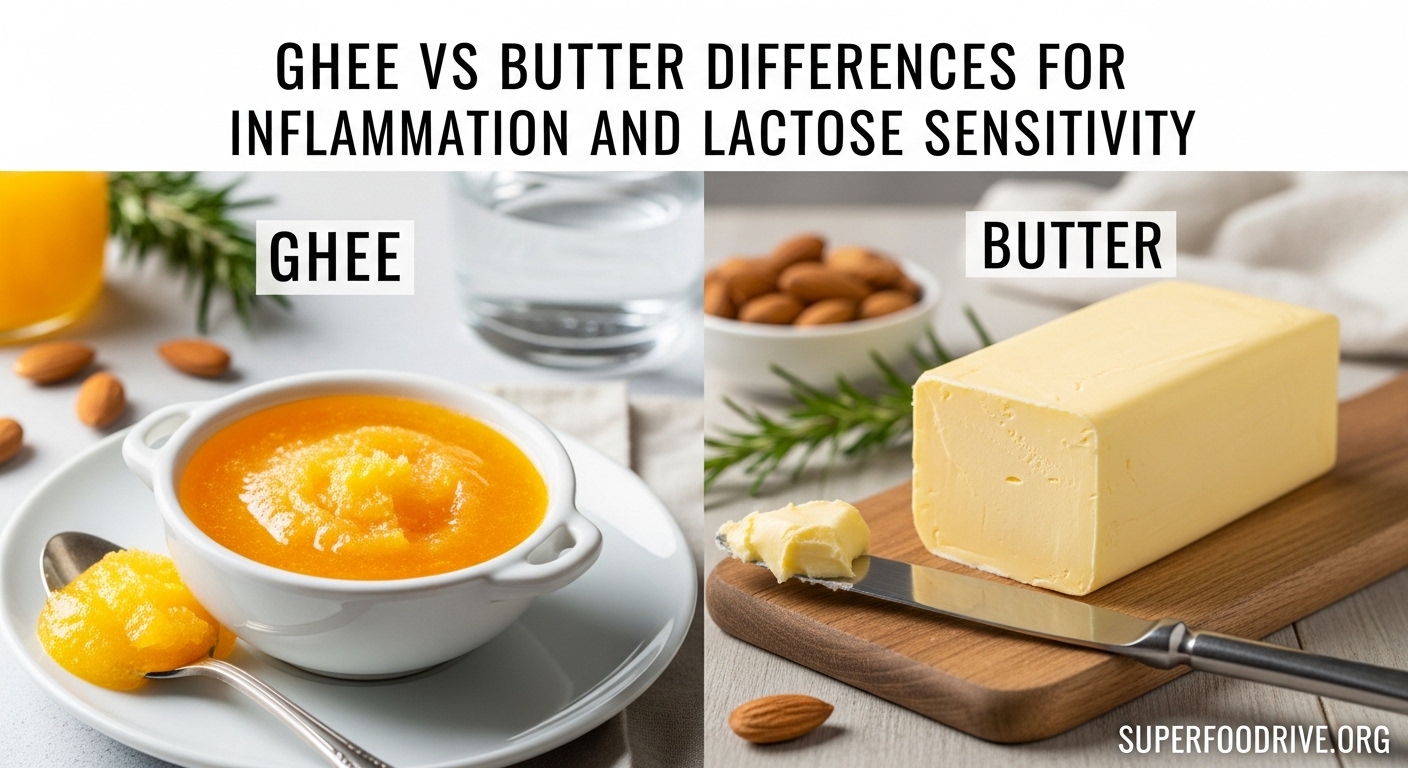
If you are lactose intolerant or dealing with inflammation, you have probably wondered whether switching from butter to ghee could help. The answer is not just about taste or cooking convenience. The differences between ghee and butter run deep, especially when it comes to lactose sensitivity and inflammation. In this guide, I will break down exactly what separates these two golden fats and why ghee might be the better choice for your digestive health and overall wellness.
Table of Contents
What Is Ghee and How Does It Differ from Butter?
Ghee is essentially clarified butter taken one step further. To make ghee, butter is gently heated until the water evaporates and the milk solids separate. These milk solids are then strained out, leaving behind pure butterfat with a rich, nutty flavor and golden color.
Regular butter contains about 16-17% water and milk solids. These milk solids include lactose (milk sugar) and casein (milk protein). Ghee removes virtually all of these components, concentrating the fat content to around 99% pure butterfat. This removal process is what makes ghee fundamentally different from butter and why it appeals to people with dairy sensitivities.
The cooking process also transforms the flavor. While butter tastes creamy and mild, ghee develops a deeper, more caramelized, nutty flavor during the clarification process. This happens because the milk solids brown slightly before being removed, imparting that characteristic toasted quality.
Lactose and Casein Content: Why Ghee Wins for Dairy Sensitivity
Let me be direct about what you came here to learn. Ghee is virtually lactose-free and contains minimal casein, while butter contains both in significant amounts. This is the single most important difference if you struggle with dairy sensitivities.
How Much Lactose Is in Each?
Butter contains about 0.1% lactose by weight. That might sound tiny, but for someone with severe lactose intolerance, even trace amounts can cause bloating, gas, and discomfort. A single tablespoon of butter contains roughly 0.01 grams of lactose.
Ghee contains less than 0.01% lactose – effectively negligible. The clarification process removes nearly all milk sugars. Most lactose-intolerant individuals tolerate ghee without any digestive distress, even when they cannot handle butter.
Casein: The Hidden Trigger Many People Miss
Casein is a protein found in milk that triggers reactions in many people, separate from lactose intolerance. Some individuals can digest lactose fine but react to casein with inflammation, skin issues, or digestive problems.
Butter contains casein at approximately 0.1-0.2%. Ghee contains trace amounts of casein – usually less than 0.001% – because the milk solids are strained out during production. However, I need to be transparent here: ghee is not 100% casein-free.
This matters because some highly sensitive individuals still react to ghee. If you have a severe casein allergy, ghee may not be safe for you. But if you have a sensitivity or mild intolerance, the trace amounts in high-quality ghee typically cause no issues.
Why Removing Milk Solids Matters
The milk solids in butter are not just carriers of lactose and casein. They also contain proteins that can be difficult to digest and may trigger immune responses in sensitive individuals. When you remove these solids through clarification, you eliminate the components most likely to cause problems.
This is why ghee has been used in Ayurvedic medicine for thousands of years as a healing food. Traditional practitioners recognized that clarified butter was easier to digest and more suitable for people with various health conditions.
Ghee vs Butter for Inflammation and Gut Health
Here is where ghee truly shines compared to butter. The benefits go beyond simply avoiding problematic dairy components. Ghee contains unique compounds that actively support gut health and may reduce inflammation.
Butyrate: The Short-Chain Fatty Acid That Heals
Ghee contains butyric acid, also known as butyrate, a short-chain fatty acid that plays a crucial role in gut health. Ghee provides approximately 1-2% butyrate by volume, making it one of the best dietary sources of this beneficial compound.
Butyrate serves as the primary fuel source for the cells lining your colon. It helps maintain the integrity of your intestinal barrier, reducing leaky gut syndrome. A strong gut barrier prevents unwanted substances from entering your bloodstream and triggering inflammatory responses.
Research suggests butyrate also has direct anti-inflammatory properties. It can reduce inflammatory markers in the gut and may help manage inflammatory bowel conditions. While butter contains some butyrate, ghee provides it in a more concentrated form without the accompanying milk proteins that might trigger inflammation.
Why Casein Absence Matters for Inflammation
Casein can trigger inflammatory responses in sensitive individuals. When your immune system reacts to casein, it releases inflammatory cytokines. This is why some people experience joint pain, skin flare-ups, or digestive inflammation when consuming dairy products.
By removing casein through the clarification process, ghee eliminates this potential inflammatory trigger. For people with autoimmune conditions, chronic inflammation, or dairy sensitivities, this difference can be significant.
CLA: Conjugated Linoleic Acid Benefits
Ghee, especially from grass-fed cows, contains conjugated linoleic acid (CLA). This fatty acid has shown promise in reducing inflammation and supporting metabolic health in research studies. While butter also contains CLA, ghee from grass-fed sources may provide slightly higher concentrations due to the concentration effect of removing water and milk solids.
Gut Lining Support
The combination of butyrate and the absence of irritating milk proteins makes ghee supportive for gut healing. Many people with irritable bowel syndrome, Crohn’s disease, or ulcerative colitis find ghee easier to tolerate than butter. The butyrate content may help soothe and repair the intestinal lining.
That said, ghee is not a cure for gut conditions. It is a supportive food that may help when incorporated into an overall gut-healing protocol. Individual responses vary, and what works for one person may not work for another.
Nutritional Profile: How Ghee and Butter Compare
Let us look at the numbers side by side. Both ghee and butter are calorie-dense fats, but there are some notable differences in their nutritional composition.
Calories and Fat Content
One tablespoon of butter contains approximately 102 calories and 11.5 grams of fat. One tablespoon of ghee contains about 112-130 calories and 12-14 grams of fat. The higher numbers for ghee reflect the removal of water – you are getting more concentrated fat per volume.
Both are primarily saturated fat, with about 7-8 grams per tablespoon. Ghee contains slightly more monounsaturated fat than butter, which may contribute to its higher smoke point and stability.
Vitamins and Fat-Soluble Nutrients
Both ghee and butter contain fat-soluble vitamins A, D, E, and K. Ghee may contain slightly higher concentrations of these vitamins per serving due to the concentration effect. A tablespoon of ghee provides approximately 8% of the daily recommended value for vitamin A.
Grass-fed versions of both ghee and butter contain higher levels of vitamins and beneficial fatty acids. If you are choosing between conventional and grass-fed options, grass-fed is worth the extra cost for the nutrient density.
Cholesterol and Heart Health Considerations
Both ghee and butter contain dietary cholesterol, approximately 30-35 milligrams per tablespoon. Recent research has softened the stance on dietary cholesterol, but people with heart disease risk factors should still consume these fats in moderation.
One potential advantage of ghee is that it produces less cholesterol oxidation products (COPs) when heated. COPs form when cholesterol is exposed to high heat and are considered potentially harmful. Ghee’s higher smoke point means you are less likely to reach temperatures that create these compounds during cooking.
Cooking With Ghee vs Butter: Smoke Point and Flavor
Beyond health considerations, practical cooking differences matter when choosing between ghee and butter. These differences can significantly affect your cooking results and kitchen convenience.
Smoke Point Differences
Butter has a smoke point of approximately 302 degrees Fahrenheit (150 degrees Celsius). This is relatively low, meaning butter burns easily when used for high-heat cooking.
Ghee has a much higher smoke point of approximately 482 degrees Fahrenheit (250 degrees Celsius). This is higher than most cooking oils, including olive oil. You can sear, fry, and roast with ghee without worrying about burning or producing harmful compounds.
When butter burns, it produces acrylamide and other potentially harmful compounds. The milk solids in butter are what burn first. By removing them, ghee eliminates this risk and allows for safer high-temperature cooking.
Flavor Profiles
Butter offers a creamy, mild, slightly sweet flavor that works well in most applications. It provides richness without overpowering other ingredients.
Ghee brings a nutty, caramelized, almost toasted flavor. It adds depth to dishes and works particularly well in Indian, Middle Eastern, and Southeast Asian cuisines. The flavor is more assertive than butter, which can be either a benefit or drawback depending on the dish.
Substitution Ratios and Tips
You can substitute ghee for butter at a 1:1 ratio in most recipes. However, because ghee contains no water, you may need to adjust liquid ingredients slightly in baking. Reduce other liquids by about 1 teaspoon per tablespoon of ghee used.
Ghee works exceptionally well for sauteeing vegetables, frying eggs, roasting meats, and making popcorn. Its high smoke point means you can get a better sear on meats without the burning risk.
Shelf Life and Storage
Butter requires refrigeration and lasts about 1-3 months in the fridge. It can be frozen for up to a year but does not store well at room temperature.
Ghee is shelf-stable and can be stored at room temperature for up to 3 months in an airtight container. In the refrigerator, it lasts up to a year. This makes ghee convenient for travel, camping, or keeping a jar handy on the counter for cooking.
How to Choose Between Ghee and Butter
Now that you understand the differences, here is how to decide which fat belongs in your kitchen.
Choose Ghee If:
You are lactose intolerant or have dairy sensitivity. The virtually lactose-free nature of ghee makes it the clear choice. You have casein sensitivity or suspect dairy proteins trigger inflammation for you. The minimal casein content in ghee eliminates most issues.
You cook with high heat frequently. The smoke point advantage makes ghee safer and more practical. You want concentrated butyrate for gut health benefits. You need shelf-stable fat for convenience.
Choose Butter If:
You have no dairy sensitivities and prefer the milder flavor. You bake frequently and want the water content for specific textures. You want a more economical option – butter typically costs less than quality ghee.
You do not cook at high temperatures and prefer the traditional taste in your recipes.
Quality Indicators When Buying Ghee
Not all ghee is created equal. Look for grass-fed or pasture-raised sources for higher nutrient content. Organic certification ensures cows were not exposed to pesticides or hormones.
Check the ingredient list – quality ghee should contain only butter or cultured butter. Avoid products with added oils or preservatives. Traditional ghee has a golden color and pleasant nutty aroma. Avoid ghee that looks pale or has an off smell.
How to Test Your Tolerance
If you are unsure whether ghee will work for you, start with a small amount – about half a teaspoon. Wait 24 hours and observe any reactions. If no symptoms occur, gradually increase the amount over several days.
Keep a food journal to track symptoms. Sometimes reactions take hours or days to appear. If you experience any adverse effects, discontinue use and consult a healthcare provider.
Frequently Asked Questions
Is ghee better than butter for lactose intolerance?
Yes, ghee is significantly better than butter for lactose intolerance. During the clarification process, virtually all lactose is removed from ghee. While butter contains about 0.1% lactose, ghee contains less than 0.01%. Most lactose-intolerant individuals can tolerate ghee without digestive distress.
Is ghee more anti-inflammatory than butter?
Ghee may be less inflammatory than butter for several reasons. It contains butyrate, a short-chain fatty acid with anti-inflammatory properties. Ghee also lacks casein, a milk protein that can trigger inflammatory responses in sensitive individuals. However, individual responses vary, and both contain saturated fat which some research links to inflammation.
Is ghee easier on the stomach than butter?
Ghee is generally easier to digest than butter because it lacks milk solids that can irritate sensitive digestive systems. The butyrate content in ghee may actually support digestive health by nourishing colon cells. Many people with IBS or other digestive issues tolerate ghee better than butter.
What do cardiologists say about ghee?
Cardiologists generally recommend consuming ghee in moderation due to its high saturated fat content. While recent research has questioned the link between saturated fat and heart disease, ghee still contains approximately 7-8 grams of saturated fat per tablespoon. People with existing heart conditions or high cholesterol should use it sparingly and consult their doctor.
Can I eat ghee if I am lactose intolerant?
Most lactose-intolerant individuals can eat ghee without problems. The clarification process removes virtually all lactose from ghee. However, those with severe lactose intolerance should start with small amounts to test personal tolerance, as trace amounts may remain in some products.
Is ghee ok for casein intolerance?
Ghee is generally safe for casein intolerance because the clarification process removes most milk proteins. Ghee contains less than 0.001% casein compared to 0.1-0.2% in butter. However, it is not completely casein-free, so individuals with severe casein allergies should exercise caution and consult a healthcare provider.
Does ghee increase inflammation?
Ghee is unlikely to increase inflammation and may actually reduce it for some people. The butyrate content has anti-inflammatory properties, and the absence of casein removes a common inflammatory trigger. However, individual responses vary, and those sensitive to saturated fat should monitor their own reactions.
Does ghee repair gut lining?
Ghee contains butyrate, which research shows supports the health of colon cells and intestinal barrier function. While ghee alone cannot repair a damaged gut lining, it may support gut healing as part of a comprehensive protocol including proper diet, stress management, and medical treatment when needed.
Conclusion: Making the Right Choice for Your Health
Ghee vs butter is not a simple good versus bad debate. Both have their place depending on your health needs and cooking preferences. But if you struggle with lactose intolerance, casein sensitivity, or inflammation, ghee offers clear advantages.
The removal of milk solids makes ghee virtually lactose-free and extremely low in casein. The concentration of beneficial compounds like butyrate provides additional gut health and anti-inflammatory benefits. The higher smoke point makes it safer for cooking at high temperatures.
That said, individual responses vary. Start with small amounts to test your tolerance, choose high-quality grass-fed options when possible, and use either fat in moderation as part of a balanced diet. For many people with dairy sensitivities, ghee provides a way to enjoy the rich flavor of butter without the uncomfortable consequences.