
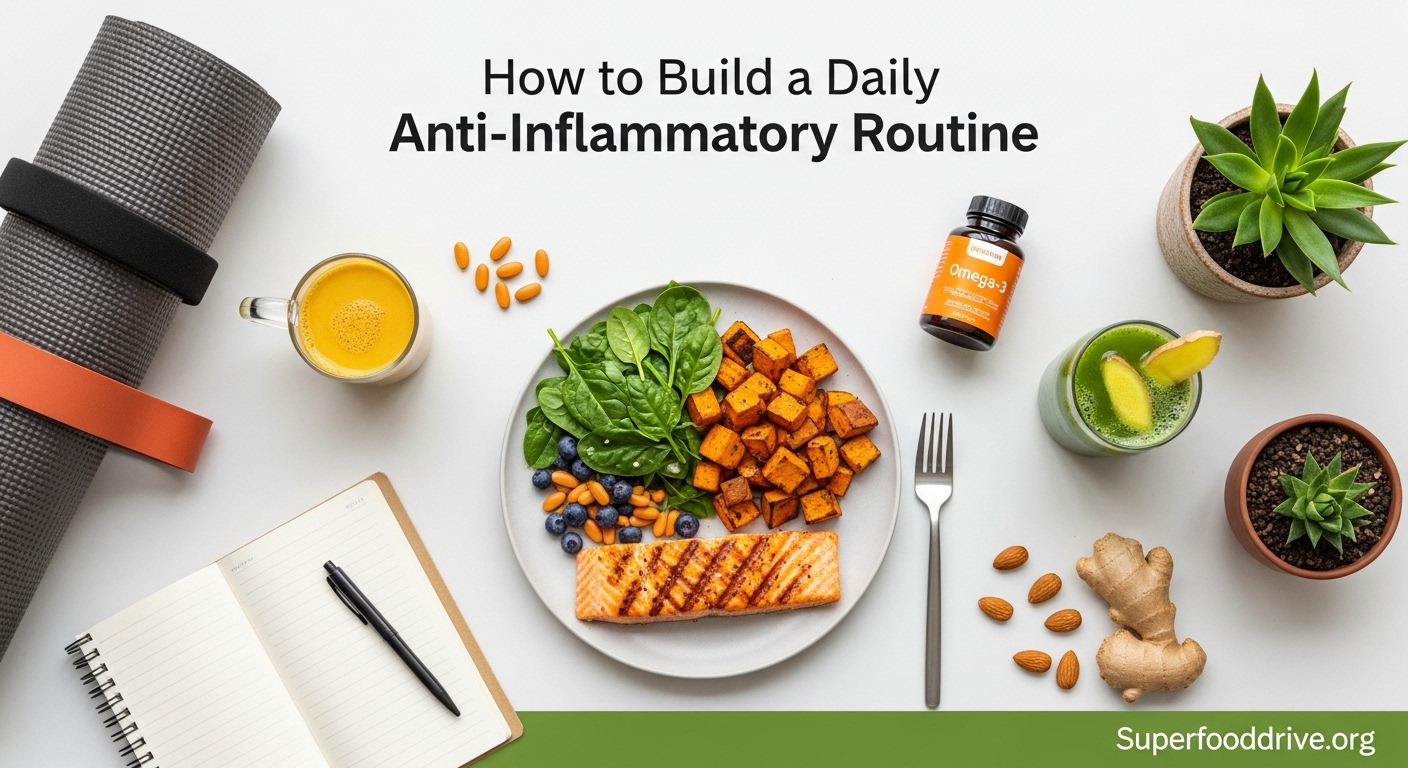
Three years ago, I woke up every morning with stiff joints and persistent brain fog that no amount of coffee could fix.
My doctor mentioned chronic inflammation might be the culprit, and that simple daily habits could turn things around. Within six weeks of building a consistent daily anti-inflammatory routine, my energy returned and the morning stiffness became a memory.
This guide shares everything I learned about creating a sustainable routine that reduces inflammation without overwhelming your life. You will discover the specific foods to eat and avoid, a complete day-by-day timeline, and the 80/20 rule that makes this approach realistic for the long term.
Table of Contents
- What Is Inflammation? (And Why It Matters)
- Anti-Inflammatory Foods to Eat Daily
- Foods That Cause Inflammation (What to Avoid)
- Your Complete Daily Anti-Inflammatory Routine
- Lifestyle Habits That Fight Inflammation
- Frequently Asked Questions
- What is the best thing to take every day for inflammation?
- What is a good anti-inflammatory diet for everyday?
- What are the 12 everyday habits to lower inflammation?
- What is the 80/20 rule for anti-inflammatory diet?
- How do you know if you have chronic inflammation?
- Can you reverse inflammation with diet?
- Conclusion
What Is Inflammation? (And Why It Matters)
Inflammation is your body’s natural defense mechanism against injury and infection. When you cut your finger, acute inflammation rushes white blood cells to the area to begin healing. This type of inflammation is essential and temporary.
Chronic inflammation is different. It happens when your immune system stays activated for months or years without a specific threat to fight. Over time, this low-grade inflammation damages healthy tissues and contributes to serious conditions including heart disease, type 2 diabetes, arthritis, and cognitive decline.
Common signs of chronic inflammation include persistent fatigue, joint pain, digestive issues, frequent infections, and difficulty concentrating. Many people live with these symptoms for years without realizing inflammation is the root cause.
The good news is that chronic inflammation responds powerfully to daily habits. What you eat, how you move, your stress levels, and your sleep quality all influence your inflammatory markers. A well-designed daily anti-inflammatory routine can reduce C-reactive protein and other inflammation indicators within weeks.
Anti-Inflammatory Foods to Eat Daily
Building your routine starts with what you put on your plate. These foods actively fight inflammation at the cellular level.
Fatty Fish Rich in Omega-3s
Salmon, mackerel, sardines, and herring are your best sources of omega-3 fatty acids. These healthy fats directly reduce inflammatory cytokines in your body. Aim for two to three servings per week.
If fish is not your preference, walnuts, flaxseeds, and chia seeds provide plant-based omega-3s. Ground flaxseed is especially easy to add to smoothies or oatmeal.
Colorful Fruits and Vegetables
Bright colors in produce signal high levels of antioxidants and polyphenols, compounds that neutralize free radicals and calm inflammation. Berries, leafy greens, tomatoes, peppers, and oranges should appear on your plate daily.
Our team tracked our produce intake for one month and noticed that days with six or more servings of colorful vegetables correlated with better energy and less joint stiffness. The research backs this up. Studies show that people eating a rainbow of vegetables have measurably lower inflammatory markers.
Whole Grains
Quinoa, brown rice, oats, and whole wheat provide fiber that feeds beneficial gut bacteria. A healthy gut microbiome plays a major role in regulating inflammation throughout your body. Swap refined grains for whole versions at every meal.
Anti-Inflammatory Spices
Turmeric contains curcumin, one of the most studied anti-inflammatory compounds. Pair it with black pepper to boost absorption by up to 2000 percent. Ginger shares similar properties and adds wonderful flavor to teas and stir-fries.
Olive Oil and Healthy Fats
Extra virgin olive oil is a cornerstone of the Mediterranean diet, consistently ranked as the most anti-inflammatory eating pattern. Use it for salad dressings and low-heat cooking. Avocados and nuts provide additional healthy fats that support inflammation reduction.
Gut-Healthy Foods
Fermented foods like yogurt, kefir, sauerkraut, and kimchi introduce beneficial probiotics to your digestive system. Prebiotic foods including garlic, onions, asparagus, and bananas feed these good bacteria. Together they create a gut environment that keeps inflammation in check.
Foods That Cause Inflammation (What to Avoid)
Just as some foods calm inflammation, others trigger it. Identifying and reducing these culprits is equally important for your daily anti-inflammatory routine.
Ultra-Processed Foods
Packaged snacks, frozen meals, and fast food contain industrial seed oils, refined sugars, and artificial ingredients that promote inflammatory responses. These foods dominate the modern diet but were virtually absent before the 1950s. Your body simply is not designed to process them.
Added Sugars and Hidden Names
Sugar is one of the most inflammatory substances you can consume. It spikes blood glucose and triggers the release of inflammatory cytokines. But sugar hides behind many names on ingredient labels.
Watch for high fructose corn syrup, maltose, dextrose, cane juice, rice syrup, and anything ending in “ose.” Even honey and agave should be used sparingly if you are fighting inflammation.
Refined Carbohydrates
White bread, white rice, and pastries made with white flour digest quickly and cause blood sugar spikes similar to sugar. These rapid glucose fluctuations promote inflammation. Choose whole grain alternatives instead.
Processed Meats
Bacon, sausage, hot dogs, and deli meats contain preservatives and high levels of saturated fat that increase inflammatory markers. Studies link regular consumption of processed meats to higher rates of heart disease and certain cancers.
Inflammatory Oils
Vegetable oils including corn, soybean, sunflower, and safflower oil have high omega-6 to omega-3 ratios that can promote inflammation when consumed in excess. These oils appear in most packaged foods and restaurant meals. Cook at home with olive oil or avocado oil whenever possible.
Reading Labels for Hidden Ingredients
Manufacturers often disguise inflammatory ingredients with innocent-sounding names. “Wheat flour” usually means white flour. “Evaporated cane juice” is just sugar. “Natural flavors” can hide MSG and other additives.
The simplest rule is this. If a product has more than five ingredients or contains anything you cannot pronounce, it probably does not support your anti-inflammatory goals.
Your Complete Daily Anti-Inflammatory Routine
Now let us put this knowledge into action with a practical timeline you can follow from morning to night.
Morning Routine
Upon waking: Drink 16 ounces of water. Overnight dehydration concentrates inflammatory markers in your blood. Adding a squeeze of lemon provides vitamin C and supports digestion.
Breakfast: Build a meal around omega-3s and fiber. A smoothie with berries, spinach, ground flaxseed, and almond butter works well. Alternatively, try oatmeal topped with walnuts and cinnamon. Avoid pastries, sugary cereals, and breakfast meats.
Movement: Twenty minutes of gentle activity reduces inflammatory markers more effectively than either intense exercise or complete rest. A brisk walk, yoga session, or light stretching prepares your body for the day.
Midday Habits
Lunch: Fill half your plate with colorful vegetables. Add a serving of fatty fish twice weekly or plant protein like lentils daily. Dress salads with olive oil and vinegar. Skip the bread basket and sugary drinks.
Light activity: A ten-minute walk after lunch helps regulate blood sugar and prevents the inflammatory spikes that follow large meals.
Hydration: Green tea contains powerful polyphenols called catechins that reduce inflammation. Replace your afternoon coffee with green tea two or three times weekly.
Evening Routine
Dinner: Emphasize vegetables, whole grains, and lean protein. Turmeric-spiced chicken with roasted vegetables and quinoa makes an excellent anti-inflammatory meal. Eat at least three hours before bedtime to allow proper digestion.
Relaxation: Chronic stress drives inflammation through elevated cortisol levels. Spend thirty minutes on stress-reducing activities like meditation, gentle stretching, or reading. Avoid screens when possible, as blue light disrupts sleep patterns.
Sleep: Aim for seven to nine hours of quality sleep. Poor sleep is directly linked to higher inflammatory markers. Keep your bedroom cool, dark, and free from electronic devices.
Simple Food Substitutions
Making the shift to an anti-inflammatory diet does not require perfection from day one. Here are easy swaps to get started:
Instead of: White rice
Try: Quinoa or brown rice
Instead of: Vegetable oil
Try: Extra virgin olive oil
Instead of: Sugary breakfast cereal
Try: Steel-cut oats with berries
Instead of: Processed deli meat
Try: Grilled chicken or hummus
Instead of: Soda
Try: Sparkling water with lemon
Instead of: Chips
Try: Raw nuts or sliced vegetables
Lifestyle Habits That Fight Inflammation
Food is just one piece of the puzzle. These lifestyle factors amplify your results.
Regular Movement and Exercise
Exercise produces anti-inflammatory cytokines and reduces visceral fat, which secretes inflammatory compounds. You do not need intense workouts. Thirty minutes of moderate activity five days weekly provides substantial benefits. Walking, swimming, cycling, and yoga all count.
Stress Management Techniques
Psychological stress triggers the same inflammatory pathways as physical injury. Daily meditation, deep breathing exercises, or time in nature activate your parasympathetic nervous system and calm inflammation. Even five minutes of focused breathing before meals can help.
Quality Sleep Importance
During sleep, your body repairs tissue and clears inflammatory waste products. Poor sleep quality or insufficient hours raises C-reactive protein and interleukin-6 levels. Prioritize sleep as a non-negotiable part of your anti-inflammatory routine.
The 80/20 Rule for Sustainable Eating
Strict perfection is not sustainable and can actually increase stress-related inflammation. The 80/20 rule means you eat anti-inflammatory foods 80 percent of the time and allow flexibility for the remaining 20 percent.
This approach acknowledges that social occasions, travel, and simple cravings are part of life. One inflammatory meal will not undo your progress if your baseline habits are solid. Consistency over time matters far more than occasional deviations.
Frequently Asked Questions
What is the best thing to take every day for inflammation?
The most effective daily anti-inflammatory additions are omega-3 fatty acids from fatty fish or fish oil, turmeric with black pepper for curcumin absorption, and a wide variety of colorful fruits and vegetables for antioxidants and polyphenols. Green tea also provides powerful catechins that reduce inflammatory markers.
What is a good anti-inflammatory diet for everyday?
An everyday anti-inflammatory diet focuses on whole, unprocessed foods. Fill your plate with vegetables, fruits, whole grains, fatty fish, nuts, seeds, and olive oil. Avoid ultra-processed foods, added sugars, refined carbohydrates, and processed meats. The Mediterranean diet is an excellent template for daily anti-inflammatory eating.
What are the 12 everyday habits to lower inflammation?
The twelve habits are: 1) Drink water upon waking, 2) Eat omega-3 rich foods, 3) Consume 6+ servings of colorful vegetables daily, 4) Choose whole grains over refined, 5) Use anti-inflammatory spices like turmeric and ginger, 6) Eliminate ultra-processed foods, 7) Avoid added sugars, 8) Exercise moderately for 30 minutes, 9) Practice stress management, 10) Prioritize 7-9 hours of quality sleep, 11) Drink green tea, 12) Follow the 80/20 rule for sustainable adherence.
What is the 80/20 rule for anti-inflammatory diet?
The 80/20 rule means eating anti-inflammatory foods 80 percent of the time while allowing flexibility for the remaining 20 percent. This sustainable approach prevents the stress of perfectionism while maintaining the benefits of an anti-inflammatory lifestyle. One indulgent meal will not undermine your progress if your daily habits are consistently healthy.
How do you know if you have chronic inflammation?
Signs of chronic inflammation include persistent fatigue, joint pain or stiffness, digestive problems, frequent infections, brain fog, and difficulty recovering from exercise. Blood tests measuring C-reactive protein and erythrocyte sedimentation rate can confirm elevated inflammation levels. Consult your doctor if you suspect chronic inflammation.
Can you reverse inflammation with diet?
Yes, diet is one of the most powerful tools for reducing chronic inflammation. Research shows that adopting an anti-inflammatory eating pattern can significantly lower inflammatory markers within weeks. While some damage from long-term inflammation may not be fully reversible, most people experience substantial symptom improvement and reduced disease risk through consistent dietary changes.
Conclusion
Building a daily anti-inflammatory routine does not require overnight transformation or complete dietary overhauls. Start with one or two changes from this guide. Perhaps you add a morning glass of water and swap your afternoon soda for green tea. Maybe you commit to eating fatty fish twice weekly and walking for twenty minutes each morning.
Small, consistent actions compound over time. Within weeks, you may notice clearer thinking, steadier energy, and less joint discomfort. Within months, blood markers of inflammation often show measurable improvement.
The key is sustainability through the 80/20 rule. Perfection is not the goal. Progress is. Your daily anti-inflammatory routine should support your life, not complicate it. Start today with one simple change, and build from there.