
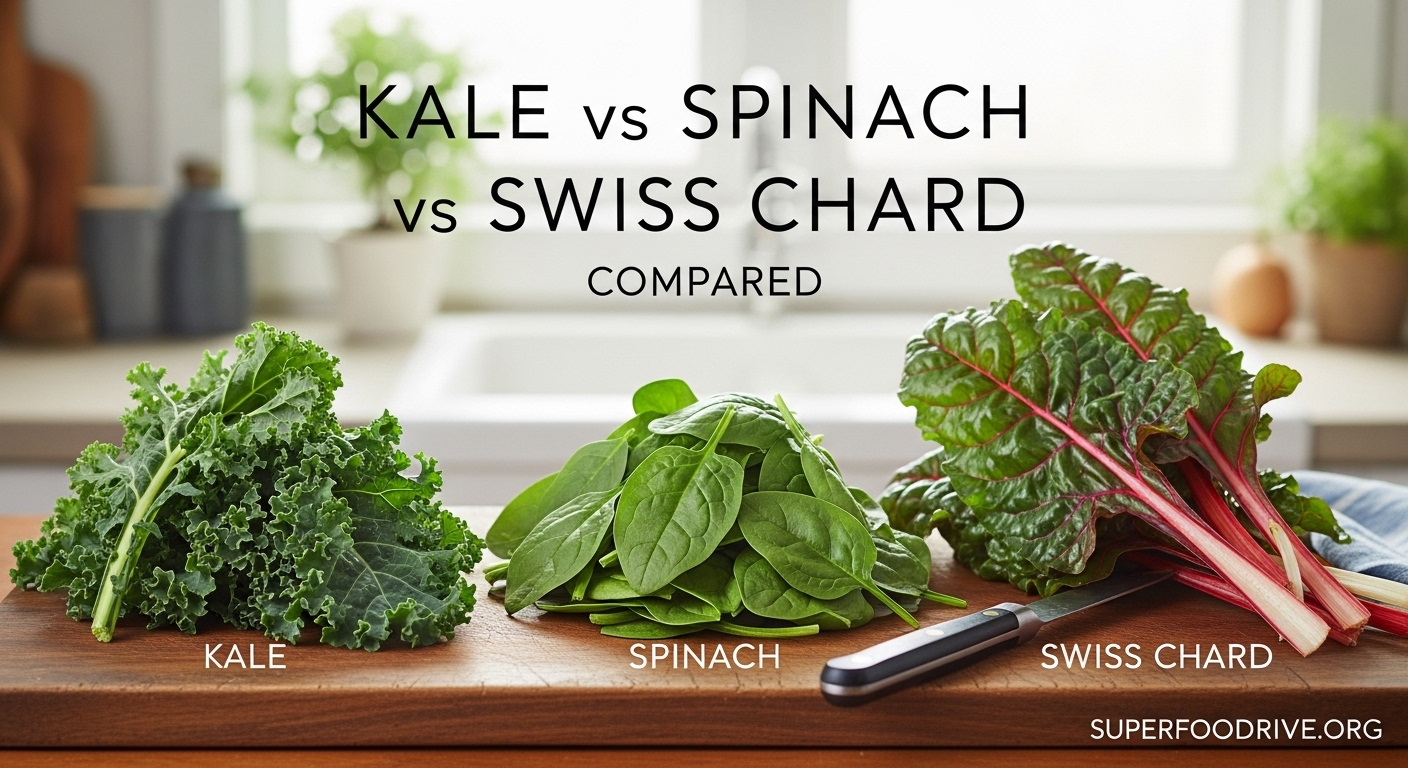
I have spent years experimenting with leafy greens in my kitchen, and the debate between kale, spinach, and Swiss chard always comes up. These three dark green vegetables dominate the produce aisle, but choosing between them can feel overwhelming. Each brings something unique to your plate, whether you are building a salad, blending a smoothie, or simmering a soup.
Our team analyzed nutritional databases, tested countless recipes, and reviewed what home cooks actually say about these greens. In this kale vs spinach vs swiss chard comparison, you will learn exactly how these superfoods stack up against each other. We will cover nutrition facts, taste differences, cooking behaviors, and which green works best for your specific needs.
By the end of this guide, you will know which leafy green deserves the top spot in your refrigerator.
Table of Contents
Quick Comparison: At a Glance
Before diving into the details, here is how these three leafy greens compare per one cup of raw greens:
| Nutrient | Kale | Spinach | Swiss Chard |
|---|---|---|---|
| Calories | 6 | 7 | 7 |
| Vitamin A | 206% DV | 52% DV | 44% DV |
| Vitamin C | 134% DV | 47% DV | 18% DV |
| Vitamin K | 684% DV | 604% DV | 374% DV |
| Iron | 0.9mg | 0.8mg | 0.6mg |
| Calcium | 101mg | 30mg | 19mg |
| Fiber | 1.3g | 0.7g | 0.6g |
| Protein | 0.6g | 0.9g | 0.6g |
| Oxalates | Low | High | Medium |
All three are incredibly low in calories and high in nutrients. Kale dominates vitamin A and C content, while spinach leads in protein and vitamin K. Swiss chard sits comfortably in the middle, offering a balanced profile with moderate oxalate levels.
Kale vs Spinach vs Swiss Chard: Individual Profiles
Understanding each green individually helps you make smarter choices. Here is what makes each one special.
Kale: The Nutrient Powerhouse
Kale has earned its reputation as a superfood for good reason. One cup of raw kale delivers over 200% of your daily vitamin A needs and more than 600% of your vitamin K requirements. This leafy green also packs impressive antioxidants including beta-carotene, lutein, and zeaxanthin.
The texture of kale is unmistakably robust. Its leaves are thick, curly, and hold up well to cooking. Raw kale has a chewy, fibrous quality that some people find tough. Massaging the leaves with a bit of oil or lemon juice softens them for salads.
Flavor-wise, kale brings an earthy, slightly bitter taste. Some describe it as peppery or nutty. This bold profile makes it ideal for dishes where you want the green to stand out rather than fade into the background.
Spinach: The Versatile Classic
Spinach is the most approachable of the three leafy greens. Its mild, slightly sweet flavor works in almost any dish without overpowering other ingredients. The tender leaves require minimal preparation and cook down quickly.
Nutritionally, spinach shines in iron and folate content. It provides more protein per cup than kale or Swiss chard. However, spinach contains high levels of oxalates, which can bind to calcium and iron, reducing absorption. Cooking spinach reduces oxalate content significantly.
One quirk of spinach is the “spinach teeth” effect some people experience. This happens when oxalic acid combines with calcium in your saliva, creating calcium oxalate crystals. It is harmless but can feel squeaky or gritty on your teeth.
Swiss Chard: The Best of Both Worlds
Swiss chard occupies the middle ground between tender spinach and sturdy kale. Its leaves are softer than kale but hold up better than spinach when cooked. Many home cooks describe it as lying “between spinach and kale – not as tender, not as tough.”
The colorful stems are a defining feature of Swiss chard. Rainbow varieties offer red, yellow, and orange stems that add visual appeal to dishes. These stems are edible but require longer cooking than the leaves. Some people find them an acquired taste due to their earthiness.
Nutritionally, Swiss chard provides excellent vitamin K and vitamin A, along with unique minerals like magnesium and potassium. Its oxalate content sits between kale and spinach, making it a safer choice for those monitoring oxalate intake.
Nutrition Face-Off: Vitamins and Minerals Compared
When comparing kale vs spinach vs Swiss chard nutritionally, each green has distinct advantages. Your health goals should guide your choice.
Vitamin Content Comparison
Kale is the clear winner for vitamin C, providing more than double what spinach offers and seven times what Swiss chard contains. This makes kale excellent for immune support and collagen production.
For vitamin K, all three excel, but spinach slightly edges out kale. This vitamin is essential for blood clotting and bone health. If you take blood thinners, you need consistent vitamin K intake, making these greens important to track.
Vitamin A comes in different forms. Kale provides beta-carotene that your body converts to vitamin A efficiently. Spinach and Swiss chard also contain beta-carotene but in lower amounts.
Mineral Content Breakdown
Kale leads in calcium with about 101mg per cup, important for bone health. Spinach technically contains more calcium by weight, but oxalates reduce absorption. Your body actually absorbs more calcium from kale despite the lower total amount.
Iron content is similar across all three, with spinach having a slight edge. However, plant-based iron (non-heme iron) is not absorbed as well as iron from meat. Pairing these greens with vitamin C-rich foods enhances iron absorption.
Swiss chard stands out for magnesium and potassium. These minerals support heart health, muscle function, and blood pressure regulation.
Taste and Texture: What to Expect From Each Green
Taste preferences are subjective, but patterns emerge when you survey regular consumers of these greens.
Flavor Profiles
Kale delivers the strongest flavor – earthy, slightly bitter, and peppery. Some people love this complexity, while others describe it as “tasting like dried grass.” Lacinato (dinosaur) kale is milder and nuttier than curly varieties.
Spinach offers the mildest taste with subtle sweetness. It blends seamlessly into smoothies, sauces, and baked dishes. This neutrality makes it the safest choice for picky eaters or those new to leafy greens.
Swiss chard has an earthy, beet-like flavor from its relation to beets. The stems can taste slightly bitter or metallic to some palates. The leaves are milder than kale but more distinctive than spinach.
Texture Differences
Raw kale is chewy and fibrous. It does not wilt easily, which makes it excellent for salads that need to hold up for hours. Kale chips maintain their crunch when baked.
Raw spinach is soft and delicate. It wilts almost instantly when exposed to heat or dressing. This tenderness makes it perfect for quick sautés and fresh salads.
Swiss chard leaves are slightly thicker than spinach but softer than kale. They wilt when cooked but retain some structure. The stems remain crunchy even after cooking, adding textural variety.
Oxalates and Health Considerations
Oxalates are compounds found in many plants that can form crystals in the body. Understanding oxalate content helps certain individuals make better choices.
Oxalate Content in Each Green
Spinach contains the highest oxalate levels of the three. One cup of cooked spinach has approximately 750mg of oxalates. This is not a concern for most people but matters if you are prone to kidney stones.
Swiss chard contains moderate oxalates – higher than kale but lower than spinach. The stems contain more oxalates than the leaves.
Kale is the lowest in oxalates, making it the safest choice for low-oxalate diets. You can eat kale freely without worrying about oxalate accumulation.
Who Should Watch Oxalate Intake
If you have a history of calcium oxalate kidney stones, limiting high-oxalate foods like spinach makes sense. Cooking reduces oxalate content, so boiled spinach is safer than raw.
People with certain digestive conditions may also benefit from lower oxalate intake. Consult your healthcare provider for personalized advice.
For most healthy individuals, the oxalate content in these greens is not a concern. The nutritional benefits far outweigh any potential risks.
Cooking and Preparation Tips
How you prepare these greens dramatically affects their taste, texture, and nutrition.
Best Cooking Methods
Kale benefits from longer cooking times. Sautéing for 5-10 minutes softens the leaves and mellows the bitterness. Roasting kale at high heat creates crispy chips. Adding kale to soups early allows it to tenderize without getting slimy.
Spinach cooks in minutes. Quick sautés, wilting into pasta, or adding at the end of soup cooking preserves nutrients and texture. Overcooking spinach makes it mushy and reduces its bright green color.
Swiss chard requires separating stems and leaves. Cook stems for 3-5 minutes before adding leaves, which only need 2-3 minutes. This ensures even texture throughout.
Preparation Techniques
Always wash leafy greens thoroughly. Dirt and grit hide in the crevices of kale and Swiss chard. A salad spinner makes drying easier.
For raw kale salads, remove the tough center rib and massage the leaves with olive oil or lemon juice. This breaks down cell walls and softens the texture.
Spinach stems are edible but can be fibrous. Remove them for delicate dishes or chop them finely.
Storage Advice
Store unwashed greens in the refrigerator in perforated bags or wrapped in damp paper towels. Kale lasts 5-7 days, Swiss chard about 5 days, and spinach 3-5 days.
Do not wash greens until ready to use. Excess moisture promotes spoilage. If greens start to wilt, a quick soak in ice water revives them.
Best Uses: Which Green for Which Dish
Matching the right green to your recipe ensures the best results.
Best for Salads and Raw Eating
Spinach wins for delicate salads where you want a neutral base. Its tender leaves require no preparation beyond washing.
Kale works for hearty salads that need to hold up for hours. Massaged kale salads stay crisp without wilting.
Swiss chard is less common in raw applications but works when sliced thinly. The stems add crunch if you enjoy their flavor.
Best for Smoothies and Juices
Spinach is the smoothie champion. Its mild taste disappears behind fruit flavors. You can pack cups of spinach into a smoothie without tasting it.
Kale works in smoothies but contributes more flavor. Pair it with strong flavors like pineapple or mango to mask the earthiness.
Swiss chard offers a middle option – more nutrition than spinach with less intensity than kale. The stems can add bitterness, so use leaves only.
Best for Soups and Stews
Kale holds up beautifully in soups, maintaining texture even after long simmering. Home cooks consistently report that kale “holds up better” and does not get slimy like other greens.
Spinach should be added at the very end of cooking. It wilts instantly and can become mushy if overcooked.
Swiss chard works well in soups, providing body without toughness. Add stems early and leaves in the final minutes.
Best for Sautéing and Stir-Fries
All three work for sautés, but timing differs. Spinach takes 1-2 minutes, Swiss chard 3-4 minutes, and kale 5-8 minutes.
Garlic and olive oil complement all three greens. Lemon juice or vinegar added at the end brightens the flavors.
The Verdict: Which Green Should You Choose
There is no single winner in the kale vs spinach vs Swiss chard comparison. Each excels in different areas.
Choose kale if you want maximum vitamins, low oxalates, and a hearty green that holds up to cooking. It is ideal for health-conscious individuals who do not mind bolder flavors.
Choose spinach if you prioritize versatility, mild taste, and protein content. It is perfect for smoothies, quick meals, and family-friendly dishes.
Choose Swiss chard if you want balance – moderate oxalates, good mineral content, and a texture between tender and sturdy. The colorful stems add visual appeal to any plate.
The best approach is rotation. Eating a variety of leafy greens ensures you get the full spectrum of nutrients each offers. Our team eats all three regularly, matching the green to the meal.
Frequently Asked Questions
Which is healthier, spinach, kale or Swiss chard?
Kale leads in vitamins A and C, while spinach has more protein and folate. Swiss chard offers balanced nutrition with moderate oxalates. For overall nutrient density, kale wins, but all three are excellent choices for health.
What’s the healthiest leafy green to eat?
Kale ranks highest in nutrient density per calorie, followed closely by spinach and Swiss chard. However, the healthiest green is the one you will actually eat regularly. Variety matters more than picking a single winner.
Is there a downside to eating kale?
Kale is very high in vitamin K, which can interfere with blood-thinning medications. Some people find it hard to digest raw. The goitrogens in kale may affect thyroid function if consumed in extremely large amounts, though this is rare.
Is Swiss chard a good replacement for spinach?
Yes, Swiss chard works well as a spinach substitute in most cooked dishes. It has a similar mild flavor but holds up better during cooking. Use the leaves interchangeably, but cook the stems separately as they require more time.
Can I eat these greens every day?
Yes, eating leafy greens daily is excellent for health. Rotate between kale, spinach, and Swiss chard to get diverse nutrients. If you are prone to kidney stones, limit spinach and favor kale or rotate all three.
Why does spinach make my teeth feel weird?
The ‘spinach teeth’ effect comes from oxalic acid combining with calcium in your saliva. This creates harmless calcium oxalate crystals that feel squeaky or gritty. Cooking spinach reduces this effect significantly.
Conclusion
The kale vs spinach vs Swiss chard comparison reveals three exceptional superfoods, each with unique strengths. Kale dominates in vitamins and antioxidants. Spinach offers unmatched versatility and mild flavor. Swiss chard provides the perfect middle ground with beautiful color and balanced nutrition.
Your best bet is to keep all three in rotation. Use kale for hearty soups and nutrient-packed smoothies. Reach for spinach when you need something quick, mild, and family-friendly. Choose Swiss chard when you want visual appeal and a texture that holds up without toughness.
What matters most is consistency. Eating any of these dark green vegetables regularly will boost your health far more than worrying about which one is perfect. Stock your kitchen with all three and let your recipes guide your choice.