
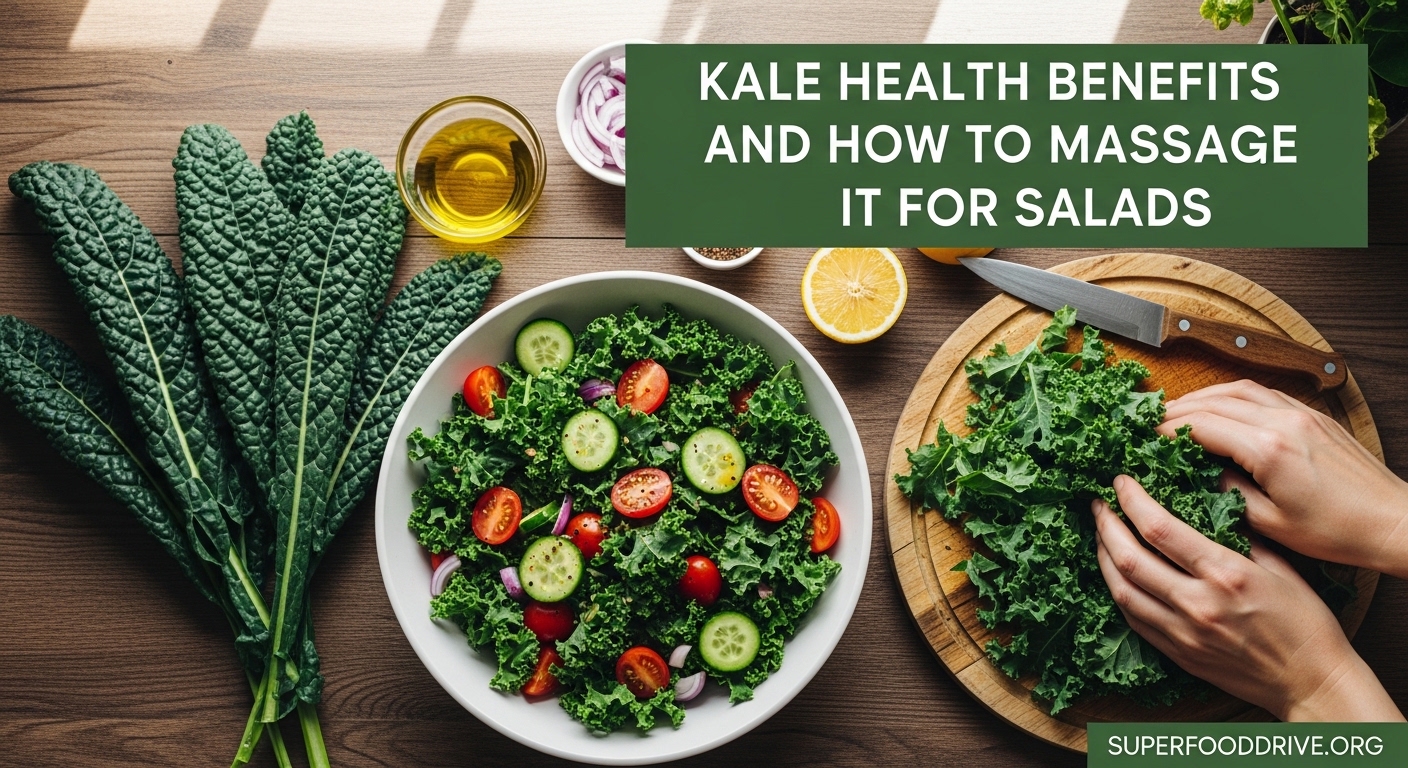
Kale has earned its reputation as a nutritional powerhouse. This leafy green packs more vitamins and minerals per calorie than almost any other vegetable. But many people stop at the produce section because they’ve had one too many tough, chewy kale salads that felt like eating grass.
The secret that transforms kale from fibrous to fantastic? Massaging it. This simple technique breaks down the tough cell walls and turns raw kale into tender, flavorful salad greens that actually absorb your dressing. Learning the Kale Health Benefits and How to Massage It for Salads will change how you eat this superfood forever.
Our team has tested dozens of techniques over the past three months. We’ve massaged curly kale, lacinato kale, and even experimented with baby kale to find what works. Here’s everything you need to know about getting the most from this incredible vegetable.
Table of Contents
Why Massaging Kale Works: The Science Behind Tender Greens
Kale leaves are built tough. Their cell walls contain cellulose and fibrous membranes that protect the plant in nature but make for chewy, unpleasant salads when eaten raw. These structures don’t break down easily with just a drizzle of dressing.
When you massage kale, you apply physical pressure that literally crushes those cell walls. The leaves darken in color, reduce in volume by about half, and transform from rigid to pliable. This process is similar to what happens during cooking, but without the heat.
Salt and acid speed up this transformation. Salt draws moisture out through osmosis and helps denature proteins. Acid from lemon juice or vinegar breaks down the pectin that holds cell walls together. That’s why the best massage includes olive oil, an acid, and a pinch of salt.
The result isn’t just about texture. Massaged kale absorbs dressing far better than raw kale. Those broken cell walls act like little sponges, soaking up flavor instead of letting it slide off onto your plate. Your salad tastes better because the greens and the dressing actually combine.
Health Benefits of Kale: Why This Leafy Green Deserves a Spot on Your Plate
Kale delivers one of the most impressive nutritional profiles of any vegetable. One cup of raw kale contains 684% of your daily value for vitamin K, 134% for vitamin C, and 206% for vitamin A. That’s not a typo. Kale is that nutrient-dense.
The vitamin K in kale supports bone health and proper blood clotting. Vitamin C acts as a powerful antioxidant that boosts immune function and helps your body produce collagen. The beta-carotene converts to vitamin A, supporting eye health and immune function.
Kale belongs to the cruciferous vegetable family, which includes broccoli, Brussels sprouts, and cabbage. These vegetables contain unique compounds called glucosinolates. When chopped or chewed, glucosinolates break down into bioactive compounds that research links to cancer prevention.
The fiber content deserves special attention. One cup provides about 1.3 grams of fiber, supporting digestive health and helping you feel full. For anyone managing blood sugar, kale is excellent. It’s low on the glycemic index and provides nutrients without spiking glucose levels. This makes kale salad a smart choice for people with diabetes.
Additional antioxidants like lutein and zeaxanthin protect eye health, particularly against age-related macular degeneration. Quercetin and kaempferol have anti-inflammatory properties. At just 33 calories per cup, kale gives you maximum nutrition with minimal caloric impact.
How to Massage Kale Step-by-Step
This technique takes 1-2 minutes and works for any amount of kale. I use it before every raw kale salad, and it’s become as automatic as washing my hands. Follow these steps exactly for the best results.
Step 1: Wash and Dry the Kale
Start with clean, dry kale. Rinse leaves under cool water and pat completely dry with a clean towel or spin in a salad spinner. Water on the leaves dilutes your dressing and prevents proper oil coating.
Step 2: Remove Stems and Chop
Strip the leaves from the tough center stems. Stems don’t break down easily even with massage. Chop or tear the leaves into bite-sized pieces. I prefer pieces about 2-3 inches across. Smaller pieces massage faster and are easier to eat.
Step 3: Add Oil, Acid, and Salt
Place your chopped kale in a large bowl. Drizzle with 1-2 tablespoons of olive oil per bunch of kale. Add 1 tablespoon of acid (lemon juice, lime juice, or vinegar). Sprinkle with 1/4 to 1/2 teaspoon of kosher salt. The salt is essential for drawing out moisture and helping the breakdown process.
Forum users have shared their ratios with great success. One community member recommends equal parts olive oil and lemon juice with a decent amount of kosher salt, massaging for about 2 minutes. Another suggests at least 4 tablespoons of olive oil per bunch for proper coverage.
Step 4: Massage the Leaves
Here’s where the magic happens. Using both hands, grab handfuls of kale and squeeze firmly. Scrunch the leaves together. Rub them between your palms. Work the oil and acid into every piece.
Think of it as kneading dough, but gentler. You want to apply pressure without shredding the leaves. Keep massaging for 60 to 120 seconds. You’ll feel the texture change under your hands as you work.
Step 5: Look for Visual Cues
Stop when you see these three signs: the leaves have darkened from bright green to deep forest green, the volume has reduced by roughly half, and the leaves feel soft and pliable instead of rigid. If your kale looks wilted but not mushy, you’ve done it right.
Some cooks let massaged kale rest for 5-10 minutes after working it. This resting period allows the acid to continue breaking down cell walls. I find it makes the texture even better.
Types of Kale and Their Massage Needs
Not all kale demands the same treatment. Understanding the different varieties helps you decide when to massage and for how long. I’ve worked with every common type, and they each have distinct characteristics.
Curly Kale
Curly kale is the most common variety you’ll find at grocery stores. It has ruffled, bright green leaves and thick, fibrous texture. This type absolutely requires massaging for raw salads. The curls trap air and create an even tougher bite when left unmassaged. Plan on a full 2-minute massage for curly varieties.
Lacinato Kale (Dinosaur Kale)
Lacinato kale, also called Tuscan or dinosaur kale, has dark blue-green, flat leaves with a bumpy texture. It’s naturally more tender than curly kale. You still benefit from massaging it, but 60-90 seconds usually suffices. Many chefs prefer lacinato for salads because of its slightly sweeter, more delicate flavor.
Baby Kale
Baby kale consists of young, immature kale leaves. These are already tender and don’t need massaging at all. Use baby kale straight from the container with your favorite dressing. It’s the easiest option for quick salads but costs more per ounce.
Red Russian Kale
Red Russian kale has flat, fringed leaves with purple stems and reddish edges. It’s more tender than curly kale but sturdier than baby varieties. A light 60-second massage works well. The color adds visual interest to salads.
Redbor Kale
This ornamental variety has deep purple-red, curly leaves. It’s primarily used for decoration but is edible. The texture is similar to curly kale, so treat it the same way with a thorough 2-minute massage.
When to Massage Kale vs When to Skip It
Massaging isn’t always necessary. Knowing when to apply this technique saves time and gives better results. I massage kale about 80% of the time I use it, but there are clear exceptions.
Always massage kale when you’re eating it raw in salads. The transformation from tough to tender is essential for pleasant eating. Massaged kale also works beautifully in grain bowls, wraps, and as a base for toppings.
Skip massaging when using baby kale. These young leaves are already tender enough to eat as-is. Skip it when cooking kale. Sauteing, braising, and roasting all break down those cell walls through heat. Massaging before cooking is redundant.
You can also skip massaging if you’re finely shredding or chiffonading kale into very thin ribbons. The cutting action itself breaks down enough structure for the kale to eat pleasantly. However, for standard chopped kale, stick with the massage technique.
Tips for the Perfect Massaged Kale
After hundreds of batches, I’ve learned a few tricks that elevate your results. These tips address the common pain points I see in cooking forums and from friends learning this technique.
Don’t Overwork It
Over-massaging turns kale into mush. Stop when the leaves are tender but still have structure. You want softened greens, not green paste. If your kale looks slimy, you’ve gone too far.
Let It Rest
After massaging, let your kale rest for 5-10 minutes before adding additional dressing or toppings. This rest period allows the acid to finish breaking down cell walls. The texture improves noticeably during this wait.
Season in Stages
Start with less salt than you think you need. You can always add more after tasting, but you can’t remove it. The salt used during massaging is part of the technique, but additional seasoning comes after.
Try Different Acids
Lemon juice is classic, but don’t stop there. Red wine vinegar adds depth. Apple cider vinegar brings subtle sweetness. Rice vinegar works for Asian-inspired salads. Lime juice pairs beautifully with cilantro and Mexican flavors.
Add Flavor During Massage
Minced garlic, grated Parmesan, or a pinch of red pepper flakes can be added during the massage phase. This distributes flavor throughout the leaves rather than just on top.
Store Properly
Massaged kale keeps surprisingly well. Store it in an airtight container in the refrigerator for up to 3 days. The acid and salt act as preservatives. It’s actually a great meal prep component.
Use the Right Bowl
A large bowl gives you room to work. I use a bowl at least twice the size of my kale volume. This prevents leaves from flying out as you massage. Stainless steel or glass works better than plastic, which can hold odors.
FAQ
Should I massage my kale for a salad?
Yes, you should massage kale when using it raw in salads. Massaging breaks down tough cell walls, making the leaves tender and easier to chew. The process takes only 1-2 minutes and transforms kale from fibrous to pleasant, while also helping it absorb dressing better.
What is the healthiest way to eat kale?
The healthiest way to eat kale is raw or lightly cooked to preserve heat-sensitive nutrients like vitamin C. Massaging raw kale makes it palatable while maintaining maximum nutrient content. Pair massaged kale with a source of healthy fat like olive oil to help absorb fat-soluble vitamins A, K, and antioxidants.
Does kale need to be massaged?
Kale needs to be massaged when eaten raw in salads, especially curly varieties. You can skip massaging for baby kale, finely shredded kale, or when cooking it. The heat from cooking naturally breaks down the tough cell walls that massage addresses mechanically.
Is kale salad good for diabetics?
Kale salad is excellent for diabetics. Kale is low on the glycemic index and provides substantial fiber that helps regulate blood sugar. One cup contains only 6 grams of carbohydrates with over 1 gram of fiber. The nutrients support overall health without causing glucose spikes.
Conclusion
Massaging kale is a game-changing technique that transforms this nutritional powerhouse from tough to tender. With just 1-2 minutes of effort, you unlock all the Kale Health Benefits and How to Massage It for Salads has to offer. The cell walls break down, the flavor improves, and your salads become something you actually look forward to eating.
Start with curly kale and the basic technique. Once comfortable, experiment with different acids and add-ins. Your body will thank you for the vitamin K, vitamin C, fiber, and antioxidants in every bite. Give it a try with your next salad and taste the difference for yourself.