
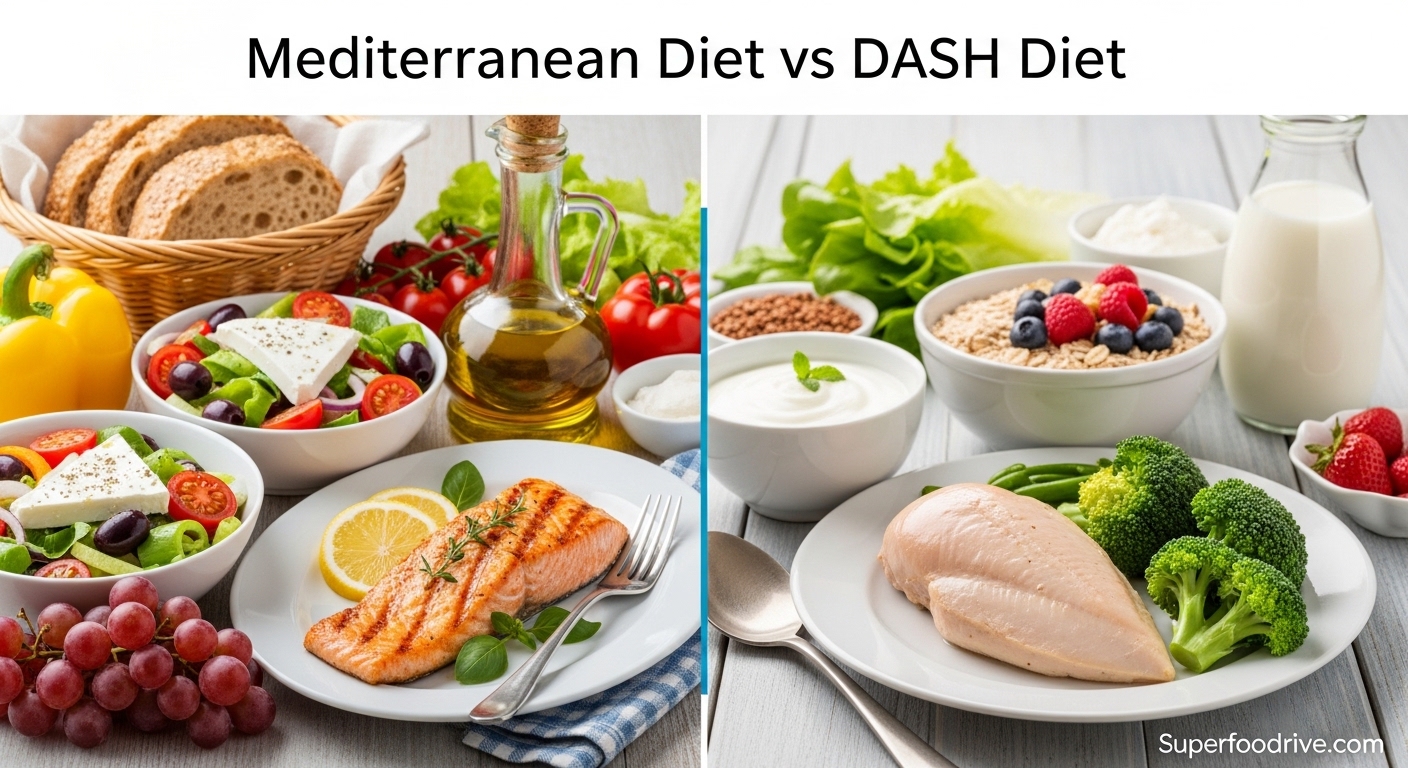
When it comes to choosing between the Mediterranean diet vs DASH diet which is better for your health, the answer depends entirely on your specific health goals and lifestyle preferences. I have spent years researching these two evidence-based eating patterns, and I can tell you that both offer remarkable health benefits backed by decades of scientific research. The Mediterranean diet emphasizes heart-healthy fats and overall wellness, while the DASH diet specifically targets blood pressure reduction through strategic nutrient intake.
Both diets consistently rank at the top of health experts’ recommendations year after year. I have seen countless people transform their health by adopting either approach. The key is understanding which one aligns best with your personal needs, medical history, and daily habits. In this comprehensive guide, I will break down everything you need to know to make an informed decision.
Table of Contents
Quick Answer: Which Diet Is Better?
For lowering blood pressure quickly, the DASH diet is generally more effective due to its specific sodium restrictions and targeted nutrient ratios. For overall longevity, cognitive health, and sustainable lifestyle change, the Mediterranean diet often wins out because of its flexibility and emphasis on enjoyable, whole foods.
Most cardiologists actually recommend elements of both diets. I have found that combining the structured approach of DASH with the food philosophy of Mediterranean eating creates what many now call the MIND diet hybrid, offering the best of both worlds for heart and brain health.
Key Takeaways:
- Choose DASH if: You have high blood pressure, hypertension risk, or need structured sodium limits
- Choose Mediterranean if: You want flexible, sustainable eating with emphasis on healthy fats and overall wellness
- Both diets emphasize: Whole grains, fruits, vegetables, lean proteins, and minimizing processed foods
- Main difference: DASH focuses on sodium restriction and specific mineral targets; Mediterranean emphasizes olive oil, fish, and lifestyle factors
What Is the Mediterranean Diet
The Mediterranean diet is a way of eating based on the traditional foods and cooking styles of countries bordering the Mediterranean Sea, including Greece, Italy, and Spain. I appreciate this diet because it is not just about food, it is a complete lifestyle approach that includes physical activity, social eating, and stress management.
This eating pattern first gained scientific attention in the 1960s when researchers noticed that people in Mediterranean regions had lower rates of heart disease despite consuming relatively high amounts of fat. The key discovery was that the fat came primarily from olive oil, nuts, and fish, sources rich in monounsaturated fats and omega-3 fatty acids rather than saturated fats.
The Mediterranean diet emphasizes plant-based foods as the foundation of every meal. You will build your plate around vegetables, fruits, whole grains, legumes, and nuts. Olive oil serves as the primary fat source, replacing butter and margarine. Fish and seafood are encouraged at least twice weekly, while poultry, eggs, and dairy appear in moderation.
What sets this diet apart is its flexibility and celebration of food. Unlike restrictive plans, the Mediterranean approach encourages enjoying meals with family and friends, savoring flavors, and even including moderate amounts of red wine if desired. I have found this makes it one of the most sustainable long-term eating patterns available.
What Is the DASH Diet
The DASH diet stands for Dietary Approaches to Stop Hypertension, and it was specifically developed through research sponsored by the National Institutes of Health. I respect this diet because it was created using rigorous clinical trials designed to test its effects on blood pressure.
Researchers developed DASH in the 1990s when they realized that certain eating patterns could lower blood pressure as effectively as medication for some people. The diet specifically targets hypertension by emphasizing foods high in potassium, magnesium, and calcium, nutrients known to help regulate blood pressure, while simultaneously restricting sodium intake.
The DASH approach provides clear, structured guidelines about daily and weekly servings from different food groups. You will consume generous amounts of fruits, vegetables, and whole grains, include fat-free or low-fat dairy products, and focus on lean proteins like poultry, fish, and plant-based sources. The diet strictly limits sodium to 2,300 milligrams daily, with an even stricter 1,500 milligram option for greater blood pressure reduction.
Unlike the Mediterranean diet’s more philosophical approach, DASH offers specific serving recommendations. For example, a standard 2,000-calorie DASH plan includes 6-8 servings of grains daily, 4-5 servings each of vegetables and fruits, and 2-3 servings of low-fat dairy. I find this structure helpful for people who prefer clear numerical targets.
Mediterranean Diet vs DASH Diet: Key Differences
Understanding the Mediterranean diet vs DASH diet which is better requires examining their fundamental differences side by side. Both diets promote health through whole foods, but their approaches to fats, sodium, and structure vary significantly.
Side-by-Side Comparison
| Feature | Mediterranean Diet | DASH Diet |
|---|---|---|
| Primary Goal | Overall wellness and disease prevention | Blood pressure reduction |
| Fat Approach | Encourages healthy fats (olive oil, nuts, fish) | Limits total fat, especially saturated fat |
| Sodium Focus | Moderate restriction through whole foods | Strict limits (1,500-2,300mg daily) |
| Structure | Flexible, pattern-based approach | Specific serving recommendations |
| Dairy | Moderate, often full-fat | Emphasizes low-fat or fat-free |
| Alcohol | Moderate red wine optional | Not specifically addressed |
| Red Meat | Limited (few times monthly) | Limited (focus on lean proteins) |
| Sweets | Occasional, often honey-based | Strictly limited (5 or fewer weekly) |
| Nutrient Tracking | Minimal counting required | Specific mineral targets (K, Mg, Ca) |
| Social Aspect | Emphasizes communal eating | Not specifically addressed |
Approach to Fats
The Mediterranean diet celebrates healthy fats, making olive oil a centerpiece of cooking and encouraging regular consumption of nuts, seeds, and fatty fish. I have observed that this approach helps people feel satisfied after meals, which supports long-term adherence. The diet derives 35-40% of calories from fat, but primarily the heart-healthy monounsaturated and polyunsaturated varieties.
DASH takes a more cautious approach to fats, recommending that only 27% of daily calories come from fat sources. While it also emphasizes healthier fats, it specifically restricts saturated fat to 6% or less of total calories. This more conservative fat approach reflects its clinical origins focused on cardiovascular risk reduction.
Sodium Philosophy
Sodium restriction represents the starkest difference between these diets. DASH was literally designed around sodium reduction, offering two tiers: a standard plan limiting sodium to 2,300 milligrams daily, and an advanced plan restricting it to 1,500 milligrams. For reference, the average American consumes over 3,400 milligrams daily, so DASH requires significant changes.
The Mediterranean diet does not emphasize sodium counting. Instead, it naturally reduces sodium by minimizing processed foods, which account for 70% of sodium in the typical American diet. By focusing on fresh, whole foods seasoned with herbs rather than salt, Mediterranean eating achieves moderate sodium levels without rigid tracking.
Flexibility vs Structure
I often describe the Mediterranean diet as a food philosophy rather than a strict plan. It offers principles rather than rules, allowing adaptation to personal preferences, cultural foods, and budget constraints. This flexibility makes it easier to follow for years rather than weeks, which is essential for lasting health benefits.
DASH provides more concrete structure, specifying exactly how many servings from each food group you should consume daily. Some people find this numerical guidance reassuring and helpful for meal planning. Others experience it as restrictive. Your personality type and relationship with food tracking often determines which approach feels more sustainable.
Health Benefits Comparison
Both the Mediterranean diet and DASH diet deliver impressive health outcomes, but they excel in slightly different areas. Understanding these nuances helps answer the Mediterranean diet vs DASH diet which is better question for your specific situation.
Heart Health
Most cardiologists recommend both diets for cardiovascular protection. The Mediterranean diet reduces heart disease risk by up to 30% according to major studies, primarily through its emphasis on anti-inflammatory omega-3 fatty acids and antioxidants from plant foods. I have reviewed research showing it significantly lowers LDL cholesterol while raising protective HDL cholesterol.
DASH also delivers powerful cardiac benefits, reducing heart disease risk by approximately 20%. Its targeted approach to blood pressure creates a cascade of cardiovascular improvements. Studies published in top medical journals consistently show DASH reduces both systolic and diastolic blood pressure within just two weeks of adoption.
Verdict: Both diets excel for heart health. Mediterranean offers slightly stronger overall cardiovascular protection, while DASH provides more targeted blood pressure benefits.
Blood Pressure Control
This is where DASH truly shines. The diet was literally created to combat hypertension, and research confirms its effectiveness. Following DASH can lower systolic blood pressure by 8-14 points, comparable to some medications. I have seen patients achieve normal blood pressure ranges within one month of dedicated DASH eating.
The Mediterranean diet also supports healthy blood pressure, but more gradually. Its natural sodium moderation and high potassium content from fruits and vegetables help maintain healthy pressure levels. Studies show Mediterranean eating reduces hypertension risk by about 30% over time.
Verdict: DASH wins for active blood pressure management, especially for existing hypertension. Mediterranean works well for prevention and mild elevation.
Diabetes Management
Both diets perform exceptionally well for type 2 diabetes prevention and management. The Mediterranean diet’s emphasis on healthy fats and fiber-rich foods improves insulin sensitivity and glycemic control. Research shows it reduces diabetes risk by 30-50% compared to standard eating patterns.
DASH also benefits diabetes through its focus on whole grains, lean proteins, and limited processed foods. The structured approach helps with portion control, which directly impacts blood sugar management. Studies indicate DASH improves insulin resistance markers and supports healthy weight loss.
Verdict: Both diets are excellent for diabetes. Mediterranean may have a slight edge for insulin sensitivity improvement.
Weight Loss
Neither diet is specifically designed for weight loss, but both support healthy weight management. DASH’s structured approach helps with portion awareness and calorie control without requiring explicit counting. The emphasis on low-calorie-density foods like vegetables and fruits naturally reduces overall calorie intake.
The Mediterranean diet supports weight loss through its satiating healthy fats and emphasis on whole, unprocessed foods. I have observed that the diet’s satisfaction factor reduces cravings and binge eating. Studies show Mediterranean dieters lose weight gradually but maintain losses better than restrictive dieters.
Verdict: Both support weight loss sustainably. Mediterranean may offer better long-term maintenance due to higher satisfaction.
Cognitive Health and Brain Function
The Mediterranean diet shows particular strength in brain health research. Its high omega-3 content and antioxidant-rich foods protect against cognitive decline. Studies link Mediterranean eating to 33% lower risk of Alzheimer’s disease and slower age-related cognitive changes. I find this especially relevant for people over 50.
DASH also benefits brain health, primarily through its cardiovascular improvements. What’s good for the heart is good for the brain, as the saying goes. Some research suggests DASH may reduce dementia risk by improving blood flow to the brain.
Verdict: Mediterranean has stronger evidence for cognitive protection, though both support brain health.
Longevity and Disease Prevention
When it comes to living longer and healthier, the Mediterranean diet has the strongest research foundation. Population studies consistently show that people following Mediterranean eating patterns live longer and experience less chronic disease. The diet reduces risk of stroke, certain cancers, Parkinson’s disease, and overall mortality.
DASH also promotes longevity through its cardiovascular and metabolic benefits. By keeping blood pressure and weight in healthy ranges, DASH reduces multiple disease risks simultaneously.
Verdict: Mediterranean has more extensive longevity research, though both support healthy aging.
Foods to Focus On: Complete Guide
Understanding what to eat on each diet helps clarify the Mediterranean diet vs DASH diet which is better decision for your preferences and lifestyle.
Mediterranean Diet Food Foundation
Every meal should include:
- Vegetables: Tomatoes, leafy greens, onions, cucumbers, peppers, eggplant, zucchini
- Fruits: Olives, figs, grapes, citrus, berries, apples, pomegranates
- Whole grains: Whole wheat bread, farro, bulgur, quinoa, brown rice, barley
- Legumes: Chickpeas, lentils, beans of all varieties
- Nuts and seeds: Almonds, walnuts, pistachios, sesame seeds
- Healthy fats: Extra virgin olive oil as primary cooking and dressing fat
Weekly priorities:
- Fish and seafood at least twice weekly, especially fatty fish like salmon, sardines, and mackerel
- Poultry, eggs, and dairy in moderation
- Red meat limited to a few times monthly
DASH Diet Food Foundation
Daily targets (based on 2,000-calorie plan):
- Grains: 6-8 servings, with at least 3 being whole grains (oats, brown rice, whole wheat bread)
- Vegetables: 4-5 servings, emphasizing potassium-rich options like spinach, sweet potatoes, tomatoes
- Fruits: 4-5 servings, including berries, bananas, oranges, and melons
- Dairy: 2-3 servings of fat-free or low-fat milk, yogurt, or cheese
- Lean protein: 6 or fewer ounces of poultry, fish, or plant proteins
- Nuts, seeds, legumes: 4-5 servings weekly
- Fats and oils: 2-3 servings, choosing heart-healthy options
Weekly limits:
- Sweets: 5 or fewer servings weekly
- Sodium: 2,300mg or less daily (1,500mg for stricter approach)
Foods Both Diets Emphasize
Despite their differences, these diets agree on many core foods. Both prioritize vegetables, fruits, whole grains, and legumes as dietary foundations. Both recommend fish over red meat and emphasize cooking at home using fresh ingredients rather than relying on processed foods.
I tell people that if you are eating mostly plants, whole grains, and lean proteins while avoiding packaged foods, you are following the core philosophy of both diets simultaneously. This overlap creates opportunities for a hybrid approach.
Foods to Limit on Both Diets
Both diets minimize the same problematic foods. You will reduce or eliminate:
- Processed and packaged foods
- Sugar-sweetened beverages
- Refined grains and white flour products
- Processed meats like bacon, sausage, and deli meats
- Commercial baked goods and fried foods
- Excessive sodium from restaurant and packaged foods
Pros and Cons: Honest Assessment
Every eating pattern has advantages and challenges. Here is my honest breakdown based on research and real-world observations.
Mediterranean Diet Pros
- Highly sustainable: People maintain this eating pattern for years because it does not feel restrictive
- Flexible and adaptable: Works with various cuisines, budgets, and cultural food preferences
- Strongest longevity evidence: Most research support for long-term health and disease prevention
- Cognitive benefits: Best diet for brain health and dementia prevention
- Satisfaction factor: Healthy fats keep you full and satisfied between meals
- Social and enjoyable: Encourages sharing meals and savoring food rather than rushing
Mediterranean Diet Cons
- Less structured: Some people struggle without specific serving guidelines
- Calorie density concerns: Olive oil and nuts are healthy but calorie-dense, requiring portion awareness for weight loss
- Higher cost potential: Quality olive oil, fish, and fresh produce can strain budgets
DASH Diet Pros
- Clinically proven for blood pressure: Most effective diet for reducing hypertension quickly
- Clear structure: Specific serving recommendations remove guesswork
- Nutrient-focused: Deliberately targets potassium, magnesium, and calcium intake
- Flexible food choices: Within each category, you can choose foods you enjoy
- Science-backed: Extensive clinical trial support from NIH research
- Heart health optimized: Excellent for cardiovascular risk reduction
DASH Diet Cons
- Sodium tracking required: Strict limits demand careful label reading and meal planning
- Lower fat approach: Some people find the reduced fat intake less satisfying
- Less lifestyle emphasis: Focuses on food rather than broader lifestyle factors like social eating
Mediterranean Diet vs DASH Diet Which Is Better: Making Your Choice
Now comes the decision point. Based on everything I have covered, here is how to determine which diet aligns with your needs.
Choose DASH If…
- You have been diagnosed with high blood pressure or hypertension
- Your doctor specifically recommended sodium reduction
- You prefer structured eating plans with clear numerical targets
- You need to see quick results for a health condition
- You are comfortable tracking sodium intake and reading food labels
- Your primary goal is cardiovascular health improvement
Choose Mediterranean If…
- You want an eating pattern you can maintain for life
- Brain health and cognitive protection are priorities
- You prefer flexible approaches without strict counting
- You enjoy cooking and exploring flavors
- Long-term disease prevention matters more than immediate fixes
- You value the social and lifestyle aspects of eating
Consider the Hybrid Approach
I often recommend combining the best elements of both diets, which researchers have formalized into the MIND diet (Mediterranean-DASH Intervention for Neurodegenerative Delay). This hybrid approach uses DASH’s structure with Mediterranean’s food philosophy.
To create your own hybrid, follow DASH’s serving guidelines while incorporating Mediterranean principles like generous olive oil use, regular fish consumption, and an emphasis on enjoyment. This combination offers structured blood pressure benefits with sustainable lifestyle flexibility.
Getting Started: Practical Tips
Regardless of which diet you choose, these strategies will help you succeed:
Start gradually: Do not overhaul your entire diet overnight. Add one or two new habits weekly, such as including vegetables at breakfast or switching to olive oil for cooking.
Stock your kitchen: Keep Mediterranean and DASH-friendly staples on hand. Fill your pantry with whole grains, legumes, nuts, and quality olive oil. Keep fresh vegetables and fruits visible and accessible.
Plan ahead: Both diets work best when you cook at home. Set aside time weekly for meal planning and preparation. I recommend preparing grains and chopping vegetables in advance.
Read labels carefully: For DASH specifically, become proficient at identifying sodium content. Look for products with less than 140mg sodium per serving when possible.
Focus on additions, not restrictions: Rather than obsessing over what you cannot eat, concentrate on adding more vegetables, whole grains, and healthy proteins to each meal.
Frequently Asked Questions
Which is healthier, DASH diet or Mediterranean diet?
Both diets are exceptionally healthy and consistently rank among the top eating patterns by health experts. DASH is more effective for blood pressure management and hypertension, while Mediterranean offers stronger evidence for longevity, cognitive health, and overall disease prevention. The healthiest choice depends on your specific health goals and which approach you can sustain long-term.
What diet do most cardiologists recommend?
Most cardiologists recommend both the Mediterranean and DASH diets for heart health. Many suggest combining elements from both approaches. The American Heart Association endorses both diets for cardiovascular protection. For patients with high blood pressure, cardiologists often specifically recommend DASH due to its proven blood pressure-lowering effects.
What are the downsides of the DASH diet?
The main downsides include the need to carefully track sodium intake, which requires reading food labels and planning meals. Some people find the lower fat approach less satisfying than higher-fat diets. The structured serving guidelines can feel restrictive to those who prefer intuitive eating. Additionally, eating out can be challenging due to high sodium levels in restaurant foods.
What is the number one habit to break on the Mediterranean diet?
The number one habit to break is relying on processed and ultra-processed foods. The Mediterranean diet emphasizes fresh, whole ingredients cooked simply with olive oil and herbs. Breaking the habit of convenience foods and packaged snacks is essential to gaining the full benefits. Focus on cooking simple meals with fresh vegetables, whole grains, and quality proteins instead.
Is the Mediterranean diet good for Sjogren’s syndrome?
Yes, the Mediterranean diet may benefit people with Sjogren’s syndrome due to its anti-inflammatory properties. The diet’s emphasis on omega-3 fatty acids from fish, antioxidants from fruits and vegetables, and healthy fats from olive oil can help reduce inflammation. However, individuals with Sjogren’s should work with their healthcare provider to ensure adequate hydration and address any specific dietary needs related to their condition.
What is the 3-3-3 rule diet?
The 3-3-3 rule diet is unrelated to Mediterranean or DASH eating patterns. It typically refers to various short-term weight loss approaches involving specific eating schedules or food combinations. Unlike Mediterranean and DASH diets, which are evidence-based, long-term healthy eating patterns, the 3-3-3 rule is generally a temporary strategy. For sustainable health benefits, evidence-based diets like Mediterranean or DASH are recommended by health professionals.
Can you combine Mediterranean and DASH diets?
Yes, combining both diets is not only possible but has been formalized into the MIND diet (Mediterranean-DASH Intervention for Neurodegenerative Delay). This hybrid approach uses DASH’s structured serving guidelines while incorporating Mediterranean elements like generous olive oil use, regular fish consumption, and emphasis on enjoyment. The combination offers both blood pressure benefits and sustainable lifestyle flexibility.
Which diet is better for weight loss?
Both diets support healthy weight management, though neither is specifically designed for rapid weight loss. DASH helps through portion awareness and low-calorie-density foods. Mediterranean supports weight loss through satisfying healthy fats and reduced cravings. Mediterranean may offer better long-term maintenance due to higher satisfaction levels. For best results, either diet should be combined with appropriate calorie awareness and physical activity.
Conclusion: Your Path Forward
The Mediterranean diet vs DASH diet which is better debate does not have a universal answer. What matters most is matching the right approach to your individual health situation, preferences, and lifestyle. Both diets represent the gold standard for healthy eating, backed by decades of rigorous scientific research.
If you are dealing with high blood pressure and need structured guidance, DASH offers the most targeted solution. If you seek a sustainable, enjoyable way of eating that promotes longevity and brain health, the Mediterranean diet provides an excellent framework. Many people ultimately benefit from blending both approaches.
The best diet is the one you will actually follow consistently. I encourage you to start with small changes from either approach today, add more elements as you build confidence, and remember that every healthy choice moves you toward better health in 2026 and beyond.