
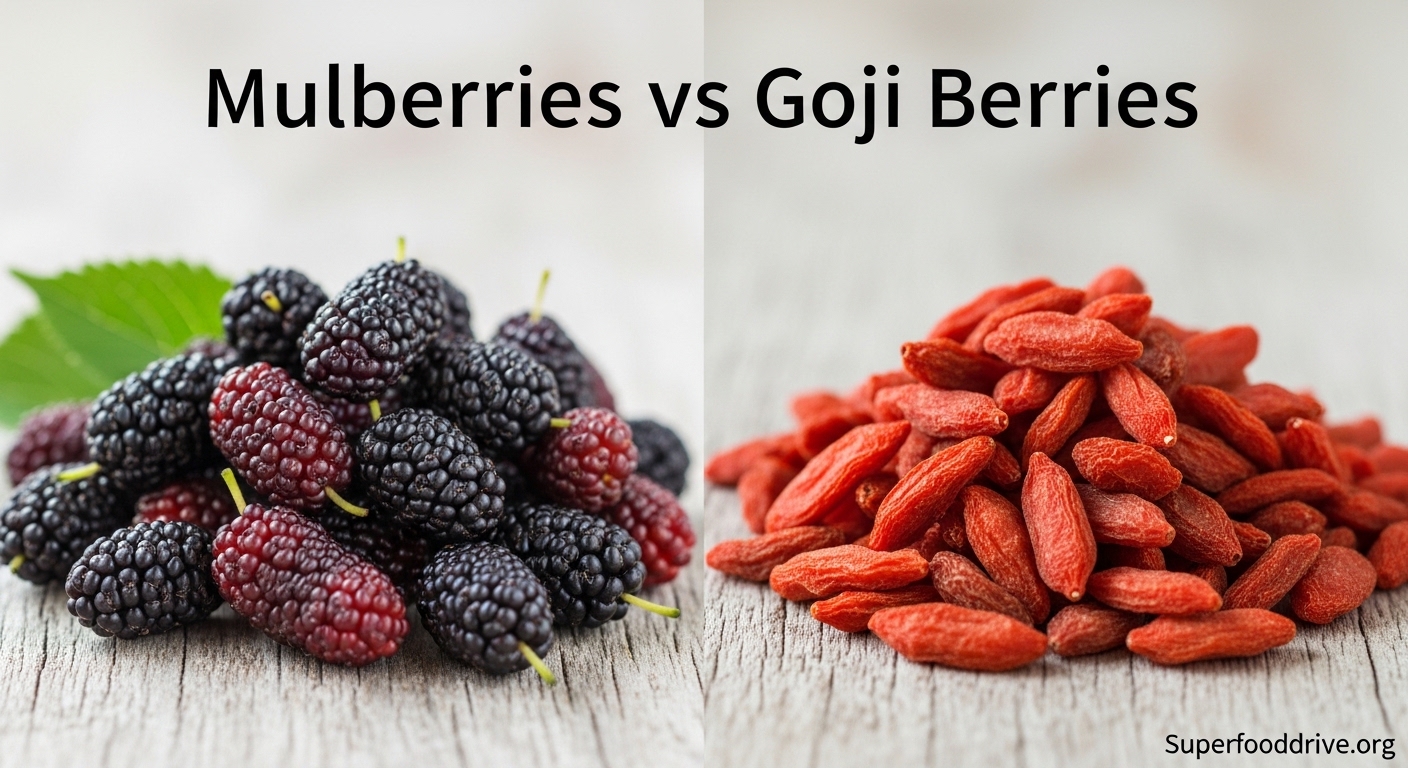
Mulberries vs goji berries: two superfruits with impressive health credentials but distinctly different profiles. When I first started researching these berries for my own blood sugar concerns, I discovered something surprising. No one had created a direct head-to-head comparison. Every article either covered goji berries alone or listed them among dozens of other berries without meaningful contrast.
That gap ends here. This guide compares mulberries and goji berries specifically on their antioxidant capacity and blood sugar impact. You will learn exactly how each berry works, which one might suit your health goals, and practical ways to add them to your diet.
Whether you are managing diabetes, seeking eye health benefits, or simply want the most antioxidant-packed fruit for your morning smoothie, this comparison covers everything you need to decide between these two nutritional powerhouses.
Table of Contents
What Are Mulberries
Mulberries come from the Morus alba tree, also known as the white mulberry tree. Despite the name, these berries range in color from white to deep purple-black depending on the variety. Native to China, mulberries spread along the Silk Road and established themselves in Europe and North America centuries ago.
Traditional Chinese Medicine has used mulberry leaves and bark for thousands of years. The fruit itself carries a sweet-tart flavor reminiscent of blackberries with a subtle honey note. Fresh mulberries offer a juicy, slightly crunchy texture from their tiny seeds. Dried mulberries become chewy and intensely sweet, making them perfect for snacking.
Fresh mulberries remain challenging to find in typical grocery stores due to their delicate nature and short shelf life. Most consumers encounter them dried, which actually concentrates their beneficial compounds. The dried form also makes mulberries more practical for regular consumption.
What Are Goji Berries
Goji berries, also called wolfberries, come from Lycium barbarum plants native to Asia. These small red-orange berries have starred in Traditional Chinese Medicine for over 2,000 years. Chinese people eat goji berries for their association with longevity, vitality, and immune strength. The practice spans from everyday wellness routines to specific therapeutic applications.
Unlike mulberries, fresh goji berries rarely appear outside growing regions. They come almost exclusively dried, with a texture similar to raisins but more chewy and less sweet. Their flavor profile combines subtle sweetness with a slightly bitter, earthy undertone that some people find acquired.
Their vibrant orange-red color hints at their high carotenoid content, particularly beta-carotene and zeaxanthin. These compounds explain why goji berries earned their reputation for supporting eye health. Chinese medicine practitioners traditionally recommend them for vision problems and overall vitality.
Nutritional Profile Comparison
Understanding the nutritional differences helps explain why these berries affect health differently. Here is how one ounce serving of dried berries compares:
Calories: Mulberries contain approximately 90 calories per ounce, while goji berries pack around 100 calories. The difference is negligible for most dietary plans.
Carbohydrates and Sugar: Mulberries provide about 22 grams of carbohydrates with 18 grams of sugar. Goji berries deliver slightly more at 22 grams of carbohydrates but with less sugar at around 12 grams, balanced by more complex carbohydrates.
Fiber: Both berries excel here. Mulberries offer 3.5 grams of fiber per ounce. Goji berries match that with 3.6 grams. This fiber content partially explains both berries’ blood sugar benefits.
Vitamin C: Goji berries dominate with 27% of daily value per ounce. Mulberries provide a respectable but lower amount at about 8%.
Vitamin A: Goji berries shine with 140% daily value of vitamin A from their rich carotenoid content. Mulberries contribute minimal vitamin A by comparison.
Iron: Goji berries provide 14% of daily iron needs per ounce. Mulberries offer about 8%. This makes goji berries particularly valuable for those monitoring iron intake.
Resveratrol: Here mulberries take the lead. They contain meaningful resveratrol, the same compound celebrated in red wine and grapes. Goji berries contain negligible amounts of this specific antioxidant.
Antioxidant Content Comparison
Both berries deliver impressive antioxidant power but through different mechanisms. Understanding these differences helps you choose based on your specific health priorities.
Anthocyanins in Both Berries
Anthocyanins give dark berries their vibrant colors and provide powerful antioxidant protection. Dark purple mulberries contain high levels of these compounds, particularly cyanidin and delphinidin. Research links anthocyanins to reduced inflammation, improved heart health, and neuroprotective effects.
Goji berries contain anthocyanins too, though at lower concentrations since they are orange-red rather than deep purple. Their anthocyanin profile differs, focusing on different subclasses that still provide antioxidant benefits but with different biological targets.
Resveratrol: The Mulberry Advantage
Mulberries stand out among berries for their resveratrol content. This polyphenol has gained fame for its potential cardiovascular benefits and anti-aging properties. While grapes and red wine get most attention, mulberries provide a concentrated plant-based source without the alcohol.
Research from PMC studies indicates resveratrol may help protect against oxidative stress and support healthy cellular function. For anyone seeking resveratrol from food sources, mulberries offer a convenient dried option.
Zeaxanthin and Beta-Carotene: The Goji Berry Strength
Goji berries contain exceptionally high levels of zeaxanthin, a carotenoid that accumulates in the retina and helps protect eye health. Studies suggest zeaxanthin may reduce risk of age-related macular degeneration and cataracts. This explains why Chinese medicine traditionally uses goji berries for vision support.
The beta-carotene in goji berries converts to vitamin A in the body, supporting immune function and skin health. Together with zeaxanthin, these carotenoids give goji berries their distinctive orange-red color and eye health reputation.
ORAC Values
ORAC (Oxygen Radical Absorbance Capacity) measures antioxidant capacity. While goji berries were once marketed with extremely high ORAC scores, more recent standardized testing places both berries in similar ranges. Dried mulberries score approximately 6,100 micromol TE per 100 grams. Goji berries score around 4,300 micromol TE per 100 grams.
However, ORAC values tell only part of the story. The specific types of antioxidants matter more than total capacity. Mulberries offer resveratrol and diverse anthocyanins. Goji berries provide unique zeaxanthin and polysaccharides with immune-modulating properties.
Mulberries vs Goji Berries Blood Sugar Impact
Mulberries vs goji berries blood sugar impact represents perhaps the most important comparison for many readers. Both berries show promise for blood sugar management but through different mechanisms.
How Mulberries Affect Blood Sugar
Research suggests mulberries help stabilize blood sugar levels through multiple pathways. Animal studies indicate compounds in mulberries may inhibit alpha-glucosidase, an enzyme that breaks down carbohydrates into glucose. This action slows sugar absorption and reduces post-meal blood sugar spikes.
A study published in PMC demonstrated that mulberry extract significantly reduced blood glucose levels in diabetic rats. The researchers attributed this effect to the presence of 1-deoxynojirimycin (DNJ), a unique compound found in mulberry leaves and fruit that inhibits carbohydrate digestion.
The fiber content in mulberries also contributes to their blood sugar benefits. Fiber slows gastric emptying and glucose absorption, creating a more gradual blood sugar curve after eating.
How Goji Berries Affect Blood Sugar
Goji berries may be helpful in controlling the release of sugar into the blood. Research suggests their polysaccharides improve insulin sensitivity and may protect pancreatic beta cells. A study in the Journal of Ethnopharmacology found that goji berry polysaccharides lowered blood glucose and improved lipid profiles in diabetic animal models.
Human studies remain limited but promising. One small trial showed that goji berry extract reduced waist circumference and improved lipid profiles in overweight adults. The researchers suggested improved insulin sensitivity as a contributing factor.
However, goji berries contain more complex carbohydrates than mulberries. This means they may affect blood sugar differently depending on the individual’s metabolic response. Some people with diabetes report stable blood sugar after eating moderate amounts, while others need to monitor more carefully.
Which Berry Is Best for Type 2 Diabetes
For type 2 diabetes management specifically, mulberries may have a slight edge based on current research. Their DNJ content provides a specific mechanism for blood sugar control that goji berries lack. The alpha-glucosidase inhibition directly addresses post-meal glucose spikes.
That said, goji berries offer complementary benefits through their insulin-sensitizing polysaccharides. Rather than choosing one, some research suggests combining both may provide broader metabolic support.
Should diabetics eat goji berries? Generally yes, in moderation. The fiber and complex carbohydrates mean they do not spike blood sugar like simple sugars. However, individuals should monitor their personal response and consult healthcare providers, especially if taking diabetes medications.
Additional Health Benefits
Beyond antioxidants and blood sugar, both berries offer additional health benefits worth considering.
Eye Health Benefits
Goji berries excel here. Their zeaxanthin and lutein content specifically targets eye health. These carotenoids accumulate in the macula and filter harmful blue light. Research suggests regular goji berry consumption may help prevent age-related macular degeneration.
A small clinical trial published in Optometry and Vision Science found that elderly participants who consumed goji berries for 90 days showed increased zeaxanthin levels in their blood and improved macular pigment density.
Immune System Support
Goji berries contain unique polysaccharides called Lycium barbarum polysaccharides (LBP) that modulate immune function. Research suggests these compounds enhance immune cell activity and support the body’s defense mechanisms.
Mulberries provide immune support through their vitamin C content and general antioxidant capacity. While less studied than goji berries for immune function, their nutritional profile supports overall immune health.
Liver Protection
Research suggests mulberries specifically help protect liver health. Animal studies show mulberry extract reduces markers of liver damage and oxidative stress in the liver. This protective effect likely stems from their antioxidant compounds.
Cardiovascular Health
Both berries support heart health through different mechanisms. Mulberries’ resveratrol content may help maintain healthy blood vessel function and cholesterol levels. Goji berries have been shown to improve lipid profiles and reduce oxidative stress markers associated with cardiovascular disease.
How to Use Mulberries and Goji Berries
Adding these superfruits to your daily routine requires minimal effort. Here are practical ways I have found to incorporate both berries:
Smoothie additions: Both berries blend well into smoothies. Soak dried berries in warm water for 10 minutes to soften them before blending. A tablespoon of each adds antioxidants without overwhelming other flavors.
Oatmeal and yogurt toppings: Sprinkle a tablespoon of dried berries over morning oatmeal or yogurt. The chewy texture contrasts nicely with creamy bases. Mulberries add sweetness, while goji berries contribute a pleasant tartness.
Trail mix combinations: Create custom trail mixes combining mulberries, goji berries, nuts, and seeds. The berries provide natural sweetness that reduces need for added sugars or chocolate.
Baking applications: Both berries work in muffins, energy bars, and homemade granola. Chop larger mulberries to distribute evenly. Goji berries rehydrate during baking, becoming tender and sweet.
Tea infusions: Goji berries traditionally steep in hot water to make restorative teas. Add a tablespoon to hot water with ginger for a warming drink. Mulberries also work well in herbal tea blends.
Serving size recommendations: Start with one tablespoon daily of either berry. Gradually increase to 1/4 cup if desired. This moderate approach lets you assess your body’s response, particularly important for blood sugar management.
Safety Considerations
Why can’t you eat a lot of goji berries? Several factors limit safe consumption of both berries.
Digestive concerns: Both berries contain significant fiber. Eating large amounts can cause digestive discomfort, bloating, or diarrhea. The forum discussions I reviewed consistently mentioned this as a primary concern. Moderate portions prevent these issues.
Potassium content: Goji berries contain relatively high potassium levels. People with kidney disease or those on potassium-restricted diets should monitor intake carefully.
Drug interactions: Goji berries may interact with blood thinners like warfarin. Their vitamin K content affects blood clotting. Anyone on anticoagulant medications should consult healthcare providers before adding goji berries to their diet.
Allergic reactions: Though rare, some people experience allergic reactions to either berry. Start with small amounts to test tolerance.
Pregnancy and breastfeeding: Limited safety data exists for concentrated goji berry consumption during pregnancy. Traditional use suggests safety, but high-dose extracts warrant caution. Discuss with healthcare providers.
Selenium content: Some goji berries grown in selenium-rich soils accumulate this mineral. While selenium is essential, excessive intake causes toxicity. Vary your berry sources and avoid consuming multiple selenium-rich foods simultaneously.
Frequently Asked Questions
Should diabetics eat goji berries?
Yes, diabetics can generally eat goji berries in moderation. The fiber and complex carbohydrates in goji berries produce a more gradual blood sugar response than simple sugars. Research suggests goji berry polysaccharides may improve insulin sensitivity. However, individuals should monitor their personal blood sugar response and consult healthcare providers, especially when taking diabetes medications.
Why can’t you eat a lot of goji berries?
Eating large amounts of goji berries may cause digestive issues due to their high fiber content. They also contain significant potassium, which can concern those with kidney conditions. Goji berries may interact with blood thinning medications. Additionally, their selenium content varies by growing region, and excessive selenium intake causes toxicity. Moderate consumption of 1-2 tablespoons daily is generally safe.
Which berry is best for type 2 diabetes?
Mulberries may have a slight advantage for type 2 diabetes based on current research. They contain 1-deoxynojirimycin (DNJ), which inhibits alpha-glucosidase and slows carbohydrate digestion. This mechanism directly addresses post-meal blood sugar spikes. However, both berries offer benefits, and combining them may provide broader metabolic support.
Why do Chinese people eat goji berries?
Chinese people have eaten goji berries for over 2,000 years in Traditional Chinese Medicine. They associate these berries with longevity, vitality, and immune strength. Practitioners traditionally prescribe them for vision health, immune support, and overall wellness. The practice spans from everyday health maintenance to specific therapeutic applications for various conditions.
Do mulberries have more antioxidants than goji berries?
Mulberries and goji berries have different antioxidant profiles rather than one being definitively higher. Mulberries contain more resveratrol and certain anthocyanins. Goji berries contain higher levels of zeaxanthin, beta-carotene, and vitamin C. ORAC testing shows mulberries with slightly higher total antioxidant capacity, but the specific antioxidants and their targets matter more than total numbers.
Conclusion
Mulberries vs goji berries antioxidant and blood sugar impact comes down to your specific health priorities. Choose mulberries if blood sugar management is your primary goal, particularly their unique DNJ content that inhibits carbohydrate digestion. Their resveratrol content also appeals to those seeking cardiovascular and cellular health benefits.
Choose goji berries if eye health tops your list. Their exceptional zeaxanthin content supports vision in ways mulberries cannot match. Their immune-modulating polysaccharides and higher vitamin C also suit those focused on immune support.
For most people, the ideal approach includes both berries in moderation. They complement each other nutritionally and provide a broader spectrum of antioxidants than either alone. Start with one tablespoon daily of each, monitor how your body responds, and adjust accordingly. Your morning oatmeal just became significantly more powerful.