
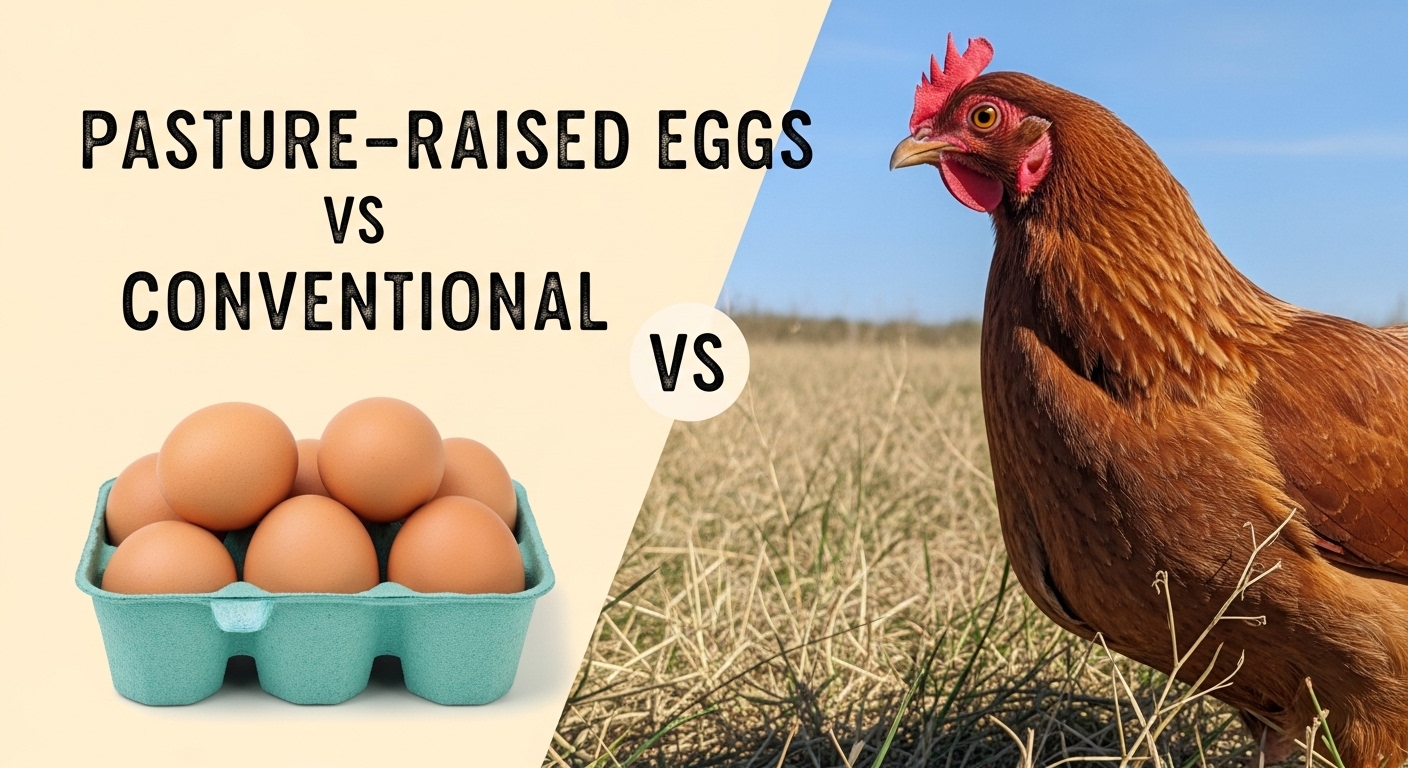
Standing in the egg aisle at your grocery store, you have probably noticed the price gap between conventional and pasture-raised eggs. A dozen conventional eggs might cost $2-3, while pasture-raised eggs often run $6-8 per dozen. That is a significant jump. You might wonder if the extra money actually buys you something better, or if it is just clever marketing. I have spent months researching egg production, nutrition studies, and farming practices to give you a clear answer on whether pasture-raised eggs are worth the premium price.
This guide breaks down exactly what makes these eggs different. You will learn about nutritional content, hen living conditions, taste differences, and whether the health benefits justify the cost. By the end, you will have the facts you need to make an informed decision about which eggs belong in your cart.
Table of Contents
Pasture Raised Eggs vs Conventional: What Do These Labels Actually Mean?
The egg aisle can feel overwhelming with so many labels shouting for your attention. Cage-free, free-range, pasture-raised, organic, vegetarian-fed, hormone-free – which claims actually matter?
Pasture-raised eggs come from hens that have continuous outdoor access to pasture. According to Certified Humane standards, each hen must have at least 108 square feet of outdoor space. These hens spend their days foraging for grass, bugs, worms, and seeds. They receive supplemental feed, but their diet includes significant natural forage.
Conventional eggs come from hens raised in battery cages. These are small wire enclosures that typically house 6-8 birds together. The hens have no outdoor access and eat only commercial feed. This intensive farming method maximizes production volume while minimizing costs.
Cage-free sounds better, but it only means hens are not kept in cages. They typically live in large indoor barns with no outdoor access. Free-range hens have some outdoor access, but the USDA only requires a small door and does not specify how much space or time outdoors.
HFAC certification (Humane Farm Animal Care) is one label you can trust. When you see the Certified Humane Pasture-Raised seal, you know the hens met strict outdoor space and living condition requirements.
Nutritional Differences: What the Research Shows
Numerous studies have compared the nutritional content of pasture-raised eggs versus conventional eggs. The differences are significant and consistent across research.
Pasture-raised eggs contain approximately 2-3 times more omega-3 fatty acids than conventional eggs. Omega-3s support brain health, reduce inflammation, and may lower heart disease risk. One study found pasture-raised eggs had 0.66 grams of omega-3s per egg compared to 0.22 grams in conventional eggs.
Vitamin D levels are another major difference. Pasture-raised eggs contain 3-6 times more vitamin D because hens synthesize it from sunlight exposure. This matters because vitamin D deficiency is common, and eggs can be a valuable dietary source.
Vitamin E content is about 3 times higher in pasture-raised eggs. Vitamin E acts as an antioxidant, protecting cells from damage. Beta-carotene levels are also elevated, giving pasture-raised egg yolks their characteristic deep orange color.
Lutein and zeaxanthin, two antioxidants critical for eye health, appear in higher concentrations in pasture-raised eggs. Some studies show double the amount compared to conventional eggs. These compounds help protect against macular degeneration and cataracts.
Cholesterol and saturated fat content remain similar between egg types. Pasture-raised eggs do contain slightly more total fat, but this comes from healthy unsaturated fats and omega-3s rather than harmful saturated fat.
Overall protein content is nearly identical. Both egg types provide about 6 grams of high-quality protein per large egg. The amino acid profile is excellent in both cases.
How Hens Are Raised: Living Conditions Explained
The living conditions of hens directly impact egg quality and nutritional content. Understanding these differences helps explain why pasture-raised eggs command higher prices.
Battery cage systems house hens in wire enclosures about the size of a filing cabinet drawer. Multiple birds share this cramped space with no room to spread their wings. They never see sunlight or touch grass. Their feed is carefully formulated for maximum egg production, but lacks the variety of a natural diet.
Pasture-raised hens live dramatically different lives. They roam outdoor pastures during daylight hours, foraging for insects, grubs, grasses, and seeds. At night, they return to barns or mobile coops for protection from predators. This natural behavior reduces stress and produces healthier birds.
The foraging diet matters nutritionally. Bugs and worms provide protein and diversify the hens’ nutrient intake. Fresh grass contributes to higher levels of vitamins and antioxidants in the eggs. Sunlight exposure enables vitamin D synthesis.
Mobile chicken coops, sometimes called “egg mobiles,” allow farmers to rotate pastures regularly. This prevents overgrazing and keeps the land healthy. The hens fertilize the soil as they move, supporting regenerative agriculture practices.
From an animal welfare perspective, pasture-raised systems offer clear advantages. Hens can express natural behaviors like dust bathing, perching, and foraging. Their lower stress levels translate to better overall health.
Taste Differences: Can You Actually Tell?
Many consumers report that pasture-raised eggs taste better than conventional eggs. Is this real or just perception?
The taste difference is subtle but noticeable to most people in side-by-side comparisons. Pasture-raised eggs typically have richer, creamier yolks with more depth of flavor. The whites may also have slightly more body and structure.
The orange yolk color of pasture-raised eggs comes from higher beta-carotene content. This natural pigment indicates elevated nutrient levels. While yolk color does not necessarily predict taste, many people associate the deeper color with higher quality.
Freshness plays a role too. Pasture-raised eggs often travel shorter distances from farm to store, meaning they reach your kitchen fresher. The “bloom,” a natural protective coating on eggs, often remains intact on pasture-raised eggs from small farms. This coating helps preserve freshness and flavor.
Cooking applications can highlight taste differences. Fried or poached eggs showcase the rich yolk flavor best. Baked goods may show subtle improvements in texture and color when using pasture-raised eggs.
Price Comparison: Breaking Down the Cost
Price is where many consumers hesitate. Let us look at the actual numbers and what you get for your money.
Conventional eggs typically cost $2-3 per dozen at most grocery stores. Sales and discounts can push this even lower. Cage-free eggs usually run $3-5 per dozen. Free-range eggs fall in the $4-6 range. Pasture-raised eggs generally cost $6-8 per dozen, with some premium brands reaching $9-10.
The price difference reflects real production costs. Pasture-raised farming requires significantly more land per hen. Mobile housing systems are more expensive than fixed barns. Lower stocking densities mean fewer eggs per acre. Labor costs are higher because hens need to be moved and monitored regularly.
From a nutritional value perspective, the math becomes more favorable for pasture-raised eggs. If you get 2-3 times the omega-3s and 3-6 times the vitamin D per egg, the cost per nutrient unit becomes more competitive. You would need to eat 2-3 conventional eggs to get similar omega-3 levels.
For a family eating two dozen eggs per week, the annual cost difference is roughly $300-500. That is not insignificant, but it works out to less than $1.50 per day for improved nutrition and animal welfare.
The value question ultimately depends on your priorities. If you eat eggs occasionally, the splurge is minor. If eggs are a dietary staple, the cumulative nutritional benefits may justify the investment.
Health Benefits of Pasture-Raised Eggs
The elevated nutrient levels in pasture-raised eggs translate to meaningful health benefits for regular consumers.
Brain health receives significant support from the higher omega-3 content. DHA, a specific omega-3 fatty acid abundant in pasture-raised eggs, is crucial for cognitive function and brain development. Studies link adequate DHA intake to improved memory and reduced risk of cognitive decline.
Heart health benefits from the omega-3 to omega-6 ratio improvement. While conventional eggs contain more inflammatory omega-6 fatty acids, pasture-raised eggs offer a better balance. The vitamin E content also provides antioxidant protection for cardiovascular health.
Eye health gets a boost from increased lutein and zeaxanthin. These carotenoids accumulate in the retina and filter harmful blue light. Regular consumption of eggs rich in these compounds may reduce risk of age-related macular degeneration.
Immune function benefits from higher vitamin D levels. Many people are deficient in this critical vitamin, especially during winter months. Pasture-raised eggs can contribute meaningfully to daily vitamin D requirements.
Eating pasture-raised eggs daily is generally considered safe and healthy for most people. Current research has largely exonerated dietary cholesterol from eggs as a heart disease risk factor for healthy individuals. The nutritional density of pasture-raised eggs makes them an excellent daily protein source.
How to Identify Quality Eggs When Shopping
Not all eggs labeled “pasture-raised” are created equal. Here is how to find the best options.
Look for third-party certifications. The Certified Humane Pasture-Raised label ensures hens have at least 108 square feet of outdoor space. The American Humane Certified and Animal Welfare Approved labels also indicate higher welfare standards.
Check the yolk color after cracking. Deep orange yolks generally indicate higher beta-carotene and better nutrition. Pale yellow yolks suggest conventional feed and limited outdoor access. However, yolk color can be manipulated with feed additives, so it is not a perfect indicator.
Read the packaging carefully. Terms like “cage-free,” “free-range,” and “pasture-raised” are not legally defined by the FDA. Only third-party certifications guarantee specific standards. Watch for misleading images of farms and pastures on conventional egg cartons.
Buy local when possible. Farmers markets often have vendors who will tell you exactly how their hens are raised. Some small farms welcome visitors to see conditions firsthand. This transparency is the best guarantee of quality.
Check the Julian date on the carton. This three-digit number indicates the day of the year the eggs were packed. Fresher eggs have better flavor and nutrition. Choose the most recent date available.
Considerations and Drawbacks
Despite the benefits, pasture-raised eggs are not perfect for every situation.
Price remains the biggest barrier. For families on tight budgets, the cost difference is meaningful. If you eat eggs frequently, the expense adds up quickly.
Availability can be an issue depending on your location. Not all grocery stores stock pasture-raised options. Rural areas may lack retailers carrying these premium eggs.
Label confusion frustrates many shoppers. Without regulation, some brands use “pasture-raised” loosely. You might pay premium prices for eggs that do not meet your expectations.
Shelf life can be shorter if you buy from small farms. Commercial eggs are washed and sanitized, removing the protective bloom. Farm eggs often keep the bloom intact but may have variable storage conditions.
Seasonal variation affects pasture-raised egg quality. In winter, hens have less access to fresh forage, potentially reducing nutritional differences compared to conventional eggs.
Frequently Asked Questions
Are pasture-raised eggs worth the extra price?
For most health-conscious consumers, yes. Pasture-raised eggs contain 2-3 times more omega-3s, 3-6 times more vitamin D, and higher levels of vitamins A and E. They also support better animal welfare. The value depends on your budget and priorities, but the nutritional benefits are real and measurable.
Are conventional eggs better than pasture-raised eggs?
Conventional eggs are not better nutritionally or ethically. They cost less but contain fewer beneficial nutrients and come from hens raised in confined conditions. The only advantage is price.
What are the downsides of pasture-raised eggs?
The main downsides are higher cost (typically $6-8 vs $2-3 per dozen), limited availability in some areas, and potential confusion over labeling claims. Some consumers also find seasonal variation in yolk color and flavor.
Is it okay to eat pasture raised eggs every day?
Yes, eating pasture-raised eggs daily is safe and healthy for most people. Current research shows dietary cholesterol from eggs does not significantly impact blood cholesterol for healthy individuals. The superior nutrient profile of pasture-raised eggs makes them an excellent daily protein source.
Do pasture raised eggs taste better?
Most people notice a difference in side-by-side comparisons. Pasture-raised eggs typically have richer, creamier yolks with more depth of flavor. The whites may have more body. The deep orange yolk color also signals higher nutrient content.
What makes pasture raised eggs different?
Pasture-raised eggs come from hens with at least 108 square feet of outdoor space per bird. These hens forage for grass, bugs, and worms, resulting in eggs with 2-3 times more omega-3s, significantly more vitamins D and E, and higher levels of beneficial antioxidants compared to conventional eggs.
Final Verdict: Is the Price Worth It?
After examining the evidence on pasture raised eggs vs conventional options, my conclusion is clear. For most people who can afford the price difference, pasture-raised eggs offer genuine value that justifies the cost.
The nutritional advantages are measurable and significant. You get 2-3 times the omega-3 fatty acids, 3-6 times the vitamin D, and substantially more antioxidants and vitamins. These nutrients support brain health, heart health, and immune function in ways that conventional eggs simply cannot match.
Beyond nutrition, you are supporting farming practices that treat animals humanely and respect the environment. Pasture-based agriculture regenerates soil and reduces the ecological footprint of egg production.
If your budget is tight, conventional eggs still provide excellent protein and nutrition. Do not feel guilty about buying them. But if you can swing the extra $3-4 per dozen, pasture-raised eggs deliver real benefits for your health and the world.
Try them for a month and see if you notice the difference. Many people find they eat fewer eggs but enjoy them more, which actually balances the cost. The rich flavor and superior nutrition might just convert you for good.