
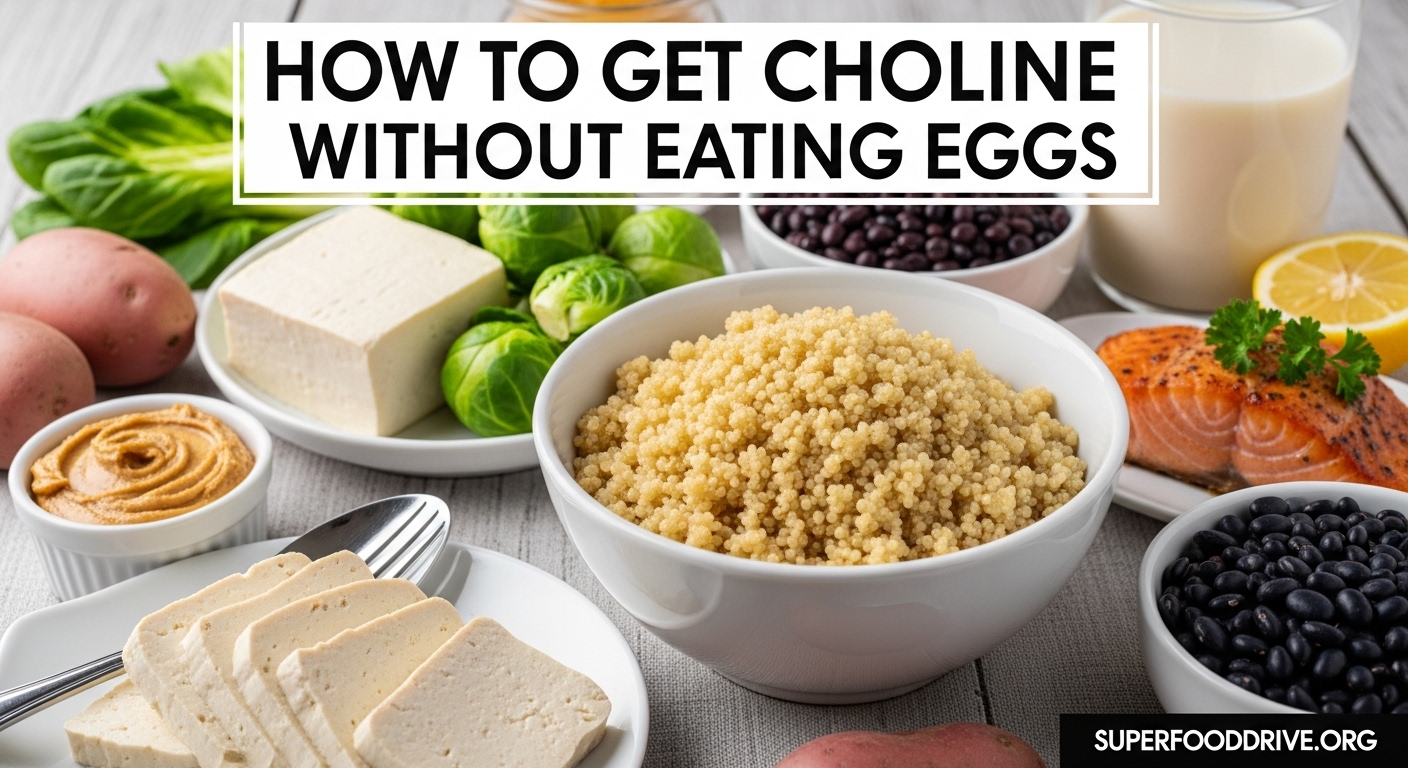
Getting enough choline without eating eggs is absolutely possible when you know which foods to prioritize. Many people need alternatives due to egg allergies, dietary restrictions, or simply rising food costs. Whether you are vegan, allergic to eggs, or just looking to diversify your nutrient sources, this guide shows you exactly how to get choline without eggs through strategic food choices and practical meal planning.
Our team spent weeks analyzing the latest research and forum discussions from communities like r/MTHFR and r/PlantBasedDiet to address the most common concerns about meeting choline needs affordably. You will find specific milligram amounts for every food mentioned, budget-friendly strategies, and a complete sample meal plan showing how to hit your daily target.
Table of Contents
What Is Choline and Why Your Body Needs It
Choline is an essential nutrient your body uses for critical functions ranging from brain health to liver detoxification. While your liver produces small amounts, you must obtain most of your choline through food sources to maintain optimal health.
Choline’s Role in Brain Function
Your brain uses choline to produce acetylcholine, a neurotransmitter essential for memory, mood regulation, and muscle control. Without adequate choline, cognitive functions including learning and memory formation suffer. Research links higher choline intake to better cognitive performance and reduced risk of age-related mental decline.
Liver Health and Fat Metabolism
Choline helps transport fat from your liver, preventing the accumulation that leads to non-alcoholic fatty liver disease. This nutrient is so critical for liver function that deficiency can cause liver damage within weeks. Your liver also uses choline to produce bile, which aids digestion and fat-soluble vitamin absorption.
Cell Structure and DNA Methylation
Every cell membrane in your body contains phosphatidylcholine derived from choline, making it fundamental to cell structure and signaling. Choline also serves as a methyl donor for DNA methylation, a process that regulates gene expression without changing your genetic code. This epigenetic function influences everything from fetal development to cancer risk.
How Much Choline Do You Need Daily
The National Institutes of Health recommends 425mg daily for adult women and 550mg for adult men. Pregnant women need 450mg daily to support fetal brain development, while breastfeeding women require 550mg to provide adequate choline through breast milk.
Understanding Adequate Intake Levels
The Institute of Medicine established these adequate intake levels in 1998 when choline was first recognized as an essential nutrient. Unlike some vitamins, choline has a tolerable upper limit of 3,500mg daily for adults, though most people never approach this amount through food alone.
Signs You Might Be Deficient
Choline deficiency symptoms include fatigue, memory problems, muscle aches, and fatty liver disease. Severe deficiency can cause liver damage visible on blood tests as elevated liver enzymes. Those following strict vegan diets, pregnant women, and people with certain genetic variations face higher deficiency risks.
Top Non-Egg Sources of Choline
While one large egg provides 147mg of choline, many other foods deliver comparable or even higher amounts per serving. Animal-based sources generally contain more concentrated choline, but strategic combinations of plant foods can also meet your needs.
Organ Meats: The Choline Champions
Beef liver tops the list with 356mg of choline per 3-ounce serving, providing 65% of your daily needs in a single portion. Chicken liver offers even more at 473mg per 3-ounce serving, making it the single most concentrated choline source available. These organ meats also provide vitamin B12, iron, and folate that work synergistically with choline.
If you are new to organ meats, start with chicken liver pate mixed with herbs and butter for a more palatable introduction. Our team found that soaking liver in milk before cooking reduces the strong flavor that puts many people off.
Fish and Seafood Options
Atlantic cod delivers 71mg of choline per 3-ounce serving, while salmon provides 56mg in the same portion size. Shrimp offers a surprising 102mg per 3-ounce serving, making it an excellent choice for pescatarians avoiding eggs. Canned fish like salmon and sardines provide affordable, shelf-stable options for maintaining choline intake.
Poultry and Meat
A 3-ounce serving of roasted chicken breast contains 56mg of choline, while the same amount of roasted turkey provides 48mg. Ground beef offers 65mg per 3-ounce serving, with leaner cuts providing slightly higher concentrations due to less fat dilution. These everyday proteins contribute meaningfully to your daily total when consumed regularly.
Dairy Products
One cup of low-fat milk provides 43mg of choline, making it a consistent low-level source for daily consumption. Cottage cheese stands out among dairy with 40mg per cup, while plain yogurt offers 25mg per cup. Regular dairy consumption throughout the day adds a steady baseline to your choline intake.
Plant-Based Choline Sources for Vegetarians and Vegans
Meeting choline needs on a vegan diet requires more planning but remains entirely achievable through strategic food selection. Plant sources generally contain less choline per serving than animal foods, so variety and consistent intake become essential.
Soybeans and Soy Products
Roasted soybeans lead plant-based options with 107mg of choline per half-cup serving. Firm tofu provides 28mg per half-cup, while 1 cup of soymilk delivers 57mg. Tempeh offers 47mg per half-cup serving along with probiotic benefits that support gut health. Edamame makes an excellent snack with 34mg per half-cup of shelled beans.
Cruciferous Vegetables
One cup of cooked broccoli contains 31mg of choline, while the same amount of Brussels sprouts provides 31mg. Cauliflower offers 24mg per cup cooked, and cooked cabbage delivers 30mg per cup. These vegetables provide the added benefit of supporting detoxification pathways alongside their choline content.
Mushrooms and Specialty Foods
One cup of cooked shiitake mushrooms contains 80mg of choline, making them the best non-soy plant source available. Dried shiitake mushrooms reconstituted in soups and stir-fries provide concentrated flavor and nutrients. Other mushrooms like cremini and portobello offer modest amounts around 20mg per cup.
Wheat germ provides 50mg of choline per quarter-cup serving, making it an easy addition to smoothies, oatmeal, or baked goods. Toasted wheat germ has a pleasant nutty flavor that enhances many breakfast foods without overwhelming them.
Nuts, Seeds, and Legumes
A quarter-cup of roasted peanuts delivers 24mg of choline, while the same amount of almonds provides 18mg. Pistachios offer 20mg per quarter-cup. One cup of cooked kidney beans contains 45mg, and lima beans provide 32mg per cup. Quinoa offers 24mg per cup cooked, making it a useful base for choline-conscious meals.
Quick Comparison: Choline Content by Food Category
Understanding the relative choline density of different foods helps you plan efficient meals. This comparison focuses on realistic serving sizes and foods most people actually eat regularly.
Animal-Based Sources (per 3-ounce serving):
- Chicken liver: 473mg (86% DV)
- Beef liver: 356mg (65% DV)
- Shrimp: 102mg (19% DV)
- Ground beef: 65mg (12% DV)
- Atlantic cod: 71mg (13% DV)
- Salmon: 56mg (10% DV)
- Chicken breast: 56mg (10% DV)
Plant-Based Sources:
- Roasted soybeans (1/2 cup): 107mg (19% DV)
- Shiitake mushrooms (1 cup cooked): 80mg (15% DV)
- Soymilk (1 cup): 57mg (10% DV)
- Wheat germ (1/4 cup): 50mg (9% DV)
- Kidney beans (1 cup cooked): 45mg (8% DV)
- Tempeh (1/2 cup): 47mg (9% DV)
- Firm tofu (1/2 cup): 28mg (5% DV)
- Broccoli (1 cup cooked): 31mg (6% DV)
Dairy Sources:
- Large milk (1 cup): 43mg (8% DV)
- Cottage cheese (1 cup): 40mg (7% DV)
- Plain yogurt (1 cup): 25mg (5% DV)
Budget-Friendly Ways to Get Choline Without Eggs
Rising egg prices have made choline accessibility a major concern for budget-conscious consumers. Forum discussions on r/Frugal reveal many people struggling to meet their needs affordably since eggs were historically the cheapest concentrated source.
Cost-Effective Animal Proteins
Chicken liver remains one of the most affordable high-choline foods at roughly $2-3 per pound, delivering nearly a full day’s choline in a small serving. Canned salmon and sardines provide shelf-stable, budget-friendly options typically costing $2-4 per can with 56-102mg choline per serving. Ground beef on sale offers versatile meal options with meaningful choline contributions.
Affordable Plant-Based Strategies
Dried beans and lentils purchased in bulk provide choline at pennies per serving. A one-pound bag of kidney beans costs around $2 and delivers over 15 servings at 45mg choline each. Frozen broccoli and Brussels sprouts often cost less than fresh while maintaining nutrient density. Wheat germ purchased from bulk bins offers concentrated choline at low cost per serving.
Stretching Your Budget Further
Combining lower-cost foods strategically helps you reach daily targets without breaking the bank. A meal combining beans, broccoli, and wheat germ delivers substantial choline for under $2 total. Shopping sales on liver, buying canned fish in bulk, and choosing frozen over fresh vegetables when practical all reduce costs while maintaining nutrient intake.
Sample Meal Plan: How to Get 550mg of Choline Daily
This practical meal plan shows exactly how to reach 550mg of choline without eggs using realistic portions and common foods. The plan includes options for omnivores, pescatarians, and vegans.
Omnivore Meal Plan (Total: 558mg)
Breakfast (102mg): Oatmeal topped with 2 tablespoons wheat germ (50mg) and 1 tablespoon peanut butter (9mg), plus 1 cup milk (43mg)
Mid-Morning Snack (34mg): 1/2 cup shelled edamame (34mg)
Lunch (124mg): Chicken and vegetable stir-fry with 3 ounces chicken breast (56mg), 1/2 cup shiitake mushrooms (40mg), and 1 cup broccoli (31mg) minus overlap
Afternoon Snack (20mg): 1/4 cup pistachios (20mg)
Dinner (278mg): 3 ounces chicken liver (473mg) OR substitute 3 ounces beef liver (356mg) with additional plant foods to reach target
Vegan Meal Plan (Total: 552mg)
Breakfast (107mg): Smoothie with 1 cup soymilk (57mg), 2 tablespoons wheat germ (50mg), and banana
Mid-Morning Snack (34mg): 1/2 cup shelled edamame (34mg)
Lunch (138mg): Buddha bowl with 1 cup quinoa (24mg), 1/2 cup roasted soybeans (107mg), and 1 cup steamed broccoli (31mg) minus overlap
Afternoon Snack (24mg): 1/4 cup peanuts (24mg)
Dinner (249mg): Tempeh and vegetable curry with 1 cup tempeh (94mg), 1 cup shiitake mushrooms (80mg), 1 cup Brussels sprouts (31mg), and 1/2 cup kidney beans (45mg)
Pescatarian Meal Plan (Total: 560mg)
Breakfast (107mg): Oatmeal with 2 tablespoons wheat germ (50mg), 1 tablespoon almond butter (7mg), and 1 cup milk (43mg), plus 1/4 cup peanuts (24mg) on the side minus overlap
Lunch (128mg): Tuna salad with 3 ounces canned tuna (56mg) on whole wheat bread (13mg per slice), plus 1 cup grapes
Afternoon Snack (34mg): 1/2 cup edamame (34mg)
Dinner (291mg): Grilled salmon with 5 ounces salmon (93mg), 1 cup roasted Brussels sprouts (31mg), quinoa pilaf with 1 cup quinoa (24mg), and side salad with 1/2 cup chickpeas (35mg) plus olive oil dressing
The Betaine Strategy: Reduce Your Choline Requirements
Betaine works as a choline-sparing nutrient, potentially reducing how much choline your body needs from food. This strategy, highlighted by nutrition researchers, offers a way to meet your methylation needs through alternative pathways.
How Betaine Supports Methylation
Betaine serves as a methyl donor just like choline, supporting the same DNA methylation and homocysteine metabolism processes. When you consume adequate betaine, your body can use it for methylation, reserving choline for its other essential functions like acetylcholine production and cell membrane maintenance.
Food Sources of Betaine
Beets and beet greens top the list of betaine-rich foods, with spinach, quinoa, and wheat germ also providing meaningful amounts. Many foods high in betaine overlap with choline sources, making them efficient choices. Spinach contains both nutrients, as do quinoa and wheat germ.
Forum users on r/MTHFR report success combining betaine-rich foods with moderate choline intake rather than relying solely on high-dose choline foods. This approach may be particularly helpful for those with genetic variations affecting methylation.
Special Considerations for High-Need Groups
Certain populations have elevated choline requirements that make strategic planning even more important. Understanding these special cases helps you adapt the general recommendations to your specific situation.
Pregnancy and Breastfeeding
Pregnant women need 450mg daily to support fetal brain and spinal cord development. Research shows that adequate choline during pregnancy reduces risks of neural tube defects and supports lifelong cognitive function in children. Breastfeeding women need 550mg daily to provide choline through breast milk at levels that support infant development.
For pregnant women avoiding eggs, chicken liver becomes particularly valuable as it provides nearly a full day’s requirement in one serving. However, consume liver in moderation during pregnancy due to high vitamin A content.
Genetic Variations Affecting Choline Needs
People with certain PEMT gene variations cannot produce choline internally as efficiently, making dietary sources essential. Those with MTHFR mutations may have higher choline needs because their methylation pathways function differently. If you have these genetic variations, you may need closer to the upper end of recommended ranges.
Testing for these genetic variants through services like Nutrition Genome or 23andMe can provide personalized guidance. Reddit users on r/MTHFR report needing 700-900mg daily due to genetic factors, well above standard recommendations.
Egg Allergies and Sensitivities
True egg allergies affect about 2% of children and require complete avoidance. For those with allergies, organ meats, fish, and soy products become primary choline sources. Some people also have egg sensitivities that cause digestive discomfort without full allergic reactions, making alternatives desirable even if not medically necessary.
Supplement Considerations
When food sources prove insufficient, choline supplements offer an alternative. CDP-choline (citicoline) and Alpha-GPC are the most bioavailable forms, while choline bitartrate is less expensive but may cause fishy body odor in high doses. Lecithin supplements derived from soy or sunflower provide phosphatidylcholine in a food-like form.
Forum discussions reveal mixed experiences with supplements. Some users report brain fog or anxiety from certain forms, while others find them essential for meeting high genetic requirements. Food sources generally produce fewer side effects and provide additional nutrients.
Frequently Asked Questions
How to get choline if you can’t eat eggs?
You can get choline without eggs by consuming organ meats like chicken liver (473mg per 3oz), beef liver (356mg per 3oz), shrimp (102mg per 3oz), soybeans (107mg per half-cup), shiitake mushrooms (80mg per cup), and cruciferous vegetables. Most adults need 425-550mg daily. A combination of animal proteins, legumes, and vegetables can easily meet your needs without any eggs.
Do choline supplements increase TMAO?
Research suggests that choline from both food and supplements can increase TMAO levels, but the clinical significance remains unclear. Some studies link elevated TMAO to cardiovascular risk, while others show no association when choline comes from whole foods. Fish and seafood contain more TMAO precursors than eggs. If concerned, focus on food sources over supplements and include plenty of fiber and polyphenols which may help mitigate TMAO formation.
How to get 500 mg of choline a day?
To get 500mg of choline daily, combine strategic food choices throughout the day. Example plan: Breakfast with oatmeal, wheat germ, and milk (100mg). Snack on edamame (34mg). Lunch with chicken breast and broccoli (87mg). Dinner featuring 3oz chicken liver (473mg) OR combine 3oz beef liver (356mg) with beans and vegetables. Vegans can reach 500mg by combining soymilk, roasted soybeans, tempeh, shiitake mushrooms, and wheat germ across meals.
Does choline help with bile flow?
Yes, choline helps produce phosphatidylcholine, a key component of bile that aids fat digestion and nutrient absorption. Adequate choline supports healthy bile flow from the liver to the gallbladder. Low choline intake can impair bile production and contribute to fat accumulation in the liver. Foods rich in choline like liver, eggs (if consumed), and cruciferous vegetables support both choline intake and natural detoxification pathways.
Can vegans get enough choline without eggs?
Yes, vegans can meet choline needs through strategic food choices, though it requires more planning than omnivore diets. Focus on soy products like roasted soybeans (107mg per half-cup), soymilk (57mg per cup), and tofu (28mg per half-cup). Include shiitake mushrooms (80mg per cup), wheat germ (50mg per quarter-cup), and cruciferous vegetables daily. Combining multiple plant sources throughout the day provides sufficient choline without any animal products.
What are the cheapest sources of choline besides eggs?
The most affordable choline sources include chicken liver ($2-3 per pound with 356-473mg per serving), dried beans and lentils (45mg per cup at pennies per serving), frozen broccoli and Brussels sprouts (30-31mg per cup), canned salmon and sardines ($2-4 per can with 56-102mg per serving), and wheat germ from bulk bins. Combining these budget-friendly options strategically helps meet daily needs without expensive specialty foods or supplements.
Conclusion
Getting choline without eggs requires knowledge of alternative sources and strategic meal planning, but it is entirely achievable for omnivores, vegetarians, and vegans alike. Focus on organ meats, fish, soy products, shiitake mushrooms, cruciferous vegetables, and wheat germ to build a choline-rich diet. Use the sample meal plans provided to hit your daily target of 425-550mg, and consider the betaine strategy to optimize your nutrient efficiency. With rising egg prices and increasing dietary restrictions, mastering these choline alternatives in 2026 gives you nutritional flexibility that serves your health regardless of what is available at the grocery store.