
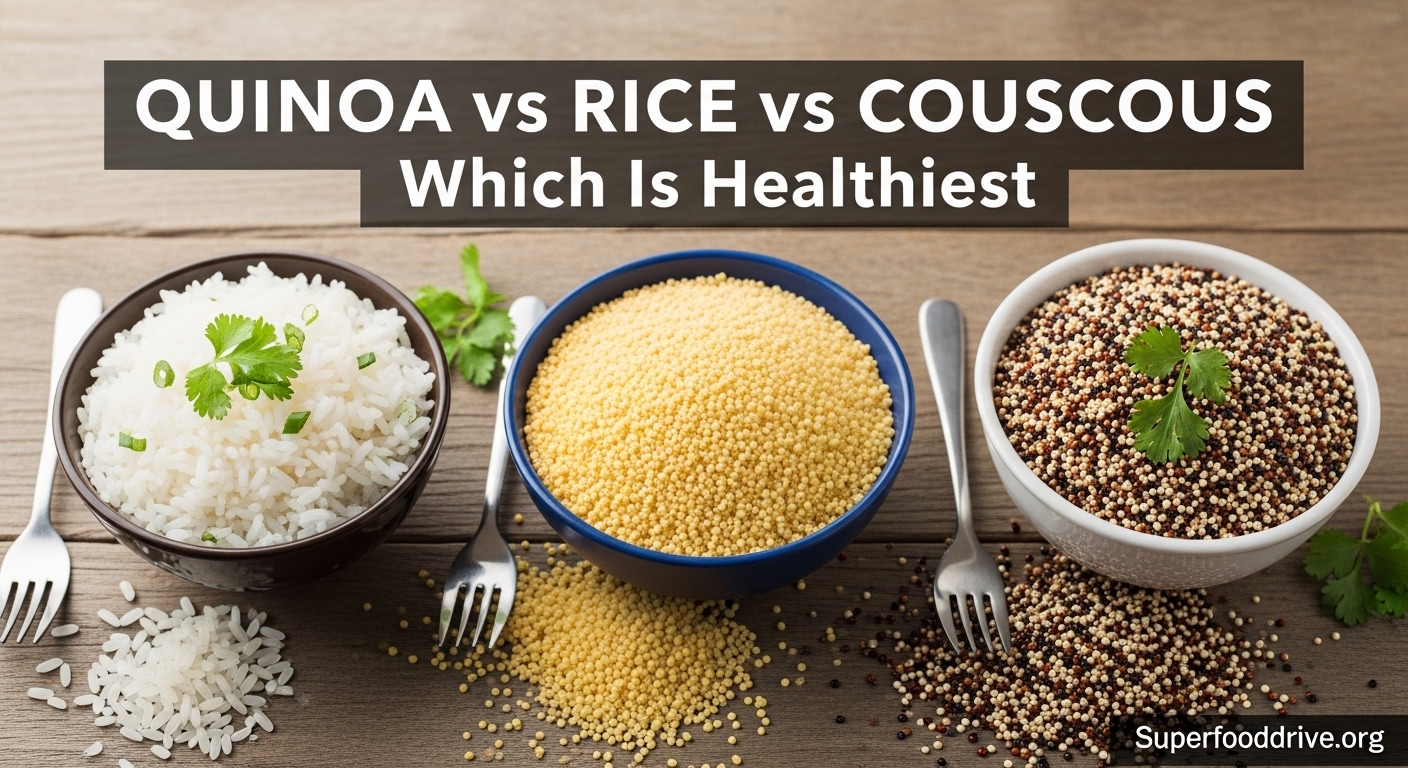
Quinoa is the healthiest choice when comparing quinoa vs rice vs couscous. It delivers complete protein with all nine essential amino acids, nearly double the fiber of brown rice, and a low glycemic index that helps stabilize blood sugar. While rice and couscous have their place in a balanced diet, quinoa offers superior nutritional density per serving.
Our team has analyzed the nutritional data for all three grains to help you make informed decisions about which belongs on your plate. Whether you are tracking macros, managing diabetes, or simply trying to eat healthier, understanding these differences matters.
Table of Contents
Nutritional Comparison at a Glance
Before diving into each grain individually, here is how quinoa, rice, and couscous stack up per 100 grams of cooked grain.
| Nutrient | Quinoa | Brown Rice | White Rice | Couscous |
|---|---|---|---|---|
| Calories | 120 | 111 | 130 | 112 |
| Protein | 4.4g | 2.6g | 2.7g | 3.8g |
| Carbohydrates | 21.3g | 23g | 28g | 23.4g |
| Fiber | 2.8g | 1.8g | 0.3g | 1.4g |
| Fat | 1.9g | 0.9g | 0.3g | 0.2g |
| Glycemic Index | 53 (Low) | 68 (Medium) | 73 (High) | 65 (Medium) |
As the table shows, quinoa leads in protein and fiber while maintaining a low glycemic index. These three factors make it the standout choice for anyone prioritizing nutrition.
What Is Quinoa
Quinoa is technically a seed, not a grain, though it is prepared and eaten like one. Native to the Andean region of South America, it has been cultivated for thousands of years and was considered sacred by the Incas.
What makes quinoa exceptional is its status as a complete protein. It contains all nine essential amino acids that your body cannot produce on its own. This is rare among plant-based foods, making quinoa invaluable for vegetarians and vegans.
A one-cup serving of cooked quinoa provides about 222 calories, 8 grams of protein, 5 grams of fiber, and significant amounts of magnesium, manganese, phosphorus, and folate. It is also naturally gluten-free, making it safe for people with celiac disease or gluten sensitivity.
The protein in quinoa is particularly high in lysine, an amino acid often lacking in other grains. This complete amino acid profile supports muscle repair, immune function, and hormone production.
What Is Rice
Rice is a true cereal grain and one of the most widely consumed foods globally. It comes in numerous varieties, but the main nutritional distinction exists between white and brown rice.
Brown rice is a whole grain, meaning it retains the bran and germ layers that white rice has removed through processing. This makes brown rice significantly more nutritious than white rice, with more fiber, vitamins, and minerals.
A cup of cooked brown rice contains about 216 calories, 5 grams of protein, and 3.5 grams of fiber. It provides manganese, selenium, magnesium, and B vitamins. White rice, by comparison, offers 242 calories, 4 grams of protein, and less than 1 gram of fiber per cup.
White rice is often enriched with iron and B vitamins to replace some nutrients lost during processing. However, it cannot match the fiber content of brown rice or quinoa. For anyone monitoring blood sugar, brown rice is the better rice choice due to its lower glycemic index.
What Is Couscous
Couscous is made from semolina wheat, which means it is technically a form of pasta rather than a whole grain. It originated in North Africa and has become popular worldwide for its quick preparation time.
A cup of cooked couscous contains approximately 176 calories, 6 grams of protein, and 2 grams of fiber. It provides some selenium and B vitamins, particularly thiamine and niacin. However, because it is made from refined wheat, couscous lacks the nutrient density of whole grains.
Unlike quinoa, couscous contains gluten, so it is not suitable for people with celiac disease or gluten intolerance. Its main advantage is convenience. Couscous cooks in just five minutes by simply adding hot water and letting it steam.
The texture is light and fluffy when prepared correctly, making it a versatile base for salads, stews, and side dishes. However, its lower fiber and protein content means it will not keep you as full as quinoa.
Protein Comparison: Which Grain Packs the Most
Protein content is where quinoa truly distinguishes itself. With 8 grams of complete protein per cooked cup, quinoa delivers nearly double the protein of brown rice and significantly more than couscous.
Couscous provides about 6 grams of protein per cup, which is respectable for a grain-like food. Brown rice offers around 5 grams, while white rice trails with only 4 grams per cup.
But protein quantity is not the whole story. Quinoa’s protein is complete, containing all essential amino acids in adequate proportions. This makes it comparable to animal proteins in terms of biological value. The other grains lack this complete profile, meaning they must be combined with other protein sources to provide all necessary amino acids.
For athletes, vegetarians, or anyone looking to increase protein intake without relying on meat, quinoa is the clear winner. The higher protein content also contributes to better satiety, helping you feel full longer after meals.
Fiber Comparison: Digestive Health and Satiety
Fiber plays a critical role in digestive health, blood sugar regulation, and weight management. Once again, quinoa leads the pack with 5 grams of fiber per cup.
Brown rice comes in second with 3.5 grams per cup, while couscous offers about 2 grams. White rice contains a mere 0.6 grams of fiber per cup, making it the least beneficial for digestive health.
The type of fiber matters too. Quinoa contains both soluble and insoluble fiber. Soluble fiber helps lower cholesterol and regulate blood sugar, while insoluble fiber promotes healthy digestion and prevents constipation.
Forum discussions reveal that many people specifically switch to quinoa for digestive benefits. Users report improved regularity and less bloating compared to eating white rice regularly. The fiber in quinoa also feeds beneficial gut bacteria, supporting overall gut health.
Glycemic Index: Blood Sugar Impact
The glycemic index measures how quickly a food raises blood sugar levels. Lower scores are better for sustained energy and blood sugar control.
Quinoa has a glycemic index of 53, classifying it as a low-GI food. This means it releases glucose slowly into the bloodstream, providing steady energy without spikes and crashes.
Brown rice has a medium GI of 68, while couscous scores 65, also in the medium range. White rice has a high GI of 73, causing more rapid blood sugar elevation.
For people with diabetes or those trying to manage their weight, quinoa’s low glycemic index is a significant advantage. The combination of protein, fiber, and complex carbohydrates in quinoa slows digestion and helps maintain stable blood sugar levels throughout the day.
Brown rice is a better option than white rice for blood sugar management, but quinoa remains superior. Couscous falls in the middle, making it acceptable for occasional consumption but not ideal as a daily staple for blood sugar control.
Weight Loss: Which Grain Supports Your Goals
When it comes to weight loss, the best grain depends on your specific approach. However, quinoa generally offers the most advantages for sustainable weight management.
Calorie-wise, couscous is actually the lowest at 176 calories per cup, followed by quinoa at 222 calories, brown rice at 216 calories, and white rice at 242 calories. However, calories tell only part of the story.
The satiety factor matters more for weight loss. Quinoa’s high protein and fiber content keeps you feeling full longer, reducing the likelihood of snacking between meals. Research consistently shows that higher protein and fiber intake correlates with better weight loss outcomes.
For meal prep enthusiasts, quinoa also stores well and maintains its texture when reheated. Many users in nutrition forums report that quinoa salads keep them satisfied longer than rice-based meals of similar calorie content.
If your primary goal is minimizing calories and you practice portion control, couscous can work. But for most people, quinoa’s superior nutrient profile makes it the better weight loss ally.
Vitamins and Minerals Breakdown
Micronutrient density is another area where quinoa excels. It provides significant amounts of magnesium, manganese, phosphorus, folate, iron, and zinc.
Magnesium supports muscle and nerve function, while manganese acts as an antioxidant. Folate is essential for DNA synthesis and cell repair. These minerals are often lacking in modern diets, making quinoa a valuable nutritional source.
Brown rice offers manganese, selenium, and some B vitamins. Selenium is important for thyroid function and antioxidant defense. However, the overall mineral content is lower than quinoa.
Couscous provides selenium and some B vitamins, particularly thiamine and niacin. However, as a refined wheat product, it lacks the mineral diversity of whole grain options.
White rice is the least nutritious option unless enriched. Even fortified white rice cannot match the natural micronutrient profile of quinoa or brown rice.
Cooking Methods and Meal Prep Considerations
Practicality matters when choosing grains for daily eating. Each option has different preparation requirements.
Quinoa takes 15 to 20 minutes to cook and requires rinsing before cooking to remove saponins, which can cause a bitter taste. Many brands now sell pre-rinsed quinoa for convenience. Once cooked, quinoa keeps well in the refrigerator for up to five days.
Brown rice requires about 45 minutes of cooking time, significantly longer than quinoa or couscous. A rice cooker simplifies this process. Brown rice stores well for four to six days refrigerated.
White rice cooks in 15 to 20 minutes and is the most foolproof option. It is difficult to overcook white rice, making it beginner-friendly.
Couscous is the fastest option at just 5 minutes. Simply pour boiling water over couscous, cover, and let it steam. This makes couscous ideal for quick weeknight meals. However, it does not keep as well as quinoa when meal prepping for multiple days.
For batch cooking and meal prep, quinoa offers the best combination of nutrition and storage stability. Many meal preppers report making a large batch of quinoa on Sunday and using it throughout the week in various dishes.
Special Dietary Considerations
Different grains suit different dietary needs and health conditions.
For people with celiac disease or gluten sensitivity, quinoa and rice are safe options. Couscous contains gluten and should be avoided.
For diabetics, quinoa’s low glycemic index makes it the best choice. Brown rice is acceptable in moderation, while white rice and couscous should be limited due to their higher glycemic impact.
For athletes requiring high protein intake, quinoa provides the most plant-based protein per serving. The complete amino acid profile supports muscle recovery better than rice or couscous.
For those on a budget, white rice is typically the most affordable option, followed by couscous. Quinoa is generally the most expensive, though prices have decreased as it has become more popular.
Regarding thyroid health, some people worry about quinoa’s goitrogen content. However, cooking quinoa eliminates most goitrogens, making it safe for thyroid health in normal dietary amounts. Couscous, as a wheat product, contains some gluten which can affect thyroid function in people with Hashimoto’s thyroiditis.
The Verdict: Which Grain Should You Choose
Based on nutritional analysis, quinoa is the healthiest option among these three grains. Its complete protein, high fiber content, low glycemic index, and rich mineral profile make it superior for overall health.
Choose quinoa if you want maximum nutrition, better blood sugar control, higher protein intake, or improved satiety for weight management. It is the best choice for vegetarians, vegans, diabetics, and anyone prioritizing nutrient density.
Choose brown rice if you prefer a milder flavor, want a more budget-friendly whole grain option, or need a versatile grain that pairs well with many cuisines. It offers decent nutrition at a lower cost than quinoa.
Choose couscous if cooking time is your priority or you want a light, fluffy texture for specific dishes. It works well for quick meals but should not be your primary grain if nutrition is the main concern.
Avoid white rice as a daily staple unless you have specific dietary needs requiring easily digestible, low-fiber foods. Even then, brown rice or quinoa offer significantly better nutritional value.
Quinoa vs Rice vs Couscous: Frequently Asked Questions
Which is healthier quinoa couscous or rice?
Quinoa is the healthiest option. It contains complete protein with all essential amino acids, nearly double the fiber of brown rice, and has a low glycemic index of 53. Couscous is made from refined wheat and contains less fiber and protein. White rice is the least nutritious option due to its low fiber and high glycemic index.
Which is better for losing weight quinoa or couscous?
Quinoa is better for weight loss despite having more calories per cup. Its high protein and fiber content promotes satiety and keeps you full longer, reducing overall calorie consumption. Quinoa has 8g protein and 5g fiber per cup compared to couscous with 6g protein and 2g fiber. The superior satiety factor makes quinoa the better choice for sustainable weight management.
What are the 5 healthiest grains for weight loss?
The five healthiest grains for weight loss are quinoa, brown rice, oats, barley, and buckwheat. Quinoa leads with complete protein and high fiber. Brown rice offers whole grain nutrition with moderate calories. Oats provide beta-glucan fiber that supports cholesterol and satiety. Barley contains resistant starch that feeds beneficial gut bacteria. Buckwheat is gluten-free and high in protein and fiber.
What is the downside to quinoa?
The main downsides to quinoa are its higher cost compared to rice and couscous, the need to rinse it before cooking to remove bitter saponins, and its distinct nutty flavor that some people dislike. Some individuals may experience digestive discomfort when first adding quinoa to their diet due to its high fiber content. Additionally, quinoa contains oxalates which may be problematic for people with kidney stones.
Is couscous healthy for the thyroid?
Couscous contains selenium which supports thyroid function, but it also contains gluten which can be problematic for people with Hashimoto’s thyroiditis or autoimmune thyroid conditions. For those with healthy thyroid function, couscous is generally fine in moderation. People with thyroid concerns should focus on gluten-free whole grains like quinoa or brown rice instead.
Can you eat quinoa if you have high triglycerides?
Yes, quinoa is an excellent choice for people with high triglycerides. Its low glycemic index of 53 helps stabilize blood sugar, which supports healthy triglyceride levels. The fiber in quinoa also helps reduce cholesterol absorption. Unlike refined grains that can spike blood sugar and worsen triglycerides, quinoa provides steady energy without metabolic disruption.
Is couscous or quinoa healthier for weight loss?
Quinoa is healthier for weight loss than couscous. While couscous has fewer calories per cup (176 vs 222), quinoa’s superior protein and fiber content provides better satiety. This means you are likely to eat less overall when choosing quinoa. The complete protein in quinoa also supports muscle maintenance during weight loss, which helps maintain metabolic rate.
Which grain is best for diabetics?
Quinoa is the best grain for diabetics due to its low glycemic index of 53. This means it releases glucose slowly into the bloodstream without causing spikes in blood sugar. Brown rice is the second best option with a medium glycemic index of 68. White rice and couscous have higher glycemic indexes and should be limited by people managing diabetes.
Conclusion
When comparing quinoa vs rice vs couscous, quinoa emerges as the clear nutritional winner. Its complete protein profile, high fiber content, low glycemic index, and rich mineral content make it the superior choice for overall health.
That said, the best grain for you depends on your specific needs and circumstances. Brown rice offers a good balance of nutrition and affordability. Couscous works well when you need something quick and easy. Even white rice has its place for those needing easily digestible carbohydrates.
For most people looking to optimize their diet, making quinoa your primary grain while occasionally rotating in brown rice provides the best nutritional strategy. Your body will thank you for the extra protein, fiber, and minerals.