
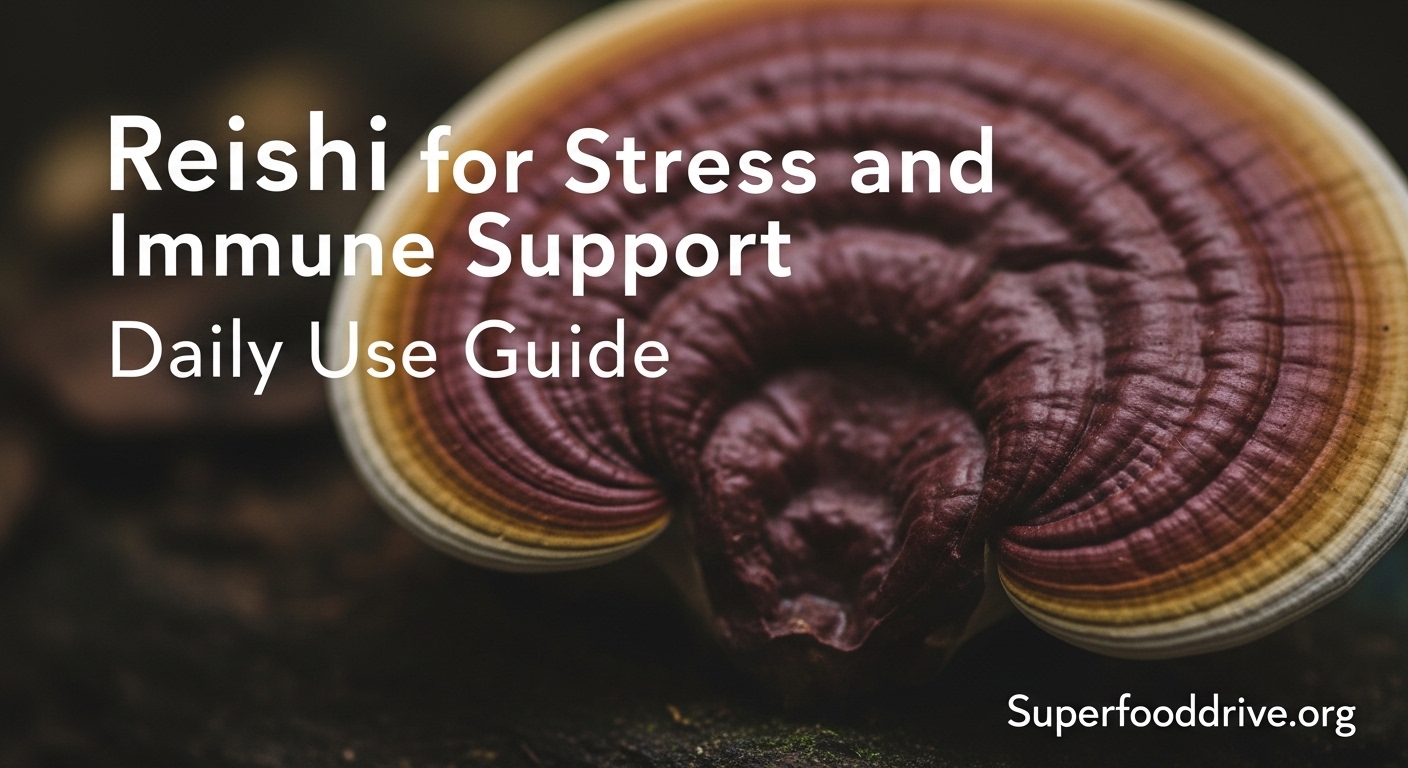
Chronic stress and a weakened immune system often go hand in hand. I learned this the hard way after burning out from back-to-back projects and catching every cold that went around the office. That is when I discovered Reishi mushroom and started using it daily for stress and immune support.
This guide shares everything I have learned about using Reishi consistently. You will find specific dosage recommendations, timing strategies, and a step-by-step plan for making Reishi part of your daily wellness routine in 2026. Whether you are dealing with work stress, looking to strengthen your immune defenses, or simply want better sleep, this guide will show you exactly how to use Reishi effectively.
Table of Contents
What Is Reishi Mushroom?
Reishi mushroom, scientifically known as Ganoderma lucidum, has earned the nickname “mushroom of immortality” in traditional Chinese medicine. People have used this functional mushroom for over 2,000 years to promote longevity, balance energy, and support overall wellness.
In Japan, Reishi is called “lingzhi,” which translates to “spiritual potency.” Traditional healers prescribed it to nourish the heart, calm the mind, and strengthen the body against disease. Modern research now validates many of these traditional uses, particularly for stress management and immune support.
The Bioactive Compounds That Make Reishi Effective
Reishi contains several powerful bioactive compounds that drive its health benefits. Beta-glucans are complex polysaccharides that modulate immune function by activating white blood cells and supporting your body’s natural defense mechanisms.
Triterpenes, particularly ganoderic acids, give Reishi its bitter taste and contribute to its adaptogenic properties. These compounds help regulate cortisol levels and support your body’s stress response system. The combination of beta-glucans and triterpenes makes Reishi unique among medicinal mushrooms.
Why Reishi Is Classified as an Adaptogen
Adaptogens are natural substances that help your body adapt to physical, chemical, and biological stress. They work by supporting your adrenal glands and balancing stress hormones like cortisol. Reishi fits this definition perfectly.
Unlike stimulants that push your body into overdrive, adaptogens help normalize function. Reishi can calm an overactive nervous system while simultaneously supporting energy in those experiencing fatigue. This balancing effect is why so many people turn to Reishi for daily stress resilience.
How Reishi Supports Stress Relief and Immune Function
Reishi offers a unique dual-action approach that addresses both stress and immunity simultaneously. Understanding how it works helps you set realistic expectations and use it more effectively as part of your daily wellness routine.
Reishi for Stress Relief and Cortisol Regulation
When you experience stress, your body releases cortisol as part of the fight-or-flight response. While helpful in short bursts, chronically elevated cortisol leads to anxiety, poor sleep, weight gain, and weakened immunity. Reishi helps regulate this stress hormone through its triterpene content.
Many users report feeling calmer within 20-30 minutes of taking Reishi. This immediate effect comes from Reishi’s interaction with the nervous system. Over time, regular use helps build stress resilience so daily challenges feel more manageable.
I personally noticed that after about six weeks of daily use, I was handling work deadlines without the usual panic response. My sleep improved dramatically, and I felt more balanced throughout the day. This aligns with what research suggests about Reishi’s ability to support the hypothalamic-pituitary-adrenal axis.
Reishi for Immune System Support
Your immune system functions like a security team, constantly monitoring for threats and responding appropriately. Reishi supports this system through immune modulation rather than simple stimulation. This means it can enhance immune activity when needed and calm overactive responses when appropriate.
The beta-glucans in Reishi interact with immune cells including macrophages, natural killer cells, and T-cells. Research shows these compounds can alter inflammation pathways and support the production of white blood cells. This is particularly valuable during cold and flu season or periods of high stress when immunity typically declines.
Forum discussions reveal that many users report fewer sick days and reduced allergy symptoms after consistent Reishi use. One user shared that their seasonal allergies, which had plagued them for years, became noticeably milder after two months of daily supplementation.
The Connection Between Stress and Immunity
Chronic stress and weakened immunity create a vicious cycle. Stress elevates cortisol, which suppresses immune function. A weakened immune system then creates more physical stress on the body. Reishi addresses both sides of this equation.
By supporting healthy cortisol levels, Reishi helps maintain immune balance. By supporting immune function, it reduces the physical stress load on your body. This synergistic effect makes Reishi particularly valuable for anyone dealing with high-stress lifestyles who wants to stay healthy.
Reishi Dosage Guidelines by Form
Finding the right Reishi dosage depends on the form you choose and your individual needs. Different preparations contain varying concentrations of active compounds, which affects how much you should take.
Reishi Mushroom Powder Dosage
Dried Reishi powder typically requires higher doses because it contains the whole mushroom material including fiber. Clinical studies and traditional usage suggest 1.5 to 9 grams per day as an effective range. Most people start with 1 to 2 grams daily and adjust based on their response.
Powder offers versatility. You can add it to smoothies, coffee, tea, or recipes. However, Reishi has a distinctly bitter, woody flavor that some find challenging. Combining it with strong flavors like cocoa, coffee, or citrus helps mask the taste.
Reishi Extract Dosage Recommendations
Concentrated extracts deliver more active compounds in smaller doses. These products typically use dual extraction methods to capture both water-soluble beta-glucans and alcohol-soluble triterpenes. For concentrated extracts, 500 milligrams to 1.5 grams per day is the standard recommendation.
Extracts often list concentration ratios like 10:1 or 20:1, indicating how much raw mushroom was used to create the extract. A 10:1 extract means 10 grams of mushroom produced 1 gram of extract. Higher ratios indicate more concentrated products requiring smaller doses.
Reishi Capsule and Tablet Dosage
Capsules offer convenience and precise dosing. Standard recommendations range from 1,000 to 2,000 milligrams daily, typically divided into two doses. Most capsules contain either powdered mushroom or concentrated extract, so check the label to understand what you are taking.
When evaluating capsules, look for the beta-glucan percentage on the label. Quality products typically contain at least 20-30% beta-glucans. Some premium products specify both beta-glucan and triterpene content, which indicates a more complete extraction.
Dosage Comparison by Form
| Form | Typical Daily Dosage | Best For |
|---|---|---|
| Dried Powder | 1.5 – 9 grams | Those who prefer whole food form, cooking enthusiasts |
| Concentrated Extract | 500 mg – 1.5 grams | Convenience, stronger effects, precise dosing |
| Capsules/Tablets | 1,000 – 2,000 mg | Travel, busy schedules, consistent daily use |
| Tinctures/Liquid | 1 – 3 ml (follow label) | Fast absorption, customizable dosing |
Beginner vs Maintenance Dosage
When starting Reishi, begin with a lower dose to assess tolerance. Some people experience mild digestive upset when first taking medicinal mushrooms. Start with half the recommended dose for the first week, then gradually increase to the full amount.
After the initial adjustment period, settle into a maintenance dose that provides benefits without side effects. This is typically the standard dosage range for your chosen form. Some people find they can reduce their dose after several months of consistent use while maintaining benefits.
How to Add Reishi to Your Daily Routine
Consistency matters more than perfection when using Reishi. The bioactive compounds build up in your system over time, creating cumulative benefits. Here is a step-by-step guide for integrating Reishi into your daily wellness routine.
Step 1: Choose Your Preferred Form
Select a Reishi form that fits your lifestyle. If you drink coffee or tea every morning, powder blends easily into these beverages. If you travel frequently or have an unpredictable schedule, capsules offer portability and convenience. Liquid extracts work well for those who prefer fast absorption.
Consider starting with capsules or a quality extract if you are new to medicinal mushrooms. These forms provide consistent dosing and eliminate the taste factor while you establish your routine.
Step 2: Select Your Timing Strategy
Decide whether morning or evening dosing works better for your goals. For stress management throughout the day, morning works best. For sleep support, evening is ideal. Some people take a split dose, half in the morning and half before bed.
Attach your Reishi dose to an existing habit to build consistency. Take it with your morning coffee, during your lunch break, or as part of your evening wind-down routine. Habit stacking makes daily use automatic rather than requiring willpower.
Step 3: Start Low and Track Your Response
Begin with half the recommended dose for the first week. Pay attention to how your body responds. Note any changes in energy, mood, sleep quality, or digestion. Keep a simple journal tracking your dose, timing, and any effects you notice.
Gradually increase to the full recommended dose over two to three weeks. This slow introduction minimizes digestive discomfort and helps you identify your optimal dosage. Some people find lower doses work well for them, while others need the full recommended amount.
Step 4: Establish a Consistent Schedule
Take Reishi at the same time each day to maintain steady levels in your system. Set a phone reminder or place your supplement somewhere visible until the habit becomes automatic. Consistency for at least 30 days is essential for evaluating whether Reishi works for you.
Missing a day occasionally will not derail your progress, but frequent skipping reduces effectiveness. If you travel, pack enough Reishi for your trip. If you forget a dose, simply resume your normal schedule rather than doubling up.
Step 5: Evaluate and Adjust After 30 Days
After one month of consistent use, assess your results. Have you noticed improvements in stress levels, sleep quality, or immunity? Are you experiencing any side effects? Use this evaluation to adjust your dosage, timing, or form if needed.
Many benefits of Reishi become more apparent after six to eight weeks. If you are not seeing results after 30 days, consider increasing your dose slightly or switching to a higher-quality product. Patience pays off with adaptogenic herbs.
Combining Reishi with Other Adaptogens
Reishi pairs well with other functional mushrooms and adaptogens. Lion’s Mane complements Reishi for cognitive support during the day. Cordyceps adds energy support without the jitters of caffeine. Ashwagandha and Rhodiola are traditional adaptogens that work synergistically with Reishi.
If you are new to adaptogens, start with Reishi alone before adding others. This helps you identify which supplements provide specific benefits. Once you understand how Reishi affects you, gradually introduce complementary supplements one at a time.
Best Time to Take Reishi: Morning vs Evening
The best time to take Reishi depends on your primary goals. While Reishi supports both stress and immunity regardless of timing, choosing the right time of day can enhance specific benefits.
Morning Dosing for Daytime Stress Support
Take Reishi in the morning if your main goal is managing work stress, supporting focus, or building resilience against daily challenges. Morning dosing provides a foundation of calm that carries through your day without causing drowsiness.
Many users report feeling more grounded and less reactive to stress when taking Reishi with breakfast. The cortisol-regulating effects help prevent the typical afternoon energy crash and evening anxiety that follow high-stress days.
Evening Dosing for Sleep and Recovery
Take Reishi in the evening, one to two hours before bed, if sleep support is your priority. The calming effects on the nervous system help transition your body into rest mode. Reishi does not act as a sedative but rather supports natural sleep cycles.
Forum discussions consistently show that evening dosing is the most popular timing among long-term Reishi users. Many describe falling asleep more easily and experiencing deeper, more restorative sleep. The immune-supporting effects also work overnight when your body focuses on repair and regeneration.
Split Dosing for Comprehensive Support
Split your daily dose between morning and evening for round-the-clock support. This approach provides stress resilience during the day and sleep support at night. It also maintains more stable levels of active compounds in your system.
For split dosing, take half your daily amount with breakfast and the other half with dinner or before bed. This works particularly well for those dealing with both high daytime stress and sleep difficulties.
Morning vs Evening Comparison
| Timing | Best For | Expected Effects |
|---|---|---|
| Morning | Work stress, daytime anxiety, immune maintenance | Calm focus, stress resilience, steady energy |
| Evening | Sleep support, recovery, nighttime anxiety | Relaxation, easier sleep onset, deeper rest |
| Split Dose | Comprehensive support, high stress, poor sleep | Daytime calm plus nighttime recovery |
How to Choose a High-Quality Reishi Supplement
Not all Reishi supplements are equal. Quality varies significantly between brands, affecting both safety and effectiveness. Use this checklist when shopping for Reishi to ensure you get a product worth your investment.
Fruiting Body vs Mycelium on Grain
The fruiting body is the actual mushroom you see growing, containing the highest concentration of beneficial compounds. Mycelium is the root-like network that grows through substrate. Some products use mycelium grown on grain, which results in a product that is mostly the grain substrate with minimal mushroom content.
Look for products specifying “100% fruiting body” on the label. These provide significantly more beta-glucans and triterpenes than mycelium-based products. If the label mentions mycelium without clarifying the growth medium, contact the manufacturer to confirm.
Extraction Method Matters
Dual-extracted Reishi products use both hot water and alcohol extraction to capture the full spectrum of beneficial compounds. Hot water extracts beta-glucans and other polysaccharides. Alcohol extracts triterpenes and other fat-soluble compounds.
Single-extraction products miss either the water-soluble or alcohol-soluble compounds. Check labels for terms like “dual-extracted,” “hot water and alcohol extract,” or specific percentages of both beta-glucans and triterpenes.
Quality Indicators Checklist
Look for these quality markers when evaluating Reishi supplements. Third-party testing and lab verification ensure the product contains what the label claims. Transparent labeling of extraction ratios and beta-glucan content indicates a reputable manufacturer.
- Third-party lab testing with certificates of analysis available
- USDA Organic certification or equivalent
- GMP (Good Manufacturing Practices) certification
- Clear specification of beta-glucan percentage (ideally 20% or higher)
- Specification of triterpene content
- Fruiting body source clearly stated
- No fillers, binders, or artificial ingredients
- Company provides customer support and answers questions
Be skeptical of products making exaggerated claims like “cures cancer” or “instant results.” Legitimate Reishi companies focus on immune support and stress relief without promising miracle cures. Quality products typically cost more because proper extraction and testing are expensive processes.
Safety Considerations and Potential Side Effects
Reishi has an excellent safety profile when used appropriately. Thousands of years of traditional use and modern research support its safety for most people. However, certain individuals should exercise caution or avoid Reishi entirely.
Common Side Effects When Starting Reishi
The most common side effects are mild digestive issues including upset stomach, diarrhea, or constipation. These typically resolve within a few days as your body adjusts. Starting with a lower dose and taking Reishi with food minimizes these effects.
Some people experience dry mouth, dizziness, or skin irritation when first taking Reishi. These reactions are uncommon and usually mild. Reducing the dose or discontinuing use resolves these symptoms. If side effects persist beyond one week, stop taking Reishi and consult a healthcare provider.
Who Should Avoid Reishi or Consult a Doctor
Pregnant or breastfeeding women should avoid Reishi due to limited safety data. People with bleeding disorders or those scheduled for surgery should avoid Reishi as it may affect blood clotting. Individuals with autoimmune conditions should consult a healthcare provider before use.
Forum discussions reveal that some people with Mast Cell Activation Syndrome (MCAS) experience negative reactions to Reishi. If you have MCAS or severe allergies, start with a very small test dose and monitor carefully for adverse reactions.
Medication Interactions to Know
Reishi may interact with certain medications. Blood thinners and anticoagulants are the primary concern, as Reishi can have mild blood-thinning effects. Combining Reishi with these medications increases bleeding risk.
Blood pressure medications may also interact with Reishi, as Reishi can lower blood pressure. If you take medications for hypertension, monitor your blood pressure closely when starting Reishi. Immunosuppressant drugs present another potential interaction due to Reishi’s immune-modulating effects.
- Blood thinners (warfarin, aspirin, clopidogrel)
- Blood pressure medications
- Immunosuppressants
- Diabetes medications (Reishi may lower blood sugar)
Always consult your healthcare provider before adding Reishi if you take prescription medications. This precaution ensures safety and allows proper monitoring of any interactions.
What to Expect: Timeline for Reishi Benefits
Setting realistic expectations helps you stay consistent with Reishi long enough to experience its full benefits. Different effects appear on different timelines. Here is what you can expect week by week.
Week 1 to 2: Initial Adjustment
During the first two weeks, your body adjusts to Reishi. Some people notice calming effects within 20-30 minutes of their first dose. Others feel nothing immediately, which is also normal. You may experience mild digestive changes as your gut microbiome adapts.
Use this period to establish your routine and find your optimal timing. Do not evaluate Reishi’s effectiveness yet. Focus on consistency and tolerability. If you experience side effects, they typically appear during this adjustment phase.
Week 3 to 4: Subtle Changes Emerge
By weeks three and four, subtle improvements often become noticeable. You might find yourself feeling slightly calmer during stressful situations. Sleep may improve gradually. Some people report better digestion or more stable energy levels.
These early benefits are typically mild and gradual. You might not notice them until you reflect on how you felt a month ago. Keep tracking your response during this phase to identify patterns.
Week 6 to 8: Noticeable Stress and Sleep Benefits
Six to eight weeks of consistent use is when most people report significant stress and sleep improvements. The adaptogenic effects become apparent. You may handle stressors that previously overwhelmed you with greater ease. Sleep quality often improves noticeably.
This is the point where many long-term users commit to Reishi as a permanent part of their routine. The benefits feel substantial enough to justify continued use. If you have not noticed improvements by this point, consider adjusting your dosage or trying a different product.
Month 3 and Beyond: Immune and Long-Term Benefits
After three months of daily use, immune-supporting benefits become more apparent. You may notice fewer colds, reduced allergy symptoms, or faster recovery when you do get sick. The cumulative effects on your immune system start showing.
Long-term users report that benefits continue to deepen over six to twelve months. Stress resilience builds progressively. Overall vitality and well-being improve. This is why consistency matters more than finding a perfect dose immediately.
Frequently Asked Questions
How much reishi should I take daily?
For dried powder, 1.5 to 9 grams per day is typical. For concentrated extracts, 500 milligrams to 1.5 grams daily works well. Capsules typically recommend 1,000 to 2,000 milligrams per day. Start with the lower end of these ranges and adjust based on your response.
What happens if you take reishi every day?
Daily Reishi use is safe for most people and actually provides the best results. The bioactive compounds build up gradually in your system, creating cumulative benefits for stress resilience and immune support. Consistency is key to experiencing the full adaptogenic effects.
Should I take reishi at night or day?
Take Reishi in the morning for daytime stress support and resilience. Take it in the evening, one to two hours before bed, for sleep support. You can also split your dose between morning and evening for comprehensive round-the-clock benefits. Choose based on your primary goals.
What not to mix with reishi?
Avoid combining Reishi with blood thinners, blood pressure medications, immunosuppressants, and diabetes medications without medical supervision. Reishi may enhance the effects of these drugs. Alcohol should be consumed in moderation when taking Reishi. Always consult your healthcare provider about specific combinations.
How long does it take for reishi to work?
Immediate calming effects may appear within 20-30 minutes. Stress and sleep benefits typically become noticeable after 6-8 weeks of consistent daily use. Immune-supporting benefits often require 3 months or more to fully manifest. Patience and consistency are essential with this adaptogen.
Is reishi safe for daily use?
Yes, Reishi is generally safe for daily use when taken at recommended dosages. It has thousands of years of traditional use and extensive modern safety research supporting its daily use. Start with a lower dose to assess tolerance, and consult a healthcare provider if you take medications or have health conditions.
Conclusion
Using Reishi for stress and immune support is a journey that rewards consistency over intensity. This ancient adaptogen works gradually to support your body’s natural resilience, helping you manage stress more effectively while maintaining healthy immune function.
Start with a quality product, begin at a lower dose, and commit to at least 30 days of daily use. Whether you choose morning or evening timing depends on your goals, but the key is making Reishi a non-negotiable part of your routine. In 2026, take control of your stress response and immune health with this time-tested mushroom ally.