
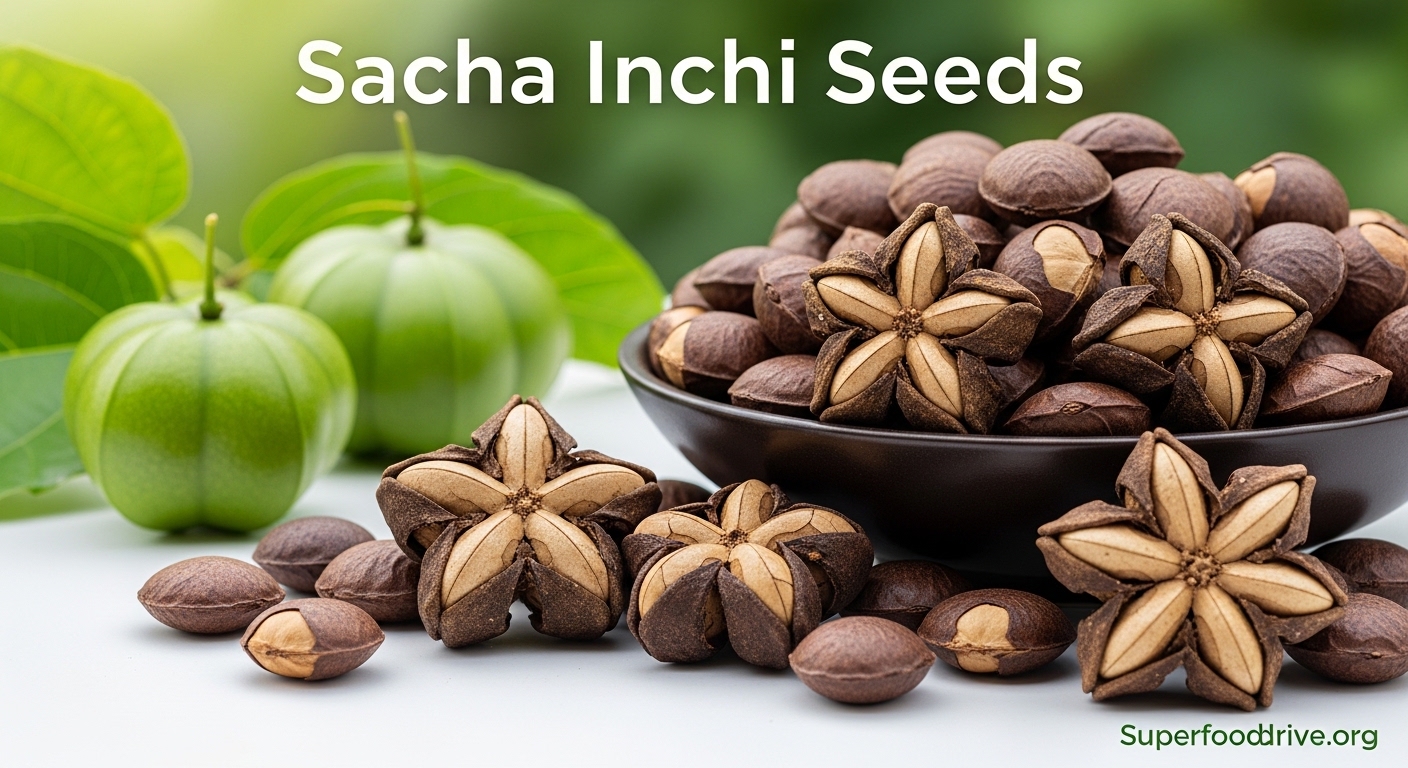
Looking for a powerful plant-based omega-3 source that goes beyond flaxseed and chia? I discovered Sacha Inchi seeds a few years ago while searching for alternatives to fish oil supplements. These star-shaped Amazonian seeds deliver one of the highest concentrations of alpha-linolenic acid (ALA) found in any plant food, packing approximately 45-50% omega-3s by weight. Whether you follow a vegan diet, have fish allergies, or simply want to diversify your nutrient intake, Sacha Inchi seeds offer a compelling solution for meeting your essential fatty acid needs.
In this guide, I will break down everything you need to know about Sacha Inchi seeds as a plant-based omega-3 source: what they are, their nutritional profile, proven health benefits, how they compare to other omega-3-rich foods, and practical ways to incorporate them into your diet.
Table of Contents
What is Sacha Inchi?
Sacha Inchi (scientific name: Plukenetia volubilis) is a perennial plant native to the Amazon rainforest of Peru, Ecuador, and Colombia. Indigenous communities have cultivated these seeds for thousands of years, with archaeological evidence suggesting they were a staple food for pre-Incan civilizations. You might also hear them called “Inca peanuts,” “mountain peanuts,” or “Inca nuts” due to their historical significance and nut-like appearance.
The plant produces distinctive star-shaped seed pods containing dark, oval seeds that resemble large sunflower seeds. When roasted, these seeds develop a crunchy texture and earthy, nutty flavor that works well as a snack or ingredient. Unlike many nuts and seeds, Sacha Inchi contains virtually zero net carbohydrates, making it popular among those following ketogenic and low-carb diets.
Sacha Inchi Seeds Nutritional Profile
A 10-gram serving of roasted Sacha Inchi seeds provides approximately 60 calories, making them an energy-dense but nutrient-rich addition to your diet. Here is the breakdown of what you get in each serving:
Protein: Sacha Inchi seeds contain about 30% protein by weight, delivering roughly 3 grams per 10g serving. This protein includes all nine essential amino acids, making it a complete protein source uncommon among plant foods.
Fat: The seeds are approximately 50% fat by weight, with the majority being healthy polyunsaturated fatty acids. The standout feature is the omega-3 content: 45-50% of the total fat consists of alpha-linolenic acid (ALA), with additional omega-6 and omega-9 fatty acids creating a favorable ratio for inflammation control.
Fiber: Each serving provides about 2-3 grams of dietary fiber, supporting digestive health and promoting feelings of fullness.
Micronutrients: Sacha Inchi seeds contain vitamin E (tocopherols), magnesium, potassium, and various phenolic compounds that act as antioxidants.
Omega-3 Comparison: Sacha Inchi vs Other Seeds
When evaluating plant-based omega-3 sources, the numbers tell a compelling story. I have compared Sacha Inchi to the most common alternatives to help you understand where it stands:
| Seed/Nut (per 10g) | Omega-3 (ALA) | Protein | Fiber | Net Carbs |
|---|---|---|---|---|
| Sacha Inchi | 4.5-5.0g | 3.0g | 2.5g | 0g |
| Flaxseed | 2.3-2.5g | 1.8g | 2.7g | 0.3g |
| Chia Seeds | 1.7-1.9g | 1.7g | 3.4g | 0.4g |
| Walnuts | 0.9-1.0g | 1.5g | 0.7g | 0.7g |
Sacha Inchi clearly leads in omega-3 density, delivering roughly twice the ALA of flaxseeds and nearly three times that of chia seeds per serving. The zero net carbohydrate content also distinguishes it for those monitoring carb intake. While flax and chia offer more fiber, Sacha Inchi provides superior protein content along with its omega-3 advantage.
Health Benefits of Sacha Inchi Seeds
Research on Sacha Inchi has grown significantly over the past decade, with studies supporting several key health benefits. Here is what the evidence shows:
Heart Health Support
The high ALA content in Sacha Inchi seeds supports cardiovascular health through multiple mechanisms. Alpha-linolenic acid helps reduce inflammation in blood vessels, supports healthy blood pressure levels, and may reduce the risk of arrhythmias. Clinical studies have shown that regular consumption of ALA-rich foods correlates with improved markers of heart health.
Brain Function and Cognitive Health
Omega-3 fatty acids are essential components of brain cell membranes. While ALA must be converted to EPA and DHA in the body (a process with limited efficiency), maintaining adequate ALA intake supports overall brain health. Some research suggests that ALA consumption may help protect against cognitive decline and support memory function.
Cholesterol Management
Studies on Sacha Inchi oil and seeds have shown promising effects on lipid profiles. Regular consumption may help reduce LDL (bad) cholesterol while maintaining or increasing HDL (good) cholesterol. The combination of plant sterols, fiber, and healthy fats works together to support healthy cholesterol levels.
Weight Management and Satiety
The protein and fiber content in Sacha Inchi seeds promotes feelings of fullness, which can help reduce overall calorie intake. Forum users frequently mention that a small handful keeps them satisfied for hours. The combination of healthy fats, protein, and fiber creates a satiating snack that supports weight management goals.
What Do Sacha Inchi Seeds Taste Like?
The flavor profile of Sacha Inchi seeds is distinctly earthy and nutty, with some people detecting subtle notes similar to dark chocolate or coffee. The texture when roasted is crunchy yet slightly softer than almonds or sunflower seeds. Many users describe the taste as more “robust” than milder nuts like cashews.
Some brands offer flavored varieties, with sea salt and vinegar being particularly popular. The neutral, earthy base takes well to seasonings, making them versatile for both sweet and savory applications. If you enjoy the taste of hemp seeds or pumpkin seeds, you will likely appreciate Sacha Inchi.
How to Use Sacha Inchi Seeds
There are several ways to incorporate this superfood into your diet:
Roasted Seeds as a Snack
The simplest way to enjoy Sacha Inchi is straight from the bag as a roasted snack. A 10-15 gram serving provides a satisfying crunch with significant nutritional benefits. They work well in trail mixes, sprinkled over salads, or as a topping for yogurt bowls.
Sacha Inchi Powder
Ground Sacha Inchi seeds create a protein-rich powder perfect for smoothies and protein shakes. The powder blends smoothly and adds a mild, nutty flavor without overpowering other ingredients. Each tablespoon delivers about 5 grams of protein along with omega-3s.
Sacha Inchi Oil
Cold-pressed Sacha Inchi oil contains the highest concentration of omega-3s and works well as a finishing oil for salads, drizzled over cooked vegetables, or added to smoothies. Do not heat this oil, as high temperatures damage the delicate omega-3 fatty acids.
Recipe Ideas
Try adding roasted Sacha Inchi seeds to homemade granola, blending the powder into energy balls, or using the oil in place of flax oil in salad dressings. They also work well as a crust for baked fish or chicken, adding crunch and nutrition.
Safety Considerations
Critical Safety Warning: Raw Sacha Inchi seeds contain toxic compounds that can cause digestive distress and other adverse effects. Always ensure you purchase roasted seeds or roast them yourself before consumption. Reputable brands clearly label their products as “roasted” and safe for eating.
Allergies to Sacha Inchi are relatively rare but possible, particularly for those with tree nut allergies. Start with a small amount to test tolerance. Some people report mild digestive discomfort when first introducing Sacha Inchi, likely due to the high fiber content. Begin with a small serving and increase gradually.
Where to Buy Sacha Inchi Seeds
Availability has improved significantly in recent years. You can find Sacha Inchi seeds at:
Trader Joes: One of the most accessible sources, often carrying roasted Sacha Inchi seeds under their own brand or popular labels like Brass Roots.
Specialty Health Food Stores: Whole Foods, Sprouts, and independent natural food stores typically stock Sacha Inchi in the nuts and seeds section.
Online Retailers: Amazon, Thrive Market, and direct-to-consumer brands offer various options including organic and flavored varieties.
Expect to pay between $8-15 for an 8-ounce bag, making them more expensive than sunflower seeds but comparable to premium nuts like macadamias or pine nuts.
Frequently Asked Questions
Are sacha inchi seeds healthy?
Yes, Sacha Inchi seeds are highly nutritious. They contain approximately 30% complete protein, 45-50% omega-3 fatty acids (ALA), and significant fiber. Research supports benefits for heart health, brain function, cholesterol management, and weight control.
Is sacha inchi oil high in omega-3?
Yes, Sacha Inchi oil is exceptionally high in omega-3 fatty acids, containing approximately 45-50% alpha-linolenic acid (ALA). This makes it one of the richest plant-based sources of omega-3s, surpassing flaxseed oil in concentration.
Which seeds have the highest omega-3?
Sacha Inchi seeds have the highest omega-3 content among common edible seeds, with 4.5-5g of ALA per 10g serving. Flaxseed ranks second at approximately 2.3-2.5g, followed by chia seeds at 1.7-1.9g per serving.
Is eating chia seeds enough for omega-3?
While chia seeds provide omega-3s, they contain about half the ALA of Sacha Inchi per serving. For optimal omega-3 intake, consider diversifying with multiple sources including Sacha Inchi, flaxseed, walnuts, and algae-based supplements for EPA and DHA.
Can you eat sacha inchi seeds raw?
No, you should never eat raw Sacha Inchi seeds. Raw seeds contain toxic compounds that can cause digestive distress and other adverse effects. Only consume seeds that have been properly roasted and labeled as safe for eating.
How many sacha inchi seeds should I eat per day?
A typical serving is 10-15 grams (about 1-2 tablespoons) daily. This provides approximately 4.5-7.5g of omega-3s along with 3-4.5g of protein. Start with a smaller amount and gradually increase to assess tolerance.
Conclusion
Sacha Inchi seeds stand out as one of the most potent plant-based omega-3 sources available today. With approximately 45-50% ALA content, complete protein, and zero net carbs, they offer unique nutritional advantages over flaxseed, chia, and walnuts. The research-backed benefits for heart health, brain function, and weight management make them a worthwhile addition to most diets.
If you are looking to boost your omega-3 intake without fish oil supplements, I recommend giving roasted Sacha Inchi seeds a try. Start with a small handful daily, experiment with different ways to incorporate them into your meals, and enjoy the earthy, nutty flavor while supporting your health with this ancient Amazonian superfood.