
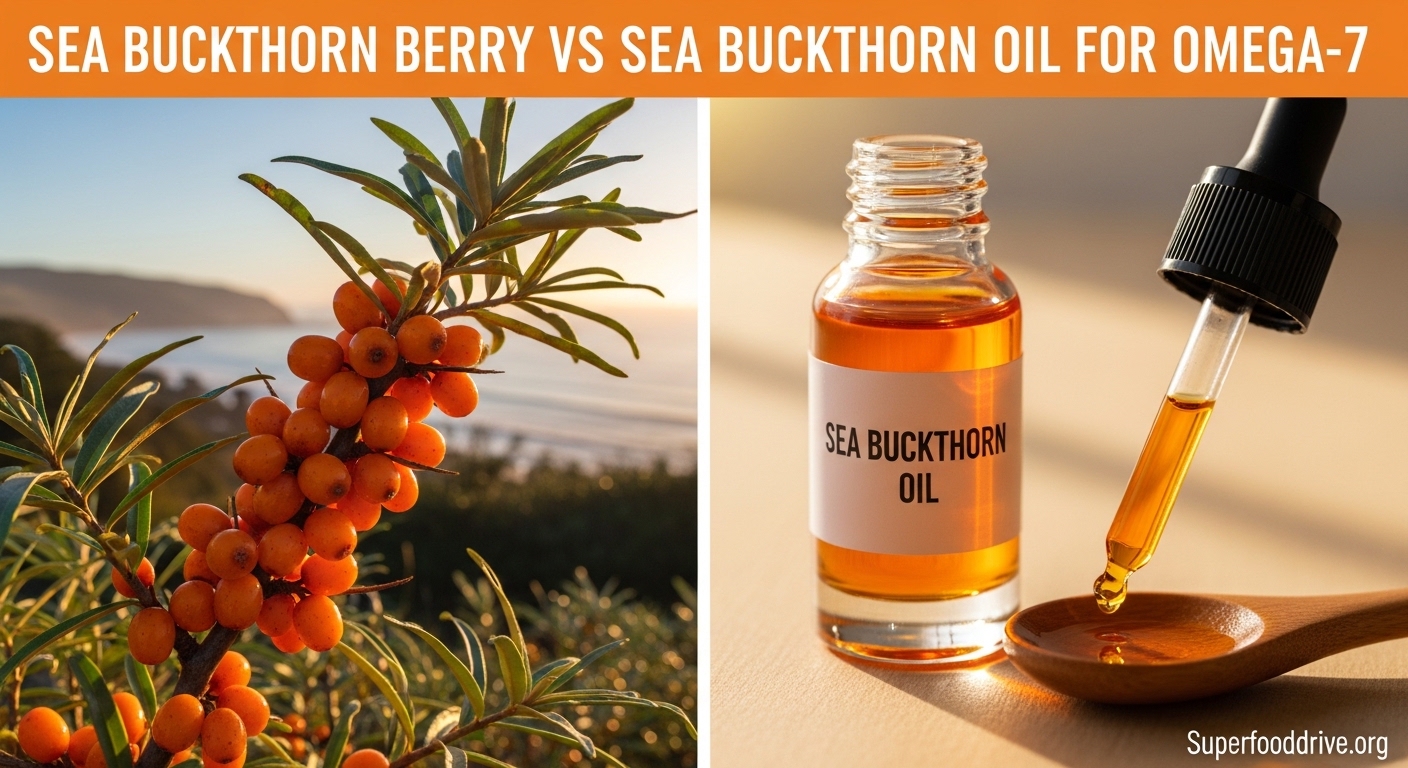
When I first started researching sea buckthorn berry vs sea buckthorn oil for omega-7 benefits, I was confused by the different forms available. You might be wondering the same thing: should you eat the berries, take berry oil, or use seed oil? Each form offers something unique, and choosing the right one depends on your specific health goals.
Sea buckthorn stands out as the world’s richest natural source of omega-7 fatty acids, a rare nutrient most people have never heard of. But not all sea buckthorn products deliver omega-7 equally. The berry pulp oil contains the highest concentration, while seed oil offers a different fatty acid profile entirely. Understanding these distinctions can help you get the results you are looking for.
In this guide, I will break down exactly how sea buckthorn berries compare to sea buckthorn oil, which form delivers the most omega-7, and how to choose the right option for dry eyes, skin health, or general wellness.
Table of Contents
Sea Buckthorn Berry vs Sea Buckthorn Oil: Quick Comparison
Before diving into the details, here is a quick overview of how the three main forms compare:
Sea Buckthorn Berries (Whole Fruit): The fresh or dried berries provide fiber, water-soluble vitamins, and some fatty acids, but omega-7 content is much lower than concentrated oils. Best for those who want whole-food nutrition.
Sea Buckthorn Berry Oil (Fruit/Pulp Oil): Extracted from the soft orange pulp, this is the highest natural source of omega-7 (palmitoleic acid), containing up to 40% of this rare fatty acid. Dark orange to red in color. Ideal for dry eyes, mucous membrane support, and skin hydration.
Sea Buckthorn Seed Oil: Extracted from the small dark seeds, this oil is rich in omega-3 and omega-6 fatty acids with only trace amounts of omega-7. Clear to light yellow in color. Best for inflammation support and balanced essential fatty acid intake.
What Is Omega-7 and Why Does It Matter?
Omega-7 fatty acids, specifically palmitoleic acid, are monounsaturated fats that play a crucial role in maintaining healthy mucous membranes throughout your body. Unlike omega-3 and omega-6, which get plenty of attention, omega-7 is relatively rare in the plant kingdom.
Your body uses omega-7 to maintain the integrity of cell membranes, particularly in tissues that need to stay moist and protected. This includes the lining of your eyes, digestive tract, and other mucous membranes. When these tissues become dry or irritated, omega-7 helps restore their natural moisture barrier.
Sea buckthorn berry oil contains approximately 30-40% palmitoleic acid, making it the most concentrated natural source available. Macadamia nuts come in a distant second at around 17%, while most other foods contain less than 5%.
Sea Buckthorn Berries: The Whole Food Option
Fresh sea buckthorn berries are small, bright orange fruits that grow on thorny shrubs in cooler climates. They have been used for centuries in traditional medicine across Asia and Europe. While the berries do contain some omega-7, the concentration is significantly lower than in the extracted oil.
The berries shine in other areas. They are exceptionally rich in vitamin C, containing up to 10 times more than oranges by weight. They also provide vitamin E, beta-carotene, flavonoids, and various minerals. The fiber content supports digestive health, and the water-soluble antioxidants offer cellular protection.
However, there are practical challenges with fresh berries. They are extremely tart and sour, with a taste many people find unpleasant. They are also highly perishable and not widely available in most grocery stores. Dried berries and berry powders offer more convenience but still lack the concentrated omega-7 benefits of the oil.
Sea Buckthorn Berry Oil: The Omega-7 Powerhouse
Sea buckthorn berry oil, also called fruit oil or pulp oil, is extracted from the soft, fleshy part of the berry. This is where the magic happens for omega-7. The oil contains the highest concentration of palmitoleic acid found anywhere in nature.
Beyond omega-7, berry oil delivers substantial amounts of beta-carotene, which gives it that distinctive dark orange to reddish color. It also contains omega-6 and omega-9 fatty acids, plus tocopherols and tocotrienols (forms of vitamin E).
The berry oil works exceptionally well for dry eyes, vaginal dryness, and skin moisture because omega-7 specifically targets mucous membrane health. When taken internally, it helps your body produce healthy tears and maintain moisture where you need it most. Applied topically, it creates a protective barrier while delivering antioxidants directly to skin cells.
One downside to note: the vibrant orange color can stain skin and clothing temporarily. Some people also find the taste of pure berry oil too strong for direct consumption, which is why many prefer it in capsule form.
Sea Buckthorn Seed Oil: The Balanced Choice
Sea buckthorn seed oil comes from the tiny dark seeds found inside the berries. While it contains only trace amounts of omega-7, it offers an impressive profile of essential fatty acids that berry oil lacks.
Seed oil provides a nearly 1:1 ratio of omega-3 (alpha-linolenic acid) and omega-6 (linoleic acid), making it excellent for supporting the body’s inflammatory response and cardiovascular health. It also contains significant amounts of omega-9 (oleic acid).
The oil from seeds is much lighter in color, ranging from clear to pale yellow. It absorbs quickly into skin without the staining associated with berry oil. Many people find it more pleasant for topical application, especially on the face.
For internal use, seed oil supports brain health, reduces inflammation, and helps maintain healthy cholesterol levels already in the normal range. It complements berry oil perfectly, which is why many high-quality supplements contain both.
Health Benefits: Which Form Works Best?
Dry Eyes and Eye Health
For dry eye relief, sea buckthorn berry oil is the clear winner. The high omega-7 content directly supports tear production and the health of the oily layer in your tears that prevents evaporation. Clinical studies have shown improvements in eye moisture and comfort after 4-8 weeks of daily supplementation with berry oil.
If you suffer from chronic dry eyes that artificial tears do not fully address, berry oil addresses the root cause by supporting the meibomian glands that produce the oil component of tears.
Vaginal Dryness
Women experiencing vaginal dryness, particularly during menopause, often report significant improvement with sea buckthorn berry oil. The omega-7 fatty acids help maintain the mucous membrane lining of the vaginal tract, restoring natural moisture and comfort.
Forums discussing menopause and women is health consistently mention sea buckthorn as one of the few natural solutions that actually works for this often-ignored symptom. Results typically appear within 2-4 weeks of consistent use.
Skin Health and Anti-Aging
Both forms benefit skin, but in different ways. Berry oil excels at surface-level moisture, barrier repair, and providing that healthy glow from its carotenoid content. It works well for dry, mature skin needing intense hydration.
Seed oil penetrates deeper and supports cellular regeneration from within. Its anti-inflammatory properties help calm irritated skin and reduce redness. Many skincare enthusiasts use both: berry oil for the body and seed oil for the face.
Digestive Health
Sea buckthorn has a long history of supporting digestive health. The omega-7 in berry oil helps maintain the mucous lining of the stomach and intestines, which can become compromised by stress, medications, or dietary factors.
Both berry and seed oils offer benefits here, but berry oil is the primary choice for soothing and protecting the digestive tract lining.
Cardiovascular and Liver Support
Seed oil takes the lead for cardiovascular health due to its omega-3 and omega-6 content. These essential fatty acids support healthy cholesterol levels, blood pressure already in the normal range, and overall heart function.
Both oils show promise for liver health in preliminary research, helping to protect this vital organ from oxidative stress and supporting its natural detoxification processes.
Topical vs Internal Use
Sea buckthorn oils work beautifully both on your skin and inside your body, but there are important differences to consider.
For topical application: Seed oil is often preferred for facial use because it absorbs quickly without staining. Berry oil works well for body application, nail care, and areas where the orange color is not a concern. Both should be applied to damp skin to lock in moisture.
For internal use: Berry oil delivers the highest omega-7 dose for mucous membrane support. Seed oil provides essential fatty acids that most diets lack. Many experts recommend combining both for comprehensive benefits.
When using berry oil topically, be aware that the beta-carotene can temporarily tint skin orange. This is harmless and washes off, but some people prefer seed oil for daytime facial use.
How to Choose the Right Form for Your Needs
Deciding between sea buckthorn berry and oil comes down to your primary health goals:
Choose whole berries if: You want whole-food nutrition, enjoy tart flavors, or are adding sea buckthorn to smoothies and recipes for general antioxidant support.
Choose berry oil if: You need omega-7 specifically for dry eyes, vaginal dryness, or mucous membrane support. This is also the best choice for intensive skin hydration and anti-aging benefits.
Choose seed oil if: You want essential fatty acid balance, have inflammatory concerns, or need a lighter oil for facial application.
Choose a blend if: You want comprehensive sea buckthorn benefits covering omega-7, omega-3, and omega-6 fatty acids together. Many quality supplements combine both oils.
Dosage Recommendations
For sea buckthorn berry oil, most studies showing benefits used doses of 500-2000 mg daily. For general maintenance, 500-1000 mg is typical. For addressing specific dryness issues like dry eyes, 1000-2000 mg may provide better results.
Sea buckthorn seed oil dosages typically range from 500-1500 mg daily, often combined with berry oil in the same product.
Whole berries can be consumed in small amounts (1-2 tablespoons of dried berries) or as powder added to smoothies. Fresh berries are quite tart, so start with small amounts.
Most people notice initial benefits within 2-4 weeks, with full effects developing over 2-3 months of consistent use.
Quality Indicators to Look For
Not all sea buckthorn products are created equal. Here is what to look for when choosing:
Cold-pressed extraction: This method preserves the delicate fatty acids and nutrients better than heat extraction.
Organic certification: Sea buckthorn berries are not heavily sprayed, but organic certification ensures purity and sustainable growing practices.
Clear labeling: The label should specify whether the product contains berry oil, seed oil, or both. Avoid products that just say “sea buckthorn oil” without clarification.
Color consistency: Berry oil should be dark orange to reddish. Seed oil should be clear to pale yellow. If berry oil is light yellow, it may be diluted or improperly processed.
Packaging: Sea buckthorn oil should come in dark glass bottles to protect from light degradation.
Side Effects and Safety Considerations
Sea buckthorn is generally well-tolerated, but there are some considerations:
Common side effects: Some people experience mild digestive upset, particularly when starting supplementation. Taking with food helps minimize this.
Blood pressure: Sea buckthorn may lower blood pressure slightly. If you take blood pressure medications, monitor your levels and consult your healthcare provider.
Blood thinning: High doses of omega fatty acids can have mild blood-thinning effects. Consult a doctor if you take anticoagulant medications.
Allergies: Those with allergies to plants in the Elaeagnaceae family should avoid sea buckthorn.
Pregnancy and breastfeeding: Safety has not been established for these populations, so avoid use unless directed by a healthcare provider.
Sea Buckthorn Berry vs Sea Buckthorn Oil: Which Is Better?
So which form wins in the sea buckthorn berry vs sea buckthorn oil comparison? The answer depends entirely on your goals.
If you need omega-7 specifically, sea buckthorn berry oil is unmatched. No other natural source comes close to its palmitoleic acid concentration. For dry eyes, vaginal dryness, and mucous membrane support, berry oil is the clear choice.
If you want balanced essential fatty acids including omega-3 and omega-6, seed oil delivers what berry oil lacks.
Whole berries offer fiber and water-soluble nutrients but cannot match the concentrated fatty acid benefits of the oils.
Many people ultimately choose a combination approach, using berry oil for omega-7 benefits and seed oil for essential fatty acid balance. Some products conveniently combine both in one formula.
Frequently Asked Questions
Which is better sea buckthorn berry oil or seed oil?
Berry oil is better for omega-7 and mucous membrane support, while seed oil excels at providing omega-3 and omega-6 for inflammation and cardiovascular health. For most people, a combination of both provides the most comprehensive benefits.
Is sea buckthorn oil the same as omega-7?
No. Sea buckthorn oil is the source, and omega-7 is the specific fatty acid (palmitoleic acid) found in high concentrations in sea buckthorn berry oil. Berry oil contains about 30-40% omega-7, while seed oil contains only trace amounts.
What is the best form of sea buckthorn to take?
For omega-7 benefits specifically, sea buckthorn berry oil is best. For balanced essential fatty acids, choose seed oil or a blend of both. Whole berries provide fiber and antioxidants but lower omega-7 concentration.
Does sea buckthorn help dry eyes?
Yes. Clinical studies show that sea buckthorn berry oil, rich in omega-7, can improve tear production and reduce eye dryness. Most people notice improvements within 4-8 weeks of daily supplementation.
Is sea buckthorn good for your thyroid?
Sea buckthorn provides antioxidants and essential fatty acids that support overall health, but direct evidence for thyroid-specific benefits is limited. The omega fatty acids may help with inflammation and cellular health throughout the body.
Conclusion
Understanding the difference between sea buckthorn berry vs sea buckthorn oil for omega-7 comes down to this simple fact: berry oil contains the highest concentration of omega-7 palmitoleic acid, while seed oil provides complementary essential fatty acids.
If your goal is addressing dry eyes, vaginal dryness, or mucous membrane health, sea buckthorn berry oil is your best option. For inflammation support and balanced omega-3/6 intake, seed oil shines. Many people find that combining both oils gives them the full spectrum of sea buckthorn benefits.
Whichever form you choose, look for cold-pressed, organic products with clear labeling about the oil source. Give it 4-8 weeks of consistent use before evaluating results. Your body needs time to incorporate these rare fatty acids and restore moisture balance where you need it most.