
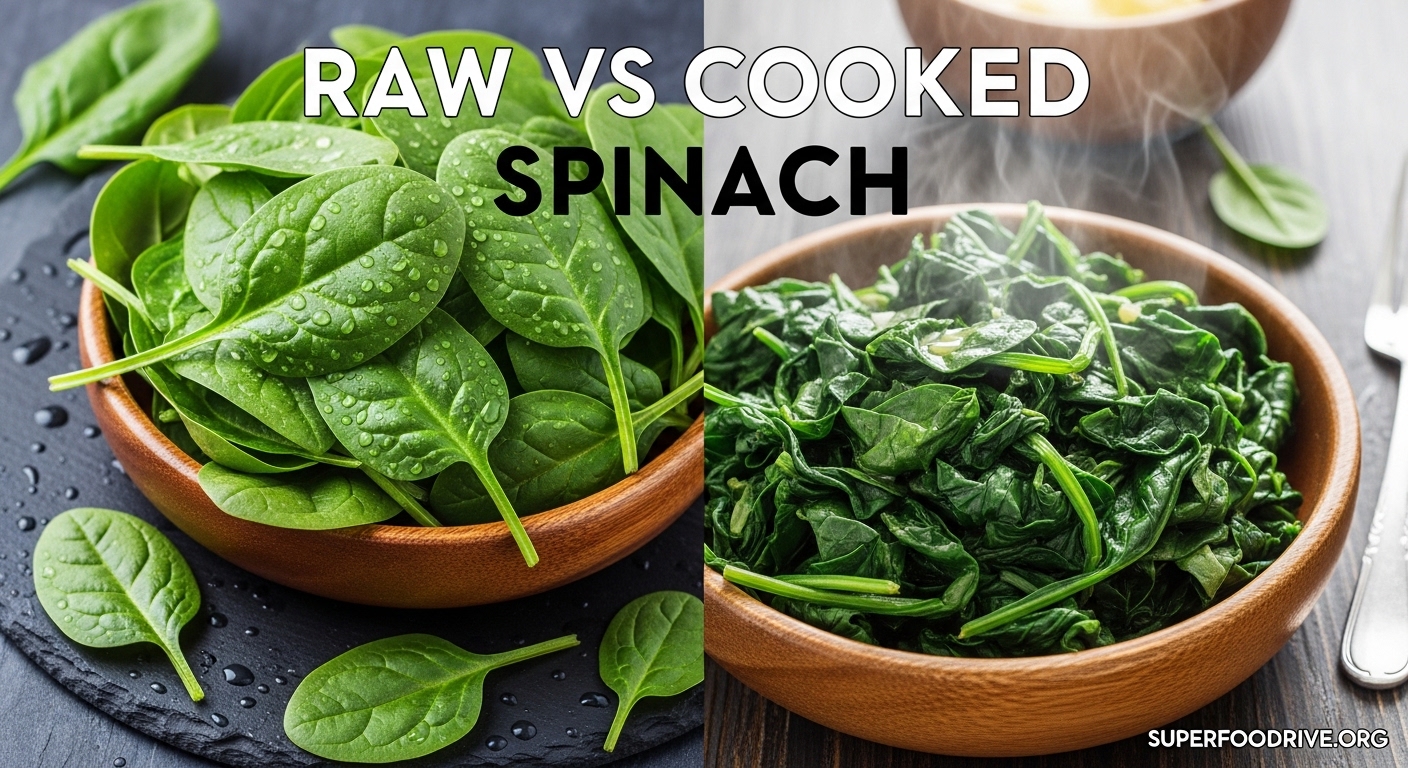
You have probably heard that raw vegetables are always the healthiest option. But with spinach, the truth is more surprising. Our team spent weeks reviewing USDA nutrition data and peer-reviewed studies to settle the raw vs cooked spinach nutrition debate once and for all. What we found challenges the common belief that raw always wins.
Whether you are trying to boost your iron levels, maximize vitamin intake, or simply want to know the best way to prepare your greens, this guide breaks down exactly what happens to spinach nutrients when you cook them. We will cover oxalates, bioavailability, and which preparation method actually delivers more nutrition per bite.
Table of Contents
Is Cooked Spinach More Nutritious Than Raw?
Cooked spinach is generally more nutritious per serving because cooking reduces oxalates by 50 to 90 percent, dramatically improving your body’s ability to absorb iron, calcium, and magnesium. Raw spinach retains more vitamin C and certain antioxidants, but your body absorbs far fewer minerals from uncooked leaves.
Research from the Journal of Agricultural and Food Chemistry shows that boiling spinach can reduce oxalate levels by over 80 percent. This single change transforms spinach from a mineral-blocker to a mineral-booster. The volume difference also matters. One cup of cooked spinach equals six to eight cups of raw, meaning you consume far more nutrients per bite when cooked.
That said, the answer depends on what you are optimizing for. Raw spinach contains about three times more vitamin C and preserves heat-sensitive antioxidants like lutein. For some health goals, raw may actually be the better choice.
Nutrient Breakdown: Raw vs Cooked Spinach
Understanding which is more nutritious requires looking at specific vitamins and minerals. Cooking affects different nutrients in different ways. Some vitamins break down with heat while others become easier to absorb.
Vitamins in Raw and Cooked Spinach
Raw spinach contains approximately 28 milligrams of vitamin C per 100 grams. After cooking, that drops to about 9 milligrams. Vitamin C is water-soluble and heat-sensitive, so cooking leaches it into the cooking water.
Carotenoids like beta carotene tell the opposite story. Your body absorbs significantly more beta carotene from cooked spinach. The heat breaks down cell walls, releasing these fat-soluble compounds so your body can access them. One study found that lightly cooking spinach increased beta carotene absorption by up to 300 percent.
Vitamin K remains stable in both raw and cooked spinach. Folate decreases slightly with cooking, but not dramatically enough to avoid cooked spinach if you need the mineral benefits.
Minerals and Bioavailability
Minerals are where cooked spinach truly shines. Spinach is famously high in iron and calcium, but raw spinach contains oxalates. These compounds bind to minerals in your digestive tract, preventing absorption.
When you cook spinach, the oxalate content drops by half or more depending on the method. This means your body can actually access the iron and calcium in the leaves. The iron in cooked spinach is up to three to four times more bioavailable than in raw spinach.
Calcium absorption improves similarly. Raw spinach contains about 99 milligrams of calcium per 100 grams, but your body absorbs very little due to oxalate binding. Cooking removes this barrier, making cooked spinach genuinely better for bone health.
The Volume Factor
Here is a practical consideration many people overlook. Spinach cooks down dramatically. Six cups of raw spinach reduce to about one cup when cooked.
This concentration effect means cooked spinach delivers far more nutrients per serving. If you struggle to eat large volumes of raw greens, cooking solves the problem. A small side of sauteed spinach provides the equivalent nutrition of a massive raw salad.
For tracking purposes, one cup of cooked spinach provides about six times the vitamin A, five times the folate, and significantly more usable iron than one cup of raw spinach.
What Are Oxalates and Why Do They Matter?
Oxalates are natural compounds found in many plants, including spinach, beets, and rhubarb. They serve protective functions for the plant, but they act as antinutrients in your body.
When you consume oxalates, they bind to minerals like calcium, iron, and magnesium in your digestive system. This binding creates insoluble compounds your body cannot absorb. The minerals pass through instead of nourishing you.
For most people eating a varied diet, moderate oxalate intake is not harmful. However, for those prone to kidney stones, oxalates pose a real concern. Calcium oxalate is the most common type of kidney stone. Reducing oxalate intake can help prevent recurrence.
Cooking spinach breaks down oxalates and leaches them into the cooking water. Boiling is most effective, removing over 80 percent of oxalates. Steaming removes about 50 to 60 percent. This reduction makes cooked spinach safer for kidney health and significantly more nutritious.
How Different Cooking Methods Affect Spinach Nutrients
Not all cooking methods treat spinach equally. The technique you choose determines which nutrients you keep and which you lose.
Boiling Spinach
Boiling reduces oxalates most effectively, removing 80 percent or more. This makes boiled spinach the best choice for kidney stone prevention and maximum mineral absorption.
The downside is nutrient leaching. Water-soluble vitamins like vitamin C and B vitamins dissolve into the cooking water. If you drain the spinach and discard the water, you lose these nutrients. The solution? Use the cooking water in soups, stews, or sauces to reclaim those vitamins.
Boiled spinach has a soft, mild flavor that works well in soups and casseroles. The texture may not appeal to everyone, but the nutrition profile is excellent for minerals.
Steaming Spinach
Steaming offers a middle ground. It reduces oxalates by about 50 to 60 percent while preserving more water-soluble vitamins than boiling. The steam method keeps spinach vibrant and slightly firm.
Steamed spinach retains better texture than boiled, making it ideal for side dishes. The moderate oxalate reduction still significantly improves mineral absorption compared to raw. For most people, steaming provides the best balance of nutrient retention and oxalate reduction.
Steam spinach for just three to five minutes. Overcooking degrades nutrients and creates an unappealing mushy texture.
Sauteing and Stir-Frying
Sauteing in olive oil or another healthy fat brings multiple benefits. First, the quick cooking time preserves vitamin C better than boiling. Second, the fat helps your body absorb carotenoids like beta carotene.
Carotenoids are fat-soluble, meaning they need dietary fat for optimal absorption. Raw spinach in a salad without fat provides fewer absorbable carotenoids than sauteed spinach with olive oil.
Sauteing reduces oxalates moderately, though not as much as boiling. The trade-off is worthwhile for the flavor and texture. Sauteed spinach works beautifully as a side dish, in omelets, or mixed into pasta.
Microwaving
Microwaving is surprisingly effective for nutrient retention. The short cooking time and minimal water usage preserve water-soluble vitamins better than boiling. Studies show microwaved spinach retains more folate and vitamin C than boiled spinach.
Oxalate reduction in microwaved spinach falls between steaming and boiling. For convenience and nutrition, microwaving is a solid choice. Simply place spinach in a microwave-safe dish with a tablespoon of water, cover, and cook for two to three minutes.
Benefits of Eating Spinach Raw
Despite cooked spinach winning on mineral absorption, raw spinach has distinct advantages. Knowing when to choose raw helps you optimize your nutrition.
Raw spinach contains approximately 28 milligrams of vitamin C per 100 grams compared to 9 milligrams in cooked. For anyone focused on immune support or collagen production, raw spinach delivers significantly more.
Lutein, an antioxidant crucial for eye health, also degrades with heat. Raw spinach preserves higher lutein levels. Research from Linkoping University found that uncooked spinach contains up to twice as much lutein as cooked spinach prepared at high heat.
Raw spinach is refreshing and convenient. Toss it into smoothies, salads, or wraps without any cooking time. The crisp texture adds variety to meals. For those who dislike cooked greens, raw spinach ensures you still get vegetable nutrition.
Benefits of Eating Spinach Cooked
Cooked spinach excels in several important areas. The reduced oxalate content transforms this green into a mineral powerhouse.
Iron absorption improves dramatically. While raw spinach contains oxalates that block iron uptake, cooked spinach allows your body to access this essential mineral. For those with iron deficiency or anemia risk, cooked spinach is the clear choice.
Kidney stone prevention is another major benefit. The 80 percent oxalate reduction from boiling makes cooked spinach safe for those prone to calcium oxalate stones. Many doctors recommend cooked spinach over raw for patients with stone history.
Digestibility improves with cooking too. Some people experience bloating or discomfort from large amounts of raw spinach. Cooking breaks down cell walls and fibers, making spinach easier on sensitive digestive systems.
The concentrated nutrition per bite matters practically. Getting six cups of raw spinach worth of nutrients from one cup of cooked spinach is efficient and filling.
Which Should You Choose? It Depends on Your Goals
The best preparation method depends on your individual health needs. Neither is universally superior.
Choose Raw Spinach If…
You want maximum vitamin C intake. Raw spinach provides three times more than cooked.
Eye health is your priority. The higher lutein content in raw spinach supports vision protection.
You enjoy the taste and texture of raw greens. Sustainability matters, so choose what you will actually eat.
You do not have kidney stone concerns or iron deficiency.
Choose Cooked Spinach If…
You need to boost iron levels. The improved bioavailability makes cooked spinach superior for anemia prevention.
You are prone to kidney stones. The oxalate reduction protects against stone formation.
You have digestive sensitivities. Cooked spinach is gentler on the stomach.
You want concentrated nutrition. One cup of cooked spinach provides more minerals than a large raw salad.
Best Meal Prep Ideas
Our nutrition team recommends a mixed approach. Enjoy raw spinach in smoothies and salads for vitamin C and lutein. Include cooked spinach in warm meals for minerals.
Pair cooked spinach with vitamin C sources like lemon juice or bell peppers. The vitamin C enhances iron absorption even further.
Add healthy fats to cooked spinach. Olive oil, avocado, or nuts help your body absorb fat-soluble carotenoids.
Try a weekly meal plan with three cooked spinach servings and two raw spinach servings. This balance optimizes both vitamin C and mineral intake.
Frequently Asked Questions
Is it healthier to eat spinach cooked or uncooked?
Cooked spinach is generally more nutritious per serving because cooking reduces oxalates by 50 to 90 percent, dramatically improving mineral absorption. However, raw spinach contains about three times more vitamin C and higher levels of certain antioxidants like lutein. The healthiest choice depends on your specific nutrition goals.
What should not be mixed with spinach?
Avoid pairing raw spinach with high-calcium dairy if you are concerned about mineral absorption, as oxalates can bind calcium. This is less of an issue with cooked spinach since cooking reduces oxalates significantly. For optimal iron absorption, pair cooked spinach with vitamin C sources rather than calcium-rich foods.
What is the healthiest way to eat spinach?
Lightly sauteing or steaming offers the best balance. These methods reduce oxalates while preserving heat-sensitive vitamins. Boiling reduces oxalates most effectively at over 80 percent but leaches water-soluble vitamins into the cooking water. Sauteing with olive oil enhances carotenoid absorption.
Does cooking spinach increase iron absorption?
Yes, cooking significantly improves iron absorption by reducing oxalates, which bind to iron and prevent your body from absorbing it. Studies show the iron in cooked spinach is up to three to four times more bioavailable than raw. Pairing cooked spinach with vitamin C sources further enhances iron uptake.
The Bottom Line
When it comes to raw vs cooked spinach nutrition, cooked spinach wins on mineral absorption while raw spinach wins on vitamin C and certain antioxidants. The best approach? Enjoy both.
Rotate between raw spinach in smoothies and salads and cooked spinach in warm dishes. This strategy maximizes the full spectrum of nutrients this remarkable green offers. Your body will thank you for the vitamin C, iron, calcium, and lutein, however you choose to eat it.
Remember that the September 2026 research consistently shows both preparations have a place in a healthy diet. Choose based on your health needs, and do not stress about eating spinach the “wrong” way. Any spinach is better than no spinach at all.