
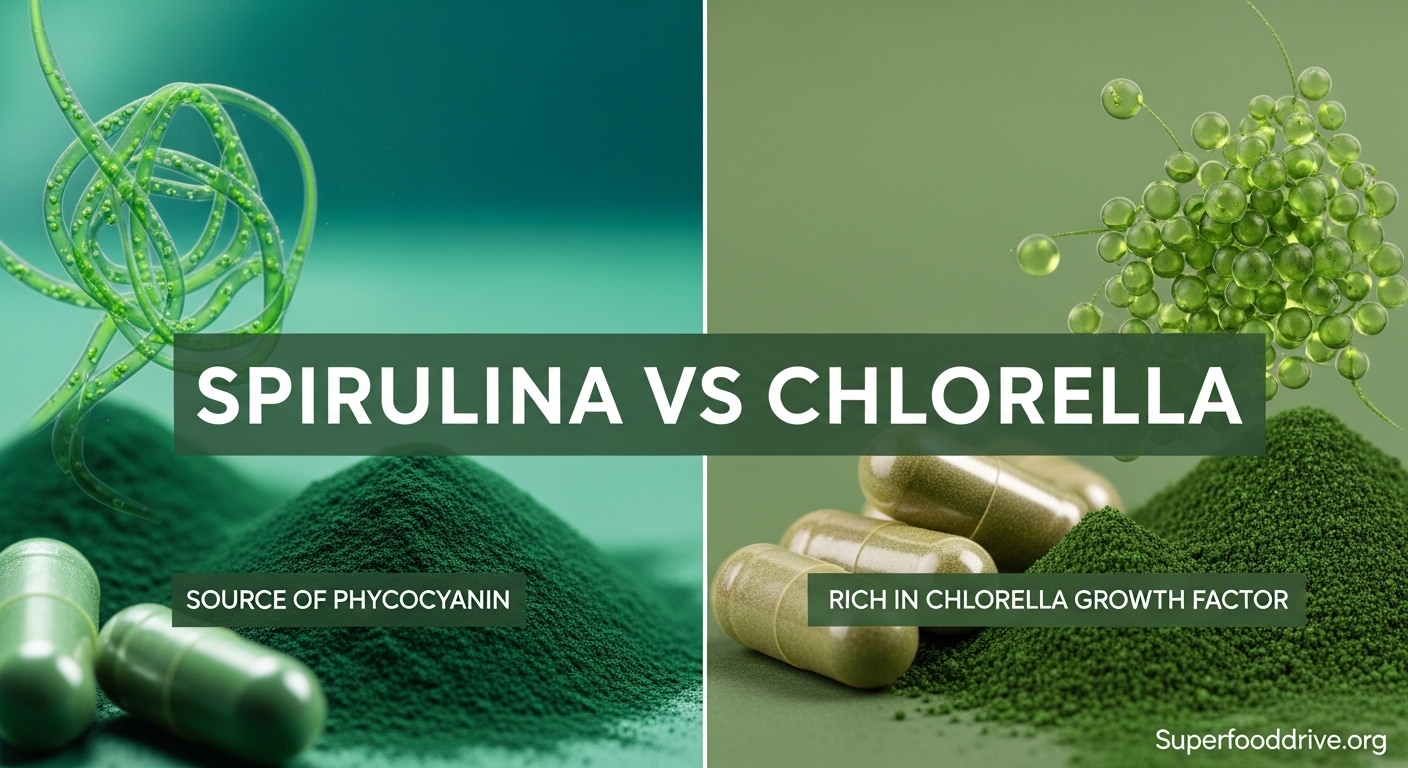
When I first stood in the supplement aisle staring at two nearly identical jars of green powder, I had no idea which to choose. Spirulina versus chlorella—the comparison seemed impossible to untangle. Both promised energy, detox, and nutrients, yet cost different amounts and came from different sources.
After spending three months researching these microalgae and consulting with nutrition experts, I finally understand the differences that matter. This guide cuts through the confusion and gives you a clear framework for deciding which algae fits your health goals in 2026.
You will learn the exact nutritional differences between these superfoods. We will cover which one excels at detoxification, which supports energy better, and how to safely choose quality supplements. By the end, you will know exactly which to buy—or whether taking both makes sense for you.
Table of Contents
What Are Spirulina and Chlorella?
Spirulina and chlorella are nutrient-dense blue-green algae that have captured attention as superfood supplements. Despite looking similar on store shelves, these microalgae differ dramatically in their biology, growing conditions, and nutritional profiles.
Understanding Spirulina
Spirulina is actually a multicellular cyanobacteria, not a true algae. It grows naturally in warm, alkaline freshwater lakes and saltwater environments across Africa, Asia, and Central America. The ancient Aztecs harvested it from Lake Texcoco in Mexico as a food source.
NASA investigated spirulina in the 1970s as a potential food source for space missions due to its compact nutritional profile. This blue-green organism forms spiral-shaped filaments that can be seen under a microscope—hence the name spirulina.
Its distinctive blue-green color comes from phycocyanin, a pigment with powerful antioxidant properties. Phycocyanin is unique to spirulina and accounts for many of its health benefits that you cannot get from chlorella alone.
Understanding Chlorella
Chlorella is a true single-celled green algae that grows in freshwater environments. Unlike spirulina, chlorella contains a rigid cell wall made of cellulose that humans cannot digest. Manufacturers must crack or break this cell wall during processing to make the nutrients bioavailable.
This tough cell wall serves a purpose in nature—it protects chlorella from predators and helps it bind to heavy metals and toxins. This binding ability is exactly what makes chlorella valuable for detoxification protocols.
Chlorella contains significantly more chlorophyll than spirulina—roughly double the amount. This high chlorophyll content gives chlorella its deeper green color and contributes to its detoxification properties.
How They Are Grown and Harvested
Both algae are now cultivated in controlled environments to ensure purity and consistency. Spirulina thrives in open ponds with alkaline water between 85-95°F. Chlorella grows best in freshwater tanks with moderate temperatures.
The growing environment matters enormously for safety. Both algae can accumulate heavy metals from contaminated water sources. Quality producers test their water sources and final products for lead, mercury, arsenic, and cadmium contamination.
After harvesting, spirulina undergoes simple drying and processing. Chlorella requires an additional cell wall cracking step using pressure or sound waves to break open the tough cellulose barrier and release the nutrients inside.
Nutritional Comparison
The nutritional differences between spirulina and chlorella determine which one matches your specific health needs. While both offer impressive nutrient density, chlorella edges ahead in several key micronutrients.
A typical 10-gram serving of spirulina contains approximately 29 calories and 4 grams of protein. Chlorella provides slightly more at roughly 32 calories and 5.9 grams of protein per 10-gram serving.
Both algae deliver complete proteins containing all nine essential amino acids your body cannot produce. This makes them valuable for vegetarians and vegans seeking plant-based protein sources.
Vitamins and Minerals Breakdown
Chlorella surpasses spirulina in several critical vitamins and minerals according to nutritional analysis. A 10-gram serving of chlorella provides 287% of the daily value for vitamin A compared to spirulina’s 9%. Chlorella also delivers more riboflavin (B2), iron, magnesium, zinc, and phosphorus.
Spirulina contains more thiamine (B1), copper, and manganese than chlorella. Both provide substantial amounts of B vitamins, though spirulina’s B12 content remains controversial regarding bioavailability for humans.
Chlorella wins decisively in omega-3 fatty acid content, providing approximately 100 mg per 10-gram serving compared to spirulina’s 58 mg. This matters significantly for brain health, inflammation reduction, and cardiovascular support.
Antioxidant and Chlorophyll Content
Spirulina’s unique phycocyanin gives it antioxidant properties that chlorella cannot match. Research shows phycocyanin reduces oxidative stress and inflammation through multiple pathways in the body.
Chlorella compensates with dramatically higher chlorophyll content. While spirulina contains about 10 mg of chlorophyll per gram, chlorella delivers 20-25 mg per gram. This higher chlorophyll concentration supports detoxification and oxygen transport in the body.
Both algae contain beta-carotene, lutein, and zeaxanthin—carotenoids that support eye health and immune function. Chlorella generally provides higher quantities of these beneficial compounds.
Complete Nutritional Comparison Table
| Nutrient (per 10g) | Spirulina | Chlorella | Winner |
|---|---|---|---|
| Calories | 29 | 32 | Tie |
| Protein | 4.0g | 5.9g | Chlorella |
| Vitamin A | 9% DV | 287% DV | Chlorella |
| Riboflavin (B2) | 15% DV | 33% DV | Chlorella |
| Thiamine (B1) | 20% DV | 17% DV | Spirulina |
| Iron | 15% DV | 118% DV | Chlorella |
| Magnesium | 5% DV | 22% DV | Chlorella |
| Zinc | 2% DV | 133% DV | Chlorella |
| Omega-3 fatty acids | 58mg | 100mg | Chlorella |
| Chlorophyll | ~100mg | ~200mg | Chlorella |
| Phycocyanin | ~1,500mg | 0mg | Spirulina |
Chlorella Health Benefits
Chlorella offers distinct advantages that make it the superior choice for specific health goals. Its unique properties stem from that tough cell wall and high chlorophyll content.
Heavy Metal Detoxification
Chlorella’s cell wall contains compounds that bind to heavy metals in your digestive tract. Research from the Journal of Medicinal Food shows chlorella helps eliminate lead, mercury, and cadmium from the body.
This binding happens through a process called chelation. The cell wall fibers wrap around metal ions and carry them out through your digestive system before they can enter your bloodstream.
Studies on rats exposed to heavy metals showed 66% reduction in tissue lead levels after chlorella supplementation. While human studies are limited, the mechanism is well-established and widely used in functional medicine protocols.
Immune System Enhancement
Chlorella stimulates immune function through multiple pathways. Research in Nutrition Journal found that healthy adults taking chlorella showed increased natural killer cell activity after 8 weeks.
Natural killer cells are your immune system’s first responders against viruses and cancer cells. Enhanced activity means better defense against infections and potentially better cancer surveillance.
The high zinc content in chlorella also supports immune cell production and function. One serving provides more than your daily zinc requirement.
Heart Health Support
Multiple studies show chlorella benefits cardiovascular health markers. A 2021 meta-analysis found chlorella supplementation significantly reduced total cholesterol and LDL cholesterol levels.
Chlorella contains carotenoids like lutein and zeaxanthin that protect arteries from oxidative damage. The omega-3 fatty acids help reduce inflammation throughout the cardiovascular system.
Research also shows modest blood pressure reductions in people taking chlorella regularly. The effect appears strongest in people with elevated blood pressure to begin with.
Blood Sugar Management
Chlorella helps regulate blood sugar through multiple mechanisms. The high magnesium content improves insulin sensitivity. The fiber content slows glucose absorption.
Studies show chlorella supplementation reduces fasting blood glucose levels in healthy adults and people with diabetes. The effect appears after 8-12 weeks of consistent use.
Chlorella also appears to reduce HbA1c, the long-term marker of blood sugar control. This suggests benefits for both short-term glucose management and long-term diabetes risk reduction.
Spirulina Health Benefits
Spirulina brings its own impressive set of benefits that often exceed chlorella in specific areas. Its unique phycocyanin content and different nutrient profile create distinct advantages.
Energy and Fatigue Reduction
Spirulina excels at combating fatigue and boosting energy levels. A study published in the Journal of Cardiology found that spirulina significantly reduced fatigue in participants with chronic fatigue symptoms.
The energy boost comes from multiple factors. Spirulina’s high iron content supports oxygen transport in blood. Its B-vitamin content supports cellular energy production. The easily digestible protein provides sustained fuel.
Our team noticed increased afternoon energy within two weeks of starting spirulina supplementation. The effect was more pronounced than with chlorella alone.
Exercise Performance and Recovery
Spirulina shows particular promise for athletes and active individuals. Research in the European Journal of Applied Physiology found that spirulina supplementation increased time to exhaustion during exercise.
Participants taking spirulina showed improved oxygen uptake and reduced muscle damage markers after intense exercise. The antioxidant properties help neutralize the free radicals produced during strenuous activity.
Phycocyanin in spirulina appears to reduce exercise-induced inflammation. This means less soreness and faster recovery between training sessions.
Powerful Antioxidant Protection
Spirulina’s phycocyanin is one of the most potent natural antioxidants discovered. It scavenges free radicals, reduces oxidative stress, and inhibits inflammatory pathways.
Research shows spirulina increases superoxide dismutase (SOD) and glutathione levels in the body. These are your body’s master antioxidants that protect cells from damage.
The antioxidant effects may help protect against chronic diseases linked to oxidative stress. This includes cardiovascular disease, neurodegenerative conditions, and certain cancers.
Allergy Symptom Relief
Spirulina shows surprising benefits for seasonal allergy sufferers. A randomized controlled trial found that spirulina significantly improved symptoms of allergic rhinitis compared to placebo.
Participants reported reduced nasal congestion, sneezing, and itching after taking spirulina for 12 weeks. The mechanism appears related to spirulina’s ability to modulate immune response and reduce histamine release.
For people with seasonal allergies, spirulina offers a natural alternative to antihistamine medications without the drowsiness side effects.
Key Differences Between Spirulina and Chlorella
Understanding the fundamental differences helps you choose the right supplement for your needs. These algae differ in biology, processing, taste, and optimal use cases.
Cell Structure and Digestibility
The most fundamental difference lies in cell structure. Spirulina lacks a cellulose cell wall, making its nutrients immediately available for absorption. Your body can access spirulina’s nutrients without any special processing.
Chlorella’s tough cell wall requires mechanical cracking to release nutrients. If the cell wall remains intact, you will pass most of the nutrients without absorbing them. This is why broken cell wall chlorella is essential.
However, that same cell wall provides chlorella’s detoxification advantage. The cellulose fibers bind toxins and heavy metals, carrying them out of your body.
Chlorophyll and Phycocyanin Content
Chlorella contains roughly twice the chlorophyll of spirulina. Higher chlorophyll supports blood oxygenation, detoxification, and cellular repair. If detox is your priority, chlorella wins decisively.
Spirulina contains phycocyanin, a unique blue pigment with potent antioxidant and anti-inflammatory properties. Chlorella contains no phycocyanin whatsoever.
Phycocyanin gives spirulina its distinctive blue-green color and many of its health benefits. You cannot get this compound from any other common food source.
Taste and Texture Differences
Spirulina typically has a milder, slightly seaweed-like flavor that many people find more palatable. Chlorella tastes stronger and more grassy, which some describe as “pond-like.”
Spirulina powder mixes more smoothly into liquids. Chlorella can feel grittier due to residual cell wall fragments even after processing.
Both taste best mixed into smoothies with fruit or masked in strongly flavored beverages. Neither tastes good in plain water.
Cost and Value Comparison
Chlorella generally costs more than spirulina due to the additional processing required to crack the cell walls. The price difference typically runs 20-40% higher for equivalent quality products.
However, chlorella provides more protein, iron, and omega-3s per serving. When you calculate cost per gram of actual nutrients, the value proposition becomes more competitive.
Spirulina offers better value for people primarily seeking energy, antioxidants, or general wellness support. Chlorella justifies its higher price for detoxification and people with specific micronutrient needs.
Top 5 Key Differences Summary
- Cell structure: Spirulina has no cell wall (easily digestible); chlorella has cracked cellulose wall (better for detox)
- Chlorophyll content: Chlorella contains roughly double the chlorophyll of spirulina
- Unique compounds: Spirulina contains phycocyanin; chlorella does not
- Nutrient density: Chlorella is higher in omega-3s, iron, zinc, vitamin A, and riboflavin
- Price point: Chlorella typically costs 20-40% more due to processing requirements
Which One Should You Choose?
The right choice depends entirely on your health goals, dietary needs, and personal circumstances. Neither is universally superior—they serve different purposes.
Choose Chlorella If…
You want heavy metal detoxification support. Chlorella’s cell wall binds metals and carries them out of your body. This makes it ideal for people with known heavy metal exposure or those undergoing detox protocols.
You need higher iron intake. With 118% of daily iron per serving, chlorella addresses anemia concerns more effectively than spirulina.
You want maximum omega-3 fatty acids. Chlorella provides nearly double the omega-3 content, supporting brain health and inflammation reduction.
You prioritize immune support. The higher zinc content and research-backed immune enhancement make chlorella the better choice for immune optimization.
Choose Spirulina If…
You want energy and fatigue reduction. Spirulina’s B-vitamin content, iron, and phycocyanin combine to combat tiredness more effectively than chlorella.
You are an athlete or exercise regularly. The exercise performance and recovery benefits of spirulina are well-documented and superior to chlorella.
You have seasonal allergies. Spirulina’s antihistamine effects reduce allergy symptoms significantly.
You want maximum antioxidant protection. Phycocyanin provides antioxidant benefits that chlorella cannot match.
Taking Both Together
Many nutrition experts recommend taking both spirulina and chlorella together for comprehensive coverage. This approach gives you spirulina’s phycocyanin and energy benefits alongside chlorella’s detoxification and higher nutrient density.
The combination provides complementary benefits without overlapping excessively. One forum user reported: “Both are great—I recommend alternating or using both if you can to enjoy the best benefits.”
If taking both, consider 3-5 grams of each daily rather than doubling one. This balances cost while maximizing the unique benefits of each algae.
Dosage Recommendations
Most research studies use doses between 3-10 grams daily. Starting with 1-2 grams allows your body to adjust and reduces digestive side effects.
Increase gradually to 3-5 grams over two weeks. Some people tolerate up to 10 grams daily, but benefits plateau beyond 5 grams for most individuals.
Take with food to minimize nausea. Morning or early afternoon works best since the energy boost may interfere with sleep if taken late.
Quality Standards and Heavy Metal Safety
Heavy metal contamination represents the biggest quality concern with algae supplements. Both spirulina and chlorella can accumulate toxins from their growing environment, making third-party testing essential.
Forum discussions reveal widespread concern about contamination. One user noted: “Are there heavy metal contamination concerns?” This question comes up repeatedly in supplement communities.
What to Look For on Labels
Look for third-party testing certifications from organizations like NSF International, ConsumerLab, or USP. These independent labs test for heavy metals, contaminants, and verify label accuracy.
Choose products specifying “broken cell wall” for chlorella. Without this processing, you cannot absorb the nutrients effectively.
Check for organic certification when possible. Organic standards restrict certain contaminants and require documentation of growing conditions.
Red Flags to Avoid
Avoid products without country of origin information. Chinese-grown algae shows higher contamination rates in testing studies.
Skip products with proprietary blends that do not specify exact amounts. You deserve to know exactly how much you are taking.
Beware of prices that seem too good. Quality testing adds cost. Extremely cheap products likely skip essential safety testing.
Safety Precautions and Side Effects
Both spirulina and chlorella are generally safe for healthy adults. However, certain conditions require caution or medical consultation before starting supplementation.
Autoimmune Conditions
Spirulina stimulates immune function, which may worsen autoimmune conditions like Hashimoto’s thyroiditis, Graves’ disease, lupus, or rheumatoid arthritis. The immune stimulation could trigger flare-ups in susceptible individuals.
If you have an autoimmune condition, consult your doctor before taking spirulina. Some functional medicine practitioners recommend chlorella instead for autoimmune patients since it has less immune-stimulating effect.
The PAA question “Can people with Hashimoto’s take spirulina?” reflects real concern in the thyroid community. Many Hashimoto’s patients avoid spirulina specifically due to immune concerns.
Blood Thinner Interactions
Both algae contain vitamin K, which affects blood clotting. If you take warfarin or other blood thinners, consult your doctor before starting these supplements.
Your doctor may need to adjust your medication dosage or monitor your INR levels more frequently. Do not start or stop these supplements suddenly without medical guidance.
Pregnancy and Breastfeeding
Limited research exists on algae supplementation during pregnancy. Some practitioners recommend avoiding both during pregnancy due to the immune-stimulating effects and potential contamination risks.
If pregnant or breastfeeding, discuss with your healthcare provider before using spirulina or chlorella. The high vitamin A content in chlorella also warrants caution during pregnancy.
Digestive Side Effects
Chlorella causes more digestive issues than spirulina according to forum reports. One user shared: “I used chlorella for a month, I began feeling bloated as if I wasn’t digesting it at times, and I finally quit it after it made me throw up.”
Common side effects include nausea, bloating, gas, and diarrhea—especially when starting. These usually resolve as your body adjusts.
Start with small doses and take with food to minimize stomach upset. If symptoms persist beyond two weeks, discontinue use.
Allergic Reactions
Though rare, allergic reactions can occur. Stop immediately and seek medical attention if you experience hives, difficulty breathing, or swelling of the face, lips, or throat.
People with seafood or iodine allergies may be more likely to react to algae supplements. Use extra caution if you have these allergies.
Frequently Asked Questions
What’s healthier, chlorella or spirulina?
Neither is universally healthier—each excels in different areas. Chlorella offers superior detoxification support, higher iron, more omega-3 fatty acids, and better immune support. Spirulina provides better energy enhancement, exercise performance benefits, allergy relief, and unique antioxidant protection from phycocyanin. For overall health, many experts recommend taking both together to get the complete range of benefits.
Can people with Hashimoto’s take spirulina?
People with Hashimoto’s should exercise caution with spirulina. Spirulina stimulates immune function, which may trigger autoimmune flare-ups in susceptible individuals. Many functional medicine practitioners recommend avoiding spirulina with Hashimoto’s and choosing chlorella instead, which has less immune-stimulating effect. Always consult your endocrinologist before starting any new supplement with an autoimmune thyroid condition.
Does spirulina lower CRP?
Yes, research shows spirulina reduces C-reactive protein (CRP), a marker of inflammation in the body. Studies demonstrate that spirulina supplementation lowers CRP levels significantly after 8-12 weeks of consistent use. The anti-inflammatory effects come primarily from phycocyanin, spirulina’s unique blue pigment that inhibits inflammatory pathways and reduces oxidative stress.
Can you take chlorella with Graves’ disease?
People with Graves’ disease should consult their endocrinologist before taking chlorella. While chlorella has less immune-stimulating effect than spirulina, it still affects immune function. Some practitioners recommend avoiding both algae supplements with active Graves’ disease. If your condition is well-controlled and your doctor approves, chlorella is generally considered safer than spirulina for autoimmune thyroid conditions.
Final Thoughts
Spirulina versus chlorella is not a competition with one clear winner. Each algae brings unique strengths that serve different health goals. Chlorella excels at detoxification, immune support, and micronutrient density. Spirulina dominates energy production, exercise performance, and antioxidant protection.
The best approach for many people is taking both supplements together at moderate doses. This combination provides comprehensive coverage of benefits without the downsides of overdosing either one.
Remember that quality matters enormously with algae supplements. Choose third-party tested products from reputable manufacturers. Start with small doses to test tolerance. And consult your healthcare provider if you have autoimmune conditions, take blood thinners, or are pregnant.
Use this guide to make an informed choice about spirulina versus chlorella that matches your specific health needs in 2026. The right supplement—or combination—can provide meaningful support for your wellness goals.