
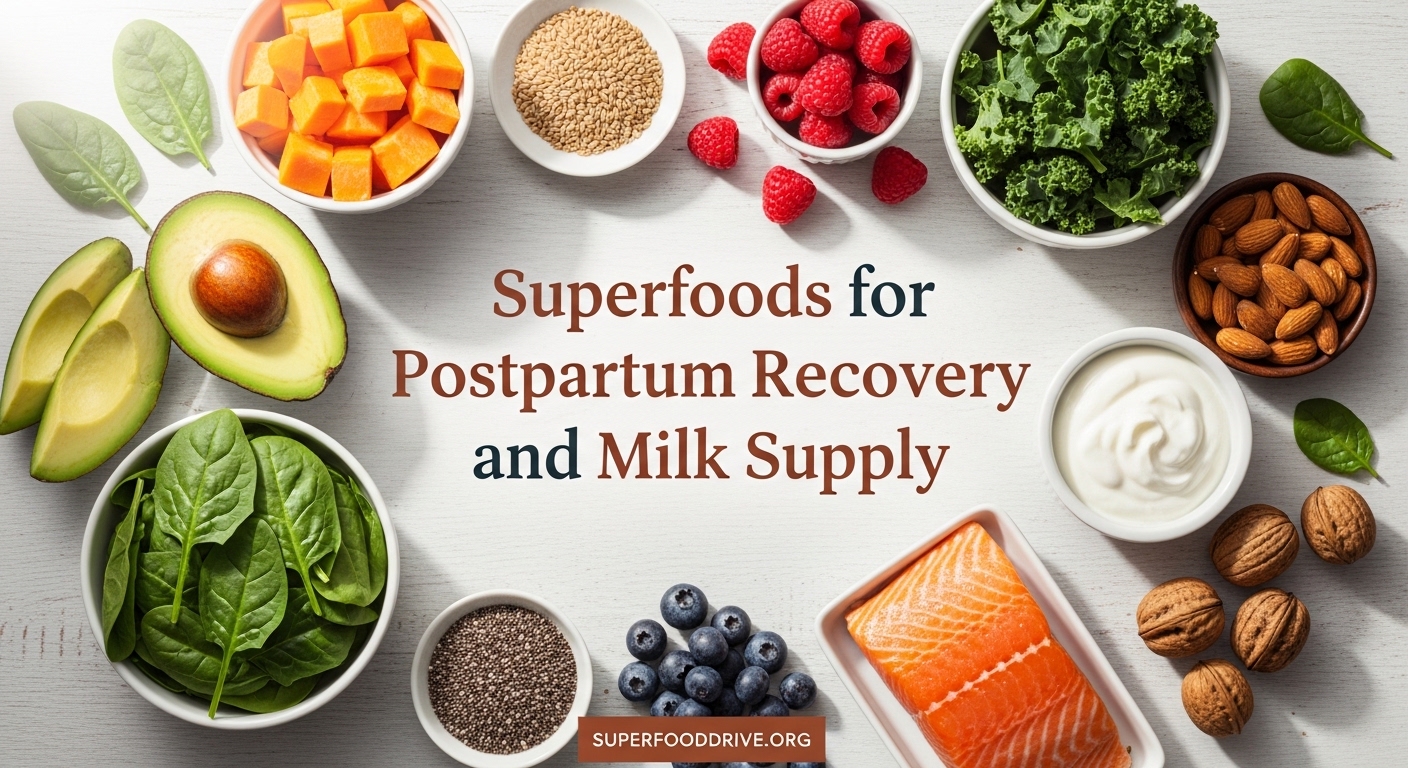
The first three months after birth, often called the “fourth trimester,” is when your body needs more nutritional support than at any other time. I learned this the hard way after my first baby, when I survived on granola bars and coffee for weeks while wondering why my energy was tanking and my milk supply struggled.
Superfoods for postpartum recovery and milk supply are not about expensive powders or exotic ingredients from faraway lands. They are simple, nutrient-dense whole foods that give your body what it needs to heal from birth and produce quality breast milk. Your nutritional needs are actually higher now than they were during pregnancy, yet most new moms eat worse postpartum than they did while expecting.
This guide covers the foods that actually work, based on both scientific research and real experiences from thousands of mothers. Whether you are exclusively breastfeeding, pumping, combination feeding, or formula feeding, your body needs replenishment. Let us dive into what to eat and how to make it happen when you are running on two hours of sleep.
Table of Contents
Understanding Your Postpartum Nutritional Needs
Most women focus intensely on pregnancy nutrition, then completely drop the ball after birth. This is backwards. Your postpartum body is recovering from one of the most physically demanding experiences possible while simultaneously producing food for another human.
Breastfeeding mothers need an extra 400 to 500 calories per day above pre-pregnancy needs. That is roughly equivalent to adding a substantial snack or small meal. But those calories need to come from nutrient-dense sources, not just empty calories. Think of it as eating for cellular repair, not just hunger.
Your macronutrient breakdown should emphasize protein, healthy fats, and complex carbohydrates. Protein needs jump to about 71 grams daily to support tissue repair from birth wounds, whether vaginal or cesarean. Healthy fats, particularly omega-3 fatty acids, support your hormone balance and your baby’s brain development through breast milk. Complex carbohydrates provide steady energy rather than the blood sugar crashes that make new mom exhaustion even worse.
Micronutrient depletion is real and common. Iron stores are depleted from pregnancy and blood loss during birth. Calcium is being diverted to breast milk. Iodine, choline, and DHA requirements increase for your baby’s neural development. Without intentional eating, you run on empty while your body pulls from your own reserves.
Superfoods for Postpartum Recovery and Milk Supply
Lactogenic foods, also called galactagogues, are foods that may help increase breast milk production. While individual responses vary, certain foods show consistent results across many mothers.
Oats top every list for a reason. They contain beta-glucan, a type of fiber that may increase prolactin levels, the hormone responsible for milk production. Oats are also comforting, filling, and easy to prepare even when exhausted. Start your day with oatmeal, add oat-based granola to yogurt, or make overnight oats for grab-and-go breakfasts.
Fenugreek is the most researched herbal galactagogue, though results are mixed. Some mothers see supply increases within 24 to 72 hours of taking fenugreek supplements or drinking fenugreek tea. Others notice no change. A small percentage of babies become fussy when mothers consume fenugreek, and it can make sweat and urine smell like maple syrup. Approach with caution and discontinue if you notice adverse effects.
Fennel seeds have milder galactagogue properties and are generally well-tolerated. Chew them after meals, brew fennel tea, or add ground fennel to soups and stews. Fennel also helps with digestion, which many new moms appreciate.
Brewer’s yeast is a nutritional powerhouse used in classic “lactation cookie” recipes. It is rich in B vitamins, protein, and minerals that support both milk supply and maternal energy. The taste is strong and bitter, so it works best mixed into baked goods or smoothies rather than consumed straight.
Seeds are breastfeeding superstars. Flaxseeds provide lignans and omega-3s. Chia seeds offer protein, fiber, and hydration support. Hemp seeds contain complete protein and healthy fats. Keep a seed mix by your nursing station and sprinkle on everything from salads to oatmeal.
Leafy greens like spinach, kale, and collards provide calcium, folate, and phytoestrogens that mimic natural estrogen and may support lactation. They also help with postpartum constipation, a common complaint. Add handfuls to smoothies if chewing salad feels like too much work.
Garlic may increase milk supply while adding flavor to otherwise bland postpartum meals. Some babies dislike the taste of garlic in breast milk and nurse less, but others show no reaction. Observe your baby’s response and adjust accordingly.
Whole grains beyond oats, including barley, brown rice, and quinoa, provide B vitamins, fiber, and sustained energy. Barley specifically contains beta-glucan similar to oats and is a traditional galactagogue in many cultures.
Recovery Superfoods for Healing and Energy
While milk supply gets most of the attention, recovery superfoods are equally important for every new mother. Your body is repairing perineal tears or surgical incisions, restoring blood volume, and recalibrating hormones.
Protein is non-negotiable for tissue repair. Aim for protein at every meal and snack. Eggs are perfect postpartum food, providing complete protein, choline for brain health, and vitamin D. Keep hard-boiled eggs in the fridge for instant snacks. Salmon and other fatty fish deliver protein plus anti-inflammatory omega-3 fatty acids that support mood and healing.
Bone broth deserves its postpartum popularity. It provides collagen for tissue repair, easily absorbed minerals, and hydration in a warm, comforting format. Many cultures traditionally serve new mothers warming soups and broths for the first weeks. Make a big batch and freeze in individual portions.
Iron-rich foods combat the fatigue and brain fog of postpartum anemia. During my second postpartum period, I felt dramatically better within a week of intentionally increasing iron-rich foods. Focus on heme iron sources like beef, chicken thighs, and oysters, which absorb better than plant-based iron. Pair plant sources like lentils and spinach with vitamin C-rich foods to boost absorption.
Healthy fats support hormone production, which is essential as your body shifts from pregnancy hormones to breastfeeding hormones. Avocados offer monounsaturated fats, fiber, and potassium. Nuts and seeds provide satisfying fat plus protein. Full-fat dairy, if tolerated, delivers fat-soluble vitamins and conjugated linoleic acid.
Complex carbohydrates stabilize blood sugar and provide energy without crashes. Sweet potatoes are ideal postpartum food, offering beta-carotene, fiber, and natural sweetness that satisfies cravings while providing nutrition. They are also easy to batch cook and reheat.
Berries deliver antioxidants that combat inflammation from birth trauma and sleep deprivation. They require zero preparation, making them perfect for exhausted mothers. Frozen berries work just as well as fresh and are often more affordable.
The Critical Micronutrients Every New Mom Needs
Beyond macronutrients, several micronutrients deserve special attention during postpartum recovery and lactation.
Iron tops the list because pregnancy depletes stores and blood loss during birth further reduces levels. Postpartum anemia affects up to 30 percent of new mothers and directly causes fatigue, weakness, and difficulty concentrating. Food sources include red meat, dark meat poultry, lentils, spinach, and fortified cereals. Pair plant sources with vitamin C and avoid tea or coffee within an hour of iron-rich meals, as tannins inhibit absorption.
Calcium needs increase to 1,000 milligrams daily during lactation as your body prioritizes breast milk over bone density. Without adequate intake, you draw from your own bones. Dairy products offer the most bioavailable calcium, but leafy greens, sardines with bones, fortified plant milks, and almonds contribute for those avoiding dairy.
Vitamin D works with calcium for bone health and also supports mood regulation. Many new mothers are deficient, especially those who delivered in winter or have darker skin. Fatty fish, egg yolks, and fortified foods provide vitamin D, though supplementation is often necessary to reach optimal levels.
DHA, an omega-3 fatty acid, is crucial for your baby’s brain development through breast milk. Your body transfers DHA to milk, potentially depleting your own stores. Fatty fish like salmon, sardines, and mackerel provide preformed DHA. Algae-based supplements offer a vegan alternative that bypasses the conversion inefficiency of flax and chia.
Choline supports both maternal recovery and infant brain development. Needs increase to 550 milligrams daily during lactation. Eggs are the best source, with one large egg providing about 150 milligrams. Other sources include beef, chicken, fish, and cruciferous vegetables like broccoli and Brussels sprouts.
Iodine is essential for infant brain development and maternal thyroid function. Needs increase substantially during lactation. Iodized salt, dairy products, eggs, and seaweed are primary sources. Many prenatal vitamins contain inadequate iodine for lactation, so check your supplement.
Hydration Strategies for Breastfeeding Success
You cannot make milk without adequate fluid intake. Breast milk is approximately 87 percent water, and lactating women produce about 25 to 35 ounces of milk daily. That is a significant fluid demand on top of normal needs.
Most lactation consultants recommend drinking to thirst while aiming for roughly 16 cups of fluid daily from all sources, including water, milk, soup, and water-rich foods. Thirst is a reliable indicator, but many busy moms ignore thirst signals until they are significantly dehydrated.
Plain water is essential, but electrolytes matter too. Breast milk contains electrolytes, and producing it depletes yours. Many mothers find coconut water, electrolyte tablets, or mineral-rich bone broth more effective than plain water alone. During my second postpartum period, adding electrolytes eliminated the constant thirst that water alone never satisfied.
Set up hydration stations around your home. Keep large water bottles in your nursing area, bedroom, living room, and anywhere you spend time. Add a reusable straw to make mindless sipping easier while holding a baby. Many moms swear by the 16-ounce rule: drink at least 16 ounces of water every time you sit down to nurse or pump.
Signs of dehydration include dark urine, headaches, fatigue, dizziness, and decreased milk supply. If you are struggling with supply and feeling thirsty, increase fluids immediately and add electrolytes.
Drinks that support milk supply include oatmeal water (agua de avena), a traditional Mexican lactation drink made by blending soaked oats with water, cinnamon, and vanilla. Nursing teas containing fenugreek, fennel, and blessed thistle help some mothers. Red raspberry leaf tea provides uterine-toning benefits along with hydration.
Traditional Postpartum Foods from Around the World
Nearly every culture has traditional postpartum food practices that have supported mothers for generations. These wisdom traditions emphasize warm, easy-to-digest, nutrient-dense foods during the vulnerable postpartum period.
Chinese confinement practices, called “zuo yue zi” or “sitting the month,” center on warming foods that restore energy and promote healing. Ginger features prominently for its warming properties and digestive benefits. Sesame oil is used for cooking instead of cooling oils. Rice wine and special soups with healing herbs are consumed daily. The emphasis on warmth reflects traditional Chinese medicine principles about restoring balance after the “cold” experience of blood loss.
Ayurvedic postpartum traditions from India focus on “vata” balancing foods that are warm, moist, oily, and grounding. Ghee is consumed liberally for lubrication and digestion. Moong dal (split mung beans) provide easy-to-digest protein. Warming spices like ginger, cumin, and fenugreek aid digestion and milk supply. Rice pudding cooked with spices offers comforting nourishment.
Mexican “cuarentena” or forty-day postpartum period traditionally includes atole, a warm drink made from masa, milk, cinnamon, and vanilla that provides calories, calcium, and comfort. Chicken broth with vegetables and epazote (a digestive herb) supports healing. Warm corn tortillas with beans offer sustained energy.
Middle Eastern traditions include warming drinks like sahlab, a thick, comforting beverage made from orchid root powder, milk, and warming spices. Dates are consumed for quick energy and iron. Fenugreek appears in many dishes for its galactagogue properties.
The common thread across all traditions is the principle of warming foods. Cold, raw foods are minimized in favor of cooked, soupy, stewed preparations that are easier to digest and provide comfort. The postpartum body is working hard on repair and milk production; warm foods require less energy to process.
Practical Eating Strategies for Exhausted New Moms
Knowing what to eat is only half the battle. Actually eating when you have a newborn attached to you 12 hours a day is the real challenge. These strategies come from mothers who have survived the fourth trimester.
Follow the one-handed eating rule. Every food in your house for the next three months should be something you can eat with one hand while holding a baby. Cut sandwiches into quarters. Pre-slice apples. Keep smoothies in cups with straws. Prepare nothing that requires a knife and fork while seated at a table.
Set up breastfeeding snack stations. Place a basket next to every nursing chair and your bed with water, shelf-stable snacks like granola bars and nuts, and easy fruit. You will spend hours in these spots; make them self-sufficient.
Freezer meal prep before baby arrives is a game-changer if you have the energy and support during late pregnancy. Focus on one-handed foods: breakfast burritos, energy balls, muffins, soups in individual portions, and pre-made smoothie bags where you just add liquid and blend.
Batch cooking on weekends, if you have help with the baby, sets you up for the week. Cook a large pot of oatmeal, a sheet pan of roasted vegetables, a batch of quinoa, and some hard-boiled eggs. Mix and match throughout the week.
Coordinate a meal train if friends and family ask how to help. Provide specific guidelines about foods you prefer and any allergies. Request that meals come in containers you do not need to return. Suggest they include a snack or breakfast item along with dinner.
Embrace no-cook options when even reheating feels impossible. Nut butter on rice cakes, Greek yogurt with granola, cheese and crackers, hummus and vegetables, trail mix, and protein bars require zero preparation but deliver nutrition.
Foods to Limit or Avoid While Breastfeeding
While most foods are safe while breastfeeding, a few deserve caution or limitation.
High-mercury fish should be limited to no more than one serving per week. Avoid shark, swordfish, king mackerel, and tilefish entirely. Limit albacore tuna to 6 ounces weekly. These fish accumulate mercury that can affect infant brain development. Low-mercury fish like salmon, sardines, and trout are safe and beneficial.
Caffeine passes into breast milk and can make some babies fussy or interfere with their sleep. Most sources recommend limiting caffeine to 200 to 300 milligrams daily, roughly equivalent to two cups of coffee. Observe your baby’s reaction and cut back if you notice increased fussiness after your morning coffee.
Alcohol does pass into breast milk. Current guidelines suggest waiting at least two hours per standard drink before nursing or pumping. Pumping and dumping does not remove alcohol faster; only time does. Some mothers choose to enjoy a drink right after a feeding when they have the longest window before the next session.
Highly allergenic foods like dairy, soy, eggs, peanuts, and wheat only need restriction if your baby shows signs of food sensitivity. Symptoms include excessive crying, blood in stool, eczema, or vomiting. Work with your pediatrician before eliminating foods, as unnecessary restriction reduces nutritional variety.
Some mothers report that peppermint, sage, and parsley in large quantities reduce milk supply. Small amounts in cooking are fine, but avoid therapeutic doses of peppermint tea or sage supplements if supply is a concern.
Postpartum Superfoods for Dietary Restrictions
Dietary restrictions require extra planning but do not prevent excellent postpartum nutrition. Here is how to meet your needs within common restrictions.
Vegan mothers need intentional planning for B12, iron, calcium, DHA, and choline. Fortified nutritional yeast provides B12. Legumes, fortified cereals, and dark leafy greens supply iron. Fortified plant milks, tofu, and tahini offer calcium. Algae-based DHA supplements are essential as flax does not convert efficiently. Choline is the hardest nutrient for vegans; consider a supplement or focus on cruciferous vegetables, beans, and quinoa.
Gluten-free eating works well postpartum as many naturally gluten-free foods are ideal recovery foods. Focus on rice, quinoa, oats (certified gluten-free), sweet potatoes, beans, nuts, seeds, eggs, fish, and poultry. Ensure your gluten-free grains are fortified if you are not getting nutrients from wheat products.
Dairy-free mothers can meet calcium needs through fortified plant milks, calcium-set tofu, canned fish with bones, leafy greens, and almonds. Vitamin D often requires supplementation regardless of dairy intake. Many traditional galactagogue foods are naturally dairy-free.
Allergen-free meal planning becomes easier when you focus on whole foods rather than substitutes. A meal of salmon, sweet potato, and broccoli contains no common allergens while providing excellent postpartum nutrition. Simple is often better during this season.
Simple Meal and Snack Ideas for New Moms
Specific meal ideas help when your brain cannot handle decisions. These require minimal preparation and can mostly be eaten one-handed.
For breakfast, try overnight oats made with oats, chia seeds, milk or plant milk, and nut butter. Refrigerate overnight and grab in the morning. Smoothie packs prepared in advance contain frozen fruit, spinach, and flaxseeds. Just add liquid and blend. Avocado toast on whole grain bread with everything bagel seasoning provides healthy fats and fiber.
One-handed lunch options include hummus wraps with vegetables in a tortilla, quinoa salad made in a big batch and eaten over several days, or lentil soup from the freezer with whole grain crackers. Hard-boiled eggs with cherry tomatoes and whole grain crackers make a balanced plate.
Dinner ideas that require minimal active cooking include sheet pan meals with salmon and vegetables roasted together, slow cooker chicken with sweet potatoes, or chickpea curry made in advance and reheated. Serve with brown rice or quinoa.
Bedside snacks for night feeds should be non-perishable and quiet to open. Try trail mix, dried fruit, granola bars, rice cakes with almond butter packets, or dark chocolate with nuts. Keep a large water bottle with a straw there too.
Energy balls are the perfect postpartum food. Blend dates, oats, nut butter, brewer’s yeast, flaxseed, and dark chocolate chips. Roll into balls and refrigerate. They provide sustained energy, galactagogue ingredients, and require no cooking or utensils.
Superfoods for Postpartum Recovery and Milk Supply: Frequently Asked Questions
What foods are good for postpartum and lactation?
The best foods for postpartum recovery and lactation include oats for milk supply, salmon for omega-3s and protein, eggs for choline and protein, leafy greens for iron and calcium, bone broth for healing, sweet potatoes for energy, and berries for antioxidants. Lactogenic foods like fenugreek, fennel, brewer’s yeast, and flaxseeds specifically support milk production. Focus on warm, easy-to-digest foods during the early weeks.
What is the 3 3 3 rule for postpartum?
The 3-3-3 rule for postpartum refers to three days in bed, three days on the bed, and three days around the bed. This traditional guideline encourages new mothers to rest extensively for the first nine days, gradually increasing activity while prioritizing recovery. During this period, warm nourishing foods, hydration, and minimal exertion support physical healing and milk supply establishment.
What foods help boost milk supply fast?
Foods that may quickly boost milk supply include oats containing beta-glucan, fenugreek in tea or supplement form, brewer’s yeast in baked goods, fennel seeds, flaxseeds, and barley. Many mothers report seeing results within 24 to 72 hours of increasing these foods. However, supply responds most reliably to frequent nursing or pumping, adequate hydration, and sufficient caloric intake.
How much water should I drink while breastfeeding?
Breastfeeding mothers should aim for approximately 16 cups of fluid daily from all sources including water, milk, soup, and water-rich foods. This replaces fluids lost through milk production. Drink to thirst and monitor urine color; pale yellow indicates good hydration. Many mothers find adding electrolytes helps more than plain water alone.
Can I lose weight while breastfeeding?
Gradual weight loss is possible while breastfeeding, but rapid weight loss can reduce milk supply. Aim for no more than one pound of weight loss per week after the first six to eight weeks postpartum. Focus on nutrient-dense foods rather than calorie restriction. Severe calorie cutting affects both supply and your own energy levels and recovery.
Do I need to avoid spicy foods while breastfeeding?
Most breastfeeding mothers can enjoy spicy foods without issues. Flavors from your diet do pass into breast milk, which may actually help your baby accept diverse tastes later. Only avoid spicy foods if you notice your baby becomes fussy, gassy, or develops a rash after you eat them. Every baby tolerates flavors differently.
How long should I focus on postpartum superfoods?
Prioritize nutrient-dense postpartum foods for at least the first three months, or throughout your breastfeeding journey. Your nutritional needs remain elevated for as long as you lactate. Even if you stop breastfeeding, focus on recovery foods for six months postpartum to replenish depleted stores and support long-term health.
Conclusion
Superfoods for postpartum recovery and milk supply do not need to be exotic or expensive. The most powerful foods are simple, whole, and accessible: oats in your breakfast bowl, salmon on your dinner plate, eggs for quick protein, leafy greens in your smoothie, and bone broth for warming comfort.
Your postpartum body is doing remarkable work. Feed it with intention, but also with grace. Some days you will eat perfectly. Other days you will survive on whatever is within arm’s reach. Both are okay. The goal is progress, not perfection.
Start with one change. Add oatmeal to your morning routine. Set up a hydration station by your nursing chair. Prepare a batch of energy balls for the freezer. Small steps accumulate into meaningful nourishment that supports your recovery, your milk supply, and your ability to show up for your baby.
You cannot pour from an empty cup. Taking care of your nutritional needs is not selfish; it is essential. Your baby needs a nourished mother more than a perfect one.