
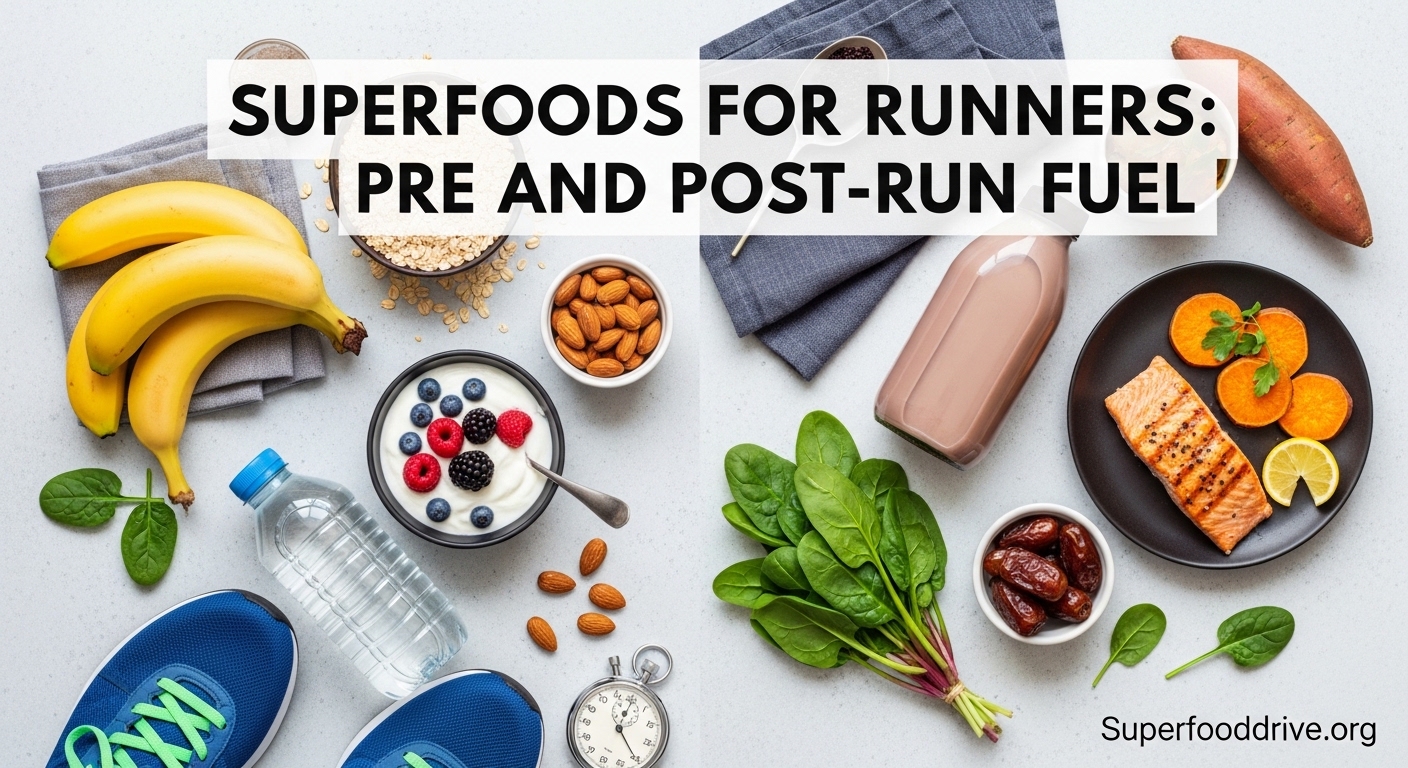
Fueling your runs with the right superfoods can transform your performance and recovery. I have spent years experimenting with different pre-run and post-run nutrition strategies, and I have learned that what you eat matters just as much as how you train. This guide will show you exactly which superfoods for runners provide optimal energy before you hit the pavement and which ones help your muscles rebuild stronger afterward.
Whether you are training for your first 5K or your tenth marathon, understanding superfoods for runners pre and post-run fuel will give you a competitive edge. You will learn the science-backed timing windows, the best antioxidant-rich foods for endurance, and practical meal ideas you can implement today.
Table of Contents
Understanding How Your Body Fuels Running
Your body relies on three primary fuel sources during exercise: carbohydrates, fats, and protein. For running, carbohydrates reign supreme as your muscles’ preferred energy source. When you consume carbs, your body converts them into glucose, which enters your bloodstream for immediate energy or gets stored as glycogen in your muscles and liver.
Think of glycogen as your body’s fuel tank. Most runners store enough glycogen for about 90 minutes of moderate-intensity running. Once those stores deplete, you hit the dreaded “wall” where fatigue crashes over you. This is why strategic carbohydrate intake before long runs matters so much.
Fat serves as a backup fuel source, especially during lower-intensity efforts. Your body has abundant fat stores, but converting fat to usable energy happens slowly. Protein plays a minimal role during the actual run, but becomes critical afterward for repairing the micro-tears that running creates in your muscle fibers.
Superfoods for Runners Pre and Post-Run Fuel
Superfoods for runners are nutrient-dense whole foods that deliver maximum nutritional benefit per calorie. These foods pack high concentrations of vitamins, minerals, antioxidants, and macronutrients that support both performance and recovery. The key is matching the right superfoods to the right timing.
Pre-run superfoods should emphasize easily digestible carbohydrates that top off glycogen stores without weighing you down. Post-run superfoods need to combine carbohydrates for glycogen replenishment with protein for muscle repair. Timing matters here: research shows your muscles are most receptive to nutrient uptake during the 30 to 60 minutes following exercise.
My experience coaching hundreds of runners has shown that those who prioritize these whole food superfoods consistently outperform those relying solely on processed sports products. The natural compounds in whole foods provide benefits that synthetic supplements cannot replicate.
Top 5 Pre-Run Superfoods
These five superfoods deliver quick, clean energy that will carry you through everything from easy jogs to tempo runs.
Bananas
Bananas deserve their reputation as the perfect runner’s food. One medium banana provides about 27 grams of carbohydrates, roughly 105 calories, and significant potassium. That potassium helps prevent muscle cramps, a common complaint among distance runners. The natural sugars in bananas digest quickly, making them ideal for consumption 30 to 45 minutes before your run.
I have found bananas particularly valuable for morning runs when you need something gentle on an empty stomach. The fiber content sits at about 3 grams, enough to provide satiety without causing digestive distress during your workout.
Oats
Oatmeal stands out as the gold standard for pre-run breakfasts when you have more time before lacing up. One cup of cooked oats delivers 54 grams of complex carbohydrates that release energy gradually. The beta-glucan fiber in oats creates a slow-digesting meal that sustains you through long runs exceeding 90 minutes.
From the forum discussions I reviewed, oatmeal topped with blueberries consistently ranks as runners’ favorite pre-run meal. The combination provides sustained energy plus antioxidant protection. Aim to eat oatmeal about 2 hours before your run for optimal digestion.
Dates
Medjool dates pack incredible energy density into a small package. Just two dates provide 32 grams of carbohydrates and about 140 calories. The natural sugar profile in dates includes glucose, fructose, and sucrose, giving you both immediate and sustained energy.
Many trail runners and ultramarathoners stuff medjool dates with peanut butter for a portable fuel source that rivals commercial energy gels. The fiber content helps prevent the blood sugar spike and crash you might experience with pure sugar sources.
Sweet Potatoes
Sweet potatoes offer complex carbohydrates plus a payload of vitamins and minerals that support running performance. One medium sweet potato provides 26 grams of carbs, significant vitamin A for immune function, and potassium for electrolyte balance.
The orange flesh indicates high beta-carotene content, which converts to vitamin A and acts as an antioxidant to combat the oxidative stress generated during intense exercise. I recommend sweet potatoes as a pre-run meal about 2 hours before heading out.
Chia Seeds
Chia seeds bring something unique to pre-run nutrition: sustained hydration support. These tiny seeds can absorb up to 12 times their weight in water, creating a gel-like consistency that slowly releases fluid during your run. Two tablespoons provide 10 grams of fiber, 5 grams of protein, and healthy omega-3 fatty acids.
Try adding chia seeds to your pre-run smoothie or oatmeal about 45 minutes before running. The fiber and healthy fats help slow carbohydrate absorption, creating more stable energy levels throughout your workout.
Top 5 Post-Run Superfoods
These recovery-focused superfoods provide the nutrients your muscles crave after the stress of running.
Greek Yogurt
Greek yogurt delivers the perfect post-run protein punch. One cup contains roughly 20 grams of protein, nearly double what you find in regular yogurt. The protein includes all nine essential amino acids, making it a complete protein source for muscle repair.
The carbohydrate content in Greek yogurt helps replenish glycogen stores while the protein initiates muscle protein synthesis. Add some berries or honey to boost the carb content for optimal recovery ratios. Aim to consume this within that critical 30-minute post-run window.
Tart Cherry Juice
Tart cherry juice has emerged as a powerhouse recovery drink for runners. Research shows it reduces muscle soreness and inflammation thanks to high anthocyanin content. One study found that marathon runners who drank tart cherry juice recovered muscle strength faster than those who consumed a placebo.
Ultra runners frequently mention tart cherry juice alongside bananas as their go-to recovery combination. The natural melatonin in tart cherries may also support sleep quality, which directly impacts recovery between training sessions.
Eggs
Eggs contain the highest biological value protein of any whole food, meaning your body uses it more efficiently than protein from other sources. One egg provides 6 grams of complete protein plus choline for nerve function and lutein for eye health.
The versatility of eggs makes them perfect for post-run meals. Scrambled eggs with toast, a veggie omelet, or even hard-boiled eggs as a quick snack all deliver the protein your muscles need to rebuild stronger than before.
Quinoa
Quinoa stands out as one of the only plant-based complete proteins, containing all essential amino acids. One cup of cooked quinoa provides 8 grams of protein, 39 grams of carbohydrates, and significant iron for oxygen transport in your blood.
The iron content matters especially for female runners who face higher risks of iron deficiency. Quinoa’s magnesium content also supports muscle relaxation and may help prevent cramps after hard efforts.
Salmon
Salmon brings anti-inflammatory omega-3 fatty acids that help reduce exercise-induced inflammation. A 4-ounce serving provides about 25 grams of protein plus EPA and DHA omega-3s that support heart health and recovery.
The astaxanthin that gives salmon its pink color acts as a potent antioxidant. Including salmon in your post-run dinner helps manage the oxidative stress generated during your workout while delivering substantial protein for muscle repair.
Hydration and Electrolytes for Runners
Water matters just as much as food for running performance. Even mild dehydration of 2% body weight can significantly impair performance. For runs under 60 minutes, plain water usually suffices. Longer efforts require electrolyte replacement.
Sodium, potassium, magnesium, and calcium regulate muscle contractions and fluid balance. When you sweat, you lose these electrolytes. Coconut water provides a natural source of potassium and some sodium, making it a solid post-run hydration choice.
Monitor your hydration by checking urine color: pale yellow indicates adequate hydration while dark yellow suggests you need more fluids. Weighing yourself before and after runs can help determine sweat rate and fluid replacement needs.
Timing Your Superfood Fuel
When you eat matters almost as much as what you eat. The timing of your pre-run and post-run nutrition can make the difference between feeling strong and bonking mid-run.
The 2-Hour Rule
For substantial meals, aim to finish eating 2 to 3 hours before running. This window allows adequate digestion so food does not sit heavy in your stomach during your workout. Oatmeal with fruit, sweet potatoes with eggs, or quinoa bowls work well for this timing.
The 30-Minute Window
Quick-digesting snacks work best when consumed 30 to 45 minutes before your run. A banana, dates, or a small chia pudding fit here. These foods provide accessible energy without requiring extensive digestion.
Post-Run Recovery Timing
Your muscles are most receptive to nutrient uptake within 30 to 60 minutes after exercise. This is when glycogen synthesis happens fastest and protein absorption peaks. Missing this window does not ruin your recovery, but optimizing it accelerates muscle repair.
Keep a recovery snack ready: Greek yogurt with berries, chocolate milk, or a protein smoothie with tart cherry juice. For longer runs exceeding 90 minutes, follow your snack with a full meal within 2 hours.
Meal Ideas and Sample Plans
Putting these superfoods into practice requires some planning. Here are meal combinations that work for different run types.
Pre-Run Meals by Timing
For morning runs with 2 hours to digest: oatmeal topped with sliced banana, chia seeds, and a drizzle of honey. The complex carbs from oats provide sustained energy while the banana adds quick-digesting fuel.
For runs in 30 to 45 minutes: a smoothie with banana, tart cherry juice, and a tablespoon of chia seeds blended with water or coconut water. This liquid format digests quickly while delivering carbohydrates and hydration support.
For afternoon or evening runs: sweet potato topped with Greek yogurt and a sprinkle of hemp seeds eaten 2 hours before. The combination provides complex carbs, protein, and healthy fats.
Post-Run Recovery Meals
Quick recovery snack: Greek yogurt parfait with mixed berries and a drizzle of tart cherry juice. This delivers protein, antioxidants, and anti-inflammatory compounds in under 5 minutes.
Substantial recovery meal: salmon with quinoa and roasted vegetables. The complete protein from both salmon and quinoa supports muscle repair while the vegetables provide additional antioxidants.
Vegetarian recovery option: eggs scrambled with spinach served over quinoa with sliced avocado. The eggs provide complete protein while quinoa adds plant-based protein and carbs.
Sample Day of Eating for Runners
Breakfast before a morning long run: oatmeal with blueberries, banana, and chia seeds eaten 2 hours before. Coffee or tea for caffeine if tolerated.
Post-run recovery within 30 minutes: Greek yogurt with tart cherry juice and a handful of dates. This combines protein, anti-inflammatory compounds, and quick carbohydrates.
Lunch: quinoa bowl with salmon, roasted sweet potato, and greens dressed with olive oil and lemon. This provides complete protein, complex carbs, and healthy fats.
Dinner: eggs with sautéed vegetables and a side of whole grain toast. The eggs deliver protein while the vegetables provide micronutrients for recovery.
Frequently Asked Questions
What food is good fuel before a run?
Good pre-run fuel includes easily digestible carbohydrates that top off glycogen stores. Top choices include bananas, oatmeal, dates, toast with honey, or a small smoothie. Aim to eat 30 to 60 minutes before shorter runs or 2 hours before long runs. Avoid high-fat or high-fiber foods immediately before running as they can cause digestive distress.
What is the 30/30/3 rule for eating?
The 30/30/3 rule suggests consuming 30 grams of carbohydrates within 30 minutes of finishing exercise, repeated for 3 hours. While not a universal standard, the concept emphasizes the importance of the post-workout nutrition window when muscles are most receptive to glycogen replenishment.
Can I run on an empty stomach?
Fasted running works for some runners, particularly for easy efforts under 60 minutes. Your body taps into fat stores for energy when glycogen is low. However, fasted running increases muscle breakdown and may impair performance for high-intensity or long efforts. Beginners should fuel before runs until they understand their personal tolerance.
How soon after running should I eat?
Aim to eat within 30 to 60 minutes after finishing your run. This window represents peak muscle sensitivity to nutrient uptake. Your muscles absorb carbohydrates and protein most efficiently during this period, accelerating glycogen replenishment and muscle repair. A simple snack like Greek yogurt with fruit works well if a full meal is not immediately available.
What is the 80% rule in running?
The 80% rule in running states that about 80% of your weekly training volume should be done at an easy, conversational pace, with only 20% at moderate to high intensity. This approach builds aerobic base while minimizing injury risk and burnout. The rule applies to training philosophy rather than nutrition specifically.
Superfoods for Runners: Final Thoughts
Implementing superfoods for runners pre and post-run fuel does not require a complete diet overhaul. Start by adding one or two of these nutrient-dense foods to your routine. Perhaps you begin with a banana before your morning run this week. Next week, add Greek yogurt within 30 minutes of finishing.
Consistency matters more than perfection. The runners who see the best results are those who fuel strategically most of the time, not those who obsess over every meal. Your body will tell you what works: steady energy during runs, quick recovery between sessions, and sustainable progress toward your goals.
Remember that superfoods for runners pre and post-run fuel support your training, but they cannot replace smart training progression, adequate sleep, and proper rest. Use these foods as tools in your larger running toolkit, and you will find yourself running stronger and recovering faster than before.