
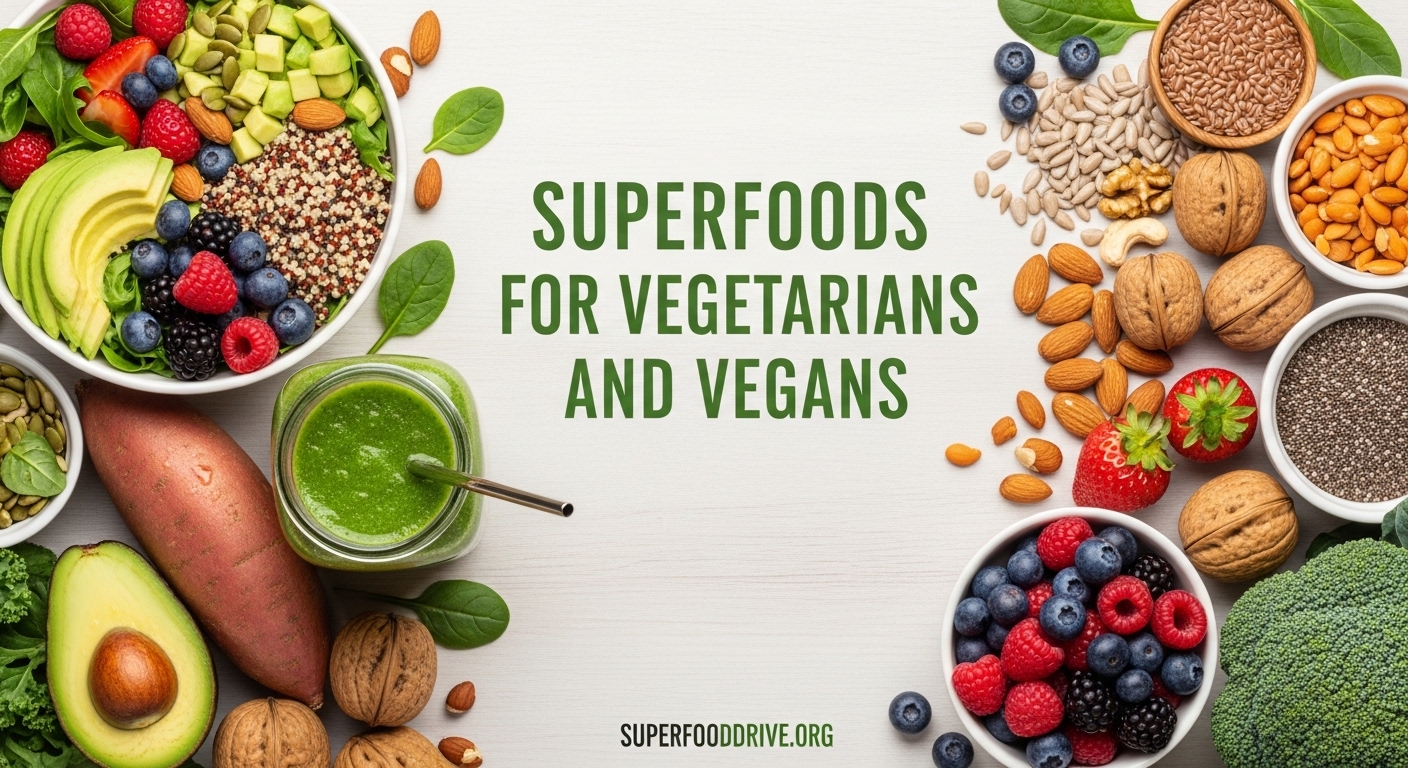
When I switched to a plant-based diet three years ago, I had one burning question: am I getting enough nutrients? The truth is, vegetarian and vegan diets can provide everything your body needs. You just need to know which superfoods for vegetarians and vegans deliver the biggest nutritional punch.
In this guide, I will share the 12 essential superfoods that should be in every plant-based pantry. I will also address the micronutrient gaps that trip up many new vegans—specifically B12, iron, and zinc—and show you exactly how to fill them. Plus, I will include a nutrient comparison table that breaks down what each superfood actually delivers per serving.
Whether you are a lifelong vegetarian or just starting your vegan journey in 2026, these nutrient-dense foods will help you thrive.
Table of Contents
What Makes a Food a Superfood
The term “superfood” gets thrown around a lot in marketing, but I prefer a simpler definition. A superfood is any nutrient-dense food that delivers significant vitamins, minerals, antioxidants, or other beneficial compounds relative to its calorie content.
No single food can do everything. Spinach will not give you vitamin B12. Quinoa alone will not meet all your protein needs. The real power comes from combining multiple superfoods to create a complete nutritional profile.
For vegetarians and vegans, superfoods take on extra importance because they help bridge the gaps that meat, dairy, and eggs would normally fill. Plant-based superfoods can provide complete proteins, absorbable iron, calcium, omega-3 fatty acids, and more—when you choose the right ones.
Addressing Vegan Micronutrient Gaps: B12, Iron, and Zinc
Before diving into the superfoods list, let us address the elephant in the room. Three micronutrients cause the most concern for people on plant-based diets: vitamin B12, iron, and zinc. Understanding these gaps is essential for long-term health.
Vitamin B12: The Non-Negotiable Supplement
Vitamin B12 is not naturally found in plant foods. Period. Your body needs B12 for nerve function and red blood cell formation, and deficiency can cause serious health problems over time.
While nutritional yeast and fortified plant milks contain B12, I recommend taking a dedicated B12 supplement of at least 250 micrograms daily or 2,500 micrograms weekly. This is non-negotiable for vegans and something many competitors gloss over.
Iron: Absorption Matters More Than Amount
Plant-based iron (non-heme iron) is less absorbable than the heme iron found in meat. This does not mean you cannot get enough iron as a vegan. It means you need to be strategic.
Consume iron-rich plant foods like lentils, spinach, and pumpkin seeds alongside vitamin C sources. A squeeze of lemon on your lentil soup or bell peppers in your spinach salad can increase iron absorption by up to 300 percent. Avoid drinking coffee or tea with meals, as tannins inhibit absorption.
Zinc: The Often-Overlooked Mineral
Zinc supports immune function, wound healing, and protein synthesis. While legumes, nuts, and seeds contain zinc, they also contain phytates that can reduce absorption.
Soaking, sprouting, or fermenting zinc-rich foods helps unlock this mineral. Pumpkin seeds and hemp seeds are particularly good sources for vegans when prepared properly.
Top Plant-Based Superfoods Comparison
Here is what separates this guide from competitors. The following table compares 12 essential superfoods by their key nutrients per typical serving. Use this to plan meals that hit your targets.
| Superfood | Protein | Iron | Calcium | Zinc | Key Benefit |
|---|---|---|---|---|---|
| Quinoa (1 cup cooked) | 8g | 2.8mg | 31mg | 2.0mg | Complete protein |
| Red Lentils (1 cup cooked) | 18g | 6.6mg | 38mg | 2.5mg | High protein + iron |
| Chia Seeds (2 tbsp) | 4g | 1.6mg | 179mg | 1.0mg | Omega-3 + fiber |
| Hemp Seeds (3 tbsp) | 10g | 2.4mg | 21mg | 3.0mg | Complete protein + zinc |
| Nutritional Yeast (2 tbsp) | 8g | 1.0mg | 20mg | 4.0mg | B12 fortified |
| Kale (1 cup raw) | 0.6g | 0.5mg | 53mg | 0.2mg | Calcium absorption leader |
| Tofu (1/2 cup) | 10g | 1.8mg | 253mg | 0.8mg | High calcium content |
| Almonds (1/4 cup) | 7g | 1.1mg | 96mg | 0.9mg | Healthy fats + vitamin E |
| Blueberries (1 cup) | 1g | 0.4mg | 9mg | 0.2mg | Antioxidant powerhouse |
| Spirulina (1 tbsp) | 4g | 2.0mg | 8mg | 0.2mg | 60% protein by weight |
| Pumpkin Seeds (1/4 cup) | 9g | 2.5mg | 16mg | 2.9mg | Highest zinc content |
| Blackstrap Molasses (1 tbsp) | 0g | 3.5mg | 172mg | 0.4mg | Iron + calcium boost |
As you can see, no single food dominates every category. Combining lentils (for protein and iron) with hemp seeds (for zinc and complete protein) and kale (for calcium) creates a nutrient profile that rivals any omnivore meal.
12 Essential Superfoods for Vegetarians and Vegans
Now let us dive deeper into each superfood, including how I personally use them and why they deserve a spot in your kitchen.
1. Quinoa: The Complete Protein Grain
Quinoa contains all nine essential amino acids, making it one of the few plant-based complete proteins. One cup of cooked quinoa delivers 8 grams of protein plus significant fiber, magnesium, and manganese.
I cook quinoa in vegetable broth instead of water for extra flavor. It works as a rice substitute, salad base, or breakfast porridge. The mild, nutty taste pairs with almost anything.
2. Lentils: The Protein and Iron Powerhouse
With 18 grams of protein and nearly 40 percent of your daily iron in one cup, lentils are arguably the most important legume for plant-based eaters. They cook in 20 minutes without soaking, making them weeknight-friendly.
Red lentils break down into a creamy texture perfect for dal or thickening soups. Green and brown lentils hold their shape better for salads. I add a splash of lemon juice to every lentil dish to maximize iron absorption.
3. Chia Seeds: Omega-3 and Fiber Champions
Chia seeds are the richest plant source of omega-3 fatty acids, specifically ALA. Two tablespoons provide 4 grams of protein, 10 grams of fiber, and 179 milligrams of calcium.
When soaked in liquid, chia forms a gel that works as an egg replacement in baking or as the base for overnight puddings. I sprinkle dry chia on oatmeal, blend it into smoothies, or mix it into homemade granola.
4. Hemp Seeds: Complete Protein with Minerals
Hemp seeds (also called hemp hearts) offer 10 grams of complete protein per 3-tablespoon serving, plus 3 milligrams of zinc—among the highest zinc content of any plant food. They also provide gamma-linolenic acid, a rare anti-inflammatory omega-6.
Unlike chia, hemp seeds do not need soaking. Their soft, nutty flavor works sprinkled on salads, blended into pesto, or stirred into yogurt alternatives. I keep a jar on my counter and add them to almost everything.
5. Nutritional Yeast: The B12 Fortified Flavor Booster
Sometimes called “nooch,” nutritional yeast is deactivated yeast that delivers a cheesy, savory flavor plus 8 grams of protein per quarter cup. Most importantly, fortified versions provide your entire daily B12 requirement in one serving.
I sprinkle it on popcorn, stir it into pasta sauce, or blend it with soaked cashews to make dairy-free cheese sauce. Check the label to ensure your brand is B12-fortified—not all are.
6. Kale and Leafy Greens: Calcium Absorption Leaders
Kale, collard greens, bok choy, and turnip greens provide highly absorbable calcium compared to spinach, which contains oxalates that block calcium absorption. One cup of cooked collards delivers 268 milligrams of calcium.
I massage raw kale with olive oil and lemon juice to soften it for salads. For cooked greens, a quick sauté with garlic preserves more nutrients than boiling. Rotate your greens weekly to get a variety of phytonutrients.
7. Tofu and Tempeh: Versatile Soy Proteins
Tofu and tempeh are complete proteins made from soybeans. Tempeh is fermented, making it easier to digest and higher in protein (31 grams per cup). Tofu contains more calcium, especially when set with calcium sulfate.
Press tofu to remove excess water before cooking for better texture. Tempeh works crumbled as a ground meat substitute or sliced and pan-fried. Both absorb marinades well—try soy sauce, maple syrup, and smoked paprika.
8. Nuts and Nut Butters: Healthy Fats and Protein
Almonds, walnuts, cashews, and their respective butters provide protein, healthy fats, and vitamin E. Walnuts are particularly valuable for their omega-3 ALA content, though chia and flax still outrank them.
Raw nuts retain more nutrients than roasted. Store them in the freezer to prevent rancidity. I make my own nut butter by blending roasted nuts with a pinch of salt—no added oils or sugars needed.
9. Berries: Antioxidant-Rich Delights
Blueberries, strawberries, raspberries, and blackberries are lower in sugar than most fruits while packing serious antioxidant power. They contain anthocyanins that support brain health and reduce inflammation.
Fresh berries are best when in season, but frozen berries are picked at peak ripeness and retain most nutrients. I blend them into smoothies, stir them into oatmeal, or eat them straight from the freezer as a cold snack.
10. Spirulina: Protein-Dense Blue-Green Algae
Spirulina is approximately 60 percent protein by weight, making it one of the most concentrated protein sources on Earth. One tablespoon provides 4 grams of protein plus iron, B vitamins, and the unique antioxidant phycocyanin.
The taste is intense and slightly fishy, so I blend spirulina into fruit smoothies rather than drinking it straight. Start with half a teaspoon and work up to avoid digestive discomfort. Quality matters—choose organic, third-party tested brands.
11. Pumpkin Seeds: The Zinc Champion
Pumpkin seeds (pepitas) contain 9 grams of protein and nearly 3 milligrams of zinc per quarter cup—more zinc than almost any other plant food. They also provide magnesium, iron, and healthy fats.
I soak raw pumpkin seeds overnight to reduce phytates and improve zinc absorption, then roast them with spices. They add crunch to salads, soups, and grain bowls. During fall, I save seeds from carving pumpkins and roast them myself.
12. Blackstrap Molasses: The Iron and Calcium Boost
Blackstrap molasses is the dark, concentrated byproduct of sugar refining. Unlike refined sugar, it retains minerals—specifically 3.5 milligrams of iron and 172 milligrams of calcium per tablespoon.
The flavor is robust and slightly bitter. I stir a tablespoon into oatmeal, use it in gingerbread or baked beans, or mix it into salad dressings with tahini and lemon. It is incredibly affordable compared to other superfoods, making it perfect for budget-conscious eaters.
Budget-Friendly Ways to Stock Your Superfood Pantry
Eating superfoods does not require a luxury grocery budget. I spend less on groceries now as a vegan than I did as a meat-eater. Here are strategies that actually work.
Buy lentils, quinoa, and nuts from bulk bins. You avoid packaging costs and can buy exactly the amount you need. A pound of bulk red lentils costs under two dollars and provides over 20 servings of high-protein meals.
Choose frozen berries over fresh. They are cheaper, last longer, and nutritionally equivalent. Frozen spinach works the same way—pre-washed, pre-chopped, and ready to add to any dish.
Grow your own greens if you have any outdoor space or even a sunny windowsill. Kale and lettuce grow almost anywhere and produce for months. Microgreens can be grown indoors year-round in small containers.
Substitute wisely. Sunflower seeds provide similar nutrition to almonds at half the cost. Cabbage delivers the same cruciferous benefits as kale for a fraction of the price. Blackstrap molasses costs pennies per serving compared to fancy supplements.
How to Incorporate Superfoods Into Daily Meals
Knowing which foods are superfoods is only half the battle. Here is how I actually use them throughout the day without spending hours in the kitchen.
For breakfast, I make overnight oats with chia seeds, hemp seeds, and berries. It takes five minutes the night before and provides protein, omega-3s, and antioxidants before I even leave the house. Or I blend a smoothie with spinach, frozen berries, banana, and a scoop of spirulina.
Lunch is often a grain bowl base. I start with quinoa or brown rice, add leftover roasted vegetables, top with chickpeas or lentils, and finish with pumpkin seeds and tahini dressing. This hits every nutrient category in one bowl.
Dinner might be a tofu stir-fry with kale and bell peppers over brown rice, or a lentil curry with spinach served with quinoa. I sprinkle nutritional yeast on almost everything for extra B vitamins and flavor.
Snacks keep me energized between meals. I keep a mix of almonds and pumpkin seeds in my bag, or I eat apple slices with almond butter. When I want something sweet, a handful of frozen blueberries satisfies the craving while delivering antioxidants.
Frequently Asked Questions
What are the best superfoods for vegan athletes?
Vegan athletes need higher protein and calorie intake. The best superfoods include lentils and beans for protein and carbs, hemp seeds for complete protein and healthy fats, quinoa for sustained energy, and spirulina for concentrated protein. Chia seeds help with hydration and omega-3s. Focus on combining these around workouts for optimal recovery.
How do vegetarians get enough protein without meat?
Plant foods can absolutely provide adequate protein. Lentils deliver 18g per cup, tofu provides 10g per half cup, and quinoa offers 8g per cup. Hemp seeds add 10g in just 3 tablespoons. The key is eating a variety throughout the day—your body combines amino acids from different sources. Most vegans eating varied diets easily meet protein requirements.
What are the most affordable plant-based superfoods?
Lentils top the list at under $2 per pound for 20+ servings. Blackstrap molasses costs pennies per tablespoon while delivering iron and calcium. Cabbage provides cruciferous benefits cheaply. Frozen spinach and berries cost less than fresh. Sunflower seeds offer similar nutrition to expensive nuts at half the price. Buying from bulk bins saves significantly on quinoa and nuts.
Do vegans need to take B12 supplements?
Yes, vitamin B12 supplementation is essential for vegans. B12 is not naturally present in plant foods in reliable amounts. While fortified nutritional yeast and plant milks contain B12, a dedicated supplement ensures adequate intake. Take at least 250mcg daily or 2,500mcg weekly. This is non-negotiable for long-term health on a vegan diet.
How can vegetarians improve iron absorption from plant foods?
Consume iron-rich foods with vitamin C sources to increase absorption up to 300%. Add lemon juice to lentil soup, eat bell peppers with spinach salad, or have orange juice with iron-fortified cereal. Avoid coffee and tea with meals as tannins inhibit absorption. Soaking and sprouting legumes and seeds also improves mineral availability.
What is the 30/30/30 rule for vegans?
The 30/30/30 rule suggests eating 30 grams of protein within 30 minutes of waking up, followed by 30 minutes of light exercise. For vegans, this might mean a smoothie with hemp seeds, protein powder, and almond butter. While this specific timing rule is not scientifically proven as essential, front-loading protein can help with satiety and muscle maintenance.
Final Thoughts on Superfoods for Vegetarians and Vegans
A well-planned plant-based diet provides all the nutrients you need. The 12 superfoods in this guide—quinoa, lentils, chia seeds, hemp seeds, nutritional yeast, leafy greens, tofu, nuts, berries, spirulina, pumpkin seeds, and blackstrap molasses—form the foundation of my own diet and have kept me thriving for years.
Remember the fundamentals: supplement B12, combine iron with vitamin C, soak your seeds and legumes, and rotate your greens. Eating superfoods for vegetarians and vegans is not about perfection. It is about making informed choices that support your health while honoring your values.
Start with three new superfoods this week. Add lentils to your pantry, sprinkle hemp seeds on your breakfast, and blend some greens into your smoothie. Small steps lead to lasting change.