
Looking for a natural way to strengthen your immune system? Turkey tail mushroom has emerged as one of the most researched medicinal mushrooms for immune support. This comprehensive guide explores everything you need to know about turkey tail mushroom benefits for immunity, backed by clinical studies and traditional use spanning centuries.
I have spent months reviewing the research on turkey tail and its effects on immune function. What I found surprised me. This is not just another wellness trend. Turkey tail contains unique compounds that have been studied in actual human trials for their immune-modulating effects.
In this guide, you will learn how turkey tail works, what the science says about its benefits, potential side effects to watch for, and how to use it safely. Whether you are dealing with immune challenges or simply want to support your body’s natural defenses, this article gives you the facts you need.
Table of Contents
What Is Turkey Tail Mushroom?
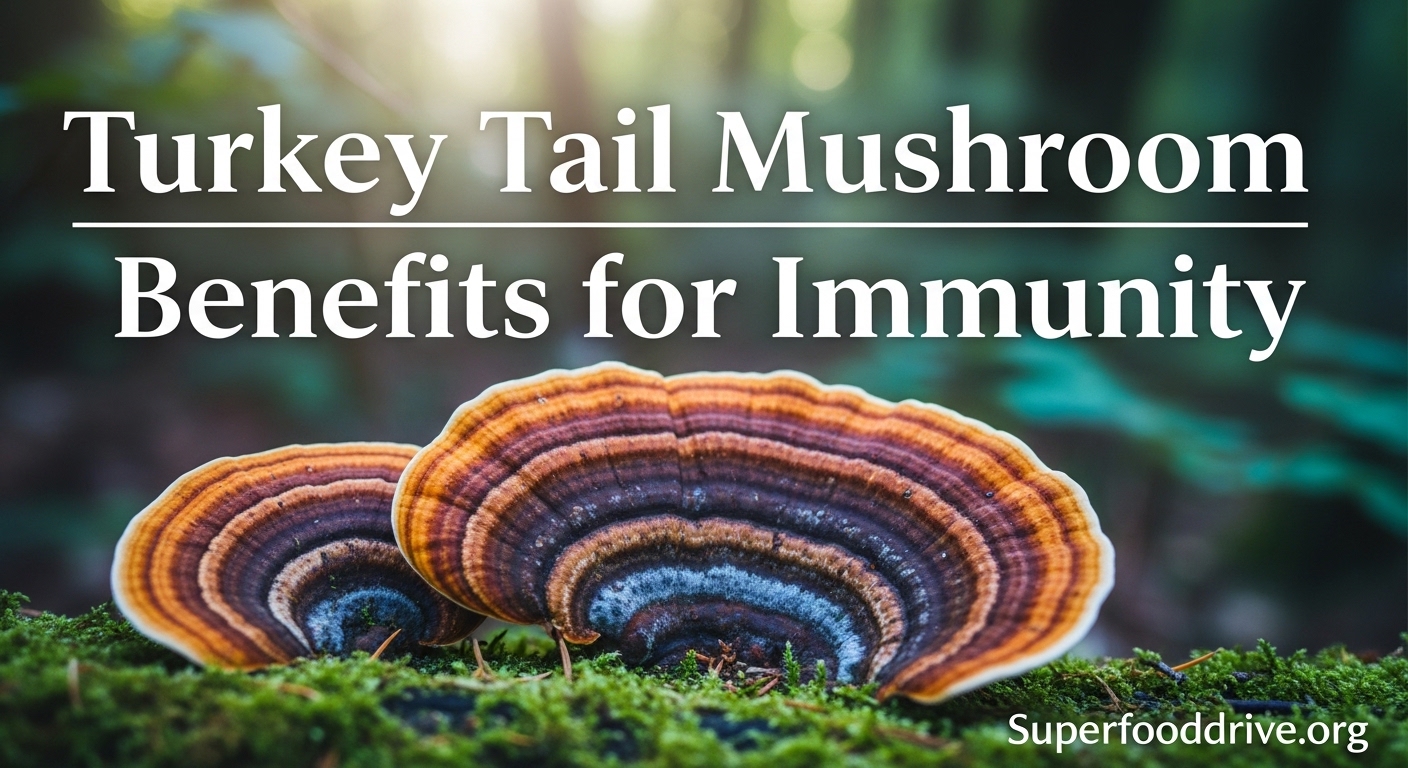
Turkey tail mushroom, scientifically known as Trametes versicolor (also called Coriolus versicolor), is a common bracket fungus found on dead hardwood trees worldwide. Its distinctive appearance features concentric rings of brown, tan, white, and gray that resemble a turkey’s tail feathers, hence the name.
Unlike culinary mushrooms you might cook with, turkey tail is tough and woody. People typically consume it as an extract, powder, or in capsule form. Traditional Chinese medicine has used turkey tail for over 2,000 years, calling it “Yun Zhi” or “cloud mushroom.”
The mushroom gained serious scientific attention in the 1970s when researchers isolated two powerful compounds: PSK (polysaccharide-K) and PSP (polysaccharide peptide). These compounds have become the focus of hundreds of studies examining their effects on immune function.
How Turkey Tail Supports Your Immune System
Turkey tail mushroom benefits for immunity work through several interconnected mechanisms. Understanding these can help you appreciate why this mushroom has captured the attention of both traditional healers and modern researchers.
PSK and PSP: The Immune-Active Compounds
The primary immune-supporting compounds in turkey tail are polysaccharide-K (PSK) and polysaccharide peptide (PSP). These are protein-bound polysaccharides, meaning they are complex carbohydrates attached to proteins. Research shows they act as biological response modifiers.
PSK and PSP do not directly attack pathogens. Instead, they train your immune system to respond more effectively. Think of them as personal trainers for your immune cells. They help your body recognize threats faster and mount a stronger defense.
Beta-Glucan Power
Beyond PSP and PSK, turkey tail contains significant amounts of beta-glucans. These are a type of soluble fiber found in the cell walls of fungi, bacteria, and grains. Beta-glucans are well-documented immunomodulators that activate macrophages, neutrophils, and natural killer cells.
When you consume turkey tail, these beta-glucans interact with specific receptors on your immune cells. This interaction triggers a cascade of immune responses that help your body fight infections and potentially abnormal cell growth.
Turkey Tail Mushroom Benefits for Immunity: 5 Science-Backed Effects
The immune benefits of turkey tail are among the most well-researched of any medicinal mushroom. Here are the five main ways turkey tail supports immune function based on clinical evidence.
1. Stimulates Natural Killer Cell Activity
Natural killer cells are your immune system’s first line of defense against viruses and cancerous cells. These specialized white blood cells can recognize and destroy infected or abnormal cells without prior sensitization.
Studies have shown that turkey tail extracts can increase natural killer cell activity. In one notable study published in the Journal of Clinical Oncology, breast cancer patients who took turkey tail capsules alongside chemotherapy showed increased natural killer cell counts compared to those receiving chemotherapy alone.
2. Supports Dendritic Cell Function
Dendritic cells act as the sentinels of your immune system. They patrol tissues looking for foreign invaders, then present these antigens to other immune cells to trigger a targeted response.
Research indicates that PSP from turkey tail can promote the maturation of dendritic cells. This maturation process is essential for effective antigen presentation and the development of long-term immunity. Better dendritic cell function means your immune system becomes better at recognizing and remembering threats.
3. Reduces Inflammation Markers
Chronic inflammation can suppress immune function over time. Turkey tail contains phenolic compounds and flavonoids that act as antioxidants, helping to reduce oxidative stress and inflammation.
Antioxidants in turkey tail include quercetin and baicalein, which help neutralize free radicals. By reducing oxidative stress, these compounds may help prevent the immune suppression that often accompanies chronic inflammation.
4. Enhances Gut-Immune Connection
About 70% of your immune system resides in your gut. Turkey tail acts as a prebiotic, feeding beneficial gut bacteria that play a direct role in immune regulation.
Studies show that turkey tail can increase populations of beneficial bacteria like Bifidobacterium and Lactobacillus. These bacteria produce short-chain fatty acids that support the gut barrier and modulate immune responses throughout the body. A healthy gut microbiome is essential for robust immunity.
5. Provides Antimicrobial Support
Turkey tail has demonstrated antimicrobial properties in laboratory studies. Research shows it has activity against certain bacteria and viruses, including Staphylococcus aureus and Salmonella.
While human studies on direct antimicrobial effects are limited, the mushroom’s ability to support overall immune function may help your body fight infections more effectively. This antimicrobial activity works alongside the immune-modulating effects rather than replacing them.
Cancer Support Potential: What the Research Shows
One of the most studied applications of turkey tail is as an adjunct therapy for cancer treatment. While turkey tail is not a cure for cancer, research suggests it may support conventional treatments.
The 2012 Breast Cancer Trial
A landmark study conducted at the University of Minnesota and Bastyr University examined turkey tail’s effects in women with breast cancer. Researchers gave participants turkey tail capsules daily alongside conventional treatment.
The results were encouraging. Patients taking turkey tail showed increased immune cell counts and improved immune function markers compared to those receiving standard care alone. Importantly, there were no significant side effects attributed to the mushroom.
PSK as Adjuvant Therapy
In Japan, PSK (known commercially as Krestin) has been approved as an adjuvant treatment for cancer since the 1970s. Multiple clinical trials have investigated its use alongside chemotherapy and radiation for various cancers.
Studies have examined PSK for gastric cancer, colorectal cancer, and lung cancer. Research published in the Journal of Clinical Oncology showed that gastric cancer patients receiving PSK alongside chemotherapy had improved survival rates compared to those receiving chemotherapy alone.
Important Limitations
While the research is promising, turkey tail should never replace conventional cancer treatment. Always consult your oncologist before adding any supplement to your treatment plan. Turkey tail is best viewed as a potential complement to standard care, not an alternative.
Gut Health Benefits Beyond Immunity
The connection between gut health and immunity is well-established, and turkey tail excels in supporting both. Its prebiotic effects make it particularly valuable for people looking to improve their digestive wellness alongside immune function.
Prebiotic Effects
Prebiotics are compounds that feed beneficial bacteria in your gut. Turkey tail contains polysaccharides that pass undigested through your small intestine and ferment in the colon, feeding your microbiome.
Research shows that turkey tail can increase levels of Bifidobacterium and Lactobacillus species. These beneficial bacteria produce butyrate and other short-chain fatty acids that strengthen the gut barrier and support immune regulation.
Post-Antibiotic Recovery
Many people on forums report using turkey tail after antibiotic courses to help restore gut flora. While specific clinical trials on this use are limited, the prebiotic mechanism supports this traditional application.
If you have recently completed antibiotics, turkey tail may help support the regrowth of beneficial bacteria. However, it should complement, not replace, any probiotic recommendations from your healthcare provider.
Other Turkey Tail Health Benefits
Beyond immune support, turkey tail shows promise for several other health applications. While these areas need more research, the existing evidence is worth noting.
Athletic Performance
Some research suggests turkey tail may help reduce fatigue and improve exercise performance. A small study on athletes showed reduced oxidative stress markers after supplementation. However, larger trials are needed to confirm these effects.
HPV Support
A pilot study examined turkey tail’s effects in people with HPV. Participants took turkey tail extract for two months, and researchers observed changes in viral markers. While preliminary, this suggests turkey tail may have applications for viral conditions beyond general immune support.
Cognitive Function
Some research suggests that by reducing inflammation and oxidative stress, turkey tail may support cognitive health. However, the evidence for cognitive benefits is preliminary compared to the robust immune research.
Safety, Side Effects, and Who Should Avoid Turkey Tail
Turkey tail is generally considered safe for most healthy adults. However, like any supplement, it can cause side effects in some people and may not be appropriate for everyone.
Common Side Effects
Reported side effects are usually mild and may include digestive upset, nausea, or changes in bowel movements. Some people report darkening of the fingernails, which is harmless and temporary.
Starting with a lower dose and gradually increasing can help minimize digestive side effects. Taking turkey tail with food may also reduce stomach upset.
Who Should Avoid Turkey Tail
Certain groups should avoid turkey tail or use it only under medical supervision:
Pregnant and breastfeeding women: Safety has not been established for these populations.
People with autoimmune conditions: Because turkey tail stimulates immune activity, it could theoretically worsen autoimmune conditions. Consult a rheumatologist or immunologist before use.
Those taking immunosuppressant medications: Turkey tail may counteract the effects of drugs designed to suppress immune function, such as those taken after organ transplants.
People with mushroom allergies: While turkey tail is different from culinary mushrooms, anyone with severe fungal allergies should avoid it.
Drug Interactions
Turkey tail may interact with blood thinners and diabetes medications. Its immune-modulating effects could theoretically interact with other drugs affecting immune function. Always consult your healthcare provider if you take prescription medications.
How to Take Turkey Tail: Forms and Dosage Guidance
Understanding how to use turkey tail properly helps you get the most benefit while minimizing risks. Here is what you need to know about forms, dosage, and quality.
Available Forms
Turkey tail comes in several forms:
Capsules: The most convenient option. Look for products standardized to contain specific percentages of PSP or PSK.
Powders: Can be mixed into smoothies, coffee, or tea. Often less expensive per dose but requires measuring.
Tinctures: Liquid extracts that may offer faster absorption. Quality varies significantly between brands.
Teas: Traditional preparation method, though extracting the beneficial compounds requires hot water and time.
General Dosage Guidance
Clinical studies have used varying doses depending on the preparation. For PSP-containing extracts, studies typically use 1-3 grams daily. For whole mushroom powders, doses of 2-6 grams are common.
Start with the lower end of the recommended range and increase gradually if needed. Consistency matters more than high doses. Taking turkey tail daily for several weeks allows the immune-modulating effects to build.
Quality Markers to Look For
Forum discussions reveal that supplement quality varies dramatically. Here is what to look for:
Third-party testing: Reputable brands provide certificates of analysis showing purity and potency.
Fruiting body vs. mycelium: The fruiting body (the visible mushroom) typically contains higher concentrations of immune-active compounds than mycelium (the root-like network). Some products use both.
PSP/PSK content: Quality products specify the percentage of these active compounds.
Organic certification: Reduces concerns about pesticide contamination, which is particularly important for mushrooms that absorb environmental toxins.
When to Take Turkey Tail
Most people take turkey tail in the morning with food. This timing allows the compounds to circulate during the day when your immune system is most active. Splitting the dose between morning and evening may provide more consistent blood levels.
Turkey Tail vs Other Medicinal Mushrooms
Turkey tail is just one of several medicinal mushrooms gaining popularity. Understanding how it compares helps you choose the right option for your needs.
Turkey Tail vs Reishi
Reishi (Ganoderma lucidum) is often called the “mushroom of immortality” in traditional Chinese medicine. While turkey tail focuses heavily on immune modulation through PSP and PSK, reishi is better known for stress reduction and sleep support.
Choose turkey tail if your primary goal is immune support. Choose reishi if you want immune benefits alongside stress management and better sleep.
Turkey Tail vs Chaga
Chaga (Inonotus obliquus) grows on birch trees and is exceptionally high in antioxidants. While both mushrooms support immunity, chaga emphasizes antioxidant protection while turkey tail focuses more directly on immune cell activation.
Choose turkey tail for active immune stimulation. Choose chaga for antioxidant support and general wellness.
Turkey Tail vs Lion’s Mane
Lion’s mane (Hericium erinaceus) is famous for cognitive benefits and nerve growth factor stimulation. It has some immune benefits but is primarily used for brain health.
Choose turkey tail for immunity. Choose lion’s mane if cognitive function is your priority. Many people take both for comprehensive support.
Frequently Asked Questions
Does turkey tail boost your immune system?
Yes, turkey tail mushroom has been shown to support immune function through multiple mechanisms. Clinical studies demonstrate it stimulates natural killer cells, supports dendritic cell function, and contains immune-modulating compounds called PSP and PSK. Research published in peer-reviewed journals shows turkey tail can increase immune cell activity, particularly when combined with conventional treatments.
What not to mix with turkey tail?
Avoid mixing turkey tail with immunosuppressant medications, as it may counteract their effects. People taking blood thinners should consult their doctor before use. Those with autoimmune conditions should use caution and get medical guidance first. Pregnant and breastfeeding women should avoid turkey tail as safety has not been established for these populations.
How much turkey tail should I take?
Studies have used doses ranging from 1-3 grams daily for standardized extracts to 2-6 grams for whole mushroom powders. Start with the lower end of the range and increase gradually. Consistency matters more than high doses. Take daily for several weeks to allow immune-modulating effects to develop. Always follow the specific product’s label instructions.
What is the best mushroom for the immune system?
Turkey tail is among the most researched mushrooms for immune support, with clinical trials showing benefits for immune cell function. Reishi and chaga also support immunity but with different mechanisms. Turkey tail excels at immune cell activation through its PSP and PSK compounds. The best choice depends on your specific needs. Turkey tail is ideal for active immune stimulation, while reishi adds stress-reduction benefits.
Is turkey tail safe for daily use?
Turkey tail is generally considered safe for daily use in healthy adults. Clinical trials have used daily supplementation for months without serious side effects. However, long-term safety data beyond a year is limited. Start with a lower dose to assess tolerance. If you take prescription medications or have health conditions, consult your healthcare provider before starting daily use.
Conclusion: Turkey Tail Mushroom Benefits for Immunity
Turkey Tail Mushroom Benefits for Immunity are among the most well-documented of any medicinal mushroom. The clinical evidence supporting turkey tail’s immune-modulating effects is impressive, particularly the research on PSK and PSP compounds.
If you are looking for natural immune support, turkey tail offers a research-backed option. The 2012 breast cancer trial and decades of Japanese research on PSK provide solid evidence that this mushroom can meaningfully impact immune function.
Remember that turkey tail works best as part of a comprehensive approach to immune health. Combine it with adequate sleep, regular exercise, stress management, and a nutrient-rich diet for best results. Always consult your healthcare provider before starting any new supplement, especially if you have existing health conditions or take medications.
Start with a quality product from a reputable brand that provides third-party testing. Begin with a lower dose to assess your tolerance, then increase gradually. With consistent use, you may notice improved resilience as your immune system gets the support it needs.