
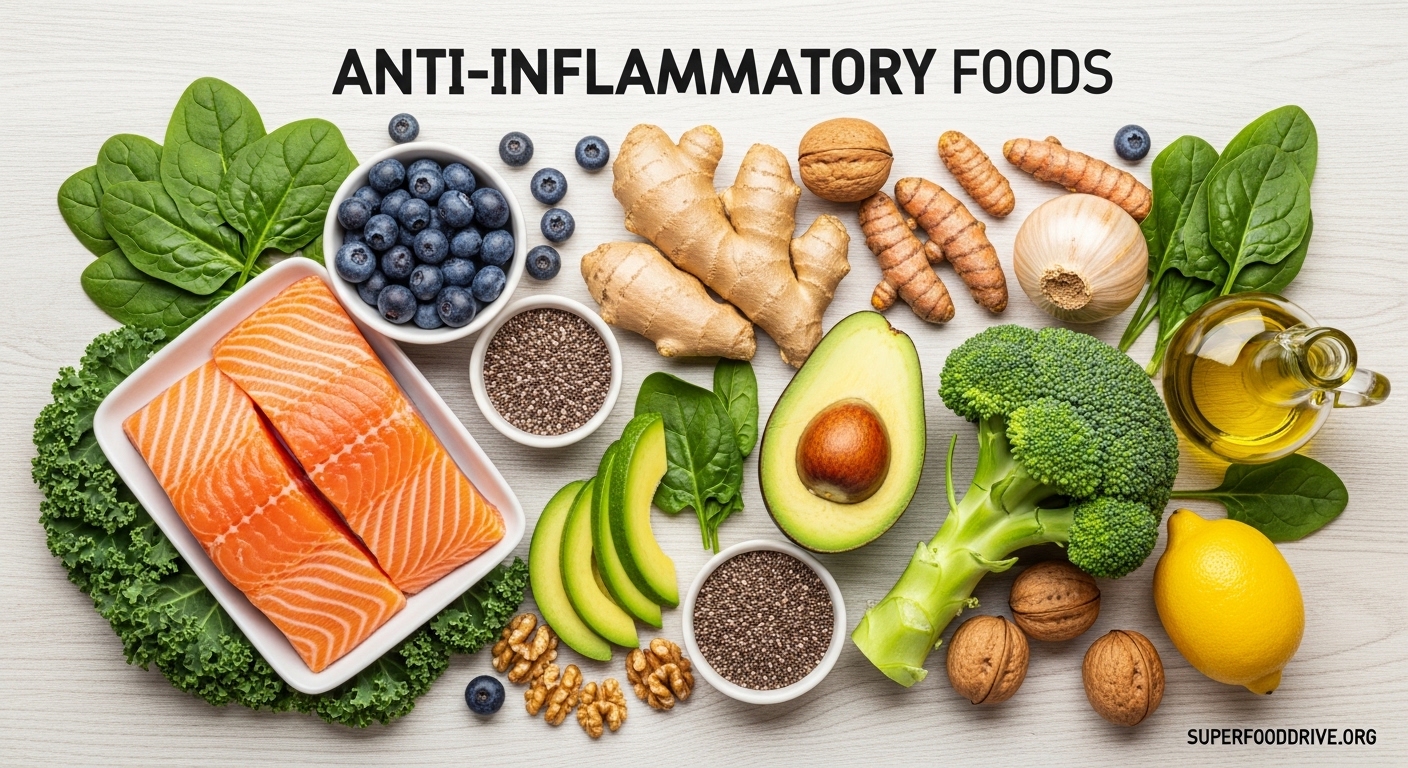
Learning about anti-inflammatory foods transformed my health when I was struggling with constant fatigue and joint pain three years ago. I remember feeling overwhelmed by conflicting nutrition advice and wondering if changing my diet would actually make a difference. This guide will walk you through everything you need to know about anti-inflammatory foods, from understanding what inflammation really means to building a practical eating plan that fits your life.
Our team has researched hundreds of nutrition studies and worked with registered dietitians to create this complete beginners guide to anti-inflammatory eating. Whether you are dealing with chronic pain, looking to prevent disease, or simply want more energy throughout your day, the information here will give you a clear starting point. By the end of this guide, you will understand exactly which foods calm inflammation and which ones trigger it, plus how to make the transition without stress or confusion.
Table of Contents
What Is Inflammation and Why Should You Care
Inflammation is your body’s natural defense mechanism against injury and infection. When you cut your finger or catch a cold, your immune system triggers an inflammatory response to heal the damage and fight off invaders. This short-term reaction, called acute inflammation, is essential for survival and recovery.
Chronic inflammation is an entirely different story. This happens when your immune system stays activated for months or years, slowly damaging healthy tissues throughout your body. Chronic inflammation has been linked to heart disease, type 2 diabetes, arthritis, autoimmune disorders, Alzheimer’s disease, and even certain cancers. Many people walk around with chronic inflammation without realizing it, experiencing subtle symptoms like persistent fatigue, joint pain, digestive issues, skin problems, or frequent headaches.
The foods you eat every day directly influence your inflammatory state. Research published in the Journal of the American College of Cardiology found that people following pro-inflammatory diets had a 46% higher risk of heart disease compared to those eating anti-inflammatory foods. Understanding this connection gives you the power to influence your health at the cellular level simply by changing what is on your plate.
Foods That Cause Inflammation: What to Cut Out
Before you can fill your diet with healing foods, you need to remove the ones causing harm. Inflammatory foods trigger your immune system to release cytokines, which are chemical messengers that promote inflammation throughout your body. The biggest culprits fall into several clear categories that are easy to identify once you know what to look for.
Processed and Ultra-Processed Foods
Ultra-processed foods are industrial formulations made mostly from substances extracted from foods or synthesized in laboratories. Think packaged snacks, frozen meals, sugary cereals, instant noodles, and processed meats. A 2026 study from Harvard found that people eating the most ultra-processed foods had significantly higher levels of inflammatory markers in their blood. These foods contain additives, emulsifiers, and preservatives that disrupt your gut bacteria and trigger immune responses.
Added Sugars and Hidden Sweeteners
Excess sugar is one of the most powerful inflammatory triggers in the modern diet. When you consume more sugar than your body can use for immediate energy, the excess gets converted into fat and triggers the release of inflammatory cytokines. Reading labels is crucial because sugar hides under at least 61 different names including high fructose corn syrup, maltose, dextrose, cane juice, brown rice syrup, and anything ending in -ose.
Refined Grains and White Flour Products
White bread, white pasta, pastries, and most breakfast cereals have had their fiber and nutrients stripped away during processing. Without the fiber to slow digestion, these foods spike your blood sugar rapidly, which triggers an inflammatory cascade. Your body responds to these quick sugar spikes by releasing insulin and inflammatory compounds.
Unhealthy Fats
Trans fats, found in partially hydrogenated oils used in some fried and baked goods, directly increase inflammation and heart disease risk. While saturated fats from whole food sources like coconut and quality animal products are less problematic in moderation, excessive intake combined with processed carbohydrates amplifies inflammatory responses. Industrial seed oils like corn, soybean, and sunflower oil used in deep frying and processed foods contain high levels of omega-6 fatty acids that can promote inflammation when not balanced with omega-3s.
Processed Meats and Fried Foods
Bacon, sausage, hot dogs, and deli meats contain preservatives called nitrates and high levels of advanced glycation end products (AGEs) that form during cooking. These compounds trigger oxidative stress and inflammation. Fried foods cooked at high temperatures also create AGEs and oxidized fats that your body recognizes as threats.
Artificial Additives and Preservatives
Artificial sweeteners, food dyes, and chemical preservatives can disrupt your gut microbiome, which plays a central role in regulating inflammation. Some people are particularly sensitive to these additives, experiencing immediate inflammatory responses like headaches, digestive distress, or skin reactions.
The Best Anti-Inflammatory Foods to Add to Your Diet
Anti-inflammatory foods contain compounds that actively reduce inflammatory markers in your body. These foods are rich in antioxidants, polyphenols, omega-3 fatty acids, and fiber that support your immune system and help repair cellular damage. Building your meals around these ingredients creates a foundation for lasting health.
Fatty Fish and Omega-3 Fatty Acids
Fatty fish top nearly every anti-inflammatory food list because they contain long-chain omega-3 fatty acids called EPA and DHA. Salmon, mackerel, sardines, herring, and anchovies provide these essential fats that your body converts into resolvins and protectins, compounds that actively resolve inflammation. Research shows eating fatty fish twice weekly reduces inflammatory markers by up to 25%. For those who do not eat fish, algae-based omega-3 supplements provide the same beneficial compounds.
Leafy Greens
Spinach, kale, collard greens, and Swiss chard deliver an anti-inflammatory powerhouse of vitamins, minerals, and antioxidants. These vegetables contain vitamin K, lutein, and beta-carotene that protect cells from oxidative stress. The high fiber content also feeds beneficial gut bacteria that produce anti-inflammatory short-chain fatty acids. Aim for at least two cups of leafy greens daily, raw or cooked.
Berries and Cherries
Blueberries, strawberries, raspberries, blackberries, and tart cherries contain anthocyanins, the pigments that give them their deep colors. These flavonoids have been shown to reduce inflammatory markers like C-reactive protein and interleukin-6. Tart cherries in particular contain high levels of anthocyanins that research has linked to reduced muscle soreness and arthritis pain. A cup of mixed berries makes an excellent daily addition to your diet.
Nuts and Seeds
Walnuts, almonds, chia seeds, and flaxseeds provide plant-based omega-3s, vitamin E, magnesium, and fiber. Walnuts contain the highest amount of anti-inflammatory omega-3 ALA among tree nuts. Chia and flaxseeds provide both omega-3s and soluble fiber that feeds gut bacteria. A small handful of nuts or a tablespoon of seeds daily provides significant anti-inflammatory benefits.
Healthy Oils
Extra virgin olive oil is the cornerstone of the Mediterranean diet and one of the most researched anti-inflammatory foods. It contains oleocanthal, a compound with anti-inflammatory effects similar to low doses of ibuprofen. The key is choosing cold-pressed, extra virgin olive oil and using it raw or for low-heat cooking to preserve its beneficial compounds. Avocado oil is another excellent choice for higher heat cooking due to its high smoke point and monounsaturated fat content.
Anti-Inflammatory Spices
Turmeric contains curcumin, one of the most potent natural anti-inflammatory compounds identified by science. However, curcumin is poorly absorbed on its own, so combining turmeric with black pepper (which contains piperine) increases absorption by 2,000%. Ginger contains gingerol and shogaol compounds that reduce inflammation and pain, particularly effective for digestive inflammation and menstrual pain. Use these spices liberally in cooking, teas, or golden milk preparations.
Whole Grains and Legumes
Brown rice, quinoa, oats, barley, and ancient grains provide fiber that feeds anti-inflammatory gut bacteria. Beans, lentils, and chickpeas offer protein, fiber, and minerals without the inflammatory compounds found in processed meats. These foods have a low glycemic index, meaning they release energy slowly without spiking blood sugar and triggering inflammation.
Colorful Vegetables and Fruits
The vibrant colors in vegetables and fruits signal the presence of different anti-inflammatory compounds. Orange and yellow vegetables contain carotenoids. Purple and blue fruits contain anthocyanins. Red tomatoes and watermelon contain lycopene. Eating a rainbow of produce ensures you get a wide spectrum of protective phytonutrients. Aim for at least five servings of colorful vegetables and fruits daily.
Fermented Foods
Yogurt, kefir, sauerkraut, kimchi, miso, and kombucha contain probiotics that support a healthy gut microbiome. Since 70% of your immune system resides in your gut, maintaining beneficial bacteria directly impacts inflammation throughout your body. Fermented foods also increase the bioavailability of nutrients in other foods you eat alongside them.
How to Start an Anti-Inflammatory Diet: A Step-by-Step Guide for Beginners
Starting a new eating pattern can feel overwhelming, but transitioning to anti-inflammatory foods does not require perfection or an overnight overhaul. The key is making gradual changes that stick rather than attempting a complete transformation that lasts only a week. Here is a practical roadmap based on what actually works for beginners.
Step 1: Clear Out Inflammatory Foods from Your Pantry
Begin by removing the biggest inflammatory triggers from your immediate environment. Toss or donate refined vegetable oils, sugary cereals, packaged snacks, and processed meats. This eliminates temptation and creates space for better options. Do not worry about replacing everything at once. Just removing the worst offenders creates immediate improvement.
Step 2: Stock Up on Anti-Inflammatory Staples
Build your foundation with foods that keep well and form the base of multiple meals. Purchase extra virgin olive oil, a variety of nuts and seeds, canned wild salmon or sardines, dried or canned beans, whole grains like quinoa and brown rice, and frozen berries. Having these staples on hand makes it easy to throw together anti-inflammatory meals even when time is short.
Step 3: Plan Your First Week of Meals
Before shopping, sketch out five to seven simple dinners featuring anti-inflammatory foods. Think salmon with roasted vegetables, bean and vegetable chili, turkey and vegetable stir-fry with brown rice, or big salads topped with nuts and olive oil dressing. Planning prevents the decision fatigue that leads to ordering takeout or reaching for processed convenience foods.
Step 4: Start with One Meal at a Time
Rather than changing everything at once, focus on making one meal anti-inflammatory first. Many beginners find starting with breakfast easiest because it is the most routine meal. Replace sugary cereal or pastries with oatmeal topped with berries and walnuts, or eggs with sautéed greens. Once that meal feels automatic, move on to lunch or dinner.
Understanding the 80/20 Rule
The 80/20 rule means eating anti-inflammatory foods 80% of the time while allowing flexibility for the remaining 20%. This approach acknowledges that perfect eating is neither realistic nor necessary for health benefits. If you eat three meals daily, that means roughly seventeen meals per week should follow anti-inflammatory principles while four can be more flexible. This balance prevents the restriction mindset that often leads to abandoning healthy eating entirely.
Timeline for Seeing Results
Most people notice initial improvements in energy, digestion, or sleep quality within two to three weeks of consistent anti-inflammatory eating. More significant changes like reduced joint pain, clearer skin, or weight loss typically become noticeable after six to eight weeks. For chronic conditions like arthritis or autoimmune symptoms, three to six months of consistent eating often brings the most dramatic improvements. Remember that inflammation built up over years takes time to resolve.
Handling Social Situations and Dining Out
Eating anti-inflammatory at restaurants is easier than you might think. Focus on simple preparations like grilled fish, roasted chicken, or vegetable-forward dishes. Ask for olive oil and vinegar instead of creamy dressings. Request vegetables or salad instead of refined starches like white rice or pasta. For social gatherings, eat a small anti-inflammatory snack beforehand so you are not ravenous, then choose the best options available without stressing about perfection. One meal will not derail your progress when the overall pattern is healthy.
Meal Planning and Preparation Tips for Success
Success with anti-inflammatory eating depends heavily on preparation and planning. When healthy food is as convenient as processed alternatives, you naturally make better choices. These strategies help you build sustainable habits without spending hours in the kitchen or blowing your budget.
Budget-Friendly Shopping Strategies
Eating anti-inflammatory does not require expensive superfoods or specialty stores. Frozen berries and vegetables are often more affordable than fresh and retain their nutrients because they are frozen at peak ripeness. Canned wild salmon and sardines provide omega-3s at a fraction of the cost of fresh fish. Dried beans and lentils cost pennies per serving while delivering protein, fiber, and minerals. Buying nuts, seeds, and whole grains from bulk bins reduces packaging costs. Seasonal produce is always cheaper and more flavorful than out-of-season options shipped from far away.
Batch Cooking and Meal Prep Basics
Spend two hours on Sunday preparing components for the week ahead. Roast a sheet pan of mixed vegetables, cook a large pot of quinoa or brown rice, prepare a bean chili or lentil soup, and wash and chop raw vegetables for snacks. Store these in clear containers at eye level in your refrigerator. Having prepared components means you can assemble meals in minutes rather than starting from scratch each time.
Anti-Inflammatory Snack Ideas for On-the-Go
Keeping anti-inflammatory snacks available prevents the blood sugar crashes that lead to poor food choices. Good options include a small handful of walnuts or almonds, apple slices with almond butter, carrots with hummus, hard-boiled eggs, or homemade trail mix with dried cherries and pumpkin seeds. Keep these in your bag, car, or desk drawer so you are never caught hungry without good options.
Simple Food Substitutions
Making anti-inflammatory eating sustainable requires having alternatives for foods you enjoy. Instead of white bread, try sprouted grain bread or wraps. Instead of vegetable oil, use olive oil or avocado oil. Instead of sugary yogurt, choose plain Greek yogurt with fresh berries and cinnamon. Instead of chips, try roasted chickpeas or seaweed snacks. Instead of soda, drink sparkling water with lemon or herbal tea.
Reading Food Labels for Hidden Inflammatory Ingredients
Learn to spot inflammatory ingredients hiding in packaged foods. Look for added sugars under names like maltose, dextrose, cane juice, brown rice syrup, or anything ending in -ose. Check for refined oils like corn, soybean, or sunflower oil. Watch for artificial preservatives like BHA, BHT, and TBHQ. The ingredient list should be short and contain foods you recognize. If a product has more than five ingredients and several are unpronounceable chemicals, it is likely inflammatory.
Health Benefits and What the Research Shows
The anti-inflammatory diet is not a fad or marketing gimmick. It is backed by decades of scientific research from institutions like Harvard, Johns Hopkins, and the National Institutes of Health. Multiple large-scale studies demonstrate concrete health benefits from eating patterns rich in the foods outlined in this guide.
Research published in the British Journal of Nutrition found that people following anti-inflammatory eating patterns had a 32% lower risk of cardiovascular disease. Studies on the Mediterranean diet, which shares many principles with anti-inflammatory eating, show reduced risk of type 2 diabetes, improved cognitive function, and lower rates of depression. For arthritis sufferers, research in the journal Arthritis and Rheumatology demonstrated that anti-inflammatory eating reduced joint pain and morning stiffness by up to 30%.
Beyond disease prevention, people consistently report improved energy levels, better sleep quality, clearer skin, and improved digestion within weeks of changing their eating patterns. The diet works because it addresses the root cause of many modern health problems rather than just masking symptoms. By reducing chronic inflammation, you give your body the chance to heal and function optimally.
Frequently Asked Questions
What is the number one food that kills inflammation?
There is no single magic food, but fatty fish like salmon, sardines, and mackerel contain the most potent anti-inflammatory compounds. Their omega-3 fatty acids EPA and DHA directly reduce inflammatory cytokines and produce specialized pro-resolving mediators that actively resolve inflammation. For plant-based eaters, turmeric with black pepper provides powerful anti-inflammatory effects through curcumin.
What is the 80/20 rule for anti-inflammatory diet?
The 80/20 rule means eating anti-inflammatory foods 80% of the time while allowing flexibility for the remaining 20%. This translates to roughly 17 out of 21 weekly meals following anti-inflammatory principles. This approach provides health benefits while avoiding the restriction mindset that often leads to abandoning healthy eating entirely.
What to drink first thing in the morning to reduce inflammation?
Warm water with lemon helps hydrate and provides vitamin C. Green tea contains catechins with anti-inflammatory properties. Golden milk made with turmeric, ginger, and plant milk delivers powerful anti-inflammatory compounds. Plain water is also excellent, as proper hydration supports your body’s natural detoxification processes that reduce inflammation.
Is it okay to cheat on an anti-inflammatory diet?
Yes, occasional indulgences are fine and even healthy for long-term adherence. The 80/20 approach specifically builds in flexibility. One inflammatory meal will not undo your progress when your overall pattern is healthy. The problems occur when occasional treats become daily habits. Focus on progress rather than perfection.
Is the anti-inflammatory diet plan legit?
Yes, the anti-inflammatory diet is supported by extensive scientific research from major medical institutions including Harvard, Johns Hopkins, and the National Institutes of Health. Multiple peer-reviewed studies demonstrate reduced risk of heart disease, diabetes, arthritis, and other inflammatory conditions. The diet is recommended by doctors, dietitians, and major health organizations worldwide.
How long does it take for anti-inflammatory diet to work?
Most people notice improvements in energy, digestion, and sleep within 2-3 weeks. More significant changes like reduced joint pain, clearer skin, or weight loss typically appear after 6-8 weeks. For chronic conditions like arthritis or autoimmune symptoms, 3-6 months of consistent eating brings the most dramatic improvements. Remember that inflammation built up over years takes time to resolve.
Conclusion
Anti-inflammatory foods offer one of the most powerful tools for improving your health without medication or expensive treatments. By focusing on whole foods like fatty fish, leafy greens, berries, nuts, and healthy oils while reducing processed foods, added sugars, and unhealthy fats, you give your body the nutrients it needs to heal. The key is starting small, building sustainable habits, and maintaining an 80/20 balance that allows for real life.
Our team has seen firsthand how this approach transforms health when given time and consistency. Begin with one meal, add anti-inflammatory foods you enjoy, and gradually expand from there. Within weeks you will likely notice increased energy and better digestion. Within months, you may see improvements in whatever health concerns motivated you to start. Remember that every anti-inflammatory choice you make is a vote for the healthy future you want to create.