
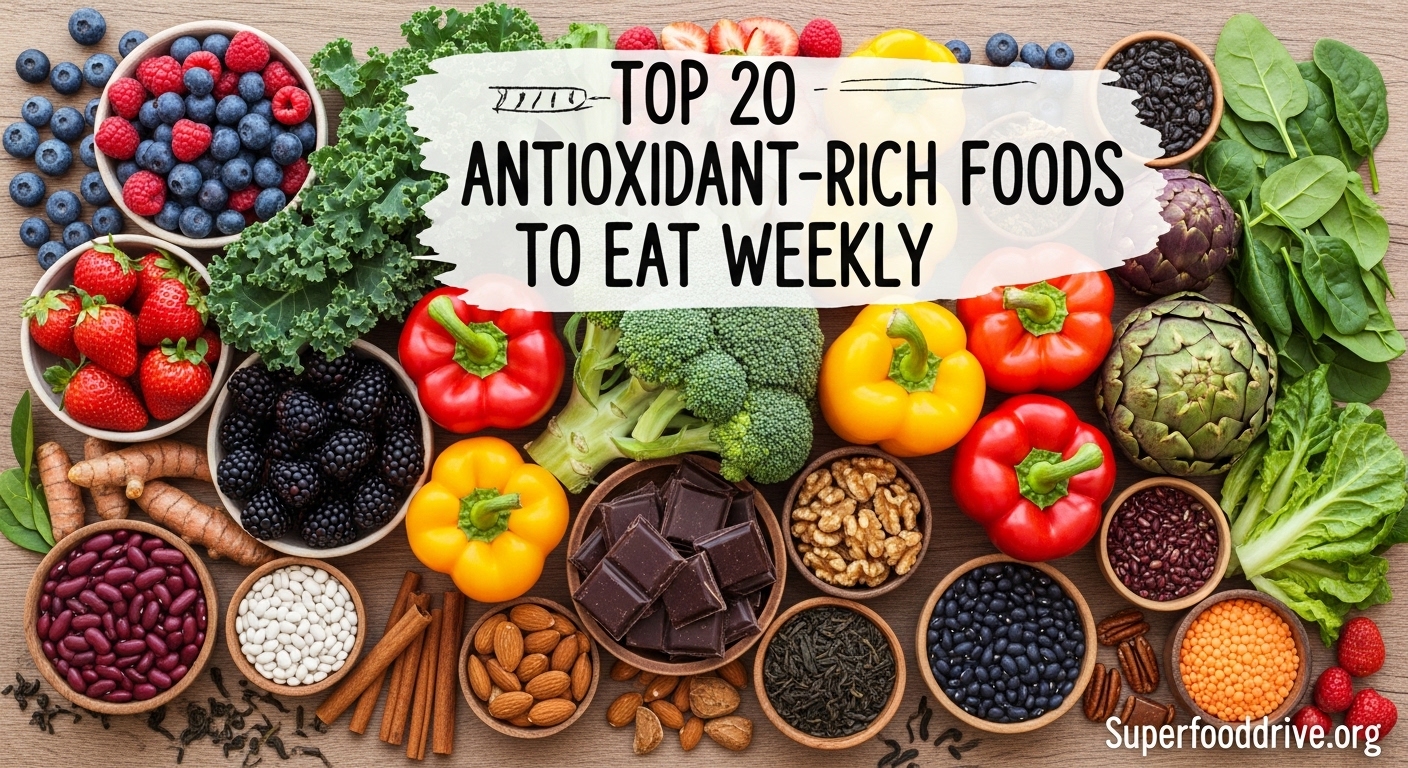
Antioxidant-rich foods protect your cells from damage caused by free radicals – unstable molecules that lead to oxidative stress and chronic diseases. I’ve been researching nutrition for over a decade, and one pattern remains clear: people who eat a variety of antioxidant-packed foods weekly enjoy better energy, clearer skin, and lower disease risk. This guide gives you the top 20 antioxidant sources and practical ways to incorporate them into your weekly routine.
Table of Contents
What Are Antioxidants and Why Do You Need Them?
Antioxidants are compounds found in foods that neutralize harmful free radicals in your body. Free radicals are unstable molecules with missing electrons that steal from healthy cells, causing oxidative stress. This cellular damage accelerates aging and contributes to heart disease, cancer, diabetes, and Alzheimer’s disease.
Your body produces some antioxidants naturally, but the bulk must come from your diet. Think of antioxidants as your cellular defense team – they donate electrons to stabilize free radicals before they can attack your cells. The most powerful antioxidants include vitamins C and E, beta-carotene, selenium, and a wide range of phytochemicals like flavonoids and polyphenols.
Eating antioxidant-rich foods weekly matters because free radical damage accumulates over time. Consistent intake builds up your body’s defense system, protecting your DNA, proteins, and cell membranes from ongoing assault.
Top 20 Antioxidant-Rich Foods to Eat Weekly
These 20 foods represent the highest antioxidant sources you can easily incorporate into your weekly meal plan. Each offers unique protective compounds that work together to support your health.
1. Wild Blueberries
Wild blueberries contain more antioxidants than cultivated varieties, with an ORAC value nearly double that of regular blueberries. They’re packed with anthocyanins – the pigments that give them their deep blue color and powerful anti-inflammatory properties.
I add a half-cup of wild blueberries to my morning smoothie at least four times a week. Studies show they support brain health, improve memory in older adults, and protect against cardiovascular disease. Frozen wild blueberries retain their antioxidant content and are available year-round at most grocery stores.
2. Blackberries
Blackberries deliver exceptional amounts of anthocyanins and vitamin C – just one cup provides 30% of your daily vitamin C needs. Their deep purple-black color signals high concentrations of protective polyphenols.
Research links blackberry consumption to improved brain function, reduced inflammation, and better blood sugar control. Add them to yogurt, blend into smoothies, or enjoy them fresh when in season during late summer.
3. Goji Berries
Goji berries have been used in traditional Chinese medicine for over 2,000 years. They contain zeaxanthin and carotenoids that protect eye health, plus unique polysaccharides that support immune function.
These dried berries taste slightly sweet and tart. Soak them in hot water for 10 minutes to soften, then add to oatmeal or trail mix. A small handful daily provides significant antioxidant benefits without adding many calories.
4. Raspberries
Raspberries contain ellagic acid, a powerful antioxidant with anti-cancer properties. They’re also rich in quercetin and vitamin C, making them excellent for immune support and cellular protection.
Fresh raspberries are delicate and perishable, so buy them in season and eat within a few days. Frozen raspberries work perfectly in smoothies and maintain their antioxidant content. I keep a bag in my freezer for quick additions to breakfast.
5. Strawberries
Strawberries rank among the best vitamin C sources, with more per serving than oranges. They also contain ellagic acid and various flavonoids that support heart health by reducing LDL cholesterol oxidation.
Aim for one cup of strawberries several times per week. They’re versatile – slice onto cereal, blend into smoothies, or eat as a standalone snack. Choose organic when possible, as strawberries appear on the Environmental Working Group’s Dirty Dozen list for pesticide residue.
6. Dark Chocolate (70% Cacao or Higher)
Dark chocolate contains flavanols and catechins that improve blood flow, lower blood pressure, and enhance brain function. The higher the cacao percentage, the more antioxidants and the less sugar.
I eat a small square of 85% dark chocolate daily. Look for brands with minimal ingredients – cacao mass, cocoa butter, and minimal sweetener. Milk chocolate and white chocolate lack these benefits due to lower cacao content and added dairy.
7. Pecans
Pecans deliver impressive amounts of vitamin E and ellagic acid. Just one ounce provides about 10% of your daily fiber needs along with healthy fats that help absorb fat-soluble antioxidants.
Research shows pecans raise blood antioxidant levels and reduce LDL cholesterol oxidation. Toast them lightly to enhance flavor, then sprinkle over salads, oatmeal, or roasted vegetables. Store pecans in the refrigerator to prevent their healthy fats from going rancid.
8. Walnuts
Walnuts contain unique antioxidants including ellagic acid, melatonin, and polyphenols not found in other nuts. They’re also the only nut with significant omega-3 fatty acids, which work synergistically with antioxidants.
Studies link regular walnut consumption to better brain function, reduced inflammation, and slower aging. Add a quarter-cup to your daily routine – blend into pesto, top salads, or eat as an afternoon snack with an apple.
9. Artichokes
Artichokes contain chlorogenic acid and cynarin – antioxidants rarely found in other foods. These compounds support liver health by promoting bile production and protecting liver cells from damage.
Fresh artichokes require preparation, but frozen and canned artichoke hearts offer convenience without sacrificing antioxidant content. Add them to pasta dishes, salads, or blend into dips. One medium artichoke provides about 25% of your daily fiber.
10. Kale
Kale packs quercetin and kaempferol – flavonoids with powerful anti-inflammatory and heart-protective effects. It’s also rich in vitamins A, C, and K, plus minerals that support antioxidant enzyme function.
I eat kale at least three times weekly, rotating between raw in salads, lightly steamed, and baked into chips. Choose darker green leaves for maximum antioxidant content. Massaging raw kale with olive oil and lemon juice breaks down tough fibers and improves texture.
11. Spinach
Spinach contains lutein, zeaxanthin, and beta-carotene – carotenoids that protect eye health and reduce age-related macular degeneration risk. It’s also packed with vitamin C, vitamin E, and selenium.
Fresh spinach wilts quickly when cooked, so add it at the end of cooking to preserve nutrients. Baby spinach works beautifully raw in salads and smoothies. I blend a handful into my morning smoothie – you won’t taste it, but your body benefits.
12. Red Cabbage
Red cabbage contains anthocyanins at levels comparable to blueberries but at a fraction of the cost. It also provides vitamin C, vitamin K, and fiber that supports digestive health.
This budget-friendly antioxidant powerhouse stays fresh for weeks in the refrigerator. Shred it thin for slaws, add to stir-fries, or ferment into probiotic-rich sauerkraut. The red-purple color indicates higher anthocyanin content than green cabbage.
13. Beets
Beets contain betalains – unique antioxidants responsible for their deep red color. These compounds reduce inflammation, support detoxification, and may improve athletic performance by enhancing blood flow.
Roasted beets develop sweet, earthy flavors that pair well with goat cheese and walnuts. Don’t discard the greens – beet tops contain even more antioxidants than the roots. Steam them lightly and dress with olive oil and lemon.
14. Red Bell Peppers
Red bell peppers contain more vitamin C than oranges – one pepper provides over 150% of your daily needs. They’re also rich in carotenoids including beta-carotene, lutein, and zeaxanthin.
Red peppers are simply ripe green peppers, having spent more time on the vine developing antioxidants. Eat them raw with hummus, roasted in the oven, or stuffed with grains and vegetables. Store in the refrigerator crisper drawer for up to two weeks.
15. Purple Grapes
Purple and red grapes contain resveratrol in their skins – the antioxidant famous for heart health benefits. They also provide quercetin, catechins, and anthocyanins.
Choose grapes with seeds when possible, as seeds contain additional antioxidants. Freeze grapes for a refreshing summer snack that satisfies sweet cravings. Concord grapes contain particularly high antioxidant levels, especially in juice form.
16. Pomegranate
Pomegranates contain punicalagins – unique antioxidants found almost exclusively in this fruit. These compounds provide powerful anti-inflammatory effects and protect against heart disease and certain cancers.
The ruby-red arils (seed sacs) deliver the antioxidants, not just the juice. Add them to salads, yogurt, or eat by the spoonful. Whole pomegranates keep for weeks in the refrigerator. Buy pre-separated arils for convenience, though they’re more expensive.
17. Sweet Potatoes
Sweet potatoes contain beta-carotene that converts to vitamin A in your body. Purple varieties also provide anthocyanins. They’re among the most nutritious vegetables, offering complex carbohydrates, fiber, and multiple antioxidants.
Baking sweet potatoes concentrates their sweetness and preserves antioxidants better than boiling. Top with Greek yogurt and cinnamon for a balanced meal. One medium sweet potato provides over 400% of your daily vitamin A needs.
18. Kidney Beans
Kidney beans contain anthocyanins in their red skins plus manganese, a mineral that supports antioxidant enzyme function. They’re also excellent sources of fiber and plant protein that stabilize blood sugar.
Dried beans require soaking and cooking, but canned kidney beans offer convenience. Rinse canned beans to reduce sodium. Add to chili, salads, or mash into bean burgers. Aim for at least three bean servings per week.
19. Coffee
Coffee is the single largest source of antioxidants in the Western diet. It contains chlorogenic acid and caffeic acid that protect against type 2 diabetes, liver disease, and Parkinson’s disease.
Choose black coffee or minimal additions to maximize benefits. Light and medium roasts retain more chlorogenic acid than dark roasts. Limit to 3-4 cups daily, and avoid drinking late in the day to protect sleep quality.
20. Green Tea
Green tea contains catechins, particularly epigallocatechin gallate (EGCG) – one of the most powerful antioxidants known. Regular consumption supports brain function, fat metabolism, and reduced cancer risk.
Brew green tea at 160-180°F (not boiling) to preserve catechins. Steep for 2-3 minutes maximum to prevent bitterness. Drink 2-3 cups daily between meals. Matcha powder provides even higher concentrations since you consume the whole leaf.
How to Eat These 20 Foods Every Week
Rotating through 20 antioxidant-rich foods weekly sounds overwhelming, but practical planning makes it manageable. I organize my shopping by food categories to ensure variety without waste.
Start with the berries section. Frozen berries offer year-round availability and often cost less than fresh. Buy mixed frozen berries for variety, plus one fresh berry type when in season. Aim for at least five berry servings weekly – that’s just one small bowl daily.
Vegetables should fill half your plate at meals. Stock dark leafy greens like kale and spinach for daily use. Keep red cabbage and beets on hand – they last weeks in the refrigerator. Buy bell peppers weekly and rotate between raw snacks and cooked preparations.
For nuts and seeds, portion control matters since they’re calorie-dense. Measure a quarter-cup serving of walnuts or pecans for daily snacks. Store them in the refrigerator to maintain freshness.
Budget-friendly shopping focuses on seasonal produce and sales. Frozen vegetables often exceed fresh in antioxidant content since they’re picked and frozen at peak ripeness. Canned beans offer convenience without significant nutrient loss.
Consider this weekly rotation: Monday features berries and walnuts at breakfast, kale salad for lunch, and roasted beets for dinner. Tuesday includes goji berries in oatmeal, spinach smoothie as a snack, and artichoke hearts in pasta. Continue rotating to ensure you hit all 20 foods across the week.
Cooking Methods That Preserve Antioxidants
How you prepare antioxidant-rich foods affects their nutritional value. Some cooking methods enhance availability, while others destroy delicate compounds.
Raw eating preserves heat-sensitive vitamins like vitamin C in berries and peppers. However, cooking certain vegetables increases antioxidant availability. Lightly steaming kale and spinach makes their nutrients more absorbable. Roasting beets concentrates their sweetness and preserves betalains.
Avoid over-boiling vegetables – water-soluble antioxidants leach into cooking water. If you must boil, use the cooking water for soups or sauces. Microwaving with minimal water preserves more nutrients than boiling.
Store foods properly to maintain antioxidant content. Keep nuts refrigerated, berries frozen until use, and vegetables in crisper drawers. Eat cut produce quickly since oxygen exposure degrades antioxidants.
Frequently Asked Questions
What are the top 20 highest antioxidant foods?
The top 20 antioxidant-rich foods include wild blueberries, blackberries, goji berries, raspberries, strawberries, dark chocolate (70%+ cacao), pecans, walnuts, artichokes, kale, spinach, red cabbage, beets, red bell peppers, purple grapes, pomegranate, sweet potatoes, kidney beans, coffee, and green tea. These foods contain high concentrations of anthocyanins, flavonoids, polyphenols, and vitamins C and E.
What is the mother of all antioxidants?
Glutathione is often called the mother of all antioxidants because it’s produced naturally by your body and plays a central role in antioxidant defense. It recycles other antioxidants like vitamins C and E, making them active again. While your body makes glutathione, consuming sulfur-rich foods like garlic, onions, and cruciferous vegetables supports production.
Can you eat too many antioxidant-rich foods?
It’s extremely difficult to consume too many antioxidants from whole foods alone. Your body regulates absorption of food-based nutrients. However, high-dose antioxidant supplements can interfere with certain medications and may actually become pro-oxidant in excessive amounts. Stick to food sources and consult your doctor before taking antioxidant supplements.
How many antioxidant-rich foods should I eat daily?
Aim to include at least 3-5 different antioxidant-rich foods in your daily diet. Variety matters more than quantity of any single food. Different antioxidants work synergistically, so eating a rainbow of colorful fruits, vegetables, nuts, and beverages provides broader protection than consuming large amounts of one food.
Are antioxidant supplements as effective as food sources?
Antioxidant supplements are not as effective as whole food sources. Foods contain complex mixtures of antioxidants, fiber, and other compounds that work together in ways science doesn’t fully understand. Studies on antioxidant supplements show mixed results, while research consistently links diets rich in antioxidant foods to better health outcomes.
Conclusion
Top 20 antioxidant-rich foods to eat weekly offer your body the cellular protection it needs to thrive. From wild blueberries and dark chocolate to kale and green tea, each food brings unique antioxidants that work together to fight free radicals and reduce disease risk.
Start small by adding three new antioxidant-rich foods to your routine this week. Build gradually until you’re rotating through the full list. Your cells will thank you with better energy, clearer thinking, and long-term health protection that compounds over time.