
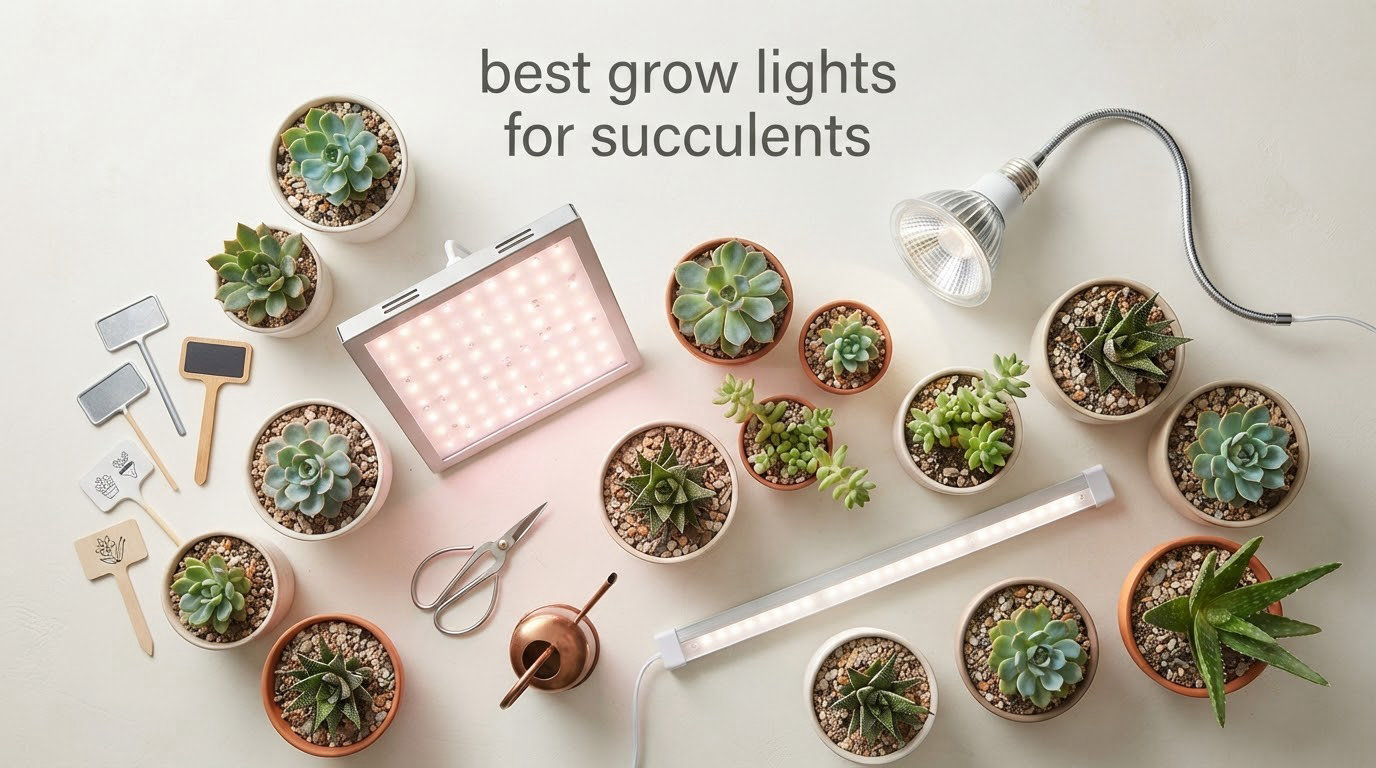
Succulents are picky about light, and most indoor rooms simply do not have enough of it. The best grow lights for succulents are full-spectrum white LEDs in the 5000K to 6500K daylight range, mounted 6 to 12 inches above the plants and run on a timer for 8 to 15 hours a day. That combination keeps rosettes compact, deepens stress colors, and stops the pale stretching growth that ruins an otherwise healthy plant.
We spent several weeks cycling ten of the most popular grow lights on this site through real setups: a small windowsill cluster, a two-shelf bookcase holding 30-odd pots, and a bare corner in a north-facing apartment. Our goal was simple. Find the lights that stop etiolation in real indoor conditions, not the ones with the longest spec sheet. Updated for October 2026.
Before the individual picks, a note on scope. None of these fixtures will replace a bright south-facing window, and all of them are rated for indoor use. If you keep a handful of plants in a sunny room, you probably do not need to spend money at all. Our general grow light guide covers larger setups, and the plant grow cabinets breakdown is worth a read if you are moving past a shelf of 20 pots.
Table of Contents
Top 3 Grow Lights for Succulents

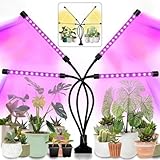
Barrina T5 Grow Lights 4-Pack
- 5000K full spectrum
- Linkable one-foot bars
- Switch on every bar
All 10 Best Grow Lights for Succulents (October 2026)
| Product | Specifications | Action |
|---|---|---|
| Barrina T5 1-Foot 4-Pack 5000K |
|
Check Latest Price |
 GooingTop 6000K Full Spectrum Clip Light GooingTop 6000K Full Spectrum Clip Light |
|
Check Latest Price |
| LEOTER 80 LED Four-Head Clamp Light |
|
Check Latest Price |
 bseah Twin-Tube Full Spectrum Clip Light bseah Twin-Tube Full Spectrum Clip Light |
|
Check Latest Price |
 SANSI 5W Pot Clip-On Grow Light SANSI 5W Pot Clip-On Grow Light |
|
Check Latest Price |
 Aokrean Halo Grow Light 3-Pack Aokrean Halo Grow Light 3-Pack |
|
Check Latest Price |
 Juhefa 6000K Gooseneck Grow Lamp Juhefa 6000K Gooseneck Grow Lamp |
|
Check Latest Price |
 Kullsinss 48 LED Halo Light Kullsinss 48 LED Halo Light |
|
Check Latest Price |
 yadoker Bamboo 61-Inch Pole Light yadoker Bamboo 61-Inch Pole Light |
|
Check Latest Price |
 GYTF 6000K Halo Light with Remote GYTF 6000K Halo Light with Remote |
|
Check Latest Price |
1. Barrina T5 1-Foot 4-Pack 5000K – Best Overall for Succulent Shelves
Barrina T5 Grow Lights for Indoor Plants, 5000K Full Spectrum, 1FT, 4 Packs
5000K full spectrum
96 LEDs on 4 one-foot bars
20W total draw
Switch on every bar
Pros
- Highest-rated option in this group at 4.6 stars
- Slim linkable bars hide under shelves
- Runs cool after 12 hours or more
- Mounting kit includes tape clips and ties
- Each bar has its own on/off switch
Cons
- No built-in timer so a wall plug timer is needed
- Short power and linking cords on wide shelves
This is the light we ended up running on our own bookcase shelf, and it is the one we recommend most often. Four one-foot aluminum bars, 96 LEDs between them, 5000K white light, 20 watts total draw. Nothing about the spec sheet is exciting, and that is exactly the point. It is the boring, modular, cool-running option that solves the real problem, which is lighting a horizontal shelf evenly without cooking the plants underneath.
Compared with the clip lights in this group, the difference is coverage. A clip lamp is a spotlight. The Barrina bars are a line source, so every pot along the shelf receives roughly the same amount of light instead of one plant getting the full dose and the rest fading out.
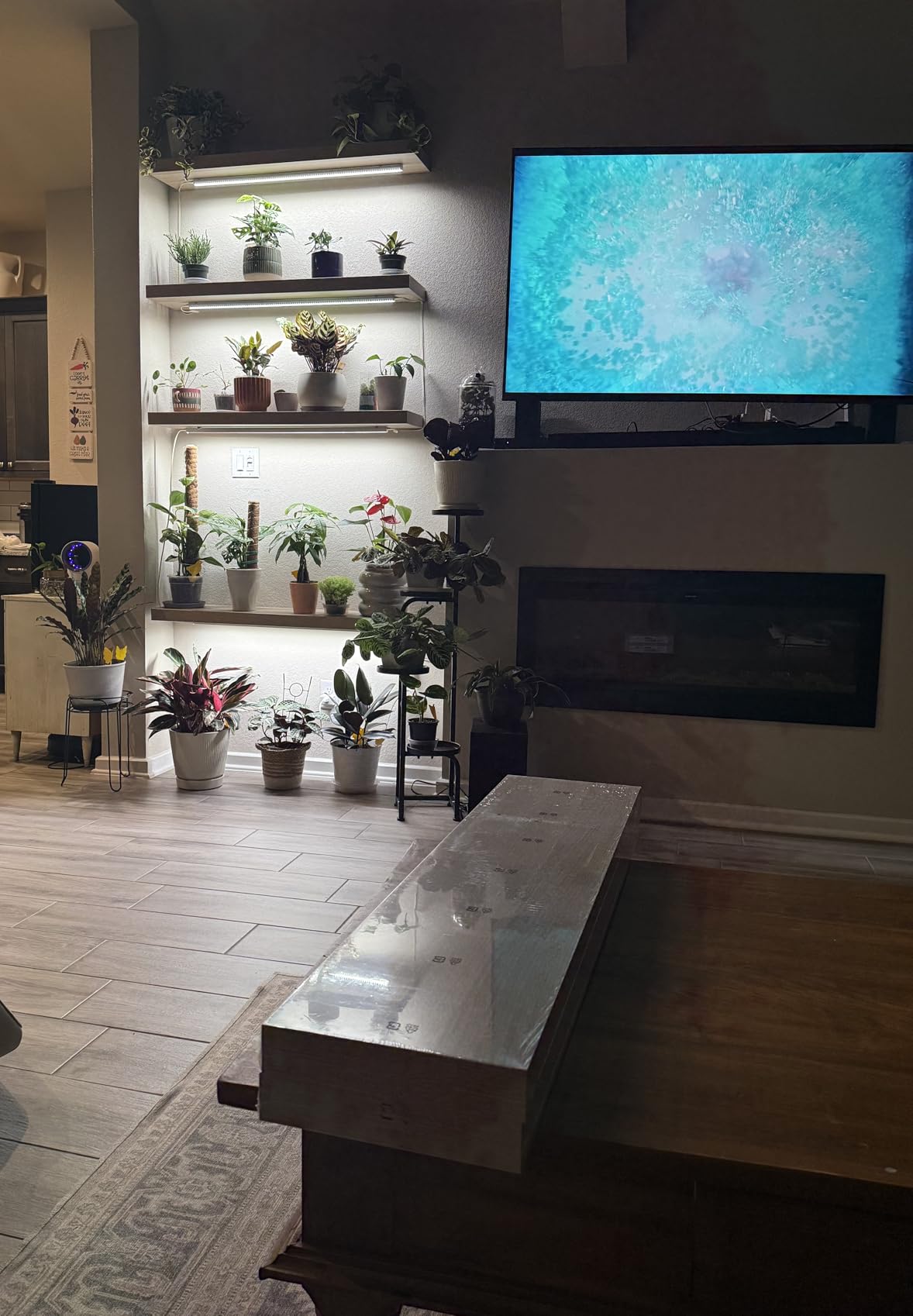
Over several weeks the shelf told the story. Pots that had been stretching toward the window firmed up, the new leaves came in shorter and thicker, and the color on the echeveria deepened noticeably. Nothing was dramatic enough to photograph, but the difference between a tight rosette and a loose one was obvious once you handled both.
Because the light stays cool, you can run it close. Owners running these in fixed positions for months report steady output, and the same community consensus we found points to Barrina as the most-recommended name in succulent circles for a reason. If you want a second opinion before buying, our grow bag roundup covers the container side of the same setups.
Where this light works best
It suits anyone with a shelf, bookcase, or plant cabinet holding more than about a dozen pots. The one-foot length tiles cleanly under a shelf edge, and the included double-sided tape, clips, and cable ties mean you do not need to drill anything. Each bar also has its own on/off switch, so you can light half a shelf and leave the other half dark while you rearrange.
Bars link in series with the included connectors, so a bigger bookcase is a matter of adding another run rather than buying a second fixture. Reviewers also report using these in aquariums and vivariums, where the same low heat output matters.
Where it falls short
The missing feature is a built-in timer. You will need a wall plug timer or a smart plug to hold a daily schedule, and that is a real friction point for anyone who travels. The included power and linking cords are also on the short side, which matters more on a wide shelf than on a narrow bookcase.
Finally, expect to do the maths on height yourself. At 20 watts across four one-foot bars, this is a light-intensity fixture, not a high-output one. If you own large columnar cacti or a dense collection of mature rosettes, you will want to mount the bars closer and keep the timer running longer.
2. GooingTop 6000K Full Spectrum Clip Light – Best Single-Pot Brightness
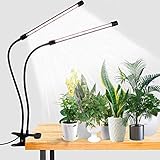
GooingTop Grow Light,6000K Full Spectrum Indoor Plant Growing Lamp
2500 lumens
84 LEDs at 6000K
4/8/12H timer
10W draw
Pros
- Highest listed output in this group at 2500 lumens with a high color rendering index
- Sturdy gooseneck that holds position
- High color rendering doubles as a reading lamp
- Regular plug power rather than USB only
- Strong clip grips shelves and pot rims
Cons
- Timer runs on a 24 hour cycle which surprises buyers
- Narrow beam needs even tray rotation
With 22,108 ratings behind it, this is the most proven lamp in the group. Output is listed at 2500 lumens from 84 LEDs, 10 of them red and 74 white at 6000K, and it is the only light here with a stated color rendering index of 90. In practice that means a window you can comfortably read next to, which matters if your plants share a desk with your work.
For succulents, the raw intensity is the selling point. It is bright enough to hold a compact rosette from close range, and it reaches full color quickly on echeveria and grape plants. The clamp and gooseneck are the sturdiest we tested, holding position without the droop that softer arms develop after a few months of repositioning.
The one real learning curve is the timer. It does not alternate on and off. It fires once every 24 hours at whatever time you set it, which is why a few owners initially thought it was broken. Set it for the time you want the light to come on each morning and it will behave like a daily alarm, but it will not shut itself off at night.
We paired it with a plug timer for exactly that reason. The light also runs on regular plug power rather than USB, so you are not hunting for a socket or a powered hub, which is the most common complaint we heard about the USB-based alternatives.
Where this light works best
It is built for one plant or one small cluster, mounted at 6 to 12 inches. That makes it the right pick for a single windowsill pot, a desk, or a shelf where you want strong light on one hero plant rather than a wash across twelve. It also doubles as a task lamp, and the 6000K tone reads as daylight rather than the purple glow of a blurple fixture.
Because the output is high, you can dial the distance rather than buying a bigger lamp. Start at 12 inches and bring it closer over a couple of weeks, which is safer for plants that have been in low light all winter.
Where it falls short
The beam is narrow. A shelf of six or more pots under one of these will produce uneven growth unless you rotate the tray every week or two, and the plants at the edges will stretch toward the center. The timer design catches people out repeatedly, so budget an extra plug timer if you want a true on-off cycle.
There is no dimmer on this model, so your only intensity control is height. For a plant being acclimated from a dark corner, that is workable but slower than a fixture with actual brightness levels.
3. LEOTER 80 LED Four-Head Clamp Light – Best for a Full Shelf
LEOTER Grow Light for Indoor Plants – Upgraded Version 80 LED Lamps with Full Spectrum & Red Blue Spectrum, 3/9/12H Timer, 10 Dimmable Level, Adjustable Gooseneck,3 Switch Modes
80 LEDs across 4 heads
Full spectrum 380-800nm
10 brightness levels
3/9/12H timer
Pros
- Largest review base in this group with over 12700 ratings
- Four aimable heads cover a shelf from one clamp
- Three spectrum modes and 10 brightness levels
- Timer memory runs a daily cycle
- Sturdy metal clamp and goosenecks
Cons
- Timer must be re-set after a power interruption
- Bulkier footprint than a single-head clip light
The LEOTER solves the same problem as the Barrina pack with a completely different shape. Instead of thin bars, it is a four-head desk lamp clamped to the edge of a shelf, with 360-degree goosenecks you can aim independently. Eighty LEDs sit across the four heads, split between red, blue, yellow, and white, and each head can point at a different corner of your collection.
That flexibility is the whole appeal. Our two-shelf test put one clamp at the front of the lower shelf and reached the back row by angling the heads upward, which a single-head clip physically cannot do. Setup is one clamp and four adjustments, and the metal clamp grips a shelf edge or a table without needing hardware.
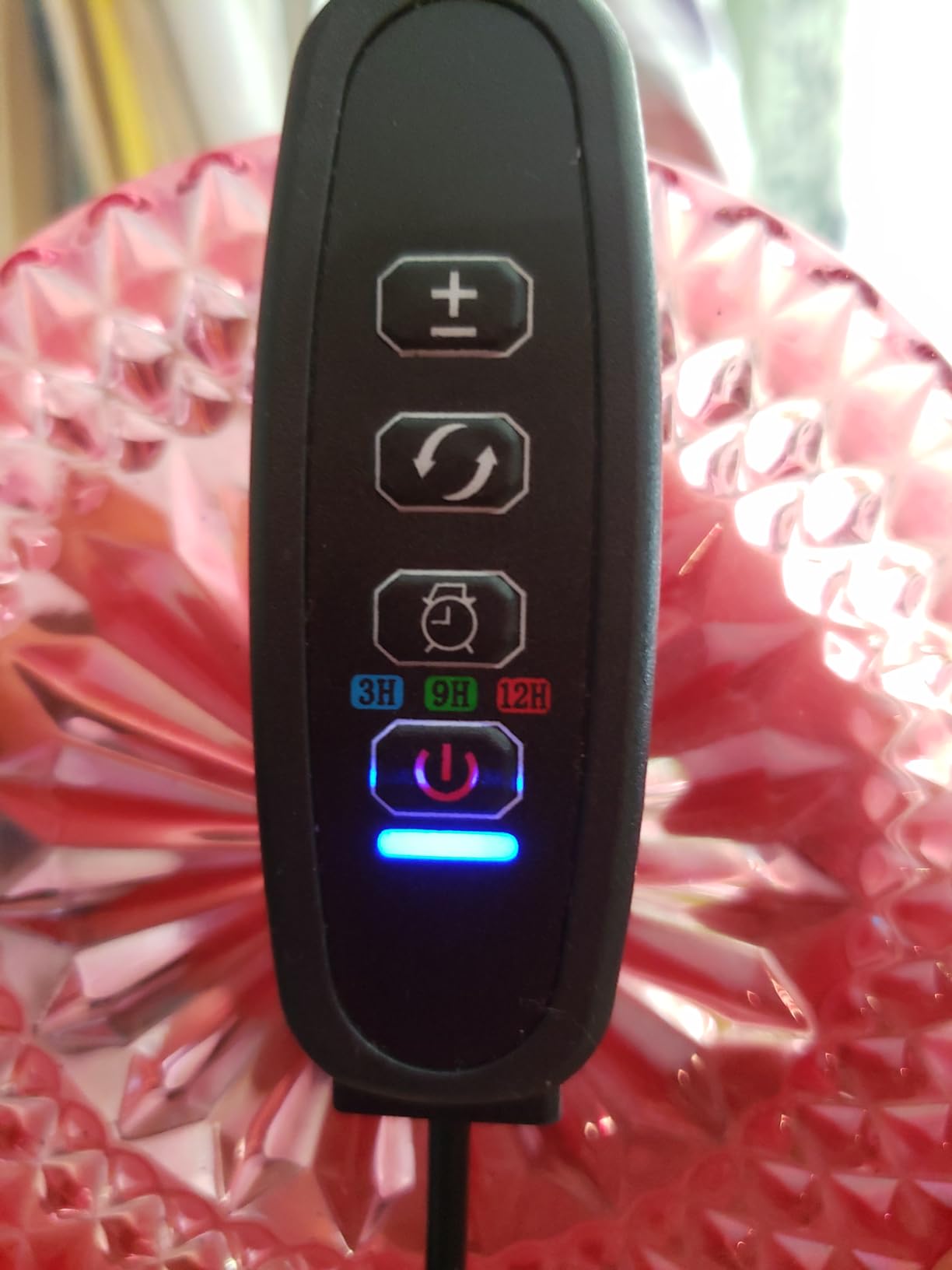
The controls are unusually granular for a light in this price bracket. Ten dimmable intensity levels mean you can start a plant at 30% and work up, and three spectrum modes cover full spectrum 380-800nm, a red-plus-blue combination, and a mixed warm-white blend. The 3, 9, and 12 hour timer stores your setting and repeats it daily while the unit stays powered.
Build quality is the other strength. Reviewers consistently single out the goosenecks for holding their angle, and the heat sink keeps the heads cool enough to sit close to foliage. If your collection outgrows an indoor shelf eventually, this fixture also pairs well with the tent-based setups in our grow tent roundup.
Where this light works best
A shelf between roughly 8 and 20 pots is the sweet spot. Four heads spread across a 2 to 3 foot section and the goosenecks handle the depth, so a shelf of 8 to 20 plants ends up with a pot at the back lit as well as one at the front. It also suits mixed collections where succulent species have different light needs, because the dimming lets you push a haworthia harder than an echeveria.
The remote control matters more than it sounds. Changing brightness or mode from across the room means you are not repeatedly reaching over your plants and knocking rosettes sideways.
Where it falls short
The circular memory timer resets if power is cut. In practice that means after a power blip or a tripped breaker you come home to a light running on the wrong schedule until you re-set it. If you already plan to use a plug timer for a precise photoperiod, the built-in timer becomes redundant anyway.
The footprint is also bulkier than a single-head clip light, and the desk-lamp styling is less discreet than a bare bar. On a small shelf, the body can crowd the pots you are trying to light.
4. bseah Twin-Tube Clip Light – Best for Wide Trays and Groupings
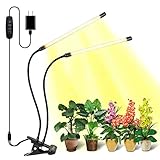
bseah Grow Light Plant Lights for Indoor Plants, Full Spectrum Plant Grow Lamp, 10 Dimmable Levels, Auto ON & Off with 3/9/12H Timer
Twin LED tubes
10 dimmable levels
3/9/12H timer
USB powered
Pros
- Twin tube design gives wider coverage than single-head lights
- 10 dimmable levels and 3 switch modes
- Strong spring clamp with firm goosenecks
- Timer memory schedules daily on and off
- Metal build with a non-slip base mat
Cons
- USB cable is short at about 54 inches
- Protective film on the tubes is sealed under the end caps
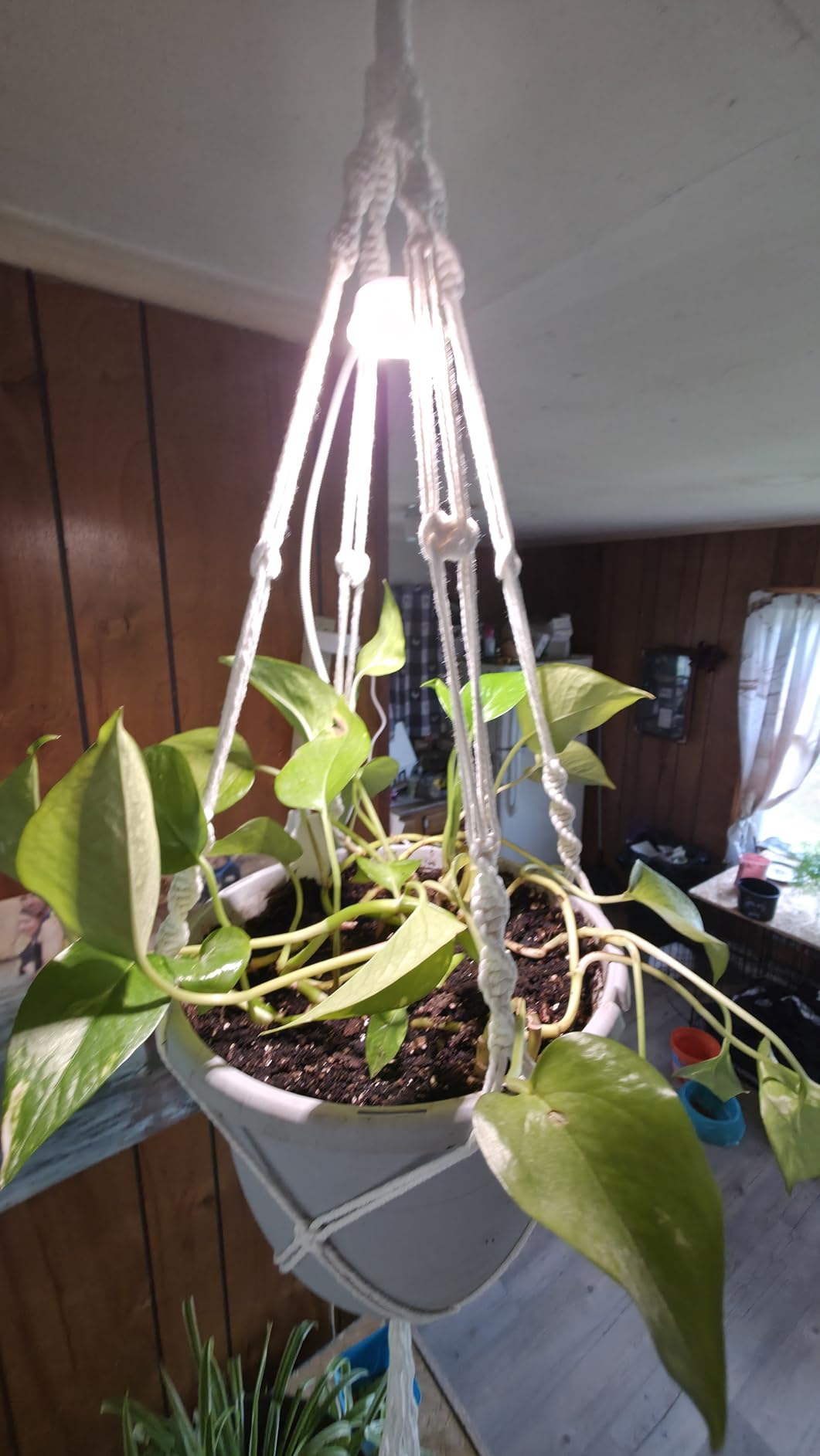
Where a single-head clip throws a cone, the bseah throws a row. Two LED tubes sit on one bar, and the combination of yellow and white emitters covers photosynthesis through flowering and fruiting. That geometry makes it the pick for a propagation tray or a wide row of small pots where a spot beam would leave the outer plants stretching.
On our shelf of small propagations it did exactly what we hoped. The row stayed even from the first pot to the last, and the 10 dimmable levels let us keep newly rooted offsets at a lower setting than the mother plants above them. Owners report noticeable improvement in plant vigor once the light is added, and the timer memory repeats a daily cycle without manual input.
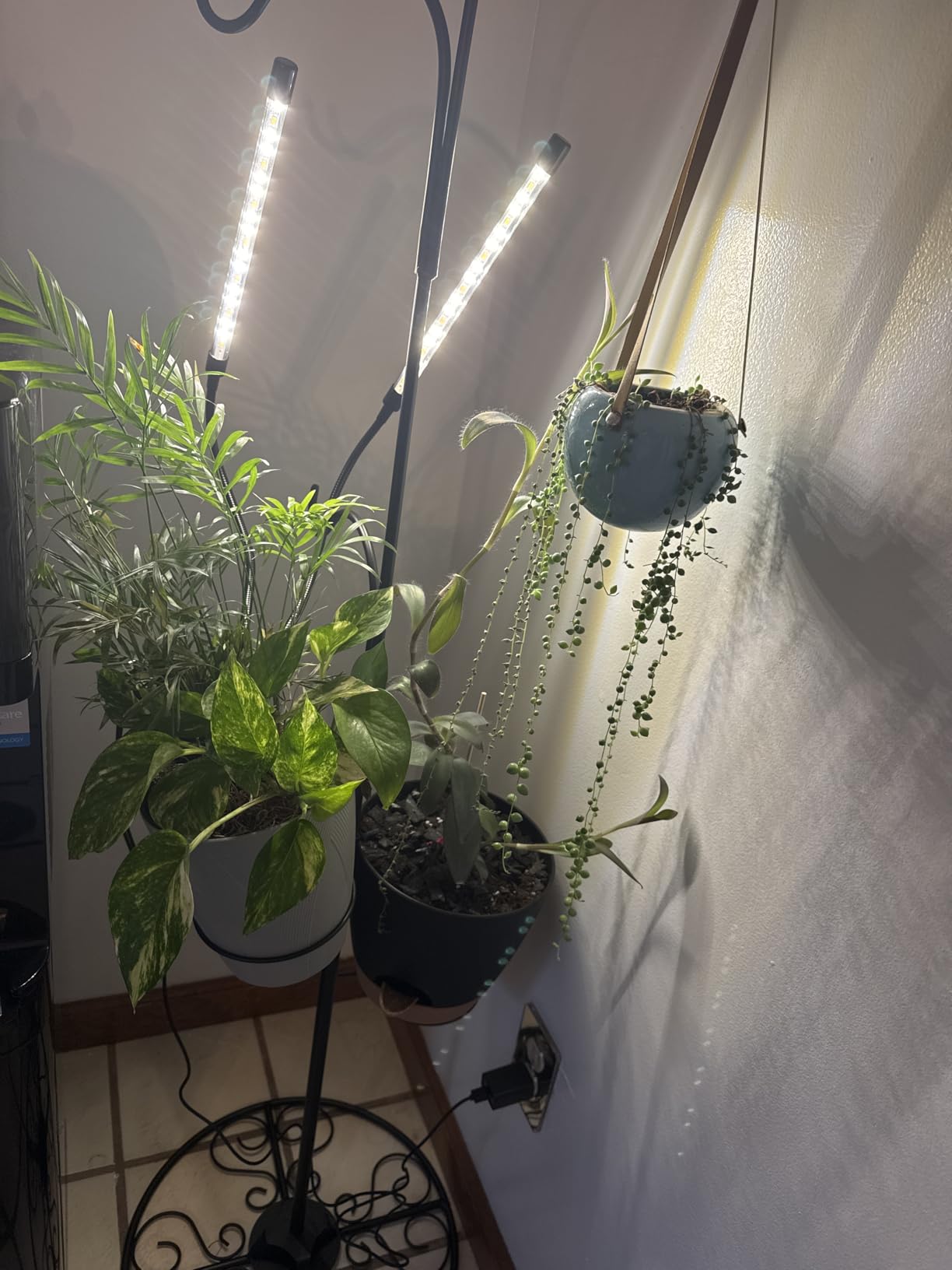
Construction is solid for the money. The spring clamp grips shelves, tables, and pot rims, and the metal goosenecks hold their bend rather than slowly folding. Power comes from USB, and the LED lifespan is tested to 50,000 hours, which is well beyond what any of us will keep a light switched on.
Two small gripes recur. The USB lead is around 54 inches, so a wide shelf means a hub or a power strip, and the factory protective film on the tubes is sealed under the end caps and cannot be fully peeled away. Neither affects the light output, but both are mildly annoying on first setup.
Where this light works best
It suits trays and rows rather than single hero pots. A flat seed tray, a grid of 2-inch nursery pots, or a line of cuttings along a shelf is where the twin tubes earn their keep. The dimmer also makes it a reasonable seedling light, since you can start low and raise intensity as the plants thicken.
If your plants live somewhere other than a shelf edge, the non-slip base mat gives you a second option. You can set it on a flat surface and angle the bar rather than clamping.
Where it falls short
The short cable is the practical limit. On a shelf wider than about three feet you will need a powered hub, and that adds a failure point to an otherwise tidy setup. Goosenecks can also sag over time under their own weight, so check the angle after a few months.
It is a two-tube light, not a bar array, so it still will not out-light a four-bar shelf rig on a large collection. Think of it as a step up from a single head rather than a substitute for a full shelf setup.
5. SANSI 5W Pot Clip-On – Best for Living Spaces
SANSI Grow Lights for Indoor Plants, Pot Clip-On Plant Light, 1-Pack
5W ceramic LED
4000K natural light
35.78 umol/s/m at 6 inches
3/6/12H timer
Pros
- Clip mounts on the pot with nothing touching the plant
- 5W ceramic LED is efficient at low power
- 4000K tone is easy on the eyes
- Four dimming levels and a 3/6/12H timer
- 5V USB so a power bank can run it
Cons
- Single light source gives limited coverage
- Clip is tight on very thin or wide pot rims
This is the one we recommend when the light has to live in a room where people sit. The 4000K tone is closer to soft indoor lighting than the blue-white of a 6000K fixture, so it does not dominate the space the way a blurple lamp does. Among the halo and clip lights here, it has the highest share of five-star reviews, at 76%.
Efficiency is the quiet advantage. The ceramic LED element delivers a listed 35.78 umol/s/m at six inches while drawing 5 watts, roughly half what comparable 10 watt fixtures use. For a plant that needs a modest amount of light in a bright-ish room, that translates to a light you can leave on for 12 hours without thinking about it.
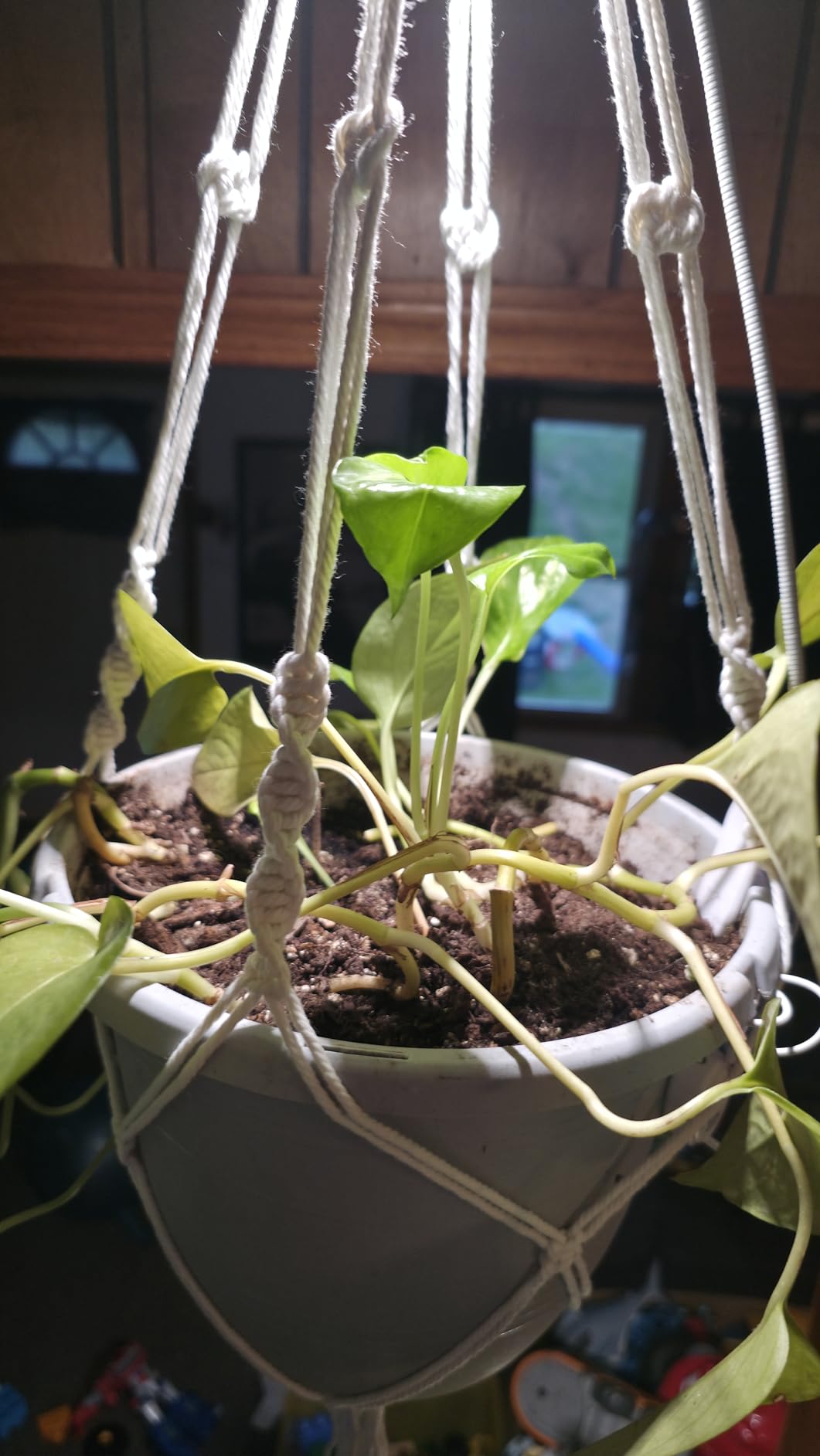
The installation is the part we like most. The 360-degree gooseneck ends in a pot clamp, so nothing touches the plant itself, no stake in the soil and no base to balance. There is no drilling, no adhesive, and nothing to knock over. The ETL listing and low-voltage USB input also mean it can run from a laptop or a power bank if the nearest socket is inconvenient.
Four dimming levels from 25% to 100% plus a 3, 6, or 12 hour cycle timer give you more control than most compact lights in this group. Community owners frequently name SANSI alongside Barrina as a go-to brand for succulent setups, and this clip-on format is the one they mention most.
Where this light works best
It suits a single pot on a desk, a bedside table, or one shelf in a living room where a bright purple or blue lamp would be unwelcome. It is also the most forgiving option for a plant that has been in low light, since you can start on the lowest dimming level and increase slowly.
Travel and dorm setups benefit too, because the whole unit runs on 5V USB. If your collection is a windowsill with a handful of pots, this is a clean, low-commitment way to add light to one of them.
Where it falls short
Coverage is the limit. One light source means one plant, and a shelf of pots needs one unit per pot or a different form factor entirely. Buy this expecting to serve a single plant well, not a row.
The clip is also the wrong shape for every pot. It is a tight fit on very thin or unusually wide rims, and on a tall narrow pot the light sits higher above the soil than you may want. Check your rim before ordering if your pots are unusual.
6. Aokrean Halo Grow Light 3-Pack – Best for Several Pots at Once
Aokrean Grow Lights for Indoor Plants, Full Spectrum Plant Light with Base
3 halo lights included
48 LEDs each
Pole reaches 26 inches
3/9/12H timer
Pros
- Three pack covers multiple pots at once
- Pole reaches 26 inches so it can follow plant growth
- Three spectrum modes and 10 brightness levels
- Soil insert or base installation
Cons
- Stand is only stable when weighted by a pot
- Corded design with no battery option
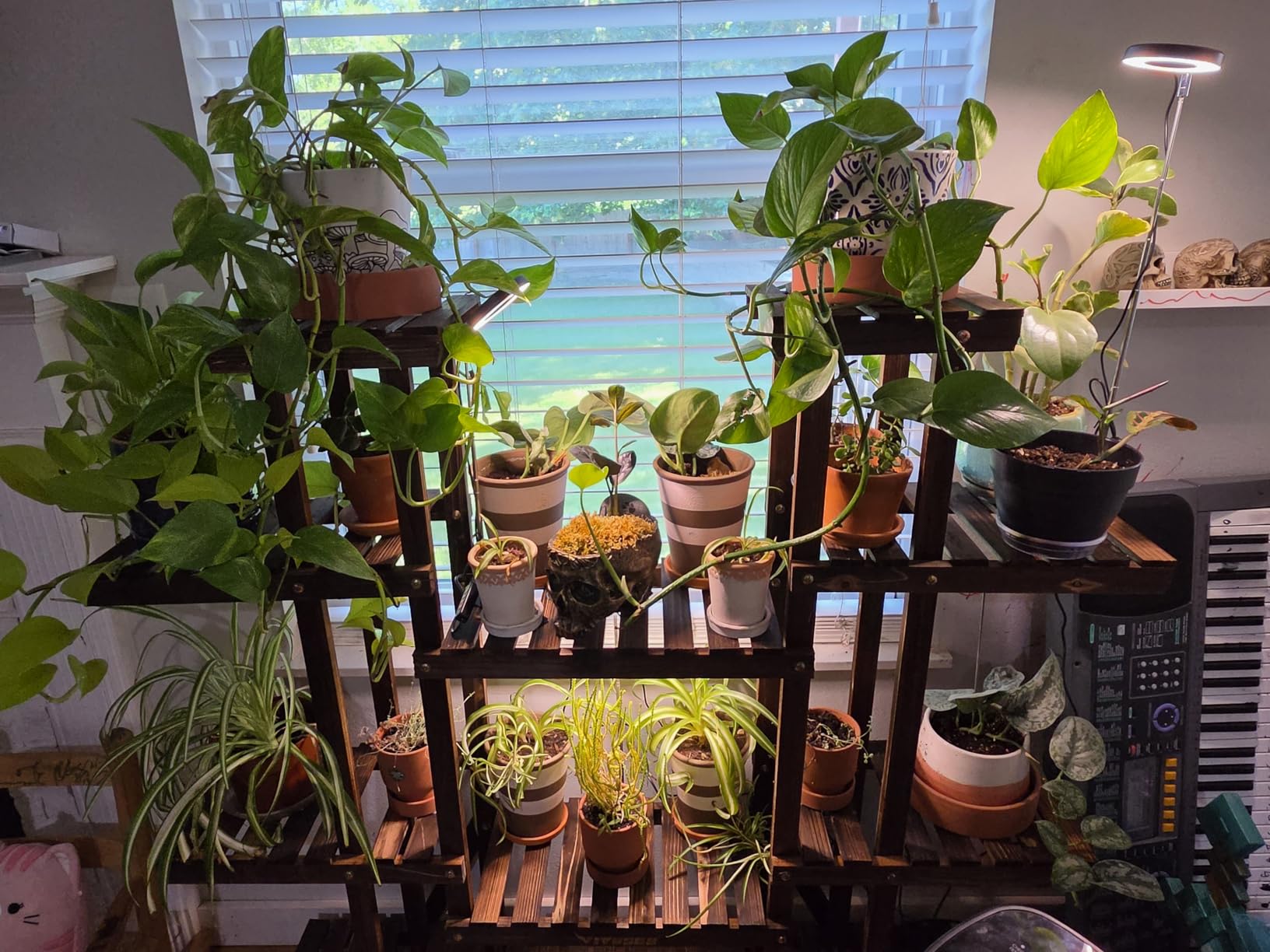
Three lights in one box is the argument here. If you have a handful of pots scattered around a desk or a single shelf, buying a three-pack is more efficient than three separate halo lights, and each one gets its own timer and brightness control. Forty-eight full-spectrum LEDs sit in each round halo head, with three lighting modes and 10 brightness levels.
The 26-inch telescoping pole sits at the taller end of the halo lights in this group, and it turned out to matter more than expected. As plants grow, you raise the head rather than swapping the fixture, which means the same setup can follow a plant from a 2-inch pot to a much larger one. The head rotates 90 degrees, so you can angle it away from a window or across a row.
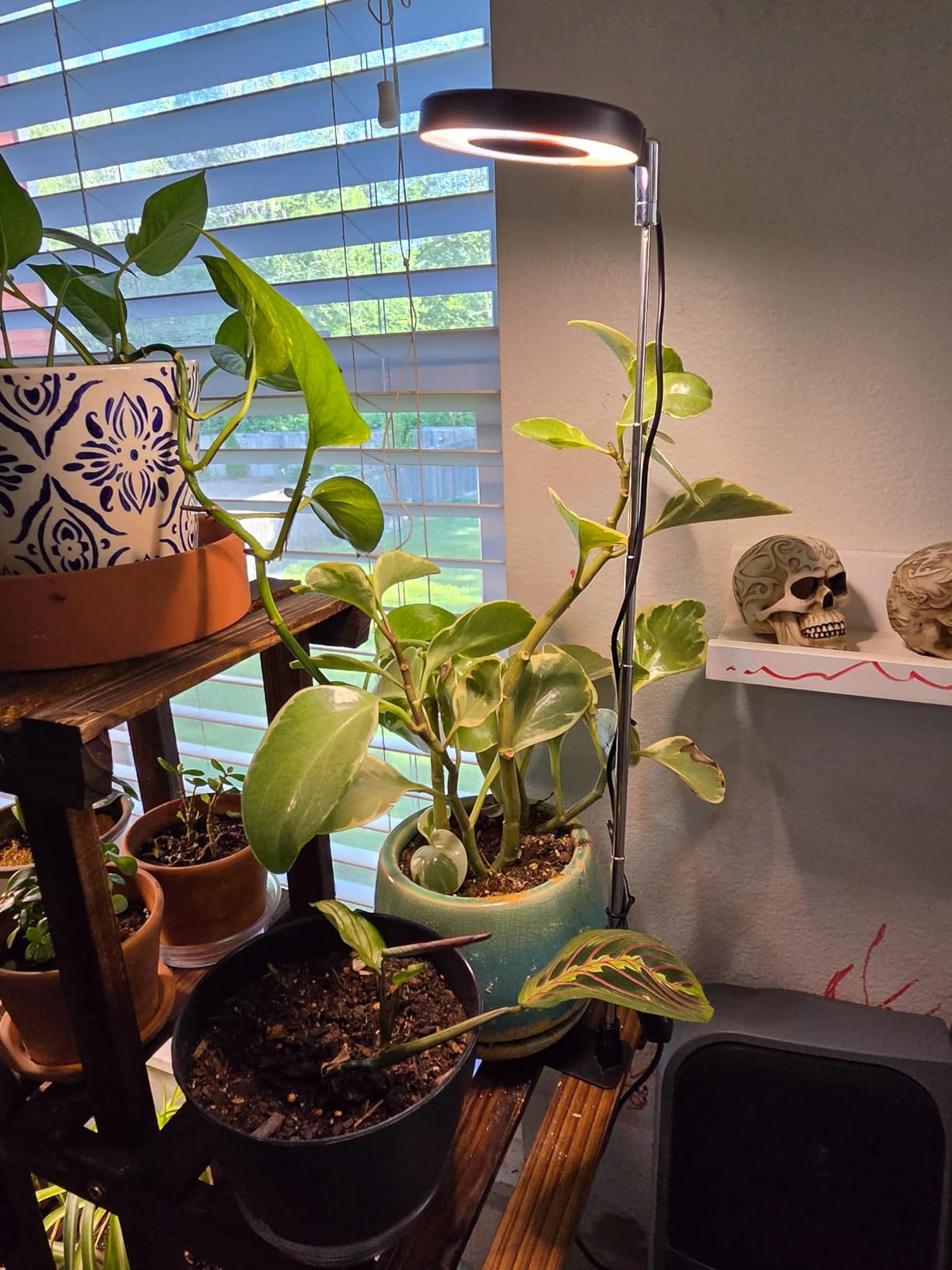
Installation is a two-way system, which is genuinely useful. You can insert the pole directly into the soil of a large pot, or stand it on the included ABS base. The soil-insert method is the most stable by a wide margin, and that is the option we would pick for anything that will be knocked by a sleeve or a pet.
The 3, 9, and 12 hour cycle timer repeats daily while the unit stays powered, so a schedule set once keeps running. Seventy-three percent of reviews are five-star, and several buyers point to the three-pack format as the reason they chose it over a single halo light.
Where this light works best
It suits a desk, a dorm room, or a shelf holding three to nine pots, especially one that is too small for a four-bar rig. Owning three independent lights also means you can put one in each room rather than moving a single fixture around.
For beginners, the 10 brightness levels remove most of the guesswork. Start low, watch the plant for a week, then raise the level rather than guessing at distance from the start.
Where it falls short
The stand is only stable when a pot is pressing down on it, which the manufacturer shows in its own listing images. On a bare surface with a small pot the base can tip, and there is no counterweight. Insert the pole into soil instead if the setup is anywhere it might get bumped.
It is also a corded design with an adapter and no battery option, so each light needs access to a socket. Three lights means three adapters and a bit of cable management behind the shelf.
7. Juhefa 6000K Gooseneck Lamp – Most Versatile
Plant Grow Light,48LED White Red 6000K Full Spectrum Gooseneck Growing Lamp
48 LEDs at 6000K
CRI 95
77 inch USB cable
4/8/12H timer
Pros
- Bright 6000K daylight spectrum at a low price
- 77 inch cable is far longer than competing lights
- Five brightness levels change without stopping the timer
- Thickened gooseneck holds its bent position
- Dual USB and plug power
Cons
- Single light source with a narrow beam covers one plant
- Lightweight fixture can swing on its stake
The Juhefa is an inexpensive way to add real daylight-spectrum light to a single pot. Forty white LEDs and eight red at 6000K, 5 watts, and a listed CRI of 95, which is unusually high for a light at this level. The color rendering means plants look natural under it, and it is comfortable enough to use as a desk lamp too.
Two details separate it from the other budget options. The 77-inch USB cable is far longer than the short leads on most competing clip lights, so you are not forced to sit the plant next to a socket. And the thickened gooseneck twists a full 360 degrees and holds the bend, which is the failure point on lighter arms.
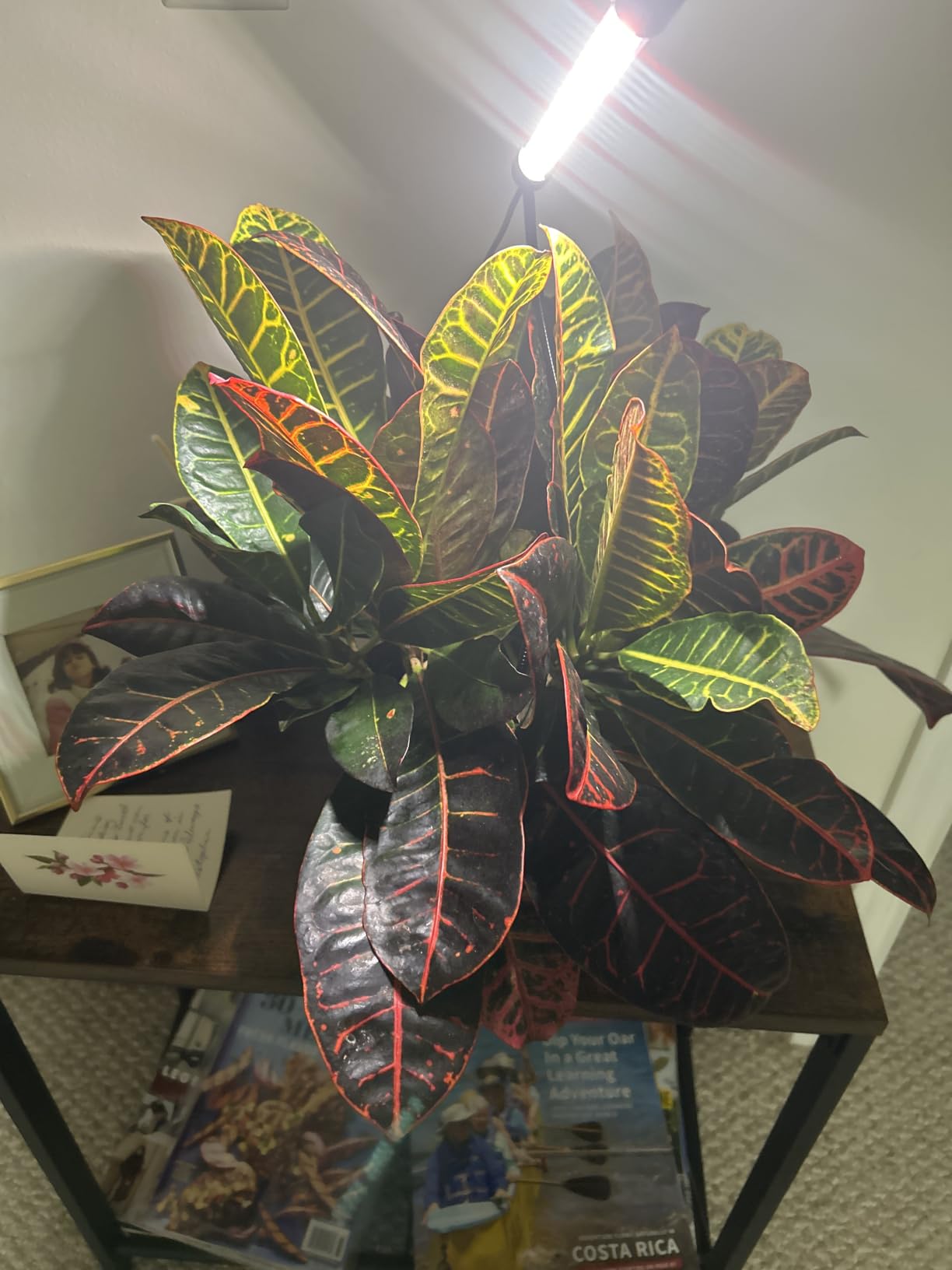
Owners treat it as a quick single-plant fix. Several report visible improvement within days, including leaves turning toward the light on plants that had been leaning. The 4, 8, and 12 hour timer runs on a 24-hour cycle, and the five brightness levels can be changed without interrupting the running schedule, so you can dim for an evening without losing your program.
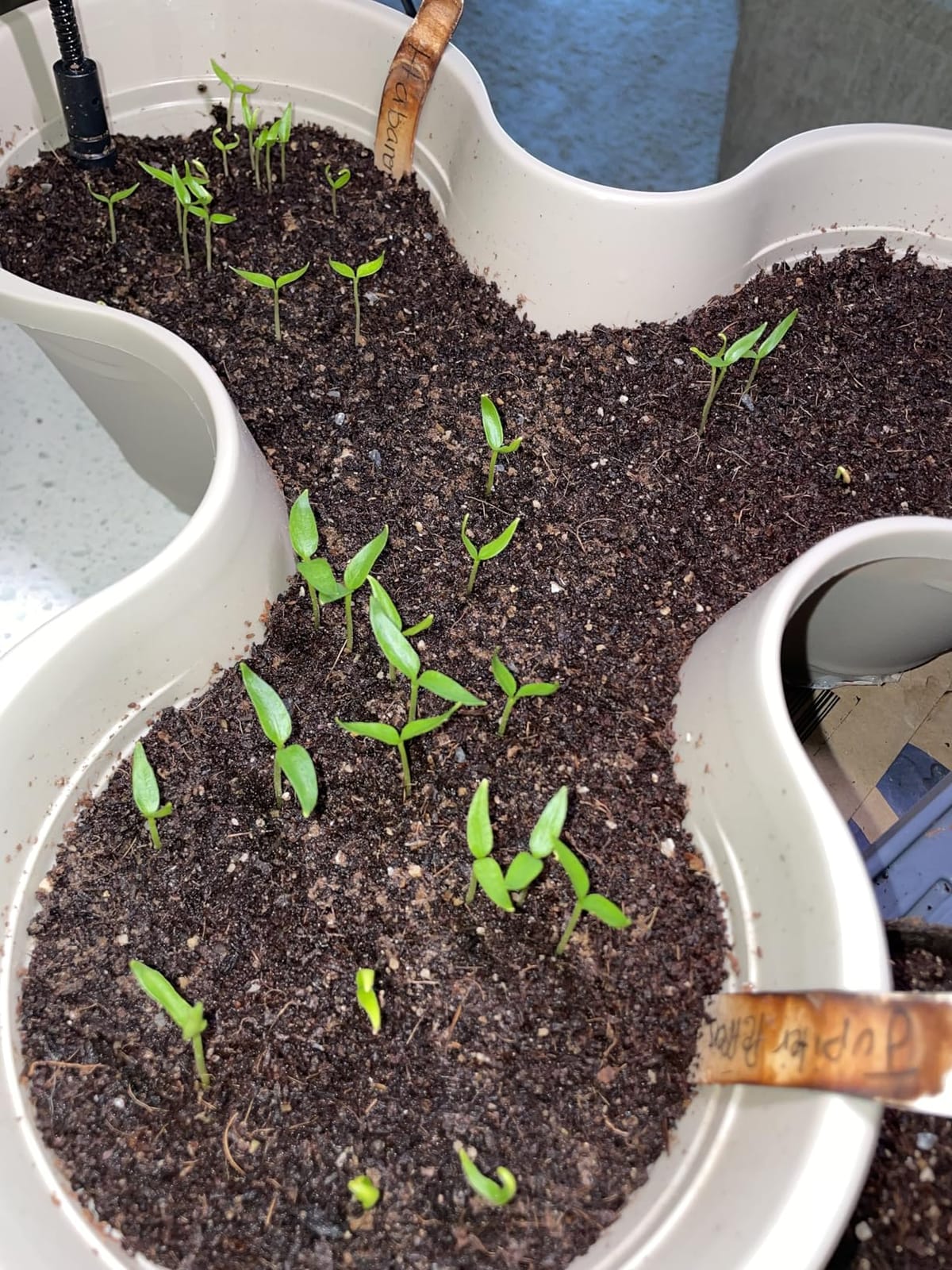
The honest limitation is coverage. This is one light source with a narrow beam. Several reviewers note that seedlings still went leggy when four were placed under a single unit, which is the clearest signal that it is built for one pot rather than a tray.
Where this light works best
It suits a single small pot that has been leaning or paling in a dim corner. The 6000K spectrum is strong enough to stop stretching on small rosettes, herbs, and cuttings, and the long cable means the light can come from 8 to 12 inches away without an extension lead.
It is also a sensible first grow light. If you buy one lamp, learn how a succulent responds to added light, and decide whether a shelf rig is worth the money later, this is a low-commitment way to start.
Where it falls short
The stake is light, so once the gooseneck is bent the whole unit can swing. Tape the base down or rest it on a heavier surface if the plant gets nudged by traffic. Trying to light several pots from one position is where it falls short, and the narrow beam means the edges of any group stay dark.
There is no dimmer for acclimation beyond the five levels, and the timer cycle behaves like a once-a-day alarm rather than an on-off cycle, so a plug timer gives you more reliable scheduling.
8. Kullsinss 48 LED Halo Light – Best Value Single-Pot Light
Kullsinss 3.5in Small Grow Lights for Indoor Plants, 48 LEDs Full Spectrum
48 LEDs from 380nm to 760nm
Pole adjusts 6.5 to 26 inches
5 levels and 3 modes
3/9/12H timer
Pros
- Base works as a pot stand or a soil insert
- 48 LEDs spanning 380-760nm for all growth stages
- Five brightness levels and three spectrum modes
- 26 inch pole doubles as a decor piece
- Good heat dissipation
Cons
- Covered area is narrow and suits one plant
- Brightness and timer options do not always match the listing
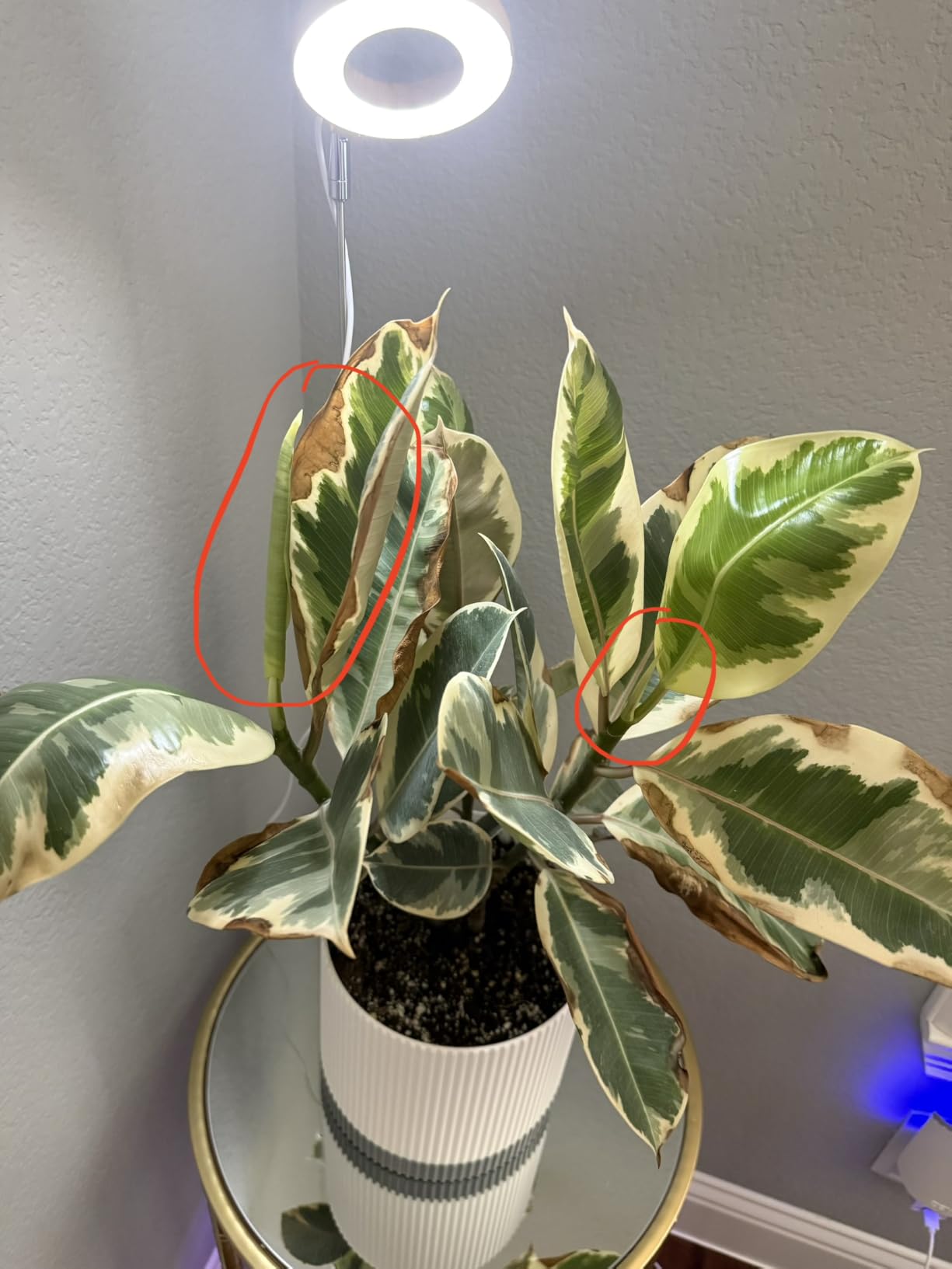
The Kullsinss is a halo light that gets the mechanics right for a small collection of modest size. Forty-eight high-efficiency diodes span 380nm to 760nm, which covers essentially everything a succulent needs from compact growth through to flowering. Seventy-four percent of its reviews are five-star, and owners consistently mention visible response such as new leaves and buds within weeks.
The two-in-one base is the feature we used most. Stand the pot on it, or insert the pole straight into the soil, and the choice depends on the pot rather than the light. The telescoping pole runs from 6.5 to 26 inches, so the same unit can light a windowsill cluster or a single pot on a tall stand.
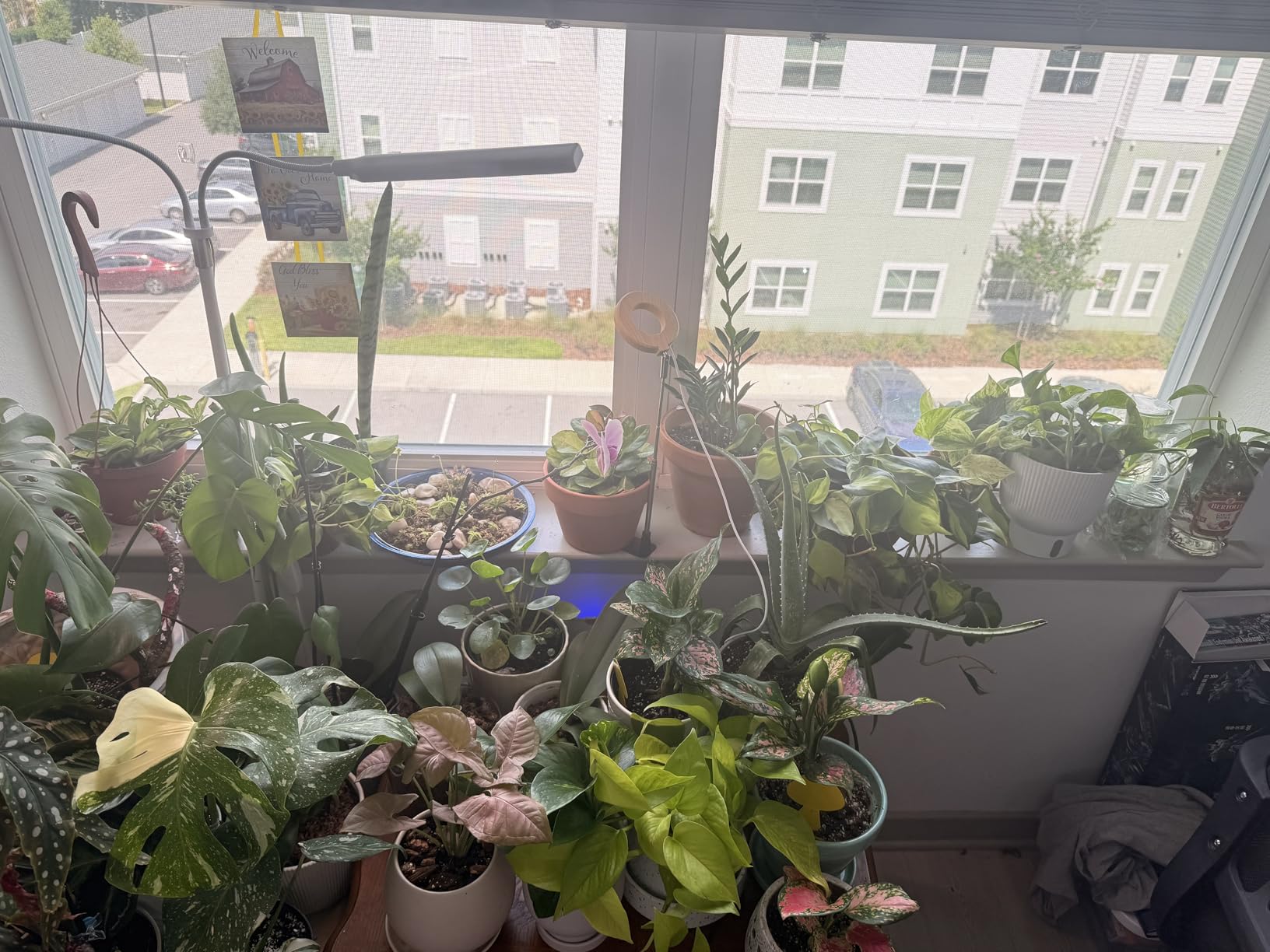
Control is thorough for the size: five dimmable levels, three spectrum modes covering white, warm white, and an all-on red combination, and a 3, 9, or 12 hour automatic timer. Heat dissipation is good enough that we never saw leaf stress on a close-set pot, even running a full day.
One honest caveat from the reviews: the listed brightness levels and timer options do not always match what the listing describes. Treat the counts as approximate and verify them on the unit itself when it arrives.
Where this light works best
It suits anyone lighting one or two small pots who wants a fixture that looks like an object rather than a machine. The halo shape and the pole finish blend into a shelf or a desk better than a clamp lamp with a visible bar.
It is also a good propagation light for cuttings and offsets, where you want low, even light at a close distance rather than a bright beam from above.
Where it falls short
The covered area is narrow by design. This is a one-plant light, and a shelf of larger pots needs something with more total output. Dimming down for a plant that is still acclimating is also limited, so the extra reach of the pole matters more than the brightness levels here.
Because the base is detachable, keep an eye on it in a busy spot. A light pole left standing on a narrow base near an edge is the kind of thing that gets knocked over eventually.
9. yadoker Bamboo 61-Inch Pole Light – Best for Tall and Floor Plants
yadoker Grow Lights for Indoor Plants, Full Spectrum Plant Light
72 LEDs across 380-800nm
Adjusts 13.7 to 61.1 inches
13 foot cord
8/12/16H timer
Pros
- Long reach at 61.1 inches for large floor plants
- 13 foot cord avoids extension cords
- Bamboo finish suits living spaces
- 10 brightness levels and a flexible cycle timer
Cons
- 4.3 average
- the lowest among the halo style lights here
- Stake base is less stable on shelves
- Output spreads thinner than a bar fixture
Every other light in this roundup tops out somewhere around a shelf. The yadoker extends to 61.1 inches, which puts light over a floor-standing plant, a tall monstera, or a hanging pot without any separate rigging. Seventy-two LEDs cover 380nm to 800nm, split between 36 white at 5000K, 28 warm white at 3000K, 6 red, and 2 blue.
Reach is the reason to buy it. If your plants are too tall or too far from an outlet for a compact light, this solves the geometry problem that no other fixture here does. The 13-foot power cord means you can run it from a neighbouring room’s socket and still have the head where the plant is.
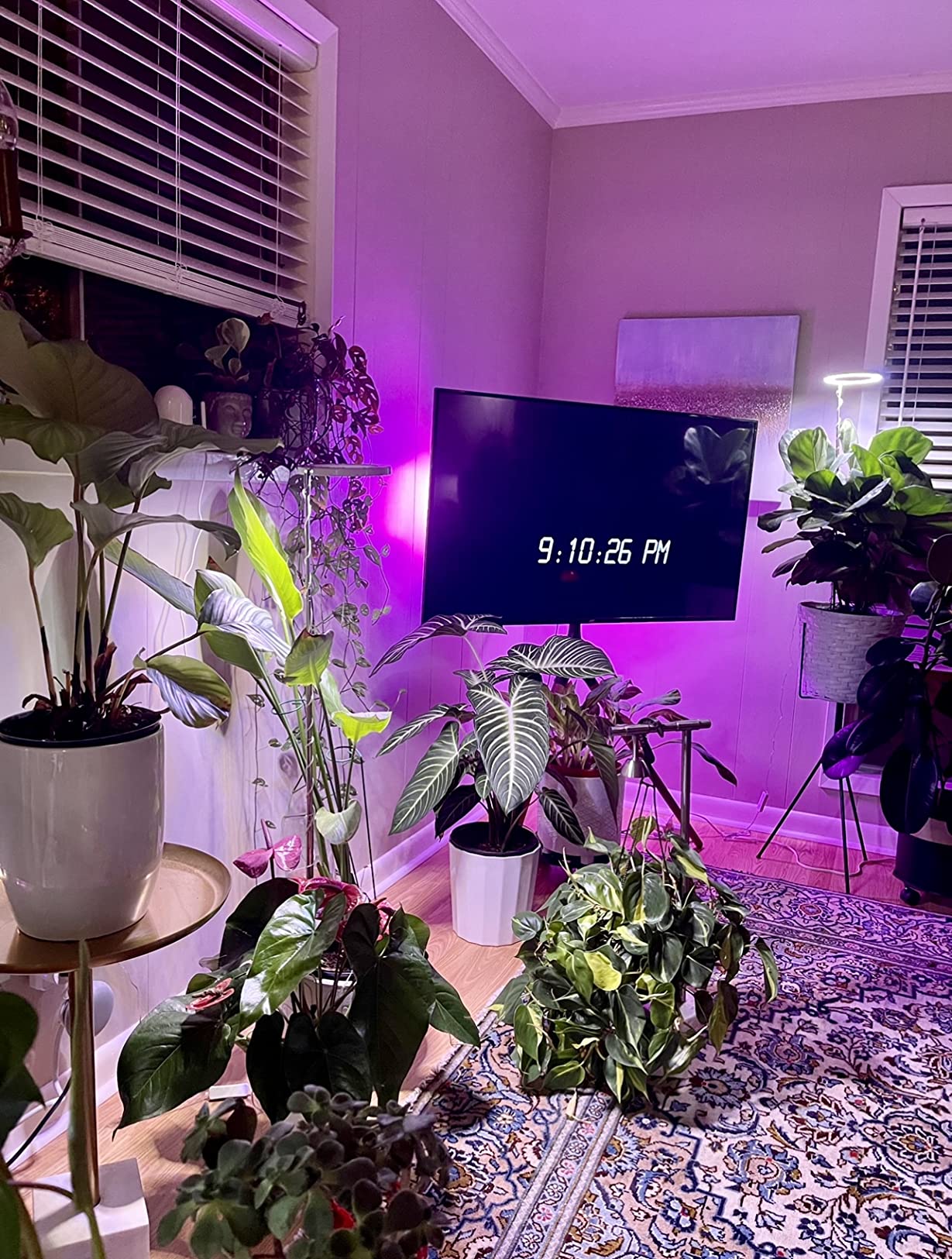
The aesthetic is genuinely different. A bamboo-finish pole in a living space reads as furniture, and the 10 brightness levels from 10% to 100% give real control over intensity at any height. The cycle timer offers 8, 12, or 16 hours on with matching hours off, which is unusually generous compared to the 3 and 9 hour options most competitors offer.
Its 4.3 average is the lowest among the halo-style lights here, with a 7% one-star share that points to a pole and base feeling unstable on lighter setups. That is a fair warning for anyone planning to perch it on a shelf rather than a floor.
Where this light works best
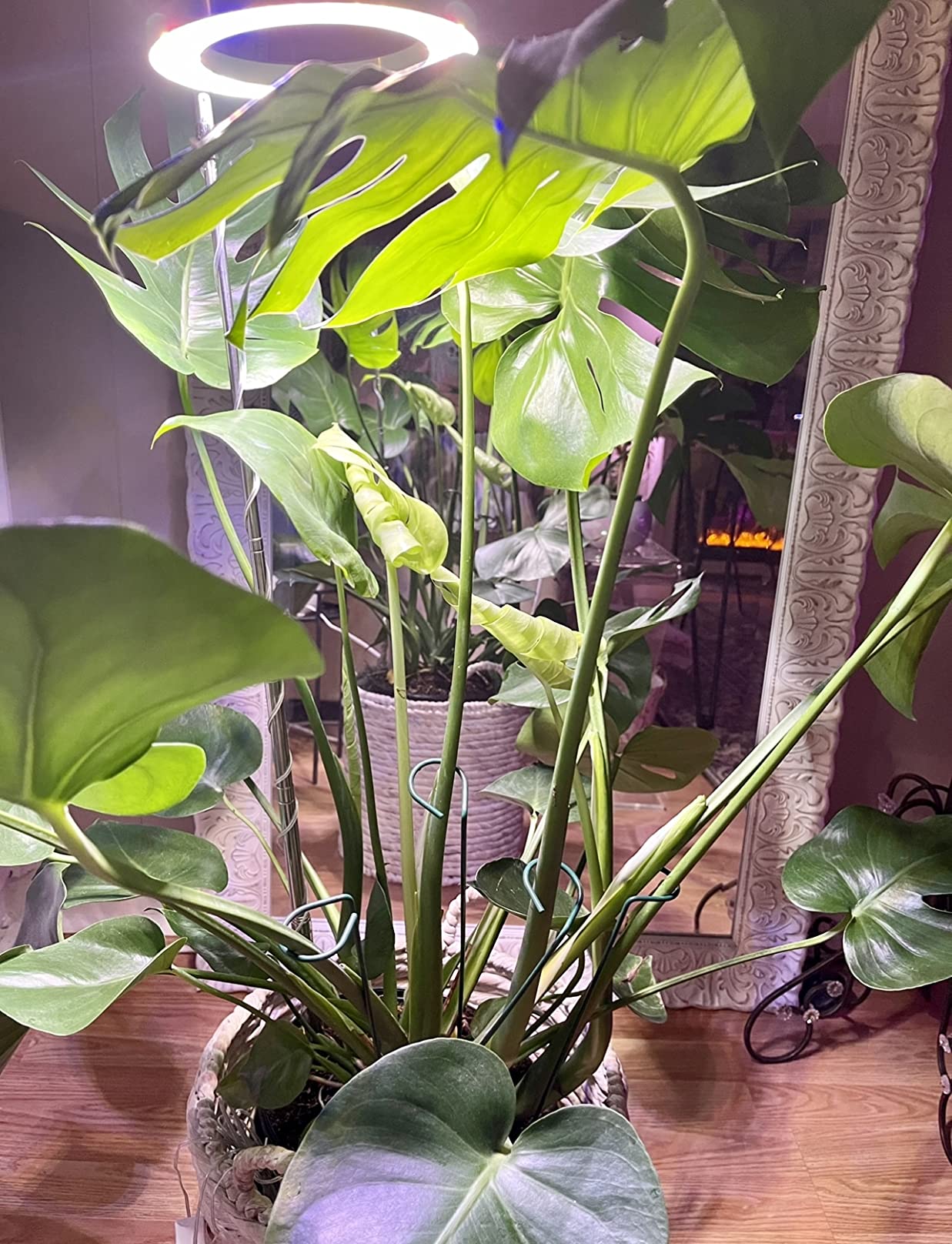
It suits a large plant in a big pot, a plant on a plant stand, or a high shelf where a short clip light would need an unrealistic amount of elevation. It is also a natural fit for a corner with a distant socket, since the cord length removes the need for extension leads.
The 8, 12, and 16 hour options are the best match we found for anyone running succulents on a long summer photoperiod, where 12 hours of light can feel like too little.
Where it falls short
The stake-in base works best in a large pot and is noticeably less stable on a shelf, so plan the placement around the base rather than the plant. Output also spreads thinner than a dedicated bar fixture over a wide area, so a full shelf of small pots will still finish unevenly.
At full extension the head is high enough that the light is less intense at plant level. For compact rosettes that means a shorter run of the dimmer at a lower height, which is a habit worth building up to.
10. GYTF 6000K Halo Light with Remote – Best Long Timer Control
GYTF Halo Plant Grow Light, 6000K White LED Full Spectrum Growing Lamp for Indoor Plants, Succulents, Mini Bonsai, Small Plants, Height Adjustable, Dimmable & Timer 4/8/12/18Hrs
48 LED beads at 6000K
4/8/12/18H timer
Pole adjusts 7 to 18 inches
10W draw
Pros
- Only light here with an 18 hour timer setting
- Remote control for dimming and timing
- Aluminum pole adjusts 7 to 18 inches with a 180 degree head
- 48 beads including 36 white 6 red and 6 blue
- Ten second setup by sticking the pole into soil
Cons
- Lowest brightness tier can be too dim for dense succulents
- Pole and head feel light for taller setups
The GYTF is the only light in this group that runs a full 18-hour cycle on its own timer, alongside the more usual 4, 8, and 12 hour options. That matters if you want to run a very long photoperiod, though for most succulents 12 hours remains the sensible ceiling. The remote handles both timing and brightness, so you are not reaching into the foliage to adjust anything.
Output is a 6000K white circle built from 48 beads: 36 white, 6 red, and 6 blue. The aluminum pole adjusts from 7 to 18 inches with a head that rotates 180 degrees, and the whole setup is genuinely a ten-second job because you stick the pole straight into the soil. Sixty-nine percent of its reviews are five-star.
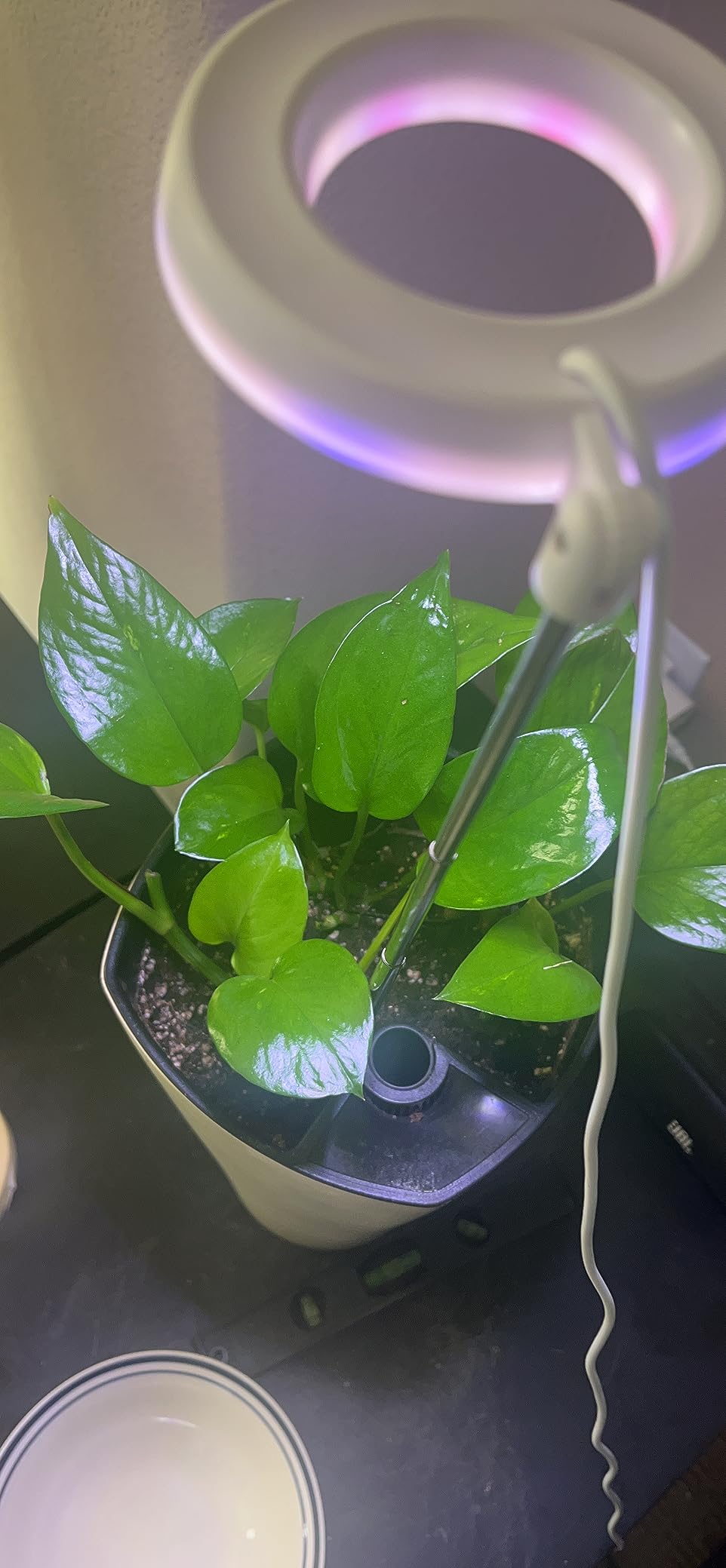
Where it earns its place is a single pot on a shelf or a desk, and small plants in a dim corner. It is a competent, cheap, no-fuss option for someone who wants the light in one spot and out of sight otherwise, and the remote means you can dim it in the evening without touching the plant.
Two limitations showed up consistently. The lowest brightness tier is not enough for dense, compact-growing succulents that need real intensity, and the head and pole feel light for taller setups, where a bump can shift the aim.
Where this light works best
It suits a windowsill where the pole can stand in the soil of a larger pot and rise above a cluster of smaller ones. The soil-insert installation is quick, leaves no base to balance, and keeps the fixture visually out of the way.
It also works well for anyone who wants remote control of a light they cannot easily reach, such as a high shelf or a closed cabinet arrangement.
Where it falls short
The 18-hour setting is a feature only in name for most growers. Succulents do better with a clear dark period, and running near-constant light encourages stretching rather than compact growth. Treat the longer settings as a backup for winter, not a target.
Intensity is the real ceiling here. On the lower dimming levels the output is genuinely faint, so a plant that needs strong light should be moved closer or upgraded to a brighter fixture rather than left on a setting that looks fine in a dark room.
Placement and Distance: How Close Should the Light Sit?
Getting the settings right matters more than the brand on the box. A good fixture mounted badly will outperform a great one mounted carelessly every time, and the most common complaint from succulent owners is not that their light is weak, it is that it sits too far above the plant.
Distance: 6 to 12 inches above the rosette. Closer for light-loving species such as echeveria and most cacti, further out for softer plants like haworthia and some sedum.
Hours: 8 to 15 hours per day. Start at 12 and adjust, remembering that a dark period every night is required.
Seasonal adjustment: 10 to 12 hours in spring, when growth is fastest, and 12 to 14 hours in winter when light and growth both slow down.
Timer: Use a mechanical plug timer or the built-in cycle. A light that runs all night weakens plants as surely as one that runs too dim.
Symptoms of too little light are unmistakable once you know them. Etiolation shows as stretched, leaning growth with wide-spaced leaves that look paler than the plant below them, and new leaves on stretched stems are noticeably thinner. If your succulent is growing toward a window or reaching, it is telling you the light is insufficient rather than that it needs feeding.
The opposite problem is light stress. Bleached or reddish-brown patches on the top leaves closest to the bulb, dry crispy tips, and sudden leaf drop in an otherwise healthy plant all point to a fixture that is too close or too bright. Move it up a few inches rather than switching it off entirely, then reassess after a week.
One more practical point. If you are using a fixture with several heads or bars, rotate or rearrange pots weekly so no single plant sits permanently under the brightest spot. Even coverage is what keeps a shelf uniform, and it takes less effort than correcting stretched growth later.
How to Choose a Grow Light for Succulents
Color temperature and spectrum
Aim for 5000K to 6500K daylight white. That range mimics outdoor sun, holds growth compact, and renders stress colors accurately without the harsh blue cast of a colder fixture. Full-spectrum white is the safer default than red-and-blue-only blurple, which is slightly more efficient on paper but produces a light most people will not want to look at in a living room and a spectrum that can leave plants less balanced overall.
Warm white below 4000K is gentler on the eyes and works for desk setups in bright rooms, but it delivers less of the blue light that keeps succulents compact. Blurple is not wrong, it just costs you the room.
Wattage, PAR and light intensity
Wattage alone tells you very little, because LED efficiency varies. What matters is the light delivered to the leaf, and the figure worth looking for is PAR output, measured in umol/s/m at a stated distance. Among the lights here, the SANSI is the most transparent, quoting 35.78 umol/s/m at six inches from a 5 watt ceramic LED.
As a practical guide, a 5 watt fixture is enough for a single small pot at 6 to 12 inches, a 10 watt fixture comfortably covers a small cluster or a shallow tray, and multi-head or multi-bar setups in the 20 watt range are what you want for a full shelf. The GooingTop stands apart on raw brightness, with 2500 lumens listed for a single clip lamp.
Coverage and how many succulents you can light
Coverage is the question buyers ask most and least often get answered. The short version: a halo or single-head clip covers one pot, a twin-tube light covers a row or a shallow tray, and a four-bar or four-head rig covers a shelf of roughly 8 to 20 plants. Total wattage is a poor proxy, because a spot beam and a line source deliver very different footprints.
If you are unsure, count the shelf length in feet rather than counting plants. A one-foot bar per 12 to 18 inches of shelf is a reasonable starting point for small succulents, and closer spacing is needed for dense rosette collections.
Form factor: clip, halo, bar, or cabinet
Clip lights are the cheapest and most flexible, and they move between plants easily, but they are spotlights and need height above the pot. Halo and pole lights are neater for a single plant, since the light stands in or beside the pot with nothing hanging over it. Bars are the right answer for shelves because they light a line evenly and hide under a shelf edge.
For anything beyond about 30 plants, a closed cabinet with side-mounted bars beats an open shelf, because it removes the gap between two shelves and lets you mount light at a consistent distance. Our plant grow cabinet roundup covers that format in more detail.
Timers and dimmers
A built-in timer is genuinely useful, but check how it behaves. Several lights here run a once-per-24-hour cycle rather than alternating on and off, and the LEOTER’s memory timer resets after a power cut. A wall plug timer costs very little and gives you a schedule you do not have to think about, which is why many owners end up using both.
Dimmability matters most for plants moving from a dark corner. A light with several brightness levels lets you start low and raise the intensity over a couple of weeks, which is gentler on a plant that has been starved of light.
Indoor versus outdoor setups
Every product in this roundup is rated for indoor use, and that rating is about moisture and temperature rather than light. For a patio or balcony shelf, look for a fixture with an IP rating and a weather-resistant housing, and expect a shorter service life than indoor use.
Outdoor placements also need far more light to match open sun, so a single indoor clip will rarely be enough. In a covered outdoor spot, a bar light mounted under a shelf overhang is the most practical approach.
When you do not actually need a grow light
If your plants sit in a bright south- or west-facing window and are compact, well-colored, and growing without leaning, they have enough light already. Adding a grow light to a healthy plant is an unnecessary cost and a risk of light stress.
Judge by the plant, not the window direction. Reaching growth, pale leaves, and stretched stems mean add light. Compact rosettes with strong color mean leave things alone. A bright room with a south window and a few pots does not need a fixture at all.
Frequently Asked Questions
Can you put succulents under grow lights?
Yes. Succulents are routinely grown under grow lights, and it is the standard solution for indoor growers without a bright south-facing window. Keep a full-spectrum white LED in the 5000K to 6500K range 6 to 12 inches above the rosette and run it on a timer. Watch for stretching, which means the light is too weak or too far, and for bleached patches, which mean it is too close or too bright.
What kind of light do most succulents need?
Most succulents need bright, direct light and they are adapted to high-intensity conditions rather than shade. Indoors, a full-spectrum white LED is the closest practical match to outdoor sun, because it delivers both the red and blue ends of the spectrum while running cool enough to sit close to the leaves. Fluorescent T5 fixtures also work, and incandescent bulbs do not provide nearly enough light for compact growth.
How many watts should my grow light be for succulents?
Around 5 watts is enough for a single small pot mounted at 6 to 12 inches. A 10 watt fixture comfortably covers a small cluster or a shallow propagation tray, and setups in the 20 watt range using multiple bars or heads are right for a full shelf. Wattage alone is not a reliable guide, because LED efficiency varies, so check the PAR output in umol/s/m at a stated distance when the listing provides it.
How close should my grow light be to my succulents?
Mount the light 6 to 12 inches above the rosette, closer for light-loving species such as echeveria and most cacti, and further out for softer plants like haworthia. If the light cannot get that close, it is almost always too weak for the position, which is the most common cause of etiolation. Raise the fixture instead of increasing brightness when leaves show bleaching or dry, crispy tips.
How long should succulents be under grow light?
Eight to 15 hours per day is the working range, with most growers settling around 12. A clear dark period every night is required, since running a light around the clock encourages stretching instead of compact growth. Longer photoperiods suit winter and low-light conditions, while summer growth often does better with 10 to 12 hours. Use a mechanical plug timer or the built-in cycle so the schedule stays consistent.
Which Grow Light Should You Buy?
After running all ten through real indoor setups, the Barrina T5 1-Foot 4-Pack in 5000K white is our pick as the best grow light for succulents overall. It lights a shelf evenly, runs cool enough to mount close, hides under a shelf edge, and scales by linking more bars. Pair it with a wall plug timer and you have the complete setup. For a single pot, the GooingTop clip light gives you the strongest light in the group, and the SANSI is the one to buy when the lamp has to look at home in a living room.
Match the fixture to the collection. One or two pots means a clip or halo light at 5 to 10 watts. A windowsill of small pots or a propagation tray means a twin-tube light. A shelf of 8 to 20 succulents means bars or a four-head clamp rig. Above 30 plants, a closed cabinet with side-mounted bars beats anything open-shelf. Whichever you pick, set the distance at 6 to 12 inches, run 8 to 15 hours on a timer, and check the plants for stretching or bleaching after the first two weeks. That adjustment matters more than any spec on the box.