
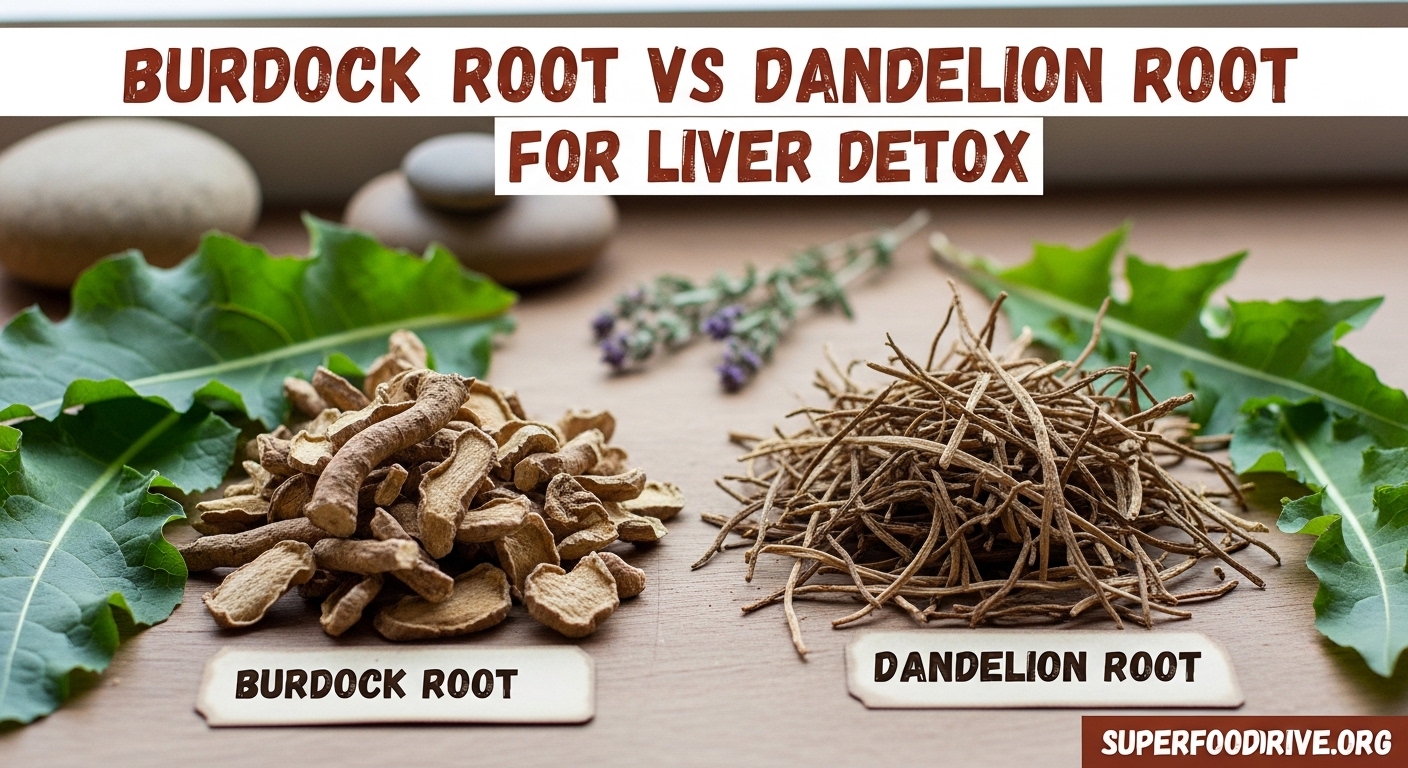
Both burdock root and dandelion root support liver health, but they work through different mechanisms. Dandelion root excels at stimulating bile production to help your liver flush toxins efficiently. Burdock root acts as a blood purifier, reducing the toxic load your liver must process by supporting lymphatic drainage and circulation.
If you are trying to decide between these two herbs for liver detox, the answer depends on your specific needs. Those dealing with digestive sluggishness, bloating, or gallbladder concerns often respond better to dandelion. People struggling with skin issues, water retention, or general toxicity buildup may find burdock more effective.
In this guide, you will learn exactly how each herb supports liver function, the science behind their detoxifying effects, and whether combining them creates better results. I have researched traditional uses, modern studies, and real user experiences to give you actionable information for 2026.
Table of Contents
Quick Comparison: Burdock Root vs Dandelion Root
Before diving into the details, here is a side-by-side look at how these two herbal allies differ.
| Feature | Burdock Root | Dandelion Root |
|---|---|---|
| Botanical Name | Arctium lappa | Taraxacum officinale |
| Primary Action | Blood purifier and lymphatic support | Bile stimulant and digestive aid |
| Best Known For | Skin health and circulation | Liver detox and digestion |
| Active Compounds | Inulin, arctigenin, lignans | Quercetin, luteolin, sesquiterpene lactones |
| Taste | Earthy, slightly sweet, mild | Bitter, coffee-like when roasted |
| Traditional Use | TCM skin conditions, Native American blood cleanser | European digestive tonic, liver support |
| Diuretic Effect | Mild to moderate | Strong |
| Prebiotic Fiber | High inulin content | Moderate |
Both herbs have earned their place in traditional medicine systems worldwide. Understanding their unique strengths helps you choose the right approach for your body.
Understanding Burdock Root: The Blood Purifier
Burdock root comes from the burdock plant, a thistle native to Europe and Asia that now grows worldwide. Traditional Chinese Medicine has used it for thousands of years to treat skin conditions and purify blood. Native American healers also valued it as a blood cleanser and general tonic.
How Burdock Supports Liver Detox
Burdock helps your liver indirectly by cleaning your blood and supporting your lymphatic system. Your liver filters everything in your blood, so when burdock improves blood quality, your liver faces less workload. This blood purifier action explains why burdock appears in so many traditional detox formulas.
The root contains high levels of inulin, a prebiotic fiber that feeds beneficial gut bacteria. Healthy gut bacteria reduce the production of endotoxins that would otherwise burden your liver. Research shows inulin also supports healthy blood sugar levels, which matters because excess sugar stresses liver function.
Burdock also promotes lymphatic drainage. Your lymphatic system acts as your body’s sewage system, collecting cellular waste. When lymph flows freely, less waste reaches your liver for processing. This explains why herbalists often recommend burdock for people feeling generally toxic or sluggish.
Key Active Compounds in Burdock
Inulin makes up about 45-50% of burdock root by weight, giving it significant prebiotic benefits. Arctigenin, a lignan compound in burdock, shows anti-inflammatory properties in research studies. Phenolic acids provide antioxidant protection that supports overall cellular health including liver cells.
These compounds work together to reduce inflammation throughout the body. Since inflammation often stems from toxicity, burdock’s combined blood-purifying and anti-inflammatory effects create powerful support for your liver’s natural functions.
Understanding Dandelion Root: The Bile Stimulator
Dandelion root comes from the same sunny yellow flower that covers lawns in spring. Far from being a weed, this plant offers serious medicinal value. European herbalists have used dandelion root for liver and digestive support since medieval times.
How Dandelion Supports Liver Detox
Dandelion root stimulates bile production and flow, which directly supports your liver’s primary detoxification pathway. Bile acts like a detergent, breaking down fats and carrying toxins out of your liver into your intestines for elimination. When bile flows freely, your liver works more efficiently.
The bitter compounds in dandelion root trigger bitter receptors in your mouth and digestive tract. This bitter taste sets off a chain reaction that increases saliva, stomach acid, pancreatic enzymes, and bile production. Better digestion means less toxic byproduct creation, reducing liver burden.
Research on animals shows dandelion root may protect liver cells from damage. While human studies remain limited, traditional use spanning centuries supports its safety and effectiveness for gentle liver support. Many herbalists consider it the go-to herb for beginning a liver cleanse.
Key Active Compounds in Dandelion
Dandelion root contains sesquiterpene lactones that give it the characteristic bitter taste and stimulate digestive juices. Flavonoids like quercetin and luteolin provide antioxidant and anti-inflammatory benefits. The root also contains taraxasterol, a compound being studied for its potential liver-protective effects.
These compounds make dandelion root particularly helpful for people who experience bloating, indigestion, or constipation alongside liver concerns. The dual action on digestion and liver function creates comprehensive support for your body’s waste elimination systems.
Burdock Root vs Dandelion Root for Liver Detox: How They Compare
When comparing these herbs for liver support specifically, both offer genuine benefits through different pathways. Understanding these pathways helps you choose the right herb or combination for your situation.
Detoxification Pathways
Dandelion root primarily supports Phase III detoxification, the elimination phase where toxins leave your body through bile. By increasing bile production and flow, dandelion ensures toxins processed by your liver actually exit your system rather than recirculating.
Burdock root primarily supports the preparatory phases by reducing the incoming toxic load. Better blood quality and lymphatic drainage means fewer toxins reach your liver in the first place. This upstream approach complements dandelion’s downstream elimination support.
Together, these herbs address both sides of the detox equation: reducing input while increasing output. This complementary action explains why many traditional formulas combine them for enhanced liver support.
Bile Production vs Blood Purification
If your liver struggles involve poor fat digestion, nausea after fatty meals, or gallbladder issues, dandelion root offers more targeted support. Its bitter compounds directly stimulate the bile production your liver needs to process fats and eliminate fat-soluble toxins.
If you deal with skin breakouts, chronic low energy, or that toxic feeling that never quite lifts, burdock root may serve you better. Its blood-purifying action addresses the root cause of many liver-related symptoms by improving the medium your liver works within.
Both herbs offer mild diuretic effects, but dandelion’s diuretic action is stronger. This makes dandelion slightly more effective for water retention and bloating concerns, while burdock offers deeper blood-cleansing benefits.
The Skin Health Connection
Your skin often reflects your liver’s health. When your liver cannot keep up with detoxification demands, your body tries pushing waste out through your skin instead. This connection explains why both burdock and dandelion appear in traditional skin-clearing remedies.
Burdock root has a particular reputation for helping hormonal acne, eczema, and psoriasis. Its blood-purifying action removes the irritants that trigger skin inflammation. Traditional Chinese Medicine practitioners have used it for skin conditions for over 3,000 years.
Dandelion root helps skin through its bile-stimulating action. Better bile flow means toxins leave through your digestive tract rather than your skin. Users on herbalism forums frequently report clearer skin within weeks of starting dandelion root tea.
If skin issues drive your interest in liver detox, consider starting with burdock root. Its more direct blood-cleansing action often produces visible skin improvements faster than dandelion alone. Adding dandelion later can enhance results through improved toxin elimination.
Can You Mix Dandelion Root and Burdock Root Together?
Yes, you can safely combine dandelion root and burdock root. Traditional herbal medicine often pairs these two roots for synergistic liver support. Their complementary actions create more comprehensive detoxification support than either herb provides alone.
Combining them addresses multiple detox pathways simultaneously. Burdock purifies your blood and supports lymphatic drainage while dandelion stimulates bile production and improves digestion. Together they support your liver from both upstream and downstream angles.
Many herbal tea companies sell pre-blended burdock and dandelion root teas. You can also buy the dried roots separately and create your own custom blend. The recipe below offers a simple starting point for combining these herbs at home.
Detox Tea Recipe: Burdock and Dandelion Blend
This simple tea combines both roots for comprehensive liver support. Drink it daily for two to four weeks as part of a gentle liver cleanse.
Ingredients:
- 1 teaspoon dried burdock root
- 1 teaspoon dried dandelion root
- 2 cups water
- Optional: slice of fresh ginger or teaspoon of honey
Instructions:
- Bring water to a boil in a small pot.
- Add burdock and dandelion root to the boiling water.
- Reduce heat and simmer gently for 15-20 minutes.
- Strain into a mug and add optional ginger or honey if desired.
- Drink warm, preferably 30 minutes before breakfast.
Simmering rather than steeping extracts more of the bitter compounds and inulin from the roots. This decoction method works better than simple tea steeping for hard roots. Drink daily for at least two weeks to notice benefits.
How to Choose the Right Herb for You
Selecting between burdock and dandelion depends on your primary symptoms and health goals. Neither herb is universally better; each shines in different situations.
Choose Dandelion Root If:
You experience digestive sluggishness, bloating after meals, or nausea when eating fatty foods. These symptoms suggest poor bile flow, which dandelion addresses directly. Its bitter compounds stimulate the exact digestive processes you need support with.
You want a coffee substitute with liver benefits. Roasted dandelion root tastes remarkably similar to coffee without the caffeine. Many people enjoy it as a morning beverage that supports rather than stresses their liver.
You deal with water retention or occasional constipation. Dandelion’s stronger diuretic effect helps your body release excess fluid. Its digestive stimulation also promotes regular bowel movements for toxin elimination.
Choose Burdock Root If:
You struggle with persistent skin issues like acne, eczema, or unexplained rashes. These often signal blood toxicity that burdock addresses effectively. Users frequently report clearer skin as the first noticeable benefit.
You feel generally toxic, sluggish, or run-down without a clear medical cause. Burdock’s blood-purifying action helps when your overall system needs cleaning. It works more on general vitality than specific digestive symptoms.
You want gut health support alongside liver benefits. The high inulin content feeds beneficial bacteria, making burdock excellent for people with digestive microbiome concerns alongside liver support needs.
Preparation Methods and Their Effects
Both roots work as teas, tinctures, capsules, or decoctions. Each preparation method offers different benefits.
Tea or decoction extracts water-soluble compounds like inulin and some bitter principles. This method works well for daily use and provides the most traditional experience. Simmer roots for 15-20 minutes rather than simple steeping.
Tinctures extract alcohol-soluble compounds including some bitter principles and flavonoids. These offer concentrated convenience for people who dislike the earthy taste. Tinctures work faster but may stress sensitive digestive systems.
Capsules provide standardized dosing without taste concerns. However, they bypass the beneficial bitter taste reaction that stimulates digestion. For liver support specifically, tasting the bitterness offers additional benefit.
Dosage Guidelines
For dried root tea or decoction, use 1-2 teaspoons of dried root per cup of water. Drink 1-3 cups daily depending on your needs and tolerance. Start with one cup daily and increase gradually.
For tinctures, follow manufacturer instructions, typically 30-60 drops (1-2 milliliters) two to three times daily. Alcohol-based tinctures enter your bloodstream faster but may irritate sensitive stomachs.
For capsules, 500-1000 milligrams once or twice daily is typical. Capsules work well for travel or when convenience matters most, though they miss some benefits of tasting the herbs.
Take either herb for at least two to four weeks before judging results. Herbal support works gradually by supporting natural processes rather than forcing immediate changes. Many users notice initial benefits within one to two weeks, with deeper effects developing over a month.
Safety and Precautions
Both burdock and dandelion root have excellent safety records when used appropriately. However, certain populations should exercise caution or avoid these herbs.
Who Should Avoid Burdock Root
People with allergies to plants in the Asteraceae family (daisies, sunflowers, ragweed) may react to burdock. Start with a small amount if you have known plant allergies. Discontinue if you experience itching, rash, or breathing difficulty.
Those taking blood sugar medications should monitor levels closely. Burdock can lower blood sugar, potentially causing hypoglycemia when combined with diabetes drugs. Consult your healthcare provider before combining with medications.
Pregnant or breastfeeding women should avoid burdock due to insufficient safety research. Traditional use is limited in these populations, and caution is warranted.
Who Should Avoid Dandelion Root
People with gallbladder obstruction or bile duct blockage should avoid dandelion. Its bile-stimulating effects could worsen these conditions. Seek medical evaluation for undiagnosed upper right abdominal pain before using dandelion.
Those allergic to ragweed, chrysanthemums, marigolds, or daisies may react to dandelion. These plants share botanical family characteristics that trigger cross-reactions in sensitive individuals.
People taking diuretic medications should use dandelion cautiously. The herb’s natural diuretic effect may amplify prescription diuretics, causing excessive fluid and electrolyte loss.
Drug Interactions to Know
Burdock may interact with blood sugar lowering medications, potentially causing hypoglycemia. Monitor blood glucose closely if combining. Dandelion may interact with diuretics, lithium, and certain antibiotics by affecting how your kidneys process these substances.
Both herbs are generally safe with most medications at moderate doses. However, always inform your healthcare provider about herbal supplements you take. This ensures they can monitor for interactions and adjust prescriptions if needed.
What to Expect: Timeline for Results
Understanding realistic timelines helps you use these herbs effectively without abandoning them too early.
Week one often brings subtle digestive changes. You may notice improved regularity, reduced bloating, or changes in appetite. Some people experience mild detox symptoms like headache or fatigue as their liver increases processing.
Weeks two to three typically show clearer benefits. Skin may start clearing, energy often improves, and water retention decreases. These changes reflect your liver handling its workload more efficiently.
Weeks four to eight provide deeper benefits. Chronic issues often improve significantly, and overall vitality increases. This is the timeframe where blood purification and improved bile flow create lasting changes.
Both herbs work best as part of a lifestyle approach rather than quick fixes. Supporting your liver with adequate sleep, reduced alcohol, and whole foods amplifies their benefits significantly.
FAQ
Which is better, dandelion root or burdock root?
Neither is universally better. Dandelion root works best for bile production and digestive support, while burdock root excels at blood purification and skin health. Choose dandelion for bloating and gallbladder concerns. Choose burdock for skin issues and general toxicity. Many people benefit from combining both.
Are dandelion and burdock good for the liver?
Yes, both herbs support liver health through different mechanisms. Dandelion stimulates bile production to help eliminate toxins. Burdock purifies blood and supports lymphatic drainage to reduce liver workload. Traditional medicine has used both for liver support for centuries, and modern research supports their benefits.
Does burdock root clean your liver?
Burdock root supports liver function indirectly by purifying blood and improving lymphatic drainage. By reducing the toxic load entering your liver, it allows your liver to work more efficiently. It also contains inulin, a prebiotic fiber that supports gut health and reduces endotoxin production that would otherwise burden the liver.
Can you mix dandelion root and burdock root together?
Yes, combining dandelion and burdock root is safe and traditionally common. Their complementary actions create comprehensive liver support. Dandelion stimulates bile flow for toxin elimination while burdock purifies blood and supports lymphatic drainage. Together they address both upstream and downstream aspects of detoxification.
Who should avoid burdock root?
People with Asteraceae family allergies should avoid burdock. Those taking blood sugar medications need monitoring as burdock may enhance hypoglycemic effects. Pregnant and breastfeeding women should avoid it due to insufficient safety data. Anyone with bleeding disorders should consult a healthcare provider before use.
What is the best herb for liver repair?
Milk thistle is most researched for liver repair due to its silymarin content that supports liver cell regeneration. However, dandelion and burdock roots offer excellent support for different aspects of liver function. For comprehensive liver support, many herbalists recommend combining milk thistle with dandelion or burdock for both repair and detoxification support.
Conclusion
Burdock root and dandelion root both offer genuine support for liver detox, but through distinctly different pathways. Dandelion stimulates bile production to help your liver eliminate toxins efficiently. Burdock purifies your blood and supports lymphatic drainage to reduce the toxic burden your liver must process.
For optimal results in 2026, consider your primary symptoms when choosing between them. Digestive issues and bloating respond well to dandelion. Skin problems and general toxicity often improve faster with burdock. Many people find combining both herbs creates the most comprehensive liver support.
Remember that herbal support works gradually alongside healthy lifestyle choices. Give either herb at least two to four weeks before evaluating results. Your liver performs hundreds of functions daily; supporting it with these traditional allies offers gentle, time-tested assistance for one of your body’s most vital organs.