
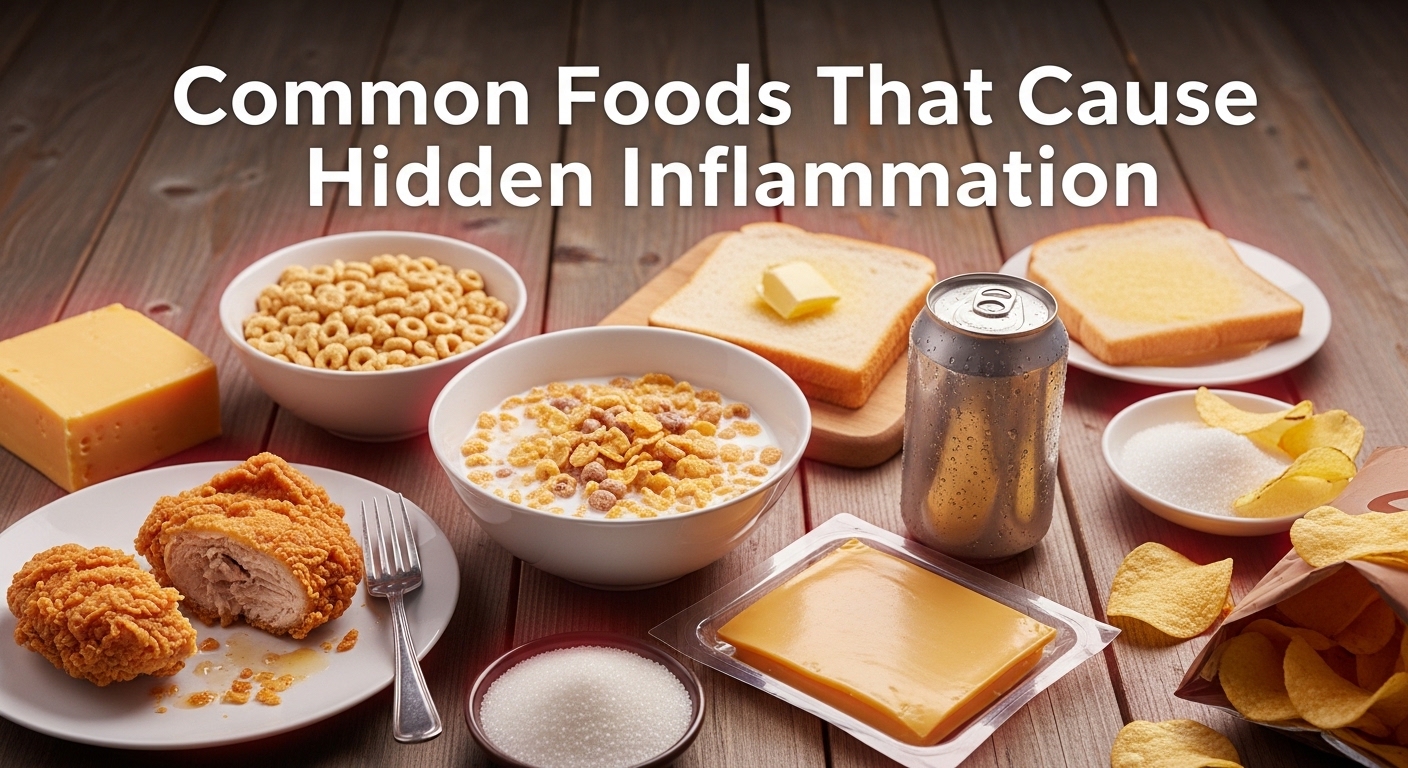
I used to think I was eating healthy. I would grab a “whole grain” muffin for breakfast, pack a sandwich with processed turkey for lunch, and cook pasta with jarred sauce for dinner. Yet I felt exhausted all the time. My joints ached. My skin broke out constantly. It took me months to realize the truth: hidden inflammation was sabotaging my health from the inside out.
Hidden inflammation is one of the most overlooked health issues of our time. Unlike the redness and swelling you see after a cut, this type of inflammation lurks silently in your body for months or even years. Foods that cause inflammation can trigger this response without you ever realizing it.
In this guide, I will show you exactly which foods are causing hidden inflammation in your body. You will learn how to spot the warning signs, identify sneaky inflammatory ingredients hiding in your pantry, and make simple swaps that can transform how you feel. Whether you are dealing with unexplained fatigue, joint pain, or just want to protect your long-term health, this information will change how you look at food.
Table of Contents
- What Is Hidden Inflammation and Why Should You Care?
- 5 Signs Your Body Has Hidden Inflammation
- Foods That Cause Inflammation: The Complete List
- 1. Refined Sugar and High-Fructose Corn Syrup
- 2. Refined Carbohydrates and White Flour Products
- 3. Processed and Red Meats
- 4. Trans Fats and Hydrogenated Oils
- 5. Omega-6 Rich Vegetable Oils
- 6. Artificial Sweeteners
- 7. Alcohol
- 8. Fried Foods
- 9. Processed Snack Foods
- 10. Soda and Sugary Beverages
- 11. Margarine and Shortening
- 12. Food Additives (MSG, Artificial Colors, and Preservatives)
- Hidden Sources of Inflammatory Ingredients
- Common Myths About Inflammatory Foods
- Simple Food Swaps to Reduce Inflammation
- How to Read Labels for Hidden Inflammatory Ingredients
- Frequently Asked Questions
- Conclusion: Taking Control of Hidden Inflammation
What Is Hidden Inflammation and Why Should You Care?
Hidden inflammation is chronic, low-grade inflammation that persists in your body over long periods. Unlike acute inflammation, which helps heal injuries and fight infections, chronic inflammation slowly damages tissues and organs without obvious symptoms.
Your immune system releases inflammatory messengers called cytokines when it detects threats. These cytokines are helpful during short-term injuries, but when they circulate constantly due to dietary triggers, they create systemic inflammation throughout your body.
The connection between diet and inflammation is well-established in scientific research. Studies published in the Journal of the American College of Cardiology show that pro-inflammatory eating patterns significantly increase the risk of cardiovascular disease. Other research links chronic inflammation to type 2 diabetes, obesity, autoimmune conditions, and certain cancers.
Here is the frustrating part: you might be eating foods that cause inflammation every single day without knowing it. Many so-called “healthy” options contain hidden inflammatory ingredients. That energy bar in your gym bag. The salad dressing at your favorite restaurant. Even your morning coffee creamer could be feeding the fire.
5 Signs Your Body Has Hidden Inflammation
Hidden inflammation often masquerades as other health issues. I spent years blaming stress for my symptoms before connecting them to my diet. Here are five warning signs that inflammatory foods might be affecting you:
1. Unexplained Fatigue
You sleep eight hours but wake up exhausted. Your energy crashes every afternoon. Chronic inflammation taxes your immune system, leaving you depleted even after rest.
2. Joint Pain and Stiffness
Morning stiffness that takes an hour to shake off. Aching knees after sitting too long. These symptoms often appear before any diagnosable joint condition and respond dramatically to dietary changes.
3. Digestive Issues
Bloating, gas, constipation, or loose stools that come and go without clear cause. Inflammation in the gut creates a vicious cycle where damaged tissues trigger more inflammation.
4. Skin Problems
Acne, eczema, psoriasis, or rashes that flare unpredictably. Your skin is often the first place inflammation shows up when your internal systems are struggling.
5. Brain Fog
Difficulty concentrating, memory lapses, or feeling mentally sluggish. Inflammatory cytokines can cross the blood-brain barrier, affecting cognitive function.
If you recognize two or more of these symptoms, your diet likely contains inflammatory triggers worth investigating.
Foods That Cause Inflammation: The Complete List
Understanding which foods cause inflammation gives you the power to make informed choices. Below are the twelve most common culprits hiding in modern diets, ranked by their inflammatory potential and prevalence.
1. Refined Sugar and High-Fructose Corn Syrup
Refined sugar is arguably the most inflammatory substance in the standard diet. When you consume sugar, your blood glucose spikes, triggering the release of inflammatory cytokines. High-fructose corn syrup, found in sodas and processed foods, is even worse because it overwhelms your liver and promotes fat accumulation.
Research from the University of California shows that just one sugary soda per day increases inflammatory markers by over 25 percent. Sugar also promotes the formation of advanced glycation end products, compounds that damage tissues and accelerate aging.
The sneaky part: sugar hides under dozens of names. Look for cane sugar, brown rice syrup, maltose, dextrose, evaporated cane juice, and fruit juice concentrate on labels.
2. Refined Carbohydrates and White Flour Products
White bread, pastries, crackers, and pasta made from refined flour act similarly to sugar in your body. The refining process strips away fiber and nutrients, leaving rapidly digestible starch that spikes blood glucose.
These refined carbohydrates create a pro-inflammatory environment by increasing oxidative stress and elevating insulin levels. Over time, this contributes to insulin resistance and adipose tissue inflammation.
Forum users frequently report that cutting white flour products produced dramatic improvements in energy and joint pain within weeks. One person described feeling “ten years younger” after eliminating refined grains.
3. Processed and Red Meats
Bacon, sausage, hot dogs, deli meats, and even excessive fresh red meat consumption promote inflammation through multiple pathways. These meats contain high levels of saturated fats, advanced glycation end products from cooking, and preservatives like nitrates.
The World Health Organization classifies processed meats as carcinogenic, largely due to their inflammatory effects. Studies show that regular consumption increases inflammatory markers like C-reactive protein.
If you eat meat, choose grass-fed options when possible and limit processed varieties entirely. The curing and preservation processes create compounds your body recognizes as inflammatory triggers.
4. Trans Fats and Hydrogenated Oils
Trans fats are the worst fats for inflammation. These artificially created fats raise LDL cholesterol, lower HDL cholesterol, and trigger widespread inflammatory responses. The good news: many countries have banned artificial trans fats, but they still appear in some packaged baked goods and margarine.
Hydrogenated oils are created by forcing hydrogen into liquid vegetable oils, making them solid at room temperature. This process creates unnatural molecular structures your body cannot process properly.
Always check labels for “partially hydrogenated” oils, even if the product claims zero trans fat. Loopholes in labeling laws allow small amounts to go unreported.
5. Omega-6 Rich Vegetable Oils
Not all vegetable oils are created equal. Oils high in omega-6 fatty acids like corn, soybean, sunflower, and cottonseed oil promote inflammation when consumed in excess. The ideal ratio of omega-6 to omega-3 fatty acids is around 4:1, but the typical diet contains ratios of 15:1 or higher.
These oils are cheap and stable, making them favorites for processed food manufacturers. They appear in chips, crackers, salad dressings, and restaurant fried foods.
Switch to oils with better omega-6 to omega-3 ratios like extra virgin olive oil, avocado oil, or flaxseed oil.
6. Artificial Sweeteners
Many people switch to diet products to avoid sugar, but artificial sweeteners come with their own inflammatory concerns. Aspartame, sucralose, and saccharin can alter gut bacteria in ways that promote inflammation.
Research from the Weizmann Institute found that artificial sweeteners change gut microbiome composition, leading to glucose intolerance and inflammatory responses. Some people also experience headaches and joint pain specifically triggered by these additives.
If you need sweetness, small amounts of raw honey or pure maple syrup are less inflammatory options.
7. Alcohol
Regular alcohol consumption triggers inflammation in multiple organ systems. Your liver processes alcohol into acetaldehyde, a toxic compound that damages cells and triggers immune responses. Alcohol also increases intestinal permeability, allowing inflammatory compounds to enter your bloodstream.
Even moderate drinking can elevate inflammatory markers. Studies show that people who eliminate alcohol often see improvements in skin conditions, digestive health, and energy levels within thirty days.
If you choose to drink, limit consumption and avoid sugary mixers that compound the inflammatory effects.
8. Fried Foods
French fries, fried chicken, and tempura are inflammation bombs. The high temperatures used in frying create advanced glycation end products and oxidize the oils used for cooking. These damaged fats trigger strong inflammatory responses when consumed.
Restaurant frying oils are often reused repeatedly, concentrating harmful compounds with each batch. One study found that regularly eating fried foods increases the risk of heart disease by over 20 percent.
If you crave crispy textures, try baking or air frying instead. These methods create satisfying results without the inflammatory compounds.
9. Processed Snack Foods
Chips, crackers, and packaged snacks combine multiple inflammatory ingredients. They typically contain refined grains, omega-6 rich oils, added sugars, and artificial additives. These foods are designed for shelf stability, not human health.
The combination of refined carbohydrates and damaged fats creates a perfect storm for blood sugar spikes and inflammatory responses. Many people find these foods genuinely addictive, making them hard to eliminate.
Swap processed snacks for whole foods like nuts, fresh fruit, or vegetables with hummus.
10. Soda and Sugary Beverages
Sugar-sweetened beverages are uniquely harmful because they deliver massive amounts of sugar without any fiber to slow absorption. A single can of soda contains more sugar than most people should consume in an entire day.
Research consistently links soda consumption to increased inflammatory markers, fatty liver disease, and metabolic syndrome. The fructose in these drinks is particularly damaging to liver health.
Sparkling water with lemon, herbal teas, or green tea are refreshing alternatives without the inflammatory load.
11. Margarine and Shortening
These butter substitutes were marketed as heart-healthy alternatives but often contain the very fats that promote inflammation. Traditional margarine relies on hydrogenated oils, while even newer formulations contain highly processed vegetable oils.
Shortening used in baking is similarly problematic. These products create flaky pastries and smooth textures but at a cost to your inflammatory status.
Small amounts of grass-fed butter, ghee, or coconut oil are better choices for cooking and spreading.
12. Food Additives (MSG, Artificial Colors, and Preservatives)
Manufacturers add hundreds of chemicals to processed foods to improve taste, appearance, and shelf life. Monosodium glutamate (MSG), artificial colors like Red 40 and Yellow 5, and preservatives like BHA and BHT can trigger inflammatory responses in sensitive individuals.
These additives are particularly concerning because they are not food. Your body treats many of them as foreign substances, mounting immune responses that create low-grade inflammation. Some people experience immediate reactions like headaches or digestive distress, while others suffer silent inflammation that builds over time.
Reading ingredient lists and choosing foods with simple, recognizable ingredients is your best defense against these hidden inflammatory triggers.
Hidden Sources of Inflammatory Ingredients
The foods listed above are obvious targets, but inflammatory ingredients hide in places you might not suspect. Learning to spot these hidden sources is essential for controlling systemic inflammation.
Condiments and Sauces
Ketchup, barbecue sauce, and sweet chili sauces often contain more sugar per serving than dessert items. Soy sauce and teriyaki can pack surprising amounts of sodium and MSG. Even mustard and mayonnaise may contain inflammatory oils and preservatives.
Salad Dressings
Bottled dressings are typically made with cheap vegetable oils, added sugars, and artificial ingredients. A seemingly healthy salad becomes an inflammatory meal when drowned in these dressings.
Packaged Healthy Snacks
Granola bars, energy balls, and gluten-free snacks often rely on refined starches, added sugars, and vegetable oils to achieve their texture and taste. The health halo on the packaging does not reflect the inflammatory reality inside.
Restaurant Meals
Even upscale restaurants rely heavily on butter, salt, and cooking oils to create flavor. Fried foods, creamy sauces, and bread baskets add inflammatory compounds to meals that might otherwise be healthy.
Common Myths About Inflammatory Foods
Misinformation about inflammatory foods abounds. Let us clear up some common misconceptions that confuse many people trying to reduce inflammation.
Myth: Dairy Is Always Inflammatory
The truth is more nuanced. Some people react strongly to casein and lactose, experiencing clear inflammatory symptoms. Others tolerate dairy well, especially fermented options like yogurt and kefir that contain beneficial probiotics. Individual testing is the only way to know your personal response.
Myth: Gluten Causes Inflammation in Everyone
Unless you have celiac disease or wheat allergy, gluten may not be your enemy. However, many gluten-containing products are made with refined flour and added sugars, which definitely cause inflammation. The problem is often the processing, not the gluten itself.
Myth: Nightshade Vegetables Are Inflammatory
Tomatoes, peppers, eggplant, and potatoes contain alkaloids that some people blame for inflammation. However, research does not support this claim for most individuals. These vegetables actually contain antioxidants that fight inflammation. Only a small subset of people with specific sensitivities need to avoid them.
Myth: One Diet Works for Everyone
Inflammatory responses are highly individual. What triggers inflammation in one person may be perfectly fine for another. Personalized approaches based on elimination and reintroduction are more effective than following generic rules.
Simple Food Swaps to Reduce Inflammation
Completely overhauling your diet can feel overwhelming. These simple swaps let you reduce inflammation gradually without feeling deprived.
Instead of white bread or pasta, try quinoa, brown rice, or whole grain alternatives. These complex carbohydrates release energy slowly and contain fiber that feeds beneficial gut bacteria.
Instead of vegetable oils for cooking, use extra virgin olive oil or avocado oil. These contain better fatty acid profiles and resist oxidation at cooking temperatures.
Instead of processed deli meats, choose wild-caught fish, pasture-raised poultry, or plant-based proteins like lentils and beans. These options provide protein without the inflammatory additives.
Instead of soda, drink green tea, herbal teas, or water infused with fresh fruit. Green tea contains EGCG, a powerful anti-inflammatory compound.
Instead of refined sugar, use small amounts of raw honey, pure maple syrup, or fresh fruit. These natural sweeteners contain trace nutrients and affect blood sugar less dramatically.
Instead of fried foods, choose baked, grilled, steamed, or air-fried options. These cooking methods preserve nutrients without creating inflammatory compounds.
Instead of margarine, use grass-fed butter, ghee, or coconut oil in moderation. These traditional fats are less processed and better tolerated by most people.
Instead of store-bought salad dressings, make simple vinaigrettes with olive oil and vinegar. Add herbs, mustard, or lemon juice for variety.
How to Read Labels for Hidden Inflammatory Ingredients
Becoming a label detective helps you spot inflammatory ingredients manufacturers try to hide. Here is what to look for:
Sugar Aliases
Sugar hides under at least 61 different names on ingredient lists. Common aliases include maltose, dextrose, sucrose, brown rice syrup, evaporated cane juice, fruit juice concentrate, and anything ending in “-ose.”
Hydrogenated Oils
Watch for partially hydrogenated oils, fractionated oils, and interesterified fats. These indicate processed fats with inflammatory potential.
Additive Codes
Numbers like E621 (MSG), E102 (Yellow 5), and E129 (Red 40) indicate artificial additives that may trigger inflammation in sensitive individuals.
Serving Size Traps
Manufacturers often list unrealistically small serving sizes to make sugar and fat content appear lower. Check how many servings you actually consume.
Focus on ingredient lists more than nutrition panels. Shorter lists with recognizable whole foods almost always indicate less inflammatory products.
Frequently Asked Questions
How to flush inflammation out of your body?
Focus on drinking plenty of water, eating anti-inflammatory foods like leafy greens and fatty fish, getting adequate sleep, managing stress through meditation or yoga, exercising regularly, and eliminating processed foods and added sugars. Some people find benefit from intermittent fasting, which gives the body time to repair and reduce inflammatory markers.
What are 5 signs your body has inflammation?
The five most common signs are unexplained fatigue that persists despite adequate sleep, joint pain and morning stiffness, digestive issues like bloating or irregular bowel movements, skin problems including acne or rashes, and brain fog with difficulty concentrating or memory issues.
What are the 7 most inflammatory foods?
The seven most inflammatory foods are refined sugar and high-fructose corn syrup, refined carbohydrates and white flour products, processed and red meats, trans fats and hydrogenated oils, omega-6 rich vegetable oils, fried foods, and artificial sweeteners. These trigger cytokine release and promote chronic inflammation.
What is the number one food that kills inflammation?
Fatty fish like salmon, sardines, and mackerel top the list for fighting inflammation due to their high omega-3 fatty acid content. These omega-3s directly counteract inflammatory pathways in the body. Other powerful options include leafy greens, berries, turmeric, and green tea.
What to drink first thing in the morning to reduce inflammation?
Warm lemon water is a popular choice for morning hydration with anti-inflammatory benefits. Green tea provides EGCG, a potent anti-inflammatory compound. Some people benefit from turmeric golden milk or ginger tea. Avoid sugary juices and coffee with artificial creamers, which can trigger inflammation.
How to know if food is causing inflammation?
Try an elimination diet by removing suspected inflammatory foods for three to four weeks, then reintroduce them one at a time while tracking symptoms. Keep a food and symptom journal. Common signs of food-triggered inflammation include digestive upset, headaches, joint pain, skin reactions, and fatigue within 24 to 72 hours of eating the problematic food.
Conclusion: Taking Control of Hidden Inflammation
Foods that cause inflammation are everywhere in the modern diet, but knowledge gives you power. By understanding which ingredients trigger inflammatory responses in your body, you can make informed choices that protect your health for years to come.
Start by eliminating the biggest offenders: refined sugar, processed foods, and damaged vegetable oils. Pay attention to how your body responds. Many people notice improvements in energy, joint comfort, and mental clarity within just a few weeks of making these changes.
Remember that inflammation is individual. What triggers symptoms for one person may be fine for another. Use the elimination and reintroduction approach to discover your personal inflammatory foods. Keep a journal, listen to your body, and adjust accordingly.
The goal is not perfection but progress. Every whole food choice you make is a step away from chronic inflammation and toward vibrant health. Start with one or two swaps this week, and build from there. Your body will thank you.