
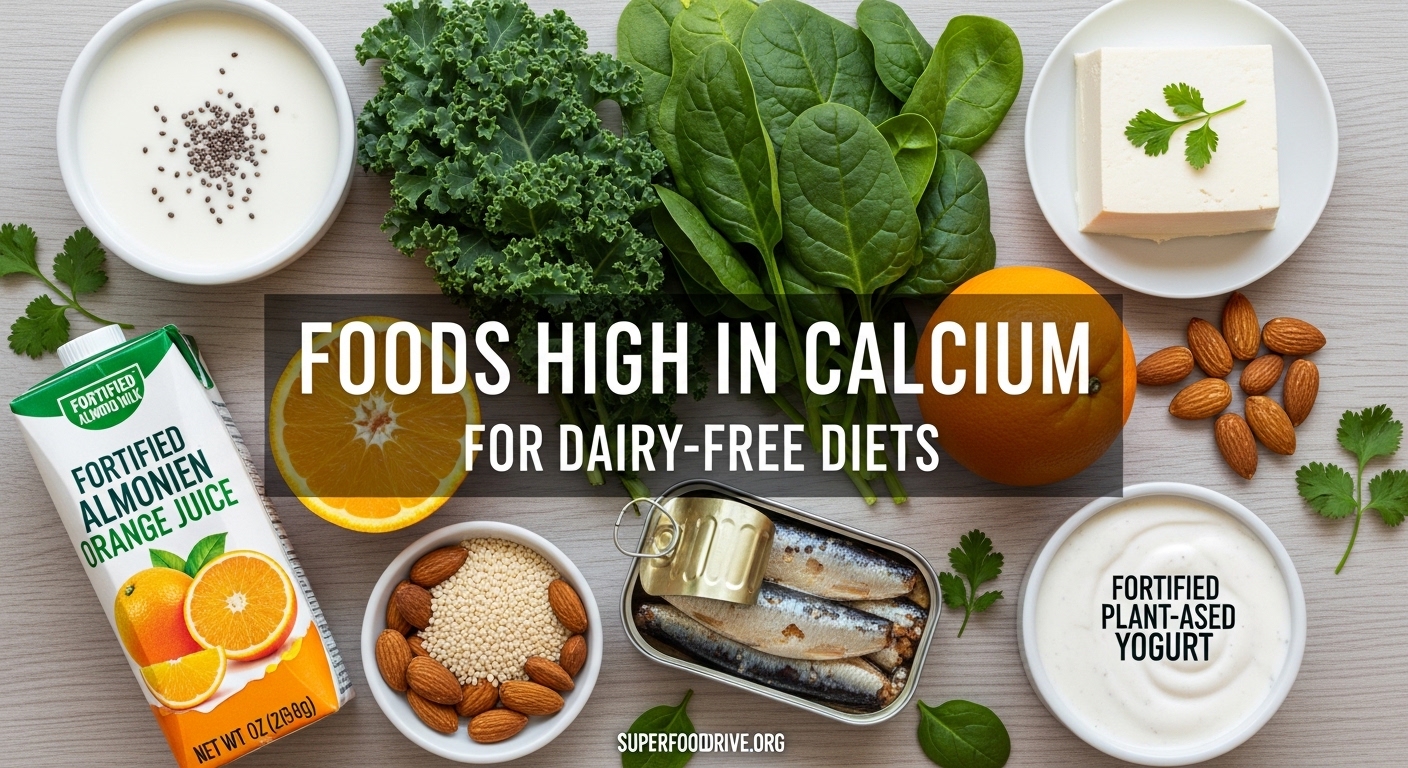
Getting enough calcium without dairy is absolutely achievable when you know which foods to prioritize. Many people worry about meeting their calcium needs after going dairy-free, but nature provides plenty of non-dairy calcium sources that can match or even exceed what you would get from milk. Whether you are lactose intolerant, following a vegan lifestyle, or simply avoiding dairy for health reasons, this guide gives you the exact milligram amounts and practical strategies to maintain strong bones.
Our team has researched medical sources and dietary guidelines to compile the most comprehensive list of calcium-rich foods for dairy-free diets. You will find specific serving sizes, calcium content in milligrams, and bioavailability information to help you make informed choices. By the end of this guide, you will have a clear meal plan showing exactly how to reach 1000mg of calcium in a single day without touching dairy.
Table of Contents
Daily Calcium Requirements by Age
Before diving into food sources, you need to know exactly how much calcium your body requires. The recommended daily intake varies significantly depending on your age, gender, and life stage. Adults aged 19 to 50 typically need 1000mg per day, while women over 50 and men over 70 need 1200mg to maintain bone density.
Children and teenagers have the highest needs relative to their body size because they are building peak bone mass. Pregnant and breastfeeding women also require additional calcium to support their own bone health while nourishing their baby. Athletes and people with certain medical conditions may need to consult healthcare providers for personalized recommendations.
| Age Group | Daily Calcium Requirement (mg) | Special Notes |
|---|---|---|
| Infants 0-6 months | 200 mg | From breast milk or formula |
| Infants 7-12 months | 260 mg | Introduction of solid foods |
| Children 1-3 years | 700 mg | Rapid growth phase |
| Children 4-8 years | 1000 mg | Building bone density |
| Children 9-18 years | 1300 mg | Peak bone mass development |
| Adults 19-50 years | 1000 mg | Maintenance phase |
| Women 51-70 years | 1200 mg | Menopause increases needs |
| Men 51-70 years | 1000 mg | Standard adult requirement |
| Adults 71+ years | 1200 mg | Prevention of bone loss |
| Pregnant/Breastfeeding | 1000-1300 mg | Varies by age group |
Vitamin D plays a critical role in calcium absorption, so your body needs adequate vitamin D levels to utilize the calcium you consume. Without sufficient vitamin D, your body cannot absorb more than 10-15% of dietary calcium. Consider getting your vitamin D levels tested and supplement if necessary, especially during winter months or if you have limited sun exposure.
Top 15 Foods High in Calcium for Dairy-Free Diets
The following foods provide substantial amounts of calcium without any dairy content. Each entry includes the exact milligram amount per standard serving, giving you the precise data needed to plan your daily intake. I have organized these by food category to make meal planning easier.
1. Chia Seeds (534 mg per 3 tablespoons)
Chia seeds top the list with an impressive 534mg of calcium in just three tablespoons. These tiny seeds also provide boron, a mineral that helps your body metabolize calcium, magnesium, and phosphorus for healthy bone growth. You can sprinkle chia seeds on oatmeal, blend them into smoothies, or make chia pudding for a calcium-rich breakfast.
2. Canned Sardines with Bones (325 mg per 3.75 oz can)
Canned sardines containing edible bones deliver 325mg of calcium per can, plus they are one of the most bioavailable sources of calcium available. The small, soft bones are completely edible and provide concentrated calcium in a form your body absorbs efficiently. Sardines also provide vitamin D and omega-3 fatty acids, making them a triple threat for bone health.
3. Fortified Soy Milk (300 mg per cup)
Fortified soy milk matches dairy milk calcium content cup for cup, providing approximately 300mg per 8-ounce serving. Look for brands fortified with calcium carbonate, which offers better absorption than other forms. Soy milk also provides protein comparable to dairy milk, making it an excellent complete replacement.
4. Collard Greens (268 mg per cup cooked)
Cooked collard greens pack 268mg of calcium per cup, and unlike some leafy greens, they have low oxalate content. This means your body can absorb the calcium more effectively than from high-oxalate greens like spinach. Sauté collards with garlic and olive oil, or add them to soups and stews.
5. Tofu (200-400 mg per half cup)
Calcium-set tofu provides between 200-400mg per half-cup serving, depending on the brand and preparation method. Check the label for calcium sulfate in the ingredients list, which indicates the tofu was set with calcium. This versatile protein source absorbs flavors well and works in stir-fries, soups, or scrambles.
6. Almonds (191 mg per third cup)
A third cup of almonds delivers 191mg of calcium along with healthy fats, fiber, and magnesium. Almonds make an excellent portable snack and can be blended into almond butter for spreading on toast. Keep in mind that almonds are calorie-dense, so portion control matters if you are watching your weight.
7. Tahini (128 mg per 2 tablespoons)
This sesame seed paste provides 128mg of calcium per two-tablespoon serving and adds a rich, nutty flavor to dishes. Tahini is the foundation of hummus and makes excellent salad dressings when mixed with lemon and garlic. The calcium in tahini is highly bioavailable because sesame seeds contain lower oxalate levels than many other seeds.
8. Bok Choy (160 mg per cup cooked)
This Chinese cabbage variety offers 160mg of calcium per cooked cup with excellent bioavailability due to its low oxalate content. Bok choy cooks quickly and works well in stir-fries, soups, or as a simple steamed side dish. It is also rich in vitamin K, which helps direct calcium to your bones rather than your arteries.
9. White Beans (161 mg per cup cooked)
Cooked white beans provide 161mg of calcium per cup along with significant fiber and protein. Beans contain some phytates that can reduce calcium absorption, but soaking and cooking them properly minimizes this effect. White beans work beautifully in soups, salads, or mashed into dips.
10. Kale (177 mg per cup cooked)
Cooked kale delivers 177mg of calcium per cup and has become a superstar among leafy greens for good reason. Unlike spinach, kale has moderate oxalate levels, meaning your body can absorb a reasonable percentage of its calcium content. Massaging raw kale with olive oil softens it for salads, or quickly sauté it as a side dish.
11. Dried Figs (162 mg per half cup)
Dried figs provide 162mg of calcium per half-cup serving and satisfy sweet cravings while delivering bone-building minerals. They also contain potassium and magnesium, which work synergistically with calcium for bone health. Enjoy figs as a snack, chop them into oatmeal, or add them to salads for natural sweetness.
12. Canned Salmon with Bones (241 mg per half can)
Similar to sardines, canned salmon containing edible bones provides 241mg of calcium per half-can serving. The soft bones mash easily and are barely noticeable when mixed into salmon patties or salads. This is an excellent option for those who find sardines too strong in flavor.
13. Sesame Seeds (88 mg per tablespoon)
A single tablespoon of sesame seeds provides 88mg of calcium and can be easily sprinkled over salads, stir-fries, or roasted vegetables. Toasting sesame seeds enhances their flavor and makes them even more delicious. While tahini provides more concentrated calcium, whole seeds offer additional fiber.
14. Broccoli (62 mg per cup cooked)
While not as calcium-dense as leafy greens, cooked broccoli still contributes 62mg per cup along with vitamin C, which aids collagen formation for bone structure. Broccoli has very low oxalate content, making its calcium highly absorbable. Steam or roast broccoli lightly to preserve nutrients.
15. Fortified Orange Juice (300 mg per cup)
Many brands of orange juice are fortified with calcium carbonate, providing approximately 300mg per cup. This offers a convenient way to boost calcium intake, especially for those who struggle to eat enough whole foods. Check labels to confirm fortification and choose brands without added sugars.
| Food | Serving Size | Calcium (mg) | % Daily Value |
|---|---|---|---|
| Chia seeds | 3 tablespoons | 534 | 41% |
| Sardines (with bones) | 3.75 oz can | 325 | 25% |
| Fortified soy milk | 1 cup | 300 | 23% |
| Fortified orange juice | 1 cup | 300 | 23% |
| Collard greens (cooked) | 1 cup | 268 | 21% |
| Canned salmon (with bones) | 1/2 can | 241 | 19% |
| Tofu (calcium-set) | 1/2 cup | 200-400 | 15-31% |
| Almonds | 1/3 cup | 191 | 15% |
| Kale (cooked) | 1 cup | 177 | 14% |
| Bok choy (cooked) | 1 cup | 160 | 12% |
| Dried figs | 1/2 cup | 162 | 12% |
| White beans (cooked) | 1 cup | 161 | 12% |
| Tahini | 2 tablespoons | 128 | 10% |
| Sesame seeds | 1 tablespoon | 88 | 7% |
| Broccoli (cooked) | 1 cup | 62 | 5% |
Maximizing Calcium Absorption from Plant Sources
Not all calcium is created equal when it comes to how well your body can use it. Understanding bioavailability and absorption factors helps you make smarter choices about which foods to prioritize and how to prepare them for maximum benefit.
Bioavailability: Plant vs Dairy Calcium
Research shows that calcium absorption from plant sources can actually exceed dairy calcium in some cases. While dairy calcium has an absorption rate of about 32%, certain low-oxalate leafy greens like bok choy and kale have absorption rates exceeding 50%. This means you may need less total calcium from these plant sources to achieve the same bone benefits.
However, high-oxalate vegetables like spinach and beet greens have much lower calcium bioavailability despite containing high total calcium amounts. Your body may only absorb 5% of the calcium in spinach because oxalates bind to calcium and prevent absorption. Focus on low-oxalate greens for your primary calcium sources.
Understanding Calcium Absorption Inhibitors
Several compounds in plant foods can interfere with calcium absorption. Oxalates, found in spinach, Swiss chard, beet greens, and rhubarb, bind with calcium and form insoluble crystals. Phytates, present in whole grains, legumes, nuts, and seeds, can also reduce calcium absorption, though to a lesser extent than oxalates.
The good news is that proper food preparation significantly reduces these inhibitors. Soaking beans and grains overnight before cooking reduces phytate content by up to 50%. Cooking vegetables reduces oxalate levels compared to eating them raw. Fermentation also breaks down phytates, which is why fermented foods like tempeh offer better mineral availability.
Foods That Enhance Calcium Absorption
Certain nutrients and food combinations can boost how much calcium your body absorbs. Vitamin D is the most critical, increasing calcium absorption from about 10-15% to 30-40%. Consuming calcium-rich foods with sources of vitamin D, such as fatty fish or fortified plant milks, maximizes uptake.
Vitamin K2 helps direct calcium to your bones rather than allowing it to deposit in arteries or soft tissues. Fermented foods like natto provide K2, as do certain cheeses for those not completely dairy-free. Magnesium, found in nuts, seeds, and dark chocolate, also supports calcium metabolism and bone health.
Preparation Tips for Maximum Calcium
How you prepare calcium-rich foods affects how much benefit you receive. Cook collard greens, kale, and bok choy rather than eating them raw to reduce oxalate content and increase available calcium. Lightly steaming preserves more nutrients than boiling, which can leach minerals into cooking water.
Soak beans and lentils for at least 8 hours before cooking to reduce phytates. Add a splash of lemon juice or vinegar to bean dishes, as the acidity helps increase mineral availability. When making smoothies with calcium-rich greens, blend thoroughly to break down cell walls and release more nutrients.
Sample Dairy-Free Meal Plan: 1000mg Calcium in One Day
Putting theory into practice, here is a complete one-day meal plan that delivers over 1000mg of calcium without any dairy products. Each meal shows the running calcium total so you can see exactly how the numbers add up throughout the day.
Breakfast: Chia Seed Pudding (534 mg)
Mix 3 tablespoons of chia seeds with 1 cup of fortified soy milk and let sit overnight. Top with half a cup of sliced almonds for an additional crunch and 96mg more calcium. Running total: 630mg.
Mid-Morning Snack: Dried Figs (162 mg)
Enjoy half a cup of dried figs as a sweet mid-morning snack. They provide natural energy along with 162mg of calcium. Running total: 792mg.
Lunch: Kale and White Bean Soup (338 mg)
Prepare a hearty soup with 1 cup of cooked kale (177mg) and 1 cup of cooked white beans (161mg). Add vegetables and seasonings to taste. Running total: 1130mg.
Afternoon Snack: Tahini Dressing with Vegetables (128 mg)
Blend 2 tablespoons of tahini with lemon juice, garlic, and water to make a creamy dressing. Dip raw vegetables like carrots, cucumbers, and bell peppers. Running total: 1258mg.
Dinner: Bok Choy Stir-Fry with Tofu and Sesame (448 mg)
Stir-fry 1 cup of bok choy (160mg) with half a cup of calcium-set tofu (200mg). Sprinkle 1 tablespoon of sesame seeds over the top (88mg). Serve with brown rice. Running total: 1706mg.
Evening Snack: Fortified Orange Juice (300 mg)
Finish your day with a cup of calcium-fortified orange juice for an additional 300mg. Running total: 2006mg.
| Meal | Foods | Calcium (mg) | Running Total |
|---|---|---|---|
| Breakfast | Chia pudding (3 tbsp chia + 1 cup fortified soy milk) + 1/3 cup almonds | 630 | 630 |
| Mid-Morning | 1/2 cup dried figs | 162 | 792 |
| Lunch | 1 cup kale + 1 cup white bean soup | 338 | 1130 |
| Afternoon | 2 tbsp tahini with vegetables | 128 | 1258 |
| Dinner | 1 cup bok choy + 1/2 cup tofu + 1 tbsp sesame seeds | 448 | 1706 |
| Evening | 1 cup fortified orange juice | 300 | 2006 |
This meal plan demonstrates that exceeding the 1000mg daily target without dairy is not only possible but can be done deliciously. You actually reach over 2000mg while enjoying varied, satisfying meals throughout the day. Feel free to swap similar calcium amounts between meals based on your preferences and schedule.
Frequently Asked Questions
How do I get calcium if I’m dairy free?
You can get sufficient calcium on a dairy-free diet by focusing on fortified plant milks, leafy green vegetables like collard greens and kale, canned fish with bones such as sardines and salmon, nuts and seeds including almonds and chia seeds, and calcium-set tofu. The key is combining multiple sources throughout the day and choosing low-oxalate vegetables for better absorption.
What dairy free foods are high in calcium?
The highest calcium dairy-free foods include chia seeds (534mg per 3 tablespoons), fortified soy milk (300mg per cup), canned sardines with bones (325mg per can), collard greens (268mg per cup cooked), calcium-set tofu (200-400mg per half cup), almonds (191mg per third cup), tahini (128mg per 2 tablespoons), and fortified orange juice (300mg per cup).
How can I get 1000 mg of calcium a day without dairy?
Reach 1000mg of daily calcium by combining several high-calcium foods: start with chia seed pudding made with fortified soy milk (534mg), add almonds as a snack (191mg), include cooked kale at lunch (177mg), enjoy tahini dressing (128mg), and finish with a cup of fortified orange juice (300mg). This combination provides 1330mg without any dairy products.
Which food is the king of calcium?
Chia seeds are the king of calcium among dairy-free foods, providing 534mg in just three tablespoons. They also contain boron, which helps your body metabolize calcium effectively. For animal-based options, canned sardines with bones provide 325mg per can with excellent bioavailability, making them a close contender for the title.
Is plant calcium as absorbable as dairy calcium?
Plant calcium can be equally or more absorbable than dairy calcium depending on the source. Low-oxalate greens like bok choy and kale have absorption rates exceeding 50%, compared to dairy’s 32%. However, high-oxalate plants like spinach have much lower absorption. Focus on low-oxalate vegetables and properly prepared legumes for optimal calcium absorption from plant sources.
Conclusion
Meeting your calcium needs without dairy is not only possible but can be achieved through a delicious variety of whole foods. The fifteen foods high in calcium for dairy-free diets listed in this guide provide everything you need to build and maintain strong bones throughout your life.
Remember to prioritize low-oxalate greens like collard greens, bok choy, and kale for the best calcium absorption. Combine these with fortified plant milks, nuts, seeds, and canned fish with bones to create meals that easily exceed the 1000mg daily target. With proper planning and the meal plan provided above, you can enjoy a calcium-rich diet that supports optimal bone health without ever touching dairy.