
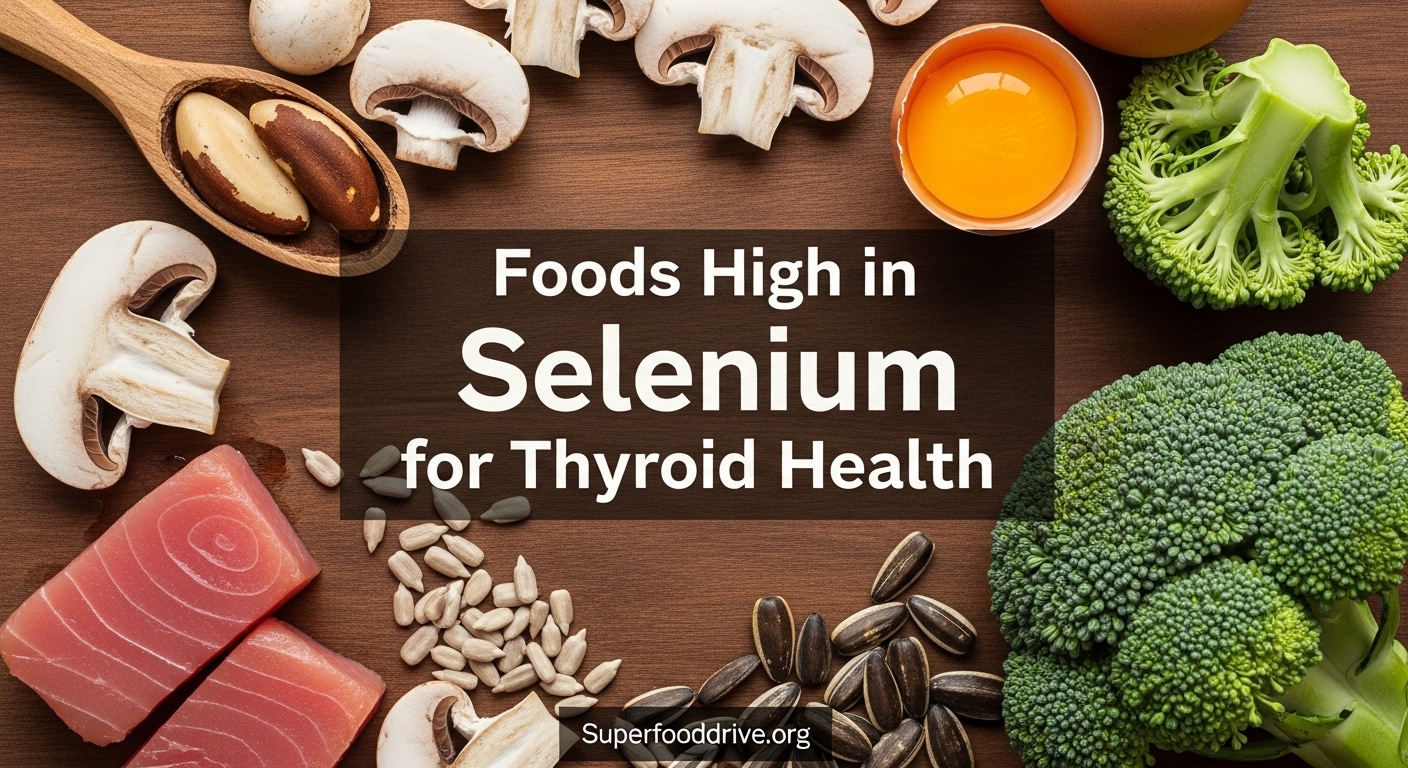
Selenium is an essential trace mineral that your thyroid gland needs to function properly. Your thyroid contains more selenium per gram of tissue than any other organ in your body, making this mineral critical for hormone production and overall metabolic health.
If you have hypothyroidism, Hashimoto’s thyroiditis, or simply want to support your thyroid naturally, understanding which foods are high in selenium can make a real difference. The good news is that getting enough selenium through your diet is straightforward once you know which foods to prioritize.
This guide walks through the science of how selenium supports thyroid health, exactly how much you need daily, and the top selenium-rich foods you should add to your plate. Practical meal ideas and important warnings about selenium toxicity are also included.
Table of Contents
How Selenium Supports Thyroid Function
Selenium works in your thyroid through selenoproteins, which are specialized proteins that contain selenium as a key component. These proteins perform several critical functions that keep your thyroid operating smoothly.
The most important selenoproteins for thyroid health include thyroid peroxidase (TPO), which helps produce thyroid hormones, and various deiodinase enzymes that convert the inactive T4 hormone into active T3. Without adequate selenium, this conversion process slows down, potentially leading to hypothyroid symptoms even if your gland is producing enough hormones.
Selenium also acts as a powerful antioxidant within your thyroid gland. Your thyroid is highly susceptible to oxidative stress because it constantly produces hydrogen peroxide during hormone synthesis. Glutathione peroxidase, another selenoprotein, neutralizes this oxidative stress and protects your thyroid cells from damage.
For people with autoimmune thyroid conditions like Hashimoto’s thyroiditis, selenium may help reduce TPO antibody levels. Research published in the National Institutes of Health database suggests that selenium supplementation can lower these antibodies, potentially slowing disease progression and reducing inflammation in the thyroid gland.
How Selenium and Iodine Work Together
Your thyroid needs both selenium and iodine to function, and these minerals work synergistically. Iodine is the building block of thyroid hormones, while selenium helps produce those hormones and convert them into their active forms.
Taking iodine without adequate selenium can actually cause problems. When you increase iodine intake without enough selenium, your thyroid may struggle to handle the additional iodine efficiently, potentially triggering or worsening autoimmune responses in susceptible individuals.
The ideal approach is to ensure adequate intake of both minerals through balanced nutrition. Foods like seafood often contain both selenium and iodine naturally, making them excellent choices for thyroid support. Brazil nuts, while selenium powerhouses, do not contain significant iodine, so pairing them with iodine-rich foods creates a more complete thyroid-nourishing combination.
Daily Selenium Requirements by Age and Life Stage
Most adults need 55 micrograms (mcg) of selenium per day to maintain optimal thyroid function and overall health. This requirement increases during pregnancy to 60 mcg daily and rises to 70 mcg while breastfeeding to support both mother and baby.
Children need less selenium based on their age. Kids ages 1-3 require 20 mcg daily, ages 4-8 need 30 mcg, and ages 9-13 should get 40 mcg. Teenagers 14-18 need 55 mcg, the same as adults.
The tolerable upper intake level for selenium is set at 400 mcg per day for adults. Exceeding this amount regularly can lead to selenosis, a condition caused by selenium toxicity. This is particularly important when consuming Brazil nuts, which can contain anywhere from 68 to 91 mcg of selenium per nut depending on their origin.
Top Foods High in Selenium for Thyroid Health
Getting enough selenium is easier than you might think. Here are the best dietary sources ranked by their selenium content, with specific microgram amounts to help you track your intake.
Brazil Nuts: The Selenium Powerhouse
Brazil nuts are by far the richest food source of selenium. Just one nut contains between 68 and 91 mcg of selenium, which is more than your entire daily requirement. Eating two Brazil nuts provides approximately 136-182 mcg, already pushing you past the daily recommended amount.
Because Brazil nuts are such concentrated sources, moderation is essential. Eating too many can quickly push you over the safe upper limit of 400 mcg per day. Most nutrition experts recommend eating no more than 1-3 Brazil nuts per day to get the benefits without risking toxicity.
The selenium content in Brazil nuts varies based on the soil where they were grown. Nuts from Brazil tend to have higher selenium levels than those from Bolivia. This variability means you cannot precisely predict your intake, which is another reason to limit consumption to a few nuts daily.
Seafood: Premium Selenium Sources
Seafood provides excellent bioavailable selenium along with other thyroid-supporting nutrients like omega-3 fatty acids and iodine. Here are the top seafood sources:
Yellowfin tuna leads the pack with approximately 92 mcg of selenium per 3-ounce serving, which is 167% of your daily value. Canned light tuna offers a more affordable option with about 42 mcg per serving. Oysters provide about 54 mcg per 3-ounce serving and come with the added benefit of high zinc content, another mineral important for thyroid health.
Shrimp contains roughly 40 mcg per 3-ounce serving, while sardines offer about 38 mcg along with excellent calcium and vitamin D. Salmon provides approximately 32 mcg per serving and is one of the best overall foods for thyroid health due to its combination of selenium, iodine, and anti-inflammatory omega-3s.
Halibut, mackerel, and herring are also strong selenium sources, providing 30-50 mcg per 3-ounce serving. When choosing seafood, balance selenium benefits with mercury concerns by prioritizing smaller fish like sardines and selecting light tuna over albacore.
Meat and Poultry Options
Animal proteins provide reliable selenium with excellent bioavailability. Turkey, particularly the dark meat, contains about 31 mcg of selenium per 3-ounce serving. Chicken breast offers approximately 24 mcg per serving, making it an accessible daily source.
Pork tenderloin provides about 33 mcg per 3-ounce serving, while beef delivers roughly 24-27 mcg depending on the cut. Organ meats like beef liver are particularly selenium-rich, offering about 28 mcg per 3-ounce serving along with other essential nutrients like vitamin A and B12.
For breakfast options, consider that ham contains about 23-28 mcg per 3-ounce serving. However, processed meats should be consumed in moderation due to sodium and preservative concerns.
Eggs and Dairy
One large egg provides about 15 mcg of selenium, with the mineral concentrated in the yolk. Eating two eggs for breakfast gives you roughly 27 mcg, nearly half your daily requirement. Eggs also provide choline and vitamin D, which support overall metabolic health.
Cottage cheese offers about 12-20 mcg of selenium per cup, depending on the brand. Regular milk contains about 8 mcg per cup, while yogurt provides roughly 5-8 mcg per serving. These dairy options make it easy to accumulate selenium throughout the day.
Plant-Based Selenium Sources
Vegetarians and vegans can meet their selenium needs, though it requires more attention since plant-based sources generally contain less selenium than animal foods. Portobello mushrooms lead plant sources with about 26 mcg per cup cooked.
Sunflower seeds provide about 19 mcg per quarter-cup serving and make an excellent snack. Brown rice contains approximately 9 mcg per cooked cup, while whole wheat pasta offers about 19 mcg per cooked cup. Oatmeal provides roughly 13 mcg per cooked cup.
Other plant sources include baked beans with about 13 mcg per cup, lentils with 6 mcg per cup, and spinach with about 3 mcg per cooked cup. Nuts like cashews and walnuts provide smaller amounts, around 3-5 mcg per ounce.
Selenium Sources for Vegetarians and Vegans
If you follow a plant-based diet, Brazil nuts should be your go-to selenium source. Eating just one Brazil nut daily provides your entire selenium requirement. Pair Brazil nuts with other plant proteins to create complete thyroid-supporting meals.
Mushrooms are your next best option. Portobello, shiitake, and white button mushrooms all contain meaningful selenium amounts. Cooking mushrooms actually concentrates their selenium content since water is removed during the cooking process.
Whole grains provide steady selenium intake throughout the day. Brown rice, oats, and whole wheat pasta are all solid choices. However, the selenium content in grains depends heavily on the soil where they were grown. Wheat grown in selenium-rich soils like the Great Plains contains significantly more selenium than wheat from selenium-poor regions.
Seeds and legumes round out vegan selenium sources. Sunflower seeds, sesame seeds, and chia seeds all contribute to your daily intake. Lentils and beans provide smaller amounts but offer fiber and protein that support overall health.
Selenium Deficiency and Toxicity: What to Watch For
Signs of Selenium Deficiency
Selenium deficiency is relatively rare in developed countries, but certain groups are at higher risk. People with Crohn’s disease, those on dialysis, and individuals living in regions with selenium-poor soil may develop deficiency.
Common signs of selenium deficiency include persistent fatigue and brain fog that does not improve with sleep. You might notice frequent illness due to weakened immune function or experience muscle weakness and pain. Hair and nail changes, including brittleness or discoloration, can also signal low selenium.
For thyroid-specific symptoms, watch for worsening hypothyroid symptoms despite medication, increased TPO antibody levels if you have Hashimoto’s, or difficulty maintaining healthy thyroid hormone levels. If you suspect deficiency, a blood test can confirm your selenium status.
Selenium Toxicity and Brazil Nut Warning
While deficiency is concerning, selenium toxicity (selenosis) is also possible, primarily from over-consuming Brazil nuts or taking excessive supplements. Symptoms include garlic odor on the breath, metallic taste in the mouth, hair loss, brittle nails, nausea, diarrhea, and neurological symptoms like irritability and fatigue.
The tolerable upper limit of 400 mcg per day is based on research showing adverse effects above this level. Just four Brazil nuts could potentially provide over 360 mcg, approaching that upper limit from a single snack.
Health experts recommend sticking to 1-3 Brazil nuts per day maximum. If you eat Brazil nuts, skip selenium supplements entirely unless specifically prescribed by your healthcare provider. The combination of Brazil nuts and supplements can quickly lead to excessive intake.
Simple Ways to Add Selenium to Your Daily Meals
Building selenium-rich meals does not require complicated recipes. For breakfast, try two eggs with sauteed mushrooms or add sunflower seeds to your oatmeal. A smoothie with Brazil nut butter (made from just 1-2 nuts) provides selenium in a drinkable format.
Lunch options include a tuna salad made with canned light tuna, or turkey and avocado on whole grain bread. A bowl of brown rice with portobello mushrooms and your favorite vegetables creates a satisfying selenium-rich vegetarian meal.
For dinner, bake salmon or halibut and serve with roasted vegetables and quinoa. Stir-fries featuring shrimp, chicken, or tofu with plenty of vegetables over brown rice deliver selenium along with other nutrients. Pasta with sardines and tomatoes is a traditional Mediterranean option packed with thyroid-supporting minerals.
Smart snacks include a small handful of sunflower seeds, one Brazil nut with an apple, or cottage cheese with berries. These combinations provide steady selenium intake without risking excess.
Cooking Methods That Preserve Selenium
How you prepare selenium-rich foods affects how much of this mineral your body actually receives. Selenium is fairly stable during cooking, but some methods are better than others for retention.
Steaming and baking preserve selenium well in both animal and plant foods. Light sauteing with minimal water also maintains selenium content. For seafood, baking or grilling is preferable to deep frying, which can degrade some nutrients and add unhealthy fats.
Avoid boiling foods in large amounts of water for extended periods, as selenium can leach into the cooking water. If you do boil foods like brown rice or pasta, use the minimum water necessary and consider using the cooking water in soups or sauces to recapture any lost minerals.
Raw consumption works well for Brazil nuts, sunflower seeds, and certain vegetables. However, cooking actually concentrates selenium in mushrooms by removing water content, making cooked mushrooms slightly more selenium-dense than raw.
FAQ
What foods are high in selenium for hypothyroidism?
The best foods high in selenium for hypothyroidism include Brazil nuts (68-91 mcg per nut), yellowfin tuna (92 mcg per 3 oz), oysters (54 mcg per 3 oz), shrimp (40 mcg per 3 oz), sardines (38 mcg per 3 oz), and portobello mushrooms (26 mcg per cup). Seafood is particularly beneficial as it combines selenium with iodine. Brazil nuts are the most concentrated source but should be limited to 1-3 nuts daily to avoid toxicity.
What are 6 signs of selenium deficiency?
The six main signs of selenium deficiency are: 1) Persistent fatigue and low energy despite adequate rest, 2) Brain fog and difficulty concentrating, 3) Frequent infections due to weakened immune function, 4) Muscle weakness and pain, 5) Hair loss or brittle, discolored nails, and 6) Worsening hypothyroid symptoms or elevated TPO antibodies in people with Hashimoto’s thyroiditis.
Can selenium improve thyroid function?
Yes, selenium can improve thyroid function by supporting the production of selenoproteins that convert inactive T4 hormone into active T3. Selenium also helps protect the thyroid from oxidative damage through antioxidant enzymes. Research shows selenium supplementation may reduce TPO antibody levels in people with Hashimoto’s thyroiditis. However, selenium works best as part of a comprehensive approach including adequate iodine and should not replace prescribed thyroid medication.
How long does it take for selenium to improve thyroid function?
Most people notice improvements in thyroid function within 3-6 months of optimizing selenium intake. Studies on Hashimoto’s patients show reduced TPO antibodies after 3 months of supplementation. However, individual results vary based on starting selenium levels, the severity of deficiency, and whether other nutrient imbalances exist. Getting blood tests before and after making dietary changes helps track progress objectively.
What vegetable is high in selenium?
Portobello mushrooms are the vegetable highest in selenium, providing about 26 mcg per cup cooked. Other selenium-containing vegetables include shiitake mushrooms (about 12 mcg per cup), white button mushrooms (about 9 mcg per cup), and spinach (about 3 mcg per cup cooked). Keep in mind that selenium content in plant foods varies based on soil selenium levels where they were grown.
What is the one thing you should be eating for your thyroid every morning?
Brazil nuts are often recommended as the one thing to eat for thyroid health every morning because just one nut provides your entire daily selenium requirement. However, moderation is crucial as eating too many can cause selenium toxicity. An alternative morning option is two eggs, which provide about 27 mcg of selenium plus choline and vitamin D. For a complete approach, pair your Brazil nut or eggs with an iodine-containing food like seafood or seaweed.
Medical Disclaimer
This article is for informational purposes only and does not constitute medical advice. Always consult with a qualified healthcare provider before making significant changes to your diet, especially if you have a diagnosed thyroid condition or are taking thyroid medication.
Selenium can interact with certain medications and may not be appropriate for everyone. Individual selenium needs vary based on health status, geography, and other factors. Blood testing is the only way to accurately assess your selenium status.
Never stop or change thyroid medication without your doctor’s supervision. Selenium from foods or supplements supports thyroid health but does not replace prescribed hormone replacement therapy.
Conclusion
Getting enough selenium for thyroid health is achievable through whole foods when you know what to eat. Foods high in selenium for thyroid health include Brazil nuts, seafood like tuna and oysters, eggs, mushrooms, and various meats and seeds.
Most adults need just 55 mcg daily, an amount easily obtained through a varied diet. Remember that Brazil nuts, while incredibly selenium-dense, require moderation due to their variability and potency. Stick to 1-3 nuts daily and skip supplements unless specifically recommended by your healthcare provider.
The combination of adequate selenium with sufficient iodine creates the ideal environment for thyroid hormone production and conversion. By incorporating the foods listed in this guide into your regular meal rotation, you provide your thyroid with the nutritional support it needs to function optimally.
If you suspect selenium deficiency or are struggling with thyroid symptoms despite medication, speak with your healthcare provider about testing. With the right approach to nutrition and medical care, you can support your thyroid health naturally and effectively.