
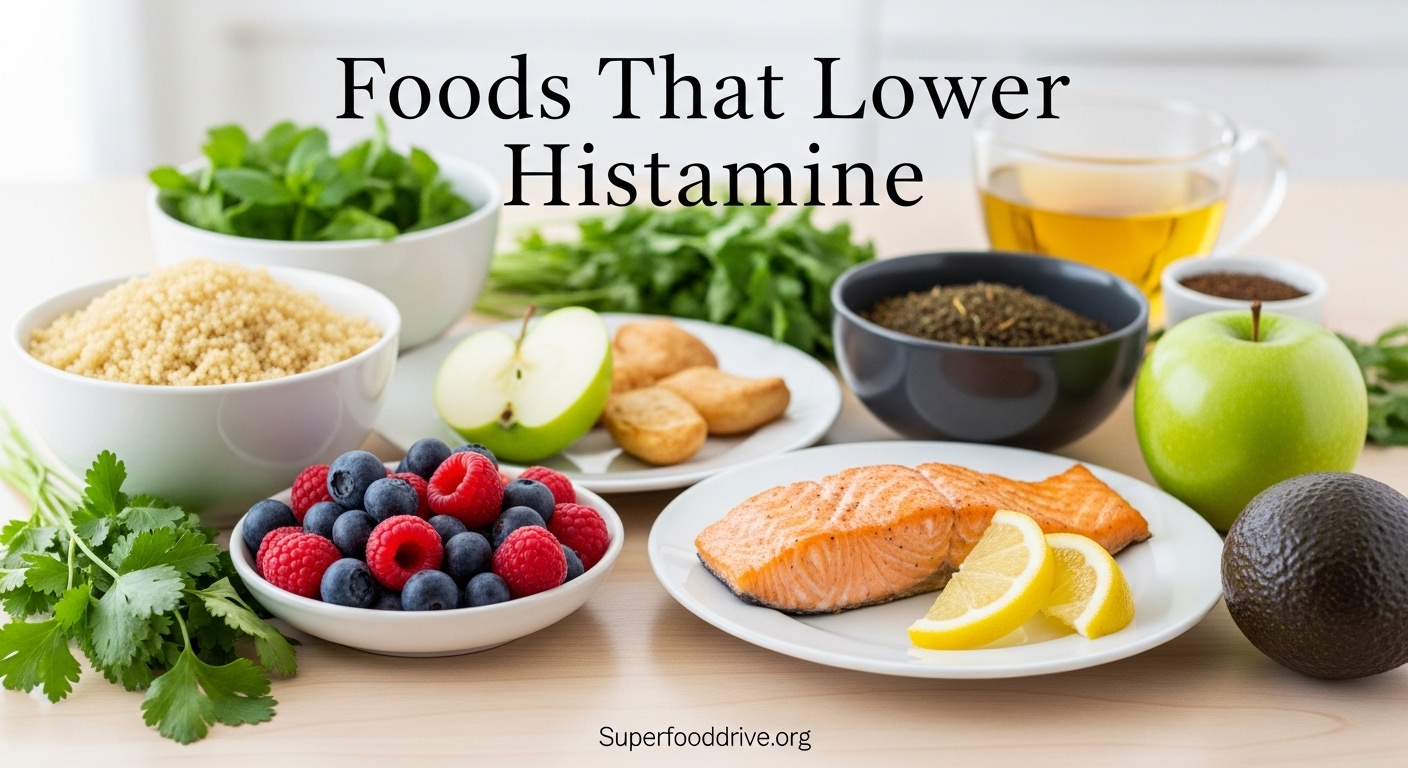
Living with Mast Cell Activation Syndrome (MCAS) or histamine intolerance can feel like walking through a minefield at every meal. You never know which bite might trigger hours of discomfort, brain fog, or worse.
After years of working with nutrition clients and reviewing the latest research, I have seen how the right foods that lower histamine can transform lives. This guide pulls together everything you need to know about eating safely with MCAS.
You will learn exactly which foods calm your mast cells, which ones trigger dangerous reactions, and how to implement a low-histamine diet without falling into the trap of over-restriction that leaves you malnourished and frustrated.
Table of Contents
Understanding MCAS and Histamine Intolerance
Before diving into food lists, you need to understand what is actually happening in your body. Knowledge makes the diet easier to follow and helps you troubleshoot when things go wrong.
What Is Mast Cell Activation Syndrome?
Mast Cell Activation Syndrome is a condition where your mast cells, a type of immune cell, become hyper-reactive. Instead of responding only to real threats like infections, they release histamine and other inflammatory chemicals in response to normally harmless triggers.
These triggers can include certain foods, temperature changes, stress, exercise, or even strong smells. When mast cells degranulate, they dump their chemical contents into your bloodstream, causing a cascade of symptoms.
MCAS exists on a spectrum. Some people have mild symptoms that are merely annoying, while others experience severe reactions that can be life-threatening. Food is one of the most controllable triggers, which makes dietary management crucial.
The Histamine Bucket Analogy
Think of your body as having a histamine bucket. Everyone has one, and it has a limited capacity. When the bucket overflows, you get symptoms.
For people with MCAS or histamine intolerance, this bucket is smaller than average. Some have genetic variations in the AOC1 gene that reduce their production of diamine oxidase, the enzyme that breaks down histamine. Others have methylation issues affecting the HNMT enzyme pathway.
Every histamine-containing food you eat adds liquid to the bucket. Stress, hormonal changes, and illness also contribute. When you stay under the overflow line, you feel fine. Cross it, and symptoms flood in.
This is why you might tolerate a food one day but react to it another. Your bucket was already partially full from other factors.
How Your Body Processes Histamine
Your body has two primary pathways for breaking down histamine. The first uses diamine oxidase, or DAO, an enzyme produced in your gut lining. DAO handles the histamine that comes from food you eat.
The second pathway uses histamine N-methyltransferase, or HNMT. This enzyme works inside your cells to break down histamine your body produces naturally. Both pathways need to function well for you to tolerate normal amounts of histamine.
When either enzyme is underactive due to genetics, nutrient deficiencies, or gut damage, histamine accumulates. That is when symptoms develop.
Common Symptoms of Histamine Intolerance and MCAS
Histamine affects multiple body systems, which is why MCAS symptoms can seem unrelated and confusing. Recognizing these patterns helps you identify when dietary changes might help.
Digestive symptoms include: bloating, abdominal pain, diarrhea, constipation, nausea, and acid reflux. Many people are misdiagnosed with IBS when histamine is the real culprit.
Neurological symptoms include: brain fog, headaches, migraines, anxiety, dizziness, and difficulty concentrating. These can be the most disabling symptoms for many sufferers.
Skin and respiratory symptoms include: hives, itching, flushing, nasal congestion, sneezing, and asthma-like breathing difficulties. These mimic traditional allergies but do not respond to antihistamines as predictably.
Cardiovascular symptoms include: rapid heartbeat, blood pressure changes, and chest discomfort. These can be frightening and are often dismissed as panic attacks.
If you experience multiple symptoms from different categories, especially after eating, a low-histamine trial may provide answers standard allergy testing cannot.
Foods That Lower Histamine: Your Comprehensive Guide
Finding safe foods is the foundation of managing MCAS through diet. This list follows the SIGHI guidelines, which are considered the gold standard for histamine intolerance management.
SIGHI rates foods on a scale of 0 to 3, with 0 being safest and 3 being highest risk. This guide focuses on SIGHI 0 and 1 foods that most people tolerate well.
Low-Histamine Vegetables
Fresh vegetables form the backbone of a low-histamine diet. Most unprocessed vegetables are naturally low in histamine, especially when eaten soon after preparation.
Safe options include: asparagus, broccoli, Brussels sprouts, cabbage, cauliflower, celery, cucumber, garlic, ginger, green beans, kale, lettuce, onions, peas, pumpkin, radishes, spinach (fresh only), squash, sweet potatoes, turnips, and zucchini.
Choose vegetables that are freshly harvested and prepared. Frozen vegetables are generally safe if they were frozen immediately after harvest without prolonged storage.
Avoid canned vegetables and vegetable juices, which often contain high histamine levels from processing and storage.
Low-Histamine Fruits
Fruit can be tricky because ripeness affects histamine content. Unripe or just-ripe fruit is safer than overripe fruit.
Generally safe fruits include: apples, apricots, blackberries, blueberries, cherries, coconut, cranberries, figs, grapes, kiwi, mango, melon (all types), nectarines, peaches, pears, plums, pomegranate, raspberries, and watermelon.
Citrus fruits like oranges, lemons, and limes are controversial. Some SIGHI guidelines rate them as liberators, meaning they may trigger histamine release even though they do not contain much histamine themselves. Test carefully.
Bananas should be eaten when still slightly green. As they ripen and develop brown spots, histamine levels rise significantly.
Safe Proteins and Meat
Protein is often the most challenging category because animal products develop histamine quickly after slaughter. The key is extreme freshness and proper preparation.
Safe protein options include: freshly cooked chicken, turkey, lamb, and beef. Wild-caught fish eaten within hours of catching can be safe for some, but fish is generally higher risk.
Buy meat frozen or cook it the same day you purchase it. Never eat leftovers. Cooked meat develops histamine rapidly, even when refrigerated.
Pressure cooking is the best method for low-histamine preparation. It destroys some existing histamine and prevents new formation better than other cooking methods.
Avoid all processed meats, deli meats, bacon, sausage, canned meat, smoked fish, shellfish, and any meat that is not extremely fresh.
Grains and Starches
Most plain grains are naturally low in histamine, making them safe staples for your diet.
Safe grain options include: white rice, brown rice, jasmine rice, basmati rice, oats, quinoa, millet, buckwheat, amaranth, teff, corn, corn tortillas, and plain rice noodles.
Choose organic when possible to avoid pesticide residues that may trigger mast cells. White rice is often better tolerated than brown rice because the bran layer can irritate sensitive guts.
Avoid fermented grain products like sourdough bread, most commercial breads with yeast, vinegar-based products, and anything containing malt or malt flavoring.
Fats and Oils
Quality fats are essential for hormone production and cellular health, especially when your body is under stress from chronic inflammation.
Safe fat sources include: coconut oil, olive oil (fresh, unrefined), avocado oil, flaxseed oil (fresh), hemp seed oil, and fats from fresh meats you cook yourself.
Store oils in dark containers in the refrigerator to prevent oxidation. Rancid oils are high in inflammatory compounds that can trigger mast cells.
Avoid all aged or fermented oils, butter that is not extremely fresh, and any oil that smells off or tastes bitter.
High-Histamine Foods and Triggers to Avoid
Knowing what to avoid is just as important as knowing what to eat. These foods either contain high histamine levels or trigger histamine release in your body.
High-Histamine Foods
These foods contain significant histamine due to aging, fermentation, or bacterial action.
Avoid these completely: aged cheeses, yogurt, kefir, fermented vegetables like sauerkraut and kimchi, soy sauce, tamari, miso, vinegar, pickled foods, cured meats, salami, pepperoni, bacon, smoked fish, canned fish, shellfish, wine, beer, champagne, and kombucha.
Leftovers are perhaps the biggest hidden source of histamine. Cooked food begins accumulating histamine within hours, even when refrigerated. By 24 hours, levels can be high enough to trigger reactions.
Spinach and tomatoes are naturally high in histamine even when fresh. Many people with severe MCAS cannot tolerate them at all.
Histamine Liberators
These foods do not contain much histamine themselves, but they trigger your mast cells to release stored histamine. They can cause reactions even when your bucket is nearly empty.
Common liberators include: citrus fruits, papaya, pineapple, strawberries, tomatoes, chocolate, cocoa, nuts (especially walnuts and cashews), peanuts, food additives like benzoates and sulfites, and certain food colorings.
Some people also react to egg whites, which can trigger histamine release in sensitive individuals.
Identifying your personal liberator triggers often requires careful elimination and reintroduction testing. Everyone’s tolerance is different.
DAO Blockers
These substances interfere with your DAO enzyme’s ability to break down histamine. Even if you eat low-histamine food, blockers prevent your body from processing it properly.
Major DAO blockers include: alcohol (all types), black tea, green tea, yerba mate, energy drinks, and certain medications including some pain relievers and antibiotics.
Alcohol is particularly problematic because it is both high in histamine and blocks the enzyme needed to break it down. This double effect makes it one of the worst triggers for most MCAS patients.
If you are taking medications, discuss DAO-blocking effects with your pharmacist. Some necessary medications may require you to be stricter with dietary histamine to compensate.
The Leftover Rule Explained
The no-leftover rule seems extreme until you understand the science. Bacteria that produce histamine grow even in cold temperatures, just more slowly.
When you cook meat or other protein-rich foods, bacteria naturally present on the surface begin multiplying. Some species produce histamine as a byproduct of their metabolism.
Within 6 to 8 hours of cooking, histamine levels begin rising. By 24 hours, they can be substantial. Freezing immediately after cooking stops this process, making frozen portions safer than refrigerated leftovers.
If you batch cook, freeze individual portions immediately after cooling. Do not refrigerate cooked food for more than a few hours before freezing.
Cooking Methods That Reduce Histamine Levels
How you cook matters almost as much as what you cook. Certain methods destroy histamine or prevent its formation, while others create ideal conditions for bacterial histamine production.
Best Cooking Methods
Pressure cooking is the gold standard for low-histamine meal preparation. The combination of high heat and pressure destroys more histamine than other methods. It also cooks food quickly, reducing the time bacteria have to produce histamine.
Boiling and steaming are also good options. These wet-heat methods keep food temperatures high enough to kill histamine-producing bacteria while adding moisture.
Quick stir-frying fresh ingredients over high heat works well when cooking time is minimal. Use fresh oils and avoid burning, which creates inflammatory compounds.
Methods to Avoid
Slow cooking is problematic for MCAS patients. The extended low-heat cooking time creates perfect conditions for histamine-producing bacteria to thrive.
Meat that simmers for hours in a slow cooker can accumulate significant histamine, even if it was fresh when you started. The same applies to crockpot meals and extended braising.
Aging and fermenting intentionally cultivate the bacteria that produce histamine. While these methods are healthy for normal digestive systems, they are dangerous for histamine intolerance.
Smoking and curing were originally developed as preservation methods precisely because they allow controlled bacterial activity. Avoid these completely.
Safe Food Storage Guidelines
Proper storage extends the safety window for your food. Temperature control is critical.
Freeze meat immediately if you will not cook it within 24 hours of purchase. Keep your refrigerator at 35 degrees Fahrenheit or below. Use a thermometer to verify, as many home refrigerators run warmer than the setting indicates.
Store cooked food in shallow containers to cool quickly. Divide large batches into single portions before freezing.
Label everything with dates. Use frozen cooked food within one month for best quality, though properly frozen food remains safe longer.
Never thaw meat at room temperature. Thaw in the refrigerator or in cold water, changing the water every 30 minutes.
How to Start a Low-Histamine Diet
Starting this diet can feel overwhelming, but a systematic approach makes it manageable. The goal is not perfection but finding your personal tolerance threshold.
The Elimination Phase
Begin with a strict elimination phase lasting 2 to 4 weeks. During this time, eat only SIGHI 0-rated foods, which are the safest options with the lowest histamine content.
Focus on simple meals built around fresh vegetables, fresh meats cooked the same day, rice or oats, and fresh fruits. Avoid all processed foods, leftovers, and questionable items.
This strict phase serves two purposes. First, it gives your body time to clear accumulated histamine. Second, it establishes a symptom baseline so you can recognize reactions during reintroduction.
Most people notice improvement within 7 to 14 days, though some need the full 4 weeks. Do not shorten this phase prematurely.
Food Journaling
Detailed records are essential for identifying your personal triggers. Create a simple daily log tracking everything you eat, your symptoms, stress levels, sleep quality, and any medications.
Note the timing of symptoms. Histamine reactions typically appear within 15 minutes to 2 hours of eating, though some delayed reactions can occur up to 24 hours later.
Include details about food preparation. Was the meat frozen or fresh? How was it cooked? How long after cooking did you eat it?
Many people discover patterns they would have missed otherwise. You might find that chicken is safe when pressure-cooked but problematic when baked and eaten later.
Reintroduction Phase
After your elimination phase, systematically reintroduce foods one at a time. This helps you build a personalized safe food list rather than relying on generic recommendations.
Choose one new food to test. Eat a small portion on day one, wait 24 hours while monitoring symptoms. If no reaction, eat a normal portion on day two.
If you react, remove that food and wait until symptoms completely resolve before testing another. This can take 3 to 5 days.
Keep successful foods in your rotation. Failed foods can be retested in 3 to 6 months as your tolerance may improve with healing.
Common Mistakes to Avoid
The biggest mistake is over-restriction. Some people become so fearful of reactions that they limit their diet to a handful of safe foods. This leads to malnutrition, which ultimately worsens MCAS symptoms.
Avoid eating the same foods every day. Rotation reduces the risk of developing new sensitivities and ensures nutritional variety.
Do not trust all online food lists blindly. Histamine content varies by source, freshness, and preparation. Use lists as starting points, not absolute rules.
Be patient with the process. Healing takes time, and setbacks are normal. A bad reaction day does not mean you have failed.
Natural Support for Histamine Breakdown
Diet is the foundation, but targeted support can help your body process histamine more efficiently. These strategies work alongside dietary changes, not as replacements.
DAO Enzyme Supplements
DAO supplements provide the enzyme your gut may be underproducing. They are derived from pig kidney and taken before meals to help break down dietary histamine.
Research shows DAO supplements can reduce symptoms for some histamine intolerance patients. A 2019 study found significant improvement in symptom scores after 4 weeks of supplementation.
These supplements work only on histamine in your food, not histamine your mast cells release. They are most helpful when your DAO production is genuinely low, not when mast cell overactivity is the primary issue.
Take DAO 15 to 30 minutes before eating. It will not help if taken after a reaction starts.
Vitamin C and Quercetin
Vitamin C is a natural mast cell stabilizer that can reduce histamine release. It also helps your body break down histamine once it is in your system.
Quercetin is a flavonoid found in foods like onions and apples. It stabilizes mast cell membranes, making them less likely to degranulate. Many MCAS patients find quercetin supplements helpful, though individual responses vary.
Both nutrients work best when taken consistently rather than as emergency measures. Build up levels over weeks for best results.
Choose low-histamine sources for supplementation. Some vitamin C products are derived from citrus or fermented sources and may trigger reactions.
Gut Health Connection
Your gut microbiome significantly influences histamine levels. Certain bacteria produce histamine, while others help break it down.
Dysbiosis, or microbial imbalance, is common in MCAS patients. Improving gut health can reduce the histamine burden your body faces daily.
Probiotics require careful selection. Many strains actually produce histamine. Look for histamine-neutral or histamine-degrading strains like Bifidobacterium infantis and Lactobacillus rhamnosus GG.
Avoid probiotic blends that include Lactobacillus casei and Lactobacillus bulgaricus, which are known histamine producers.
Prebiotic fiber from safe vegetables feeds beneficial bacteria. Focus on getting adequate fiber from tolerated foods rather than supplements, which can cause reactions.
Frequently Asked Questions
What foods lower histamine quickly?
Fresh vegetables like broccoli, cauliflower, and asparagus help reduce histamine burden. Freshly cooked meats consumed immediately after preparation are safest. Rice, oats, and fresh fruits like apples and pears provide nourishment without adding histamine. Pressure-cooked foods destroy existing histamine better than other cooking methods.
What to eat to calm MCAS?
Focus on SIGHI 0-rated foods including fresh vegetables, freshly cooked meats, rice, oats, and safe fruits. Avoid leftovers completely. Use pressure cooking to minimize histamine formation. Eliminate alcohol, fermented foods, and aged products. Stay hydrated and maintain regular meal timing to support stable blood sugar and reduce stress on your system.
Will a low histamine diet help with MCAS?
Yes, a low histamine diet helps many MCAS patients by reducing the total histamine load on their system. While diet does not cure MCAS, it removes one major trigger, often allowing other treatments to work better. Most patients notice symptom improvement within 2 to 4 weeks of strict implementation. The diet works best as part of a comprehensive management approach.
How can I calm my histamine naturally?
Support your body’s histamine breakdown with DAO enzyme supplements taken before meals. Include vitamin C and quercetin to stabilize mast cells. Practice stress reduction techniques since stress fills your histamine bucket. Get adequate sleep for enzyme production. Consider gut healing protocols to address microbiome imbalances that may contribute to histamine overload.
What foods are high in histamines for MCAS?
Aged cheeses, yogurt, fermented vegetables, soy sauce, vinegar, cured meats, smoked fish, and alcohol are highest in histamine. Leftover meats, even when refrigerated, accumulate histamine rapidly. Spinach, tomatoes, and eggplant contain naturally high histamine. Processed foods often contain histamine liberators and additives that trigger mast cell degranulation.
What does a histamine dump feel like?
A histamine dump, or mast cell degranulation, feels like an intense allergic reaction. Symptoms include sudden flushing, racing heartbeat, anxiety, nausea, diarrhea, headache, and difficulty breathing. Some people describe it as feeling like their body is on fire from the inside. Reactions can last hours to days depending on the trigger severity and your body’s clearance capacity.
Can you cheat on a low histamine diet?
Occasional small deviations may be tolerated if your histamine bucket is low, but cheating is risky with MCAS. Stress, hormonal changes, and other triggers fill your bucket without you realizing. What you tolerate one day may cause a severe reaction another. Build a wide safe food list through careful reintroduction rather than relying on cheating.
How long before I see results from a low histamine diet?
Most people notice initial improvement within 1 to 2 weeks, with significant changes by 3 to 4 weeks. Some experience immediate relief within days. Others with severe gut damage or multiple triggers may need 6 to 8 weeks. Results depend on your starting histamine burden, compliance with the diet, and whether you have addressed other triggers like stress and sleep.
Conclusion
Finding the right foods that lower histamine can transform life with MCAS from a constant struggle into a manageable condition. The key is understanding that this diet is not about perfection but about finding your personal tolerance threshold.
Start with a strict elimination phase using only the safest SIGHI 0 foods. Track everything in a food journal. Reintroduce foods systematically to build a personalized safe list. Support your body with targeted nutrients and proper cooking methods.
Remember that healing takes time. Setbacks are normal and do not mean failure. With patience and persistence, you can reclaim your health and expand your dietary options as your body heals.
If you are just beginning this journey, start today with a simple meal of fresh vegetables and freshly cooked protein. Your future self will thank you for taking that first step toward managing MCAS through the power of low-histamine nutrition.