
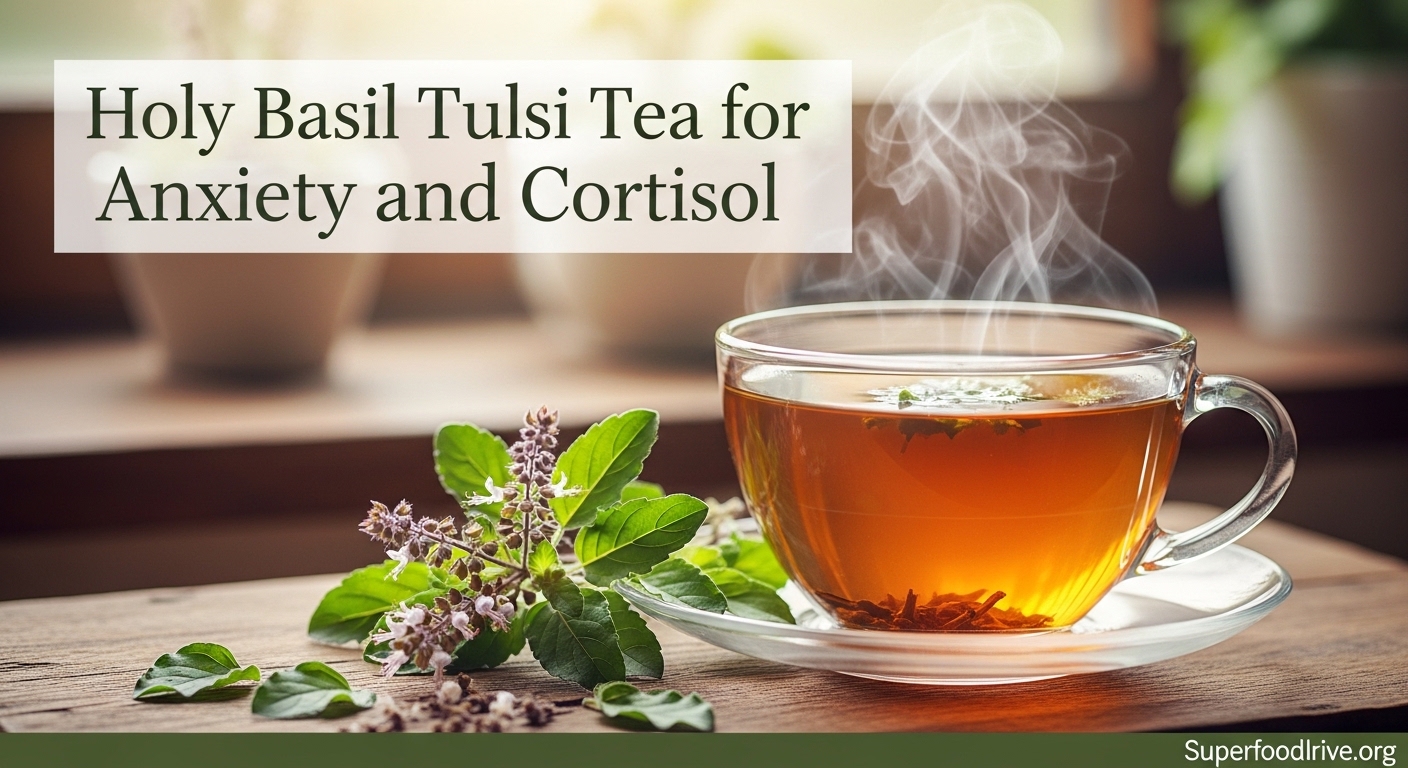
If you’ve been searching for a natural way to calm your nerves and balance stress hormones, holy basil tulsi tea for anxiety and cortisol might be exactly what you need. Our team has spent months researching adaptogenic herbs, and we’ve found that holy basil stands out for its unique ability to support both mental calm and hormonal balance.
In this comprehensive guide, you’ll learn how this ancient Ayurvedic herb works to reduce cortisol levels, ease anxiety symptoms, and support your nervous system. Whether you’re dealing with chronic stress, occasional anxiety, or simply want to build resilience against life’s pressures, we’ll show you exactly how to use holy basil tea effectively.
Table of Contents
What is Holy Basil (Tulsi)
Holy basil, scientifically known as Ocimum sanctum or Ocimum tenuiflorum, is an adaptogenic herb that has been revered in Ayurvedic medicine for over 3,000 years. In India, it’s called “tulsi” and is considered sacred, often planted at temple entrances and in household gardens.
As an adaptogen, holy basil helps your body adapt to stress and restore balance. Unlike sedatives that simply knock you out, adaptogens work with your body’s natural systems to improve resilience. The key bioactive compounds responsible for these effects include eugenol, rosmarinic acid, and ursolic acid. These compounds work together to modulate stress hormones and support your HPA axis.
Traditionally, tulsi has been used for everything from respiratory health to spiritual purification. Modern research is now validating what Ayurvedic practitioners have known for centuries: this herb has profound effects on stress physiology and emotional well-being.
How Holy Basil Affects Cortisol and Anxiety
The connection between holy basil and cortisol reduction is one of the most well-documented aspects of this herb. Research published in the National Library of Medicine shows that holy basil extract can significantly reduce cortisol levels. One study found reductions of up to 36% in participants taking holy basil supplements.
But how does this work? The answer lies in your HPA axis, the hypothalamic-pituitary-adrenal system that regulates your stress response. When you encounter a stressor, your HPA axis triggers cortisol release. Chronic activation of this system leads to elevated cortisol, which contributes to anxiety, sleep problems, and numerous health issues.
Holy basil works by modulating HPA axis signaling, helping to reset your stress response system. It doesn’t suppress cortisol entirely (which would be unhealthy), but rather helps restore healthy cortisol rhythms. This means lower cortisol when you need to relax, and appropriate cortisol when you need to be alert.
The Vagus Nerve Connection
Here’s something most articles miss: the simple act of sipping warm tulsi tea activates your vagus nerve. This cranial nerve runs from your brain to your gut and is the main pathway of your parasympathetic nervous system, your “rest and digest” mode.
When you drink warm tea slowly, the warmth and ritual signal safety to your nervous system. This triggers vagal pathways that naturally calm anxiety. So you’re getting dual benefits: the pharmacological effects of holy basil compounds plus the physiological effects of the tea ritual itself.
Scientific Evidence for Anxiety Relief
Let’s look at what the research actually shows. A randomized controlled trial published in the Journal of Ayurveda and Integrative Medicine found that participants taking holy basil extract experienced significant reductions in stress-related symptoms compared to placebo. They reported improved sleep, less forgetfulness, and reduced fatigue.
Another study in the Indian Journal of Pharmacology examined holy basil’s effects on generalized anxiety disorder. Participants taking 500mg of holy basil extract twice daily showed measurable improvements in stress management and emotional well-being after just 60 days.
It’s important to note that while these results are promising, holy basil isn’t a miracle cure. The research shows modest but meaningful improvements, typically in the range of 20-36% reduction in cortisol and stress markers. For many people, this is enough to make a real difference in daily functioning without the side effects of pharmaceutical alternatives.
Benefits Beyond Anxiety and Cortisol
While we’re focused on holy basil tulsi tea for anxiety and cortisol, it’s worth noting this herb offers several other health benefits that support your overall stress resilience.
Blood Sugar Balance
Research shows holy basil may help maintain healthy blood sugar levels. Since blood sugar fluctuations can trigger anxiety and cortisol spikes, this secondary benefit directly supports your stress management goals. One study found that holy basil helped reduce fasting blood glucose by approximately 12% in participants with type 2 diabetes.
Sleep Support
Many people find holy basil helps them sleep better, not by sedating them but by calming the mental chatter that keeps them awake. Clinical trials have shown improvements in sleep quality scores when holy basil is taken consistently.
Anti-inflammatory Properties
Chronic inflammation is both a cause and effect of chronic stress. Holy basil’s anti-inflammatory compounds help break this cycle, supporting overall health while you work on stress management.
Immune Support
Regular tulsi consumption has been shown to support immune function, which matters because stress directly suppresses immunity. When you’re less anxious and sleeping better, your immune system naturally performs better too.
Holy Basil vs Other Adaptogens
One of the most common questions we see in forums is: “Should I take holy basil or ashwagandha?” The answer depends on your specific needs.
Holy Basil vs Ashwagandha
Ashwagandha is excellent for physical stress and adrenal fatigue. It’s more grounding and sedating. Holy basil tends to be more uplifting and clarifying. If your anxiety comes with brain fog and mental fatigue, holy basil might be the better choice. If you feel wired and exhausted simultaneously, ashwagandha may suit you better.
Holy Basil vs Rhodiola
Rhodiola is energizing and best for physical fatigue and performance anxiety. Holy basil is calming without being sedating. Think of rhodiola for presentations and holy basil for general daily stress.
Can You Combine Them?
Yes, many people find benefit from combining adaptogens. A common approach is holy basil in the morning for clarity and ashwagandha in the evening for deeper sleep support. Always start with one herb before adding others so you can track what works.
How to Use Holy Basil Tea
Now let’s get practical. Here’s how to prepare and use holy basil tea for maximum benefit.
Preparation Instructions
Step 1: Bring fresh water to a boil, then let it cool for 30 seconds. Boiling water can damage some of the delicate compounds in holy basil.
Step 2: Add 1 teaspoon of dried holy basil leaves (or one tea bag) to your cup.
Step 3: Pour 8 ounces of hot water over the leaves.
Step 4: Steep for 5-10 minutes. Longer steeping extracts more compounds but can taste more bitter.
Step 5: Strain if using loose leaf, then sip slowly while warm.
Loose Leaf vs Tea Bags
Loose leaf tulsi generally contains higher quality herbs and allows you to control the strength. However, quality tea bags from reputable brands like Organic India offer convenience without sacrificing too much potency. Look for organic certification to avoid pesticide residues.
Popular Tulsi Blends
Many people enjoy tulsi combined with other calming herbs. Popular blends include:
- Tulsi with ginger and lemon for digestive support
- Tulsi with chamomile for extra calming effects
- Tulsi with peppermint for mental clarity
- Tulsi with green tea for antioxidant benefits
Tea vs Supplement vs Tincture
Tea offers the ritual benefits and is gentler on the system. Supplements provide standardized dosing and higher concentrations of active compounds. Tinctures absorb quickly and are portable. For anxiety and cortisol support, tea is often sufficient for mild to moderate stress, while supplements may be needed for more significant concerns.
Dosage and Timing
Getting the dosage and timing right makes a significant difference in your results.
Recommended Dosage
For tea: 1-3 cups daily is the typical range. Start with one cup and increase if needed.
For supplements: Studies typically use 300-600mg of standardized extract, taken in divided doses.
Morning vs Evening Use
This is a personal preference, but here’s our guidance based on research and user reports. Many people find holy basil clarifying rather than sedating, making it excellent for morning use. Others find it helps them unwind and prefer it in the evening.
Try morning first. If you feel too energized, switch to afternoon or evening. The effects are subtle enough that experimentation is safe.
How Long Does It Take to Work
This is perhaps the most important question. Based on clinical research and user experiences from forums, here’s what you can realistically expect:
- Immediate (first cup): Some people feel a subtle calm within 30-60 minutes, likely from the ritual and warmth.
- 1-2 weeks: Beginning to notice reduced reactivity to stress, slightly better sleep.
- 4-6 weeks: Measurable improvements in anxiety and stress resilience for most people.
- 8-12 weeks: Full adaptogenic benefits, including cortisol regulation and improved stress response.
Consistency matters more than dosage. Daily use for at least 6-8 weeks is needed to evaluate whether holy basil works for you.
Signs It’s Working
Many users report the effect as “feeling it by not feeling it.” You might notice you handle stress better without consciously thinking about it. Other signs include:
- Less rumination and mental chatter
- Better sleep quality
- More stable energy throughout the day
- Reduced physical tension
- Improved focus and mental clarity
Side Effects and Precautions
While holy basil is generally safe, there are important considerations to keep in mind.
Common Side Effects
Most people tolerate holy basil well. Occasional side effects include mild nausea (usually from taking too much on an empty stomach) or paradoxically increased anxiety in sensitive individuals.
The anxiety increase typically happens when starting with too high a dose. Start low and increase gradually.
Who Should Avoid Holy Basil
Avoid holy basil if you are:
- Pregnant or trying to conceive (traditional Ayurvedic texts classify it as an emmenagogue)
- Breastfeeding (safety not established)
- Trying to conceive (may affect fertility in animal studies)
- Scheduled for surgery (stop 2 weeks prior due to blood thinning effects)
Medication Interactions
Holy basil may interact with blood-thinning medications due to its natural anticoagulant properties. If you take warfarin, aspirin, or other blood thinners, consult your healthcare provider before using holy basil regularly.
It may also lower blood sugar, so monitor levels if taking diabetes medications. Always discuss with your doctor if you take prescription medications.
Frequently Asked Questions
Is tulsi tea good for high cortisol?
Yes, research shows tulsi tea can help reduce high cortisol levels. Studies have found that holy basil extract may reduce cortisol by up to 36% through its effects on the HPA axis. The bioactive compounds in tulsi help modulate stress hormone production and restore healthy cortisol rhythms. Drinking 1-3 cups daily as part of a consistent routine provides the best results.
What is the best tea for high cortisol?
Tulsi (holy basil) tea is one of the best options for high cortisol due to its adaptogenic properties and clinical research backing. Other effective options include green tea (for L-theanine), chamomile (for relaxation), and rooibos (for cortisol reduction). For maximum benefit, choose organic tulsi tea and steep for 5-10 minutes to extract the full range of beneficial compounds.
Does holy basil work for anxiety?
Yes, clinical research supports holy basil’s effectiveness for anxiety. Multiple studies show significant reductions in stress-related symptoms and improvements in emotional well-being. Users typically report feeling calmer, less reactive to stress, and better able to manage daily pressures. Effects are generally subtle and build over 4-6 weeks of consistent use rather than providing immediate sedation.
How long does holy basil take to work for anxiety?
Most people notice initial benefits within 1-2 weeks of consistent use, with full effects developing over 4-8 weeks. Some users report feeling calmer within 30-60 minutes of drinking tulsi tea, likely due to the ritual and warmth activating the parasympathetic nervous system. For lasting anxiety reduction and cortisol balance, daily use for at least 6-8 weeks is recommended before evaluating effectiveness.
Can holy basil cause anxiety?
While uncommon, some people experience increased anxiety when taking holy basil, typically from starting with too high a dose. This paradoxical reaction may occur because adaptogens can initially stimulate the system before calming it. Starting with a low dose and gradually increasing can prevent this. If anxiety increases after taking holy basil, reduce the dose or discontinue use and consult a healthcare provider.
Should I take holy basil at night or morning?
Most people find holy basil clarifying and energizing rather than sedating, making morning or afternoon the ideal time. However, individual responses vary. Try morning first, and if you feel too alert, switch to afternoon. Some people do find it relaxing enough for evening use. Experiment with timing to find what works best for your unique physiology and schedule.
Conclusion
Holy basil tulsi tea for anxiety and cortisol offers a gentle, research-backed approach to managing stress naturally. Through its effects on the HPA axis, cortisol regulation, and vagus nerve activation, this ancient herb provides multiple pathways to calm and resilience.
The key to success is consistency and patience. Unlike pharmaceutical anxiety medications that work immediately, holy basil works gradually to rebuild your stress resilience from the inside out. Give it 6-8 weeks of daily use before deciding if it’s right for you.
If you’re struggling with chronic stress, anxiety, or elevated cortisol, consider adding holy basil tea to your daily routine. Start with one cup in the morning, pay attention to how you feel, and adjust timing and dosage based on your body’s response. Combined with other stress management practices like good sleep, movement, and mindfulness, holy basil can be a valuable tool in your wellness toolkit.