
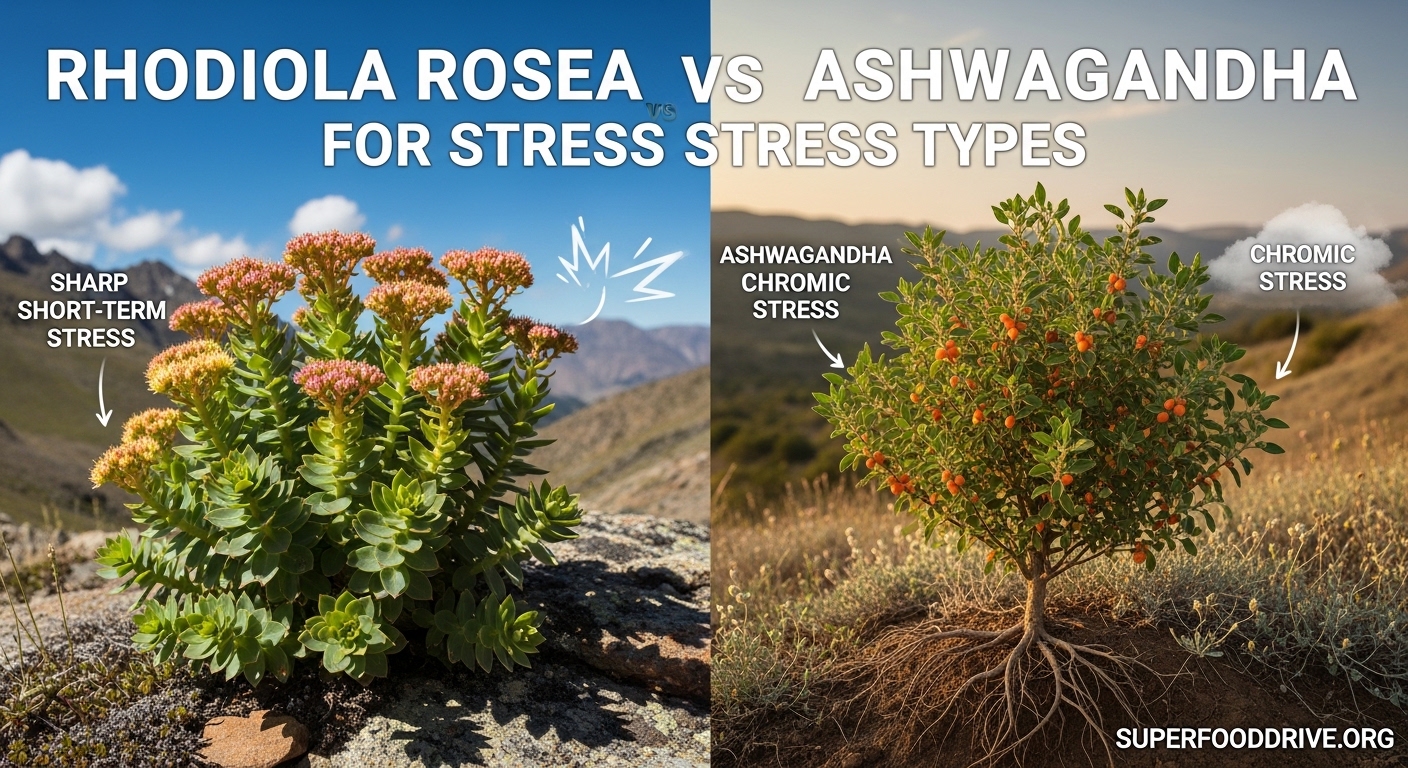
If you have been searching for natural ways to manage stress, you have probably come across two names repeatedly: Rhodiola Rosea and Ashwagandha. Both are adaptogenic herbs with impressive reputations, yet they work in distinctly different ways. Understanding Rhodiola Rosea vs Ashwagandha for stress types is the key to choosing the right supplement for your specific situation.
I have spent months researching these adaptogens, combing through clinical studies and user experiences to understand when each shines. Here is what I discovered: the difference between these two herbs is not about which is “better” overall. It is about matching the right tool to your specific stress pattern.
This guide breaks down exactly how these adaptogens differ, which stress types each addresses best, and how to make an informed choice for your needs in 2026.
Table of Contents
What Are Adaptogens and How Do They Work?
Adaptogens are natural substances that help your body adapt to stress and restore balance. Unlike stimulants that force energy or sedatives that suppress alertness, adaptogens work with your body’s natural stress response systems.
These herbs primarily interact with the hypothalamic-pituitary-adrenal (HPA) axis, the system that governs your stress response and cortisol production. By modulating this system, adaptogens can help regulate cortisol levels, support mental clarity, and improve your resilience to physical and emotional stressors.
The key insight is that different adaptogens produce different effects. Some lean toward stimulation and energy, while others promote relaxation and calm. This is why choosing between Rhodiola Rosea vs Ashwagandha depends entirely on your stress type.
Rhodiola Rosea: The Energy-Boosting Adaptogen
Rhodiola Rosea is a flowering plant that grows in cold, mountainous regions of Europe and Asia. Traditional medicine systems in Russia and Scandinavia have used it for centuries to combat fatigue and enhance physical endurance.
Active Compounds and Mechanism
The primary active compounds in Rhodiola are salidroside and rosavin. These compounds work by influencing neurotransmitters including serotonin, dopamine, and norepinephrine. This neurochemical action explains why Rhodiola feels stimulating rather than sedating.
Research shows Rhodiola can reduce mental fatigue and improve cognitive function during stressful periods. A review published in Phytomedicine found that Rhodiola significantly improved stress-associated fatigue and mental performance.
Primary Benefits for Stress
Rhodiola excels at addressing stress that comes with mental exhaustion and burnout. Users report improved focus, reduced brain fog, and sustained energy without the jitters associated with caffeine. It is particularly effective for what researchers call “asthenic” conditions: low energy, decreased productivity, and cognitive impairment from stress.
From forum discussions, I noticed a consistent pattern: people taking Rhodiola before workouts or demanding mental tasks report enhanced performance and resilience. The key phrase that kept appearing was “clean energy” – stimulation without the crash.
Best Use Cases
Consider Rhodiola if you experience:
- Mental fatigue during stressful work periods
- Difficulty concentrating under pressure
- Physical exhaustion from overwork
- Stress-related performance decline
- Seasonal mood dips during winter months
Ashwagandha: The Calming Adaptogen
Ashwagandha (Withania somnifera) has deep roots in Ayurvedic medicine, where it has been used for over 3,000 years. Its Sanskrit name translates to “smell of horse,” referring to both its odor and traditional belief that it provides the strength of a horse.
Active Compounds and Mechanism
The primary active compounds in Ashwagandha are withanolides, particularly withanolide A. These compounds work through multiple pathways: they support GABA receptor activity (promoting calm), reduce cortisol production, and provide neuroprotective effects.
Unlike Rhodiola’s stimulating action, Ashwagandha works more on the inhibitory side of your nervous system. It helps dial down the stress response rather than pushing through it with extra energy.
Primary Benefits for Stress
Ashwagandha shines for chronic stress and anxiety. Multiple clinical studies show it can significantly reduce cortisol levels, with some research showing reductions of up to 30% in chronically stressed individuals. This cortisol-lowering effect makes it particularly valuable for long-term stress management.
Users consistently report improved sleep quality, reduced anxiety, and a sense of calm that builds over time. The effects are cumulative rather than immediate, which is why consistent use over several weeks yields the best results.
Best Use Cases
Consider Ashwagandha if you experience:
- Chronic stress and feeling “wired but tired”
- Anxiety and racing thoughts
- Poor sleep quality or insomnia
- High cortisol symptoms (weight gain around midsection, sugar cravings)
- Stress-related irritability
Rhodiola Rosea vs Ashwagandha: Key Differences
Understanding the core differences between these adaptogens will help you make the right choice. Here is how they compare across key dimensions.
Stimulating vs Calming Effects
Rhodiola acts as a mild stimulant. It increases alertness, focus, and physical capacity. Think of it as nature’s alternative to energy drinks, but without the crash. This makes it ideal when you need to perform under pressure.
Ashwagandha works in the opposite direction. It promotes relaxation, reduces nervous tension, and helps you unwind. If Rhodiola is for pushing through stress, Ashwagandha is for recovering from it.
Energy vs Relaxation
Rhodiola users describe feeling “switched on” – mentally sharp, physically capable, and ready to tackle challenges. This can be exactly what you need during demanding periods, but it can also be too much if you are already overstimulated.
Ashwagandha users report feeling “grounded” – calm, centered, and better able to handle stress without feeling overwhelmed. This makes it excellent for evening use or during periods of chronic stress when your nervous system needs support.
Timing Recommendations
Timing matters significantly with these adaptogens. Take Rhodiola in the morning or early afternoon. Its stimulating effects can interfere with sleep if taken too late. Many users report optimal results when taking it 30 minutes before a demanding task.
Ashwagandha can be taken in the evening, and many users find it supports better sleep quality. However, it can also be taken in the morning for all-day stress support without causing drowsiness.
Onset of Effects
Rhodiola tends to work quickly. Many users report feeling effects within the first few days, sometimes even after the first dose. This makes it useful for acute situations – before a big presentation, during exam periods, or when facing immediate deadlines.
Ashwagandha requires patience. Its benefits build over time, with most studies showing significant results after 4-8 weeks of consistent use. This reflects its role in addressing chronic stress patterns rather than providing immediate support.
Cortisol Response: How Each Adaptogen Works
Cortisol, often called the “stress hormone,” plays a central role in how both adaptogens function. Understanding their different effects on cortisol regulation is crucial for choosing the right one.
Rhodiola’s Effect on Cortisol
Rhodiola helps normalize cortisol levels but does not dramatically lower them. Its primary action is helping your body use cortisol more efficiently. This means you maintain the performance-enhancing aspects of cortisol while reducing its negative impacts.
Research suggests Rhodiola is particularly effective for cortisol dysregulation associated with burnout – when cortisol is both elevated at the wrong times and depleted when you need it. It helps restore proper cortisol rhythm rather than simply suppressing production.
Ashwagandha’s Effect on Cortisol
Ashwagandha directly reduces cortisol levels. A randomized controlled trial published in the Indian Journal of Psychological Medicine showed that participants taking Ashwagandha had 28% lower cortisol levels compared to placebo after 60 days.
This cortisol-lowering effect makes Ashwagandha particularly valuable for chronic stress where elevated cortisol has become the norm. It addresses the hormonal root of stress symptoms.
Which Is Better for Cortisol?
If your primary concern is high cortisol with symptoms like weight gain, poor sleep, and anxiety, Ashwagandha may be the better choice. If your issue is cortisol dysregulation affecting performance and energy, Rhodiola might serve you better.
For many people, the ideal approach involves addressing both aspects: lowering chronically elevated cortisol while restoring proper cortisol function.
Matching the Right Adaptogen to Your Stress Type
This is where most guides fall short. They compare the herbs in abstract terms without helping you identify which matches your specific stress pattern. Here is a practical decision framework.
Acute vs Chronic Stress
Acute stress is situational and time-limited. Deadlines, presentations, temporary work overload. For acute stress, Rhodiola is usually the better choice. It provides the energy and focus you need to perform through the challenging period.
Chronic stress is ongoing and persistent. A demanding job, family pressures, financial worries that never let up. For chronic stress, Ashwagandha typically works better. It addresses the underlying hormonal imbalance and helps restore resilience over time.
Mental Fatigue vs Physical Exhaustion
Are you mentally drained but physically fine? Rhodiola targets cognitive fatigue and mental performance. Users report it helps with “brain fog” and difficulty concentrating.
Are you physically worn out but mentally wired? Ashwagandha helps calm the nervous system while supporting physical recovery. It addresses the “tired but wired” state that many chronically stressed people experience.
Workplace Stress Recommendations
For high-pressure work environments requiring sustained mental performance, Rhodiola taken in the morning can provide clean energy without the crash of caffeine. It helps maintain productivity during demanding periods.
For workplaces causing chronic anxiety, tension, or sleep disruption, Ashwagandha provides better support. It helps you stay calm under pressure and recover properly after work.
Anxiety vs Fatigue Patterns
Your dominant symptom is a strong indicator. If anxiety, worry, and tension dominate your stress experience, Ashwagandha is likely the better fit. If fatigue, low motivation, and mental fog are your primary complaints, Rhodiola is worth trying first.
Of course, many people experience both anxiety and fatigue. In these cases, combining both adaptogens (discussed below) or cycling between them based on your current state can be effective.
User Archetype Matching
Based on patterns from forum discussions and research, here are common archetypes:
The High Performer: You push hard, work long hours, and need sustained energy. Rhodiola matches your needs.
The Worrier: You ruminate, struggle to unwind, and stress affects your sleep. Ashwagandha is designed for you.
The Burnout Candidate: You were high energy but now feel depleted and anxious. Start with Ashwagandha to restore balance, then consider adding Rhodiola once recovered.
The Seasonal Stressed: Winter months hit you hard with low mood and energy. Rhodiola has solid research for seasonal support.
Dosage, Timing, and Usage Tips
Getting the dosage and timing right makes a significant difference in your results with these adaptogens.
Rhodiola Dosing Recommendations
Research typically uses doses between 200-600mg daily of standardized extract (containing 3% rosavins and 1% salidroside). Start with 200mg in the morning and adjust based on your response.
Some people are sensitive to Rhodiola’s stimulating effects. If you feel jittery, reduce the dose or take it earlier in the day.
Ashwagandha Dosing Recommendations
Effective doses range from 300-600mg daily of standardized root extract. KSM-66 and Sensoril are well-researched standardized forms with consistent quality.
Higher doses do not necessarily mean better results. Consistency over time matters more than taking large amounts.
Best Time of Day for Each
Take Rhodiola in the morning, ideally 30 minutes before breakfast or your first demanding task of the day. Avoid taking it after 2 PM if you are sensitive to stimulants.
Ashwagandha can be taken morning or evening. If sleep is your priority, take it 1-2 hours before bed. For all-day stress support, morning dosing works well.
Expected Timeline for Results
With Rhodiola, many users notice effects within the first week. Some feel a difference after the first dose. Full benefits typically develop over 2-4 weeks.
Ashwagandha requires more patience. Expect 2-4 weeks before noticing changes, with full benefits appearing at 6-8 weeks of consistent use.
Combining Both Supplements
Yes, you can take Rhodiola and Ashwagandha together. Many users report excellent results from this combination, as they address different aspects of the stress response.
A common protocol is Rhodiola in the morning for energy and focus, Ashwagandha in the evening for recovery and sleep support. This mirrors your natural cortisol rhythm – higher in morning, lower at night.
Start with one adaptogen first to understand how you respond, then add the second if needed.
Side Effects and Important Considerations
Both adaptogens are generally well-tolerated, but they are not right for everyone. Here is what you need to know.
Rhodiola Side Effects
Common side effects include insomnia (if taken too late), jitteriness, and dry mouth. Some users report feeling overstimulated or anxious at higher doses.
Rhodiola may lower blood sugar. People with diabetes should monitor levels carefully. It can also affect blood pressure, so those on blood pressure medications should consult their doctor.
Ashwagandha Side Effects
Side effects are usually mild: drowsiness (especially at first), upset stomach, and in rare cases, thyroid hormone changes. Some users report vivid dreams when taking it before bed.
Ashwagandha may stimulate thyroid function. People with hyperthyroidism should avoid it or use only under medical supervision.
Who Should Avoid Each
Avoid Rhodiola if you have bipolar disorder (it may trigger mania), are pregnant or breastfeeding, or have autoimmune conditions without medical guidance.
Avoid Ashwagandha if you have hyperthyroidism, are pregnant or breastfeeding, or take sedative medications without medical supervision.
Interactions with Medications
Both adaptogens can interact with medications that affect the central nervous system, blood sugar, blood pressure, and thyroid function. If you take prescription medications, discuss with your healthcare provider before starting either supplement.
Pregnancy and Breastfeeding Warnings
Neither adaptogen has sufficient safety data for pregnancy or breastfeeding. Traditional use suggests caution, and most healthcare providers recommend avoiding both during these periods.
Frequently Asked Questions
Which is better for stress, Rhodiola or Ashwagandha?
Neither is universally better – it depends on your stress type. Rhodiola works best for acute stress with mental fatigue and low energy. Ashwagandha excels for chronic stress with anxiety and poor sleep. Match the adaptogen to your specific symptoms for best results.
Can I take Rhodiola and Ashwagandha together?
Yes, many people take both adaptogens together successfully. A common approach is Rhodiola in the morning for energy and focus, Ashwagandha in the evening for relaxation and sleep support. Start with one first to assess your response before adding the second.
How long does it take to feel effects from Rhodiola?
Rhodiola works relatively quickly. Many users notice effects within the first few days, sometimes even after the first dose. Full benefits typically develop over 2-4 weeks of consistent use. This makes it useful for acute stress situations.
How long does it take for Ashwagandha to work?
Ashwagandha requires more patience than Rhodiola. Expect 2-4 weeks before noticing meaningful changes, with full benefits typically appearing after 6-8 weeks of consistent daily use. This reflects its role in addressing chronic stress patterns rather than providing immediate relief.
Will Rhodiola calm anxiety?
Rhodiola is generally not the best choice for anxiety relief. Its stimulating effects can actually worsen anxiety in some people. Ashwagandha is better suited for anxiety due to its calming, cortisol-lowering effects. However, if your anxiety stems from burnout and exhaustion, Rhodiola may help by restoring energy.
Which is better for lowering cortisol?
Ashwagandha has stronger clinical evidence for directly lowering cortisol levels, with studies showing reductions up to 28-30%. Rhodiola helps regulate cortisol function and rhythm rather than dramatically lowering levels. For high cortisol with weight gain and anxiety, Ashwagandha is typically more effective.
Conclusion
Understanding Rhodiola Rosea vs Ashwagandha for stress types comes down to one simple principle: match the adaptogen to your specific stress pattern. Neither is superior overall – they simply address different manifestations of stress.
Choose Rhodiola when you need energy, focus, and performance support during demanding periods. Choose Ashwagandha when you need calm, recovery, and long-term stress resilience. Consider both when you want comprehensive stress support that addresses both immediate performance and long-term recovery.
The best adaptogen is the one that matches your current needs. Pay attention to your symptoms, start with one herb at a time, and give it a fair trial before deciding. With the right match, you may find these ancient herbs provide exactly the support your modern life demands.