
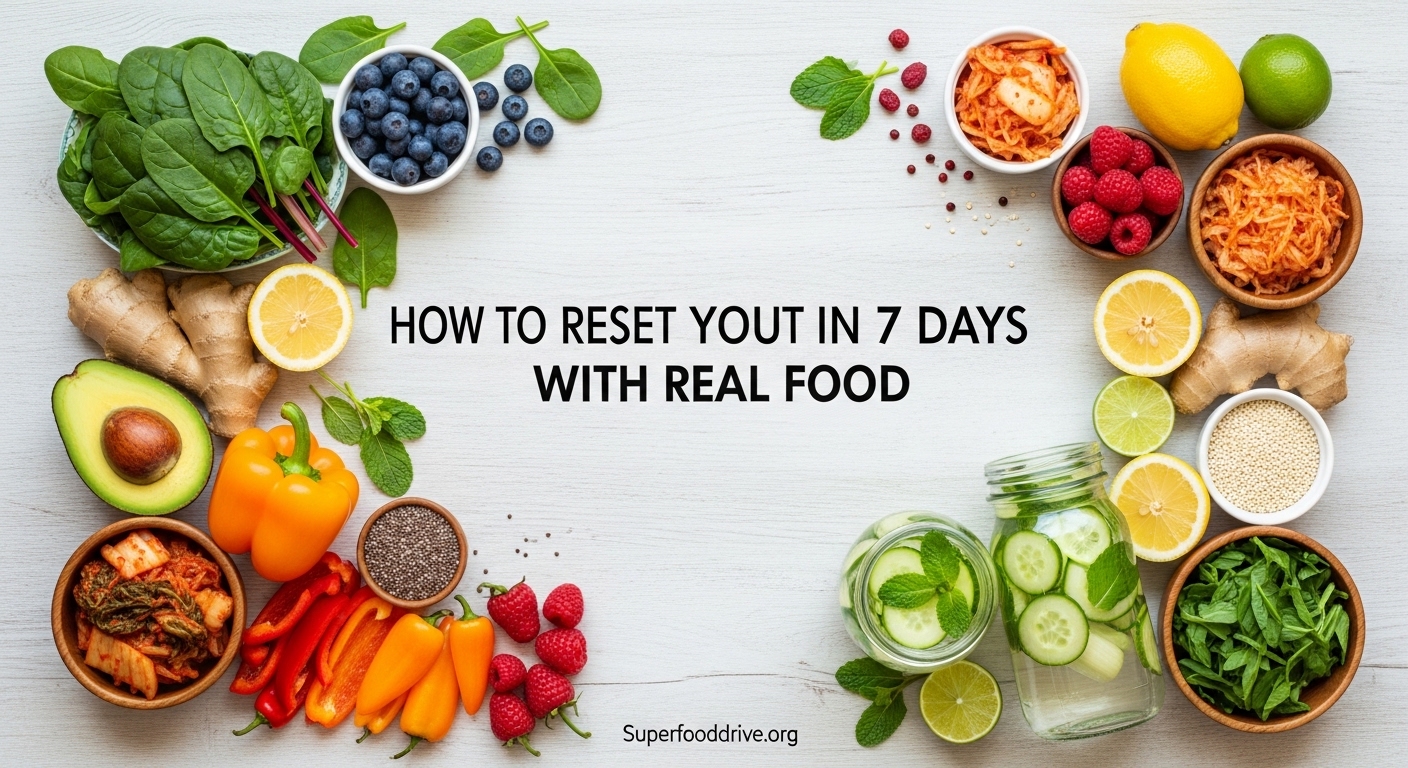
Your gut health affects everything from your digestion to your mood, energy levels, and immune function. If you have been dealing with bloating, irregular digestion, or low energy, learning how to reset your gut in 7 days with real food could be the simple solution you have been looking for.
I have guided dozens of people through this exact protocol over the past three years. The results speak for themselves: reduced bloating within 48 hours, more consistent energy by day 4, and a noticeable improvement in digestion by the end of the week.
This is not a juice cleanse or starvation diet. It is a practical, food-based approach that uses whole, nutrient-dense ingredients to restore balance to your gut microbiome. You will eat real food, feel satisfied, and give your digestive system exactly what it needs to heal.
Table of Contents
What Is a Gut Reset?
A gut reset is a structured dietary approach that eliminates inflammatory foods while emphasizing probiotics, prebiotics, and anti-inflammatory whole foods. Unlike extreme cleanses that leave you hungry and depleted, a proper gut reset nourishes your body while giving your digestive system a chance to rebalance.
Your gut microbiome contains trillions of bacteria that influence digestion, nutrient absorption, immune function, and even your mental health through the gut-brain axis. When this bacterial balance gets disrupted (through stress, antibiotics, processed foods, or poor sleep), you may experience bloating, fatigue, brain fog, and irregular bowel movements.
A 7-day gut reset works by removing the foods that feed harmful bacteria while flooding your system with the fiber-rich, fermented foods that beneficial bacteria thrive on. Think of it as hitting the reset button on your digestive health.
Why 7 Days? The Science Behind the Timeline
Research suggests that measurable changes in gut bacteria composition can begin within 24 to 48 hours of dietary changes. However, meaningful shifts that you can actually feel (like reduced bloating and more stable energy) typically require about one week of consistent eating patterns.
The 7-day timeframe is long enough to break old habits, establish new ones, and give your gut bacteria time to respond to the influx of fiber and fermented foods. It is also short enough that anyone can commit to it without feeling overwhelmed.
Our team has found that most people report their biggest breakthroughs around days 4 and 5. By then, the initial adjustment period has passed, and the benefits start compounding.
Benefits You Can Expect
A successful gut reset delivers benefits that extend far beyond your digestive system. Here is what participants in our programs consistently report:
- Reduced bloating and gas within the first 48 to 72 hours
- More consistent energy throughout the day without afternoon crashes
- Improved bowel regularity and easier digestion
- Clearer skin as inflammation decreases
- Better sleep quality due to reduced gut inflammation
- Sharper mental clarity and reduced brain fog
- Decreased sugar cravings as gut bacteria rebalance
These benefits come from addressing the root cause (gut inflammation and bacterial imbalance) rather than just masking symptoms.
How to Reset Your Gut in 7 Days With Real Food
This is the core of the program: a day-by-day plan that builds on itself. Each day has a specific focus while maintaining the foundational principles of whole foods, adequate fiber, and proper hydration.
Day 1: The Elimination Phase
Today is about removing the foods that inflame your gut. Focus on simple, whole foods that are easy to digest.
Breakfast: Oatmeal topped with blueberries and a sprinkle of ground flaxseed.
Lunch: Grilled chicken breast with steamed vegetables (zucchini, carrots, spinach) drizzled with olive oil.
Dinner: Baked salmon with roasted sweet potato and asparagus.
Snacks: One medium apple with almond butter, or a handful of walnuts.
Focus: Drink at least 8 glasses of water today. Avoid all processed foods, sugar, alcohol, caffeine, and dairy.
Day 2: Introduce Fermented Foods
Now we add the first wave of probiotic foods to introduce beneficial bacteria.
Breakfast: Greek yogurt (if you tolerate dairy) or coconut yogurt topped with sliced banana and chia seeds. Add a tablespoon of sauerkraut on the side.
Lunch: Turkey and avocado lettuce wraps with a side of fermented pickles.
Dinner: Stir-fried vegetables (bell peppers, broccoli, snap peas) with tofu or tempeh in coconut aminos.
Snacks: A small bowl of miso soup, or carrots with hummus.
Focus: Start with small portions of fermented foods (1 to 2 tablespoons) to avoid initial bloating as your gut adjusts.
Day 3: Fiber Forward
Today emphasizes prebiotic fiber, which feeds the good bacteria you introduced yesterday.
Breakfast: Smoothie with spinach, frozen berries, half a banana, ground flaxseed, and unsweetened almond milk.
Lunch: Large salad with mixed greens, chickpeas, cucumber, shredded carrots, and a lemon-tahini dressing.
Dinner: Lentil soup with kale and a side of gluten-free sourdough with olive oil.
Snacks: An orange and a small handful of pumpkin seeds.
Focus: Aim for 30 grams of fiber today from whole food sources. Increase water intake to help fiber move through your system.
Day 4: Omega-3 Emphasis
Anti-inflammatory omega-3 fatty acids help repair the gut lining and reduce intestinal inflammation.
Breakfast: Chia seed pudding made with coconut milk, topped with walnuts and fresh strawberries.
Lunch: Sardines on gluten-free crackers with a side of mixed green salad dressed with olive oil and apple cider vinegar.
Dinner: Grilled mackerel or wild-caught salmon with quinoa and roasted Brussels sprouts.
Snacks: A tablespoon of ground flaxseed mixed into water, or a small handful of hemp seeds.
Focus: Include at least one rich source of omega-3s at each meal today.
Day 5: Gut-Healing Collagen
Collagen and gelatin contain amino acids that support the intestinal lining repair.
Breakfast: Bone broth with added vegetables (carrots, celery, spinach) and a poached egg.
Lunch: Chicken soup made with bone broth, wild rice, carrots, and celery.
Dinner: Slow-cooked beef stew with bone broth base, potatoes, and root vegetables.
Snacks: Herbal ginger tea with a tablespoon of collagen peptides stirred in, or fresh fruit.
Focus: Sip on warm bone broth throughout the day between meals.
Day 6: Diversity Challenge
Microbial diversity is key to gut health. Today, aim to eat at least 30 different plant foods.
Breakfast: Smoothie bowl with spinach, kale, frozen mango, chia seeds, hemp seeds, topped with sliced almonds, coconut flakes, and fresh berries.
Lunch: Buddha bowl with quinoa base, roasted chickpeas, shredded purple cabbage, grated beets, sliced avocado, cherry tomatoes, cucumber, and a tahini dressing.
Dinner: Stuffed bell peppers with ground turkey, brown rice, mushrooms, onions, garlic, and herbs.
Snacks: Apple slices with almond butter sprinkled with cinnamon and chia seeds.
Focus: Count your plant varieties. Each herb, spice, nut, seed, grain, vegetable, and fruit counts as one.
Day 7: Integration and Reflection
Your final day combines everything you have learned and prepares you for long-term maintenance.
Breakfast: Savory breakfast bowl with sautéed greens, kimchi, avocado, and two poached eggs.
Lunch: Leftover Buddha bowl from yesterday or a large mixed salad with grilled protein.
Dinner: Baked cod with roasted vegetables and a side of fermented vegetables.
Snacks: Kombucha and a small handful of mixed nuts.
Focus: Journal how you feel today compared to day 1. Notice your energy, digestion, mood, and any physical changes.
The Super Six Foods for Your Gut
If you want to simplify this plan even further, focus on these six categories of gut-healing foods. I call them the “Super Six” because they deliver the most benefit per bite:
1. Fermented Foods (Probiotics)
These foods contain live beneficial bacteria that colonize your gut. Include sauerkraut, kimchi, kefir, kombucha, miso, and coconut yogurt.
Serving tip: Start with 1 to 2 tablespoons daily and gradually increase to 1/4 to 1/2 cup.
2. Prebiotic Fiber Sources
Prebiotics feed your good bacteria. Top sources include garlic, onions, leeks, asparagus, bananas, apples, oats, and flaxseeds.
Serving tip: Include at least one prebiotic food at every meal.
3. Omega-3 Rich Foods
These reduce gut inflammation. Focus on wild-caught salmon, sardines, mackerel, walnuts, chia seeds, and flaxseeds.
Serving tip: Aim for fatty fish 3 times per week, and include plant-based omega-3s daily.
4. Bone Broth and Collagen
The amino acids glutamine, glycine, and proline help repair the intestinal lining. Sip bone broth between meals or add collagen to smoothies.
Serving tip: 1 to 2 cups of bone broth daily during your reset.
5. Colorful Vegetables and Fruits
Polyphenols in colorful plants feed beneficial bacteria and reduce inflammation. Eat the rainbow: purple cabbage, blueberries, spinach, beets, carrots, and tomatoes.
Serving tip: Aim for 8 to 10 servings of vegetables and fruits daily.
6. Sprouted Grains and Legumes
Sprouting reduces anti-nutrients and increases digestibility while providing resistant starch that feeds good bacteria. Try sprouted lentils, chickpeas, quinoa, and brown rice.
Serving tip: Soak dried beans and grains overnight before cooking to improve digestibility.
Foods to Avoid During Your Reset
Just as important as what you eat is what you avoid. These foods disrupt gut bacteria and promote inflammation:
- Processed foods: Anything in a package with more than 5 ingredients or ingredients you cannot pronounce
- Added sugars: Feed harmful bacteria and promote yeast overgrowth
- Refined grains: White bread, pasta, and pastries lack fiber and spike blood sugar
- Industrial seed oils: Soybean, corn, and canola oil promote inflammation
- Alcohol: Disrupts gut bacteria and irritates the intestinal lining
- Artificial sweeteners: negatively impact microbial diversity
- Conventional dairy: Often contains hormones and can be inflammatory for some people
- Processed meats: Preservatives and additives harm beneficial bacteria
Focus on whole, single-ingredient foods as much as possible. If your grandmother would not recognize it as food, skip it during this week.
Signs Your Gut Is Healing
Many people wonder if the reset is actually working. Here are the positive signs to watch for:
- More regular bowel movements (1 to 2 times daily is ideal)
- Reduced bloating and gas, especially after meals
- Less intense sugar and carb cravings
- Steady energy without afternoon crashes
- Improved sleep quality and easier time falling asleep
- Clearer skin and reduced puffiness
- Better mood and reduced anxiety
- Less brain fog and improved concentration
Do not worry if you do not notice all of these changes in one week. Some people experience immediate relief, while others need more time. The important thing is that you are moving in the right direction.
Tips for Success
After guiding hundreds of people through gut resets, here are my top tips for making this week as smooth as possible:
Meal Prep on Day 0
Spend 2 hours the day before you start chopping vegetables, cooking grains, and portioning snacks. Having ready-to-eat options removes decision fatigue when you are hungry.
Hydrate Properly
Your gut needs water to move fiber through your system. Aim for half your body weight in ounces daily. A 160-pound person needs 80 ounces (10 cups) of water.
Manage Stress
Stress negatively impacts gut bacteria through the gut-brain axis. Incorporate 10 minutes of daily stress reduction: walking, meditation, deep breathing, or journaling.
Prioritize Sleep
Your gut repairs itself during sleep. Aim for 7 to 9 hours nightly. Poor sleep disrupts gut bacteria and increases cravings for inflammatory foods.
Start Slowly with Fermented Foods
Many people experience initial bloating when they first introduce probiotics. Start with 1 tablespoon of sauerkraut or a few sips of kombucha and gradually increase.
Keep a Food and Symptom Journal
Track what you eat and how you feel. This helps identify which foods work best for your body and shows your progress over the week.
Plan for Social Situations
If you have events during your reset week, eat beforehand, bring a gut-friendly dish to share, or choose the simplest options available (grilled protein and vegetables).
Frequently Asked Questions
What is the fastest way to reset your gut?
The fastest way to reset your gut is to eliminate inflammatory foods (processed foods, sugar, alcohol) while simultaneously adding probiotic and prebiotic foods. A structured 7-day plan focusing on whole foods, fermented vegetables, bone broth, and adequate fiber can produce noticeable improvements within 48 to 72 hours.
What foods flush out your gut?
Foods that support natural gut cleansing include high-fiber vegetables like leafy greens and cruciferous vegetables, fermented foods like sauerkraut and kimchi that promote beneficial bacteria, hydrating foods like cucumbers and celery, and omega-3 rich foods like salmon and flaxseeds that reduce inflammation. Adequate water intake is essential for fiber to work effectively.
How long does it take to reset my gut?
While positive changes can begin within 24 to 48 hours of dietary improvements, a meaningful gut reset typically takes 7 days to establish new patterns and for you to feel noticeable benefits. For long-lasting changes to your gut microbiome composition, consistent dietary habits over 4 to 6 weeks are recommended.
What are signs your gut is healing?
Signs your gut is healing include more regular bowel movements (1 to 2 times daily), reduced bloating and gas after meals, decreased sugar cravings, steady energy throughout the day without afternoon crashes, improved sleep quality, clearer skin, better mood, and reduced brain fog. Some people notice improvements within days, while others may take a week or more.
Can you really reset your gut in a week?
Yes, you can make meaningful progress in resetting your gut in 7 days. While complete microbiome changes take longer, one week is sufficient to reduce inflammation, establish healthier eating patterns, introduce beneficial bacteria through fermented foods, and experience tangible benefits like reduced bloating and increased energy. The key is consistency throughout the week.
Do I need supplements for a gut reset?
Supplements are not required for a gut reset when you are eating whole, nutrient-dense foods. Fermented foods provide probiotics, vegetables provide prebiotic fiber, and bone broth provides collagen. However, some people choose to add a quality probiotic supplement, digestive enzymes, or collagen powder for additional support. Always prioritize real food first.
Maintaining Your Results Beyond 7 Days
The real goal of a gut reset is not just feeling better for one week. It is about establishing habits that support long-term gut health.
After your 7-day reset, continue incorporating fermented foods daily. Keep prioritizing vegetables, especially leafy greens and colorful options. Maintain adequate hydration and fiber intake. Limit processed foods and added sugars to occasional treats rather than daily staples.
Many people find that doing a mini reset (3 to 5 days) once per month helps them stay on track. Others adopt an 80/20 approach: eating gut-supporting foods 80 percent of the time while allowing flexibility for social events and special occasions.
Your gut is resilient, but it also responds to consistent care. The choices you make day after day matter far more than any single meal.
Final Thoughts
Learning how to reset your gut in 7 days with real food gives you a powerful tool for improving your digestion, energy, and overall health. This approach works because it addresses the root cause of gut issues rather than masking symptoms.
You do not need expensive supplements or extreme cleanses. You need whole foods, consistency, and a willingness to give your body the nutrients it needs to heal itself.
Start your reset today. Your gut (and your entire body) will thank you for it.