
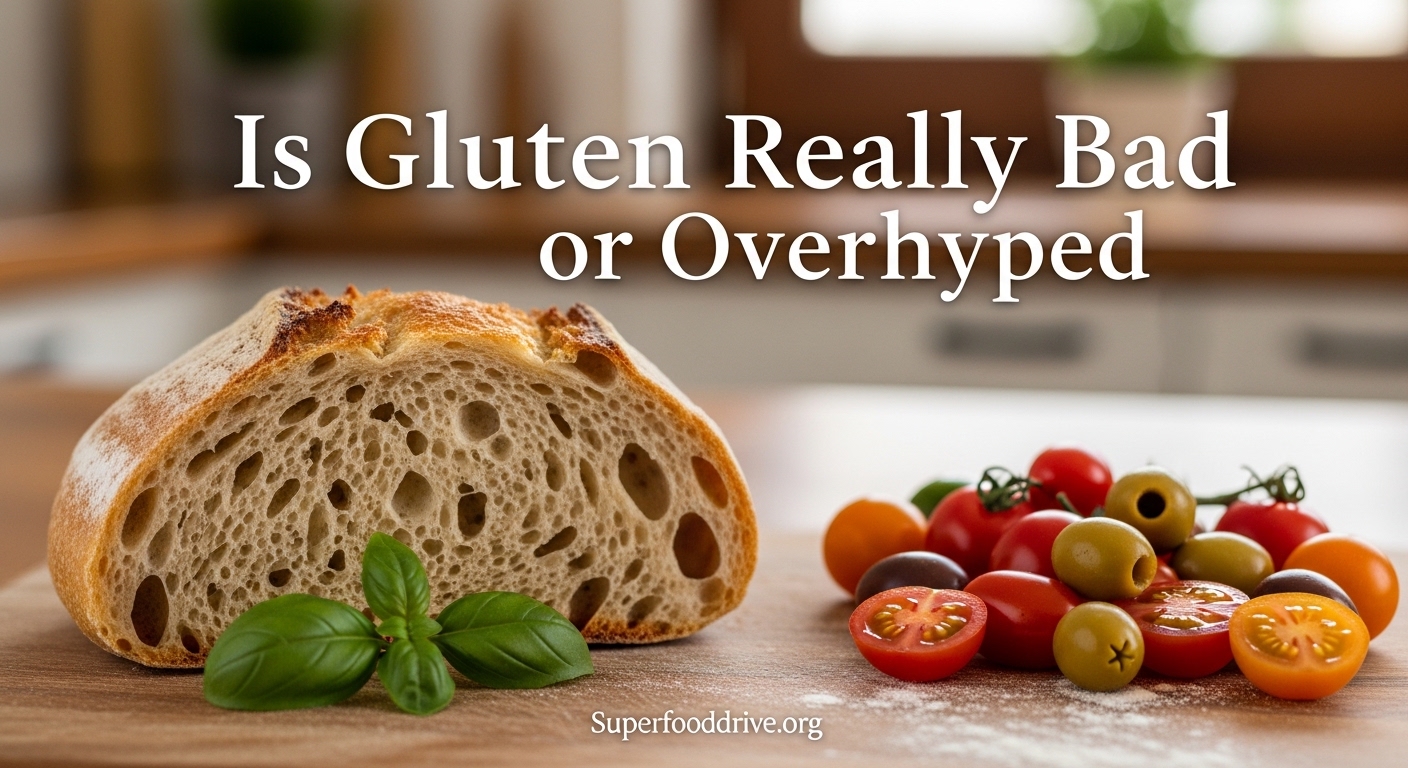
Walk into any grocery store 2026 and you will find entire aisles dedicated to gluten-free products. From pasta to pizza to cookies that claim to be healthier simply because they lack gluten, the message seems clear: gluten is the enemy. But is it really? After reviewing the latest research and speaking with registered dietitians, I have discovered the answer is more nuanced than the marketing would have you believe. For most people, gluten is not bad at all. In fact, whole grains containing gluten offer significant health benefits. The real issue is that gluten has become a scapegoat for a much more complex digestive puzzle.
This guide cuts through the hype to explain what gluten actually is, who truly needs to avoid it, and why so many people feel better when they stop eating bread and pasta. By the end, you will understand whether gluten deserves its villain status or if it has been unfairly demonized.
Table of Contents
What Is Gluten and Why Does It Matter?
Gluten is a family of proteins found in wheat, barley, rye, and triticale. Specifically, it is made up of two main proteins: gliadin and glutenin. When you mix flour containing gluten with water, these proteins form a sticky network that gives dough its elasticity and helps bread rise and maintain its shape.
The term “gluten” actually comes from the Latin word for “glue,” which perfectly describes its binding properties. Without gluten, bread would be dense and crumbly. Pizza dough would not stretch. Cakes would fall flat. This protein complex is what makes wheat-based products so satisfyingly chewy and structurally sound.
Gluten is found in obvious sources like bread, pasta, and baked goods. But it also hides in less expected places: soy sauce, salad dressings, soups, processed meats, and even some medications and supplements. For people who must avoid gluten, this hidden presence creates a constant vigilance that shapes daily life.
From a nutritional standpoint, gluten itself is not a nutrient. It is simply a structural protein. The nutritional value of wheat comes from the vitamins, minerals, and fiber in the grain, not from the gluten proteins. This distinction matters because it explains why gluten-free products are not automatically healthier, a point we will explore later.
Who Actually Needs to Avoid Gluten?
Despite what marketing suggests, only specific medical conditions require strict gluten avoidance. Understanding these conditions helps separate fact from fad. Three distinct health issues involve gluten reactions, each with different mechanisms and implications.
Celiac Disease: The Autoimmune Condition
Celiac disease is an autoimmune disorder affecting approximately 1% of the population worldwide. When someone with celiac disease eats gluten, their immune system mistakenly attacks the small intestine. Specifically, the immune response targets the villi, tiny finger-like projections lining the intestinal wall that absorb nutrients.
This immune assault damages the villi over time, leading to malabsorption of essential nutrients like iron, calcium, and B vitamins. The damage can be severe enough to cause osteoporosis, anemia, and neurological problems if left untreated. For people with celiac disease, even trace amounts of gluten, as small as 50 milligrams (about the amount in a small crumb of bread), can trigger this damaging immune response.
Symptoms of celiac disease vary widely. Some people experience classic digestive issues: bloating, diarrhea, constipation, and abdominal pain. Others have seemingly unrelated symptoms: fatigue, joint pain, skin rashes, migraines, or depression. This variability makes diagnosis challenging. Blood tests for specific antibodies (tTG-IgA and EMA) provide initial screening, but a definitive diagnosis requires an intestinal biopsy showing villous atrophy.
The only treatment for celiac disease is a strict, lifelong gluten-free diet. When followed faithfully, the intestinal lining heals, symptoms resolve, and the risk of associated conditions decreases dramatically.
Wheat Allergy: The Immediate Immune Response
Wheat allergy differs fundamentally from celiac disease. While celiac is an autoimmune condition, wheat allergy is an IgE-mediated allergic reaction. The immune system overreacts to proteins in wheat (not just gluten), releasing histamine and other chemicals that cause allergic symptoms.
Symptoms of wheat allergy typically appear within minutes to hours after eating and can include hives, itching, swelling of the lips and throat, difficulty breathing, and in severe cases, anaphylaxis. Unlike celiac disease, which causes delayed intestinal damage, wheat allergy produces immediate, sometimes life-threatening reactions.
Wheat allergy is more common in children than adults. Many children outgrow it by age 16. Management requires complete avoidance of wheat, though some people with wheat allergy can tolerate other gluten-containing grains like barley and rye since the allergenic proteins differ.
Non-Celiac Gluten Sensitivity: The Controversial Middle Ground
Non-celiac gluten sensitivity (NCGS), also called gluten intolerance, represents the most debated category. People with NCGS experience symptoms similar to celiac disease when they eat gluten: bloating, diarrhea, abdominal pain, fatigue, brain fog, and joint pain. However, they test negative for celiac antibodies and show no intestinal damage on biopsy.
Estimates suggest NCGS affects anywhere from 0.5% to 13% of the population, though exact prevalence is difficult to determine because there is no definitive diagnostic test. The diagnosis is essentially one of exclusion: if symptoms improve on a gluten-free diet and return when gluten is reintroduced, and celiac disease and wheat allergy have been ruled out, NCGS is the likely culprit.
Recent research has complicated the NCGS picture. Some studies suggest that FODMAPs (fermentable oligosaccharides, disaccharides, monosaccharides, and polyols), not gluten, may be responsible for symptoms in many people diagnosed with NCGS. We will explore this crucial distinction in the next section.
Is Gluten Actually the Problem? The FODMAPs Connection
Here is where the gluten story gets interesting. Multiple studies have found that when researchers isolate gluten and give it to people with suspected NCGS in double-blind, placebo-controlled trials, many participants do not react to gluten alone. Instead, they react to the fructans (a type of FODMAP) present in wheat, barley, and rye.
FODMAPs are short-chain carbohydrates that are poorly absorbed in the small intestine. When they reach the colon, gut bacteria ferment them, producing gas and causing bloating, pain, and altered bowel movements in sensitive individuals. Wheat is high in fructans, which explains why people feel better when they stop eating wheat products.
The critical insight is that gluten and FODMAPs travel together in wheat-based foods. When you eliminate gluten, you simultaneously eliminate most FODMAPs. This creates a situation where people attribute their symptom relief to gluten avoidance when FODMAP reduction may be the actual cause.
A 2013 study published in Gastroenterology put this theory to the test. Researchers gave 37 people with self-reported NCGS three different diets: one high in gluten, one low in gluten but high in FODMAPs, and one low in both. Participants reported similar symptom improvements on the low-FODMAP diet regardless of gluten content. When researchers added pure gluten back into the low-FODMAP diet, symptoms did not worsen significantly. This suggested that FODMAPs, not gluten, were the primary trigger.
Does this mean NCGS does not exist? Not necessarily. Some individuals may genuinely react to gluten proteins, particularly alpha-amylase/trypsin inhibitors (ATIs) found in wheat, which can trigger immune responses. But the evidence suggests that many people diagnosed with NCGS actually have FODMAP sensitivity, a condition that is more nuanced and allows for some wheat consumption using specific preparation methods or portion control.
Why Do So Many People Feel Better Without Gluten?
Given that only about 1% of people have celiac disease and perhaps 5-6% have genuine gluten sensitivity, why do so many more report feeling better on gluten-free diets? The answer involves several factors beyond gluten itself.
The Processed Food Reduction Effect
When most people go gluten-free, they eliminate a huge category of processed foods: pizza, pastries, bread, pasta, cookies, cakes, and most fast food. These foods are not just sources of gluten; they are typically high in refined carbohydrates, added sugars, unhealthy fats, and sodium. They are also low in fiber, vitamins, and minerals.
By cutting out gluten, people inadvertently adopt a diet with fewer processed foods and more whole foods like vegetables, fruits, meats, and gluten-free grains. This dietary shift alone, regardless of gluten status, improves digestion, energy levels, and overall health. The gluten-free diet acts as a “health halo” that drives better food choices.
The Placebo Effect Is Real
The placebo effect is powerful, especially for subjective symptoms like bloating, fatigue, and brain fog. When people believe a dietary change will make them feel better, they often do feel better. Expectations shape perception. If someone adopts a gluten-free diet expecting improved energy and digestion, their brain may interpret normal bodily sensations more positively, confirming their expectation.
Studies using double-blind gluten challenges have found that many people who report gluten sensitivity cannot reliably distinguish between gluten-containing and gluten-free foods when they do not know which is which. This does not mean their symptoms are imaginary; it means the cause may be more complex than gluten alone.
Reduced FODMAP Intake
As discussed earlier, gluten-free diets are typically low in FODMAPs simply because wheat, barley, and rye are major FODMAP sources. People with undiagnosed FODMAP sensitivity experience genuine symptom relief when they eliminate these foods, even though the mechanism is different from gluten sensitivity.
The Health Benefits of Whole Grains with Gluten
For people without celiac disease, wheat allergy, or genuine gluten sensitivity, whole grains containing gluten offer substantial health benefits. Abandoning these foods without medical reason may actually harm your health.
Whole wheat is rich in fiber, particularly insoluble fiber that promotes healthy digestion and regular bowel movements. It contains B vitamins including folate, thiamin, and niacin that support energy metabolism and nervous system function. Whole wheat also provides minerals like iron, magnesium, and zinc, along with antioxidants and phytochemicals.
The arabinoxylan oligosaccharide in wheat bran acts as a prebiotic, feeding beneficial gut bacteria like bifidobacteria. These bacteria produce short-chain fatty acids that nourish the intestinal lining, reduce inflammation, and support immune function. Research from the Harvard T.H. Chan School of Public Health has found that people who eat the most whole grains have lower risks of heart disease, type 2 diabetes, and certain cancers compared to those who eat the least.
A 2016 study in The BMJ analyzed data from 45 studies and found that people with the highest whole grain intake had significantly lower risks of coronary heart disease, cardiovascular disease, and mortality from all causes. The dose-response relationship was clear: more whole grains equaled better health outcomes.
The key word here is “whole” grains. Refined wheat products like white bread and pastries have been stripped of their bran and germ, removing most of the fiber, vitamins, and minerals. The problem is not gluten; it is the processing that turns whole grains into nutrient-poor foods.
The Hidden Risks of Gluten-Free Diets
For people who do not need to avoid gluten, going gluten-free carries real risks that are often overlooked in the wellness conversation.
Nutritional Deficiencies
Gluten-free diets are often low in fiber, iron, calcium, zinc, folate, and B vitamins. Many gluten-free products use refined starches like rice flour, potato starch, and tapioca starch, which have less nutritional value than whole wheat flour. Unless carefully planned, gluten-free diets can lead to constipation, anemia, and poor gut health.
Increased Exposure to Processed Foods
To compensate for the binding and textural properties of gluten, manufacturers add extra sugar, fat, and salt to gluten-free products. A gluten-free cookie often has more calories and sugar than its gluten-containing equivalent. Many gluten-free products qualify as ultra-processed foods, which research links to weight gain, metabolic syndrome, and chronic inflammation.
Some studies have found that people on gluten-free diets have higher levels of heavy metals like arsenic, mercury, and lead in their blood. This may be due to increased consumption of rice-based products, which can accumulate arsenic from soil and water.
Social and Financial Burden
Gluten-free products typically cost 2-3 times more than their gluten-containing equivalents. This creates a financial burden, especially for families. Social situations become complicated, requiring constant vigilance about cross-contamination and ingredient lists. Dining out becomes stressful rather than enjoyable.
For people with genuine medical conditions requiring gluten avoidance, these burdens are necessary. For everyone else, they represent unnecessary sacrifices that provide no health benefit and may cause harm.
Autoimmune Disease and Gluten: What About Hashimoto’s?
A common question is whether people with autoimmune conditions, particularly Hashimoto’s thyroiditis, should avoid gluten. The theory is that gluten proteins resemble thyroid tissue, and the immune system might attack both through molecular mimicry.
The evidence here is mixed and largely observational. Some studies suggest that people with autoimmune thyroid disease are more likely to have celiac disease than the general population. For these individuals, gluten avoidance is clearly beneficial. However, for people with Hashimoto’s who do not have celiac disease, the benefits of gluten avoidance are less clear.
A few small studies have found that some Hashimoto’s patients experience reduced thyroid antibodies when following a gluten-free diet. However, these studies are limited by small sample sizes, short duration, and lack of proper controls. Larger, better-designed trials have not consistently shown benefits.
The consensus among endocrinologists is that unless you have celiac disease or diagnosed gluten sensitivity, there is insufficient evidence to recommend gluten avoidance for Hashimoto’s thyroiditis. If you have Hashimoto’s and suspect gluten sensitivity, working with a registered dietitian to conduct a proper elimination and rechallenge protocol can help determine if gluten is truly problematic for you.
Does Gluten-Free Lower Cortisol or Improve A1c?
Two specific claims deserve attention: that gluten-free diets reduce cortisol (stress hormone) and improve A1c (blood sugar control). Let us examine the evidence.
Cortisol: There is no direct evidence that gluten consumption raises cortisol levels in people without celiac disease. The claim likely stems from observations that people feel less stressed when they follow any restrictive diet that makes them feel “in control” of their health. If gluten-free eating improves digestive comfort, reduced physical stress could theoretically lower cortisol. However, no studies have specifically shown that gluten-free diets lower cortisol compared to healthy diets containing gluten.
A1c: Gluten-free diets do not inherently improve blood sugar control. In fact, many gluten-free products have higher glycemic indexes than their wheat-based counterparts because they lack the protein structure that slows digestion. Some studies have found that people on gluten-free diets have higher rates of type 2 diabetes, possibly due to increased consumption of refined starches and reduced fiber intake.
If a gluten-free diet leads to weight loss through calorie reduction, A1c could improve indirectly. But this is a calorie effect, not a gluten effect. For blood sugar management, a diet emphasizing whole grains, legumes, vegetables, and lean proteins, regardless of gluten content, is the evidence-based approach.
FAQ
Is gluten actually the problem for most people?
No. For the vast majority of people, gluten is not harmful. Only about 1% of the population has celiac disease requiring strict avoidance. Another small percentage may have non-celiac gluten sensitivity or wheat allergy. For everyone else, gluten is safe to consume. Many people who think they react to gluten are actually sensitive to FODMAPs, a group of carbohydrates found in wheat and other foods that can cause digestive symptoms.
Should I avoid gluten if I have Hashimoto’s thyroiditis?
Unless you also have celiac disease, there is insufficient evidence to recommend gluten avoidance for Hashimoto’s. While some small studies suggest potential benefits, larger trials have not confirmed this. If you suspect gluten affects your thyroid, consult an endocrinologist or registered dietitian to conduct a proper elimination trial rather than making permanent dietary changes based on limited evidence.
Does going gluten-free lower cortisol levels?
There is no direct scientific evidence that gluten-free diets lower cortisol. Any stress reduction likely comes from improved digestive comfort if you have underlying sensitivity, or from the general sense of control that comes with dietary changes. The reduction in processed foods that often accompanies gluten-free eating may also reduce physical stress on the body.
Is a gluten-free diet good for blood sugar and A1c?
Gluten-free diets do not inherently improve blood sugar control. Many gluten-free products have higher glycemic indexes than wheat-based alternatives because they use refined starches. For managing blood sugar, focus on eating whole grains, vegetables, legumes, and lean proteins rather than avoiding gluten specifically. Some studies actually show higher diabetes rates in people following gluten-free diets, likely due to increased processed food consumption.
How do I know if I am truly gluten intolerant?
True gluten intolerance (non-celiac gluten sensitivity) is diagnosed by exclusion. First, get tested for celiac disease while still eating gluten. If negative, try a strict gluten-free diet for 2-4 weeks, then reintroduce gluten while monitoring symptoms. Work with a registered dietitian to ensure you are truly testing gluten and not other components like FODMAPs. Keeping a detailed food and symptom diary helps identify patterns.
Why do I feel better when I stop eating gluten?
Feeling better after cutting gluten often has little to do with gluten itself. When you eliminate gluten, you typically reduce processed foods, increase whole foods, and lower your FODMAP intake. You may also experience placebo effects. The combination of better overall nutrition, reduced fermentable carbohydrates, and positive expectations explains why many people feel better on gluten-free diets even without diagnosed sensitivity.
Is Gluten Really Bad or Just Overhyped? The Verdict
After examining the evidence, the answer is clear: gluten has been overhyped as a dietary villain for most people. The anti-gluten movement has created a false binary where gluten is either toxic or harmless, when the reality is more nuanced.
For people with celiac disease, gluten is absolutely harmful and must be avoided completely. For those with wheat allergy, gluten-containing grains pose serious risks. For individuals with genuine non-celiac gluten sensitivity, gluten avoidance provides real symptom relief. These groups represent a small but important minority who deserve accurate information and safe food options.
For everyone else, gluten is not bad. In fact, whole grains containing gluten contribute to better health outcomes when they replace refined carbohydrates and processed foods. The fiber, vitamins, minerals, and prebiotic compounds in whole wheat support digestive health, heart health, and longevity.
The confusion arises because many people who feel better without gluten are actually benefiting from reduced processed food intake, lower FODMAP consumption, or placebo effects. The gluten-free diet acts as a proxy for overall dietary improvement rather than a specific medical necessity.
If you suspect gluten sensitivity, get tested for celiac disease before eliminating gluten. Work with a healthcare provider or registered dietitian to conduct a proper elimination trial that distinguishes between gluten, FODMAPs, and other potential triggers. Do not self-diagnose based on marketing claims or internet anecdotes.
The bottom line: gluten is not inherently bad. It is a protein that most people digest without issue. The problem is not gluten; it is the ultra-processed foods that contain it. Focus on eating whole, minimally processed foods, and let your individual symptoms and medical tests guide your dietary choices, not food marketing.