
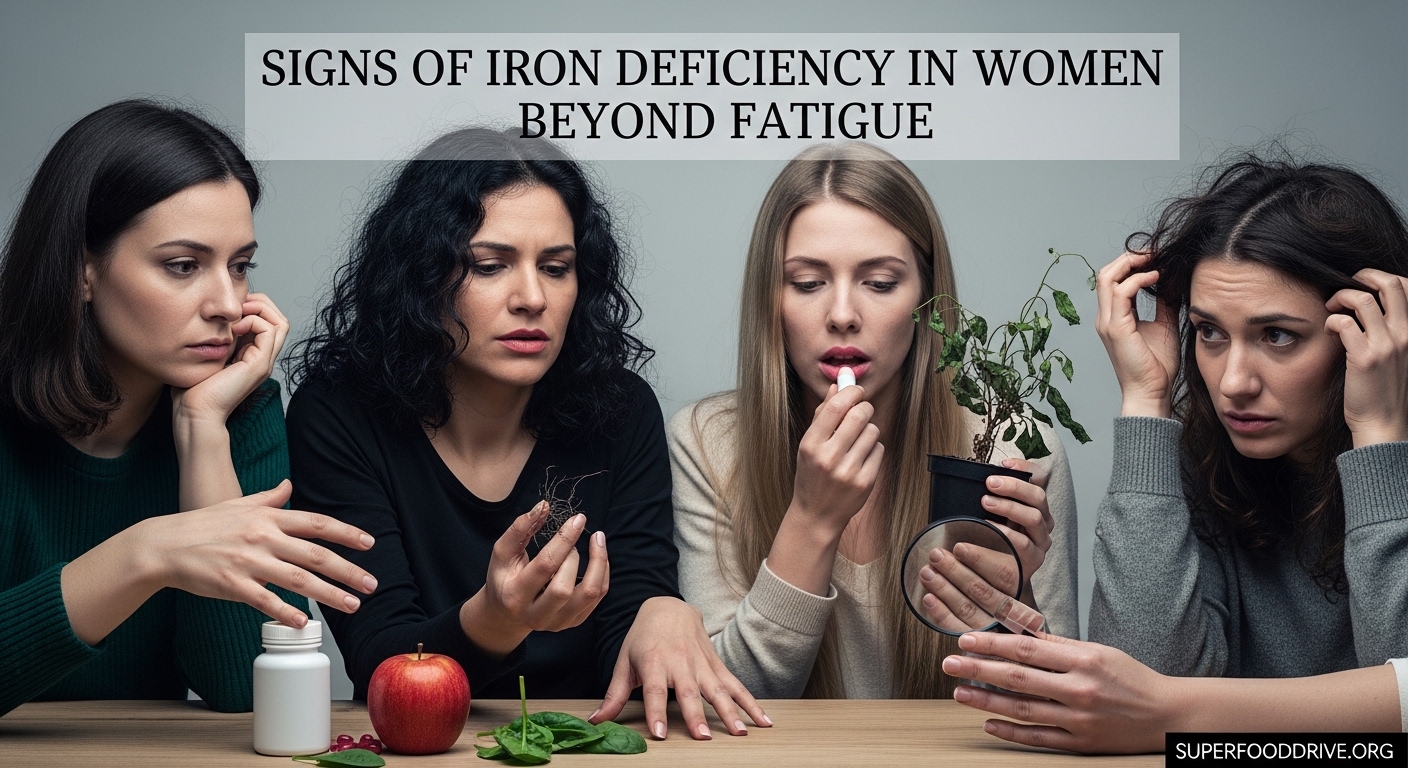
When most women think about iron deficiency, they picture someone who feels tired all the time. That image is not wrong, but it is incomplete. I have spent years researching women’s health issues, and iron deficiency keeps surfacing as one of the most misunderstood and underdiagnosed conditions affecting women today.
Here is what surprised me most: you can have significant iron deficiency without being anemic, and the symptoms go far beyond feeling sleepy. From hair falling out in the shower to anxiety that mimics panic disorder, low iron can manifest in ways that doctors often miss or dismiss.
Understanding the full range of iron deficiency symptoms in women empowers you to advocate for proper testing and treatment. This guide covers the signs that extend well past fatigue, helping you recognize when your body is crying out for iron.
Table of Contents
Understanding Iron Deficiency: More Than Just Tiredness
Iron plays a central role in producing hemoglobin, the protein in red blood cells that carries oxygen throughout your body. When iron levels drop, your cells cannot get the oxygen they need to function properly.
Most people confuse iron deficiency with iron deficiency anemia, but these are different stages of the same problem. You can have low ferritin (your iron storage protein) and experience symptoms long before your hemoglobin drops enough to qualify as anemia. This matters because standard blood tests often only check hemoglobin, missing the early warning signs.
Fatigue is the most talked-about symptom for good reason. When your tissues are starved of oxygen, every activity feels harder. But focusing only on tiredness means missing dozens of other signals your body sends when iron runs low.
Physical Symptoms Beyond Fatigue
Your body has many ways of signaling iron deficiency that have nothing to do with feeling tired. These physical signs often appear gradually, making them easy to attribute to stress, aging, or other causes.
Skin, Hair, and Nail Changes
Pale or sallow skin is one of the earliest visible signs of iron deficiency. Your skin loses its healthy glow because reduced hemoglobin means less oxygen-rich blood reaching the surface. Some women also develop a slight yellowish tint.
Hair loss is devastating and surprisingly common with low iron. Your hair follicles are among the most rapidly dividing cells in your body, and they need plenty of oxygen to maintain healthy growth. When iron is scarce, your body prioritizes vital organs over hair, leading to thinning, increased shedding, and lack of regrowth.
Your nails tell a story too. Brittle nails that chip and crack easily often signal iron deficiency. In more severe cases, you might develop koilonychia, where nails become concave and spoon-shaped. This condition, while less common, is a clear indicator that iron stores are severely depleted.
Cardiovascular Symptoms
Your heart works harder when iron is low because it must pump more blood to compensate for reduced oxygen-carrying capacity. This extra effort can cause heart palpitations, where you feel your heart racing, pounding, or skipping beats.
Chest pain sometimes occurs as the heart muscle itself struggles with inadequate oxygen supply. Shortness of breath is another red flag, particularly noticeable when climbing stairs or during mild exercise. You might find yourself gasping for air after activities that used not to wind you.
These cardiovascular symptoms understandably cause anxiety. Many women end up in emergency rooms thinking they are having heart problems, only to learn their hearts are fine but their iron is critically low.
Neurological and Sensory Symptoms
Restless legs syndrome has a strong connection to iron deficiency. That irresistible urge to move your legs, especially at night, often improves dramatically once iron stores are replenished. The exact mechanism is not fully understood, but dopamine pathways in the brain appear to be involved.
Dizziness and headaches plague many women with low iron. You might feel lightheaded when standing up quickly, or experience persistent headaches that do not respond to typical pain relievers. Some women describe a sensation like being on an elevator with every step they take.
Cold hands and feet are classic signs that doctors check for during exams. Reduced circulation to extremities leaves them feeling perpetually chilly, even in warm environments. Tinnitus, or ringing in the ears, also appears in forum discussions among women with iron deficiency, though this symptom receives less medical attention.
Unusual Physical Signs
Pica is perhaps the strangest symptom of iron deficiency. This condition causes cravings for non-food items like ice, dirt, starch, or even paper. Craving ice specifically, called pagophagia, is so strongly linked to iron deficiency that doctors consider it a diagnostic clue.
Mouth sores and tongue problems occur when iron deficiency affects the tissues lining your mouth. Your tongue might become swollen, smooth, and pale, a condition called glossitis. Painful cracks at the corners of your mouth, known as angular cheilitis, can also signal low iron.
Exercise intolerance frustrates active women who suddenly cannot maintain their usual fitness levels. Without adequate iron, your muscles cannot access the oxygen they need for exertion. Activities that once felt easy become exhausting, and recovery takes longer than it should.
Mental and Emotional Symptoms
The psychological impact of iron deficiency deserves far more attention than it typically receives. Brain tissue is highly sensitive to oxygen deprivation, and when iron is low, mental and emotional functioning suffer.
Cognitive Symptoms
Brain fog is the term women use most often to describe what happens when iron runs low. You might struggle to find words, lose your train of thought mid-sentence, or feel like your thinking is stuck in mud. Simple decisions become surprisingly difficult.
Memory problems extend beyond typical forgetfulness. You might walk into a room and forget why, misplace items constantly, or struggle to recall information you just learned. These cognitive changes can affect work performance and daily functioning significantly.
Concentration becomes a major challenge. Reading a page and realizing you absorbed none of it, or staring at a computer screen unable to focus, are common complaints. Many women fear they are developing dementia when these symptoms first appear.
Emotional and Psychological Impact
Anxiety and iron deficiency share a complex relationship. Low iron can trigger or worsen anxiety symptoms, including racing thoughts, sense of impending doom, and even panic attacks. Forum discussions reveal countless stories of women being prescribed anti-anxiety medications when what they really needed was iron supplementation.
Depression and mood swings often accompany iron deficiency. You might feel tearful for no apparent reason, or experience irritability that seems out of proportion to situations. The emotional volatility can strain relationships and make you feel like you are losing control.
The combination of physical exhaustion and emotional instability creates a profound impact on quality of life. Women report feeling like strangers in their own bodies, unable to trust their emotions or energy levels from one day to the next.
Why Women Are at Higher Risk
Women face unique challenges when it comes to maintaining adequate iron stores. Understanding these risk factors helps explain why iron deficiency affects up to one-third of women of reproductive age.
Menstrual Blood Loss
Heavy menstrual bleeding is the leading cause of iron deficiency in premenopausal women. Losing significant blood each month drains iron stores over time, particularly if dietary intake cannot keep pace with losses.
Conditions like fibroids, endometriosis, and polycystic ovary syndrome can cause or worsen heavy periods. Unfortunately, many women normalize their bleeding patterns, not realizing their flow is excessive until iron deficiency symptoms appear.
The iron deficiency cycle creates a frustrating pattern. Low iron can actually worsen menstrual symptoms, leading to heavier bleeding, which further depletes iron. Breaking this cycle requires addressing both the bleeding and the deficiency simultaneously.
Pregnancy and Postpartum
Pregnancy dramatically increases iron requirements. Your blood volume expands by up to 50 percent to support your growing baby, and iron is essential for fetal brain development. Many women enter pregnancy with marginal iron stores and quickly become deficient.
Postpartum iron depletion is common but frequently overlooked. Blood loss during delivery, combined with the demands of breastfeeding and recovery, can leave new mothers severely iron deficient. Postpartum depression and anxiety may have iron deficiency as a contributing factor.
Even women who had normal iron levels before pregnancy may struggle to rebuild stores afterward, particularly if they experienced significant blood loss or have closely spaced pregnancies.
Other Risk Factors
Vegetarian and vegan diets require more planning to meet iron needs. Plant-based iron, called non-heme iron, is not absorbed as efficiently as the heme iron found in meat. Without careful attention to iron-rich foods and vitamin C pairing, deficiency can develop even with adequate calorie intake.
Digestive conditions like celiac disease, Crohn’s disease, and gastric bypass surgery affect iron absorption. Chronic use of acid-reducing medications can also impair absorption since stomach acid helps convert iron to its absorbable form.
Athletic women face increased iron demands. Foot-strike hemolysis, where red blood cells break down from repetitive impact, combined with increased iron needs for oxygen transport, puts female athletes at elevated risk.
Diagnosis and Testing
Getting properly diagnosed requires understanding which tests matter. Many women are told their iron is normal when it is actually suboptimal for symptom relief.
Ferritin is the most important test for assessing iron stores. This protein reflects how much iron your body has saved for future use. While lab normal ranges often start at 12 ng/mL, many women do not feel relief from symptoms until ferritin reaches 50 ng/mL or higher.
Hemoglobin measures whether you have anemia, but it can remain normal even when ferritin is depleted. A complete blood count (CBC) provides additional information about red blood cell size and number. Transferrin saturation and serum iron offer more detail about iron transport and availability.
Doctors sometimes miss iron deficiency because they only test hemoglobin, or because they interpret ferritin results using the lower end of normal ranges. Additionally, ferritin can be falsely elevated by inflammation, potentially masking deficiency during illness.
When discussing testing with your doctor, ask specifically for ferritin along with hemoglobin. Request your actual numbers, not just whether results are normal. If your ferritin is below 30 ng/mL and you have symptoms, treatment may be appropriate even without anemia.
Treatment Options and Recovery
Treating iron deficiency involves replenishing stores and addressing the underlying cause. The approach depends on severity, cause, and how well you tolerate different interventions.
Oral iron supplements are the first-line treatment for most cases. Ferrous sulfate, ferrous gluconate, and ferrous fumarate are common formulations. Taking iron with vitamin C enhances absorption, while avoiding it with calcium, coffee, or tea prevents interference.
Many women struggle with gastrointestinal side effects from oral iron. Nausea, constipation, and stomach upset lead some to discontinue treatment. Taking iron every other day, or switching to different formulations like iron bisglycinate, can improve tolerance.
IV iron becomes necessary when oral supplements fail, cause intolerable side effects, or when rapid repletion is needed. This option delivers iron directly into the bloodstream, bypassing the digestive system entirely. It requires medical supervision but can be transformative for severe deficiency.
Dietary sources support treatment but rarely correct established deficiency alone. Heme iron from meat, poultry, and fish is most absorbable. Non-heme sources like lentils, spinach, and fortified cereals can contribute significantly when paired with vitamin C-rich foods.
Recovery takes time, typically several months to fully rebuild stores. Many women notice some improvement within two to four weeks of starting treatment, but complete resolution of symptoms may take three to six months or longer.
Frequently Asked Questions
How to tell if fatigue is from low iron?
Iron deficiency fatigue typically feels like exhaustion that sleep does not fix. You may wake up tired, struggle with physical activity that used to be easy, or feel breathless after mild exertion. Other accompanying symptoms like hair loss, pale skin, or cravings for ice suggest iron deficiency rather than simple tiredness. A blood test checking ferritin and hemoglobin levels confirms the diagnosis.
Can you have iron deficiency without anemia?
Yes, you can have iron deficiency without anemia. This condition, sometimes called iron deficiency without anemia or iron deficiency with normal hemoglobin, occurs when ferritin is depleted but hemoglobin remains within normal range. Symptoms like fatigue, hair loss, brain fog, and restless legs can occur even before anemia develops. Many women feel significantly better once iron stores are replenished, even if they never technically had anemia.
What are the first signs of iron deficiency?
Early signs include unusual fatigue, pale skin, brittle nails, and increased hair shedding. Some women notice cravings for ice or non-food items, cold hands and feet, or difficulty concentrating. Restless legs at night and frequent headaches can also signal early deficiency. These symptoms often develop gradually, making them easy to attribute to stress or aging until they become more pronounced.
How long does it take to recover from iron deficiency?
Most women notice some symptom improvement within 2 to 4 weeks of starting iron supplementation, but full recovery typically takes 3 to 6 months. Severe deficiency may require longer treatment to completely rebuild stores. Hair regrowth takes the longest, often 6 months or more. Continuing treatment for several months after symptoms resolve ensures stores are fully replenished and prevents relapse.
Can iron deficiency cause anxiety?
Yes, iron deficiency can cause or worsen anxiety symptoms. Low iron affects neurotransmitter function and brain oxygenation, potentially triggering racing thoughts, panic attacks, and feelings of impending doom. Many women report significant improvement in anxiety symptoms once iron levels normalize. If you are experiencing anxiety along with physical signs of iron deficiency, testing your ferritin level is worthwhile.
When should I see a doctor for iron deficiency?
See a doctor if you have persistent fatigue lasting more than two weeks, unexplained hair loss, heart palpitations, shortness of breath, or any combination of symptoms discussed here. Women with heavy menstrual periods, those planning pregnancy, or anyone with digestive conditions affecting absorption should also be evaluated. Seek immediate care for chest pain, severe shortness of breath, or fainting, which can indicate severe deficiency requiring urgent treatment.
What foods help iron deficiency?
Iron-rich foods include red meat, poultry, lentils, beans, spinach, fortified cereals, and pumpkin seeds. Pairing plant-based iron sources with vitamin C foods like citrus, bell peppers, or tomatoes enhances absorption. Avoid drinking coffee or tea with meals, as tannins inhibit iron uptake. Cooking with cast iron skillets can also add iron to your diet. While dietary changes support treatment, established deficiency usually requires supplementation.
Conclusion
Signs of iron deficiency in women extend far beyond the fatigue that everyone expects. From hair loss and brittle nails to anxiety and brain fog, low iron can affect virtually every system in your body. Understanding these broader symptoms empowers you to recognize when something is wrong and seek appropriate testing.
If you recognize yourself in the symptoms described here, do not dismiss them as just stress or normal aging. Request a complete iron panel including ferritin from your healthcare provider. Many women suffer needlessly for months or years because their deficiency was missed or undertreated.
Iron deficiency is common, treatable, and the relief that comes with proper treatment can be life-changing. You deserve to feel energetic, clear-headed, and emotionally stable. Taking steps to identify and correct iron deficiency could be the key to reclaiming your health in 2026.