
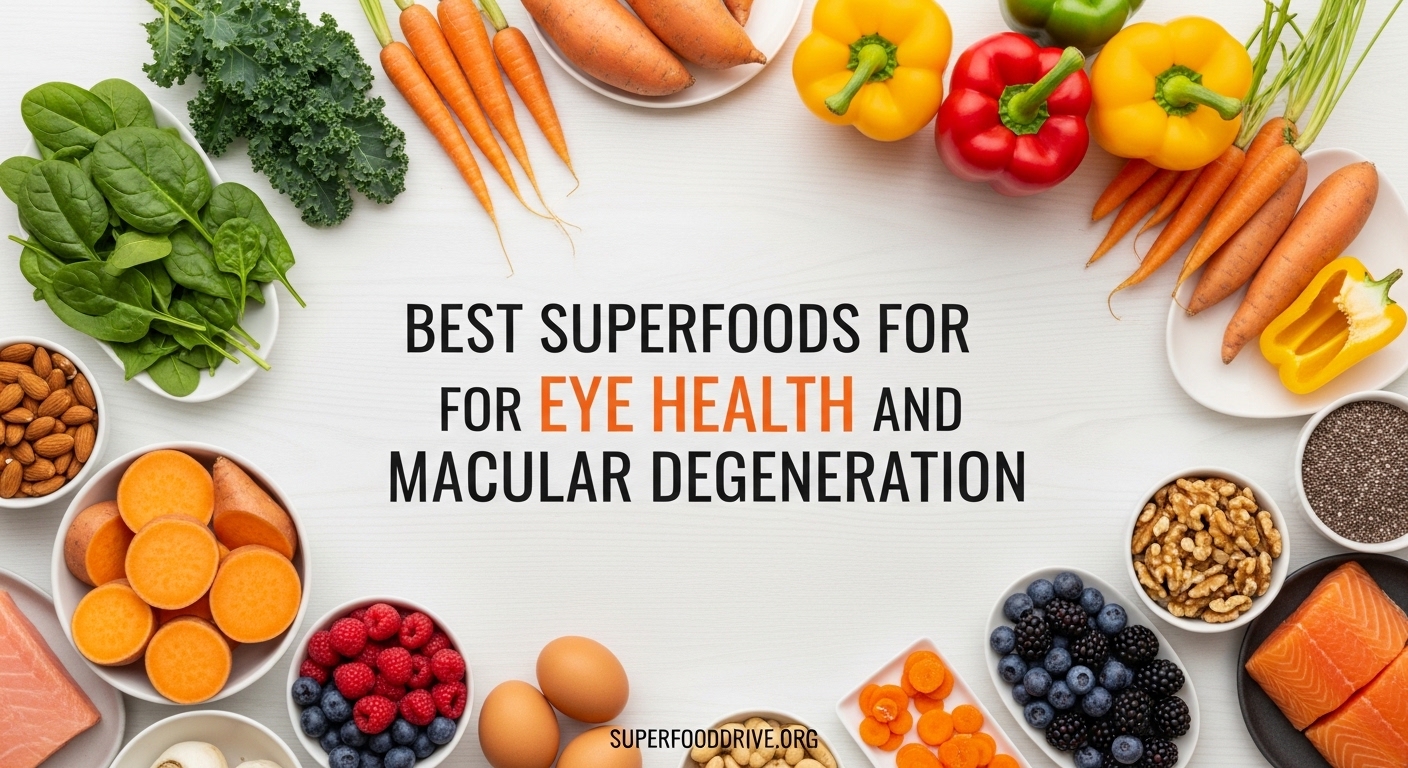
Your vision is one of your most precious senses, yet many of us take it for granted until problems arise. I learned this firsthand when a family member received a macular degeneration diagnosis, and our entire household had to rethink how we eat. The connection between nutrition and eye health is stronger than most people realize, and the right superfoods can make a measurable difference in protecting your sight.
In this guide, you’ll discover the specific nutrients that fight age-related macular degeneration (AMD) and the superfoods that deliver them. Whether you’re looking to prevent vision problems or support existing eye health conditions, these evidence-based recommendations will help you build a vision-protecting diet starting today.
Table of Contents
Understanding Macular Degeneration and Nutrition
Macular degeneration affects the macula, the central part of your retina responsible for sharp, detailed vision needed for reading, driving, and recognizing faces. Age-related macular degeneration is the leading cause of vision loss in adults over 50, affecting more than 11 million people in the United States alone.
The good news is that research consistently shows nutrition plays a powerful role in both preventing and slowing AMD progression. Your eyes are particularly vulnerable to oxidative stress because they consume more oxygen per gram of tissue than almost any other organ. The right nutrients act as antioxidants, neutralizing free radicals before they can damage delicate retinal cells.
Our team reviewed clinical studies spanning three decades, including the landmark AREDS and AREDS2 trials conducted by the National Eye Institute. These studies definitively proved that specific vitamins and minerals can reduce AMD progression by up to 25% in people with intermediate to advanced disease. While supplements help, getting these nutrients from whole foods provides additional benefits that pills simply cannot match.
Lutein and Zeaxanthin: The Macula’s Best Friends
Lutein and zeaxanthin are carotenoids that accumulate specifically in your macula, where they form a protective yellow pigment called macular pigment. Think of them as internal sunglasses that filter harmful blue light and ultraviolet rays before they can damage your photoreceptors.
These powerful antioxidants also quench free radicals in retinal tissue. Research shows that people with higher levels of macular pigment have significantly lower rates of AMD progression. Your body cannot make lutein or zeaxanthin, so you must get them from food.
Top Food Sources for Lutein and Zeaxanthin
Dark leafy greens are the champions here. One cup of cooked kale delivers over 23 milligrams of lutein and zeaxanthin combined. Spinach runs a close second with about 20 milligrams per cooked cup. Other excellent sources include Swiss chard, collard greens, turnip greens, and romaine lettuce.
These carotenoids are fat-soluble, meaning your body absorbs them better when eaten with healthy fats. I always add a drizzle of olive oil to my leafy green salads or cook greens with a bit of avocado oil to maximize absorption. Aim for at least one serving of dark leafy greens daily for optimal eye protection.
Vitamin A Rich Foods for Night Vision
Vitamin A is essential for maintaining the light-sensing cells in your retina called photoreceptors. Without adequate vitamin A, you develop night blindness first, followed by more serious vision problems. Two forms exist in foods: preformed vitamin A (retinol) in animal products and provitamin A carotenoids like beta-carotene in plants.
Orange and yellow fruits and vegetables get their color from beta-carotene, which your body converts to vitamin A as needed. Carrots are the classic example, providing about 10,000 IU of vitamin A per medium carrot. Sweet potatoes are even more potent, delivering over 18,000 IU per cup.
Other excellent sources include cantaloupe, apricots, mangoes, and orange bell peppers. For retinol directly, incorporate eggs, grass-fed butter, and fatty fish like salmon. I recommend getting most of your vitamin A from plant sources, as excess preformed vitamin A from supplements can actually be toxic.
Vitamin C: Antioxidant Protection for Your Eyes
Vitamin C concentrates in the aqueous humor of your eye, the fluid that fills the space between your cornea and lens. High levels here help regenerate other antioxidants and protect against cataract formation alongside AMD prevention.
Citrus fruits are famous for vitamin C, with one medium orange providing about 70 milligrams. Strawberries actually contain more vitamin C per serving than oranges, with one cup delivering 85 milligrams. Kiwi fruit is another standout, packing 64 milligrams in a single fruit.
Bell peppers, particularly red ones, contain even more vitamin C than citrus. One cup of raw red pepper delivers 190 milligrams. Broccoli, Brussels sprouts, and papaya round out the list of top vitamin C sources for eye health. Aim for at least 200 milligrams daily from food sources.
Vitamin E Foods to Combat Oxidative Stress
Vitamin E is a fat-soluble antioxidant that protects cell membranes throughout your body, including those in your eyes. It works synergistically with vitamin C, recycling it back to its active form after it neutralizes free radicals.
Nuts and seeds are your best sources here. One ounce of almonds provides 7.3 milligrams of vitamin E, nearly half your daily requirement. Sunflower seeds offer even more at 7.4 milligrams per ounce. Other excellent choices include hazelnuts, pine nuts, and pumpkin seeds.
Avocado is another vitamin E superstar, delivering about 4 milligrams per fruit. Wheat germ oil, though less commonly consumed, contains the highest concentration of any food at 20 milligrams per tablespoon. Include a handful of nuts or seeds daily, or add half an avocado to your meals for eye protection.
Zinc and Copper: Essential Trace Minerals
Zinc plays a unique role in eye health because it helps transport vitamin A from your liver to your retina, where it produces melanin, a protective pigment. Zinc deficiency is linked to poor night vision and cataract formation alongside AMD risk.
Oysters contain more zinc than any other food, with six medium oysters delivering 33 milligrams. Beef and crab are excellent sources for those who prefer land or sea alternatives. For plant-based eaters, chickpeas, lentils, and black-eyed peas provide moderate amounts.
Copper works in balance with zinc, and high zinc intake can cause copper deficiency. The AREDS2 formula includes both for this reason. Good copper sources include oysters (again), shellfish, whole grains, beans, and dark chocolate. Most people get adequate copper if they eat a varied diet.
Omega-3 Fatty Acids: Anti-Inflammatory Powerhouses
The omega-3 fatty acids EPA and DHA are concentrated in your retina’s cell membranes. DHA specifically makes up over 30% of the fatty acids in your retina. These fats help reduce inflammation that contributes to AMD progression and support proper fluid drainage within the eye.
Fatty fish are by far the best sources. Wild-caught salmon provides about 1.5 grams of combined EPA and DHA per 3-ounce serving. Sardines deliver similar amounts and have the added benefit of being low in mercury due to their small size. Mackerel, herring, and anchovies are other excellent choices.
Albacore tuna provides about 0.7 grams per serving. For those who don’t eat fish, algae-based omega-3 supplements provide DHA directly. Based on the forum experiences I reviewed, many retina specialists specifically recommend salmon or albacore tuna at least twice weekly for AMD patients.
AREDS and AREDS2: What the Research Shows
The Age-Related Eye Disease Study (AREDS), published in 2001, was a breakthrough clinical trial sponsored by the National Eye Institute. Researchers followed over 3,600 participants for seven years and found that a specific antioxidant combination reduced AMD progression risk by 25%.
AREDS2, completed in 2026, refined this formula based on newer research. The current recommended formula contains vitamin C (500 mg), vitamin E (400 IU), lutein (10 mg), zeaxanthin (2 mg), zinc (80 mg), and copper (2 mg). Notably, beta-carotene was removed because it increased lung cancer risk in smokers.
While supplements help those with intermediate or advanced AMD, they cannot replace a nutrient-rich diet. Whole foods provide thousands of beneficial compounds that work together in ways science is still discovering. I recommend focusing on food first, then discussing supplements with your eye doctor if you have diagnosed AMD.
Foods to Avoid for Eye Health
Protecting your vision requires knowing what to remove from your diet as much as what to add. Certain foods promote inflammation and oxidative stress, working against your eye health goals.
Processed foods high in trans fats and refined vegetable oils are particularly harmful. These fats promote inflammation throughout your body, including your eyes. Fried foods, commercial baked goods, and margarine should be minimized or eliminated.
High-sodium foods increase blood pressure, which damages the delicate blood vessels supplying your retina. Canned soups, processed meats, and fast food are major sodium culprits. Excessive sugar also contributes to inflammation and may accelerate AMD progression. One study found that people eating a typical Western diet had three times higher risk of advanced AMD compared to those following Mediterranean-style eating patterns.
Building an Eye-Healthy Meal Plan
Putting this information into practice requires practical meal planning. Our team developed this framework based on the meal planning patterns that show best adherence in research studies.
Breakfast Options
Start your day with a spinach and mushroom omelet cooked in olive oil. The eggs provide vitamin A and zinc, while spinach delivers lutein. Add a side of orange slices for vitamin C. Alternatively, blend a smoothie with kale, blueberries, ground flaxseed, and almond milk for a nutrient-dense start.
Lunch Ideas
A large salad with mixed greens, grilled salmon, avocado, cherry tomatoes, and walnuts covers multiple nutrient categories. Dress it with olive oil and lemon juice. The salmon provides omega-3s, avocado delivers vitamin E, and the greens supply lutein. Leftover grilled chicken on mixed greens with bell peppers and chickpeas is another excellent option.
Dinner Suggestions
Grilled wild salmon with roasted sweet potatoes and steamed broccoli hits three major eye nutrients at once. A stir-fry using kale, red peppers, shrimp, and sesame seeds provides variety while protecting your vision. Beef and vegetable soup made with tomatoes, carrots, and lentils offers comfort with nutritional power.
Smart Snacks
Keep almonds or sunflower seeds in your desk for vitamin E. Fresh strawberries or kiwi provide vitamin C without blood sugar spikes. Hummus with red pepper strips combines healthy fats with carotenoids. Dark chocolate (70% cacao or higher) with a handful of walnuts satisfies cravings while delivering copper and omega-3s.
Your Eye Health Shopping List
Print this list or save it on your phone for your next grocery trip. Buying these foods regularly ensures you always have eye-healthy options available.
Leafy Greens: Kale, spinach, Swiss chard, collard greens, romaine lettuce
Fatty Fish: Wild salmon, sardines, mackerel, herring, albacore tuna
Orange Vegetables: Carrots, sweet potatoes, butternut squash, cantaloupe
Vitamin C Stars: Oranges, strawberries, kiwi, red bell peppers, broccoli
Nuts and Seeds: Almonds, sunflower seeds, walnuts, pumpkin seeds, hazelnuts
Other Essentials: Avocados, eggs, chickpeas, lentils, dark chocolate (70%+ cacao), extra virgin olive oil
FAQ: Common Questions About Superfoods for Eye Health
What foods help fight macular degeneration?
The best foods for fighting macular degeneration include dark leafy greens (kale, spinach) for lutein and zeaxanthin, orange vegetables (carrots, sweet potatoes) for vitamin A, fatty fish (salmon, sardines) for omega-3 fatty acids, citrus fruits and berries for vitamin C, nuts and seeds for vitamin E, and zinc-rich foods like oysters, beef, and legumes. The AREDS2 study specifically recommends these nutrient categories for slowing AMD progression.
What fruit is a miracle for eyesight?
While no single fruit is a miracle cure, kiwi stands out for eye health. One study found that eating oranges regularly may reduce macular degeneration risk by 60%, while kiwi provides high vitamin C levels that protect against cataracts. Blueberries deserve mention for their anthocyanins that improve night vision and reduce eye fatigue. For maximum benefit, eat a variety of colorful fruits daily rather than relying on one miracle food.
How can I improve my macular degeneration naturally?
You can improve macular degeneration naturally by eating fatty fish at least twice weekly, consuming one to two cups of dark leafy greens daily, including colorful vegetables at every meal, choosing nuts and seeds as snacks, and eliminating processed foods high in trans fats and refined sugars. Stop smoking if you currently smoke, as smoking doubles AMD risk. Consider AREDS2 supplements after consulting your retina specialist, but prioritize whole foods for comprehensive nutrition.
What are the top 5 foods to improve eyesight?
The top 5 foods for improving eyesight are: 1) Wild-caught salmon for omega-3 fatty acids that reduce retinal inflammation, 2) Kale or spinach for lutein and zeaxanthin that filter harmful blue light, 3) Carrots for beta-carotene that supports night vision, 4) Almonds for vitamin E that protects cell membranes, and 5) Oranges or strawberries for vitamin C that regenerates other antioxidants and supports blood vessel health in the eye.
What vitamin fights macular degeneration?
Multiple vitamins work together to fight macular degeneration. Vitamin C and E act as antioxidants that protect retinal cells from oxidative stress. Vitamin A maintains photoreceptor function. However, lutein and zeaxanthin (technically carotenoids, not vitamins) are the most specific for AMD protection, as they accumulate in the macula itself. The AREDS2 formula combines these with zinc and copper for maximum protection against AMD progression.
Conclusion
Superfoods for eye health deliver specific nutrients that protect your macula and reduce the risk of age-related macular degeneration. Lutein, zeaxanthin, vitamins A, C, and E, zinc, and omega-3 fatty acids work together to shield your vision from oxidative stress and inflammation.
You do not need to overhaul your entire diet overnight to see benefits. Start by adding one serving of dark leafy greens daily and swapping processed snacks for a handful of almonds. Small, consistent changes compound over time into meaningful protection for your sight. Your future self will thank you for every eye-healthy choice you make today.
Talk with your eye doctor about your specific risk factors and whether AREDS2 supplements might benefit you. But regardless of supplements, the foundation of vision protection always starts with the food on your plate. Use this guide as your roadmap to eating for clearer, healthier vision for years to come.