
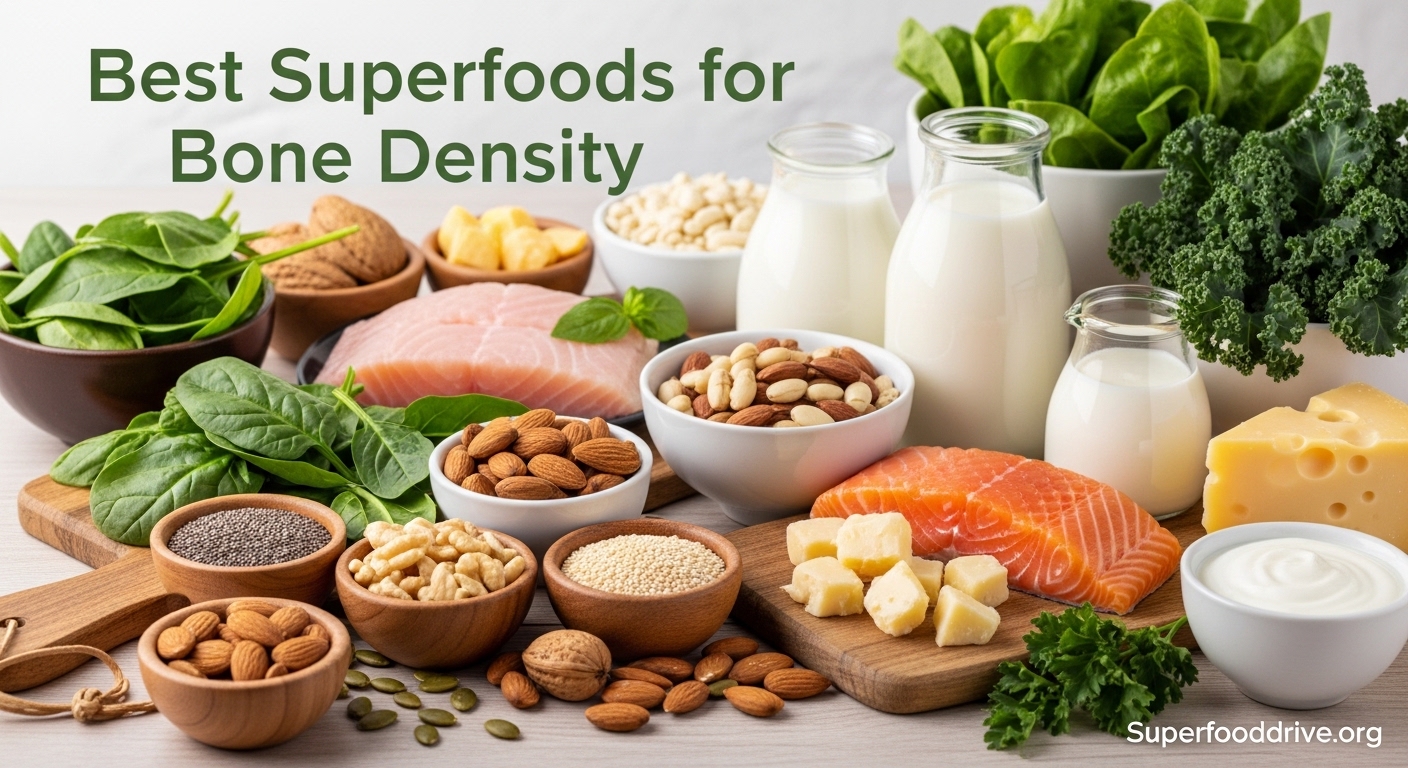
Your bones are living tissue that constantly rebuilds itself throughout your life. But after age 30, bone breakdown starts outpacing bone formation, and for postmenopausal women, this loss accelerates dramatically. Half of all women over 50 will break their hip, wrist, or spine due to osteoporosis, and men are not immune either.
The food choices you make every day can either feed your skeleton or starve it. I spent months researching the latest studies on nutrition and bone density, including compelling new research on prunes that changed how I think about bone health. This guide to superfoods for bone density and osteoporosis prevention covers everything you need to know about eating for stronger bones.
You will learn which foods deliver the most calcium per bite, how vitamin D and K2 work together to protect your skeleton, and practical ways to add bone-building nutrients to your daily meals. No complicated recipes or expensive supplements required. Just real food that works.
Table of Contents
Understanding Osteoporosis and Bone Health
Osteoporosis literally means “porous bone.” It is a condition where bones become weak and brittle due to loss of tissue, typically caused by hormonal changes, calcium deficiency, or vitamin D deficiency. Your bones may look solid from the outside, but inside they have a honeycomb structure with tiny spaces.
When osteoporosis develops, those spaces grow larger and the bone’s outer walls thin. This weakens the bone structure significantly. A sneeze, a minor fall, or even hugging someone too hard can cause a fracture in severe cases.
The Bone Remodeling Process
Your skeleton is not static. Specialized cells called osteoclasts break down old bone while osteoblasts build new bone in a continuous cycle called remodeling. This process takes about 10 years to completely replace your entire skeleton.
Up until about age 30, bone building outpaces breakdown. You are accumulating peak bone mass. After that threshold, the balance shifts. Without intervention, you lose roughly 0.5% to 1% of bone mass yearly.
For women, menopause accelerates this dramatically. The drop in estrogen causes bone loss of 2% to 3% per year for the first five years after the final menstrual period. This is why postmenopausal women face the highest fracture risk.
Risk Factors Beyond Age
Genetics play a role, but lifestyle choices matter enormously. Smoking, excessive alcohol consumption, and being underweight all increase osteoporosis risk. So does a sedentary lifestyle and long-term use of certain medications like corticosteroids.
Your diet quality matters most of all. Research consistently shows that people who eat calcium-rich foods, adequate protein, and plenty of fruits and vegetables maintain better bone density into old age. The superfoods ahead provide these nutrients in their most bioavailable forms.
Superfoods for Bone Density and Osteoporosis Prevention: The Top 10
These ten superfoods deliver the specific nutrients your bones need most. Each entry includes serving suggestions and calcium amounts so you can plan your meals with confidence.
1. Prunes: The Surprising Bone Builder
Prunes are having a moment in bone health research. An October 2022 study published in the American Journal of Clinical Nutrition found that postmenopausal women who ate 5 to 6 prunes daily for 12 months maintained significantly better bone mineral density than those who did not.
Researchers believe polyphenol compounds in prunes reduce bone breakdown by inhibiting inflammatory chemicals that activate osteoclasts. The fiber content also supports gut health, which emerging research links to better mineral absorption.
One serving of 5 to 6 prunes provides about 60 calories and makes an easy snack. Add them to oatmeal, blend into smoothies, or eat them straight from the bag. Consistency matters more than quantity.
2. Dark Leafy Greens: Calcium Powerhouses
Kale, collard greens, bok choy, and turnip greens deliver highly absorbable calcium along with vitamin K, which helps direct calcium to your bones rather than your arteries. One cup of cooked collard greens packs 268 mg of calcium.
Not all greens are equal for bone health. Spinach and Swiss chard contain high levels of oxalates, compounds that bind calcium and reduce absorption. While these greens offer other nutrients, they should not be your primary calcium source.
For maximum calcium absorption from greens, pair them with a source of vitamin C like lemon juice or tomatoes. The acidity helps release the minerals. Try massaging raw kale with olive oil and lemon for a bone-boosting salad base.
3. Canned Salmon with Bones: The Vitamin D Duo
A 3-ounce serving of canned salmon with the bones delivers 180 to 240 mg of calcium plus a significant dose of vitamin D. The soft edible bones are where most of the calcium lives, so do not drain them out.
Vitamin D and calcium work as a team. Without adequate vitamin D, your body cannot absorb calcium efficiently no matter how much you eat. This is why salmon with bones is such a bone-health superstar.
Make salmon patties, mix into pasta salads, or simply eat it straight from the can with crackers. The convenience makes this an easy addition to busy weeknight dinners. Look for wild-caught varieties when possible for better omega-3 content.
4. Dried Figs: Portable Calcium
Two dried figs contain about 65 mg of calcium along with magnesium and potassium, two minerals essential for bone structure. Unlike some other dried fruits, figs have a relatively low glycemic impact.
Figs also provide fiber that feeds beneficial gut bacteria. Recent research suggests the gut microbiome plays a role in how well we absorb minerals. A healthy gut means stronger bones.
Keep a container of dried figs in your desk drawer for afternoon snacking. Chop them into yogurt, add to grain bowls, or stuff with almonds for a nutrient-dense treat. Choose unsulfured varieties without added sugars.
5. Tofu and Soy Foods: Isoflavones and Protein
Calcium-set tofu can deliver up to 400 mg of calcium per half-cup serving depending on the brand. Look for labels that specify calcium sulfate as the coagulant. This makes tofu one of the most calcium-dense plant foods available.
Soy foods contain isoflavones, plant compounds with weak estrogen-like activity. Multiple studies show these compounds may help slow bone loss in postmenopausal women. The protein content also supports the collagen matrix that gives bones flexibility.
Silken tofu blends into smoothies undetected. Firm tofu takes well to marinades and stir-fries. Try adding crumbled tofu to scrambled eggs or grain bowls. Edamame makes an excellent appetizer or salad topper.
6. Almonds: Magnesium and More
One ounce of almonds provides 75 mg of calcium plus 80 mg of magnesium. Magnesium is crucial for converting vitamin D into its active form, which then enables calcium absorption. Without adequate magnesium, your bone health strategy falls apart.
Almonds also deliver healthy fats and protein that help you feel satisfied. This makes them an ideal between-meal snack that supports bone health rather than undermining it with empty calories.
Raw or dry-roasted almonds are best. Avoid varieties with added oils and excessive salt. Keep portions to about 15 to 20 almonds per serving since they are calorie-dense. Almond butter on whole grain toast makes an excellent breakfast option.
7. Fortified Plant Milks: Beyond Dairy
Fortified soy, almond, oat, and pea protein milks typically contain 300 to 450 mg of calcium per cup, comparable to dairy milk. Many are also fortified with vitamin D and sometimes vitamin B12.
The key word here is fortified. Natural almond milk contains minimal calcium. Check labels to ensure you are getting a product with added calcium carbonate or tricalcium phosphate. Shake the carton before pouring as fortificants can settle.
Use fortified plant milk anywhere you would use dairy. In coffee, over cereal, in smoothies, or for cooking. Pea protein milk tends to have the most protein, making it the closest nutritional match to cow’s milk for bone health.
8. Canned White Beans: Budget-Friendly Minerals
One cup of canned white beans delivers about 160 mg of calcium plus substantial magnesium and fiber. Navy beans, great northern beans, and cannellini beans all offer similar benefits at a fraction of the cost of many superfoods.
Beans contain phytates, compounds that can reduce mineral absorption. Rinse canned beans thoroughly and consider cooking dried beans with a strip of kombu seaweed, which helps neutralize phytates.
White beans blend into creamy soups without dairy. Mash them for sandwich spreads or add whole to grain bowls. Their mild flavor makes them incredibly versatile. One can contains roughly two servings.
9. Oranges and Citrus: Vitamin C for Collagen
One medium orange contains about 60 mg of calcium and 70 mg of vitamin C. While the calcium amount is modest, vitamin C is essential for collagen synthesis. Collagen forms the structural framework that minerals deposit onto.
Fortified orange juice can deliver 300 mg of calcium per cup plus vitamin D in some brands. However, whole fruit provides fiber that juice lacks. The choice depends on your overall dietary pattern.
Grapefruit, lemons, and limes offer similar benefits. Squeeze fresh lemon over greens to boost iron and calcium absorption. Add orange segments to salads for a bright, bone-supporting addition.
10. Sweet Potatoes: Potassium and Vitamin A
One medium sweet potato provides about 40 mg of calcium plus 542 mg of potassium. Potassium helps neutralize acid in the body, which reduces calcium loss from bones. The beta-carotene converts to vitamin A, which supports osteoblast activity.
Unlike white potatoes, sweet potatoes have a lower glycemic index. This means they do not spike blood sugar as dramatically, which is better for overall metabolic health and bone preservation.
Bake a batch on Sunday for easy additions to meals throughout the week. Top with Greek yogurt and cinnamon for a calcium-boosting side dish. The natural sweetness makes them appealing even to picky eaters.
Key Nutrients for Bone Health: How They Work Together
Bone health is not just about calcium. It is about a team of nutrients working in concert. Understanding these relationships helps you make smarter food choices.
Calcium: The Building Block
Calcium provides the mineral content that makes bones hard and strong. Adults under 50 need 1,000 mg daily. Women over 50 and men over 70 need 1,200 mg. Most Americans fall short, averaging about 800 mg per day from food.
Your body maintains blood calcium levels within a narrow range. If dietary intake is insufficient, your body pulls calcium from bones to keep blood levels stable. Over time, this borrowing weakens your skeleton.
Vitamin D: The Absorption Enabler
Vitamin D acts like a key that unlocks calcium absorption in your intestines. Without adequate vitamin D, you absorb only 10% to 15% of dietary calcium. With sufficient vitamin D, absorption jumps to 30% to 40%.
The recommended daily intake is 600 IU for adults under 70 and 800 IU for those over 70. Many experts recommend higher amounts, especially for people with limited sun exposure or darker skin tones. Food sources include fatty fish, fortified foods, and egg yolks.
Vitamin K2: The Traffic Director
Vitamin K2 activates proteins that direct calcium to bones and away from arteries and soft tissues. Without K2, calcium may deposit in blood vessels instead of bones, contributing to both osteoporosis and cardiovascular issues.
Fermented foods like natto, certain cheeses, and egg yolks provide K2. Some research suggests K2 supplements may help, but food sources remain the safest approach for most people. The K1 found in leafy greens converts to K2 in the body, though inefficiently.
Magnesium: The Converter
Magnesium converts vitamin D into its active form and also influences bone crystal formation. About 60% of the magnesium in your body resides in bones. Adult women need 310 to 320 mg daily, while men need 400 to 420 mg.
Nuts, seeds, legumes, whole grains, and leafy greens provide magnesium. Modern diets often lack adequate magnesium due to processed food consumption and soil depletion. This deficiency can silently undermine bone health even when calcium intake appears adequate.
Protein: The Flexibility Factor
Collagen proteins form the flexible matrix that calcium minerals deposit onto. Without adequate protein, bones become brittle rather than strong. Research shows protein intakes of 1.0 to 1.2 grams per kilogram of body weight support optimal bone health in older adults.
Contrary to old beliefs, higher protein intake does not cause calcium loss when combined with adequate calcium consumption. The acid produced during protein metabolism is neutralized by fruits and vegetables in a balanced diet.
Foods to Limit or Avoid for Bone Health
Building strong bones requires not just adding good foods but also minimizing those that harm your skeleton. Here are the key culprits to watch.
Excess Sodium
High sodium intake increases calcium excretion through urine. For every 2,300 mg of sodium consumed, you lose about 40 mg of calcium. Most Americans eat over 3,400 mg of sodium daily, well above the recommended 2,300 mg limit.
Processed foods, restaurant meals, and canned goods are the primary sodium sources. Cooking at home with fresh ingredients dramatically reduces sodium intake. Rinse canned beans and vegetables to remove about 40% of the sodium.
Phosphoric Acid in Colas
Cola beverages contain phosphoric acid, which may interfere with calcium absorption and increase bone loss. Studies show cola consumption correlates with lower bone density in women, possibly due to displacement of calcium-rich beverages.
The occasional cola will not destroy your bones, but regular consumption of multiple servings daily may contribute to bone loss over time. Choose calcium-fortified beverages instead when you want something flavored.
Excessive Caffeine and Alcohol
Caffeine in moderation is fine, but more than 400 mg daily may reduce calcium absorption slightly. That is roughly four cups of brewed coffee. Consider adding milk to coffee or having a calcium-rich snack with your morning cup.
Alcohol interferes with bone remodeling and calcium absorption. Heavy drinking significantly increases fracture risk. Limit intake to one drink per day for women and two for men, or less for optimal bone health.
The 3-Food Rule for Osteoporosis
Some health professionals recommend the “3-food rule” for osteoporosis management: limit sodium, avoid excessive phosphorus from processed foods, and minimize alcohol. This simple framework helps patients remember which dietary factors matter most.
Strontium Supplements: A Warning
Strontium supplements marketed for bone health require caution. While prescription strontium ranelate is used in some countries for osteoporosis treatment, over-the-counter strontium citrate lacks comparable evidence and may interfere with calcium absorption.
Strontium also artificially inflates DEXA scan readings, making bones appear denser than they actually are. This can give false reassurance about fracture risk. Focus on calcium and vitamin D from food before considering any supplements.
Practical Meal Planning for Stronger Bones
Knowing which foods help is only half the battle. Here is how to actually build bone-supporting meals into your daily routine without complicated recipes or specialty ingredients.
Breakfast Ideas
Start with a smoothie blending fortified plant milk, silken tofu, frozen berries, and a handful of spinach. This delivers calcium, protein, and vitamins in one glass. Add a tablespoon of almond butter for magnesium and healthy fats.
Or try oatmeal cooked in fortified milk, topped with chopped dried figs and almonds. Sprinkle with cinnamon for flavor without added sugar. This combination provides about 400 mg of calcium before you even leave the house.
Lunch Combinations
A salad built on massaged kale with canned salmon, white beans, and orange segments covers multiple bone nutrients. Dress with olive oil and lemon juice to enhance mineral absorption. Add whole grain crackers for crunch and additional minerals.
Alternatively, a tofu scramble with leafy greens and whole grain toast topped with almond butter provides a satisfying plant-based option. Round out the meal with a side of fresh fruit.
Dinner Plates
Grilled or baked salmon with a sweet potato and steamed bok choy creates a bone-health powerhouse dinner. The combination covers calcium, vitamin D, potassium, and vitamin K in one meal.
For plant-based dinners, try a tofu stir-fry with plenty of vegetables over brown rice. Use calcium-set tofu and add sesame seeds for extra minerals. A side of fortified plant milk completes the nutrient profile.
Smart Snacking
Keep prunes and almonds in your desk drawer for afternoon energy. Pair an apple with almond butter for a satisfying combination. A small handful of dried figs with a few nuts makes a portable travel snack.
For evening treats, try Greek yogurt topped with berries and chopped nuts. The protein supports overnight bone repair processes. Avoid late-night caffeine which can disrupt sleep, itself important for bone health.
Supplement Timing Tips
If you take calcium supplements, split doses of 500 mg or less throughout the day since absorption decreases with higher single doses. Take calcium carbonate with meals for better absorption. Calcium citrate absorbs well with or without food.
Avoid taking calcium supplements with iron supplements or high-iron meals as they compete for absorption. Take vitamin D with a fat-containing meal since it is fat-soluble. Magnesium can be taken at bedtime as it may promote relaxation.
Frequently Asked Questions About Bone Health
What are 5 foods that can help prevent osteoporosis?
The five most effective foods for preventing osteoporosis are prunes (supported by October 2022 research), dark leafy greens like collards and kale, canned salmon with bones for calcium and vitamin D, calcium-set tofu for plant-based protein and minerals, and almonds for magnesium which activates vitamin D. Each provides specific nutrients that work together to maintain bone mineral density.
What is the number one vitamin to rebuild bone density?
Vitamin D is the most critical vitamin for rebuilding bone density because it enables calcium absorption. Without adequate vitamin D, your body absorbs only 10-15% of dietary calcium. The recommended daily intake is 600-800 IU, though many adults need supplementation to reach optimal blood levels. Pair vitamin D with vitamin K2 to ensure calcium deposits in bones rather than arteries.
What do Japanese do for osteoporosis?
Japanese dietary patterns for bone health emphasize soy products rich in isoflavones, natto (fermented soybeans) for vitamin K2, small fatty fish eaten whole with bones, seaweed for minerals, and green tea. Traditional Japanese diets contain less dairy but achieve bone protection through fermented foods and fish consumption. Natto specifically provides high vitamin K2 levels that support bone density.
What is the 3 food rule for osteoporosis?
The 3 food rule for osteoporosis management recommends limiting sodium (which increases calcium excretion), avoiding excessive phosphorus from processed foods and colas (which may interfere with calcium balance), and minimizing alcohol (which disrupts bone remodeling). This simple framework helps focus dietary changes on the factors that most significantly impact bone health.
How can I reverse osteoporosis and increase my bone density?
Reversing osteoporosis requires a comprehensive approach: consume 1,200 mg of calcium daily from foods like dairy, leafy greens, and fortified products; ensure adequate vitamin D levels through sun exposure, fortified foods, or supplements; engage in weight-bearing exercise like walking and resistance training; limit bone-depleting substances like excess sodium, alcohol, and caffeine; and follow medical guidance regarding osteoporosis medications when appropriate. While completely reversing osteoporosis is challenging, these strategies can significantly slow bone loss and in some cases modestly improve density.
Conclusion: Building Stronger Bones One Bite at a Time
Your bones support you every day. Supporting them back with smart food choices is one of the most powerful investments you can make in your long-term health. The superfoods for bone density and osteoporosis prevention covered in this guide offer a roadmap to stronger bones without extreme diets or expensive supplement regimens.
Start with simple additions: five prunes daily, a handful of almonds for snacks, leafy greens at lunch, and canned salmon weekly. Small consistent changes compound over time just like interest in a savings account. Your future self will thank you for every bone-building bite you take today.
Remember that food works as a team. Calcium needs vitamin D. Vitamin D needs magnesium. They all need the protein matrix that collagen provides. Build varied meals that include multiple bone-supporting nutrients rather than fixating on single nutrients in isolation. The result is a stronger skeleton that carries you confidently through the decades ahead.