
Short answer: the Levoit Core 300-P is the best air purifier for pet dander for most homes, because it is the rare budget tower that publishes an AHAM VERIFIDE clean air delivery rate of 143 CFM for smoke, 153 CFM for dust and 167 CFM for pollen, then actually delivers 4.8 air changes per hour in a 222 square foot room. It is also one of the quietest sleepers in this group at 24 dB and the most reviewed model we looked at, with more than 108k ratings behind it.
Dander is one of the easiest indoor air problems to fix with a machine, and also one of the most frequently oversold. A correctly sized purifier genuinely lowers the airborne fraction of pet dander and the allergen proteins riding on it. It does nothing for the hair already settled into your sofa, and it will not touch the smell coming from a full litter tray. The trick is matching the clean air delivery rate to the room, not buying the biggest advertised square footage.
Below I compare eight purifiers that suit homes with cats, dogs and multi-pet households, normalised every coverage claim to a real air-change rate so the numbers are comparable. I have not lab-tested any of these machines myself. Every specification comes from the manufacturers’ published AHAM or UL figures and from the aggregated review record, and I label manufacturer filtration claims as manufacturer claims wherever they appear.
Last updated: October 2026. Specs and review counts rechecked on the date shown. Filter availability and replacement costs change often, so treat any running-cost commentary here as a direction rather than a fixed figure.
If you want the wider picture first, our general air purifier roundup covers the units that are not pet-specific, and our allergy-focused picks dig deeper into the filter standards that matter for sensitive households.
Top 3 Picks for Pet Dander Homes (2026)

Levoit Core 300-P
- AHAM VERIFIDE 143 CFM smoke CADR
- 24dB sleep mode
- Washable pre-filter stage


Best Air Purifiers for Pet Dander in 2026 at a Glance
All coverage figures below are normalised to 4.8 air changes per hour, which is the standard AHAM Verifide room-size basis. Where a manufacturer quotes a larger room at a slower rate, we have ignored it, because a purifier moving one air change per hour is doing a fraction of the work.
| Product | Specifications | Action |
|---|---|---|
| Levoit Core 300-P |
|
Check Latest Price |
| Levoit Vital 200S-P |
|
Check Latest Price |
| Winix 5510 |
|
Check Latest Price |
 GermGuardian AC4825E GermGuardian AC4825E |
|
Check Latest Price |
 Coway Mighty AP-1512HH Coway Mighty AP-1512HH |
|
Check Latest Price |
 PuroAir 240 PuroAir 240 |
|
Check Latest Price |
 MOOKA PR1 MOOKA PR1 |
|
Check Latest Price |
 Levoit Core 161 Levoit Core 161 |
|
Check Latest Price |
1. Levoit Core 300-P — Best Overall for Most Pet Homes
Levoit Air Purifier for Home Pets Hair Allergens in Bedroom Quiet Purifiers
AHAM VERIFIDE
143 CFM smoke,153 dust,167 pollen CFM
222 sq ft at 4.8 ACH
24dB sleep mode
Pros
- AHAM CADR you can verify for yourself
- Very quiet 24dB sleep mode for bedrooms
- Display lights switch off completely for sleep
- 3-in-1 filtration with a washable pre-filter stage
- Very large review base for long-term reliability
Cons
- 143 CFM suits small and medium rooms only
- Genuine Levoit filters are the only supported replacement
- No app or smart home connectivity
The Core 300-P is the unit I keep coming back to for pet homes, and the reason is unglamorous: it publishes its numbers. AHAM Verifide certification covers air cleaning performance, safety and energy efficiency, and the certified rates are 143 CFM for smoke, 153 CFM for dust and 167 CFM for pollen. Those are real, third-party figures, which is more than most of the category manages.
Put those figures through the standard 4.8 air change calculation and you get a 222 square foot room. That is a small bedroom, a home office, a nursery or a single flat-panel living room. Levoit also advertises coverage up to 1073 sq ft, but that is one air change per hour, and one air change per hour is not what you want in a room where a large dog is shedding. Read the 222 figure, not the 1073 figure.
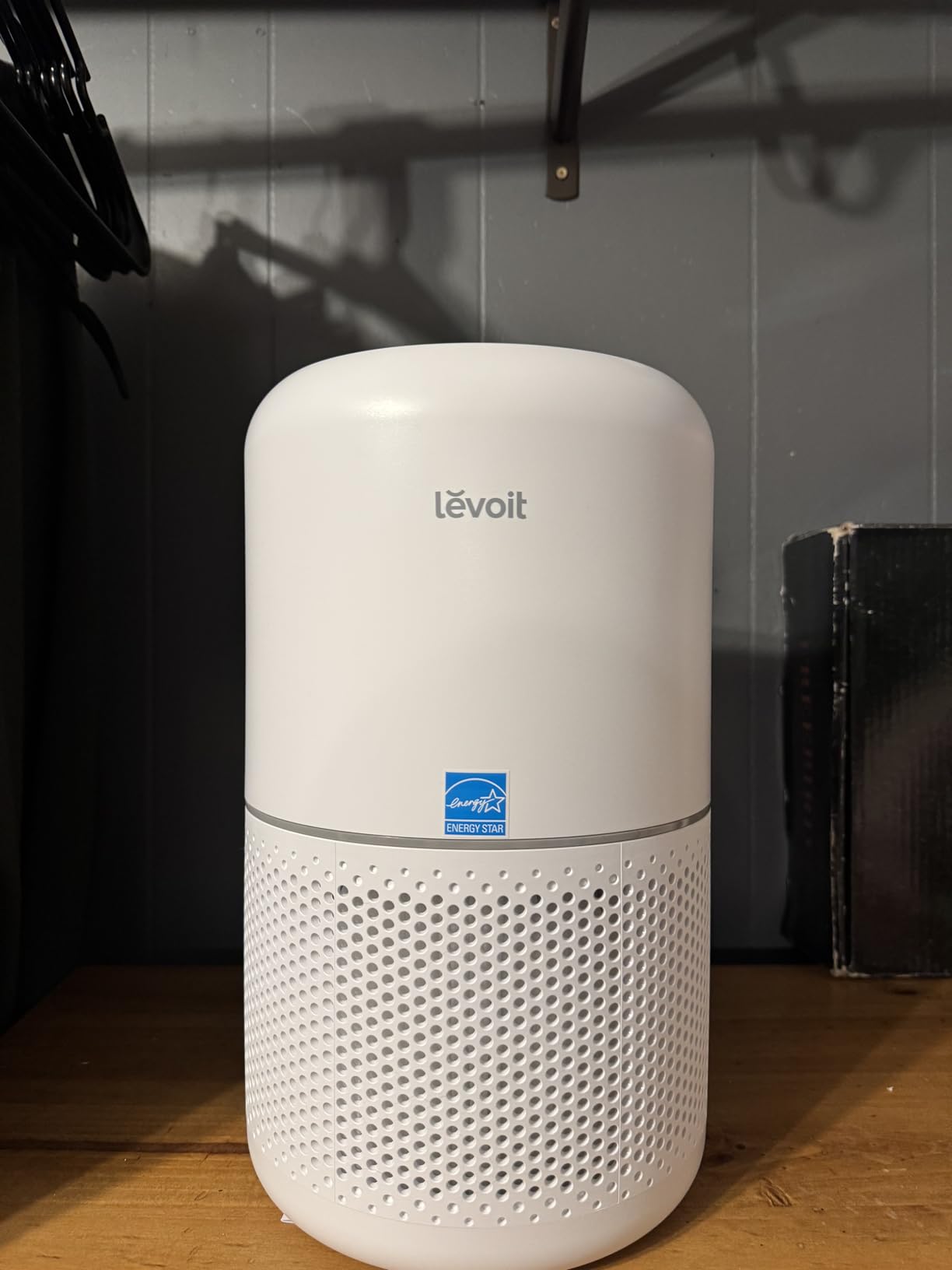
Pet performance is where this unit earns its spot. The 3-in-1 filtration system is rated by the manufacturer at 99.97% efficiency for particles between 0.1 and 0.3 micron, explicitly including animal dander allergens. That is a manufacturer claim, but the filter class is a genuine 3-in-1 stack with a pre-filter, and the pre-filter is the component that earns its keep in a shedding home.
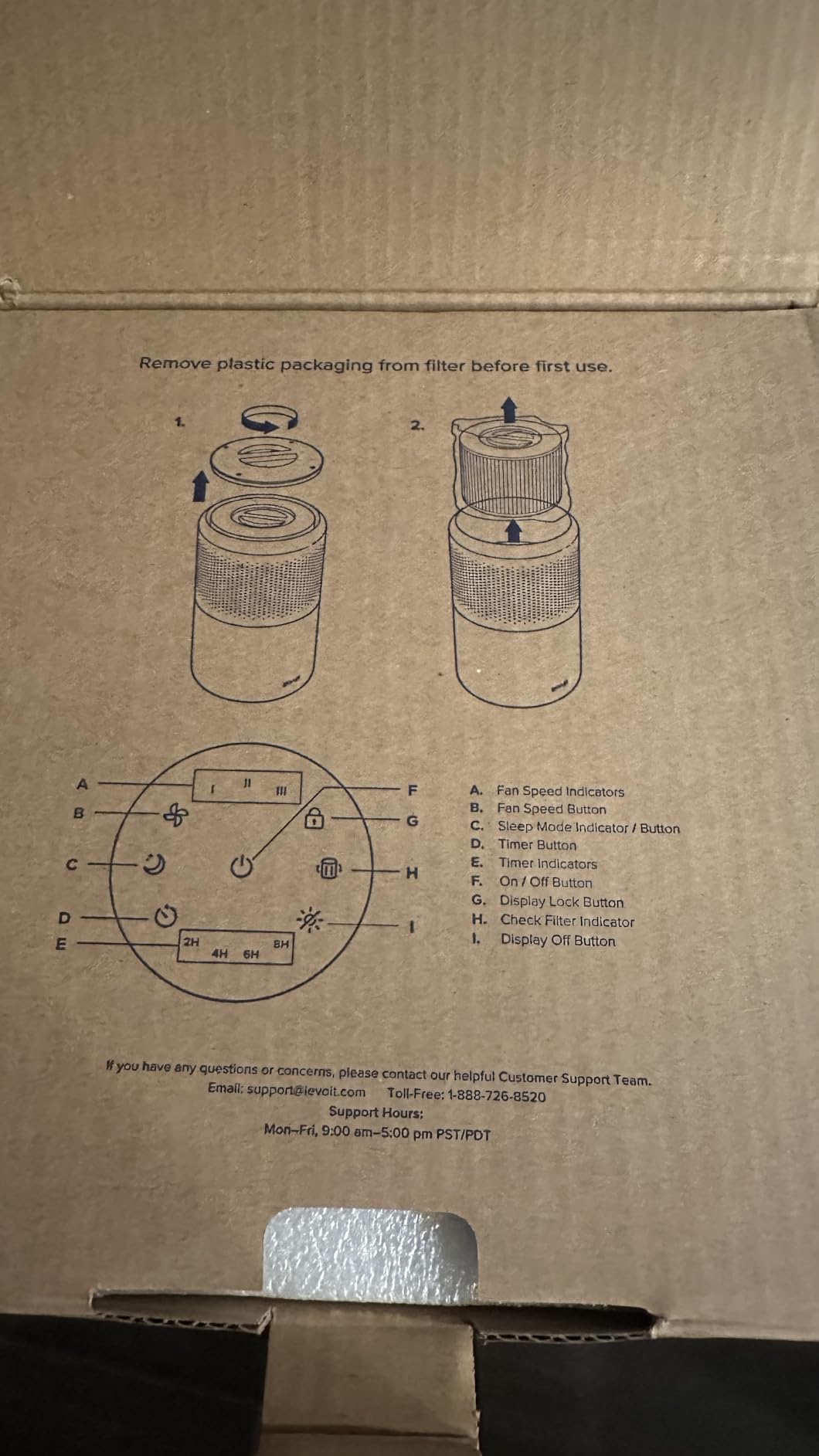
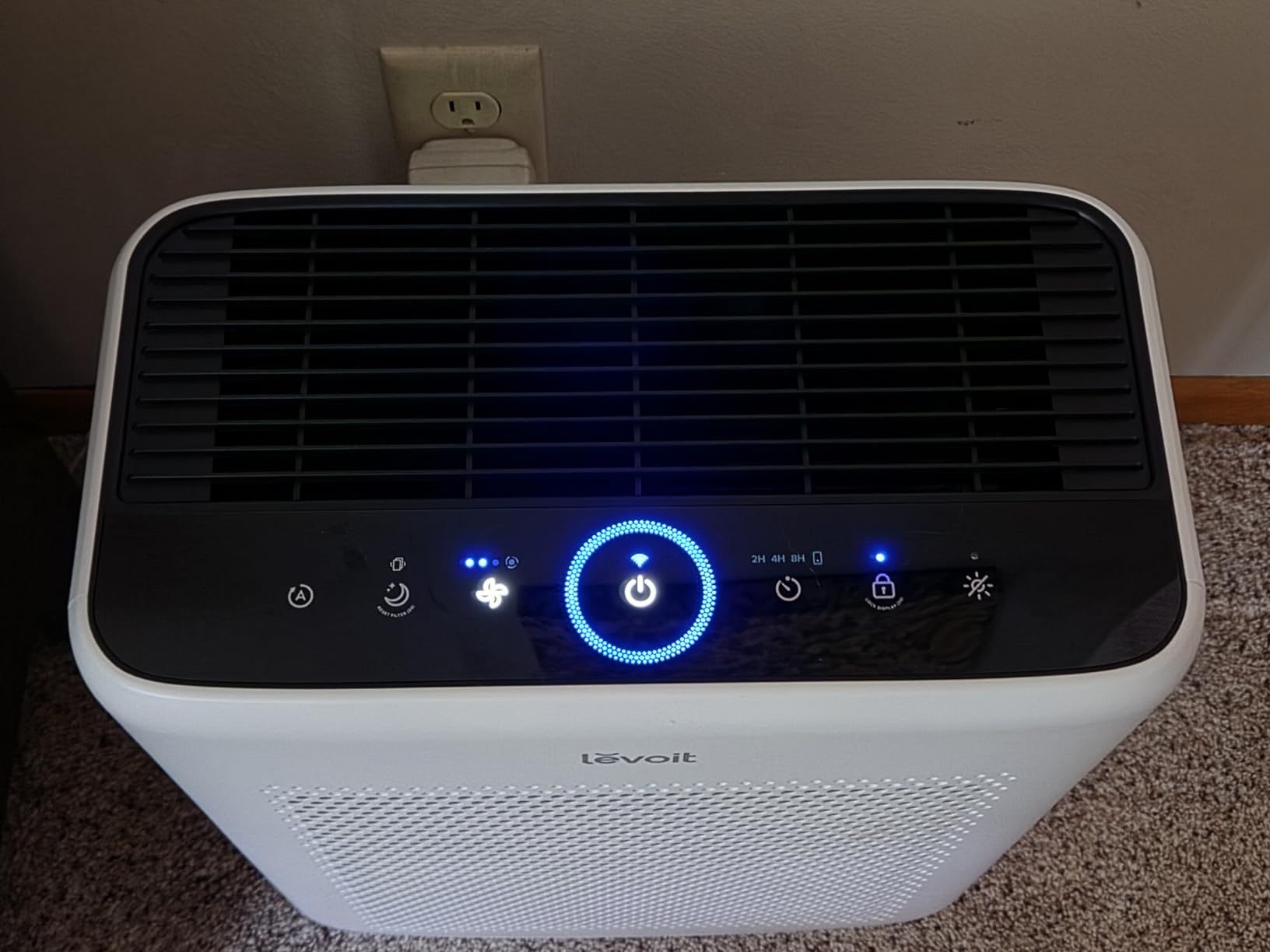
At 7.9 pounds and 14.2 inches tall, it moves between rooms easily. It runs at 56 watts, which is low enough that leaving it on continuously is a sensible habit rather than an expensive one. There is a 2, 4, 6 or 8 hour timer, a check-filter indicator and a display that switches off completely, so it will not light up a dark bedroom at two in the morning.
Who this purifier suits, and who should skip it
It suits cat households and small dog homes in a bedroom or a single-purpose living room, especially where somebody has pollen or dust sensitivities alongside the pet allergy. It also suits anyone who wants a machine quiet enough to sleep beside, since 24 dB in sleep mode is close to the threshold of a whisper.
Skip it for a double-coated breed shedding in an open-plan living room, or for a home that treats it as a single machine for the whole house. At 143 CFM it will run constantly trying to keep up and never quite get there. If your space is much larger, step up to the Vital 200S-P or run two smaller machines instead of one large one.
Ownership realities
The main running cost is genuine Levoit replacement filters; the brand steers owners away from off-brand filters, and that is the correct call for filter performance even though it narrows your options. Check the filter indicator rather than a fixed calendar, because a light-shedding home stretches far longer between changes than a two-dog household with a brushed coat.
There is no app and no air quality sensor, which sounds like a drawback until you realise there is nothing to configure. Owners of this model overwhelmingly describe it as set-and-forget, and the 108k-review record is the largest long-term ownership record in this roundup.
2. Levoit Vital 200S-P — Best for Open-Plan Rooms and Multi-Pet Homes
LEVOIT Smart Air Purifier for Home Large Room up to 1875 Ft² Vital 200S-P
250 CFM smoke,254 dust,289 pollen
388 sq ft at 4.8 ACH
Dual standard plus U-shaped inlet
VeSync app and filter life tracking
Pros
- Dual air inlet built specifically around pet hair
- App control with schedules and filter life percentage
- AHAM VERIFIDE with published CADR numbers
- Quiet on low and mid fan speeds
Cons
- Advertised 1875 sq ft coverage is a marketing number
- Air quality sensor is not very sensitive
- Replacement filters are among the costlier in the group
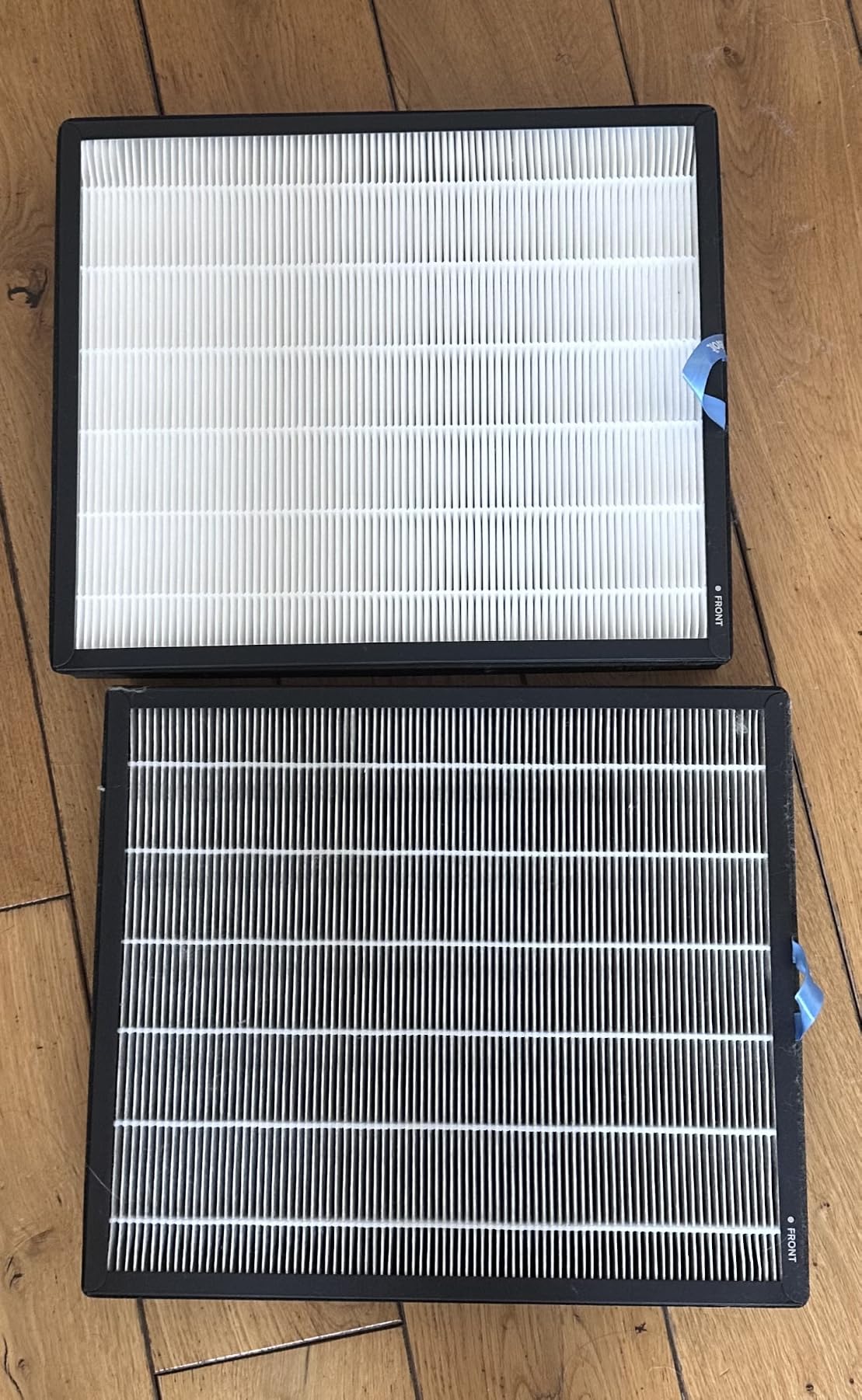
The Vital 200S-P solves the exact problem that makes people give up on purifiers in busy homes: hair clogs the intake. Levoit gives it two air inlets, the standard grille plus an additional U-shaped channel designed to trap airborne pet hair and odors with less clogging. In a home with two shedding dogs, that second intake is the feature that keeps the machine breathing.
On raw output it leads this group by a wide margin. The certified rates are 250 CFM smoke, 254 CFM dust and 289 CFM pollen, which works out to a 388 square foot room at 4.8 air changes per hour. That is a genuine large living room or an open-plan main floor, and it is the number to size on.
It also has the most complete smart layer in this group. The VeSync app gives you a live air quality readout, fan control, schedules and a filter life percentage, so you can see when the pre-filter is loading up with fur before the airflow drops. Buyers in pet homes report the scheduling as the feature they use most, running high while the house is empty and dropping to sleep mode at night.
Levoit markets it for rooms up to 1875 square feet, and that figure is a real weakness in the listing rather than in the machine. Treat it as a 388 square foot unit at 4.8 ACH. At higher fan speeds the unit is noticeably loud, so bedroom use means living with low or medium rather than max.
Who this purifier suits, and who should skip it
It suits open-plan homes, finished basements and multi-pet households where hair load is high and the animal is large enough that the standard intake would clog. It also suits anyone who wants the air quality trend data rather than a guess, because the filter life percentage tells you when to pull the pre-filter.
Skip it for a small bedroom, where you would be paying for airflow capacity you cannot use and living with a large 13.2 pound footprint. Also skip it if you rely on auto mode as your only control. The sensor is not very sensitive, so it can sit on low while fine particles and odor are still present, which is a problem in exactly the pet situations this machine is built for.
Ownership realities
Replacement filters are among the most expensive in this group, and in a heavy-shedding home that becomes the number that matters over a few years. The plastic control panel scratches easily, which is cosmetic but annoying on a machine that lives in the open.
Everything else about ownership is straightforward. At 14.96 by 8.66 by 19.69 inches it needs real floor space, and 13.2 pounds is manageable but not a unit you carry between rooms weekly. Owners consistently report the air feeling fresher within days and allergy symptoms easing over the first month.
3. Winix 5510 — Top Rated for Durability and Odour Control
WINIX 5510 Air Purifier (New Generation of 5500-2 with App Support) for Home Large Room Up to 1881 Ft² in 1 Hr, True HEPA, High Deodorization Carbon Filter and Auto Mode, Captures Pet Allergies, Smoke
AHAM verified 392 sq ft per hour
True HEPA to 0.01 micron
Advanced deodorization carbon
23.5dB on slowest speed
Pros
- Owners report machines still running after five years
- Washable mesh pre-filter with thick carbon media
- Smart sensor auto mode with real-time indicator
- 23.5dB and a light-activated sleep mode
- Strong record for smoke and pet allergens
Cons
- 13.3 lb is heavy to move between rooms
- App can be laggy or unresponsive
- Some versions ship with a non-US power plug
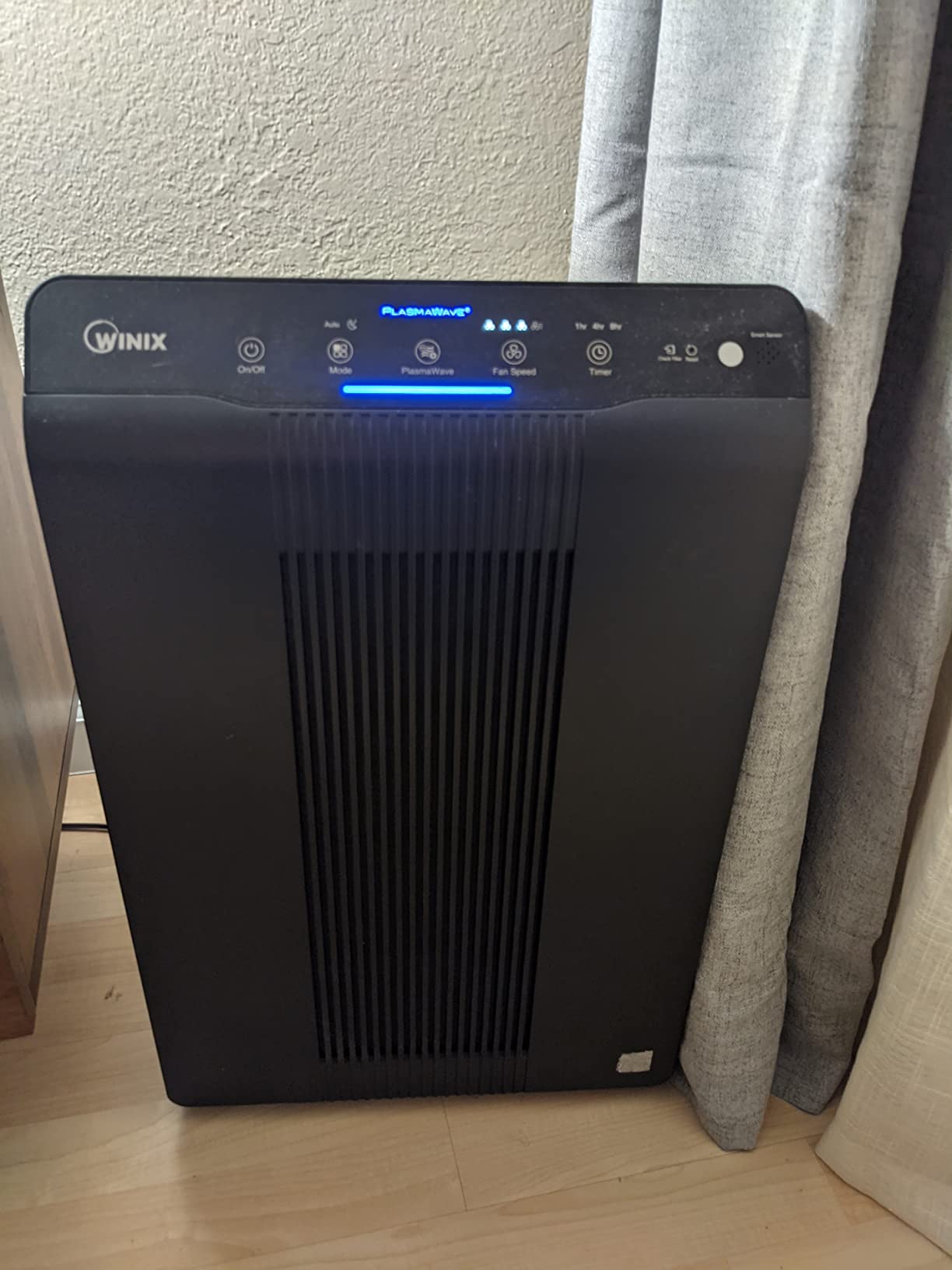
What separates the Winix 5510 from the pack is the review record. This model shows a large volume of multi-year update reviews from owners who bought it for wildfire smoke or pollen and then kept running it, and the recurring message is that the machine is still going years later, which is the reason it is worth considering first for continuous use. In a category where breakage is common, that longevity matters more than any spec line.
The filtration is also the most aggressive on paper. Winix rates it at 99.99% capture of airborne allergens as small as 0.01 micron, which is a manufacturer figure and almost certainly optimistic, but the True HEPA stage itself is the point. Ahead of it sits a washable fine mesh pre-filter, which is the component that decides whether a shedding dog shortens your filter life from a year to a quarter.
AHAM verification puts it at 392 square feet per hour, with marketing coverage of up to 1882 square feet in one hour. Winix does not publish a CADR figure in the same style as Levoit, so we cannot give you a clean 4.8 ACH number. The honest read is that it sits in the large-room class, in the same territory as the Vital 200S-P, and you should treat the one-hour figure as a fast clean rather than a sustained rate.
The carbon stage is described as advanced odor control and owners with litter boxes report it holding up for roughly 12 months, which is longer than most deodorization filters manage in a pet home. The washable pre-filter in front of it means the hair problem is handled with a rinse rather than a purchase.
Who this purifier suits, and who should skip it
It suits large rooms with a strong odor load, particularly homes where a litter box sits inside the living space rather than in a closed utility area. It also suits anyone planning to run a purifier continuously for years and would rather buy once, because the durability record here is the best in the roundup.
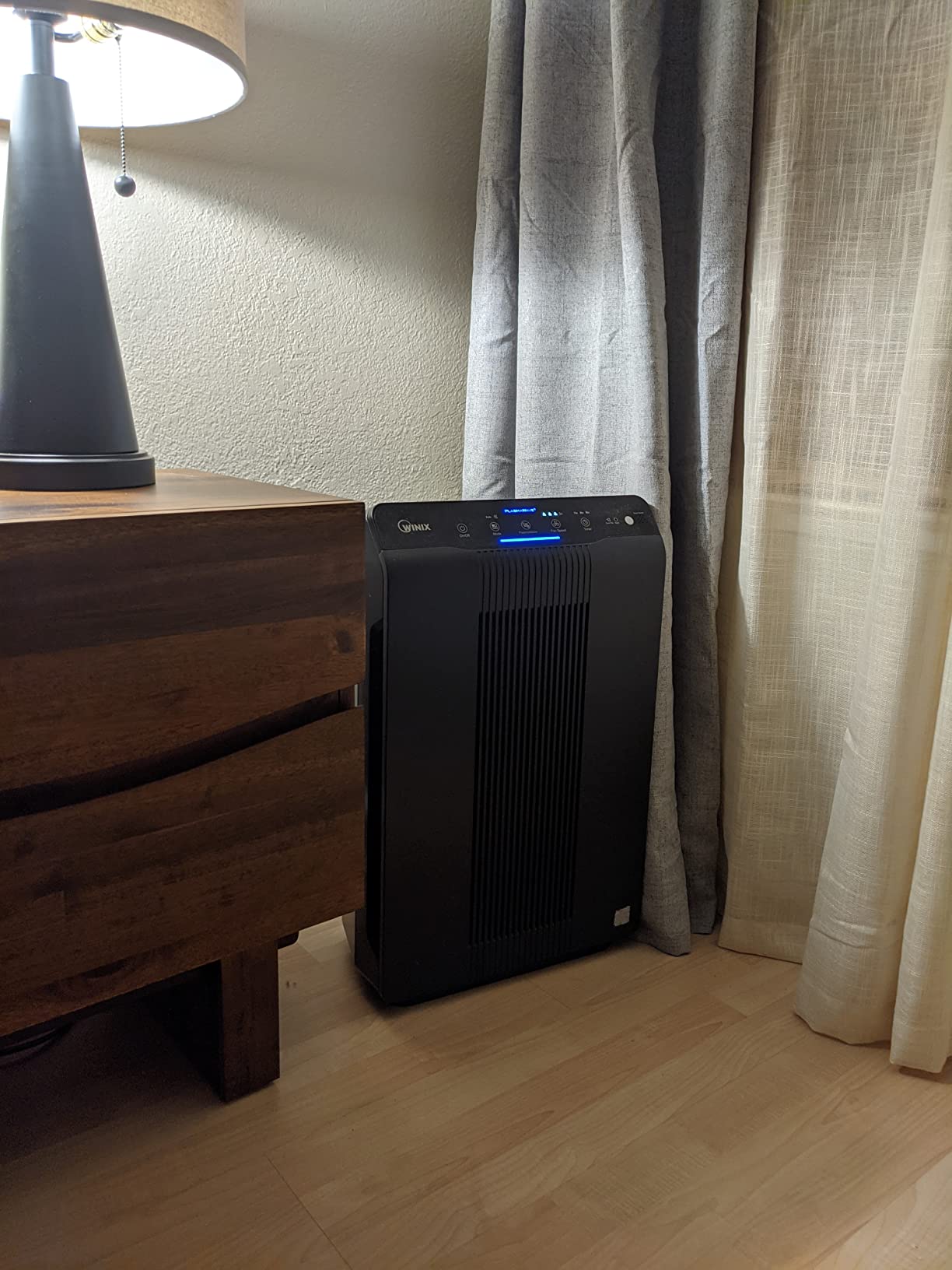
Skip it for a small room and skip it if you move machines often. At 13.3 pounds and 25.2 inches tall it is a two-person lift, and the tall narrow body needs clearance on all sides for intake. Buyers outside North America should check the plug configuration, since some variants ship with a non-US design.
Ownership realities
The app is the weak spot. Owners report scheduling and filter life tracking working, but also report lagginess and occasional unresponsiveness. Treat the app as a convenience rather than a dependency, because the physical controls and the auto mode do the real work.
Noise is genuinely excellent at 23.5 dB on the slowest speed, and the light-activated sleep mode dims when the room goes dark, so a bedroom placement is realistic. The review record also contains a small number of failure reports, which is what you would expect across a review base that size. Failure is still the rarest complaint we found.
4. GermGuardian AC4825E — Best for Pet Odour in a Smaller Space
GermGuardian HEPA Air Purifier – Large Room Air Purifier for Bedroom, Office, Dorm, and Home – Filters Pet Dander, Dust, Pollen, Smoke, Scents – AC4825E – 22″ Tower – Gray
HEPA PURE 99.97% at 0.1 micron
Activated carbon for pet scents
743 sq ft per hour
Zero Ozone Verified and CARB Certified
Pros
- Pet owners single out the odor removal as excellent
- UV-C lamp adds measurable extra control
- Zero Ozone Verified and independently tested in the USA
- Simple dial controls with no setup
- Long-running track record since 2011
Cons
- Top fan speeds are audible in a bedroom
- Blue UV indicator light cannot be dimmed
- Coverage tops out around 743 sq ft
- Thin carbon filter needs rinsing every two weeks
This tower has been in production since 2011, which means there is an unusually deep pool of long-term ownership experience, and pet owners consistently single out one thing: the smell. The activated carbon stage here is paired with a HEPA PURE filter rated by the manufacturer at 99.97% capture of allergens as small as 0.1 microns, and the combination is why buyers with dogs report skunk-adjacent smells and general pet scent dropping within weeks.
Sizing is the catch. GermGuardian states it filters a 153 square foot bedroom every 12.5 minutes and a 743 square foot space every hour. The 743 figure is a one-hour number, so plan on something closer to 200 to 250 square feet for continuous 4.8 ACH operation. That is still a good-sized bedroom or a small living room.
What makes it distinctive in this list is the optional UV-C lamp, which adds a further stage of airborne particle and mould control that the mechanical models here do not offer. It is not a replacement for cleaning, and the replacement bulbs are a separate consumable, but for a household with a damp pet bed or a persistently humid corner it is a real differentiator.
Safety certification is strong. The unit is CARB Certified, ETL Certified and Zero Ozone Verified, which is a meaningful line in a category where ionisers are common. In a home with an asthmatic cat or an allergy-prone child, that certification is worth more than an extra fan speed.
Who this purifier suits, and who should skip it
It suits small and medium rooms where odor is the main complaint rather than sheer particle load, particularly homes with a dog and a small child sharing a bedroom. It also suits anyone who wants a certified no-ozone machine and does not mind buying bulbs occasionally.
Skip it for a large open-plan space, because coverage stops at 743 square feet per hour and you would need two machines to do what one Vital 200S-P does. Also skip it for a light-sensitive sleeper unless you can live with the blue UV indicator, which is bright in a dark room and cannot be dimmed.
Ownership realities
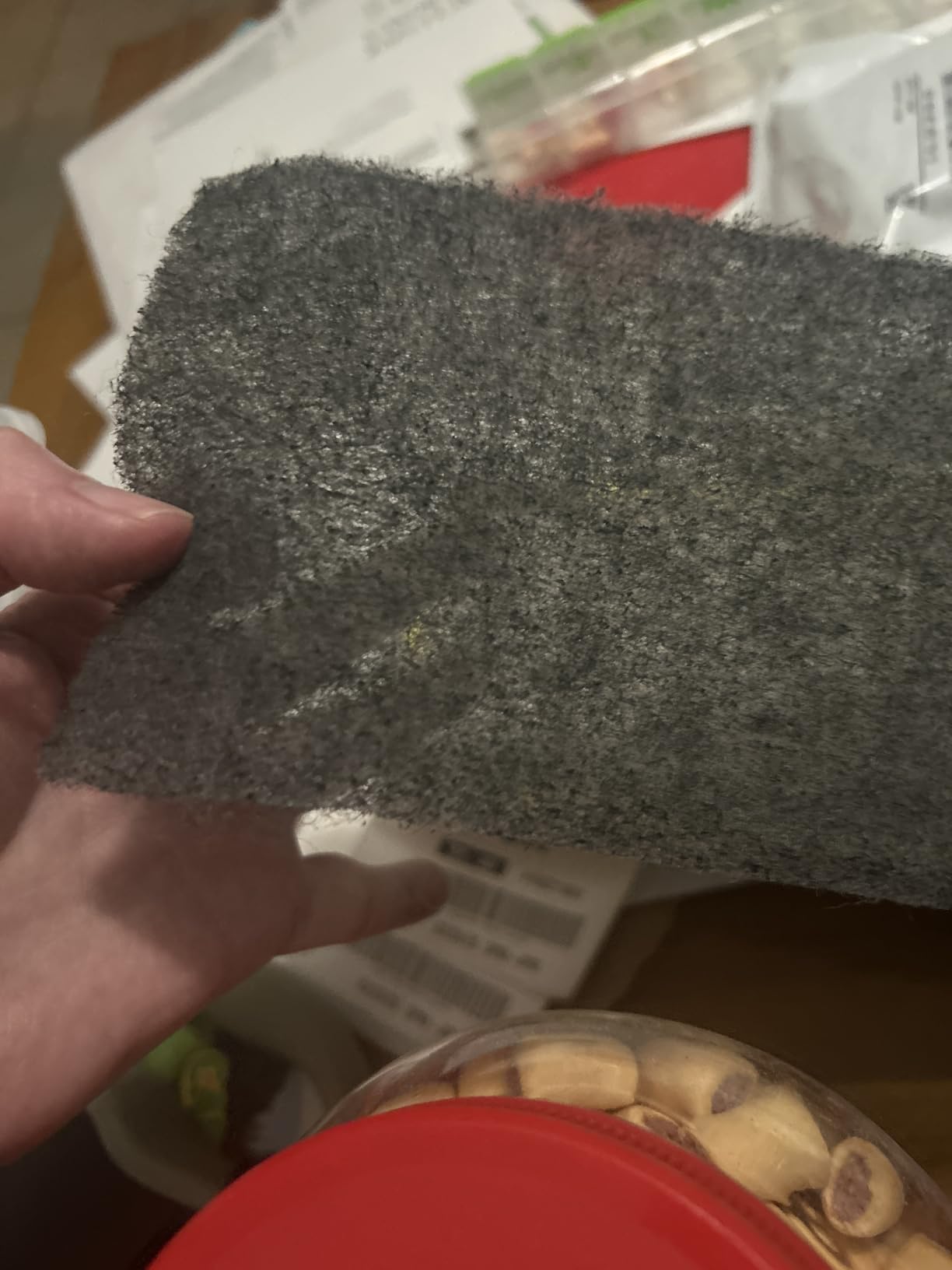
The carbon filter is the weak point. It is thin, it needs rinsing roughly every two weeks in a shedding home, and owners warn that it tears if you vacuum it rather than wash it. Expect to handle that filter more often than the main HEPA.
Noise above the lowest speed is audible, so bedroom use means the quiet setting only, which reduces the air actually delivered. A slight new-plastic odour for the first day or two is normal and clears quickly. The dial control needs no app, no pairing and no firmware, which after many years is still refreshing.
5. Coway Mighty AP-1512HH — Best for Allergy Households and Low Running Cost
COWAY Air Purifier for Home Up to 1,748ft², HEPA Filter for Smoke, Allergies, Pet Dander, Odor, Air Quality Monitor, Auto&Eco Mode, Timer, Filter Indicator, 3yr Warranty, Mighty AP-1512HH(W), White
Four-stage filtration with bipolar stage
99.97% at 0.3 micron plus VOCs
Covers 1748 sq ft in 60 minutes
3 year warranty
Pros
- Washable pre-filter lowers ongoing filter cost
- Four stages including a dedicated deodorization filter
- Large rated coverage for open-plan homes
- Filter and pre-filter maintenance alerts
- Backed by a 3 year warranty
Cons
- Bipolar ionization stage is a concern for sensitive asthma households
- Bulky footprint beside slim towers
- Higher purchase cost than compact HEPA towers
Coway’s four-stage design is the most complete filtration chain in this roundup: washable pre-filter, deodorization filter, bipolar device and HEPA filter, with the washable pre-filter doing the real cost saving, because the stage handling odor gases is a washable mesh rather than a replaceable carbon cartridge you buy on a schedule.
The particle claim is 99.97% reduction of 0.3 micron particles including pollen and other allergens, plus VOC and odour reduction, again a manufacturer figure. Coverage is stated as 1748 square feet in 60 minutes, so the sustained 4.8 ACH room is considerably smaller than that headline. Size it in the region of 250 to 300 square feet for continuous use.
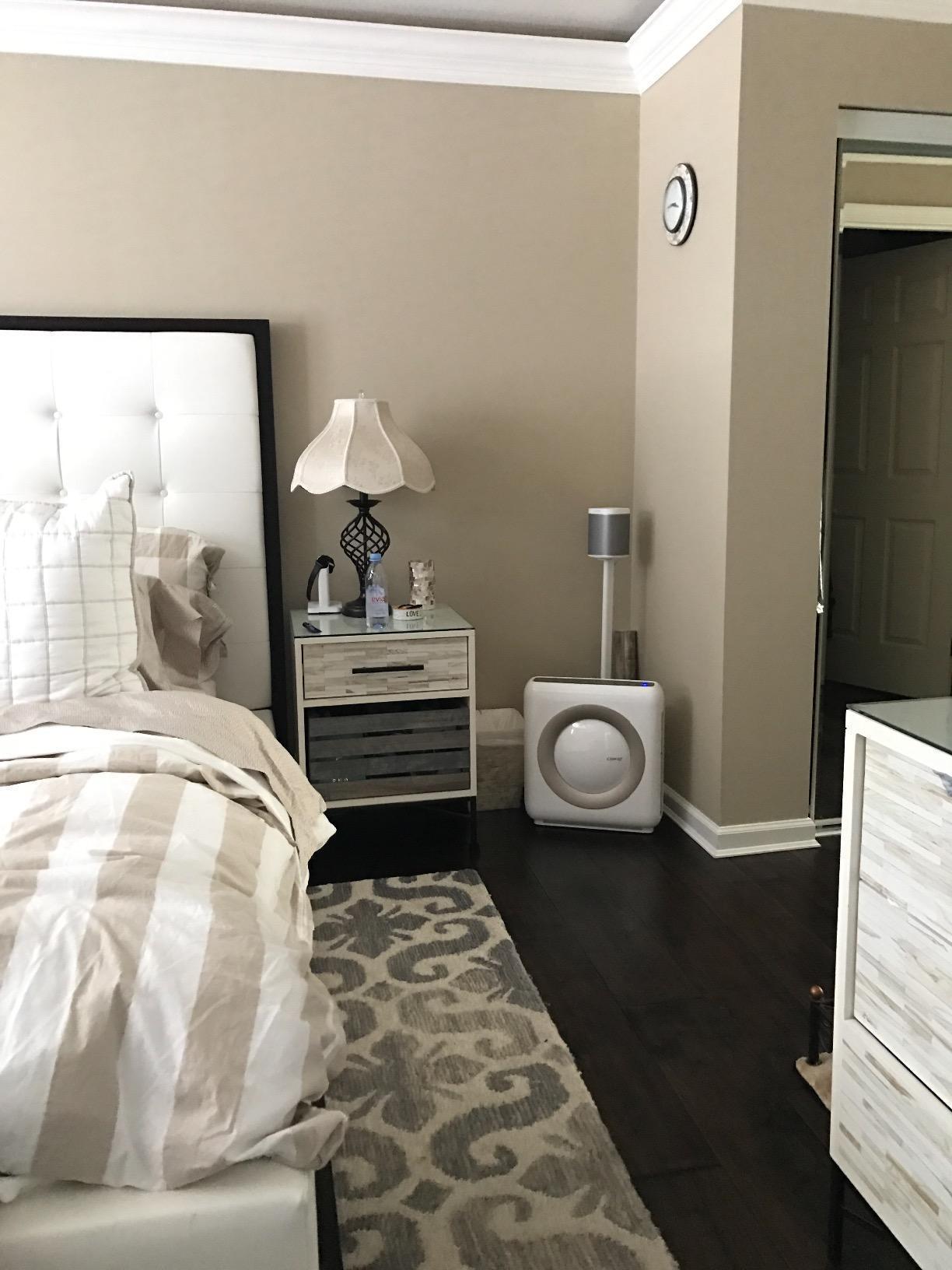
For allergy households this is the pick I would look at first after the Core 300-P, because the pre-filter is genuinely washable and the unit tells you when to clean it. The filter alert indicator and the pre-filter cleaning alert mean you are not guessing. In a home with a shedding dog where nobody wants to inspect a filter every month, that prompting is worth real money over a year of ownership.
Auto and Eco modes adjust fan speed from the air quality monitor, and the air quality indicator LED has a light-off setting for sleeping. It runs quietly enough on auto for a bedroom in most owner accounts, which matters more here than the headline decibel figure.
Who this purifier suits, and who should skip it
It suits allergy households that also care about running cost, and larger open rooms. It also suits owners who like a manufacturer warranty long enough to cover the first three years of a machine expected to run continuously.
Skip it if anyone in the home has asthma severe enough to be sensitive to ionised air. The bipolar stage charges particles to help them stick to the filter, which is effective, but the EPA’s guidance on air cleaners notes that ionisers can emit ozone as a by-product. If that describes your household, choose one of the Zero Ozone Verified or no-ozone models here instead.
Ownership realities
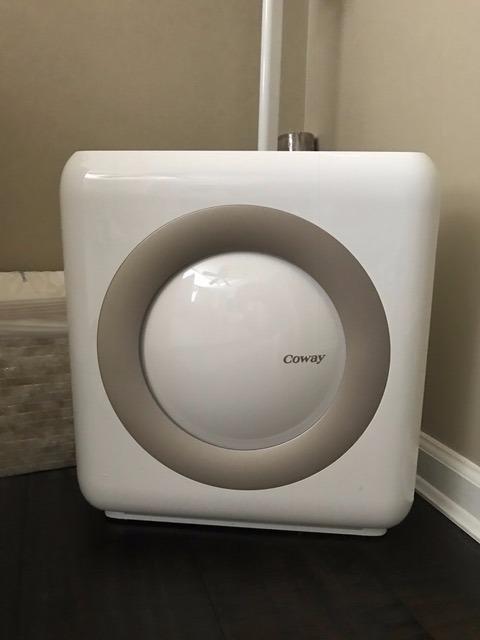
The unit is bulky at 9.6 by 16.8 by 18.3 inches and weighs 12.5 pounds, so plan the placement before you buy rather than after. It also carries a higher purchase cost than the compact towers in this roundup, which is part of why running cost matters so much with it.
Owner feedback is consistently positive on quiet auto mode, on the washable pre-filter, and on steady reductions in dust and pet odour. The recurring gripes are size and purchase cost, not performance, which is a reasonable trade for a household that runs a machine every day for a decade.
6. PuroAir 240 — Best for Bedrooms and Sleeping With a Pet
PuroAir 240 HEPA Air Purifiers for Home Pets Bedroom – 1,000 Ft²
Rated to 1000 sq ft
CARB ETL ISO and UL certified
Top-mounted controls and air display
2 year warranty with US support
Pros
- Owners report strong results on litter box and musty pet odours
- Quiet enough for a bedroom on the higher setting
- Compact footprint with a built-in carry handle
- Simple top-mounted controls and air quality display
- Partnership with the American Lung Association
Cons
- Does little about visible or floating pet hair
- Replacement filters are a meaningful recurring cost
- 110V US-only design
- Some reports of early failure after extended use
The PuroAir 240 is the sleeper of this list, and in a pet context that means literal sleeping. Owners with cats and shedding dogs describe better sleep and noticeably less morning nasal congestion, and the top-mounted control panel with the air quality display reads clearly at arm’s length from a bed without needing to look at the unit.
Its certification list is unusually broad: CARB, ETL, ISO and UL, with independent lab work referenced through SleepScore testing and a partnership with the American Lung Association. That matters for anyone who wants a purifier bought as a health purchase rather than an appliance purchase.
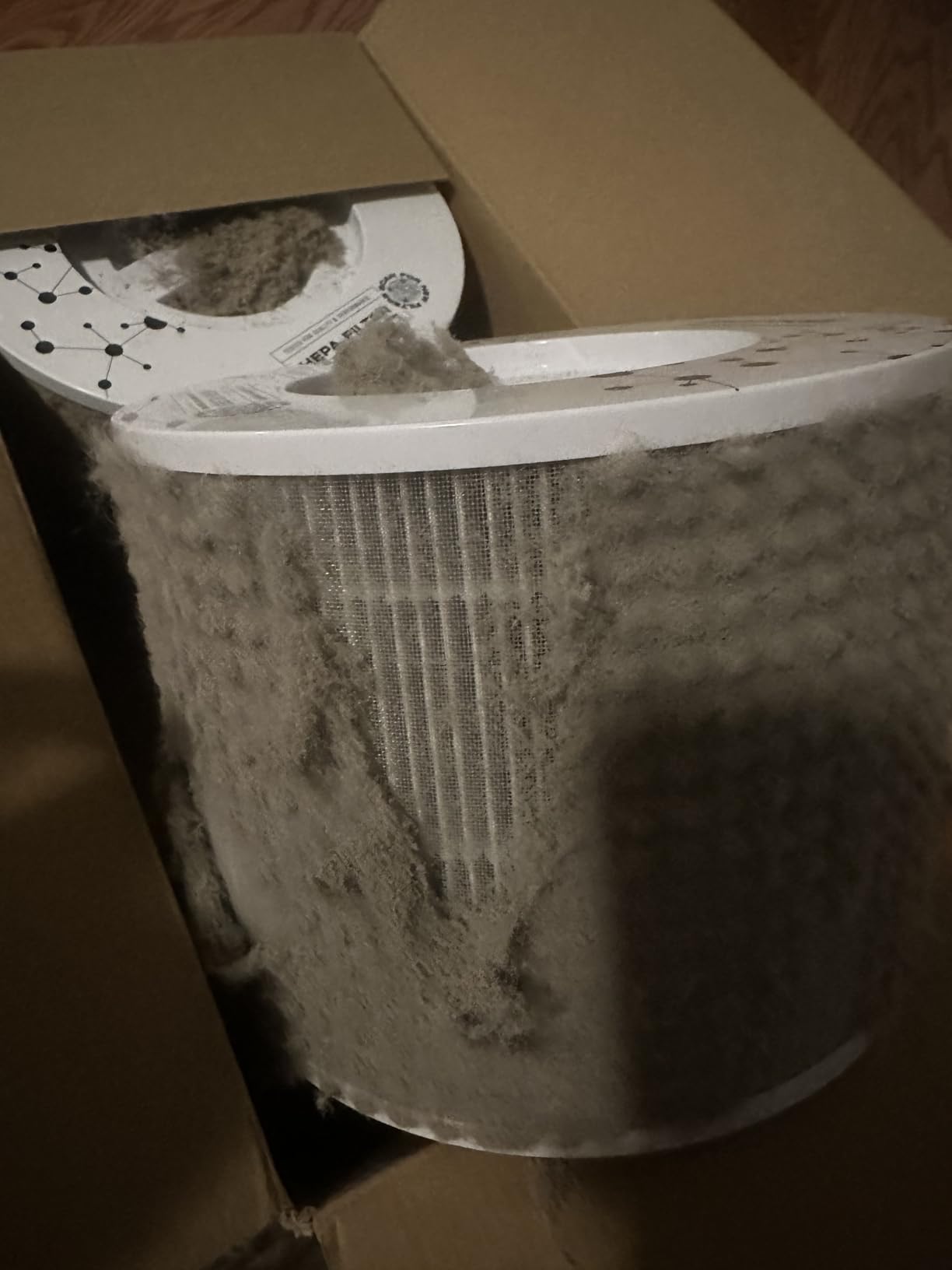
Be clear-eyed about what it does not do. Owners are consistent that it does little about visible or floating pet hair. That is a design consequence rather than a defect: the machine is built around air quality and odour rather than around catching hair, so if your main frustration is fur on the sofa you need source control, not a better purifier.
On the odor side, though, the reports are strong, including litter box odour in rooms where the tray is not perfectly maintained. It is rated to 1000 square feet, and the slim tower at 10.63 by 10.63 by 28 inches stays out of the way against a wall. The built-in carry handle means one machine can move between the bedroom and the room the pet actually sleeps in.
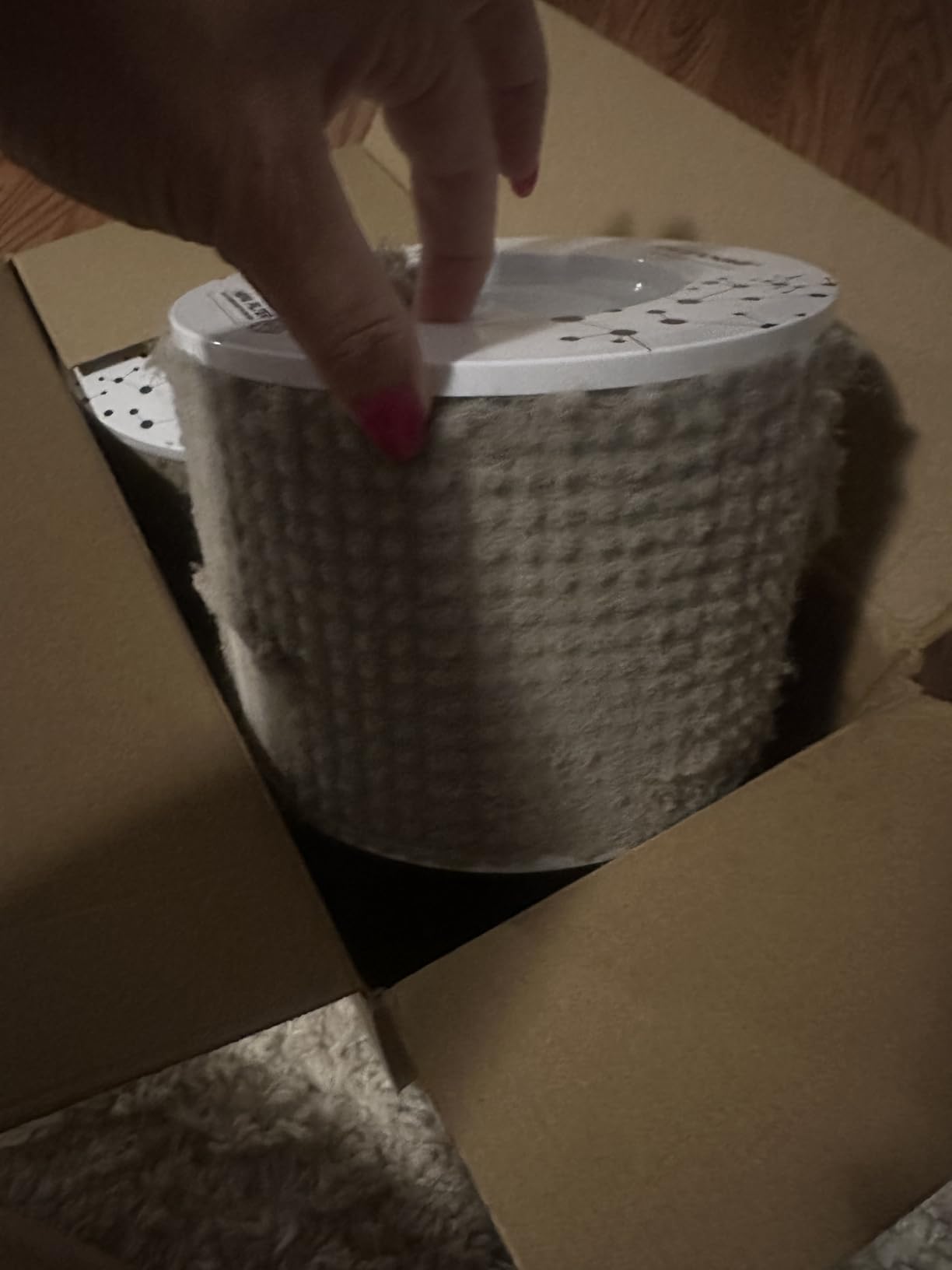
Who this purifier suits, and who should skip it
It suits a bedroom shared with a pet, particularly where somebody wakes congested, and it suits owners who want certification language they can point to. It also suits small flats where 1000 square feet of rated coverage already covers the whole space.
Skip it if hair is your primary complaint rather than smell, and skip it if you need a machine you can move constantly, because 28 inches tall on a base is a two-person job in a busy house. The 110V design also means UK and European buyers need a step-down transformer.
Ownership realities
Replacement filters are the real ongoing cost here, and owners of this model in continuous use treat that as the budget line to plan for. It is a 2 year warranty with US-based support, and US support is genuinely useful when you are deciding between genuine and third-party filters.
There is a small number of reports of machines cutting out after extended use, which is worth weighing against a review base of more than 19k. Most of that record is positive, with owners describing it as quiet, simple and effective on smell. Our broader guide to purifiers for stubborn smells covers what to do when the smell source itself has not been cleaned.
7. MOOKA PR1 — Best Value with a Dedicated Pet Mode
Air Purifiers for Home Large Room up to 2200sq.ft, MOOKA Air purifier for Home Pets with Washable Filter, PM 2.5 Display Air Quality Sensor Air Cleaner for Bedroom, Dorm room, Pets, Office PR1 (White)
Up to 2200 sq ft claimed
4-stage with washable pre-filter
Dedicated Pet Mode
PM2.5 sensor with on-screen readout
Pros
- Pet Mode plus a washable pre-filter that visibly fills with fur
- Real-time PM2.5 numeric display that responds quickly
- Very affordable for the coverage claimed
- Quiet on low settings and easy to carry
- CARB ETL DOE and FCC certified with no ozone and no UV
Cons
- Pet Mode and top fan setting are noticeably loud
- PM2.5 display cannot be dimmed in a dark room
- Timer stops at 8 hours for overnight use
- Some reports of the fan locking to high speed
The MOOKA PR1 is the one to buy when you want a lot of air movement per dollar and you have one specific complaint: fur and urine smell. The Pet Mode raises fan speed when you need a burst, and the washable pre-filter behind a wider sided intake is the part that makes the difference. Owners report the pre-filter visibly filling with pet fur within weeks in a heavy shedder, which is exactly the behaviour you want.
The intake design is described as wider sided to draw in more air without clogging, and coverage is claimed up to 2200 square feet. Treat that headline number as a marketing figure, since no CADR is published. In practice the sustained room for continuous running is a small to medium room, and this is the model in the list where the coverage claim most exceeds what the published data can support.
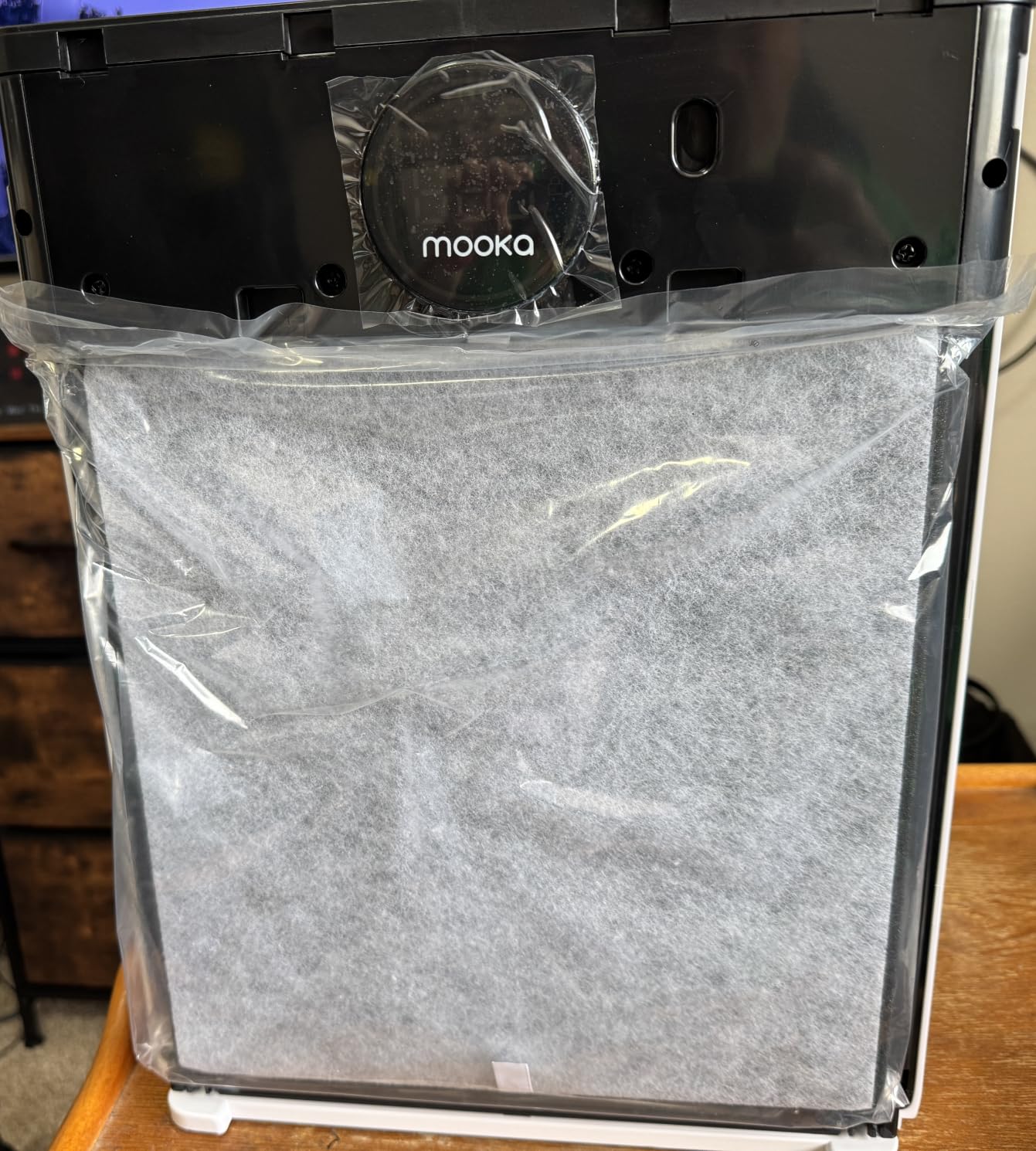
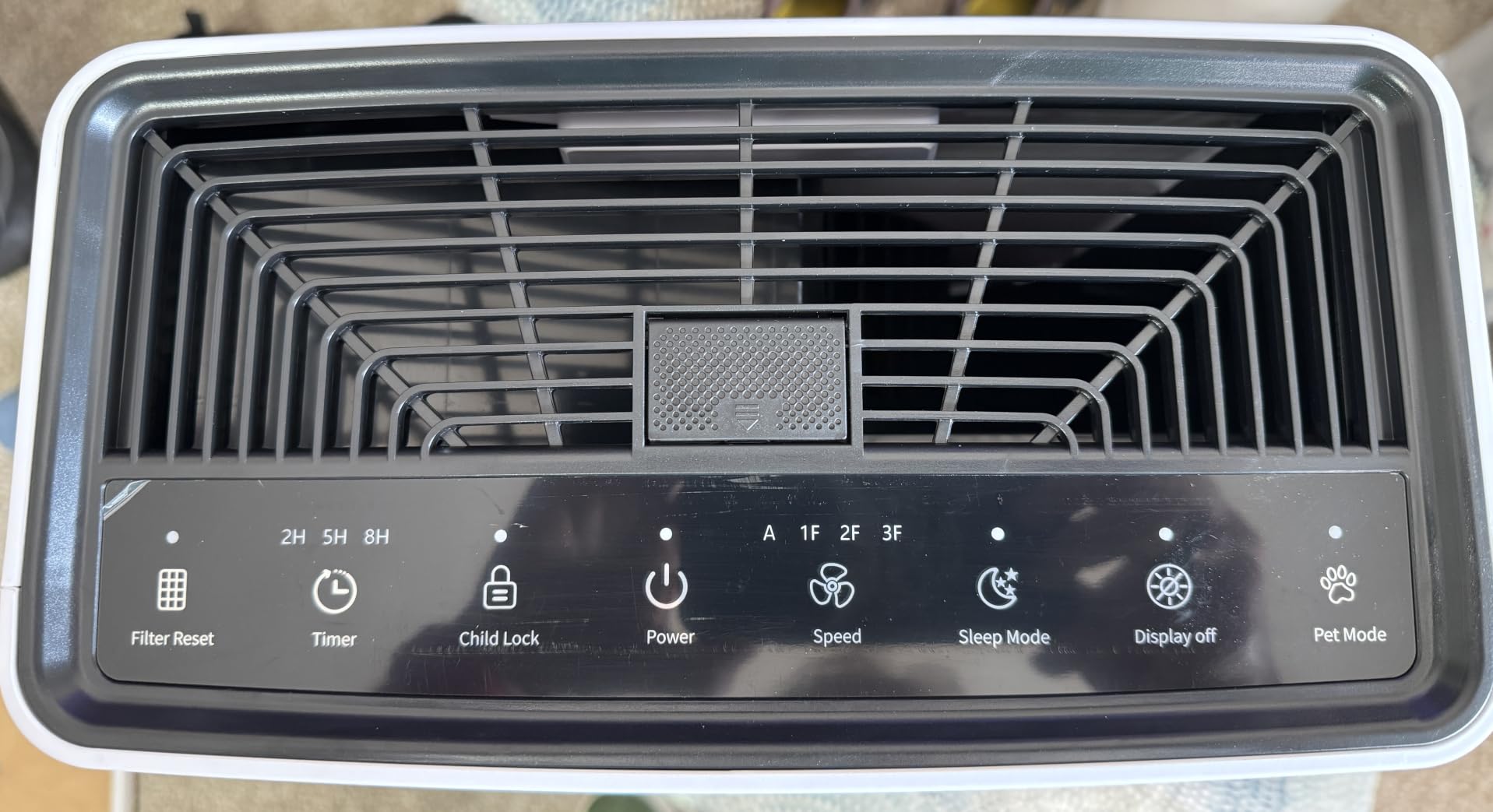
The PM2.5 sensor with a numeric on-screen readout is a genuine step above the no-display budget units, and owners like that it responds quickly when cooking smoke or a brushing session kicks up dust. There are six fan speeds, including sleep mode as low as 26 dB, plus a timer, a child lock and an aroma function for essential oils.
On safety it is well certified: CARB, ETL, DOE and FCC, with explicitly no ozone release and no UV light. For a household trying to avoid ionising technology, that is a clean position. The trade is that you get fewer stages of filtration for the money than the Coway or the Winix.
Who this purifier suits, and who should skip it
It suits owners who want a visible pre-filter they can rinse, a dedicated pet setting, and a sensor readout without stepping up to a much larger spend. It also suits a home office or dorm-style room with a pet that needs a dedicated machine of its own.
Skip it as a bedroom unit for a light sleeper, because Pet Mode and the top setting are loud and the PM2.5 display cannot be dimmed. Also skip it if you want to set it overnight and forget it, since the timer stops at 8 hours and needs a manual restart.
Ownership realities
Owners report a small number of sensor-driven high-speed lockups, where the fan sticks on high and the PM2.5 reading is inaccurate. The power cord is short. None of these is serious, but all three are the kind of detail that only shows up after a few months, which is exactly what a large review base eventually surfaces.
At 4.5 stars across nearly 5,000 ratings it has the smallest review record of the eight, so treat the durability picture as less settled than the Core 300-P or the Winix. The pet-specific feature set, though, is the most directly aimed at the problem in this article. Our UV purifier guide explains why this model deliberately omits a UV stage.
8. Levoit Core 161 — Budget Pick for Bedrooms and Small Spaces
Levoit Air Purifiers for Bedroom Home Pets Dorm Room, Small Air Purifiers
AHAM VERIFIDE certified
2.2 lb desktop footprint
Three fan speeds with sleep mode
Aromatherapy tray
Pros
- Strong value for dander and dust capture
- Effectively silent on low speed for bedside use
- Tiny footprint that fits a nightstand or dorm room
- Aromatherapy tray for essential oils
- Very low wattage suits continuous operation
Cons
- Small footprint suits only small rooms and personal spaces
- Three fan speeds with no sensor or app control
- Filter replacement is a recurring cost on a machine often run continuously
The Core 161 is the smallest machine here and the most sensible first purchase for a bedroom, a dorm room or a cat that sleeps on the pillow next to you. At 2.2 pounds and 10.24 inches tall it sits on a nightstand, and on low speed it is effectively silent, which is the entire point in a room where you are trying to sleep.
It is AHAM VERIFIDE certified, which matters even at this size because it means the performance is third-party tested. The pre-filter and main filter capture lint, hair, pet dander, fine airborne pollutants and smoke particles, and the unit also helps neutralise smoke, odours and fumes. Owners with allergic pets report measurable improvement in both the animal and the humans in the room.
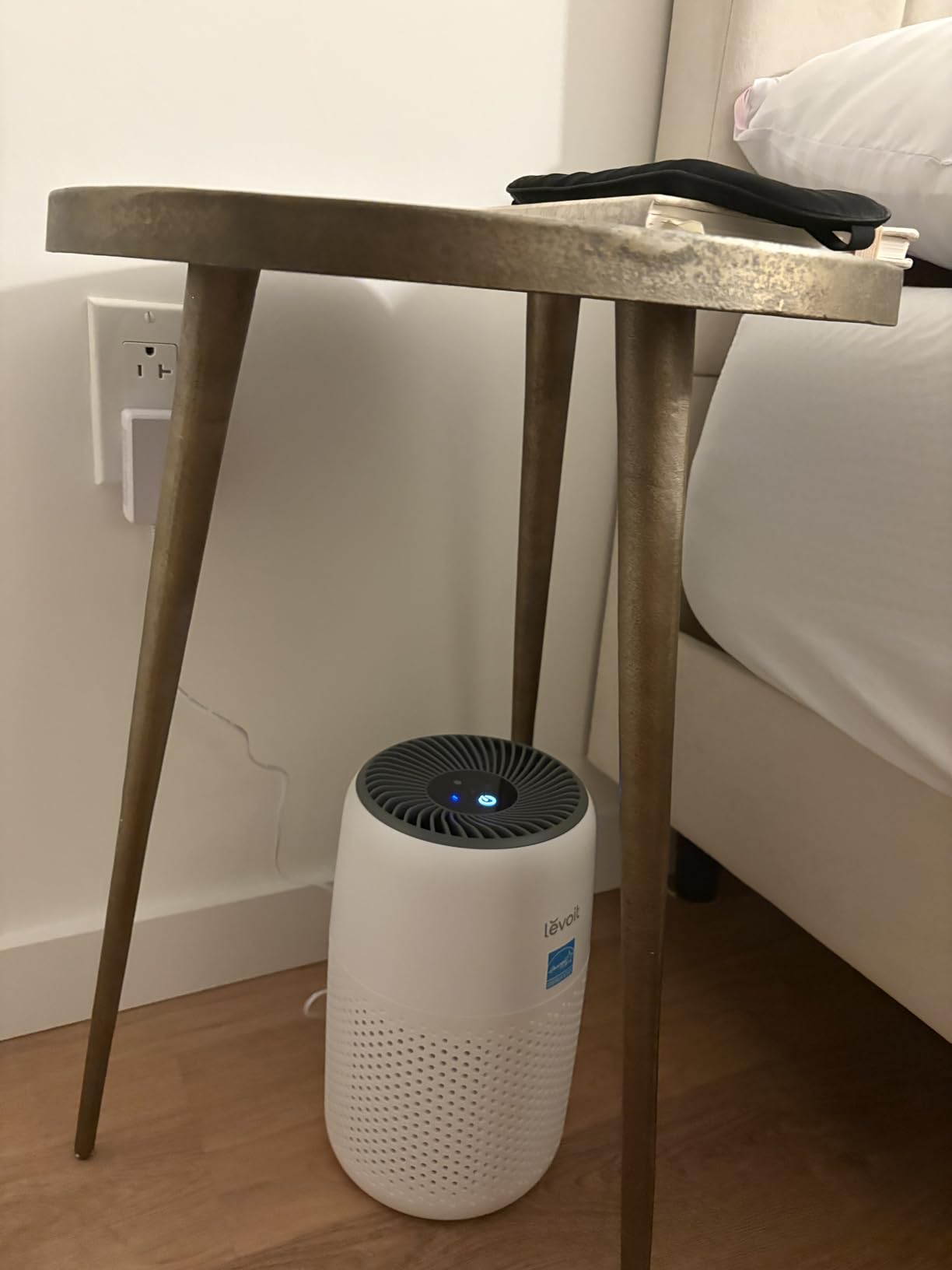
What you give up is throughput and control. There are three fan speeds, no air quality sensor and no app connectivity, so it runs on whatever setting you choose and tells you nothing about the room. The very low wattage is a genuine advantage for continuous operation, since this is the kind of unit people leave running overnight and forget.
It also has an aromatherapy tray for essential oils, which is a nice touch in a bedroom and a reminder that this is a small personal-space device rather than a room air cleaner. Any coverage figure in the region of 200 square feet at continuous use is the honest way to think about it.
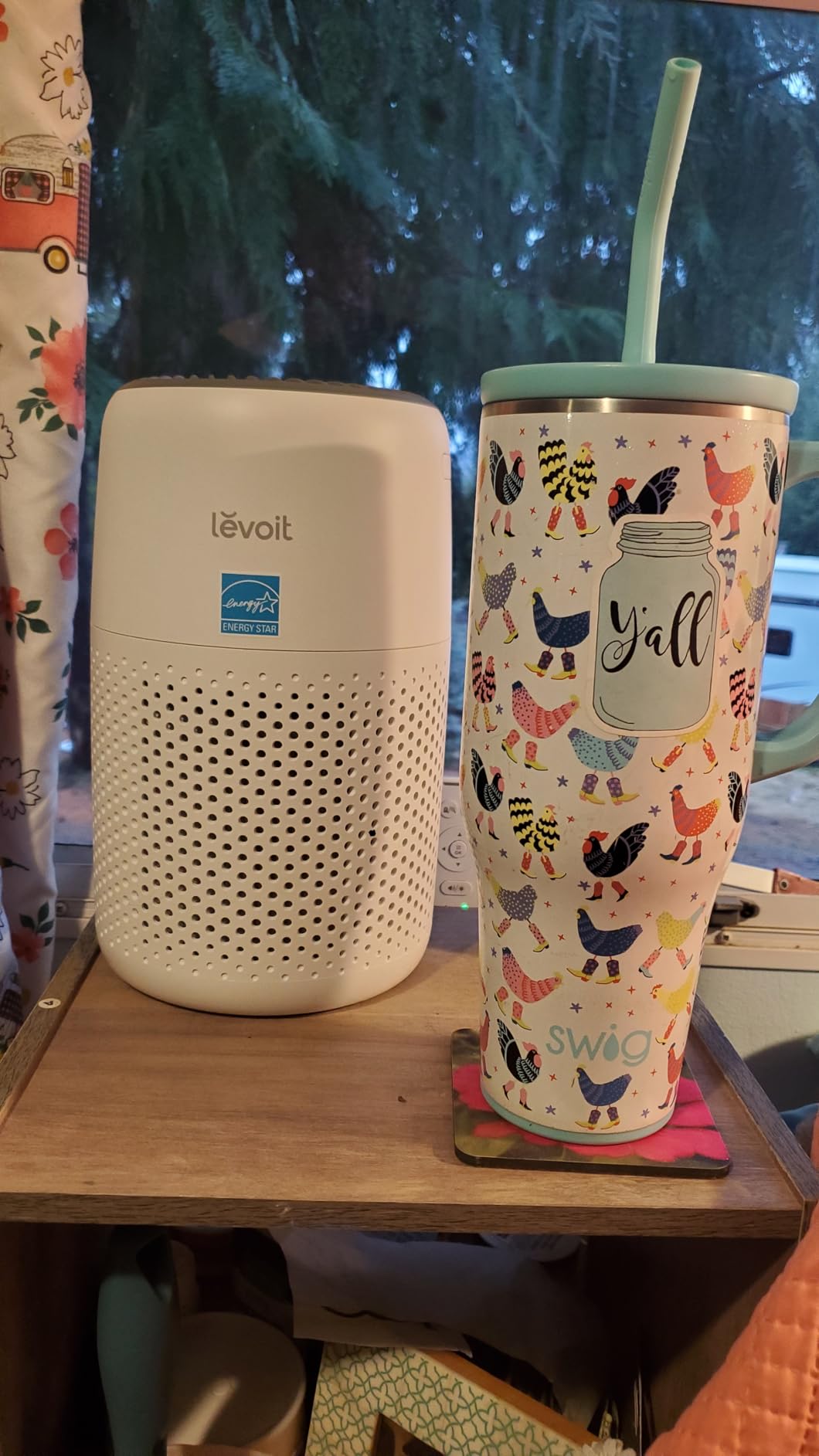
Who this purifier suits, and who should skip it
It suits a bedroom shared with a pet, a home office, a dorm room, a nursery or a second zone in a multi-room house. It also suits anyone who wants a first purifier to learn from, because there is nothing to configure and nothing to get wrong.
Skip it for a living room, a shared open space or any room where you expect to see visible floating hair settle, because a unit this small simply does not move enough air. Also skip it if you want auto adjustment. There is no sensor, so it will never respond to a shedding event on its own.
Ownership realities
The replacement filter is the practical issue, because a machine this small is often run continuously and the filter becomes a recurring line item. Budget for it when you buy rather than when the light comes on, and check the manufacturer guidance on interval before assuming it is a twice-yearly cost.
Beyond that, ownership is trivial. 2.2 pounds means you can move it between rooms as the pet relocates, three speeds means no learning curve, and the auto-off display means it will not glow in a dark room. For 45k-plus ratings averaging 4.6, that simplicity is clearly working for the buyers who matched it to a small space.
How to Size an Air Purifier for a Pet Room
Size on clean air delivery rate, not on advertised square footage. The AHAM Verifide standard rates a purifier’s smoke CADR, and the standard industry rule is to multiply that number by 2 for a conservative room, or by 3 for a faster clean. Using the 2-times rule on the ratings in this roundup gives these honest sustained room sizes at roughly 4.8 air changes per hour.
150 sq ft room: 100 CFM minimum. The Levoit Core 161 handles this comfortably.
200 sq ft room: 120 to 140 CFM. The Levoit Core 300-P at 143 CFM lands here, which is its real-world sweet spot.
250 sq ft room: 150 to 170 CFM. Around the Core 300-P’s dust and pollen rates, or a small tower like the GermGuardian.
300 sq ft room: 180 to 200 CFM. The Coway’s four-stage chain sits comfortably here.
400 sq ft room: 240 to 260 CFM. This is the Levoit Vital 200S-P’s territory at 250 CFM.
500 sq ft and above: 300 CFM or more, or two correctly sized machines rather than one oversized one.
Any coverage claim quoted at one air change per hour is roughly five times larger than the same machine’s honest 4.8 ACH figure. That is why so many of these units advertise 1000, 1500 or 2000 square feet while the verified rate supports a quarter of that. The GermGuardian’s 743 square feet per hour and the Winix’s 1882 square feet in one hour are both fast-clean numbers rather than sustained ones.
Working in metric? Multiply your room area in square metres by 10.76 to get square feet, then apply the list above. A 25 square metre living room is about 269 square feet, which needs roughly 160 CFM to keep up continuously. That is the calculation most people skip, and it is why a machine that feels overwhelmed in one room is often just undersized.
True HEPA vs HEPASilent vs Ionizer in a Pet Home
A True HEPA filter removes 99.97% of 0.3 micron particles at 0.3 microns under test conditions. That is a statement about the filter, not about the appliance, and the difference matters enormously. A large filter moved slowly and a small filter moved fast do not deliver the same clean air, which is exactly why CADR is the number to buy on and filtration percentage is marketing filler.
HEPASilent technology and PECO systems use electrostatic charge to help particles stick to the filter before the mechanical stage. These are effective filtration methods, and the Blueair HEPASilent and Molekule PECO families are respectable. They are also harder for a buyer to compare, because the charge is a manufacturer term rather than a published standard.
Ionisers and bipolar ionisers are a different category entirely. They charge particles in the air to make them fall out of the air faster, which sounds attractive until you consider that the by-product is often ozone. The EPA’s guidance on air cleaners in the home treats ioniser-generated ozone as a concern, and it matters more in a home with a pet because animals breathe faster and spend more time near floor level, where ozone and fine particles concentrate.
For most pet households, the safe and simple rule is: if the product page leads with True HEPA and CADR rather than with ionisation technology, choose that one. Our picks above include two explicitly no-ozone or Zero Ozone Verified models and one with a bipolar stage we have flagged for that reason.
Dander, Hair and Odor Are Three Different Jobs
Treating pet problems as one problem is the most common mistake. They are three different contaminants that need three different stages, and understanding the split tells you which spec to read.
Hair. Large, visible, settles fast, sits on surfaces. Air purifiers are poor at this. A washable pre-filter catches the loose hair that gets lifted into the intake, but the real answer is a rubber brush, a vacuum with a pet head and a lint roller. Hair embedded in upholstery is not an air problem at all.
Dander and the allergens on it. Dander is microscopic skin flake, and it carries the major allergen proteins, Fel d 1 from cats and Can d 1 from dogs. These particles are small, they stay airborne for hours, and they are the reason an air purifier is worth owning. This is the job of the HEPA stage, and it is the job CADR determines. Note that no purifier can filter allergen that is already inside your body or your pet’s coat, so no size of filter cures an allergy.
Odor. Dander smell, urine smell and litter box ammonia are gas-phase compounds, not particles. HEPA does essentially nothing for them. Activated carbon adsorbs them, and the amount and form of carbon matters. A thick granular bed or a substantial deodorization filter stage holds far more than a thin carbon-coated mesh, which is why the Coway’s washable deodorization stage and the Winix’s thick carbon media are worth more for odor than any particle spec.
Our odour-focused purifier guide goes deeper into the gas-phase side, because the same principle applies to cooking smells as to pet smells: source control first, carbon second.
Is It Safe to Run an Ionizer or Ozone-Producing Unit Around Pets?
For most households, yes, and for pet households with respiratory sensitivities, choose a no-ozone model instead. Ozone is a respiratory irritant at low concentrations, and the EPA’s Guide to Air Cleaners in the Home specifically notes that some ionisers and electronic air cleaners can emit ozone as a by-product of their charging process. Dogs and cats also spend much of their time near the floor, where a purifier’s output mixes most closely with the breathing zone.
Certification is the practical test. Zero Ozone Verified, published by UL 2998, is the standard to look for. CARB certification covers the electrical and emissions safety side and is required for sale in California. The GermGuardian AC4825E carries Zero Ozone Verified, and the MOOKA PR1 is certified with explicitly no ozone release.
Where a unit uses a bipolar or ionising stage as an assist rather than a headline feature, the honest framing is that it works and it is generally fine in a healthy household, but it is not the right first choice for a home with an asthmatic pet or a child with reactive airways. That is why the Coway Mighty earns a watch note rather than a disqualification.
Where to Put the Unit and How to Pet-Proof It
Placement matters more than any setting. The single most common mistake in pet homes is pushing the purifier against a wall to hide it, which starves the intake and quietly destroys the CADR you paid for. Give it clearance on the intake side, keep it a few feet off the floor so a pet cannot block it, and place it in the room where the pet actually spends time rather than the room where the litter box is.
Run the numbers on separate rooms. A purifier in a closed-off bedroom does nothing for the living room, and forum buyers learn this the expensive way. In a multi-room or open-plan home, one correctly sized machine per zone beats one large machine chasing the whole floor.
For timing, continuous or near-continuous operation is what actually lowers airborne dander. A purifier switched on for an hour before guests arrive produces a brief clean and then lets the room recontaminate. If noise is a problem, the practical compromise many owners use is medium speed while the room is in use and sleep mode overnight.
Pet-proofing is mostly common sense with a few specifics. Run the cord along a wall or into a conduit, because chewing is a real and expensive habit. Check for tip-over risk, particularly with a large dog or an active cat, and place the unit somewhere it will not be shouldered. Keep it off the floor if your pet likes to sit on things, and remember that touch panels can be triggered by a cat landing on top of the unit, which is a recurring and amusing complaint in pet households. Finally, leave the intake clear of bedding and blankets, since a fabric draped over a purifier is the same as running it half-closed.
What an Air Purifier Cannot Do
Honesty here will save you money and disappointment. Five limits are worth stating plainly, because they are the ones most often implied away in marketing copy.
It cannot remove settled hair from a sofa, rug or bed. Hair on surfaces needs removal at the source.
It cannot treat fur embedded in upholstery. That is a professional clean or a very good vacuum head, not an appliance.
It cannot prevent hairballs, and it is not a substitute for grooming, brushing or de-shedding tools.
It cannot cure an allergy, asthma or a pet’s skin condition. It lowers one input to the problem, which is meaningful but not curative.
It cannot fix odor at the source. A full litter tray or a soaked dog bed keeps producing smell, and no filter outruns an uncleaned source indefinitely. Clean the source first, then run the machine.
Treated honestly, a purifier is one layer of a plan: brush the animal, vacuum with a head designed for hair, wash bedding and pet beds hot, clean the litter box daily, and then run a correctly sized purifier continuously to handle the fraction that stays airborne. Our smell-focused roundup makes the same argument for kitchen odours.
Frequently Asked Questions
Do air purifiers actually work for pet dander?
Yes, with one qualification. A correctly sized purifier with a True HEPA stage measurably reduces airborne dander and the allergen proteins such as Fel d 1 and Can d 1 that travel on it, which is why allergy and asthma households report real relief. It does nothing for hair already settled into carpets or upholstery, does not cure an allergy, and does not fix odor at the source. Treat it as one layer alongside brushing, vacuuming and washing bedding.
What is the best air purifier for pet dander overall?
For most homes, the Levoit Core 300-P. It is AHAM VERIFIDE certified with published rates of 143 CFM smoke, 153 CFM dust and 167 CFM pollen, which supports a 222 sq ft room at 4.8 air changes per hour, and it runs at 24 dB in sleep mode. For an open-plan or multi-pet home, step up to the Levoit Vital 200S-P at 250 CFM smoke.
How often should I change the air purifier filter with pets?
Clean or wash the pre-filter every one to two weeks in a heavy-shedding home, since trapped hair is what chokes the main filter. Replace the main filter on the sensor indicator or the manufacturer guidance, which in a busy pet household is roughly every six to nine months. Replace carbon on odor decline, which often comes sooner than the particle filter does in a room with a litter box.
How much does it cost to replace a HEPA filter?
It varies enormously by brand and by model, which is why we do not publish fixed figures. The pattern is consistent across the industry: genuine manufacturer filters cost meaningfully more than off-brand cartridges, and budget units with small filter media and thin carbon work out more expensive per year of continuous use than larger machines. Check the current cost of the specific model’s filter before buying, and factor in one to two changes a year in a shedding home.
How many hours a day should you run an air purifier?
Continuously, or close to it, if you are managing allergies. A purifier run only occasionally produces a brief clean and then lets the room recontaminate, so the benefit never accumulates. A practical compromise owners use is medium speed while the room is occupied and sleep mode overnight. If noise prevents overnight running, position the unit away from the bed head and run it all day in an adjoining space.
What actually gets pet dander out of the air?
A HEPA-rated filter stage in an appliance with enough clean air delivery rate for the room. Loose hair is caught by a washable pre-filter, fine dander and the Fel d 1 or Can d 1 allergens on it are captured by the HEPA media, and odor gases are adsorbed by activated carbon. You need all three stages working, and you need the pre-filter cleaned on a schedule or the main filter clogs.
Is a HEPA air purifier safe for pets?
A mechanical True HEPA purifier is safe for pets. The caution applies to ionisers and bipolar ionisers, which can emit ozone as a by-product, and ozone is a respiratory irritant that matters more in a home with an asthmatic pet or a child with reactive airways. Look for Zero Ozone Verified to UL 2998 or CARB certification with an explicit no-ozone statement if anyone in the household has respiratory sensitivity.
What size air purifier do I need for my room?
Multiply your room area in square feet by 2 to get the minimum smoke CADR you need. A 200 sq ft bedroom needs about 120 CFM, a 300 sq ft living room about 180 CFM, and a 400 sq ft open-plan space about 240 CFM. Ignore coverage figures quoted at one air change per hour, because the same machine’s honest figure at 4.8 air changes per hour is roughly a quarter of the headline number.
The Best Air Purifiers for Pet Dander: Final Verdict
The best air purifiers for pet dander depend almost entirely on room size and hair load, not on brand. Buy the Levoit Core 300-P if your pet shares a bedroom or a small living space, because its published 143 CFM smoke CADR and 24 dB sleep mode are the most honestly specified combination in this roundup. Move up to the Levoit Vital 200S-P for an open-plan floor or a two-dog household, where 250 CFM and the dual pet-hair inlet earn their cost. Choose the Winix 5510 when odor and five-year durability matter most, and the Coway Mighty when running cost and allergy relief are the priority and nobody in the home has ozone-sensitive lungs.
For bedroom-only use, the PuroAir 240 handles odor and sleep quality well, and the Levoit Core 161 covers a small room on a budget. The MOOKA PR1 is the value pick with a dedicated Pet Mode and a rinseable pre-filter. Whatever you choose, size it on CADR at 4.8 air changes per hour, clean the pre-filter every week or two, and run it continuously. An air purifier handles the airborne fraction of dander. Brushing, vacuuming, washing bedding and cleaning the litter box handle everything else.
Our allergy purifier picks and UV purifier guide cover the filter technologies in more detail if you want to go deeper.