
That jar of cinnamon in your spice cabinet might be hiding a health risk you never knew existed. If you sprinkle cinnamon on your oatmeal every morning or take cinnamon supplements for blood sugar support, the type you choose matters far more than most people realize.
Ceylon cinnamon and Cassia cinnamon come from different trees, grow in different countries, and contain dramatically different amounts of a compound called coumarin. One is safe for daily use. The other can damage your liver over time.
In this guide, I will explain the critical differences between these two cinnamon types, why the coumarin content matters for your health, and exactly how to choose the right one for daily consumption.
Table of Contents
Ceylon vs Cassia Cinnamon at a Glance
Before diving into the details, here is a quick comparison of the two main cinnamon types you will find in stores:
| Feature | Ceylon Cinnamon | Cassia Cinnamon |
|---|---|---|
| Scientific name | Cinnamomum verum | Cinnamomum cassia |
| Origin | Sri Lanka, Madagascar | China, Indonesia, Vietnam |
| Coumarin content | 0.004% (trace amounts) | 1% (250x higher) |
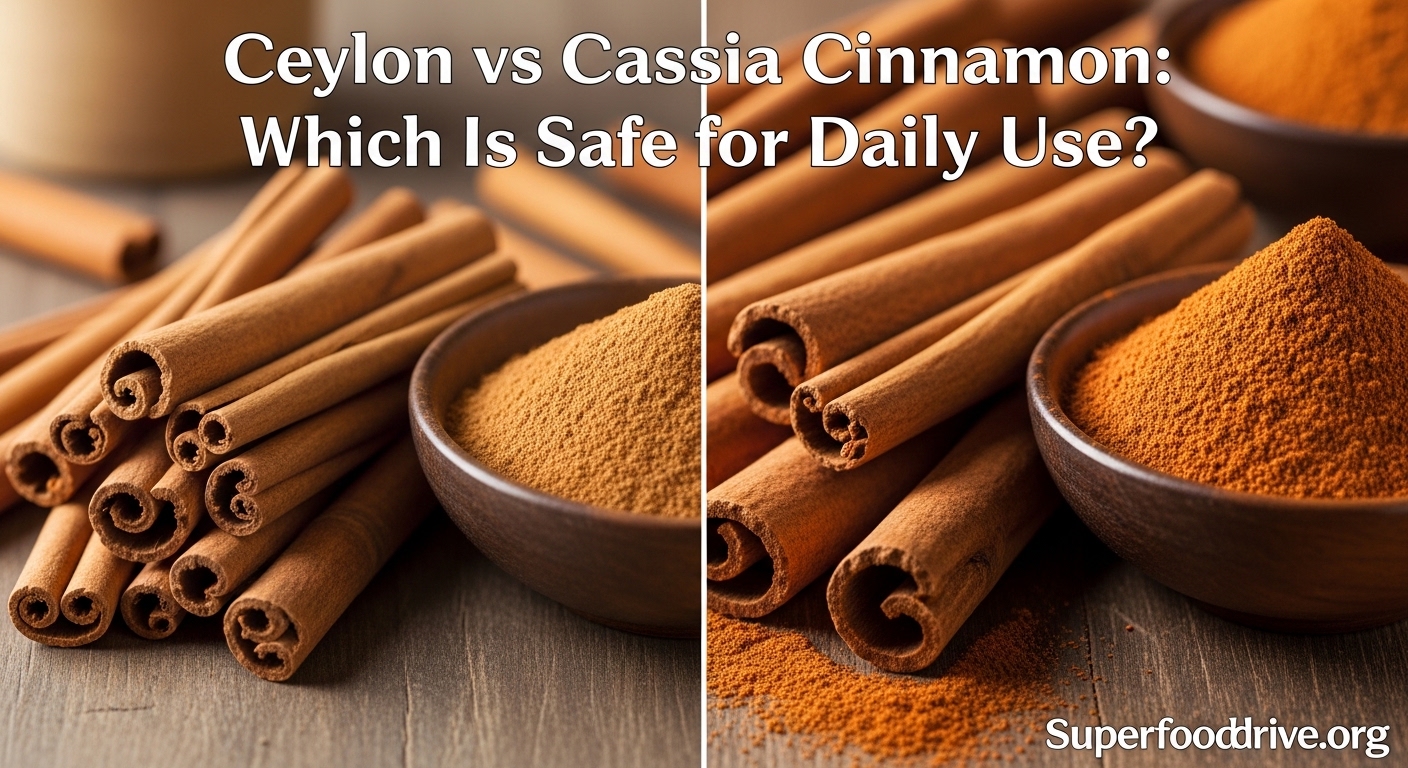
| Appearance (sticks) | Thin, layered, tan-colored | Thick, hollow, dark red-brown |
| Flavor | Mild, sweet, delicate | Strong, spicy, peppery |
| Safe for daily use | Yes | Limited (under 1 tsp/day) |
| Common labels | True cinnamon, Sri Lankan | Chinese cinnamon, just “cinnamon” |
| Price | Higher ($15-25 per pound) | Lower ($5-10 per pound) |
What Makes Ceylon and Cassia Cinnamon Different
These two cinnamon varieties come from completely different tree species. Understanding their origins helps explain why their chemical compositions and safety profiles differ so dramatically.
Botanical Origins and Geographic Sources
Ceylon cinnamon, also called true cinnamon, comes from the Cinnamomum verum tree native to Sri Lanka. The island nation produces approximately 80% of the world’s Ceylon cinnamon supply, with Madagascar contributing most of the remainder.
Cassia cinnamon comes from the Cinnamomum cassia tree, primarily grown in China, Indonesia, and Vietnam. This is the cinnamon you find in nearly every supermarket in the United States. When a recipe simply calls for “cinnamon” without specifying a type, it almost certainly means Cassia.
The harvesting process differs too. Ceylon producers must carefully peel thin inner bark layers from young branches by hand. This labor-intensive process explains part of the price difference. Cassia bark is thicker and easier to harvest, making it more economical to produce at scale.
Physical Appearance: How to Tell Them Apart
If you buy cinnamon sticks, you can easily distinguish the two types by appearance alone. As one experienced cook on Reddit noted: “Cassia will be hollow tube, while Ceylon looks like layers of paper and is a bit spongy-looking in the middle.”
Ceylon sticks consist of many thin, papery layers rolled together like a cigar. They feel soft and flexible, almost spongy when pressed. The color tends toward tan or light brown with yellowish tones.
Cassia sticks form thick, rigid, hollow tubes with a single curl. They feel hard and woody. The color appears much darker, ranging from reddish-brown to almost black.
Ground cinnamon presents a bigger challenge. Once powdered, both types look similar. Ceylon powder appears slightly lighter in color, but this can vary by batch and age. For ground cinnamon, you must rely on the label.
Flavor Profile Differences
The flavor difference is immediately noticeable once you taste them side by side. A cooking enthusiast on Reddit described it well: “Ceylon is softer, fruitier, and more floral, making it great in fruit desserts. Cassia is hotter (think red hots) and much more assertive in flavor.”
Ceylon cinnamon delivers a subtle, complex sweetness with citrus and floral notes. It works beautifully in delicate desserts, fruit dishes, and beverages where you want the warmth of cinnamon without overwhelming other flavors.
Cassia cinnamon packs a bold, spicy punch with prominent heat and peppery undertones. It shines in robust dishes like curries, stews, and heavy baked goods. The strong flavor stands up to other potent ingredients.
Coumarin Content: The Critical Safety Difference
The safety gap between these cinnamon types comes down to one compound: coumarin. This naturally occurring substance gives cinnamon some of its flavor and aroma, but it can damage the liver when consumed regularly in high amounts.
What Is Coumarin and Why Does It Matter
Coumarin belongs to a class of compounds called benzopyrones found in several plants. The European Food Safety Authority has established a tolerable daily intake of 0.1 milligrams per kilogram of body weight.
For a 150-pound adult, that translates to roughly 6.8 milligrams of coumarin per day as the upper safe limit. Regular consumption above this amount may cause liver damage over time.
The problem: Cassia cinnamon contains approximately 1% coumarin by weight. Just one teaspoon of Cassia cinnamon contains roughly 5-8 milligrams of coumarin. That single teaspoon puts you at or above the daily safety threshold.
The 250x Difference: The Numbers That Matter
Ceylon cinnamon contains approximately 0.004% coumarin. Compared to Cassia’s 1%, that represents roughly a 250-fold difference. You would need to eat 250 times more Ceylon cinnamon to consume the same amount of coumarin.
This massive difference makes Ceylon cinnamon safe for daily consumption even in larger amounts. You could safely consume several teaspoons of Ceylon cinnamon daily without approaching the coumarin safety threshold.
With Cassia cinnamon, even moderate daily use can push you over safe limits. One teaspoon in your morning oatmeal, another in your afternoon smoothie, and a third in your evening tea could deliver 15-24 milligrams of coumarin. That exceeds the safe daily limit by 2-3 times for an average adult.
How Coumarin Damages the Liver
Coumarin toxicity primarily affects the liver. The compound gets metabolized in liver cells, and high concentrations can overwhelm the organ’s processing capacity, leading to cellular damage.
Research published in the journal Molecular Nutrition and Food Research documented cases of liver toxicity in individuals consuming large amounts of Cassia cinnamon regularly. Most cases involved people taking cinnamon supplements or consuming cinnamon in unusually high quantities.
The liver damage is usually reversible once coumarin consumption stops. However, for people with existing liver conditions, the damage can progress more quickly and prove harder to reverse.
Signs of possible coumarin-related liver issues include unexplained fatigue, yellowing of the skin or eyes (jaundice), dark urine, abdominal pain in the upper right area, and nausea. If you use Cassia cinnamon daily and experience these symptoms, discontinue use and consult a healthcare provider.
Health Benefits of Each Cinnamon Type
Both cinnamon types offer health benefits, though research quality and quantity varies. The active compounds responsible for most benefits, particularly cinnamaldehyde, appear in both types but at different concentrations.
Blood Sugar Management
Multiple studies suggest cinnamon can help regulate blood glucose levels. A meta-analysis published in the Journal of Clinical Nutrition found that cinnamon supplementation reduced fasting blood glucose by an average of 24.6 mg/dL in people with type 2 diabetes.
Cinnamon appears to improve insulin sensitivity, helping cells respond more effectively to insulin signals. This mechanism helps move glucose from the bloodstream into cells where it belongs.
Cassia cinnamon contains higher concentrations of cinnamaldehyde, the compound most associated with blood sugar benefits. However, the coumarin content limits how much Cassia you can safely consume for therapeutic effect.
Ceylon cinnamon offers a safer alternative for daily blood sugar support, though you may need slightly higher amounts to achieve comparable cinnamaldehyde intake.
Anti-Inflammatory Properties
Both cinnamon types contain antioxidants that help reduce inflammation throughout the body. Chronic inflammation contributes to numerous health conditions, including heart disease, arthritis, and certain cancers.
Ceylon cinnamon actually contains higher total antioxidant capacity than Cassia, according to research comparing ORAC (Oxygen Radical Absorbance Capacity) values. This gives Ceylon an edge for anti-inflammatory benefits when consumed regularly.
Antimicrobial Effects
Cinnamon has demonstrated antimicrobial properties in laboratory studies. Cinnamaldehyde can inhibit the growth of certain bacteria and fungi. Historically, people used cinnamon as a food preservative partly because of these protective properties.
While promising, these findings come primarily from test tube and animal studies. The amounts used in research often exceed typical dietary consumption, so practical benefits for everyday users remain uncertain.
Who Should Avoid Cassia Cinnamon
Certain populations face higher risks from Cassia cinnamon’s coumarin content and should either avoid it entirely or use it only in tiny amounts.
People with Liver Disease or History
Anyone with existing liver conditions, including hepatitis, fatty liver disease, cirrhosis, or a history of liver damage should avoid Cassia cinnamon completely. Their livers already function under stress and cannot handle additional coumarin exposure.
Even if your liver disease is well-managed, adding a hepatotoxic compound like coumarin creates unnecessary risk. Ceylon cinnamon offers a safe alternative for enjoying cinnamon’s flavor and benefits.
Those Taking Blood-Thinning Medications
Coumarin compounds have blood-thinning properties. This is actually the origin of warfarin, a common blood-thinning medication derived from a synthetic coumarin derivative.
If you take anticoagulant medications like warfarin, heparin, or newer drugs like apixaban and rivaroxaban, avoid Cassia cinnamon. The additional coumarin could amplify your medication’s effects and increase bleeding risk.
Even people not on blood thinners but with bleeding disorders should choose Ceylon over Cassia to minimize coumarin exposure.
Heavy Alcohol Consumers
Alcohol consumption stresses the liver. Heavy drinkers or those with alcohol-related liver concerns should avoid adding Cassia cinnamon’s coumarin load to an already burdened organ.
If you consume alcohol regularly, especially in amounts exceeding recommended limits, switching to Ceylon cinnamon removes one source of liver stress from your daily routine.
Pregnant and Breastfeeding Women
Pregnant women should limit Cassia cinnamon consumption. During pregnancy, the body processes compounds differently, and liver workload increases. Adding coumarin exposure creates unnecessary risk during this sensitive period.
Breastfeeding women should also choose Ceylon over Cassia. While research on coumarin transfer through breast milk remains limited, caution suggests minimizing exposure to potentially hepatotoxic compounds.
Ceylon cinnamon provides a safe alternative that lets pregnant and nursing women enjoy cinnamon’s flavor without the coumarin concerns.
Daily Use Guidelines: How Much Is Safe
The amount of cinnamon you can safely consume daily depends entirely on which type you choose. Here are specific, actionable guidelines based on current research.
Safe Limits for Cassia Cinnamon
For an average adult weighing around 150 pounds, limit Cassia cinnamon to no more than 1 teaspoon per day. This provides approximately 5-8 milligrams of coumarin, staying near the tolerable daily intake of 6.8 milligrams.
Larger adults can safely consume slightly more, while smaller adults should consume less. A general formula: multiply your weight in pounds by 0.045 to get your approximate daily milligram limit of coumarin.
Remember that coumarin accumulates over time. Regular daily consumption at the upper limit for months or years may still pose risks, even if individual days stay within safe thresholds.
If you choose Cassia for daily use, consider taking breaks. Use it for 3-4 weeks, then switch to Ceylon for 1-2 weeks to give your liver processing time.
Ceylon Cinnamon Daily Amounts
Ceylon cinnamon’s extremely low coumarin content makes it safe for daily consumption in normal culinary amounts. You would need to consume roughly 250 teaspoons of Ceylon cinnamon to approach the coumarin content of just 1 teaspoon of Cassia.
Most research on cinnamon’s health benefits uses doses between 1-6 grams daily (approximately 1/4 to 1.5 teaspoons). Ceylon cinnamon at these amounts presents no coumarin safety concerns.
For blood sugar management specifically, studies typically use 1-3 grams of cinnamon daily. You can safely achieve these amounts with Ceylon cinnamon without worrying about liver toxicity.
Supplement vs Culinary Use Differences
Many people take cinnamon supplements for blood sugar support or other health goals. These supplements typically contain concentrated cinnamon extract, often from Cassia.
Supplements pose higher coumarin risks than culinary use because:
- Concentrated extracts contain higher compound levels
- Cassia supplements deliver consistent daily coumarin doses
- People often take supplements long-term without breaks
- Supplement labels rarely specify cinnamon type
If you take cinnamon supplements, look for products explicitly labeled as Ceylon or “true cinnamon.” Avoid generic cinnamon supplements unless the manufacturer confirms they use Ceylon.
How to Identify Ceylon Cinnamon in Stores
One of the biggest frustrations consumers report is difficulty finding Ceylon cinnamon. As one Reddit user shared: “I like to grind my own spices, and am getting very low on ceylon cinnamon, but its hard for me to find. Most places only have cassia cinnamon.”
Finding Ceylon requires knowing what to look for and where to shop.
Label Terms That Indicate Ceylon
Look for these specific terms on packaging:
- Ceylon cinnamon – The most common label
- True cinnamon – Indicates Ceylon specifically
- Sri Lankan cinnamon – Geographic indicator
- Cinnamomum verum – Scientific name
- Mexican cinnamon (canela) – Usually Ceylon
Avoid labels that simply say “cinnamon” without qualification. In the United States, unlabeled cinnamon is almost always Cassia.
Labels reading “Chinese cinnamon,” “Indonesian cinnamon,” or “Vietnamese cinnamon” indicate Cassia varieties from those regions.
Where to Find Ceylon Cinnamon
Regular supermarkets rarely stock Ceylon cinnamon in their standard spice sections. However, some larger chains with extensive international food sections may carry it.
Your best bets include:
- Specialty spice shops – Penzeys, The Spice House, local independent spice stores
- Mexican or Latin American markets – Look for “canela,” which is typically Ceylon
- Health food stores – Whole Foods, Sprouts, natural grocers
- Online retailers – Widest selection, often with better prices
- Indian or Sri Lankan grocery stores – Authentic sources, often fresher
When shopping online, verify that the seller specifies Ceylon or true cinnamon. Some sellers use misleading product titles or photos.
Price Expectations
Ceylon cinnamon costs significantly more than Cassia. Expect to pay $15-25 per pound for Ceylon sticks or quality ground Ceylon, compared to $5-10 per pound for Cassia.
Organic certification adds another $5-10 per pound. While the price difference seems substantial, remember that cinnamon is used in small quantities. A pound of cinnamon sticks lasts most home cooks 6-12 months.
Given the safety advantages, the price premium for Ceylon represents a worthwhile investment for anyone consuming cinnamon regularly.
Culinary Uses: Which Type for What
Both cinnamon types serve culinary purposes, but their different flavor profiles make each better suited for specific applications.
When to Use Cassia Cinnamon
Cassia’s bold, spicy flavor works best in dishes that can handle strong seasoning:
- Savory dishes – Curries, stews, chili, and meat rubs
- Robust baked goods – Cinnamon rolls, apple pie, pumpkin bread
- Mulled beverages – Hot cider, mulled wine, spiced tea
- Chocolate pairings – Mexican hot chocolate, chocolate desserts
The assertive flavor of Cassia holds up against other strong ingredients like chocolate, coffee, and chilies.
When to Use Ceylon Cinnamon
Ceylon’s delicate, sweet profile shines in lighter preparations:
- Delicate desserts – Custards, panna cotta, light cakes
- Fruit dishes – Poached pears, fruit salads, compotes
- Beverages – Coffee, tea, smoothies where you want subtle spice
- Breakfast foods – Oatmeal, yogurt, toast with honey
- Fragrant rice dishes – Middle Eastern and Indian rice preparations
Ceylon enhances without overwhelming, making it ideal for recipes where cinnamon should complement rather than dominate.
Substitution Guidelines
You can substitute one cinnamon type for the other, but adjustments are necessary.
When replacing Cassia with Ceylon, increase the amount by 25-50% to achieve similar flavor intensity. Your dish will taste slightly different – more subtle and complex – but still delicious.
When replacing Ceylon with Cassia, reduce the amount by one-third to one-half. Start with less and add more if needed. Cassia’s strength can easily overwhelm a recipe developed for milder Ceylon.
For daily consumption purposes, the health safety of Ceylon outweighs any minor flavor adjustments needed.
Switching from Cassia to Ceylon: Action Steps
If you currently use Cassia cinnamon daily, switching to Ceylon protects your liver without eliminating cinnamon from your diet. Here is a practical approach.
Gradual Transition Approach
You do not need to throw away your Cassia cinnamon immediately. Instead, use this phased approach:
Week 1-2: Reduce your Cassia consumption by half. If you normally use 2 teaspoons daily, cut back to 1 teaspoon.
Week 3-4: Obtain Ceylon cinnamon and start blending. Use half Cassia and half Ceylon in recipes, gradually adjusting to the milder flavor.
Week 5+: Switch completely to Ceylon for daily use. Reserve Cassia for occasional recipes where its stronger flavor truly benefits the dish, using it no more than 2-3 times per week.
Storage Differences
Both cinnamon types store similarly but with slight differences in shelf life due to oil content differences.
Store whole Ceylon sticks in an airtight container away from heat and light. They maintain potency for 2-3 years. Ground Ceylon retains freshness for about 1 year.
Cassia’s higher oil content gives it a slightly longer shelf life. Whole Cassia sticks stay fresh for 3-4 years, ground Cassia for 1-2 years.
Label your containers clearly. Many home cooks have accidentally continued using Cassia because they stored both types in similar jars without proper labeling.
Frequently Asked Questions
What is the safest cinnamon to consume daily?
Ceylon cinnamon is the safest choice for daily consumption. It contains approximately 0.004% coumarin compared to Cassia’s 1% – about 250 times less. This extremely low coumarin content means you can safely consume Ceylon cinnamon daily without risking liver damage.
Which is healthier Ceylon cinnamon or Cassia cinnamon?
Ceylon cinnamon is healthier for regular use due to its dramatically lower coumarin content. Both types offer similar benefits for blood sugar management and antioxidant effects, but Cassia’s high coumarin levels make it unsafe for daily consumption. Ceylon actually contains higher antioxidant capacity overall, giving it an edge for health benefits when consumed regularly.
Is 1 teaspoon of Ceylon cinnamon a day too much?
No, 1 teaspoon of Ceylon cinnamon daily is not too much. You would need to consume roughly 250 teaspoons of Ceylon cinnamon to approach the coumarin content in just 1 teaspoon of Cassia. Most research on cinnamon’s health benefits uses 1-3 grams daily (about 1/4 to 3/4 teaspoon), making Ceylon at these amounts completely safe.
Who should not use Cassia cinnamon?
People who should avoid Cassia cinnamon include: those with liver disease or history of liver problems, people taking blood-thinning medications like warfarin, heavy alcohol consumers, and pregnant or breastfeeding women. These populations face higher risks from coumarin exposure and should choose Ceylon cinnamon instead.
Can cinnamon help in hormonal imbalance?
Some research suggests cinnamon may help regulate hormones, particularly in conditions like Polycystic Ovary Syndrome (PCOS). Studies indicate cinnamon can improve insulin sensitivity, which may help balance hormones in women with PCOS. However, research specifically on hormonal imbalance remains limited. If using cinnamon for hormonal support, Ceylon is the safer choice for long-term daily use.
Is ground cinnamon ok for GERD?
Ground cinnamon may trigger GERD symptoms in some people due to its spicy nature. Both Ceylon and Cassia contain compounds that can irritate the esophagus and stomach lining in sensitive individuals. If you have GERD, start with small amounts of Ceylon cinnamon, which has a milder profile, and monitor your symptoms. Discontinue use if you experience heartburn, chest pain, or acid reflux after consuming cinnamon.
How can I tell if my cinnamon is Ceylon or Cassia?
If you have cinnamon sticks, examine the structure: Ceylon consists of thin, layered, papery quills that look like cigars made of many sheets, while Cassia forms thick, hollow, single-curl tubes. Ceylon appears tan or light brown; Cassia looks dark red-brown. For ground cinnamon, check the label for terms like ‘Ceylon,’ ‘true cinnamon,’ ‘Sri Lankan,’ or ‘Cinnamomum verum.’ Unlabeled ground cinnamon is almost always Cassia.
Does Ceylon cinnamon taste different than Cassia?
Yes, the flavor difference is significant. Ceylon cinnamon offers a mild, sweet, complex taste with floral and citrus notes. It is subtle and delicate. Cassia cinnamon delivers a strong, spicy, peppery punch similar to red hot candies. Ceylon works better in delicate desserts and beverages, while Cassia suits robust savory dishes and bold baked goods. Many people prefer Ceylon’s more refined flavor once they try both.
Conclusion: Making the Safe Choice for Daily Use
Ceylon vs Cassia cinnamon is not a debate about subtle flavor preferences. It is a safety issue that affects your liver health. The 250-fold difference in coumarin content makes Ceylon cinnamon the clear and only safe choice for daily consumption.
If you use cinnamon occasionally – a few times per month in baking – Cassia poses minimal risk. But if cinnamon appears in your daily routine, whether in morning oatmeal, afternoon tea, or supplement form, switching to Ceylon protects your liver without sacrificing flavor or health benefits.
The extra cost of Ceylon cinnamon is small insurance against potential liver damage. Given how long a pound of cinnamon lasts most households, the price difference amounts to pennies per serving.
Look for “Ceylon,” “true cinnamon,” or “Cinnamomum verum” on labels. Check the appearance of sticks – thin layered quills indicate Ceylon, thick hollow tubes mean Cassia. Shop at specialty spice stores, Latin American markets, or online to find authentic Ceylon.
Your daily cinnamon habit should support your health, not slowly damage your liver. Choose Ceylon cinnamon for safe daily use and enjoy this wonderful spice with confidence.