
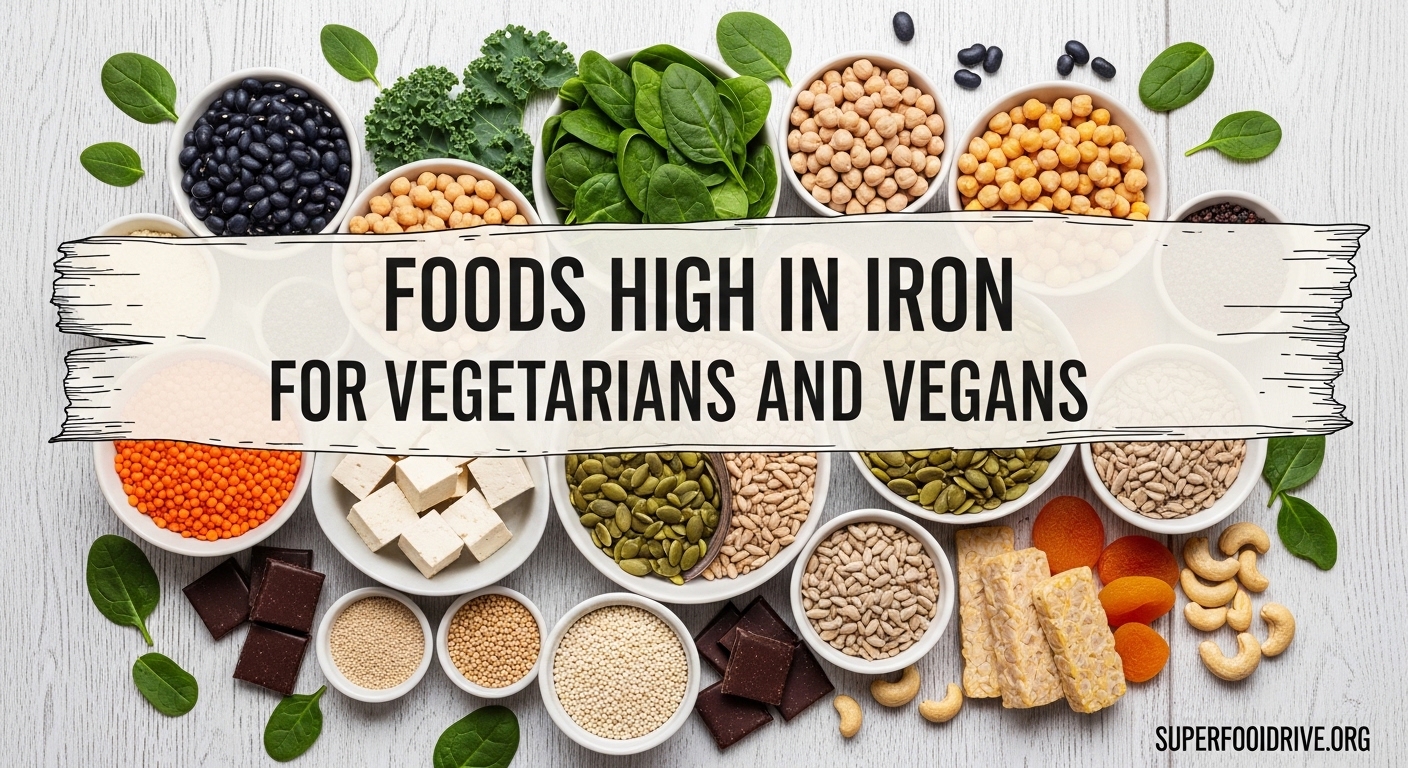
Getting enough iron on a plant-based diet doesn’t have to be complicated. I’ve spent years working with vegetarian and vegan clients who struggled with fatigue, only to discover they weren’t eating the right iron-rich foods or pairing them properly for absorption.
Here’s the truth: vegetarians and vegans can absolutely meet their iron needs through food alone. You just need to know which foods deliver the most non-heme iron and how to help your body absorb it effectively.
In this guide, I’ll walk you through the best foods high in iron for vegetarians and vegans, exactly how much you need, and proven strategies to maximize absorption.
Table of Contents
Heme Iron vs Non-Heme Iron: What You Need to Know
Iron comes in two forms. Heme iron is found in animal products like meat, poultry, and fish. Your body absorbs 15-35% of heme iron easily.
Non-heme iron is what you’ll find in plant foods. This includes lentils, beans, leafy greens, nuts, and seeds. The catch? Your body only absorbs 2-20% of non-heme iron. This lower absorption rate is why vegetarians need about 1.8 times more iron than people who eat meat.
But don’t worry. With the right food combinations and timing, you can absolutely meet your iron needs on a vegetarian or vegan diet.
Foods High in Iron for Vegetarians and Vegans
These are the iron powerhouses that should be staples in your plant-based diet. I’ve organized them by category with specific milligram values per serving.
Legumes: The Iron Champions
Lentils top the list with 6.6mg of iron per cooked cup. That’s 37% of your daily needs in one serving. They’re also incredibly versatile.
Chickpeas deliver 4.7mg per cooked cup. Toss them in salads, blend them into hummus, or roast them for a crunchy snack.
Black beans provide 3.6mg per cooked cup and work perfectly in tacos, burritos, or alongside rice.
Tofu and tempeh offer 3.4mg and 4.5mg per cup respectively. These soy products are complete proteins too, making them nutritional multitaskers.
Leafy Greens: More Than Just Salad
Cooked spinach packs 6.4mg of iron per cup. The cooking process actually concentrates the iron by reducing volume. One cup of cooked spinach equals about 6 cups raw.
Swiss chard provides 4mg per cooked cup and has a milder flavor than spinach, making it great for sautés.
Beet greens often get thrown away, but they contain 2.7mg per cooked cup. Save those tops and sauté them with garlic.
Nuts and Seeds: Portable Iron Sources
Pumpkin seeds offer 2.5mg per ounce. Keep a bag at your desk for easy snacking.
Sesame seeds contain 2.5mg per ounce and work great sprinkled on salads or blended into tahini.
Cashews provide 1.9mg per ounce and make creamy sauces that boost both flavor and nutrition.
Whole Grains: Hearty Iron Options
Amaranth delivers 5.2mg per cooked cup, making it one of the highest iron grains available.
Quinoa provides 2.8mg per cooked cup and contains all nine essential amino acids.
Oats offer 2.1mg per cooked cup. Start your day with oatmeal and you’ve already covered 12% of your iron needs.
Surprising Iron Sources
Dark chocolate (70% cacao or higher) contains 3.3mg per ounce. Yes, chocolate can be part of your iron strategy.
Blackstrap molasses packs 3.5mg per tablespoon. Stir it into oatmeal or use it in baking.
Dried apricots provide 3.5mg per half-cup. They’re perfect for on-the-go snacking.
How to Boost Iron Absorption
Eating iron-rich foods is only half the battle. You need to help your body actually absorb that iron.
Vitamin C is your best friend here. It can increase non-heme iron absorption by up to 300%. Always pair iron-rich foods with vitamin C sources.
Here are winning combinations I recommend: Lentils with diced tomatoes. Spinach salad with lemon juice dressing. Chickpea curry with bell peppers. Tofu stir-fry with broccoli. Oatmeal topped with strawberries.
Cooking in cast iron skillets also helps. Acidic foods like tomato sauce can leach small amounts of iron from the pan into your food.
Soaking and sprouting legumes and grains reduces phytates, compounds that can inhibit iron absorption. If you have time, soak beans overnight before cooking.
Foods and Drinks That Block Iron Absorption
Some common foods actually work against your iron goals. Coffee and tea contain tannins that can reduce iron absorption by up to 60%. Have your coffee or tea at least one hour before or after iron-rich meals.
Calcium competes with iron for absorption. Avoid taking calcium supplements or drinking calcium-fortified plant milks at the same time as your iron-rich meals.
Whole grains and legumes contain phytates, which can bind to iron. While these foods are iron sources themselves, the phytates can reduce how much you actually absorb. Soaking, sprouting, and cooking help reduce phytate levels.
My practical tip: Space your coffee and calcium-rich foods away from iron-heavy meals by at least one hour.
How Much Iron Do You Actually Need?
Daily iron requirements vary by age, sex, and life stage. Adult men need 8mg daily. Adult women aged 19-50 need 18mg daily due to menstrual blood loss. Pregnant women need 27mg daily to support fetal development.
Women over 51 and post-menopausal women need 8mg daily.
Remember, if you’re vegetarian or vegan, multiply these numbers by 1.8. That means vegetarian men need about 14mg daily, and vegetarian women of childbearing age need about 32mg.
These higher targets account for the lower absorption rate of plant-based iron.
Signs You Might Be Iron Deficient
Iron deficiency develops gradually, and early symptoms are easy to dismiss. Persistent fatigue is the most common complaint I hear from clients. You might feel exhausted even after a full night’s sleep.
Other warning signs include pale skin, especially on your face, lips, and nail beds. Brittle nails that split or break easily. Shortness of breath during normal activities. Dizziness or lightheadedness when standing up.
Cold hands and feet, even in warm environments. Difficulty concentrating or brain fog. Cravings for ice, clay, or other non-food items.
If you experience these symptoms, see your doctor. A simple blood test measuring ferritin and hemoglobin can confirm iron deficiency.
Frequently Asked Questions
What vegetarian food has the highest iron?
Lentils contain the most iron among vegetarian foods, providing 6.6mg per cooked cup. Cooked spinach comes close with 6.4mg per cup. Soy products like tofu (3.4mg) and tempeh (4.5mg) are also excellent sources.
What boosts iron immediately?
Vitamin C boosts iron absorption immediately when consumed together. Pair iron-rich foods with citrus fruits, bell peppers, tomatoes, or strawberries. A single vitamin C source can increase iron absorption by up to 300%.
How can I raise my iron levels quickly as a vegetarian?
Focus on high-iron legumes like lentils and chickpeas at every meal. Always pair them with vitamin C sources. Avoid coffee and tea for one hour before and after eating. Cook in cast iron pans when possible. Consider getting your ferritin levels checked to monitor progress.
What is the #1 food highest in iron?
Liver and oysters top the list for heme iron, but among plant foods, cooked lentils and cooked spinach lead with over 6mg per cup. For vegetarians and vegans, these legumes and leafy greens are your best iron sources.
How much iron do vegans need daily?
Vegans need 1.8 times the standard iron recommendations due to lower absorption of non-heme iron. Adult men need about 14mg daily. Women aged 19-50 need about 32mg daily. Pregnant vegans need approximately 49mg daily.
Final Thoughts
Getting enough iron on a vegetarian or vegan diet is absolutely achievable. Focus on legumes, leafy greens, nuts, seeds, and whole grains. Always pair iron sources with vitamin C. Space your coffee and calcium intake away from iron-rich meals.
If you suspect deficiency, get tested. Knowledge is power when it comes to optimizing your nutrition.
Remember: foods high in iron for vegetarians and vegans are abundant. You just need to eat them strategically.