
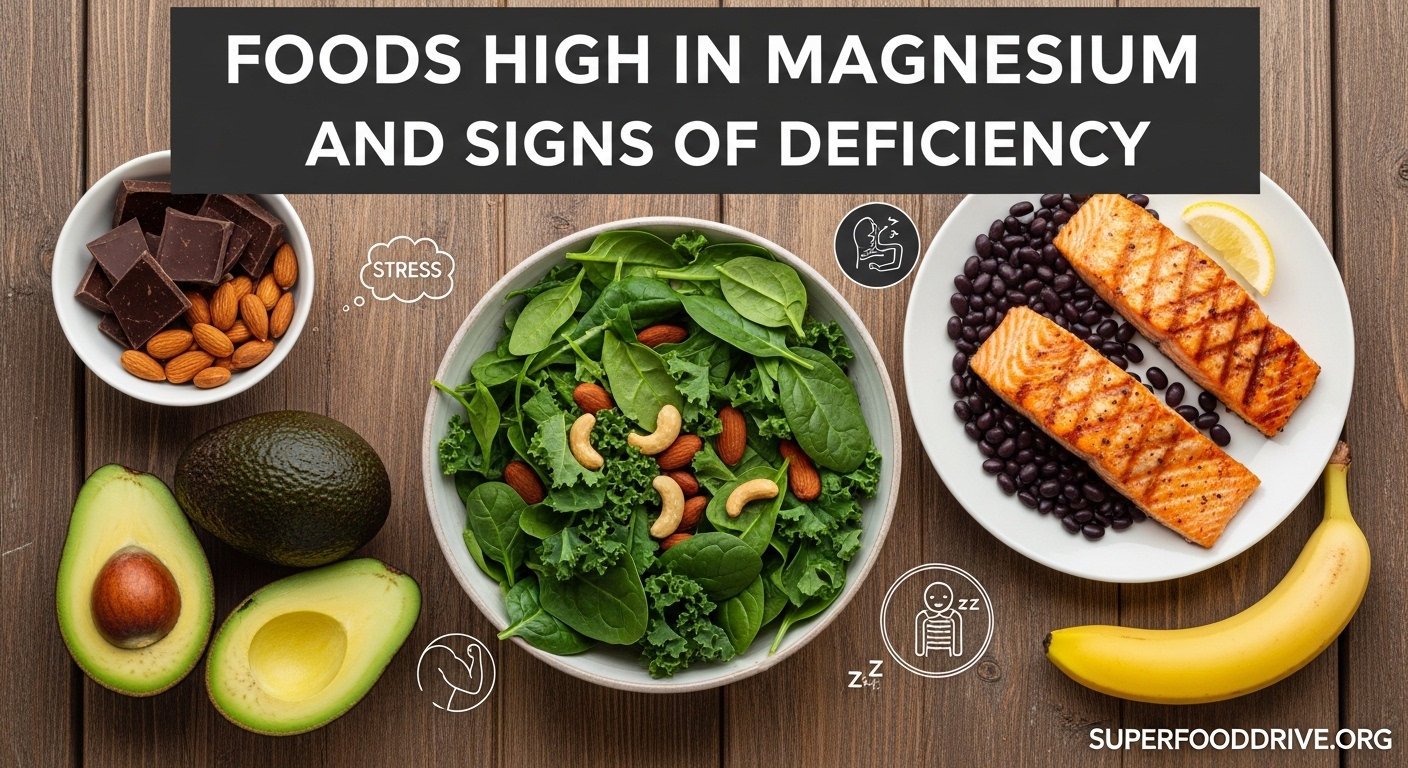
About half of all Americans don’t get enough magnesium from their diets. I learned this the hard way when chronic muscle cramps and unexplained anxiety led me to investigate my own mineral levels. If you’re searching for foods high in magnesium and wondering whether your symptoms might signal a deficiency, this guide covers everything you need to know.
In this article, I’ll share the best dietary sources of magnesium with specific amounts per serving. You’ll also learn to recognize the eleven warning signs that your body may be running low on this essential mineral.
Magnesium deficiency often hides behind other conditions. Many people suffer for years before connecting their symptoms to this critical nutrient gap.
Table of Contents
What Is Magnesium and Why Your Body Needs It
Magnesium is an essential mineral involved in over 300 biochemical reactions in your body. Every cell needs it to function properly, yet it rarely gets the attention that calcium or iron receive.
This mineral works as a cofactor for enzymes that regulate diverse processes throughout your body. Without adequate magnesium, systems start to break down in subtle but significant ways.
Your muscles need magnesium to contract and relax properly. Calcium helps muscles contract, while magnesium allows them to release. When magnesium runs low, muscles can get stuck in contraction mode, leading to cramps, spasms, and twitching.
Nerve transmission depends heavily on magnesium. It regulates neurotransmitters that send signals throughout your nervous system. Low levels can trigger heightened stress responses, anxiety, and sleep disturbances.
Magnesium also plays a critical role in energy production. It helps convert food into ATP, the fuel your cells use for every function. Without enough magnesium, you may feel tired despite eating well and sleeping adequately.
Bone health represents another crucial function. About 60 percent of your body’s magnesium stores sit in your bones alongside calcium. This mineral helps regulate calcium transport and activates vitamin D, making it essential for maintaining strong bones throughout life.
Heart health depends on stable magnesium levels too. The mineral helps maintain normal heart rhythm and supports healthy blood pressure by relaxing blood vessels. Research consistently links adequate magnesium intake to reduced cardiovascular risk.
Blood sugar control represents another key benefit. Magnesium helps insulin work properly, allowing cells to absorb glucose from your bloodstream. Studies show that people with higher magnesium intake have lower risk of developing Type 2 diabetes.
Despite these critical functions, dietary surveys reveal that most people consume less than the recommended daily amount. Processed foods, depleted soil, and modern farming practices have reduced magnesium content in many staple foods.
Foods High in Magnesium
The good news is that magnesium occurs naturally in many delicious, accessible foods. By incorporating these items into your regular diet, you can meet your daily requirements without supplements.
Dark Chocolate
One ounce of dark chocolate containing 70 to 85 percent cocoa delivers 64 milligrams of magnesium. That’s about 15 percent of your daily value in a single serving.
Dark chocolate also provides antioxidants called flavonoids that support heart health. Choose varieties with minimal added sugar to maximize benefits. I keep a bar with 85 percent cocoa in my desk drawer for afternoon energy slumps.
Avocados
A medium avocado contains approximately 58 milligrams of magnesium, contributing 14 percent toward your daily needs. This creamy fruit also delivers healthy monounsaturated fats and potassium.
Avocados support heart health while helping you feel satisfied after meals. Add slices to salads, mash onto toast, or blend into smoothies for a magnesium boost that tastes indulgent.
Nuts and Seeds
This category offers some of the most concentrated magnesium sources available. An ounce of dry-roasted almonds provides 80 milligrams, while cashews deliver 72 milligrams in the same serving.
Brazil nuts contain 107 milligrams per ounce, making them one of the richest nut sources. Pumpkin seeds pack an impressive 156 milligrams per ounce, more than one-third of your daily requirement.
Sunflower seeds, flaxseeds, and chia seeds all contribute significant magnesium as well. Keep a small container of mixed nuts and seeds handy for portable, nutrient-dense snacking.
Legumes
Beans, lentils, and peas provide substantial magnesium along with fiber and plant protein. One cup of cooked black beans contains 120 milligrams, nearly 30 percent of your daily target.
Chickpeas offer 79 milligrams per cup, while lentils provide 71 milligrams. Soybeans lead the legume category with 148 milligrams per cup of cooked edamame.
Legumes support digestive health and help stabilize blood sugar. Add them to soups, salads, or grain bowls for affordable, versatile nutrition.
Tofu
A 3.5-ounce serving of firm tofu delivers 53 milligrams of magnesium, about 13 percent of your daily value. This soy-based protein source also contains calcium and iron.
Tofu absorbs flavors beautifully from marinades and sauces. It works well in stir-fries, scrambles, and soups for plant-based eaters seeking magnesium-rich protein.
Whole Grains
Refined grains lose most of their magnesium during processing. Whole grains retain the germ and bran where minerals concentrate.
One cup of cooked quinoa provides 118 milligrams of magnesium. Brown rice offers 86 milligrams per cup, while oats deliver 58 milligrams per cooked cup. Whole wheat bread contributes approximately 46 milligrams per two slices.
Switching from white to whole grain versions of bread, pasta, and rice significantly boosts your magnesium intake without requiring major dietary changes.
Fatty Fish
Fish provides magnesium along with heart-healthy omega-3 fatty acids. A 3.5-ounce serving of cooked salmon contains 32 milligrams of magnesium.
Mackerel offers slightly more at 60 milligrams per serving. Halibut provides 107 milligrams, making it one of the best seafood sources available.
Eating fish twice weekly supports cardiovascular health while contributing to your magnesium needs. Choose wild-caught varieties when possible for optimal nutrient profiles.
Leafy Greens
Spinach stands out as a magnesium superstar. One cup of cooked spinach packs 157 milligrams, about 40 percent of your daily requirement.
Swiss chard offers 150 milligrams per cooked cup. Kale provides 49 milligrams per cup cooked, though raw kale contains less due to volume differences.
Cooking concentrates magnesium by reducing water content. A large raw spinach salad might look impressive, but a half-cup of cooked spinach delivers far more minerals.
Bananas
One large banana contains approximately 37 milligrams of magnesium. While not the richest source, bananas offer convenience and additional potassium that supports blood pressure regulation.
The potassium-magnesium combination in bananas makes them excellent for post-workout recovery. They’re portable, affordable, and familiar to even picky eaters.
How Much Magnesium Do You Need Daily
The Recommended Dietary Allowance varies based on age, gender, and life stage. Adult men require 400 to 420 milligrams daily, while adult women need 310 to 320 milligrams.
Pregnancy increases requirements to 350 to 360 milligrams daily to support fetal development. Breastfeeding women need slightly more as well, around 310 to 320 milligrams.
Teenage boys need 410 milligrams daily, while teenage girls require 360 milligrams. Children between 9 and 13 need 240 milligrams, and younger children require less based on their smaller body size.
Food labels show Daily Value percentages based on 420 milligrams for adults. A food providing 20 percent DV contains about 84 milligrams of magnesium per serving.
Meeting these targets through whole foods offers advantages over supplements. Food sources provide additional nutrients and fiber while reducing overdose risk.
11 Warning Signs of Magnesium Deficiency
Magnesium deficiency often masquerades as other health conditions. After reviewing hundreds of forum discussions and research studies, I’ve identified the eleven most common warning signs.
1. Muscle Cramps and Spasms
Persistent muscle cramps, especially charlie horses in your calves, often signal low magnesium. This was my first symptom, striking frequently during sleep and exercise.
Magnesium helps muscles relax after contraction. Without enough, muscles stay tense and prone to painful spasms. Eye twitches and facial muscle spasms can also indicate deficiency.
2. Anxiety and Panic Attacks
Many forum users report discovering their magnesium deficiency only after years of treating anxiety symptoms. The mineral regulates GABA, a calming neurotransmitter in your brain.
Low magnesium can make your nervous system hypersensitive to stress. Small stressors feel overwhelming. Some people describe feeling like their nervous system is “fried” or constantly on edge.
3. Insomnia and Sleep Disturbances
Magnesium deficiency disrupts sleep in multiple ways. The mineral helps regulate melatonin production and maintains healthy GABA levels that promote relaxation.
People with low magnesium often struggle to fall asleep or stay asleep through the night. Sleep feels unrefreshing despite adequate time in bed.
4. Brain Fog and Memory Issues
Difficulty concentrating, mental fatigue, and forgetfulness can indicate inadequate magnesium. The mineral supports synaptic plasticity, helping your brain form and retain memories.
Forum discussions frequently mention that brain fog lifts dramatically after correcting deficiency. Tasks requiring mental focus become easier.
5. Persistent Fatigue
Low magnesium reduces your cells’ ability to produce ATP energy. Many deficiency sufferers describe crippling fatigue that doesn’t improve with rest or caffeine.
This differs from normal tiredness. You might sleep ten hours yet wake feeling exhausted. Physical exertion feels disproportionately draining.
6. Irregular Heartbeat
Your heart is a muscle that requires magnesium to maintain steady rhythm. Palpitations, skipped beats, or awareness of your heartbeat can signal deficiency.
While occasional palpitations are normal, frequent irregularities warrant medical attention. Magnesium supports electrical conduction in heart tissue.
7. High Blood Pressure
Magnesium helps relax blood vessels, supporting healthy blood pressure. Research links low magnesium levels to hypertension risk.
If your blood pressure runs higher than expected despite other lifestyle factors, mineral status deserves investigation.
8. Nausea and Loss of Appetite
Early deficiency sometimes causes digestive symptoms. Nausea, vomiting, or unexplained appetite loss can appear before more obvious signs.
These symptoms usually indicate more severe deficiency and often accompany other warning signs.
9. Weakness and Lethargy
Generalized muscle weakness makes normal activities feel difficult. You might struggle with stairs, carrying groceries, or maintaining exercise routines.
This weakness differs from soreness after workouts. It persists consistently and affects overall function.
10. Numbness and Tingling
Since magnesium affects nerve function, deficiency can cause abnormal sensations. Numbness, tingling, or pins-and-needles feelings may appear in extremities.
These neurological symptoms indicate more advanced deficiency requiring prompt attention.
11. Personality Changes and Mood Swings
Severe deficiency can trigger personality changes including depression, apathy, and confusion. These mental health impacts often surprise people who expect only physical symptoms.
Addressing deficiency sometimes resolves mood issues that resisted other treatments.
Who Is at Risk for Magnesium Deficiency
Certain groups face higher deficiency risk due to reduced absorption, increased losses, or elevated needs. Understanding your risk profile helps prioritize testing and dietary improvements.
People with digestive disorders top the risk list. Crohn’s disease, celiac disease, and chronic diarrhea reduce magnesium absorption from food. Surgical bowel resections further compromise uptake.
Type 2 diabetes patients often run low on magnesium. High blood sugar increases urinary magnesium losses, creating a cycle where deficiency worsens insulin resistance. Correcting deficiency may improve blood sugar control.
Older adults absorb magnesium less efficiently from food. Combined with typically reduced appetites and medication interactions, seniors frequently fall short of requirements.
People taking proton pump inhibitors for acid reflux or diuretics for blood pressure lose more magnesium through urine. Long-term use significantly increases deficiency risk.
Those with alcohol dependence face multiple risk factors. Alcohol increases urinary losses, damages digestive function, and often replaces nutrient-dense foods in the diet.
GLP-1 medication users represent an emerging risk group. These popular weight-loss and diabetes drugs can affect nutrient absorption and may increase magnesium depletion over time.
How to Test for Magnesium Deficiency
Here’s something that surprises many people: standard blood tests often miss magnesium deficiency. Your body works hard to maintain stable blood levels, pulling magnesium from bones and tissues when dietary intake drops.
Serum magnesium tests measure only the small fraction circulating in blood. Normal results can occur despite significant tissue depletion. By the time blood levels drop, deficiency is usually severe.
Red blood cell magnesium tests provide better information. RBC magnesium reflects actual tissue stores more accurately. Many functional medicine practitioners prefer this test for assessing status.
Symptom assessment combined with dietary analysis offers another approach. If you experience multiple deficiency signs and rarely eat magnesium-rich foods, empirical treatment may be appropriate.
Work with a healthcare provider to determine testing needs. They can order appropriate labs and rule out other conditions causing similar symptoms.
How to Correct a Magnesium Deficiency
Addressing deficiency requires consistent effort over weeks or months. Forum users report that significant improvement typically requires four to six weeks of increased intake.
Food-first approaches work best for mild to moderate deficiency. Add several magnesium-rich foods to your daily diet. A breakfast of oatmeal with pumpkin seeds, a lunch salad with spinach and avocado, and salmon with quinoa for dinner can deliver over 300 milligrams.
Supplements help when dietary changes prove insufficient or when deficiency is severe. Magnesium glycinate offers excellent absorption with minimal digestive side effects. Magnesium citrate works well but can cause loose stools at higher doses.
People with MTHFR genetic variants often benefit from magnesium supplementation. The MTHFR enzyme requires magnesium to function properly. Many practitioners recommend magnesium alongside methylated B vitamins for optimal methylation support.
Maintenance dosing after correction typically requires ongoing attention. Many people need 400 to 600 milligrams daily from combined food and supplement sources to prevent recurrence.
Warning signs of excessive magnesium include diarrhea, nausea, and abdominal cramping. These symptoms typically resolve when intake decreases. People with kidney disease should consult doctors before supplementing.
Frequently Asked Questions
What do you crave if your magnesium is low?
Many people with magnesium deficiency crave chocolate, particularly dark chocolate. This makes sense since cocoa contains significant magnesium. Some individuals also report cravings for nuts, seeds, or salty foods when their magnesium runs low.
Can I take magnesium with MTHFR?
Yes, magnesium is actually beneficial for people with MTHFR variants. The MTHFR enzyme requires magnesium to function properly. Many practitioners recommend magnesium glycinate alongside methylated B vitamins to support optimal methylation and reduce associated symptoms.
What are the 11 signs you have low magnesium?
The eleven warning signs of magnesium deficiency are: 1) Muscle cramps and spasms including charlie horses, 2) Anxiety and panic attacks, 3) Insomnia and sleep disturbances, 4) Brain fog and memory issues, 5) Persistent fatigue, 6) Irregular heartbeat or palpitations, 7) High blood pressure, 8) Nausea and loss of appetite, 9) Generalized weakness and lethargy, 10) Numbness and tingling sensations, and 11) Personality changes including depression and mood swings.
Can GLP-1 affect magnesium levels?
GLP-1 medications may affect magnesium status over time. These drugs alter digestion and nutrient absorption, potentially increasing magnesium depletion. If you take GLP-1 medications for diabetes or weight management, monitoring magnesium levels and increasing dietary intake is wise.
How long does it take to correct magnesium deficiency?
Correcting magnesium deficiency typically requires four to six weeks of consistent increased intake. Severe deficiencies may take two to three months to fully resolve. Maintenance supplementation often remains necessary to prevent recurrence, as modern diets frequently provide insufficient magnesium.
What food is highest in magnesium?
Pumpkin seeds rank among the highest magnesium foods, providing 156 milligrams per ounce. Cooked spinach follows closely with 157 milligrams per cup. Other top sources include Brazil nuts, halibut, soybeans, quinoa, and dark chocolate. Combining multiple sources throughout the day ensures adequate intake.
Can you get too much magnesium from food?
Getting too much magnesium from food alone is extremely difficult. Your kidneys efficiently excrete excess from dietary sources. However, excessive supplementation can cause diarrhea, nausea, and abdominal discomfort. People with kidney disease should consult healthcare providers before taking magnesium supplements.
Conclusion
Magnesium deficiency affects millions of people who never suspect this mineral gap causes their symptoms. By focusing on foods high in magnesium, you can support muscle function, nerve health, energy production, and cardiovascular wellness.
The best sources include dark chocolate, avocados, nuts and seeds, legumes, whole grains, fatty fish, leafy greens, and bananas. Aim for 310 to 420 milligrams daily depending on your age and gender.
Watch for warning signs like muscle cramps, anxiety, insomnia, brain fog, and persistent fatigue. If these symptoms sound familiar, consider assessing your dietary intake and discussing testing with your healthcare provider.
Most people can correct deficiency through diet alone or with modest supplementation. The reward is better sleep, more stable energy, improved mood, and reduced risk of chronic disease.